Job Offer Letter for Lawyer
What this document covers
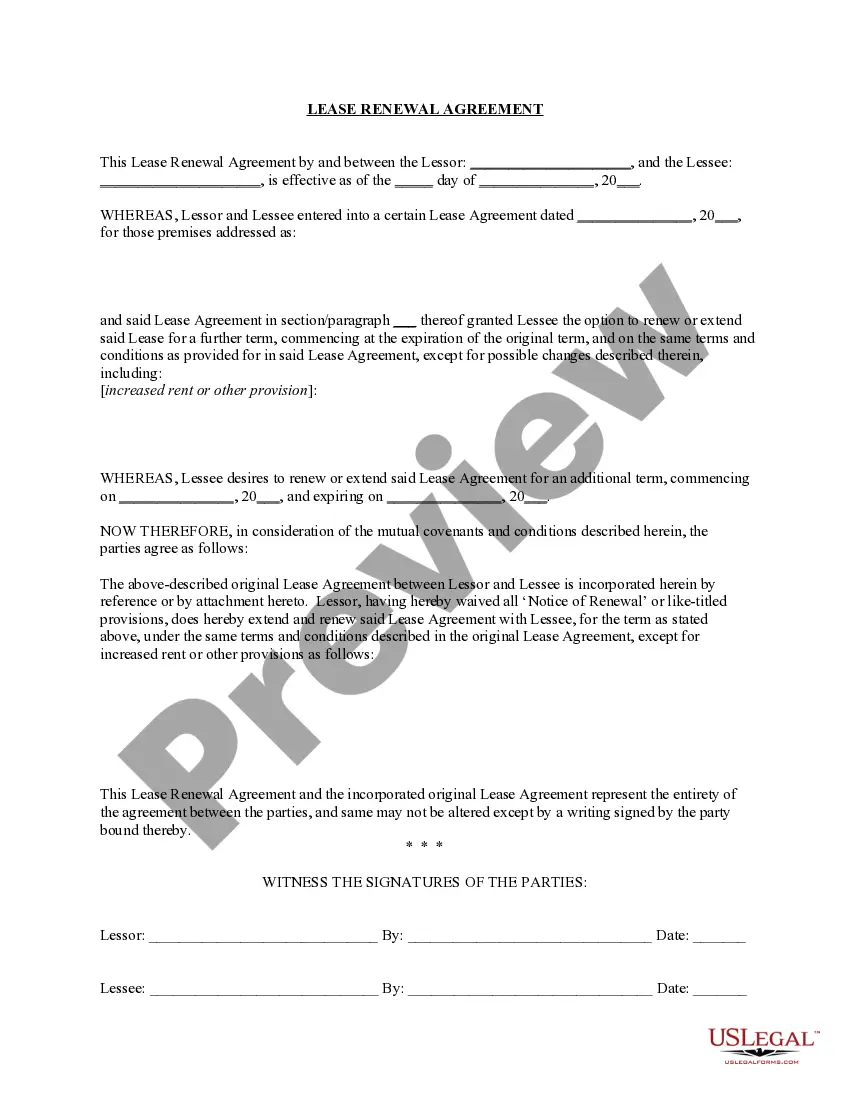
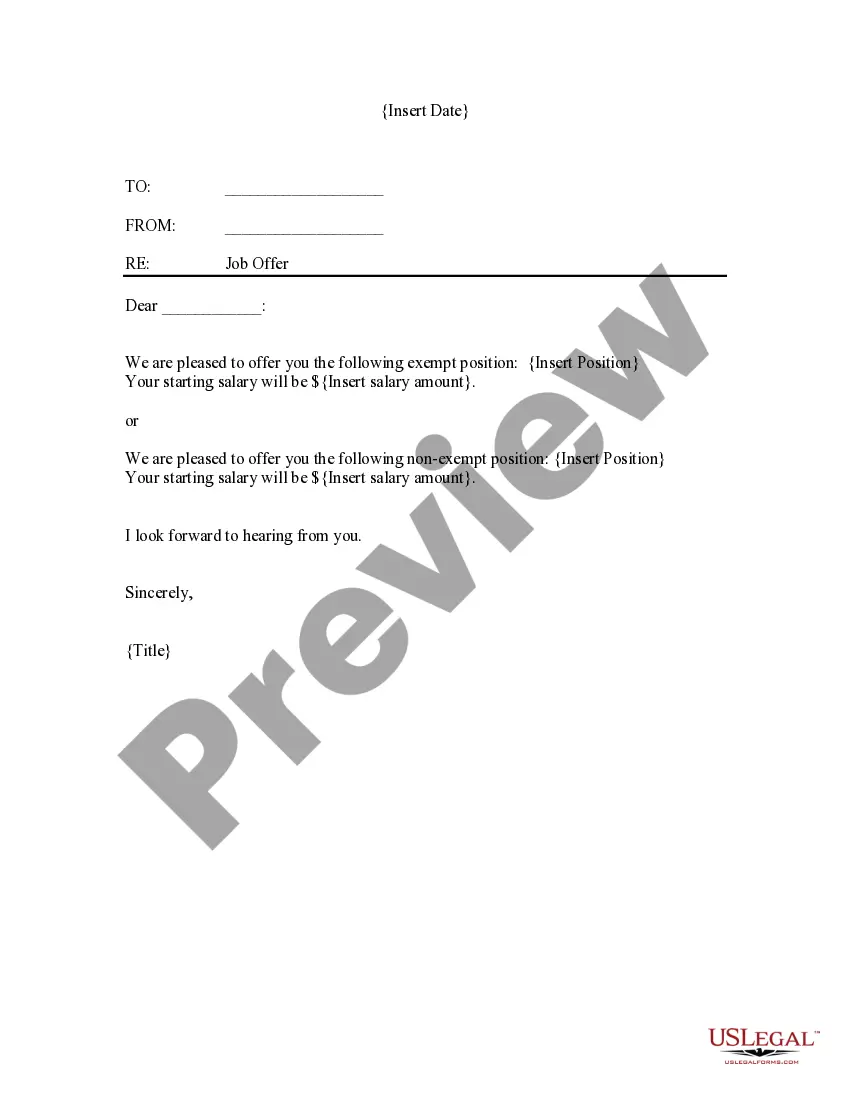
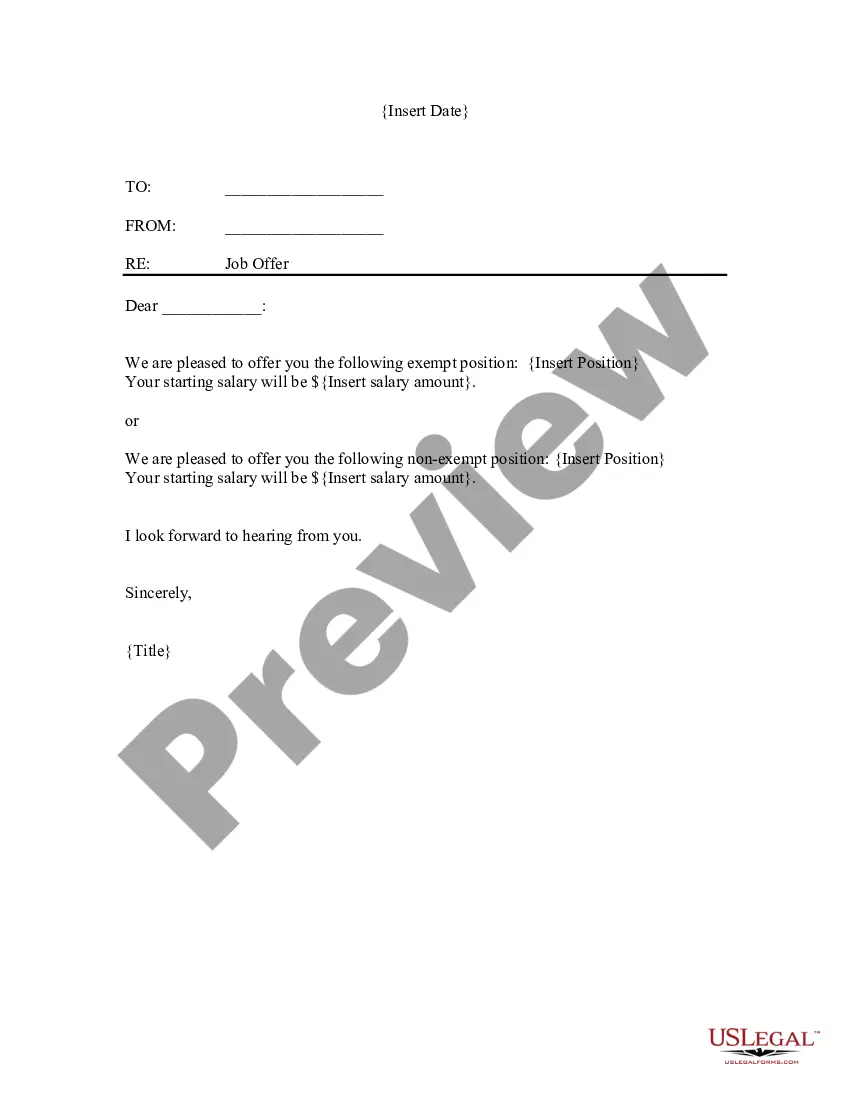
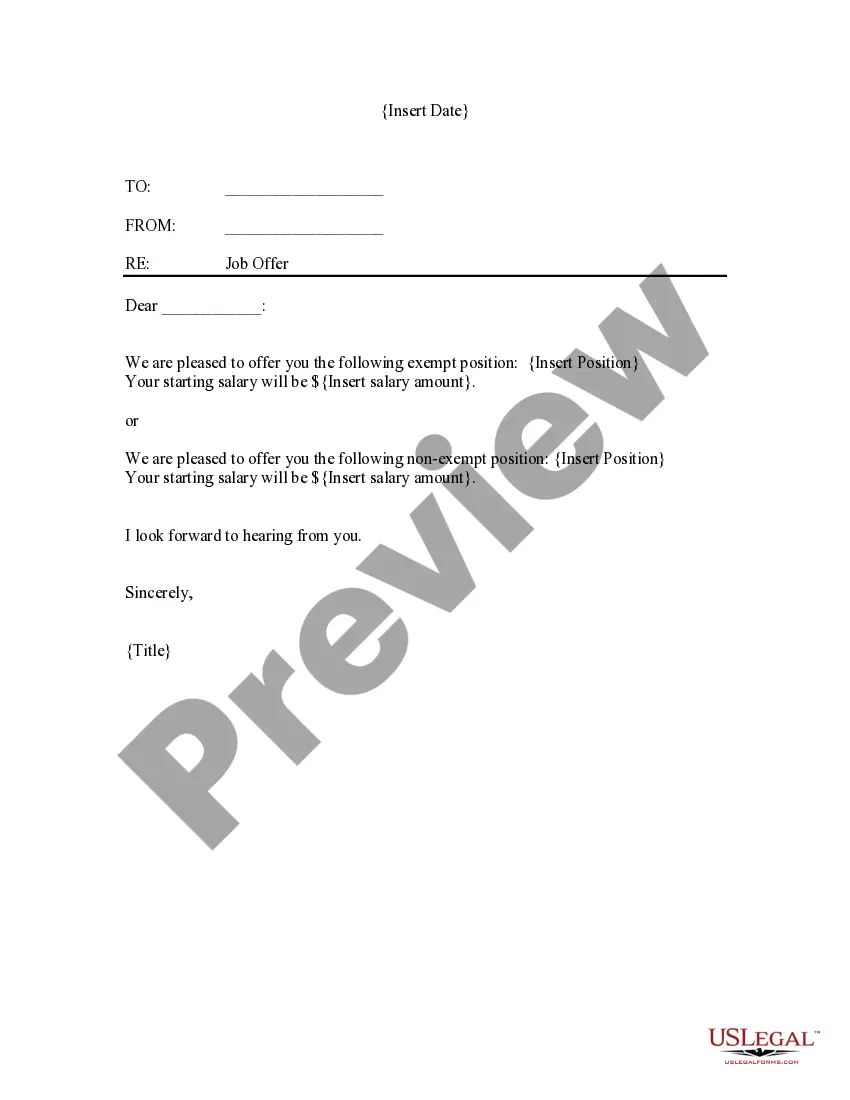
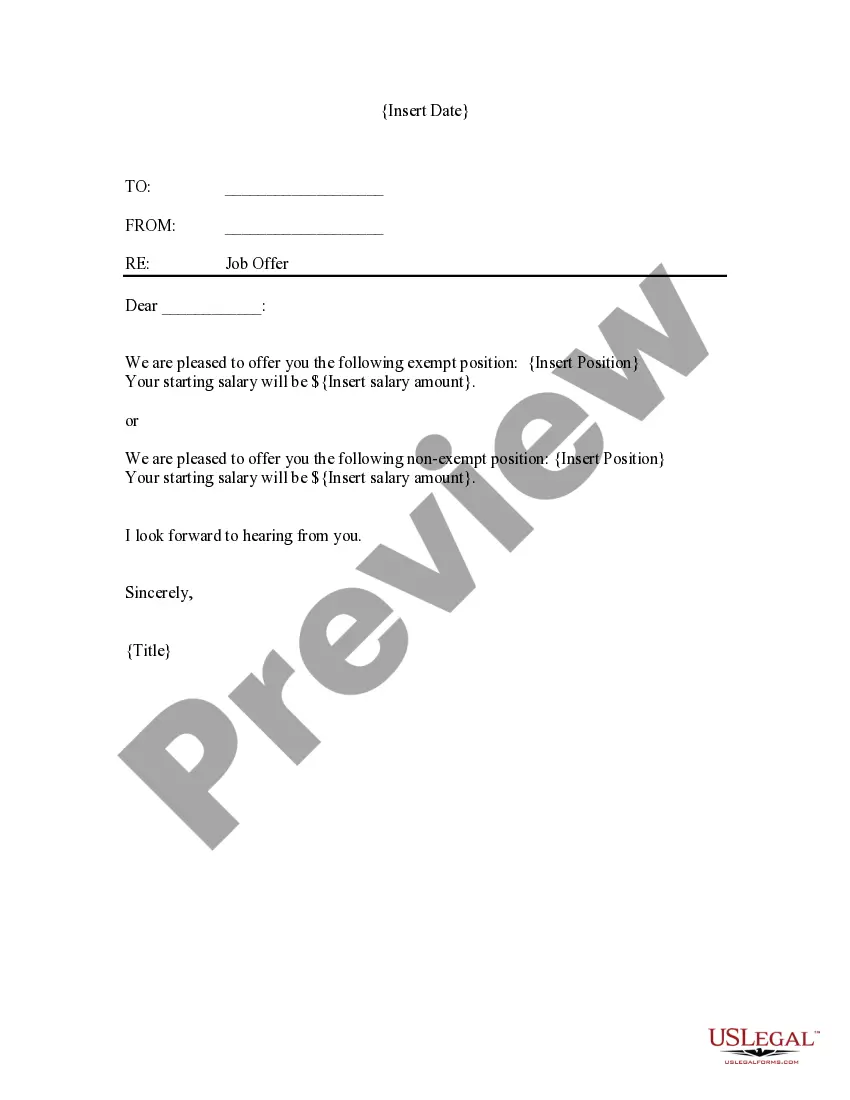
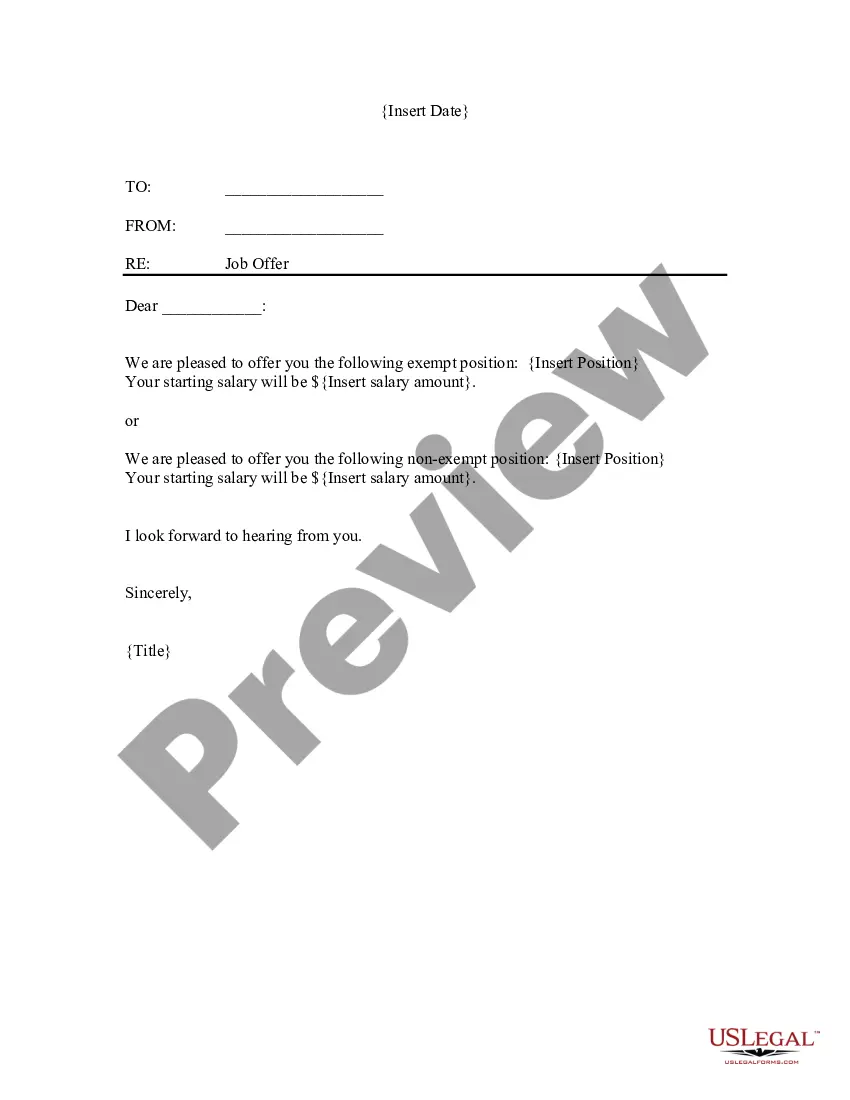
The Job Offer Letter for Lawyer is a formal document that notifies an individual of a job offer for a legal position. This letter can specify whether the position is exempt or non-exempt under labor laws, distinguishing it from other job offer letters by addressing the unique requirements of the legal profession.
Key components of this form
- Employer details: includes the name and contact information of the employer.
- Job title: the specific position being offered within the legal firm.
- Salary: the starting salary amount for the offered position.
- Exemption status: indicates whether the position is exempt or non-exempt.
- Closing remarks: expresses anticipation for the candidate's response.
When this form is needed
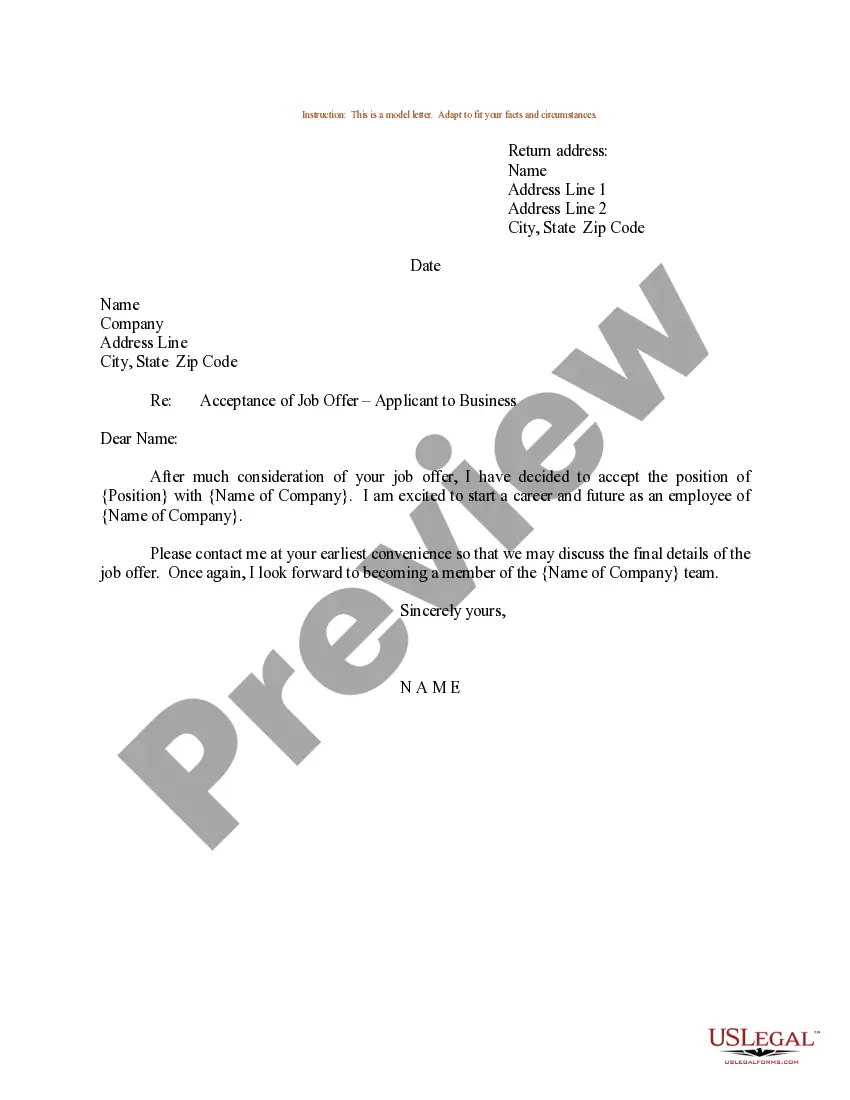
This form is used when an employer is ready to extend a job offer to a candidate for a lawyer position. It is suitable in various scenarios, such as when hiring for a law firm, corporate legal department, or governmental legal office. The letter serves as an official communication, outlining essential job details and compensation to facilitate the candidate's acceptance.
Who needs this form
- Employers looking to hire a new lawyer.
- Human resources professionals managing recruitment in legal settings.
- Law firms needing to formalize job offers to candidates.
- Corporate entities expanding their legal teams.
Completing this form step by step
- Identify the employer by entering the company's name and contact information.
- Write the candidate's name and job title being offered in the appropriate fields.
- Specify the starting salary amount clearly to avoid any ambiguity.
- Indicate whether the position is exempt or non-exempt based on labor regulations.
- Conclude with a polite closing statement inviting the candidate to respond.
Is notarization required?
This form does not typically require notarization unless specified by local law. Ensure compliance with any specific state regulations that may apply to job offer letters.
Get your form ready online
Our built-in tools help you complete, sign, share, and store your documents in one place.
Make edits, fill in missing information, and update formatting in US Legal Forms—just like you would in MS Word.
Download a copy, print it, send it by email, or mail it via USPS—whatever works best for your next step.
Sign and collect signatures with our SignNow integration. Send to multiple recipients, set reminders, and more. Go Premium to unlock E-Sign.
If this form requires notarization, complete it online through a secure video call—no need to meet a notary in person or wait for an appointment.
We protect your documents and personal data by following strict security and privacy standards.

Make edits, fill in missing information, and update formatting in US Legal Forms—just like you would in MS Word.

Download a copy, print it, send it by email, or mail it via USPS—whatever works best for your next step.

Sign and collect signatures with our SignNow integration. Send to multiple recipients, set reminders, and more. Go Premium to unlock E-Sign.

If this form requires notarization, complete it online through a secure video call—no need to meet a notary in person or wait for an appointment.

We protect your documents and personal data by following strict security and privacy standards.
Common mistakes to avoid
- Forgetting to specify the job title or salary.
- Not clarifying the exemption status of the position.
- Using informal language instead of a professional tone.
- Failing to include contact information for follow-up questions.
Why complete this form online
- Easy accessibility: download the form anytime and from anywhere.
- Editability: fill in the required details quickly with no hassle.
- Legal assurance: templates drafted by licensed attorneys ensure compliance.
- Time-saving: streamline the hiring process with ready-made templates.
Looking for another form?
Form popularity
FAQ
Job title. Job description. Starting date. Work schedule. Reporting structure. Salary (Compensation Bonus or Commission) Paid time off. Employee benefits.
An offer letter provides a brief overview of the position and company and includes specific job details, like start date, salary, work schedule and benefits. Since there isn't a standard format for a job offer letter, you can reorder the elements described below to fit your company and the roles you're hiring for.
Job offers typically contain the details of the employment offer, including salary, benefits, job responsibilities, and the reporting manager's name and title. The offer letter may also cover the expected work hours, the desired start date, and additional details that are important for the prospective employee to know.
An offer letter is both a policy document and a legal contract.As per Indian Contract Act, a legally valid contract should be legally enforceable in nature and spirit.
Once a candidate signs an offer letter, it confirms the candidate has accepted the position, which is an important step. However, if the language of the letter implies an employment contract or agreement, you may be legally bound to provide certain benefits even if the relationship is short-lived.
Until you are holding a piece of paper in your hand with the job offer on it, including the salary and other details like the official start date, you do NOT have a new job.When you have that piece of paper, called a written offer, THEN you have a job offer.
Position/Title. Name/Position of Supervisor. Full-Time/Part-Time Schedule. State whether the position is full-time or part-time; specify the basic work schedule. Exempt/Nonexempt Classification. Duties. Equity. Bonus/Commissions. Base Salary.
An offer letter is any notice in written form that informs a candidate that they have been selected for employment. It's a formal letter that often includes the details of employment, from the start date, to benefits and, most importantly, the terms of employment.
The general purpose of the letter is to offer a position to a candidate and to spell out the details of the position. Offer letters are also used to identify a start date and provide information on compensation and benefits packages.