Notice of Disputed Account
What this document covers
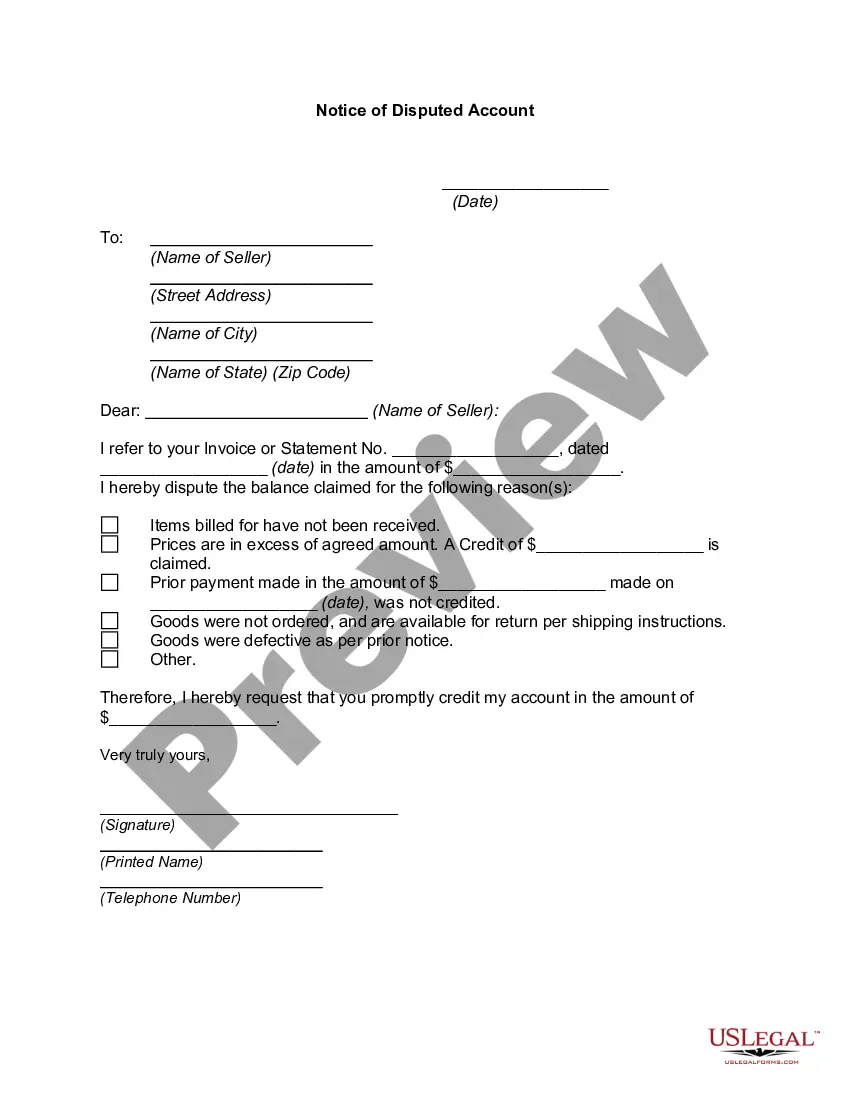
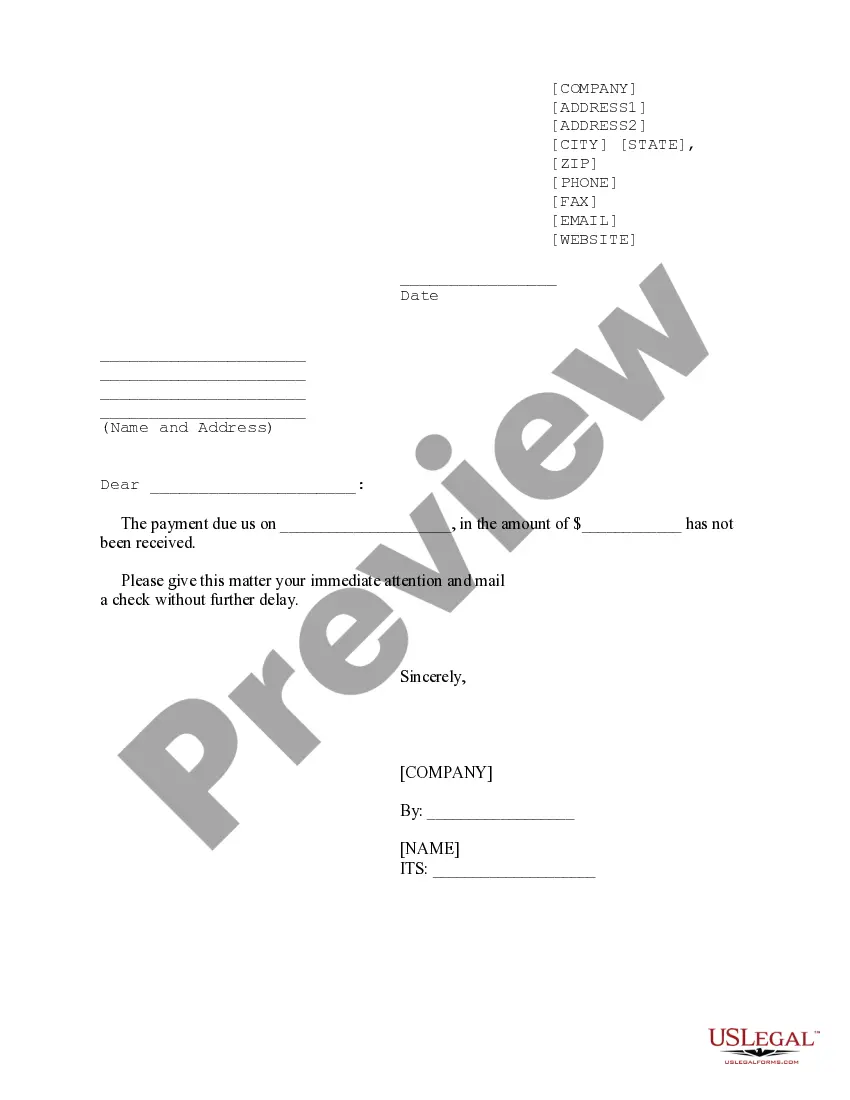
The Notice of Disputed Account is a document used by customers to formally dispute charges on an account. This form serves to communicate disagreements regarding transactions or invoices to the seller, helping to resolve payment discrepancies effectively. Unlike informal complaints, this notice provides a structured approach to addressing billing issues, ensuring that disputes are documented clearly and professionally.
Key parts of this document
- Date of notice
- Recipient's name and address
- Invoice or statement number and date
- Disputed amount and reason(s) for the dispute
- Requested credit amount
- Signature and printed name of the customer
When to use this form
This form should be used when a customer believes there are errors or disputes related to charges on their account. Common scenarios include when items billed were not received, prices differ from what was agreed upon, or when prior payments were not credited. It ensures that the seller is formally notified of any discrepancies, paving the way for a resolution.
Who can use this document
This form is intended for:
- Customers who have received an invoice or statement with discrepancies
- Individuals or businesses looking to formally dispute account charges
- Anyone who requires documentation of their dispute for legal or record-keeping purposes
Completing this form step by step
- Fill in the date at the top of the form.
- Provide the name and address of the seller or creditor you are disputing.
- Enter the invoice or statement number and the date it was issued.
- Specify the reasons for the dispute and the amount you believe is owed.
- Sign and print your name, along with your contact telephone number.
Is notarization required?
This form does not typically require notarization unless specified by local law. It is advisable to check specific requirements in your jurisdiction to ensure compliance.
Get your form ready online
Our built-in tools help you complete, sign, share, and store your documents in one place.
Make edits, fill in missing information, and update formatting in US Legal Forms—just like you would in MS Word.
Download a copy, print it, send it by email, or mail it via USPS—whatever works best for your next step.
Sign and collect signatures with our SignNow integration. Send to multiple recipients, set reminders, and more. Go Premium to unlock E-Sign.
If this form requires notarization, complete it online through a secure video call—no need to meet a notary in person or wait for an appointment.
We protect your documents and personal data by following strict security and privacy standards.

Make edits, fill in missing information, and update formatting in US Legal Forms—just like you would in MS Word.

Download a copy, print it, send it by email, or mail it via USPS—whatever works best for your next step.

Sign and collect signatures with our SignNow integration. Send to multiple recipients, set reminders, and more. Go Premium to unlock E-Sign.

If this form requires notarization, complete it online through a secure video call—no need to meet a notary in person or wait for an appointment.

We protect your documents and personal data by following strict security and privacy standards.
Avoid these common issues
- Failing to include all necessary details such as the invoice number or specific reasons for the dispute.
- Not signing the form, which can result in the seller not recognizing the dispute.
- Using vague language that doesn't clearly communicate the issue at hand.
Benefits of using this form online
- Immediate access to a structured template that is easy to complete.
- Editability allows for customization based on individual disputes.
- Reliably crafted by licensed attorneys to ensure legal viability.
Looking for another form?
Form popularity
FAQ
The act of disputing items on your credit report does not hurt your score. However, the outcome of the dispute could cause your score to adjust. If the negative item is verified to be correct, for example, your score might take a dip.
Your dispute letter should always include your full legal name and Social Security number at the top of the letter. You should also include any account numbers relevant to the disputes made in the body of the letter.
The debt dispute letter should include your personal identifying information; verification of the amount of debt owed; the name of the creditor for the debt; and a request that the debt not be reported to credit reporting agencies until the matter is resolved or have it removed from the report, if it already has been
Sample credit dispute letter To whom it may concern: I am writing to inform you about an error I noticed on my TransUnion credit report (account number 1234-56789). I am requesting that you remove this information from my credit report. Thank you for your help.
Once you submit a dispute, the creditor has a duty to investigate your claim, according to the Fair Credit Reporting Act. In most cases, the creditor is expected to respond to your claim within 30 to 45 days and to inform you of the results of its investigation within five business days.
In a credit card or debit card account, a dispute is a situation in which a customer questions the validity of a transaction that was registered to the account.
What is a dispute? If you see an item on your credit report that you think is inaccurate, you can start a dispute and the credit reporting agency (such as TransUnion) will investigate the possible inaccuracy.
Your full name. Your current address and all addresses you have lived at over the past two years. Copy of a government-issued ID. Copy of a utility bill, bank statement, or insurance statement. A reference line that begins RE: and includes the name of the creditor and the account number for the item(s) you're disputing.
Your letter should identify each item you dispute, state the facts and explain why you dispute the information, and ask that the information provider take action to have it removed or corrected. You may want to enclose a copy of your report with the item(s) in question circled.