Cross-Purchase Agreement among Stockholders of Close Corporation --Purchase by Surviving Stockholders of Interest of Withdrawing or Deceased Stockholder
Understanding this form
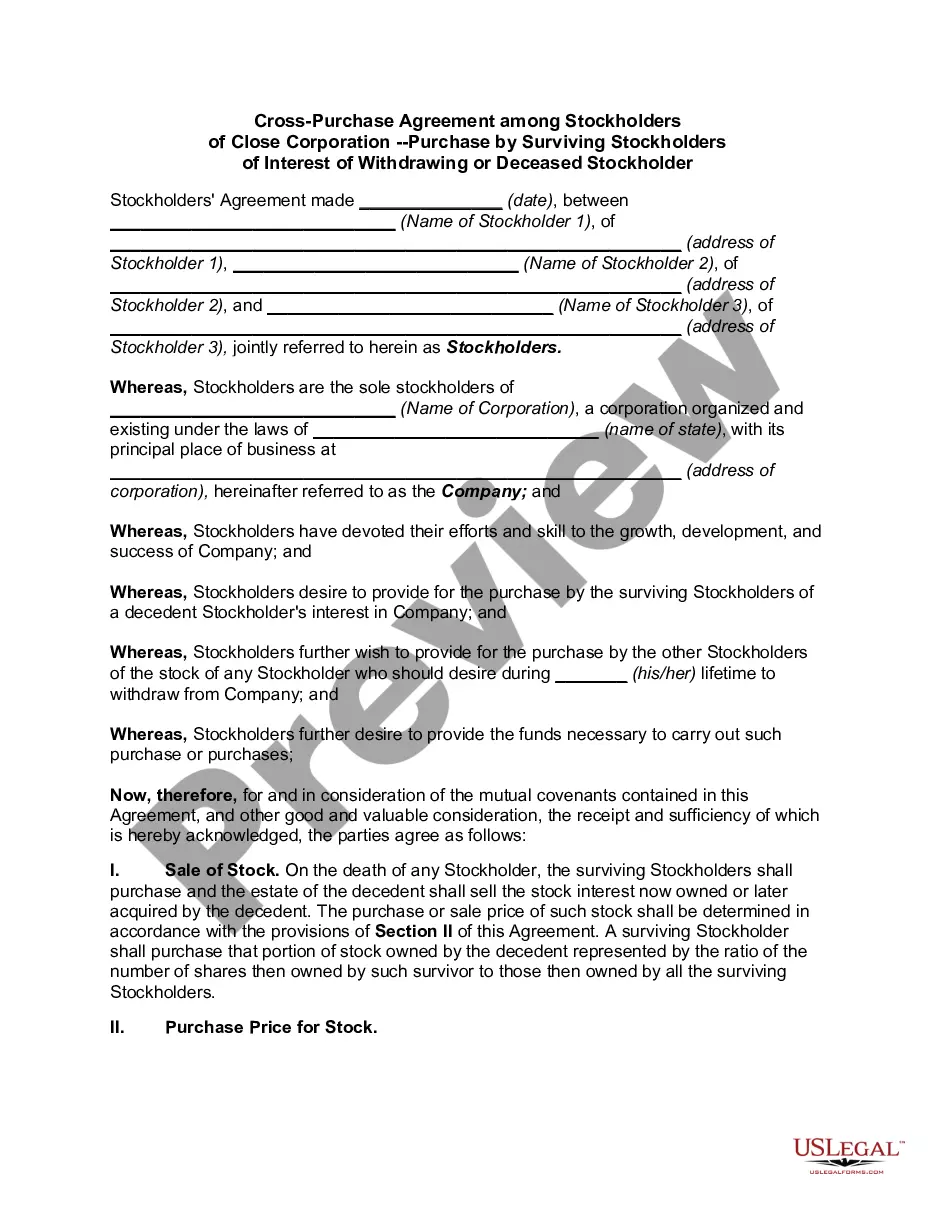
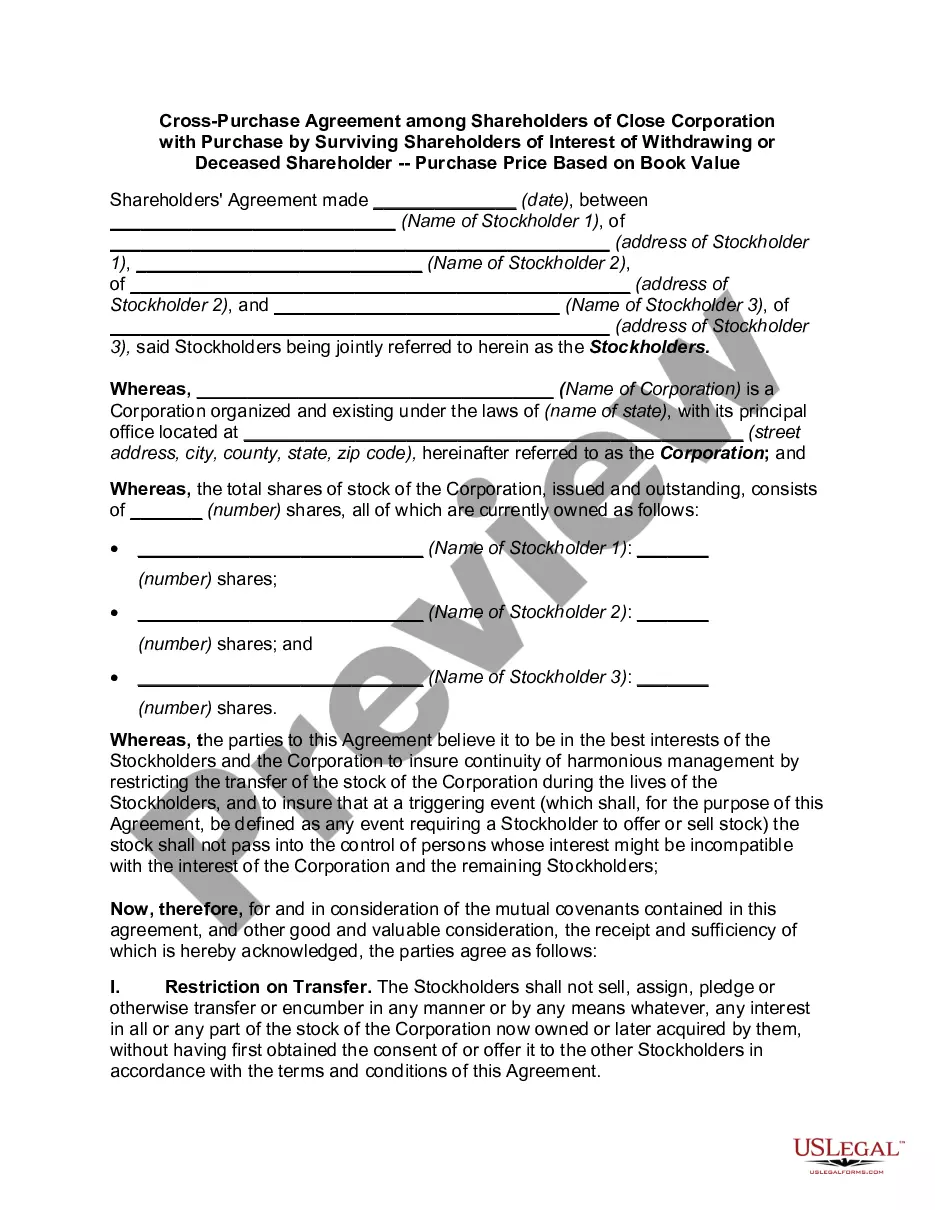
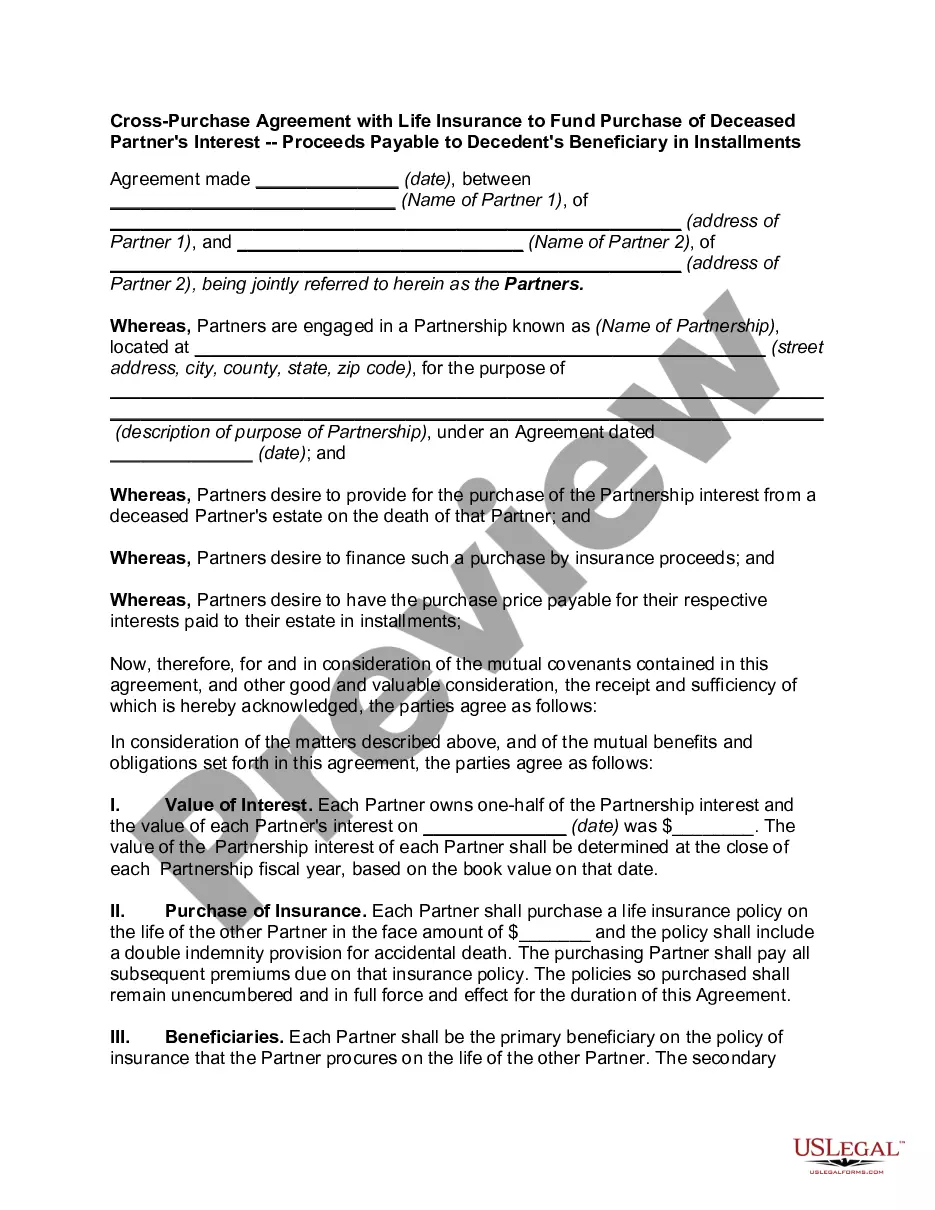
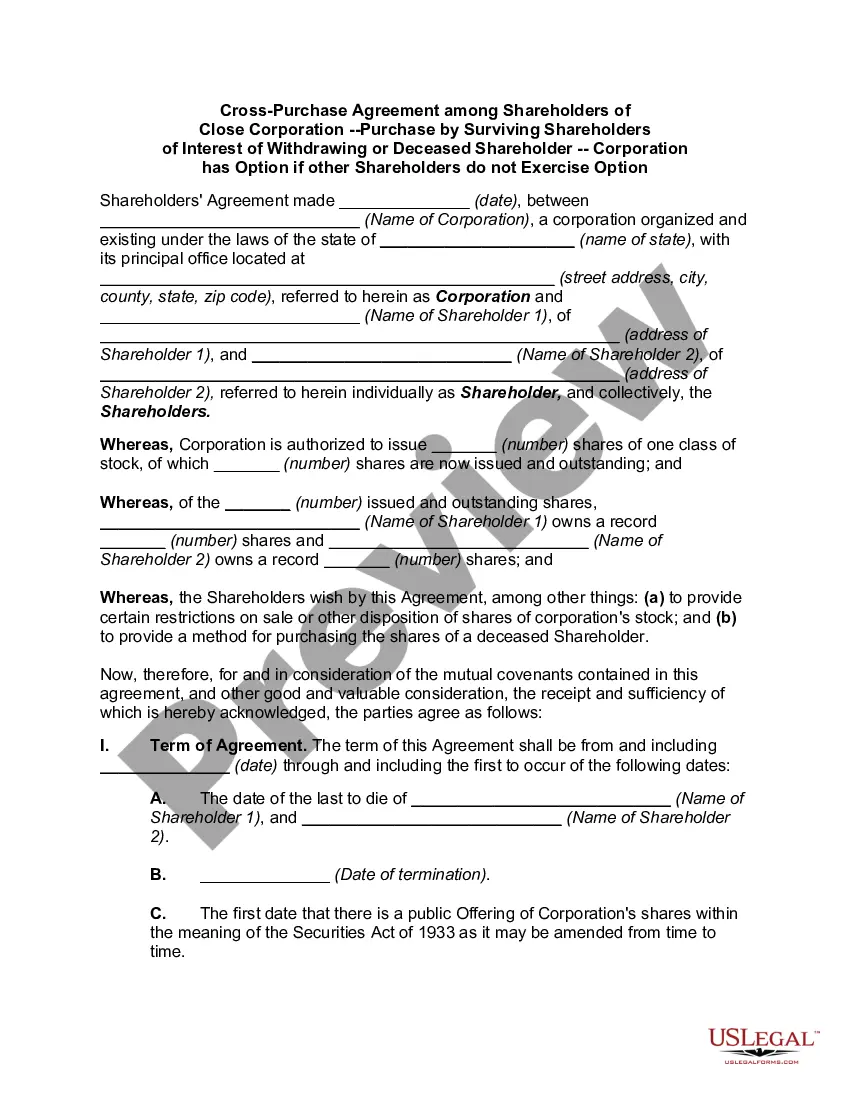
A Cross-Purchase Agreement among Stockholders of Close Corporation outlines the process for transferring ownership of a business interest if a stockholder withdraws, retires, or passes away. This agreement ensures that the remaining stockholders have the first right to purchase the departing stockholder's shares, which can be critical to maintain stability and control within the corporation. Unlike buy-sell agreements, this form allows individual stockholders to directly purchase interests in the corporation, which can simplify the transition of ownership and financial matters in times of change.
Form components explained
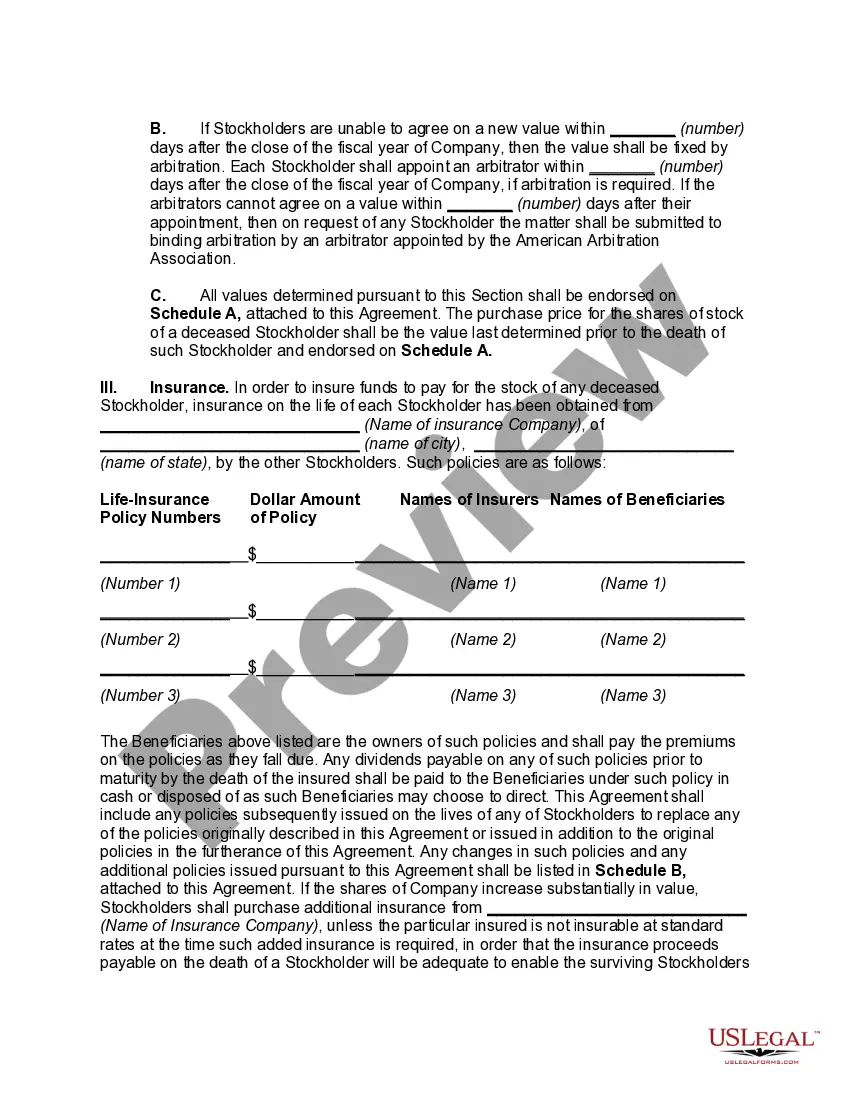
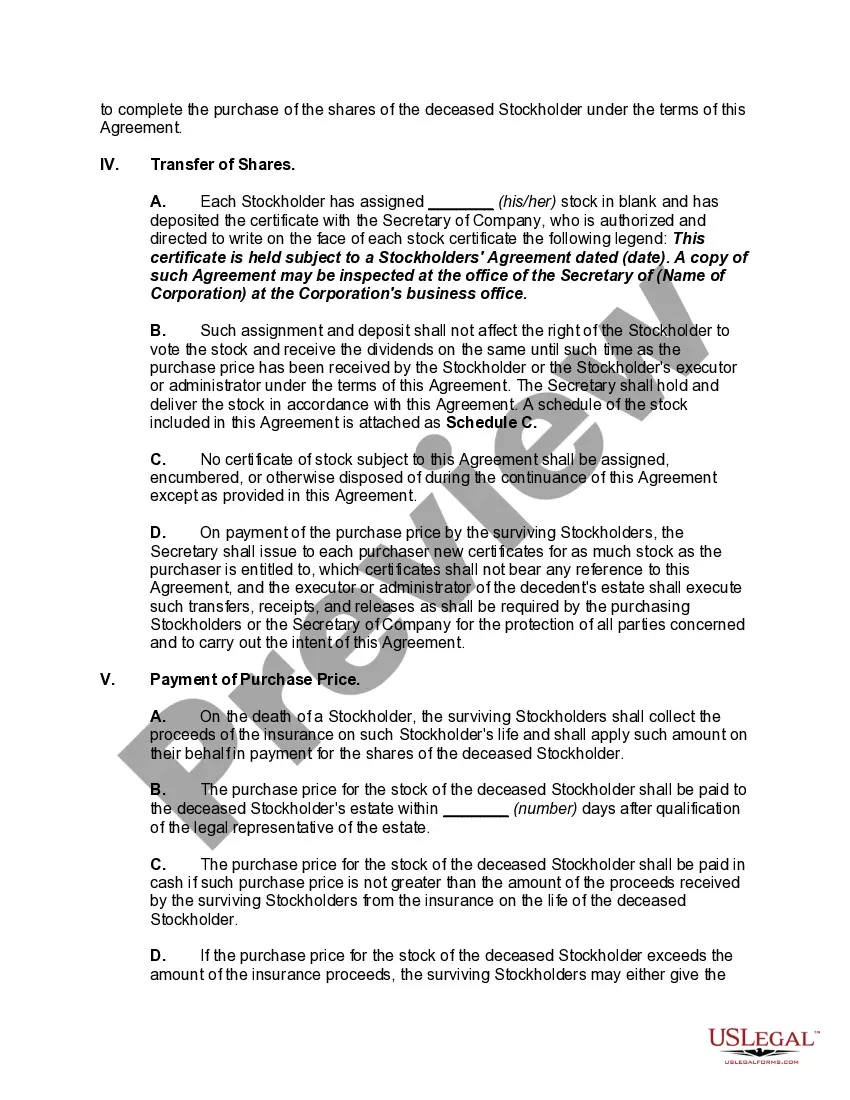
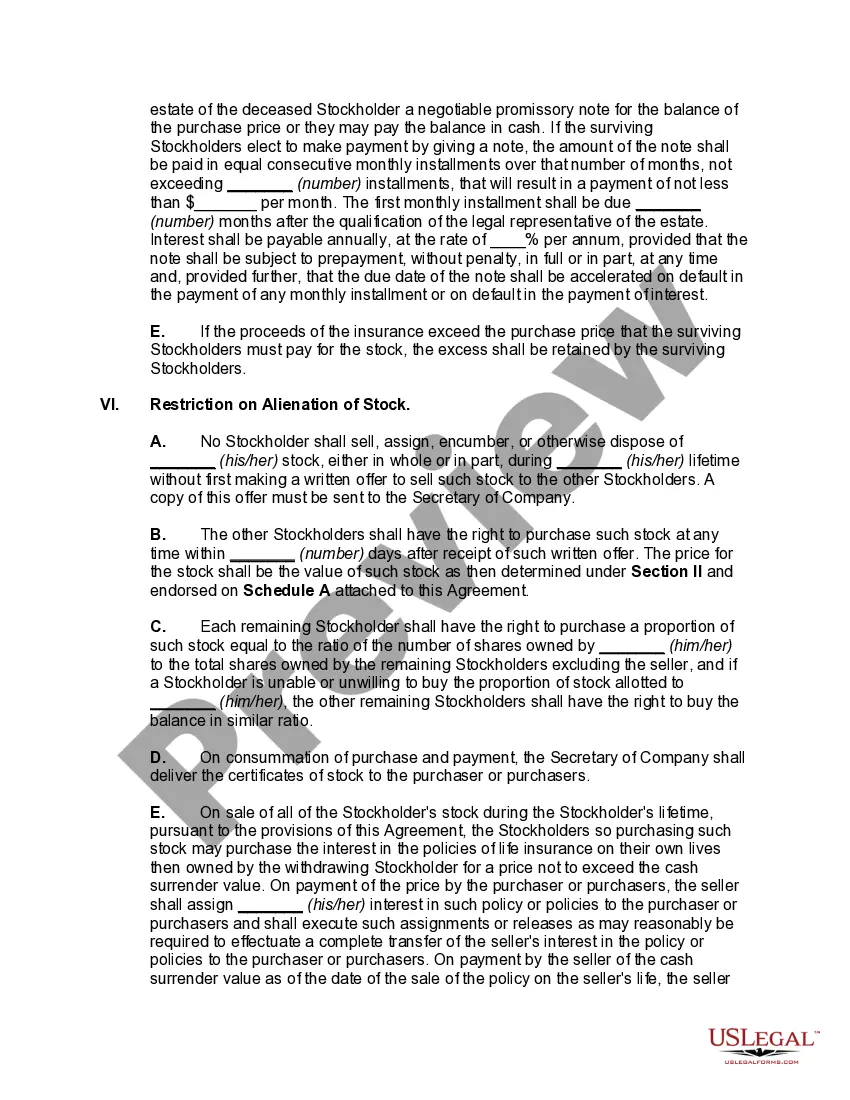
- Details on the sale of stock upon the death or withdrawal of a stockholder.
- Guidelines for determining the purchase price of the stock, including valuation methods.
- Insurance requirements to fund the stock purchase.
- Procedures for transferring shares and ensuring proper documentation.
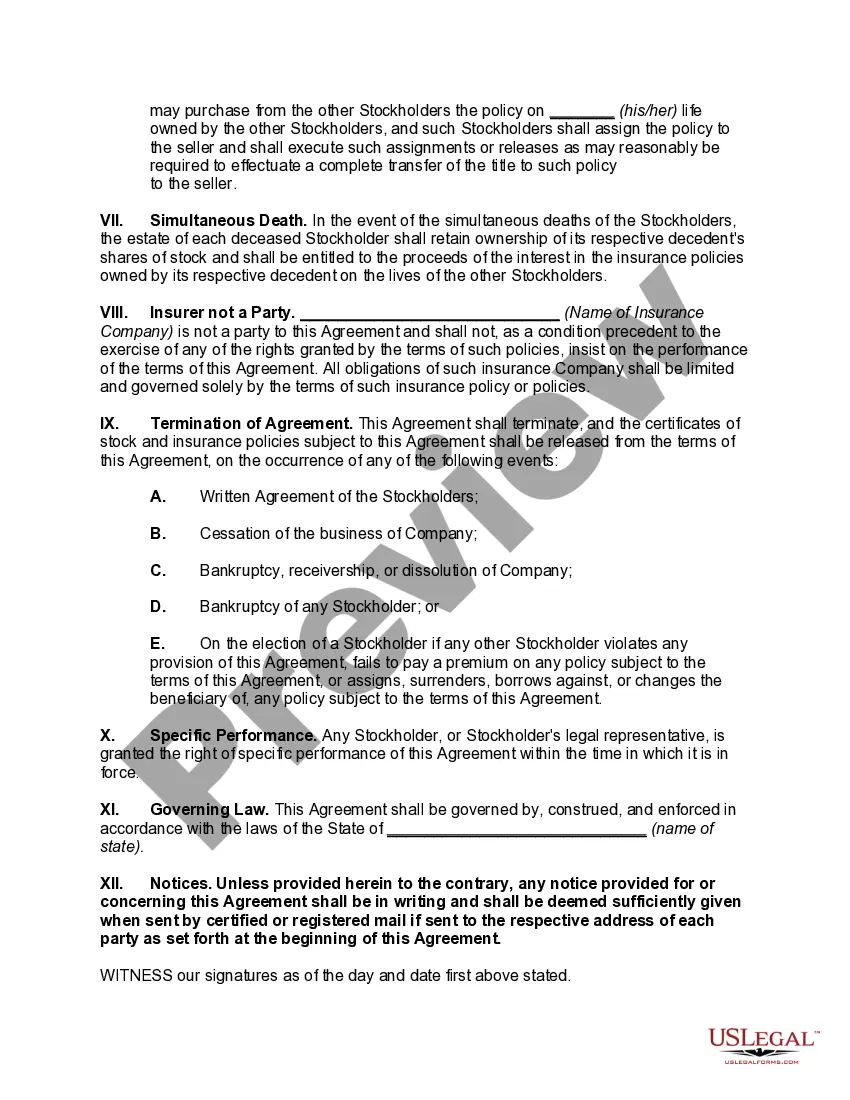
- Clauses addressing simultaneous death of stockholders and vaccination against disputes.
When this form is needed
This form is essential when stockholders in a close corporation want to formalize the terms under which the remaining stockholders can buy out a deceased or withdrawing member's shares. Use this agreement when establishing the financial responsibilities and rights of stockholders in scenarios involving death, retirement, or disability. It can also be beneficial to have in place when seeking to secure business continuity and prevent disputes regarding ownership transfer.
Who needs this form
- Stockholders of a close corporation looking to protect their investment and control.
- Business partners wanting to define a clear process for ownership transfer in the event of certain life changes.
- Corporations that wish to ensure a smooth transition of ownership and minimize litigation risks.
- Individuals seeking to establish financial arrangements related to the buyout of deceased or withdrawing stockholders' interests.
Steps to complete this form
- Identify the stockholders involved by entering their names and addresses at the beginning of the agreement.
- Specify the corporation's name and address in the introductory clause.
- Clearly define the terms for valuing stock in Section II and include schedules for ongoing evaluations.
- Document any life insurance policies taken out for funding the purchase of shares in the case of death.
- Ensure all stockholders sign the agreement and consider filing it alongside corporate records.
Does this form need to be notarized?
This form usually doesn’t need to be notarized. However, local laws or specific transactions may require it. Our online notarization service, powered by Notarize, lets you complete it remotely through a secure video session, available 24/7.
Get your form ready online
Our built-in tools help you complete, sign, share, and store your documents in one place.
Make edits, fill in missing information, and update formatting in US Legal Forms—just like you would in MS Word.
Download a copy, print it, send it by email, or mail it via USPS—whatever works best for your next step.
Sign and collect signatures with our SignNow integration. Send to multiple recipients, set reminders, and more. Go Premium to unlock E-Sign.
If this form requires notarization, complete it online through a secure video call—no need to meet a notary in person or wait for an appointment.
We protect your documents and personal data by following strict security and privacy standards.

Make edits, fill in missing information, and update formatting in US Legal Forms—just like you would in MS Word.

Download a copy, print it, send it by email, or mail it via USPS—whatever works best for your next step.

Sign and collect signatures with our SignNow integration. Send to multiple recipients, set reminders, and more. Go Premium to unlock E-Sign.

If this form requires notarization, complete it online through a secure video call—no need to meet a notary in person or wait for an appointment.

We protect your documents and personal data by following strict security and privacy standards.
Mistakes to watch out for
- Failing to update the valuation of stock on an annual basis as agreed in the contract.
- Not documenting insurance policies or their beneficiaries accurately.
- Omitting critical information about the corporation, such as its official name and address.
- Neglecting to obtain signatures from all stockholders involved in the agreement.
Benefits of using this form online
- Immediate access to a legally vetted template created by licensed attorneys.
- Convenience of downloading and completing the form at your own pace.
- Ability to make edits as your business situation changes, ensuring compliance and relevance.
- Secure storage of completed documents for ongoing reference.
Key takeaways
- A Cross-Purchase Agreement is vital for stockholders in a close corporation.
- The form outlines the process and price for transferring shares upon certain events.
- Proper documentation and annual valuations are essential to avoid disputes.
- Utilizing this form can provide peace of mind and financial security for stockholders.
Looking for another form?
Form popularity
FAQ
One common question we receive when discussing key person benefits is ?What is a buy/sell agreement?? A buy/sell agreement, also known as a buyout agreement, is a contract funded by a life insurance policy that can help minimize the turmoil caused by the sudden departure, disability or death of a business owner or
The four types of buy sell agreements are: Cross-purchase agreement. Entity purchase agreement. Wait-and-See. Business-continuation general partnership.
In a cross-purchase plan, each business owner purchases a life insurance policy on each of the other owners. Each business owner will pay the premium and will be the owner and beneficiary of the policy written on the partner's life.
There are two common forms of buy-sell agreements: In a cross-purchase agreement, the remaining owners or partners purchase the share of the business that is for sale. In an entity-purchase agreement (also known as a redemption agreement), the business entity itself buys the deceased's share of the business.
In a cross purchase buy-sell agreement, each business owner buys a life insurance policy on the other owner(s). With multiple owners, this can get very complex and complicated. Instead, try a trusteed cross purchase buy-sell, in which a third-party (acting as trustee) takes care of the buy-sell arrangement.
purchase agreement allows a company's partners or other stakeholders to coordinate continuance of a business. The agreement involves the purchase of life and/or disability insurance policy in case a stakeholder dies or becomes incapacitated.
The trust is the owner and beneficiary of the policies. When one of the owners passes away, the life insurance benefit goes to the trustee, who in turn pays the deceased owner's estate for their business interest.
With a redemption plan, the business enters into a contract with the owners to purchase each owner's interest at a specified time. In the cross- purchase arrangement, the owners establish an agreement among themselves to buy and sell the stock. The business entity is not a party to the arrangement.