Sample Letter for Order Appointing New Conservator
Overview of this form
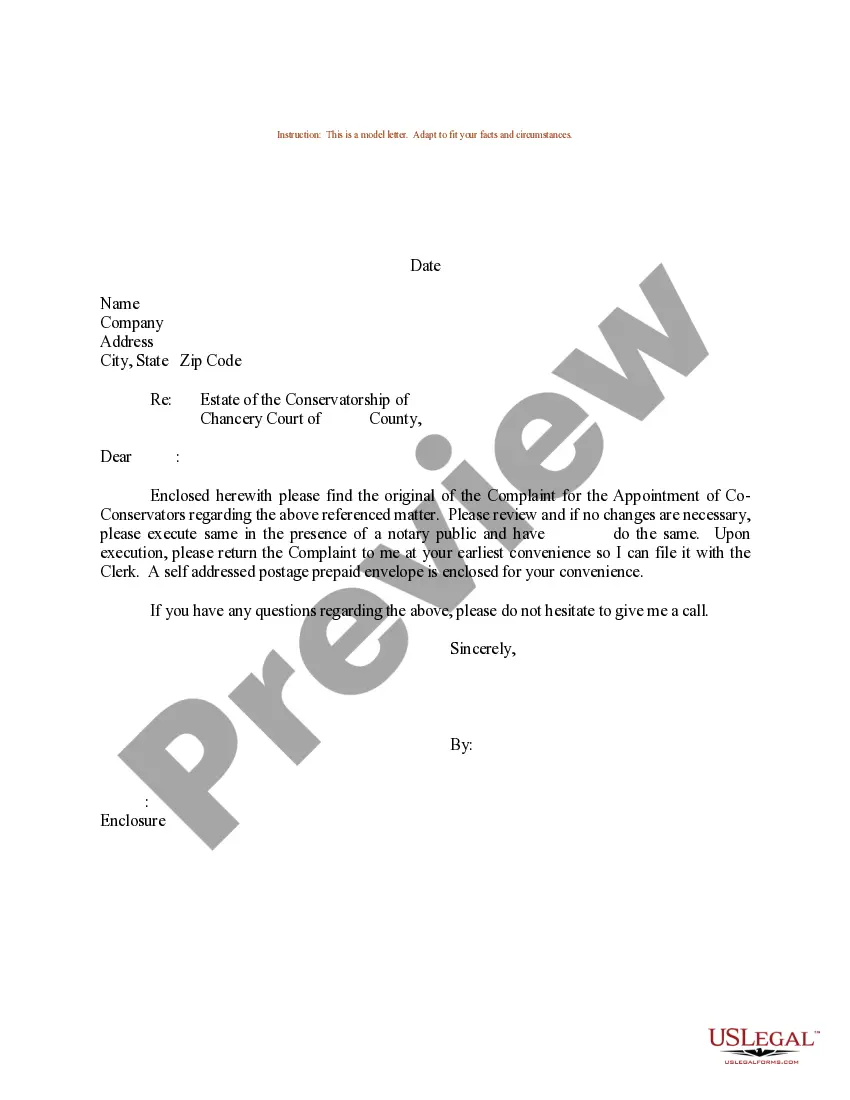
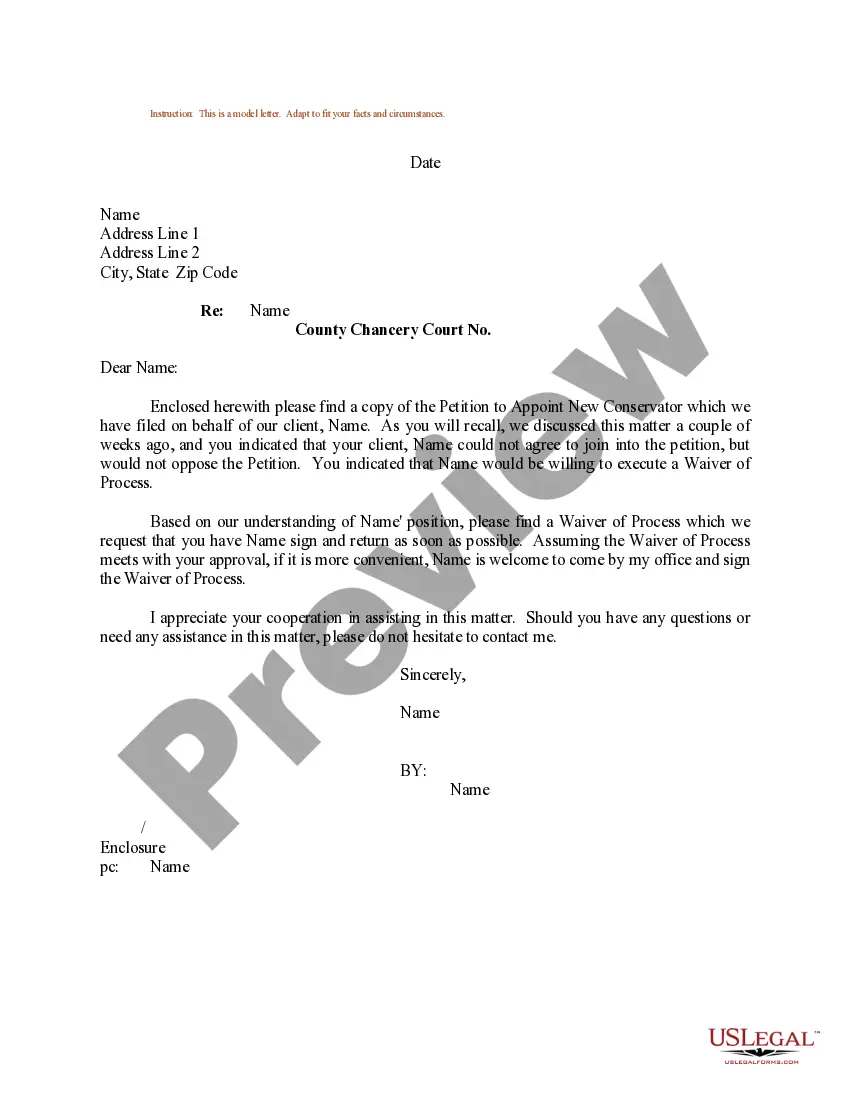
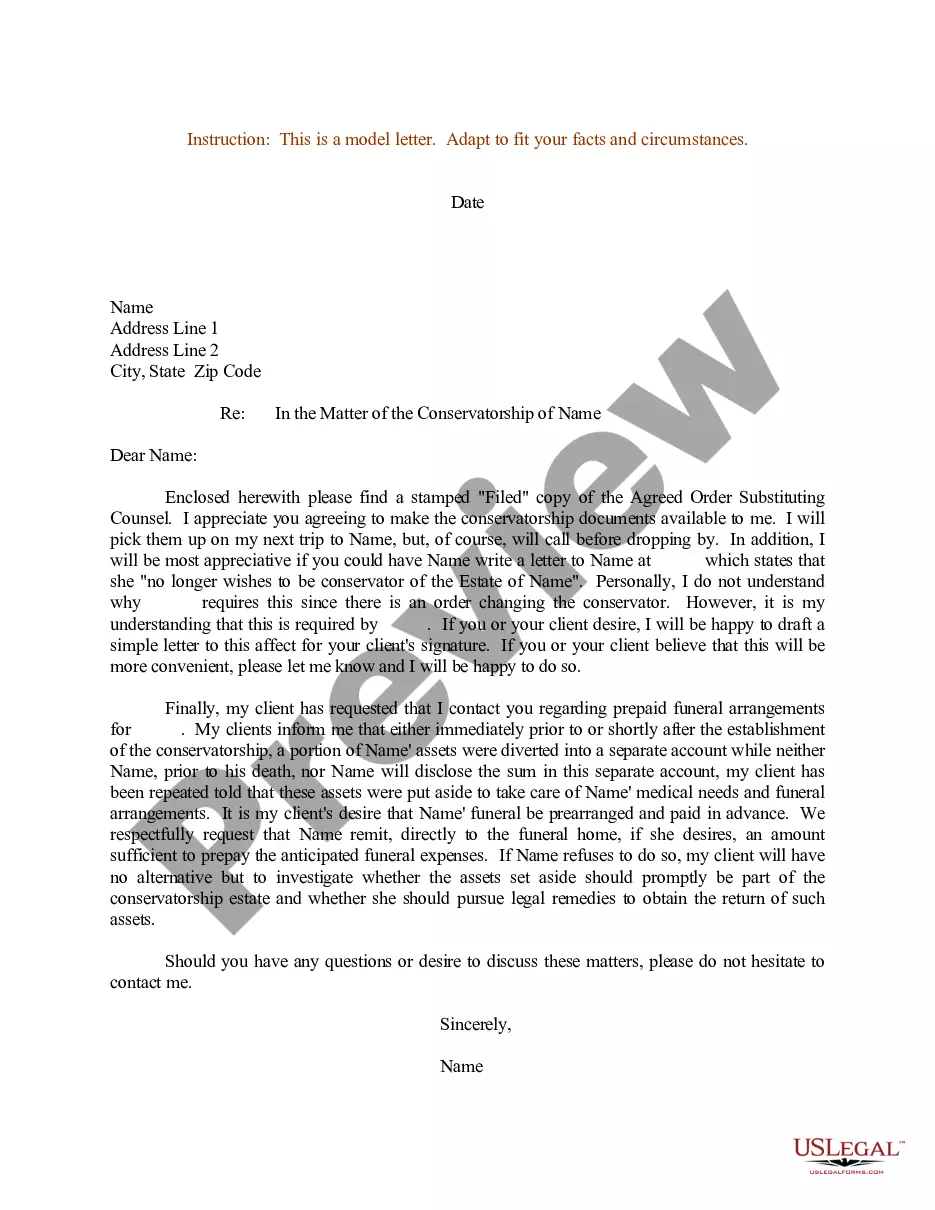
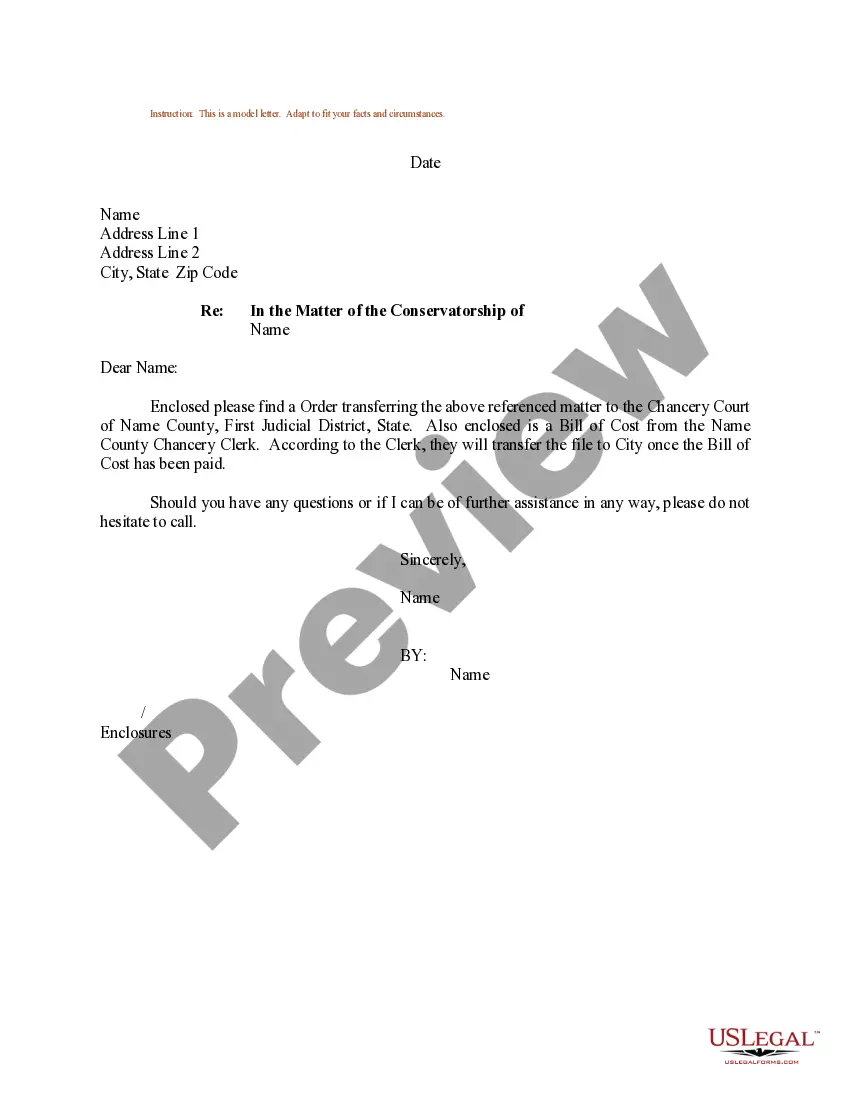
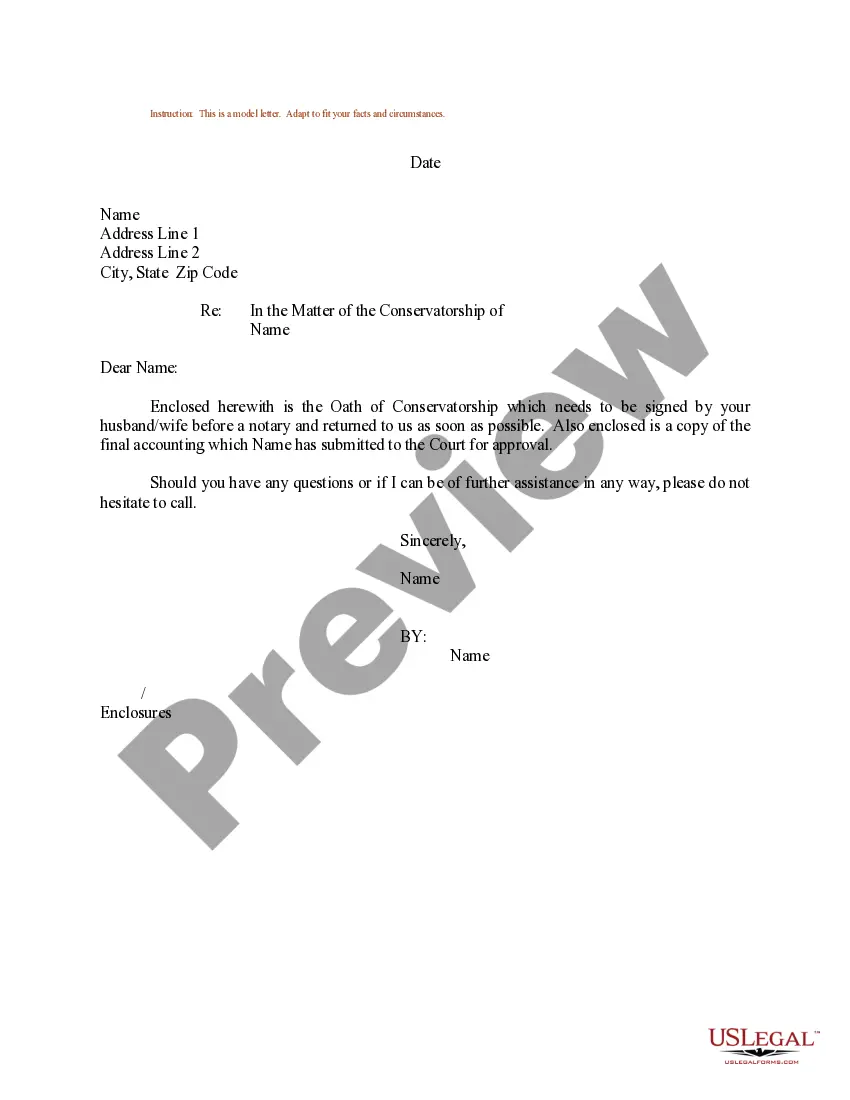
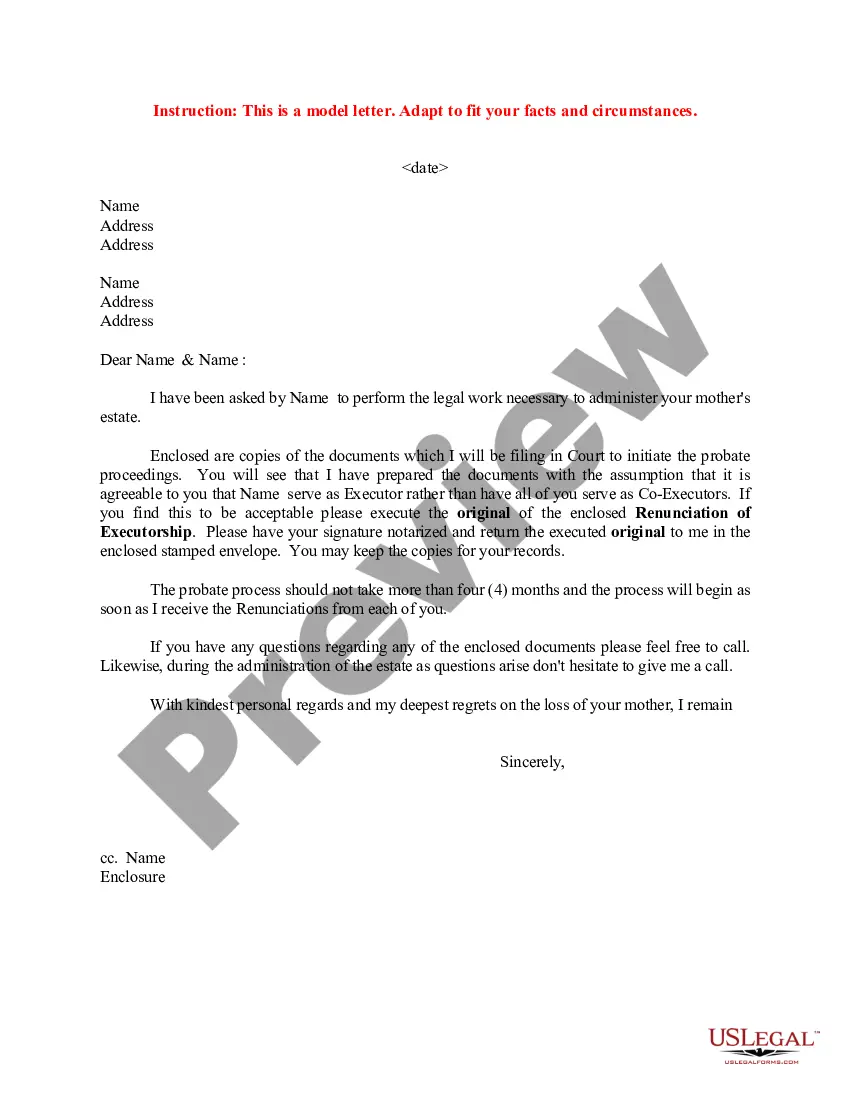
The Sample Letter for Order Appointing New Conservator is a template designed to facilitate communication regarding the appointment of a new conservator for an individual in need of guardianship. This sample letter helps ensure that important legal notifications are formally communicated, differentiating it from other legal documents that may not specifically address this matter.
Form components explained
- Date: The date when the letter is prepared.
- Recipient's information: Includes name and address of the person receiving the letter.
- Subject line: Specifies the matter concerning the conservatorship.
- Salutation: Personalized greeting to the recipient.
- Body: Contains the notification about the enclosed Order Appointing New Conservator.
- Closing: Formal closing statement and signature of the sender.
When to use this form
This form should be used when a court orders the appointment of a new conservator and formal notification needs to be sent to relevant parties. It is important to use this letter when ensuring that all concerned individuals are informed about the change in conservatorship, which helps maintain transparency and compliance with legal requirements.
Who this form is for
- Individuals acting as conservators needing to notify others about a change in guardianship.
- Attorneys representing clients in conservatorship cases.
- Family members or advocates for individuals under conservatorship.
Steps to complete this form
- Enter the date at the top of the document.
- Add the name and address of the recipient in the designated fields.
- Clearly state the subject matter in the subject line.
- Include a personal greeting in the salutation.
- In the body, mention the enclosed Order Appointing New Conservator.
- Conclude with a formal closing and your signature.
Notarization guidance
This form does not typically require notarization to be legally valid. However, some jurisdictions or document types may still require it. US Legal Forms provides secure online notarization powered by Notarize, available 24/7 for added convenience.
Get your form ready online
Our built-in tools help you complete, sign, share, and store your documents in one place.
Make edits, fill in missing information, and update formatting in US Legal Forms—just like you would in MS Word.
Download a copy, print it, send it by email, or mail it via USPS—whatever works best for your next step.
Sign and collect signatures with our SignNow integration. Send to multiple recipients, set reminders, and more. Go Premium to unlock E-Sign.
If this form requires notarization, complete it online through a secure video call—no need to meet a notary in person or wait for an appointment.
We protect your documents and personal data by following strict security and privacy standards.

Make edits, fill in missing information, and update formatting in US Legal Forms—just like you would in MS Word.

Download a copy, print it, send it by email, or mail it via USPS—whatever works best for your next step.

Sign and collect signatures with our SignNow integration. Send to multiple recipients, set reminders, and more. Go Premium to unlock E-Sign.

If this form requires notarization, complete it online through a secure video call—no need to meet a notary in person or wait for an appointment.

We protect your documents and personal data by following strict security and privacy standards.
Common mistakes to avoid
- Failing to include the correct date.
- Not double-checking the recipient's address for accuracy.
- Omitting the enclosed document reference in the letter.
- Using informal language in a legal notification.
Advantages of online completion
- Convenient access to a professionally drafted letter template.
- Easy to edit and customize to fit specific needs.
- Reliable format that meets legal requirements.
Looking for another form?

Form popularity
FAQ
A conservatorship is necessary for those individuals who have neither a power of attorney or healthcare directive, and have lost the ability to make informed decisions and/or care for themselves. A conservatorship may also be necessary for other reasons, such as an invalid or fraudulent power of attorney document.
Fix the residence or specific dwelling of the young adult child. Have access to the confidential records and papers of the young adult child. Control the right of the young adult child's right to enter into contracts. Give or withhold medical consent regarding the young adult child.
The court removes the conservator The conservatee or any of his or her relatives or friends may ask the court to remove and replace the conservator. If the conservatee makes the request and does not have his or her own lawyer, the judge will generally appoint one to file the petition for the conservatee.
You have a couple of options. You can ask the court to terminate the conservatorship, or you can ask the court to give you a new conservator. To terminate the conservatorship, you have to prove that you no longer need it.
The out-of-pocket costs to begin a conservatorship are the filing fee, which ranges from $278 to $1,176 (in 2019) depending on the amount of assets, plus the expenses for having the respondent personally served, getting certified copies from the court, etc., which are usually around $200.
Although lawyers often advise against sharing conservatorship amongst a number of people, co-conservatorship is possible.In the case of an elderly parent for example, more than one child may want to gain conservatorship.
A conservatorship is a court case where a judge appoints a responsible person or organization (called the conservator) to care for another adult (called the conservatee) who cannot care for himself or herself or manage his or her own finances.
Whoever is writing the letter should explain in his or her own words why they believe the parent is the right guardian for the child. The opening paragraph should describe the author's relationship with the parent they are supporting, as well as the parent's relationship with the child.
A conservatorship may be established after a relative, friend, or public official petitions the court for appointment of a conservator. The petition must contain information on why the individual cannot manage his or her financial affairs or make appropriate decisions concerning his or her personal care.