Letter of Recommendation Template for Graduate School
About this form
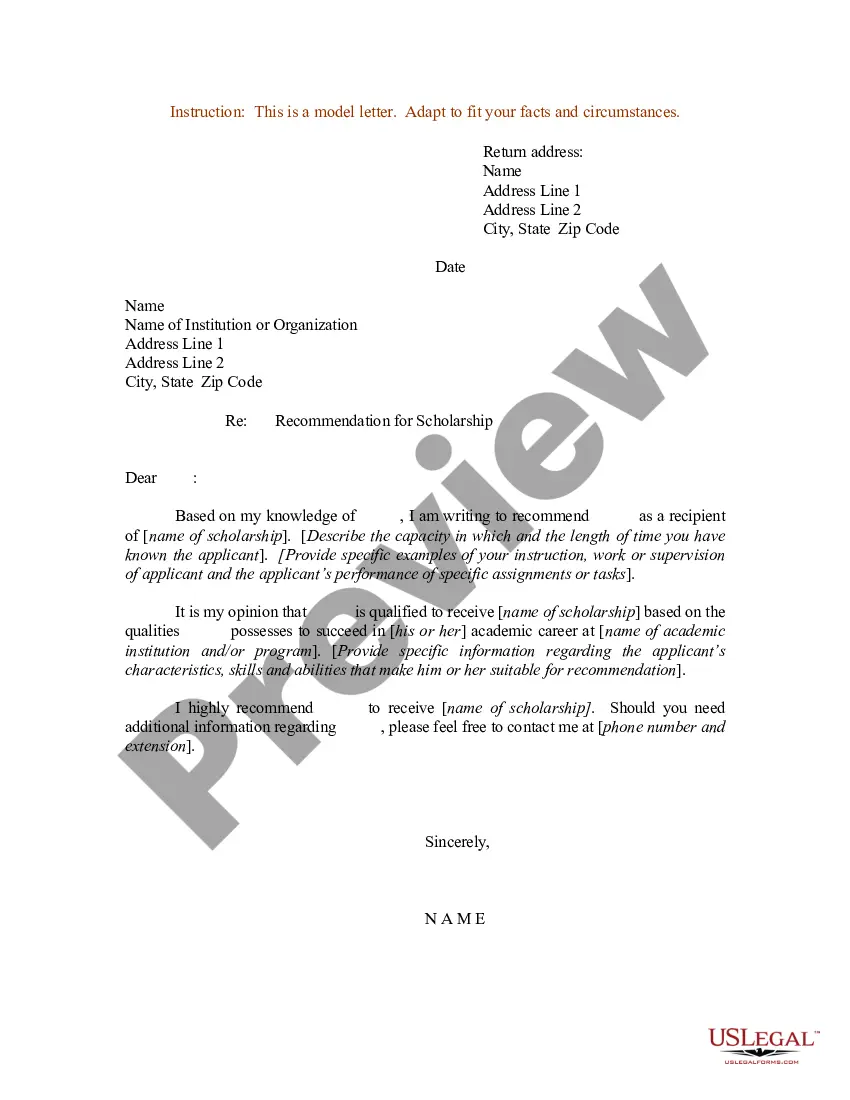
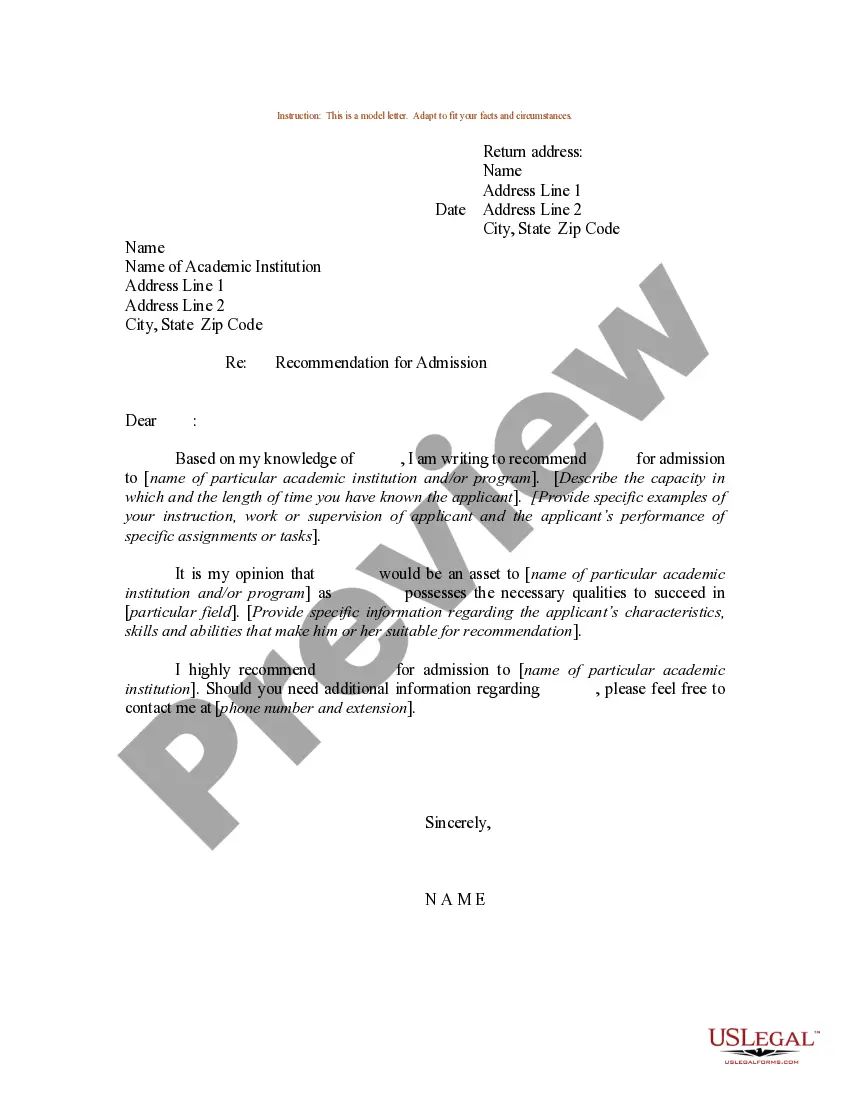
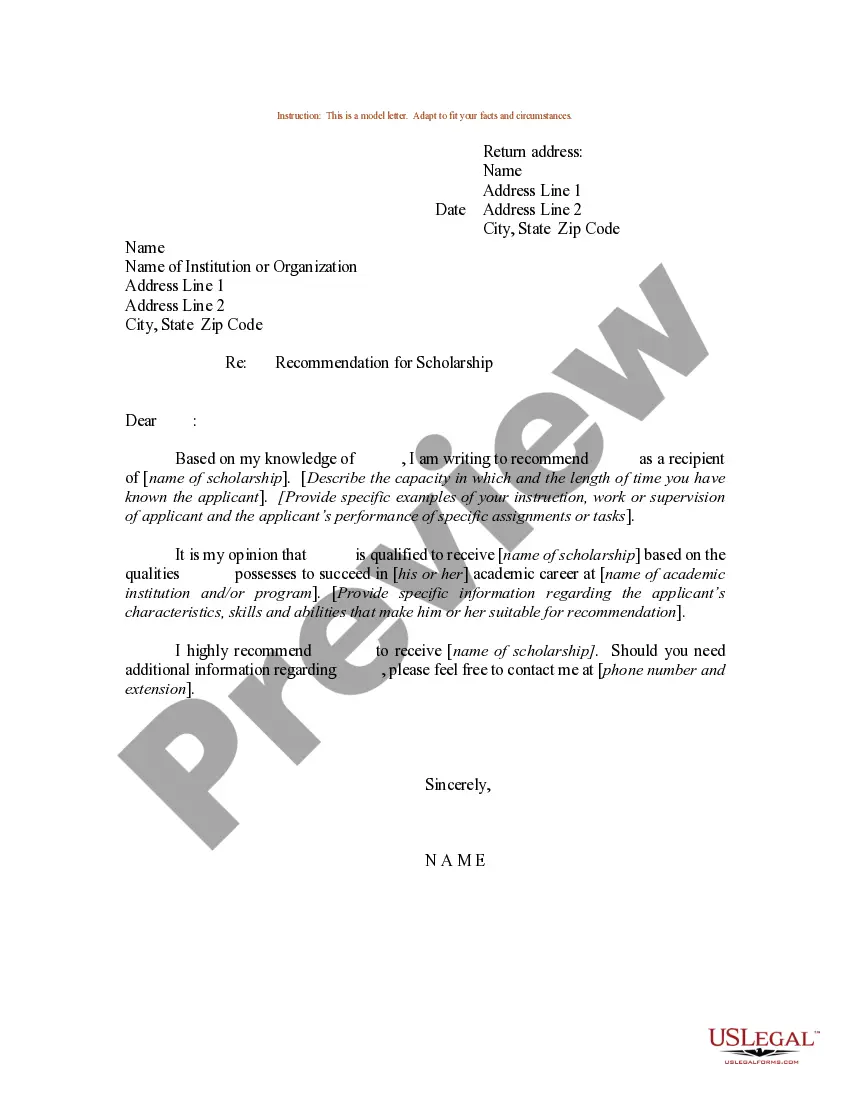
The Letter of Recommendation Template for Graduate School is a customizable document designed to recommend a candidate for admission to a graduate program or for receiving a scholarship. It serves to highlight the candidate's strengths and academic achievements, differentiating itself from general letters of recommendation by its specific focus on graduate education and scholarships.
Main sections of this form
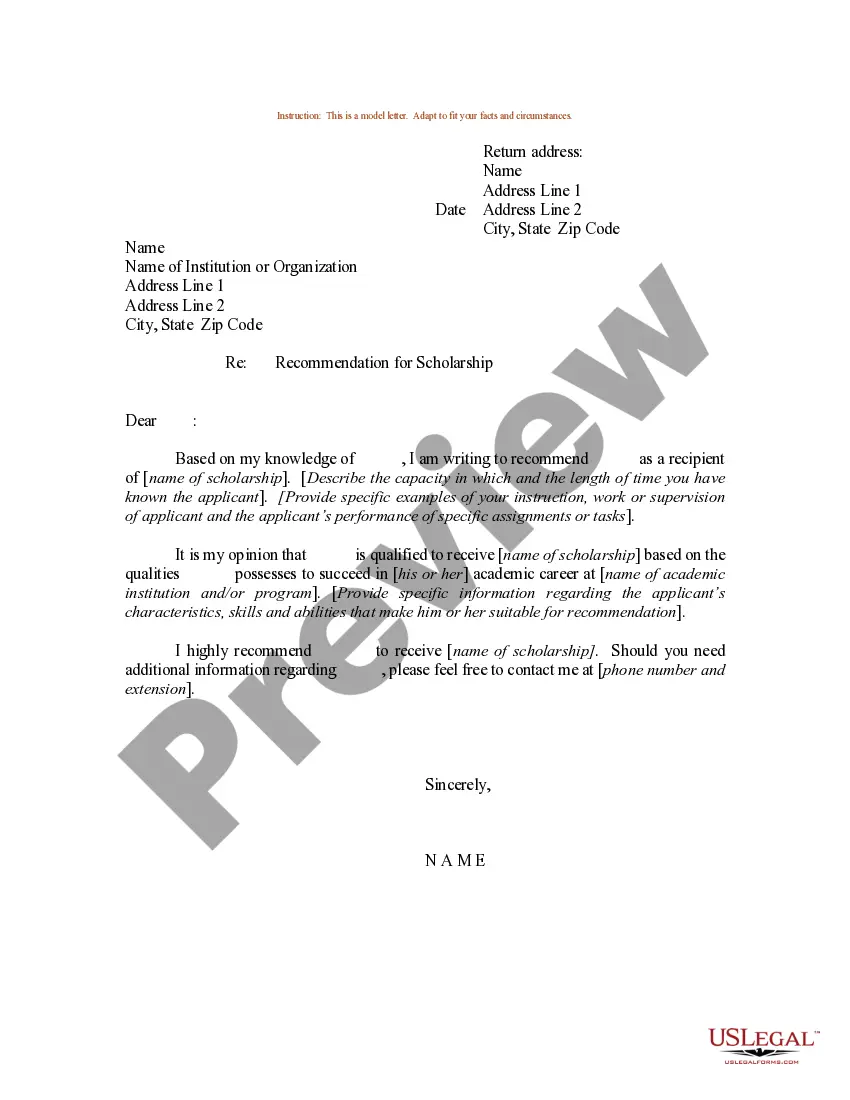
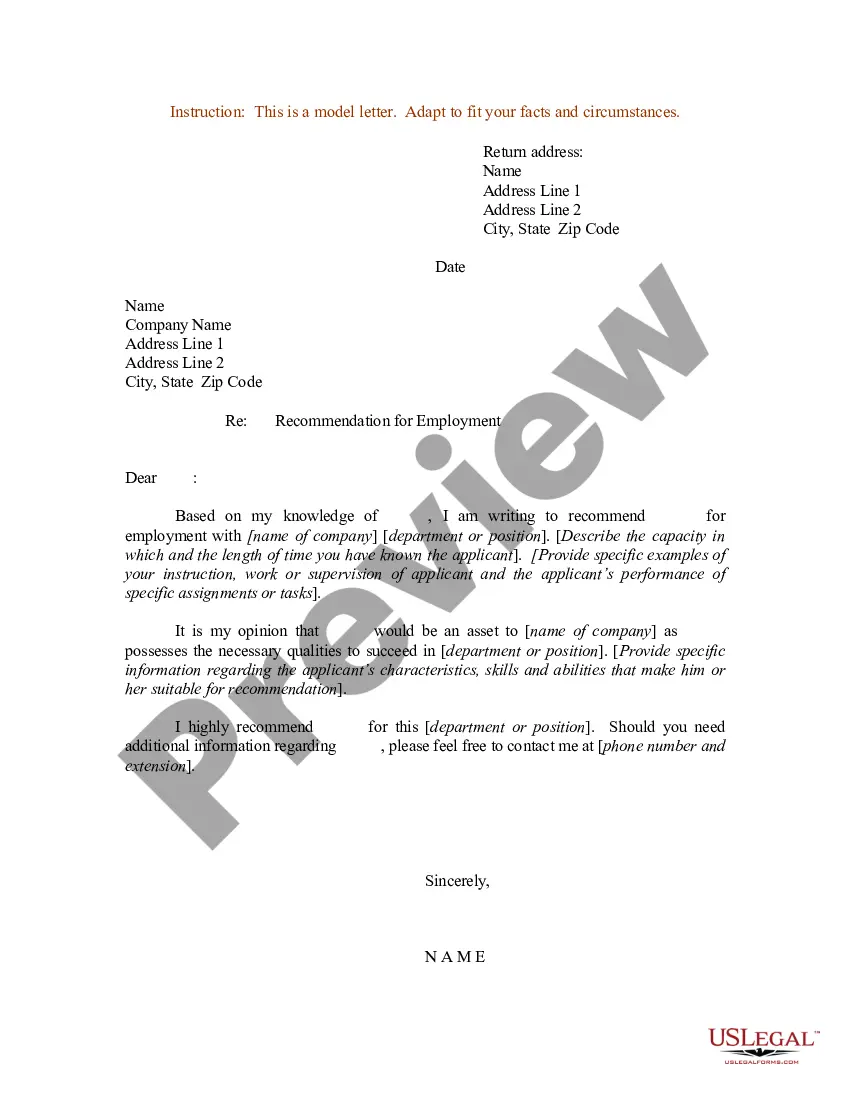
- Return address: Includes the address of the person writing the recommendation.
- Date: Indicates when the letter is written.
- Recipient's details: Contains the name and address of the institution or organization.
- Subject line: Clearly states the purpose of the letter as a recommendation for scholarship.
Situations where this form applies
This form is needed when a candidate applies for graduate school or seeks an academic scholarship. It is appropriate to use when a professor, employer, or mentor is requested to provide a formal endorsement, showcasing the candidate's qualifications, capabilities, and academic performance.
Who needs this form
This form is suitable for:
- Professors recommending students for graduate school.
- Employers providing reference letters for employees pursuing further education.
- Mentors supporting candidates for academic scholarships.
Steps to complete this form
- Identify the return address with your contact information.
- Insert the date the letter is written.
- Fill in the recipient's information accurately.
- State the purpose of the letter in the subject line.
- Personalize the letter by discussing the candidate's strengths and accomplishments.
Does this document require notarization?
This form does not typically require notarization unless specified by local law. However, it is essential to check for any specific requirements dictated by the institution receiving the letter.
Get your form ready online
Our built-in tools help you complete, sign, share, and store your documents in one place.
Make edits, fill in missing information, and update formatting in US Legal Forms—just like you would in MS Word.
Download a copy, print it, send it by email, or mail it via USPS—whatever works best for your next step.
Sign and collect signatures with our SignNow integration. Send to multiple recipients, set reminders, and more. Go Premium to unlock E-Sign.
If this form requires notarization, complete it online through a secure video call—no need to meet a notary in person or wait for an appointment.
We protect your documents and personal data by following strict security and privacy standards.

Make edits, fill in missing information, and update formatting in US Legal Forms—just like you would in MS Word.

Download a copy, print it, send it by email, or mail it via USPS—whatever works best for your next step.

Sign and collect signatures with our SignNow integration. Send to multiple recipients, set reminders, and more. Go Premium to unlock E-Sign.

If this form requires notarization, complete it online through a secure video call—no need to meet a notary in person or wait for an appointment.

We protect your documents and personal data by following strict security and privacy standards.
Avoid these common issues
- Failing to personalize the letter for the specific candidate.
- Not providing specific examples of the candidate's achievements.
- Omitting contact information for follow-up inquiries.
Why use this form online
- Convenient download options for immediate access.
- Editable templates that allow customization to fit individual needs.
- Templates drafted by licensed attorneys ensuring legal reliability.
Key takeaways
- The Letter of Recommendation Template is tailored for graduate school and scholarship applications.
- Key components include the sender's address, date, recipient's information, and a personalized message.
- Using the template ensures a structured and professional recommendation letter.
Looking for another form?
Form popularity
FAQ
Think carefully before saying yes. Follow a business letter format. Focus on the job description. Explain how you know the person, and for how long. Focus on one or two traits. Remain positive. Share your contact information. Follow the submission guidelines.
Classes the student has taken with the recommender. Experiences you have shared. Transcripts. Resume/CV. Research experience and internships. Awards and achievements. Academic/career goals. Relevant professional experience.
Customize your letter to the job at hand. Use 2-3 specific examples. Speak to the candidate before you write. Explain why your opinion matters. Start with enthusiasm. Format your letter correctly.
Enlist the Applicant's Help. Even if you know the applicant very well, you'll need some pertinent information to help you write the best letter possible. Pinpoint Her Best Traits. Watch Your Language. Write About the Applicant as a Whole.
It is important that a recommendation letter be written by someone who knows you well academically. Faculty members most commonly write letters of recommendation; however, other professionals who know you well and have supervised your work in academia or research may also be appropriate choices.
Your letter should highlight your most important personal and academic strengths, as well as support them with examples. Rather than repeating your resume, it should focus on just a few key aspects of who you are as a student and person.
Review the important information. Introduce yourself and explain your professional relationship. Include specific examples of your coworker's accomplishments. Explain what your coworker will add to the new company or university. Include contact information.
A recommendation letter should include information on who you are, your connection with the person you are recommending, why they are qualified, and the specific skills they have. Specifics. Whenever possible, it's helpful to provide specific anecdotes and examples that illustrate your support.
Think carefully before saying yes. Follow a business letter format. Focus on the job description. Explain how you know the person, and for how long. Focus on one or two traits. Remain positive. Share your contact information. Follow the submission guidelines.