Acknowledgment by a Nonprofit Church Corporation of Receipt of Gift
Overview of this form
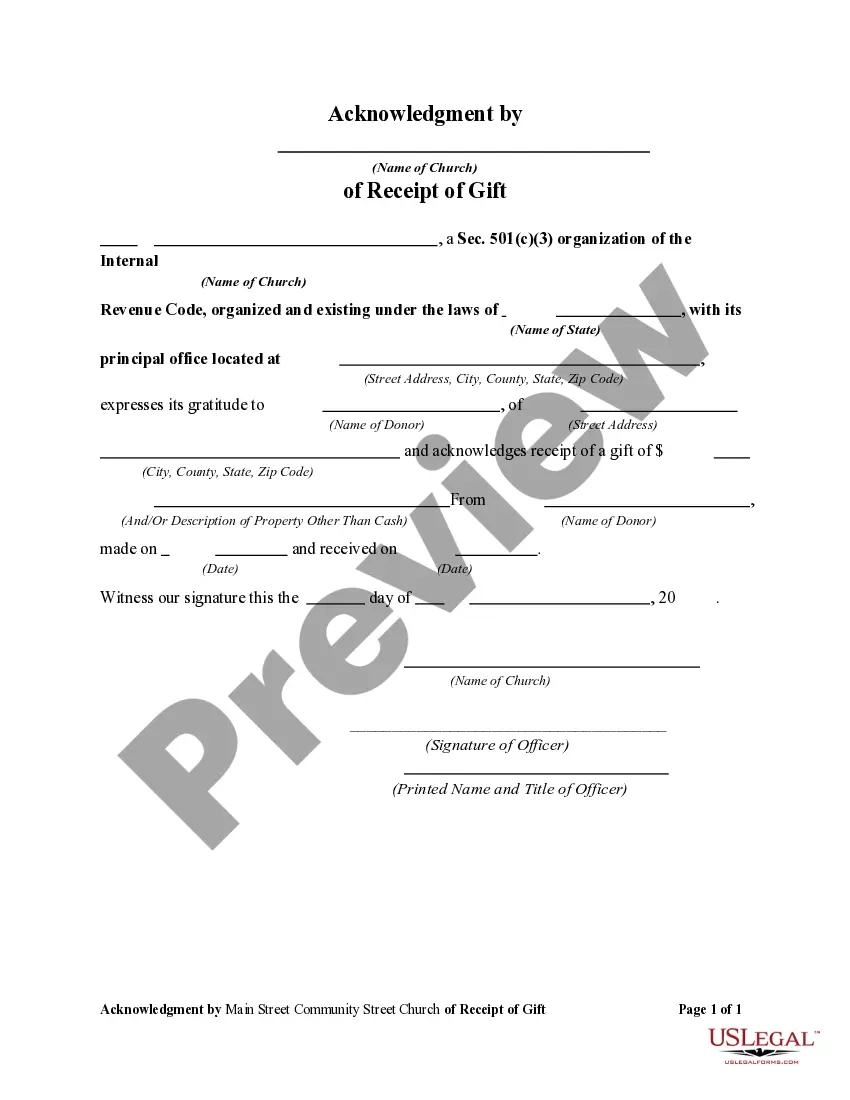
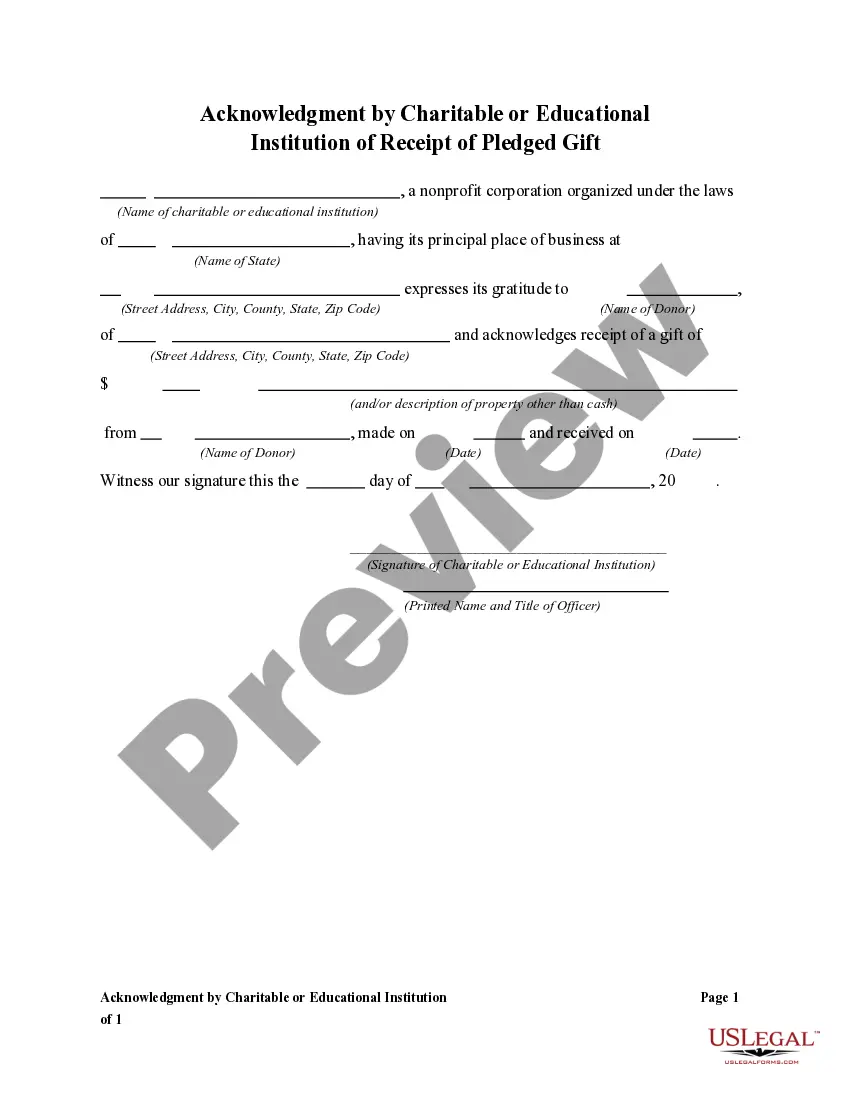
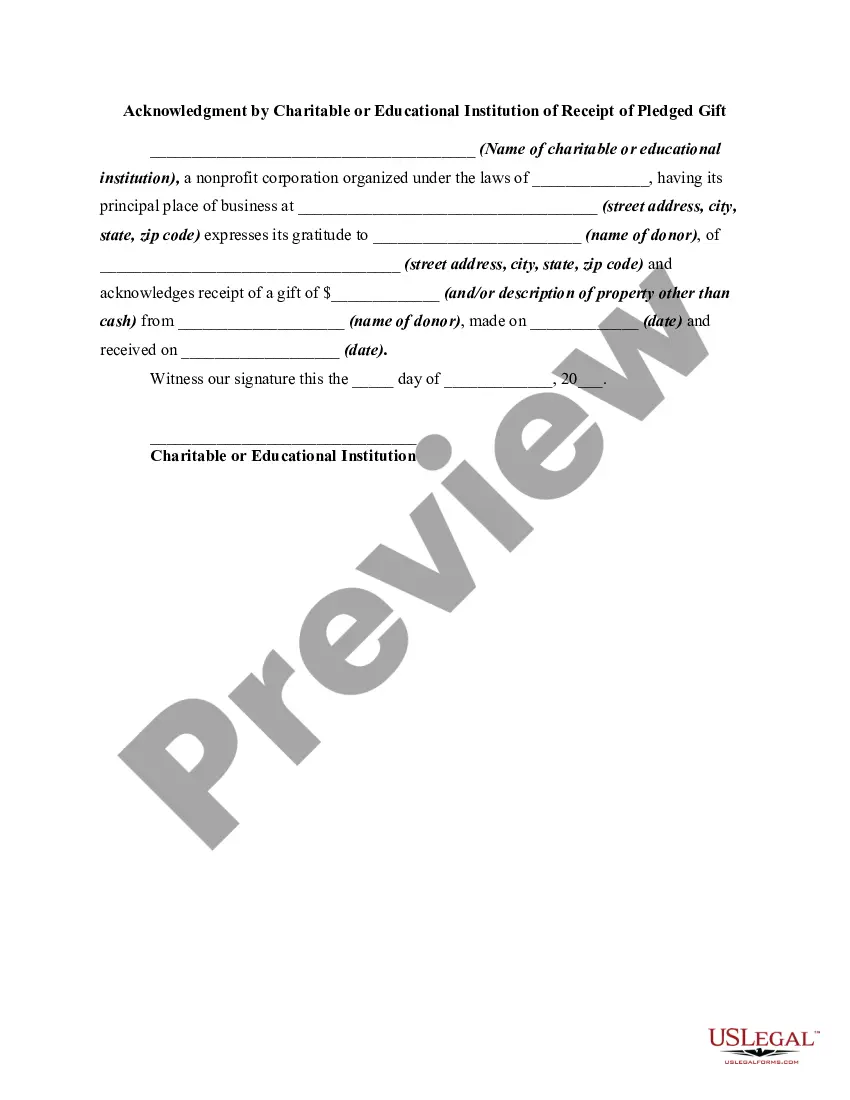
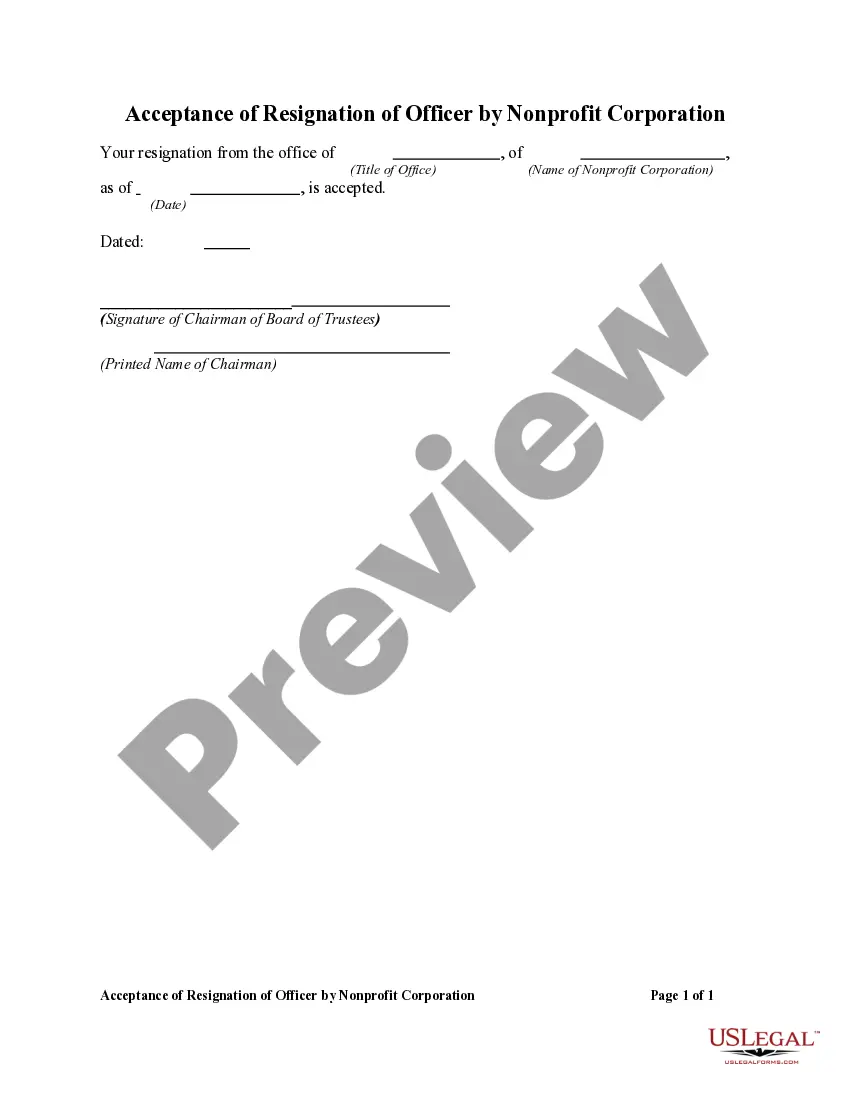
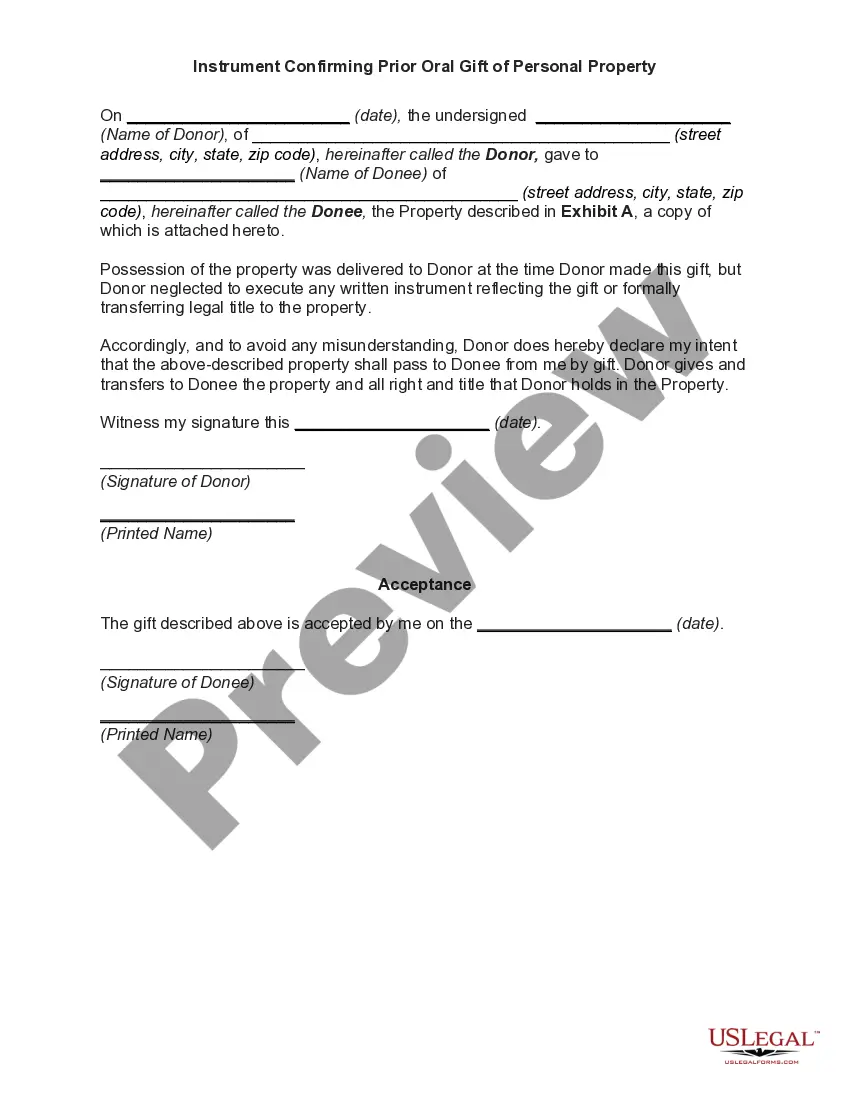
The Acknowledgment by a Nonprofit Church Corporation of Receipt of Gift is a formal document that serves as written confirmation acknowledging the receipt of a gift, such as cash or property, by a nonprofit church corporation. This form is essential for record-keeping and demonstrates transparency in transactions. It is particularly important for churches to maintain compliance with financial regulations and promote accountability within their community. Unlike general receipts, this form is specially designed for nonprofit organizations, ensuring it meets specific legal requirements relevant to such entities.
Key components of this form
- Identification of the nonprofit church corporation receiving the gift.
- Details of the donor, including name and contact information.
- Description of the gift being received (cash, property, etc.).
- Date of receipt of the gift.
- Signature line for an authorized representative of the church corporation.
When to use this document
This form should be used whenever a nonprofit church corporation receives a gift. It is particularly useful during fundraising events, donations from members or the community, or when receiving property. By completing this acknowledgment form, the church can provide donors with a formal receipt, which may be necessary for tax purposes or personal record-keeping.
Who can use this document
- Nonprofit church corporations receiving gifts or donations.
- Donors looking for formal acknowledgment of their contributions.
- Church administration team members responsible for financial management.
Completing this form step by step
- Enter the name of the nonprofit church corporation at the top of the form.
- Provide the donor's information, including their name and contact details.
- Describe the gift being received, specifying whether it is cash, property, or other items.
- Include the date the gift was received by the church.
- Have an authorized representative sign the form to validate the acknowledgment.
Does this form need to be notarized?
Notarization is generally not required for this form. However, certain states or situations might demand it. You can complete notarization online through US Legal Forms, powered by Notarize, using a verified video call available anytime.
Get your form ready online
Our built-in tools help you complete, sign, share, and store your documents in one place.
Make edits, fill in missing information, and update formatting in US Legal Forms—just like you would in MS Word.
Download a copy, print it, send it by email, or mail it via USPS—whatever works best for your next step.
Sign and collect signatures with our SignNow integration. Send to multiple recipients, set reminders, and more. Go Premium to unlock E-Sign.
If this form requires notarization, complete it online through a secure video call—no need to meet a notary in person or wait for an appointment.
We protect your documents and personal data by following strict security and privacy standards.

Make edits, fill in missing information, and update formatting in US Legal Forms—just like you would in MS Word.

Download a copy, print it, send it by email, or mail it via USPS—whatever works best for your next step.

Sign and collect signatures with our SignNow integration. Send to multiple recipients, set reminders, and more. Go Premium to unlock E-Sign.

If this form requires notarization, complete it online through a secure video call—no need to meet a notary in person or wait for an appointment.

We protect your documents and personal data by following strict security and privacy standards.
Mistakes to watch out for
- Failing to include all necessary donor information.
- Not providing a clear description of the gift.
- Omitting the date of the transaction.
- Not obtaining the required signatures from authorized representatives.
Why use this form online
- Convenient access to the form allows for immediate use.
- Editable fields make it easy to customize for specific gifts and donors.
- Reliability as all templates are drafted by licensed attorneys, ensuring legal compliance.
Legal use & context
- The acknowledgment serves as proof of the donation for tax deductions.
- It can help prevent disputes between donors and nonprofit organizations regarding the gifts.
- Ensure compliance with IRS requirements for charitable contributions.
What to keep in mind
- This form serves as an official acknowledgment of gifts received by nonprofit church corporations.
- Please ensure all information is accurate and complete to avoid common errors.
- Utilizing this form supports transparency and accountability in financial donations.
Looking for another form?
Form popularity
FAQ
Letter or Email Acknowledgement. Direct mail and email are the most common ways to thank your donors because you can send multiple letters at once. Public Thank You. Social Media Shout Out. Donor Gift. Website Appreciation Page.
Each donor receipt should include the charity's name and name of the donor. Many donor receipts also include the charity's address and EIN, although not required. The donor, however, is required to have records of the charity's address.
1Name of the organization to which the donation has been made;2A statement that the nonprofit is a public charity recognized as tax-exempt by the IRS under Section 501(c)(3);3Name of the donor;4The date the donation was received;5Amount of cash contribution;Complete Guide To Donation Receipts For Nonprofits - Donorbox\ndonorbox.org > nonprofit-blog > donation-receipts
Cash Donations If you donate by check, cash or some other monetary gift, you must provide written communication such as a bank record, payroll deduction records or written acknowledgement from the tax-exempt organization with your tax return. This written proof must include: The name of the organization.
Some experts recommend that your acknowledgment read something like, Thank you for recommending the generous grant of $500.00, that we received on <date>, through your donor advised fund at Fidelity Charitable.
Name and address of the organization to which the donation has been made. Name and address of the donor. Amount of the gift. Value and description of any non-cash contribution. Unique serial number of the receipt.
Donation receipts, or donation tax receipts, are a form of donor communication that provide official documentation of a gift made by a donor.Nonprofits also use donation receipts to provide donors with important information needed for tax purposes.
Registered Canadian amateur athletic associations. Registered journalism organizations. Registered municipalities. Registered municipal or public bodies performing a function of government in Canada. Registered universities outside Canada.
1Tax-exempt status statement: Statement that the organization is a 501c3 tax-exempt organization.2Name of the organization (the charity) and name of the donor.3Date of the contribution: The date the donation was received.4Contribution Details.Donor Acknowledgment Letters - What to include?\ncullinanelaw.com > donor-acknowledgment-letters