Termination of Employment
About this form
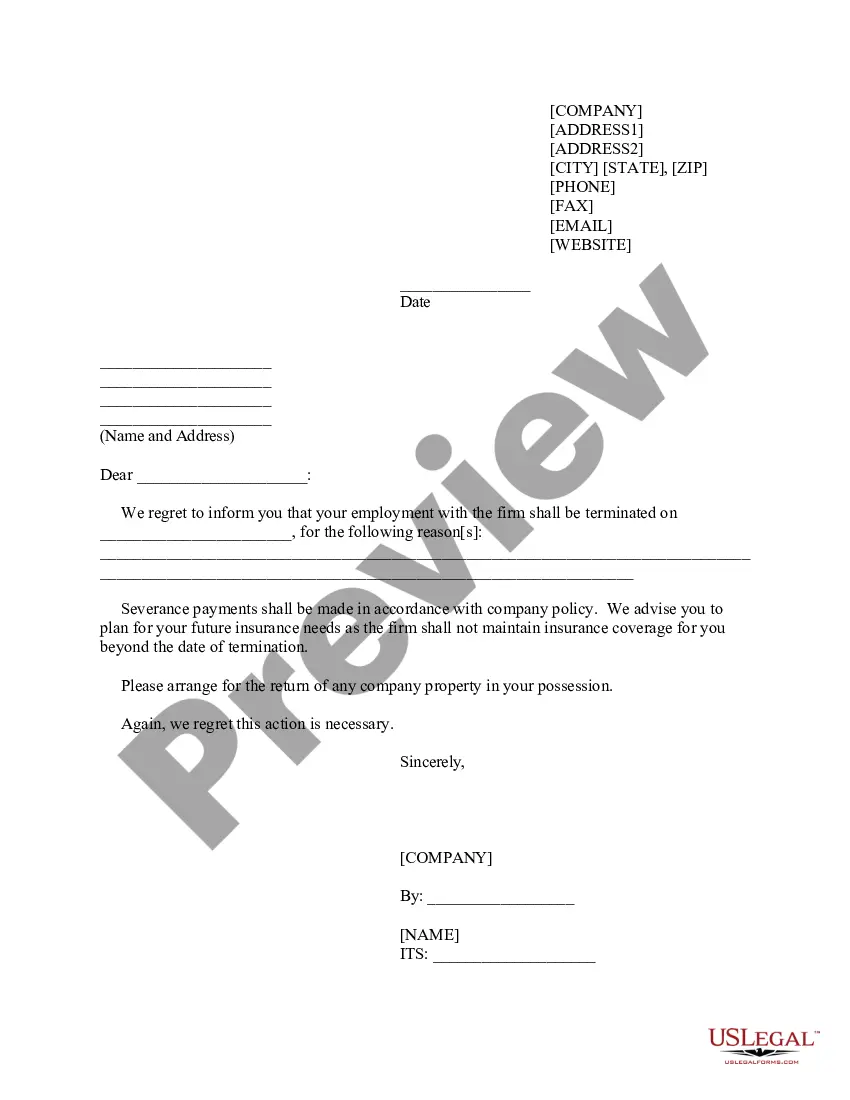
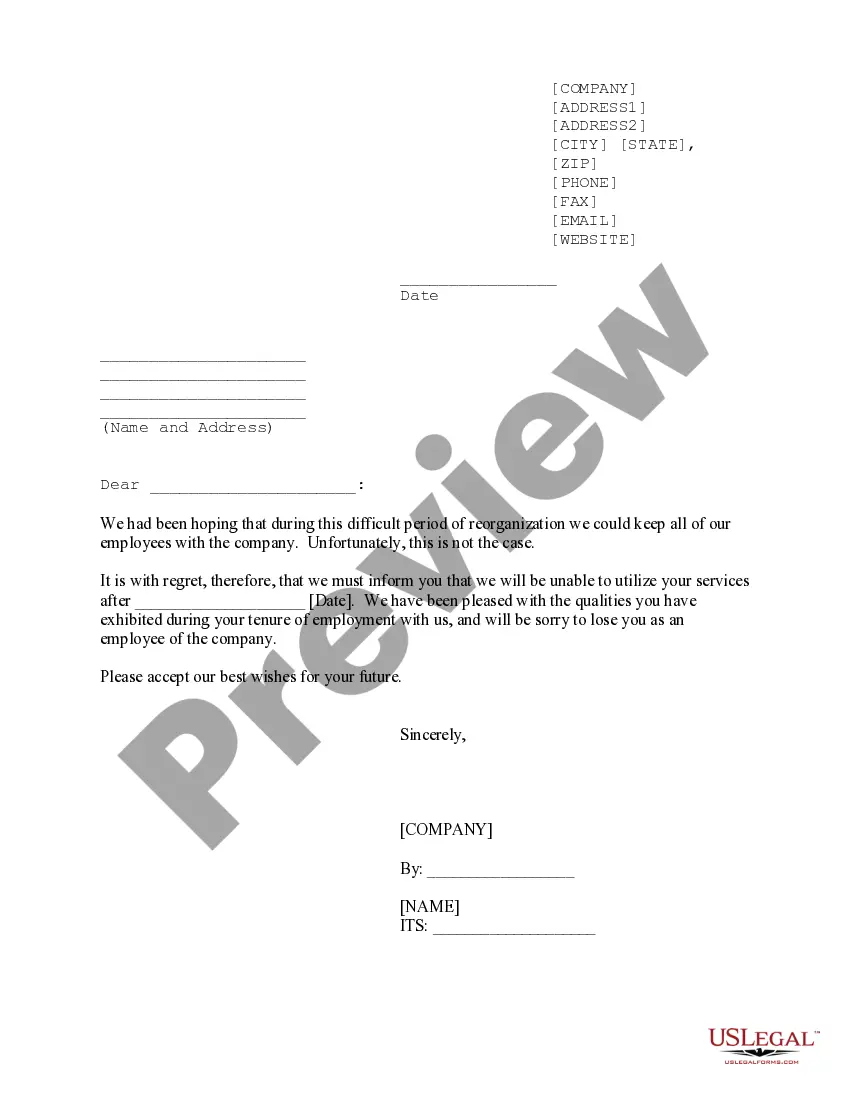
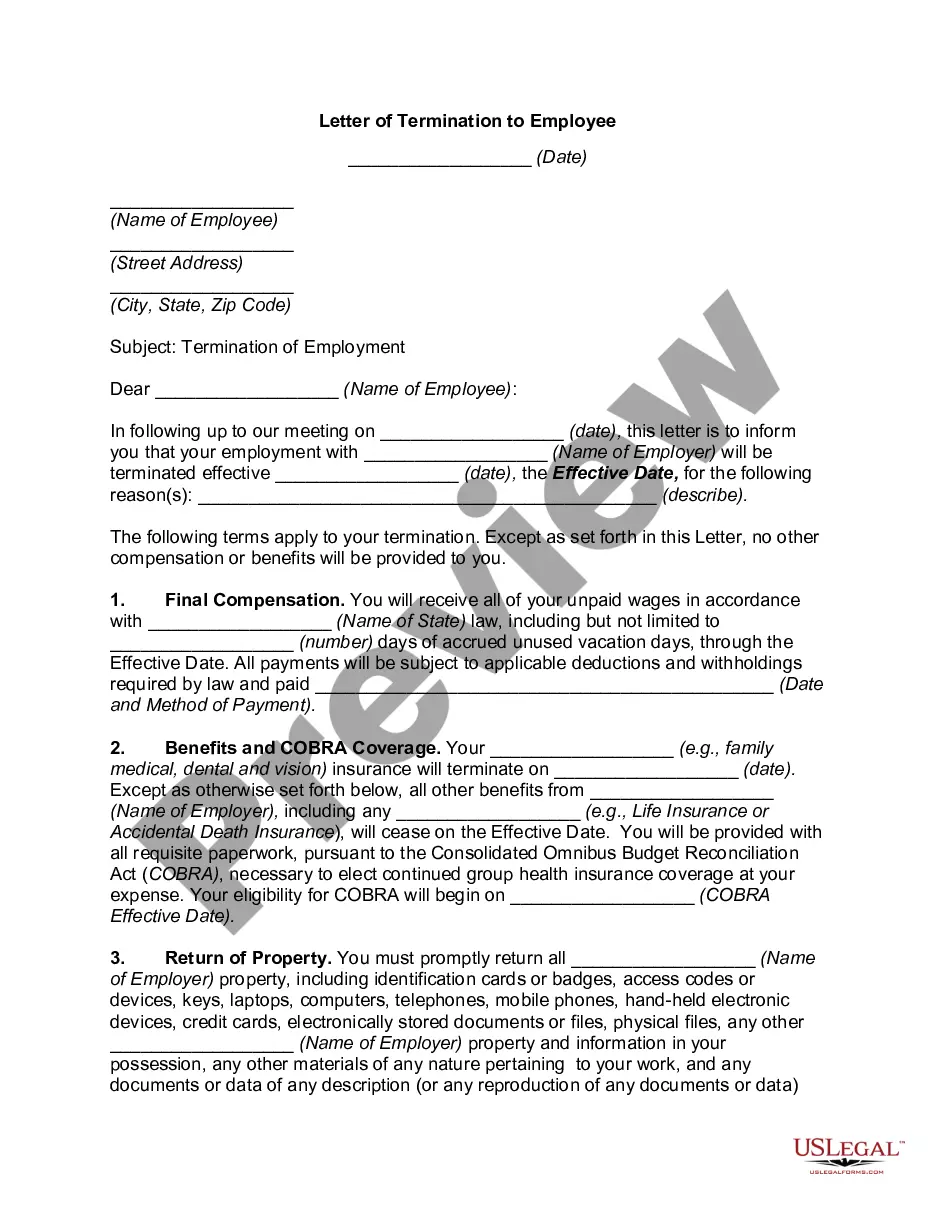
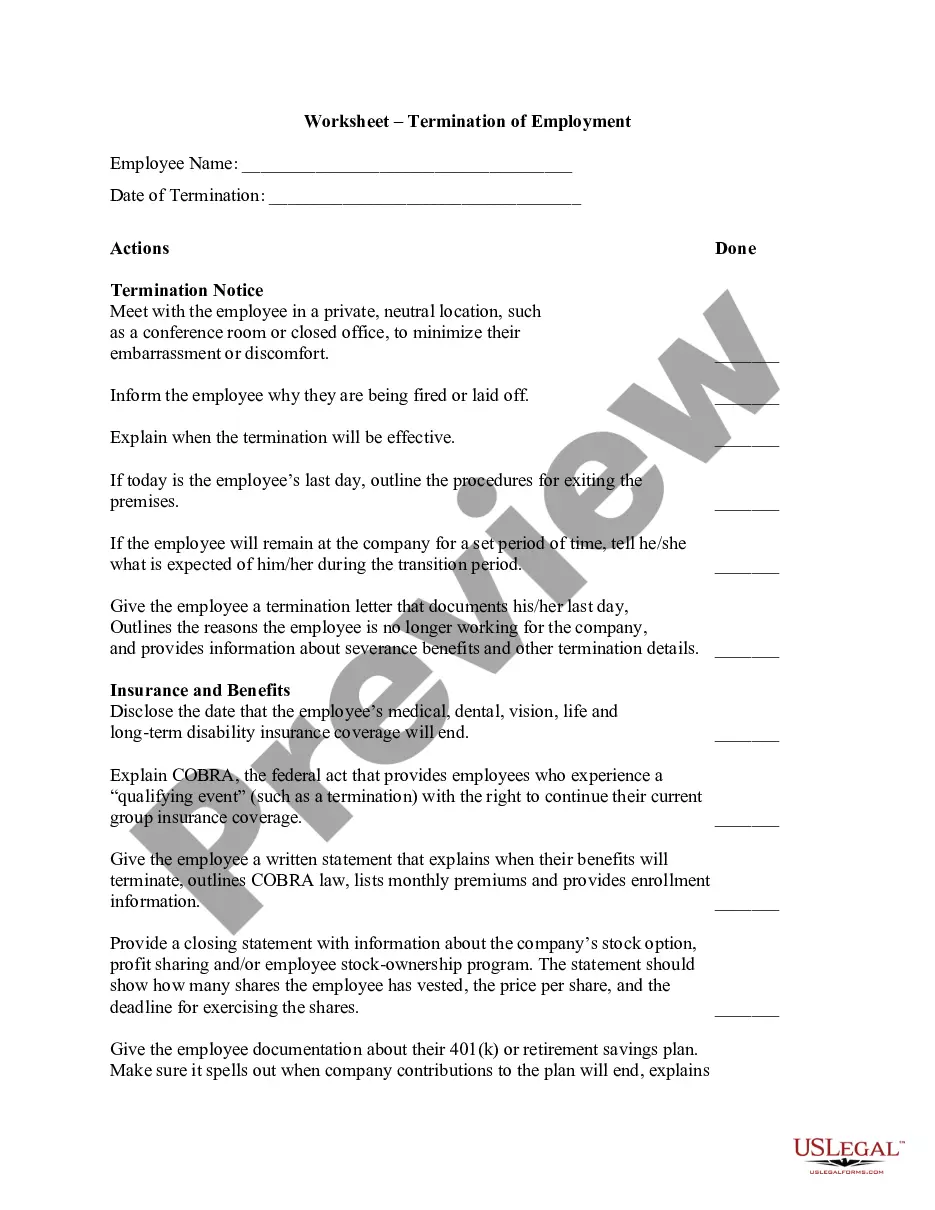
The Termination of Employment form is a legal document used by employers to formally notify an employee of their termination. This form outlines the reasons for the termination, details regarding severance payments, and instructions for returning company property. It serves as an official record of the employer's decision and is distinct from other employment-related forms, such as resignation letters or termination agreements, by focusing specifically on the termination process itself.
Key parts of this document
- Employee's name and address
- Date of termination
- Reasons for termination
- Details about severance pay
- Instructions for returning company property
- Signature of the authorized company representative
Situations where this form applies
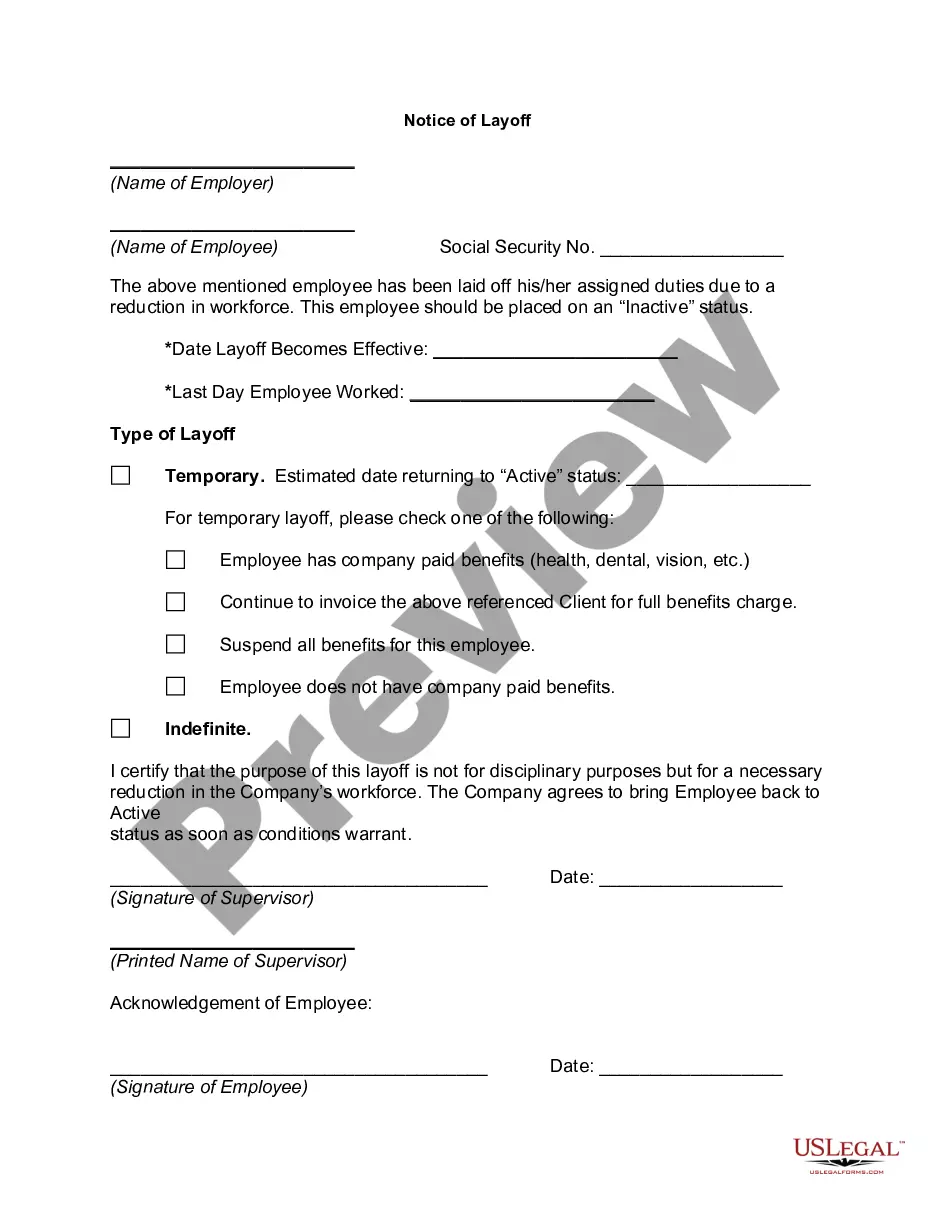
This form should be used when an employer needs to officially terminate an employee's employment. Situations may include performance issues, layoffs, or violations of company policy. Utilizing this form helps provide clarity to the employee about their termination and ensures that the employer has documented the process correctly.
Who can use this document
- Employers who need to terminate an employee
- Human resources personnel responsible for compliance and documentation
- Managers who have decision-making authority regarding employment status
Steps to complete this form
- Provide the employee's name and address at the top of the form.
- Enter the date when the termination will take effect.
- Clearly outline the reasons for the termination in the designated section.
- Include details about severance payments and insurance coverage.
- Instruct the employee to return any company property prior to their departure.
- Sign the form to make it official, including the name and position of the signatory.
Notarization requirements for this form
This form does not typically require notarization unless specified by local law. Make sure to confirm any jurisdiction-specific requirements that may apply.
Get your form ready online
Our built-in tools help you complete, sign, share, and store your documents in one place.
Make edits, fill in missing information, and update formatting in US Legal Forms—just like you would in MS Word.
Download a copy, print it, send it by email, or mail it via USPS—whatever works best for your next step.
Sign and collect signatures with our SignNow integration. Send to multiple recipients, set reminders, and more. Go Premium to unlock E-Sign.
If this form requires notarization, complete it online through a secure video call—no need to meet a notary in person or wait for an appointment.
We protect your documents and personal data by following strict security and privacy standards.

Make edits, fill in missing information, and update formatting in US Legal Forms—just like you would in MS Word.

Download a copy, print it, send it by email, or mail it via USPS—whatever works best for your next step.

Sign and collect signatures with our SignNow integration. Send to multiple recipients, set reminders, and more. Go Premium to unlock E-Sign.

If this form requires notarization, complete it online through a secure video call—no need to meet a notary in person or wait for an appointment.

We protect your documents and personal data by following strict security and privacy standards.
Avoid these common issues
- Not providing clear reasons for termination, which can lead to dispute.
- Failing to include the correct date of termination.
- Neglecting to mention severance payments and insurance issues.
- Forgetting to instruct the employee about returning company property.
Benefits of using this form online
- Convenience of downloading and completing the form at your own pace.
- Editability allows customization to fit specific circumstances.
- Reliability in ensuring all necessary clauses are included.
Looking for another form?
Form popularity
FAQ
Resignation means the employee has decided to sever the employment. We usually call this quitting. Termination means the employer has decided to sever the employment. We call this being fired, terminated or laid off.
The two types of termination of employment are involuntary and voluntary termination. The main difference between voluntary vs. involuntary termination is that voluntary termination occurs when the employee decides to leave the workforce. In involuntary termination, the decision is made by the employer.
Experts advise informing the terminated employee face to face. The conversation should be brief and factual, with no suggestion of any opportunity to revisit your decision. Explain the employee's next steps with regard to the final paycheck, benefits, and collecting personal belongings ? and then say goodbye.
There are two types of job terminations: Voluntary: A voluntary termination of employment is a decision made by the employee. Voluntary termination includes resignation or retirement. Involuntary: Employment termination is involuntary when an employee is terminated by the employer.
There are several types of employment separations, including the following: Constructive discharge. Firing. Layoff. Termination for cause. Termination by mutual agreement. Termination with prejudice. Termination without prejudice. Involuntary termination.
Incompetence, including lack of productivity or poor quality of work. Insubordination and related issues such as dishonesty or breaking company rules. Attendance issues, such as frequent absences or chronic tardiness. Theft or other criminal behavior including revealing trade secrets.
Generally speaking, "terminated" means your employment ends. It can be voluntary (you resign), or it can be involuntary, which means your employer fires you or lays you off.
Types of Employee Termination Voluntary Termination. In this type of termination, the worker takes the initiative to leave the company.Involuntary Termination. Involuntary termination refers to an event wherein the employer removes a worker from employment.Employment at Will.Mutual Termination.