Credit Card Holder's Inquiry Concerning Billing Error
What this document covers
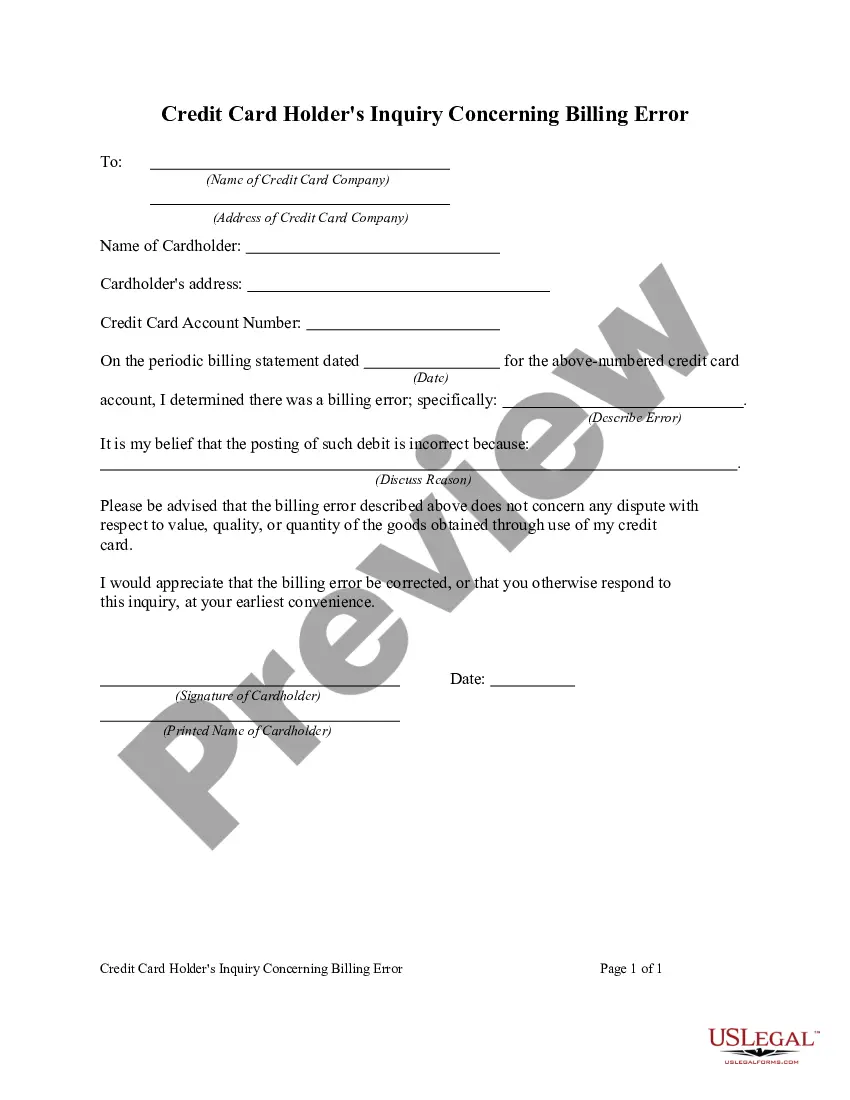
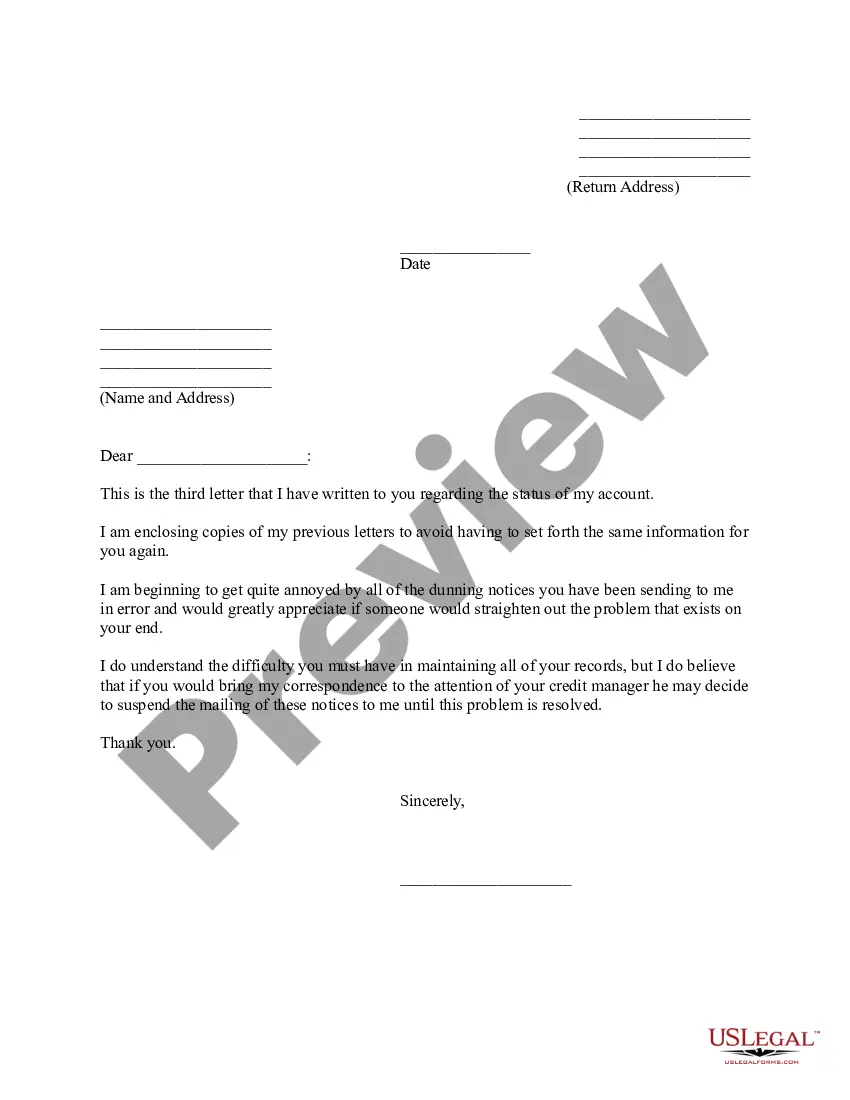
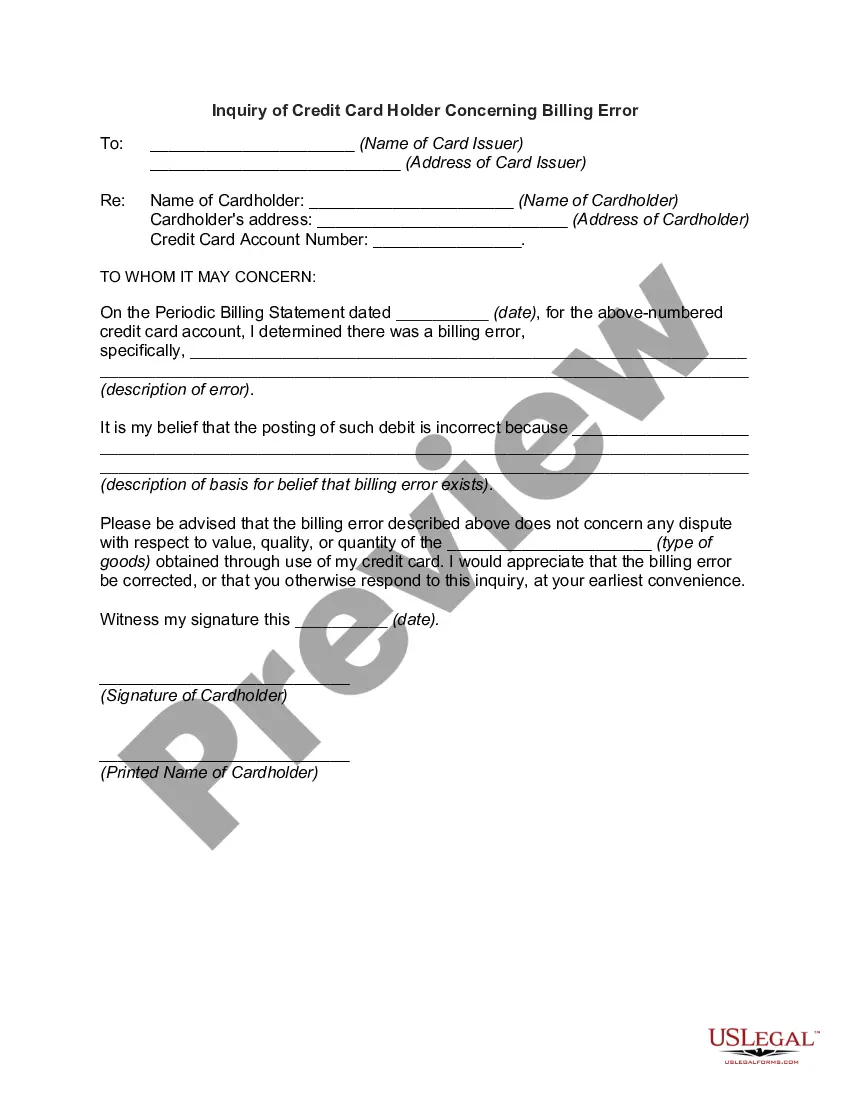
The Credit Card Holder's Inquiry Concerning Billing Error form is a legal document designed to formally address issues regarding incorrect charges on a credit card statement. This form allows cardholders to request investigations into billing errors, such as duplicate charges or unexpected fees. By using this form, consumers can quickly initiate the dispute process with their credit card issuer, ensuring their rights are protected and any potential errors are rectified efficiently.
Main sections of this form
- Cardholder information: Includes fields for the name, address, and contact details of the credit card holder.
- Account details: Space to provide the credit card number and other relevant account information.
- Billing error description: Section for the cardholder to explain the nature of the billing error.
- Supporting documentation: Request for any evidence or documents to support the inquiry.
- Signature and date: To validate the form and confirm the accuracy of the provided information.
When to use this document
This form should be used when a cardholder identifies discrepancies on their credit card statement, such as unauthorized transactions, multiple charges for a single purchase, or errors in the amount billed. It is essential to address these issues promptly to avoid complications in credit reporting and to seek a resolution with the credit card company.
Intended users of this form
- Credit cardholders who notice billing errors on their statements.
- Individuals seeking to protect their rights as consumers.
- Anyone who has been overcharged or incorrectly billed by a merchant.
How to complete this form
- Fill in your personal details in the cardholder information section.
- Provide your credit card account details, keeping in mind to protect your sensitive information.
- Clearly describe the billing error you are disputing, including dates and amounts.
- Attach any supporting documents that bolster your claim.
- Sign and date the form to confirm the accuracy of your claims.
Is notarization required?
In most cases, this form does not require notarization. However, some jurisdictions or signing circumstances might. US Legal Forms offers online notarization powered by Notarize, accessible 24/7 for a quick, remote process.
Get your form ready online
Our built-in tools help you complete, sign, share, and store your documents in one place.
Make edits, fill in missing information, and update formatting in US Legal Forms—just like you would in MS Word.
Download a copy, print it, send it by email, or mail it via USPS—whatever works best for your next step.
Sign and collect signatures with our SignNow integration. Send to multiple recipients, set reminders, and more. Go Premium to unlock E-Sign.
If this form requires notarization, complete it online through a secure video call—no need to meet a notary in person or wait for an appointment.
We protect your documents and personal data by following strict security and privacy standards.

Make edits, fill in missing information, and update formatting in US Legal Forms—just like you would in MS Word.

Download a copy, print it, send it by email, or mail it via USPS—whatever works best for your next step.

Sign and collect signatures with our SignNow integration. Send to multiple recipients, set reminders, and more. Go Premium to unlock E-Sign.

If this form requires notarization, complete it online through a secure video call—no need to meet a notary in person or wait for an appointment.

We protect your documents and personal data by following strict security and privacy standards.
Typical mistakes to avoid
- Failing to provide complete contact information.
- Not including enough detail about the billing error.
- Neglecting to attach supporting documents.
- Forgetting to sign and date the form.
Benefits of using this form online
- Convenience of accessing and filling out the form at your own pace.
- Easy editability to ensure all details are accurate before submission.
- Immediate downloadable format for quick processing.
- Reliable access to resources and templates created by licensed attorneys.
Main things to remember
- The Credit Card Holder's Inquiry Concerning Billing Error is crucial for addressing billing discrepancies.
- Completing this form accurately helps facilitate a quicker investigation by your credit card issuer.
- Always attach relevant documentation to support your inquiry.
Looking for another form?
Form popularity
FAQ
Dear Sir or Madam: I am writing to dispute a debit in the amount of $______ on my account. The amount is inaccurate because the merchandise I ordered was not delivered. I ordered the merchandise on date.
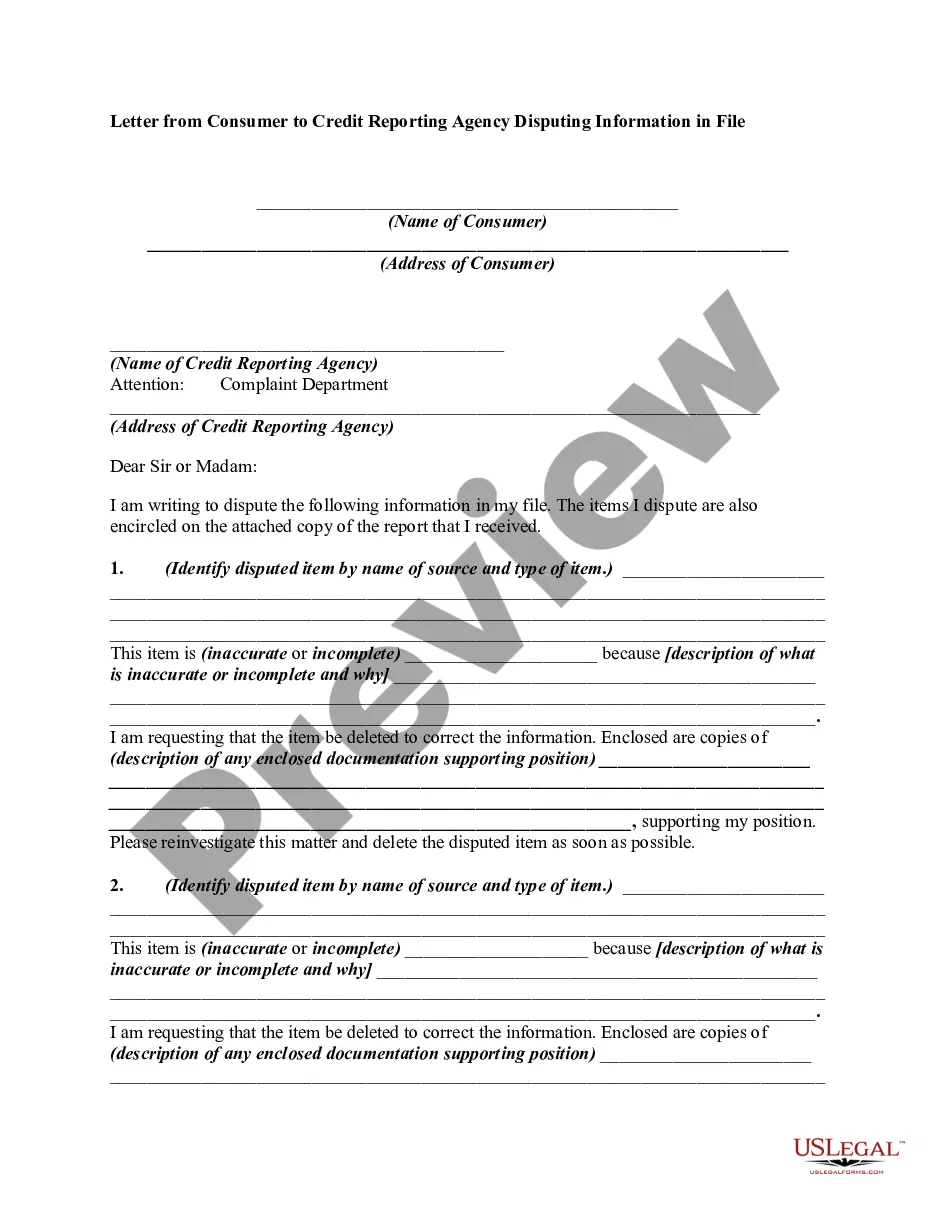
Send your letter by certified mail, return receipt requested, so you can document what the credit reporting company received. Keep copies of your dispute letter and enclosures. Credit reporting companies must investigate the items in question usually within 30 days unless they consider your dispute frivolous.
Respond quickly. You have 60 days from the time the billing statement is sent to request a correction, so act quickly. Your request needs to be in writing. Then you wait. Don't withhold payment! Cover yourself.
To correct a mistake on a handwritten invoice you have already given to a customer, write a corrected version, mail it with a note explaining the correction, and keep copies of both the incorrect and corrected invoices.
Your full name. Your current address and all addresses you have lived at over the past two years. Copy of a government-issued ID. Copy of a utility bill, bank statement, or insurance statement. A reference line that begins RE: and includes the name of the creditor and the account number for the item(s) you're disputing.
Disputing a credit card charge. Consumers can dispute fraudulent charges on their bill by calling their issuer.You also have the right to dispute a credit card charge for a purchase you willingly made. This can be done for a number of reasons, including services not rendered or dissatisfaction with services rendered.
Dear Sir or Madam: I am writing to dispute a fraudulent charge on my account in the amount of $______. I am a victim of identity theft, and I did not make or authorize this charge.
The name 623 dispute method refers to section 623 of the Fair Credit Reporting Act (FCRA). The method allows you to dispute a debt directly with the creditor in question as long as you have already filed your complaint with the credit bureau and completed their process.
Tell about the billing error. Request correction or ask for more information in the first statement or the last paragraph. Mention anything that can help the reader in getting more information about the error. Write down the check numbers, amounts and attach the relevant photocopies.