Rental Lease Agreement for House
What this document covers
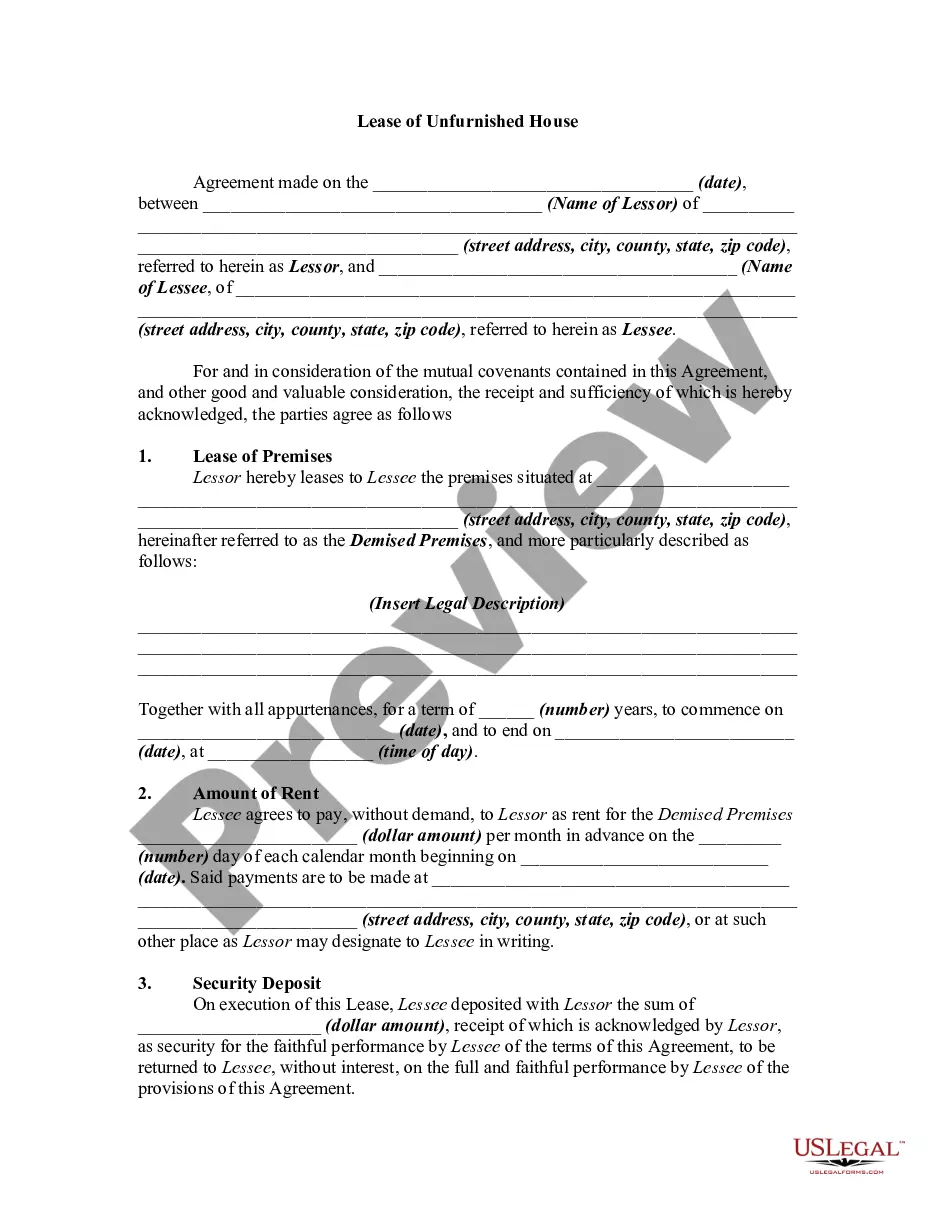
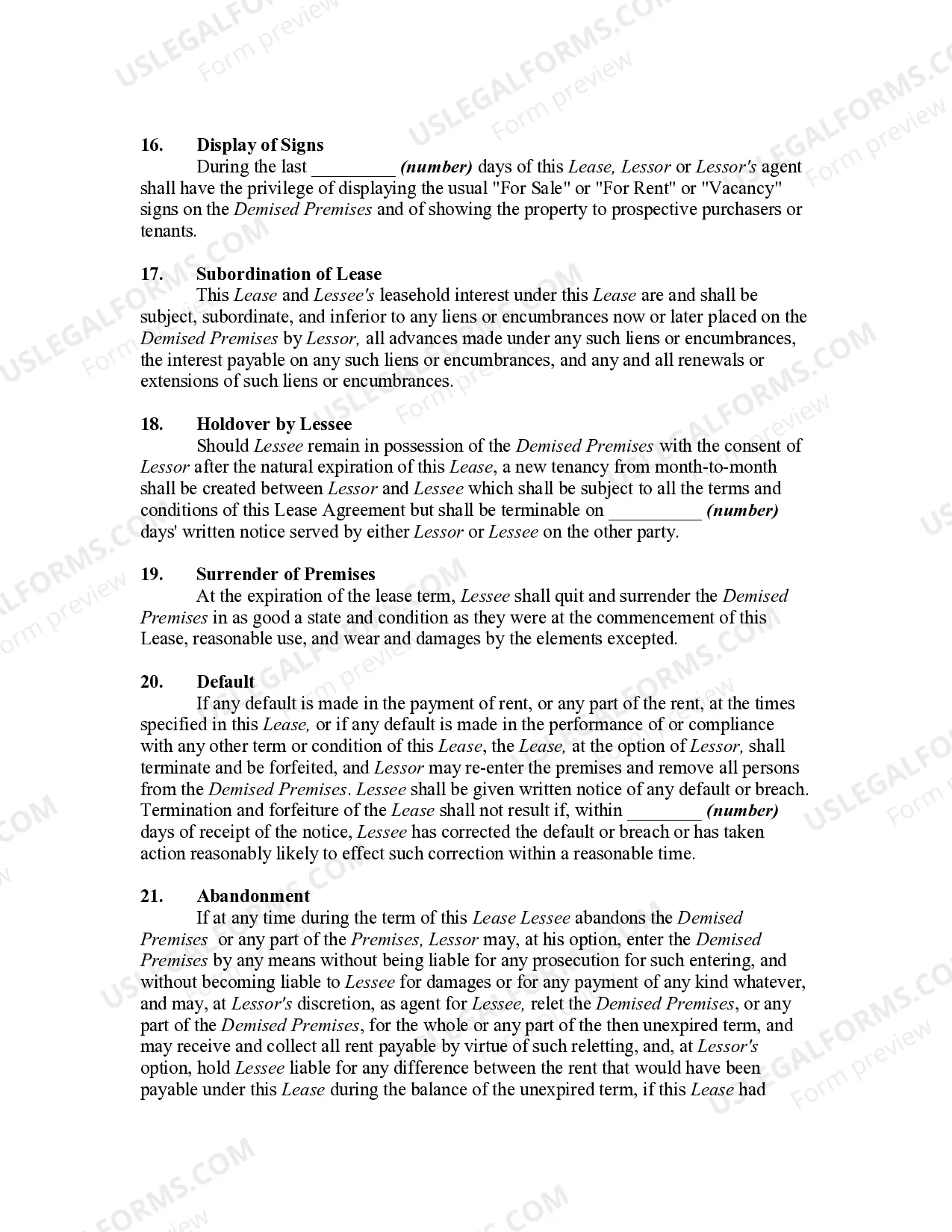
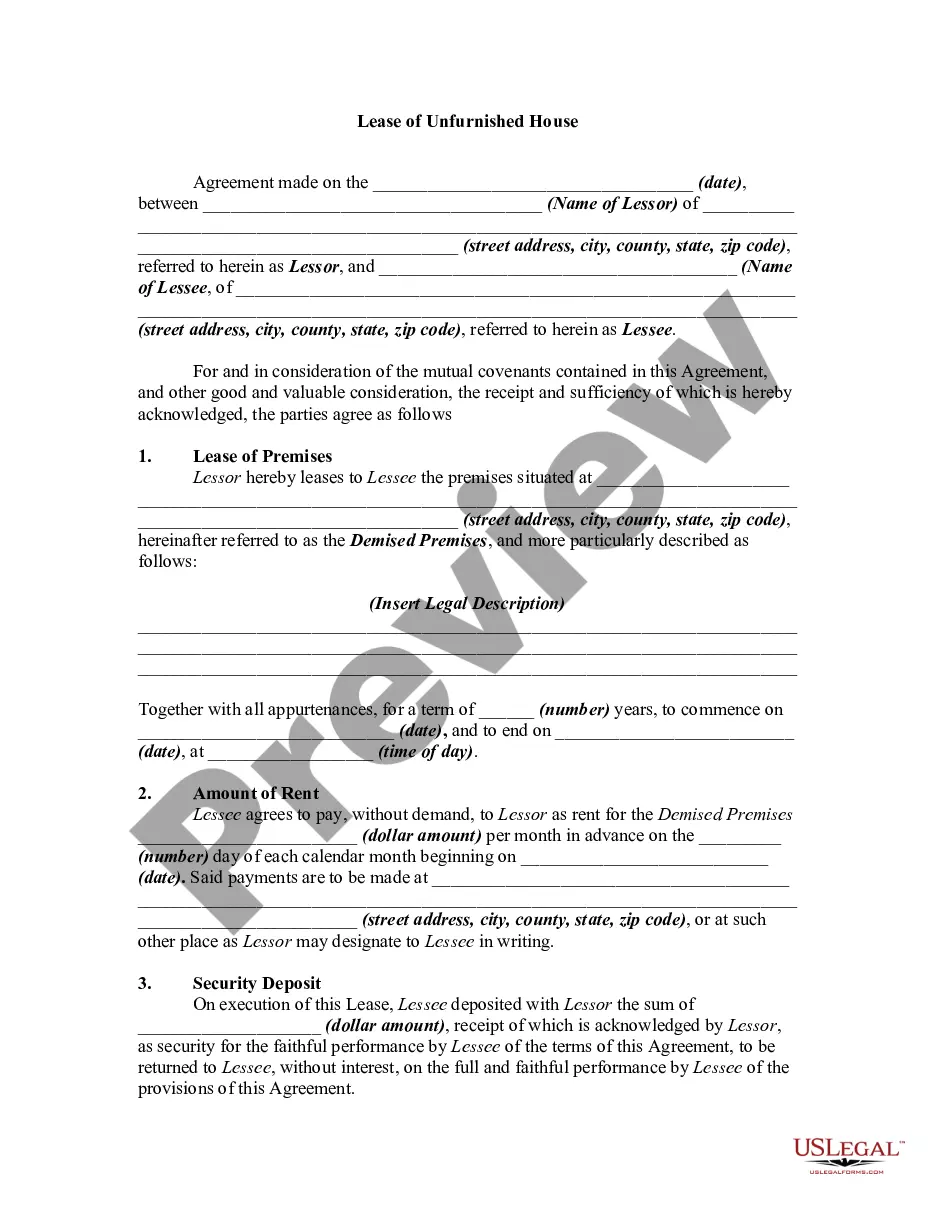
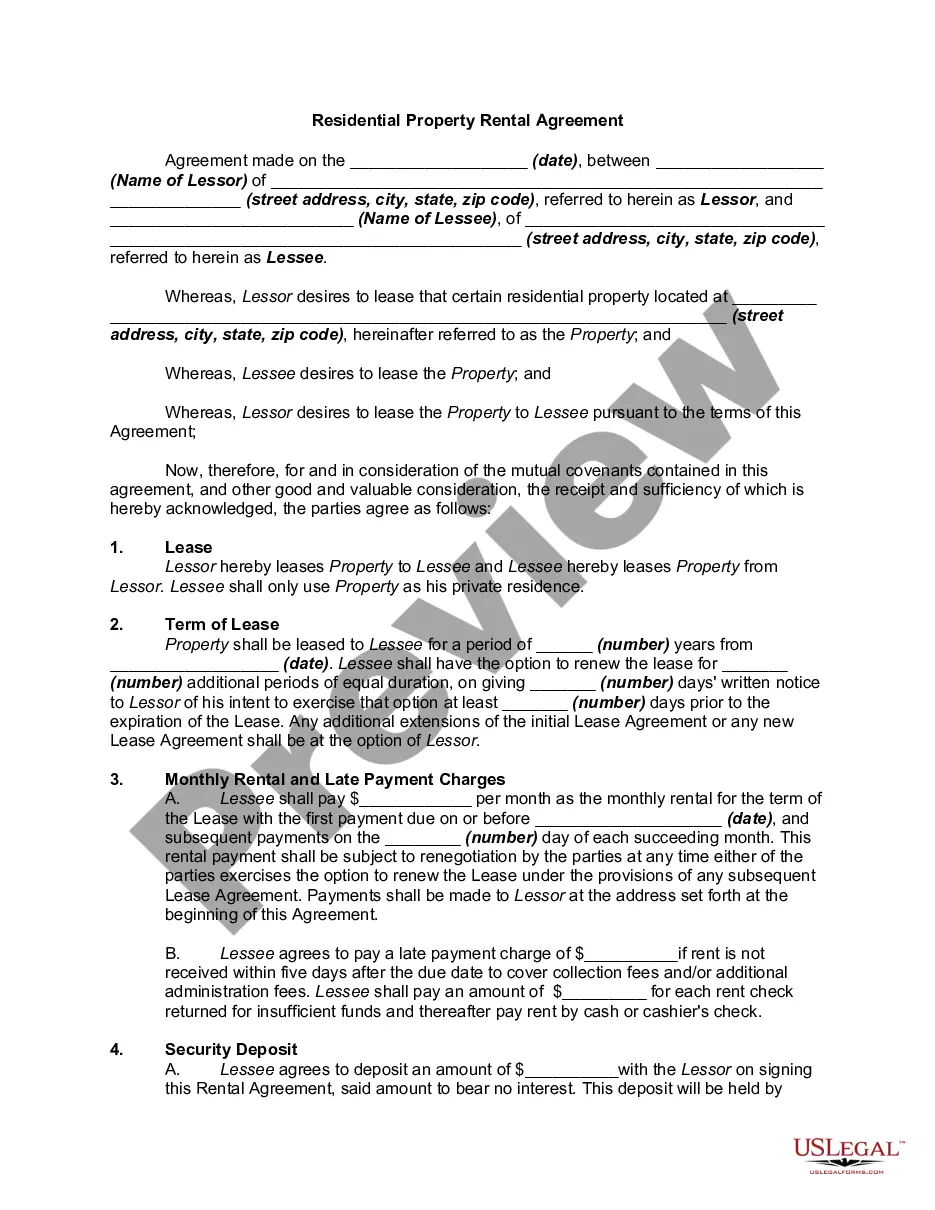
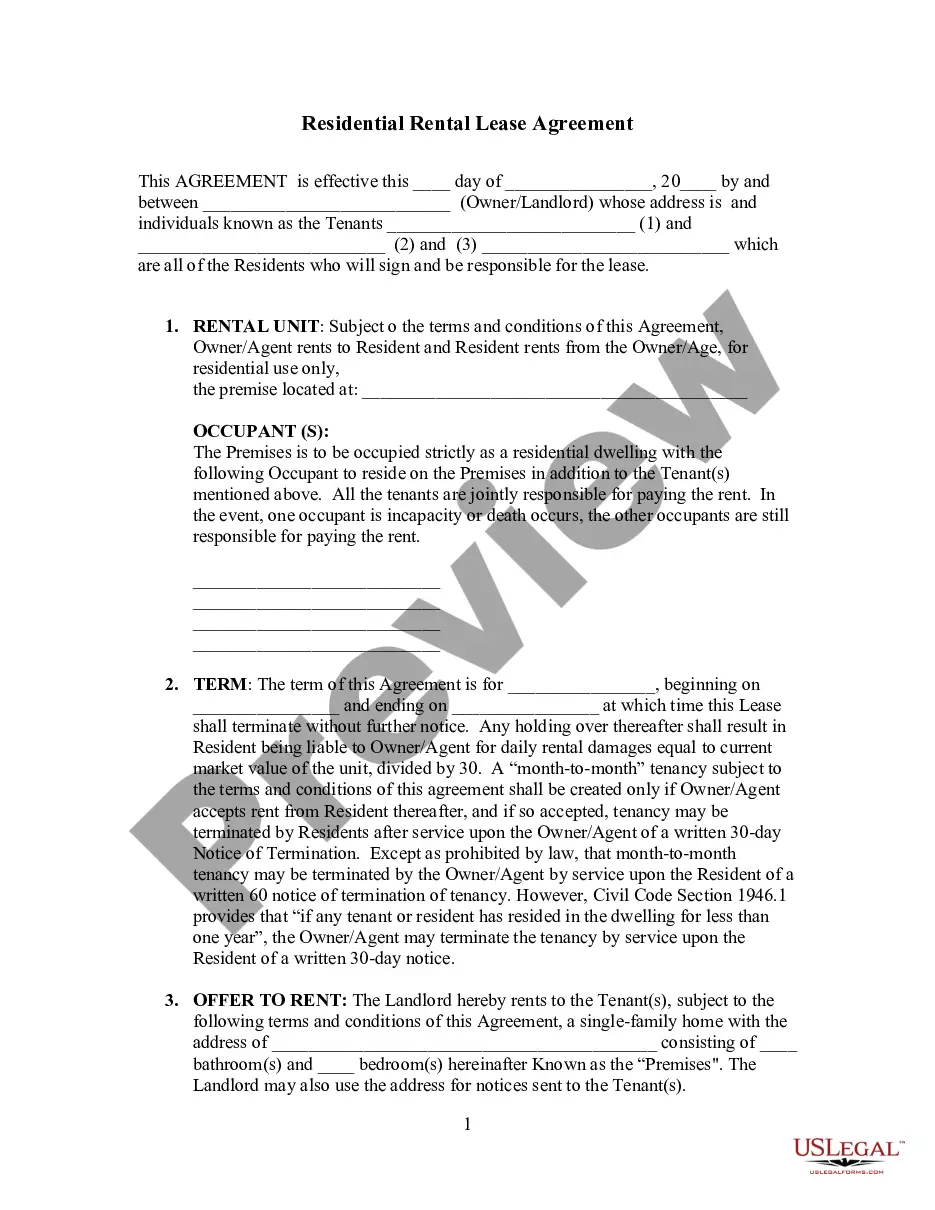
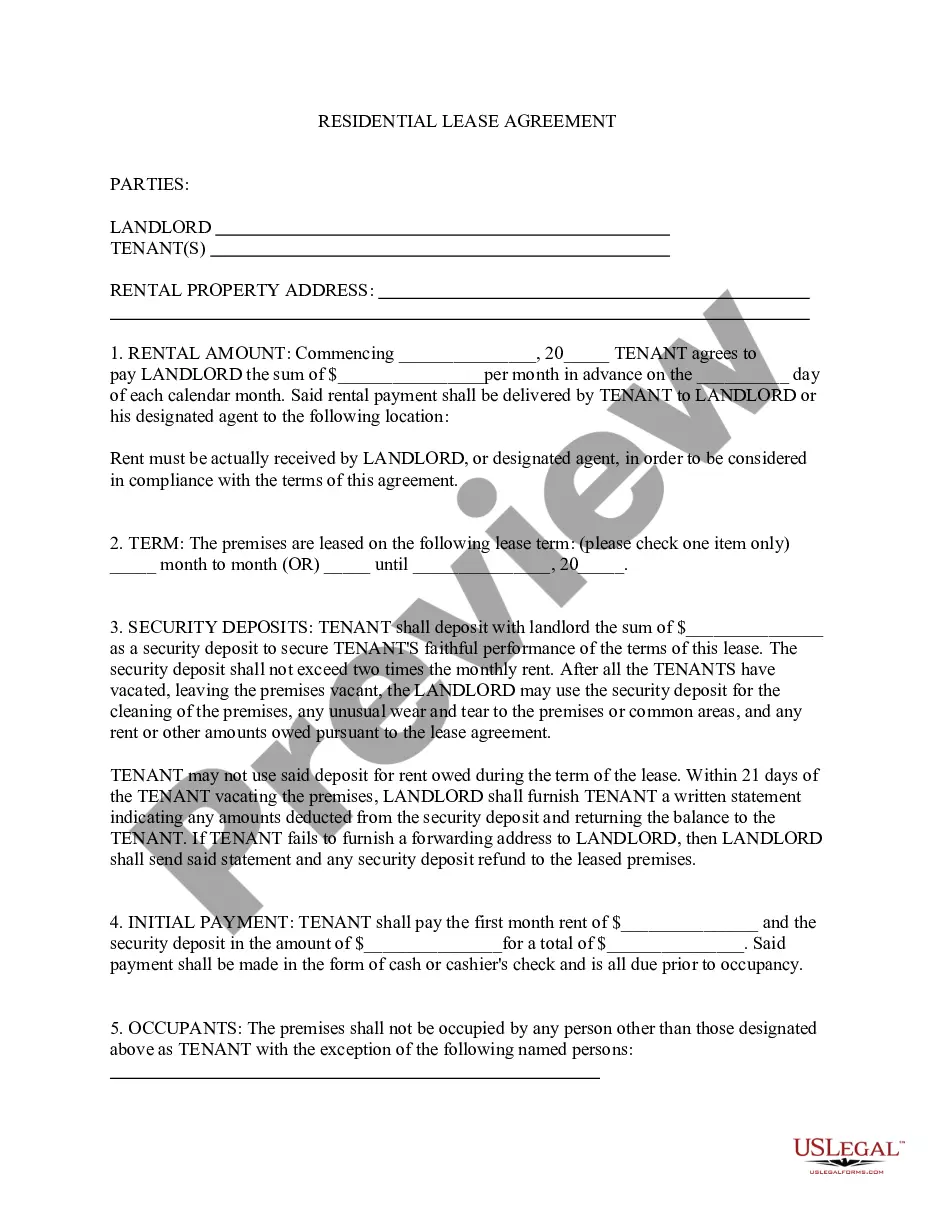
The Rental Lease Agreement for House is a legal contract that outlines the terms and conditions between a landlord (lessor) and tenant (lessee) regarding the rental of a residential property. This agreement serves to protect the rights of both parties, ensuring a clear understanding of terms such as rent, duration, and responsibilities. Unlike informal rental arrangements, this written agreement provides legal security, reducing the risk of disputes during the tenancy.
Key parts of this document
- Date of agreement and parties involved
- Lease term and property description
- Rent amount and payment details
- Security deposit terms
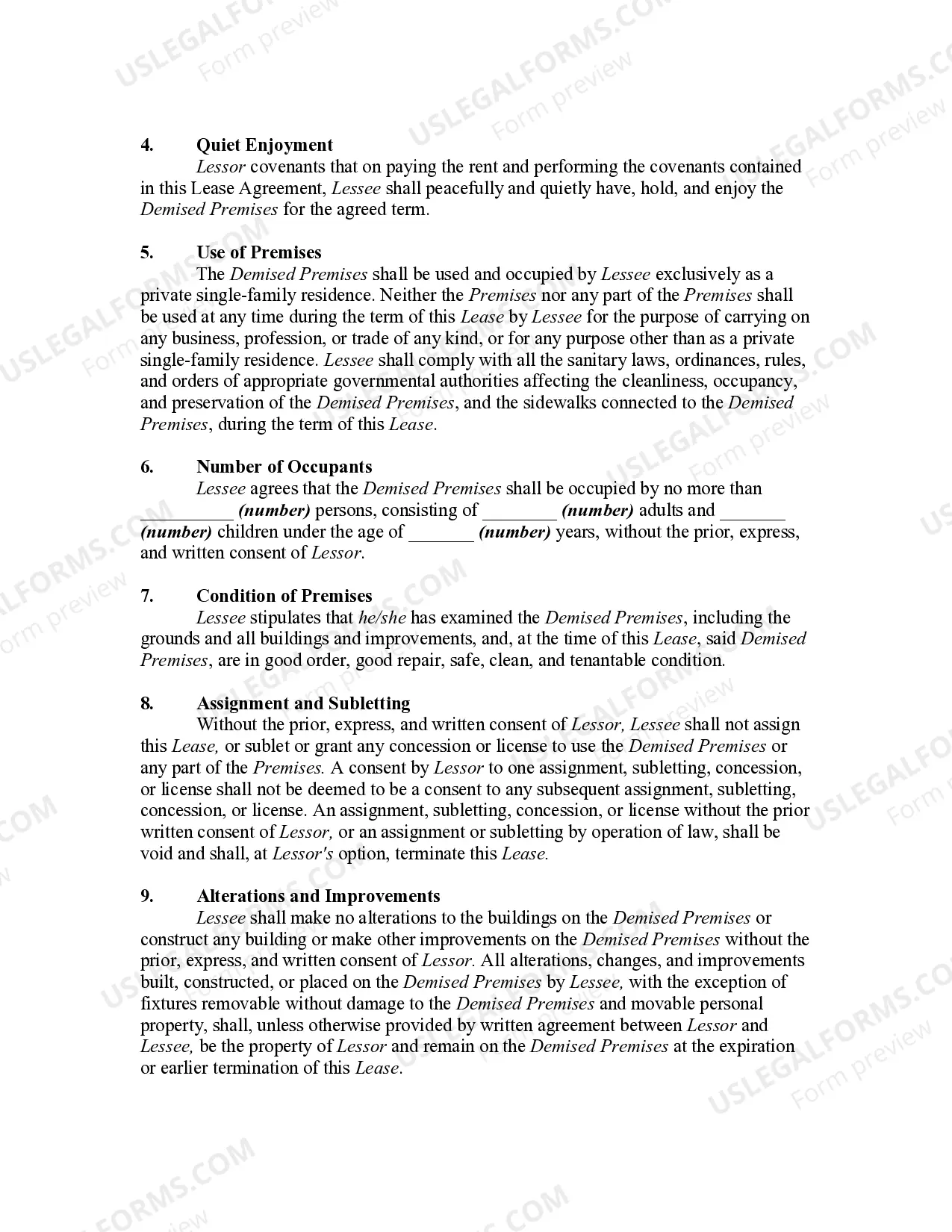
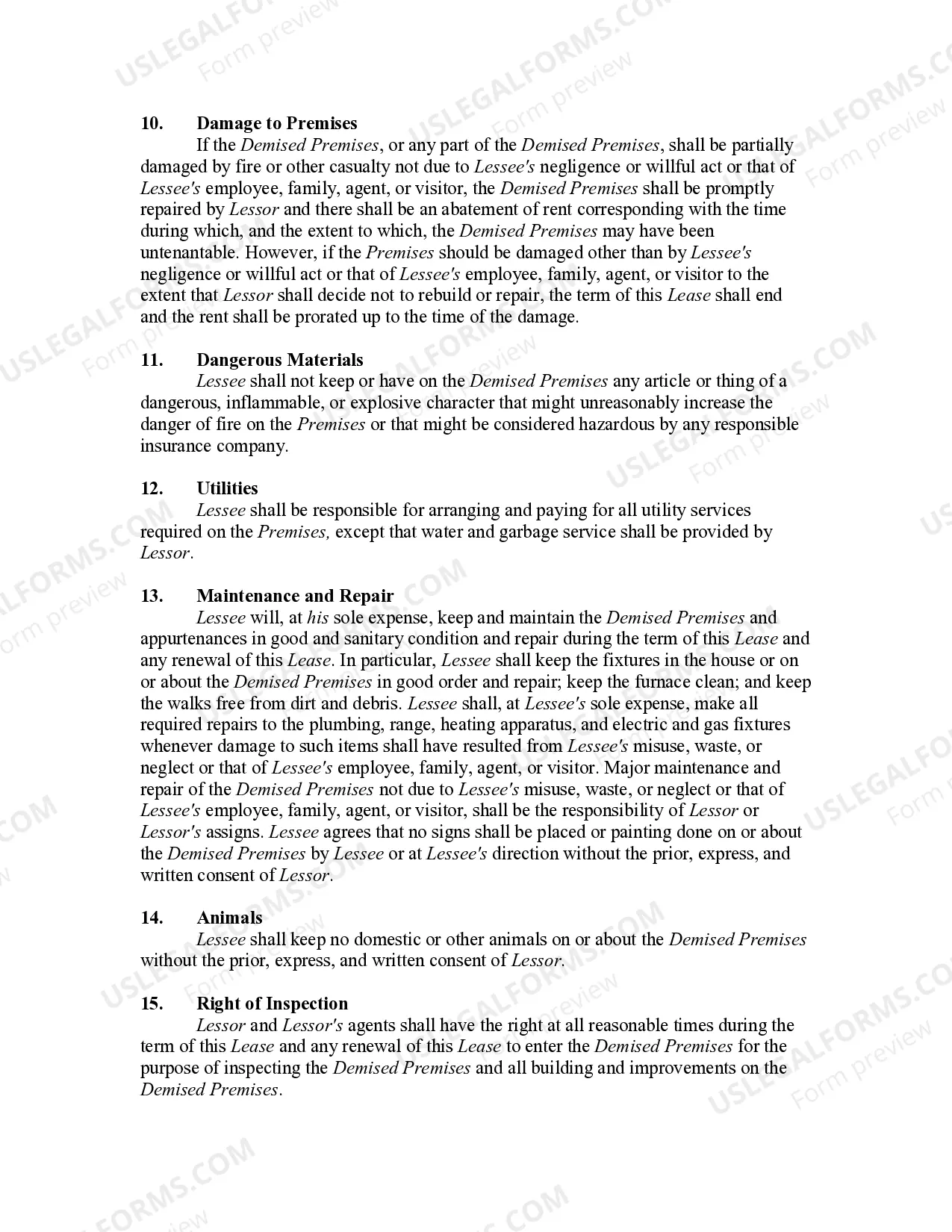
- Conditions for use of premises
- Responsibilities for maintenance and repairs

When to use this document
This form is essential when a landlord wants to lease a residential house to a tenant. It ensures both parties agree on rental terms, including duration, payment, and maintenance responsibilities. Use this form when renting out a property to avoid misunderstandings that can lead to disputes. It's also useful when changes in rental agreements occur, such as renewals or new tenants moving in.
Who should use this form
Individuals that should consider using this form include:
- Landlords renting their property to tenants
- Tenants renting a house and seeking a formal rental agreement
- Property managers overseeing rental agreements on behalf of landlords
- Household members involved in a rental agreement
Instructions for completing this form
- Identify the parties involved by entering the names and addresses of both the lessor and lessee.
- Specify the property details including the street address and legal description.
- Enter the lease term duration, start date, and end date.
- Clearly state the rental amount and payment schedule.
- Detail the security deposit amount and any additional terms related to the lease.
Does this form need to be notarized?
This form does not typically require notarization unless specified by local law. Always check your local regulations to confirm whether notarization is necessary for your specific lease agreement.
Get your form ready online
Our built-in tools help you complete, sign, share, and store your documents in one place.
Make edits, fill in missing information, and update formatting in US Legal Forms—just like you would in MS Word.
Download a copy, print it, send it by email, or mail it via USPS—whatever works best for your next step.
Sign and collect signatures with our SignNow integration. Send to multiple recipients, set reminders, and more. Go Premium to unlock E-Sign.
If this form requires notarization, complete it online through a secure video call—no need to meet a notary in person or wait for an appointment.
We protect your documents and personal data by following strict security and privacy standards.

Make edits, fill in missing information, and update formatting in US Legal Forms—just like you would in MS Word.

Download a copy, print it, send it by email, or mail it via USPS—whatever works best for your next step.

Sign and collect signatures with our SignNow integration. Send to multiple recipients, set reminders, and more. Go Premium to unlock E-Sign.

If this form requires notarization, complete it online through a secure video call—no need to meet a notary in person or wait for an appointment.

We protect your documents and personal data by following strict security and privacy standards.
Common mistakes
- Failing to specify all parties' names and addresses accurately.
- Leaving out essential clauses regarding maintenance and repairs.
- Setting unclear payment deadlines or amounts.
- Not updating the agreement to reflect any changes or extensions.
Benefits of completing this form online
- Convenient access from anywhere at any time.
- Editability to personalize the agreement as needed.
- Reliability as templates are drafted by licensed attorneys.
- Cost-effective compared to hiring a lawyer for drafting agreements.
Looking for another form?
Form popularity
FAQ
Names of all tenants. Limits on occupancy. Term of the tenancy. Rent. Deposits and fees. Repairs and maintenance. Entry to rental property. Restrictions on tenant illegal activity.
The Lease Must be in Writing It does not matter if the lease is handwritten or typed. If the lease is for more than one year, it must be in written form and contain the following terms.
Step 1: Title & Format Your Document. Step 2: Make a List of Lease Provisions. Step 3: Flesh Out Each Clause. Step 4: Check Local Laws. Step 5: Create a Signature Section.
When writing your own renters agreement you are able to include your own classes, such as tenants aren't allowed to have pets. However, these added clauses must be in line with both the landlord's and tenants' rights and if they infringe on these rights then they are void and can't stand up in a court of law.
Collect each party's information. Include specifics about your property. Consider all of the property's utilities and services. Know the terms of your lease. Set the monthly rent amount and due date. Calculate any additional fees. Determine a payment method. Consider your rights and obligations.
As long as the contract spells out specific details and both parties have signed that they agree to the contract's terms, a handwritten contract is legally binding and enforceable in court.
If you're thinking of renting out your property, or you're a tenant, and the current owner doesn't already have an agreement drawn up, it's possible to create your own rental contract.
The letter should be clear in its terms and conditions. The factors like rent amount, a period of rent and other details should be its special highlight. The letter should contain the interests of both parties. The letter should be inclusive of all the rights of both parties.
These types of tenancy agreements are most commonly used by private landlords who are choosing to forgo using a letting agent or property management firm. People can even draw up their own tenancy agreements based on the free downloadable templates available on the internet.