This form allows a parent or guardian to release a minor for intramural sports from liability for injuries which may be incurred by a minor child while on the premises, taking part in activities, etc.
Texas Waiver and Release From Liability For Minor Child for Intramural Sports
Category:
State:
Multi-State
Control #:
US-WAV-90M
Format:
Word;
Rich Text
Instant download
Description
Free preview
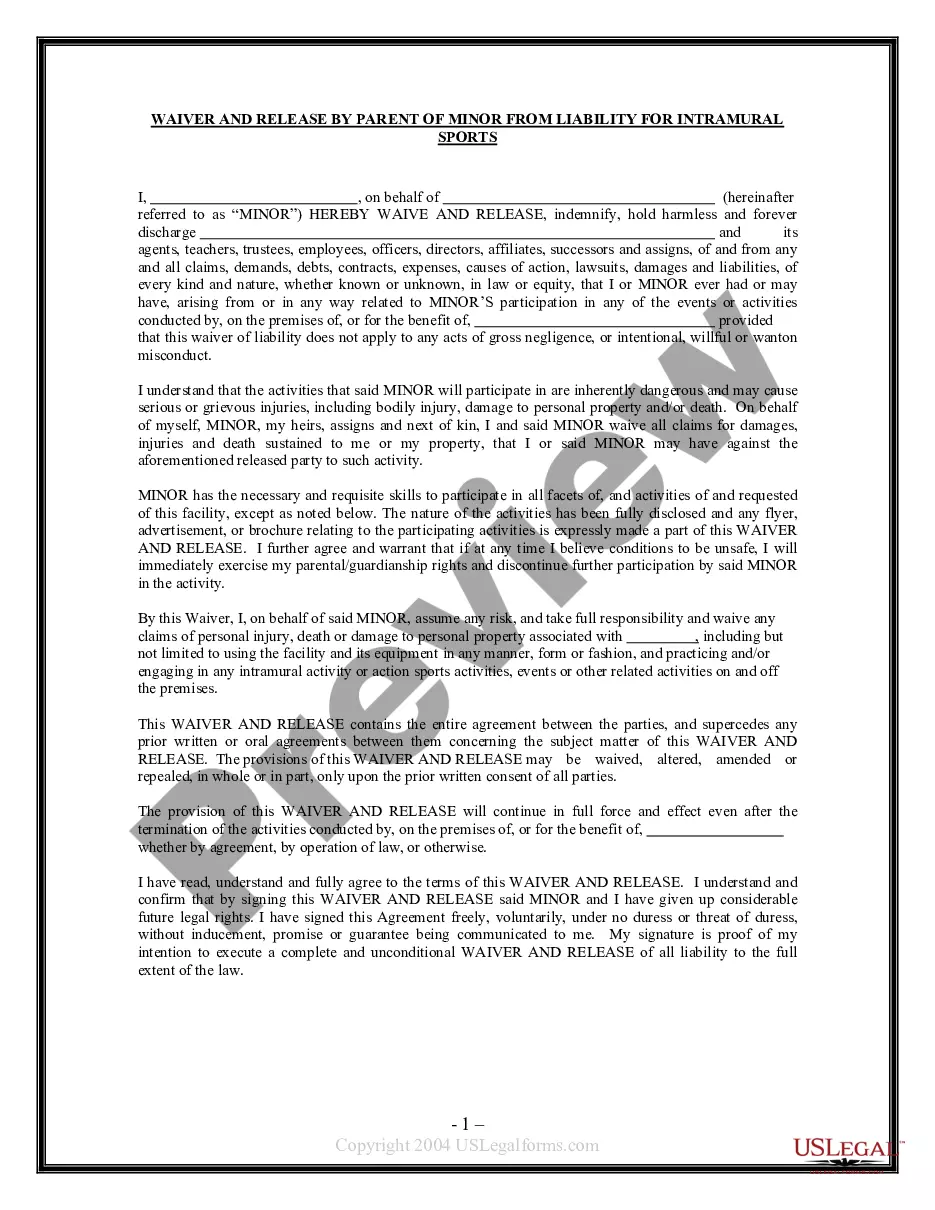
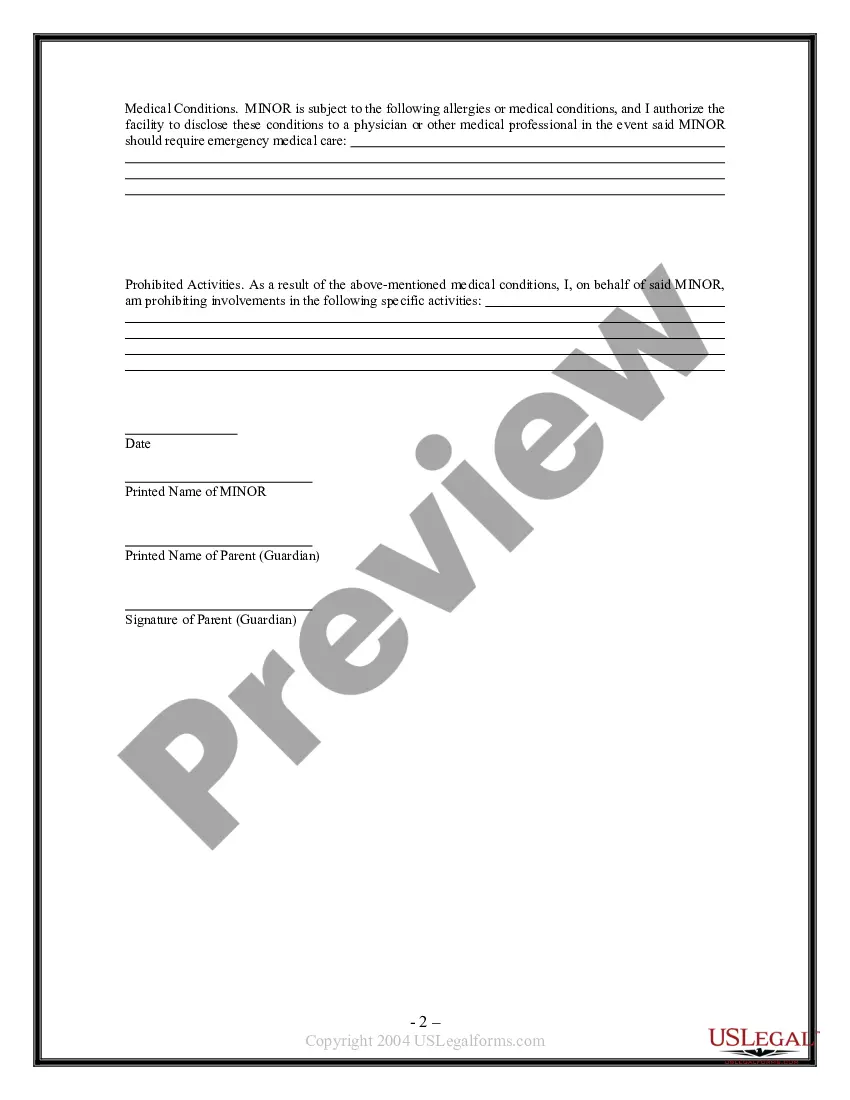
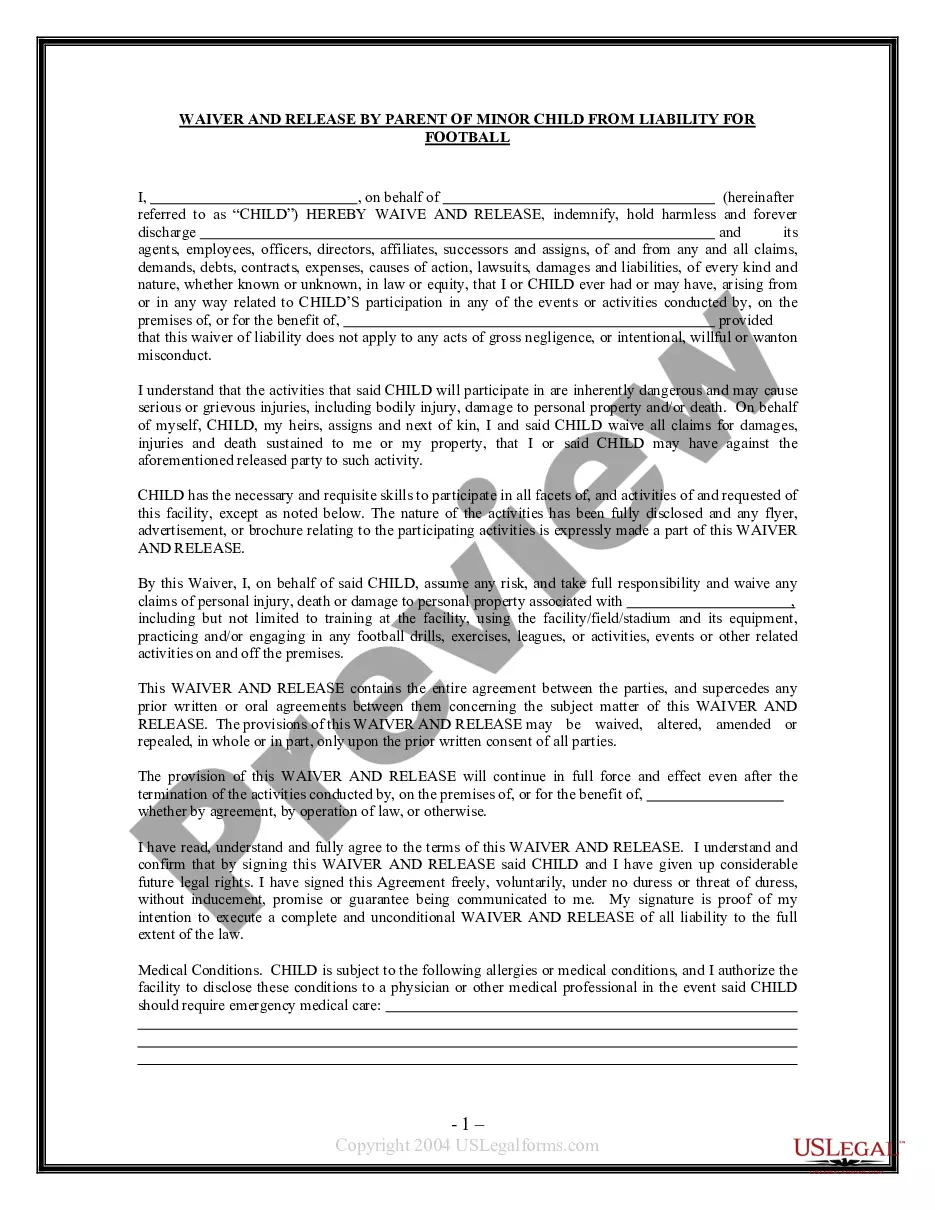
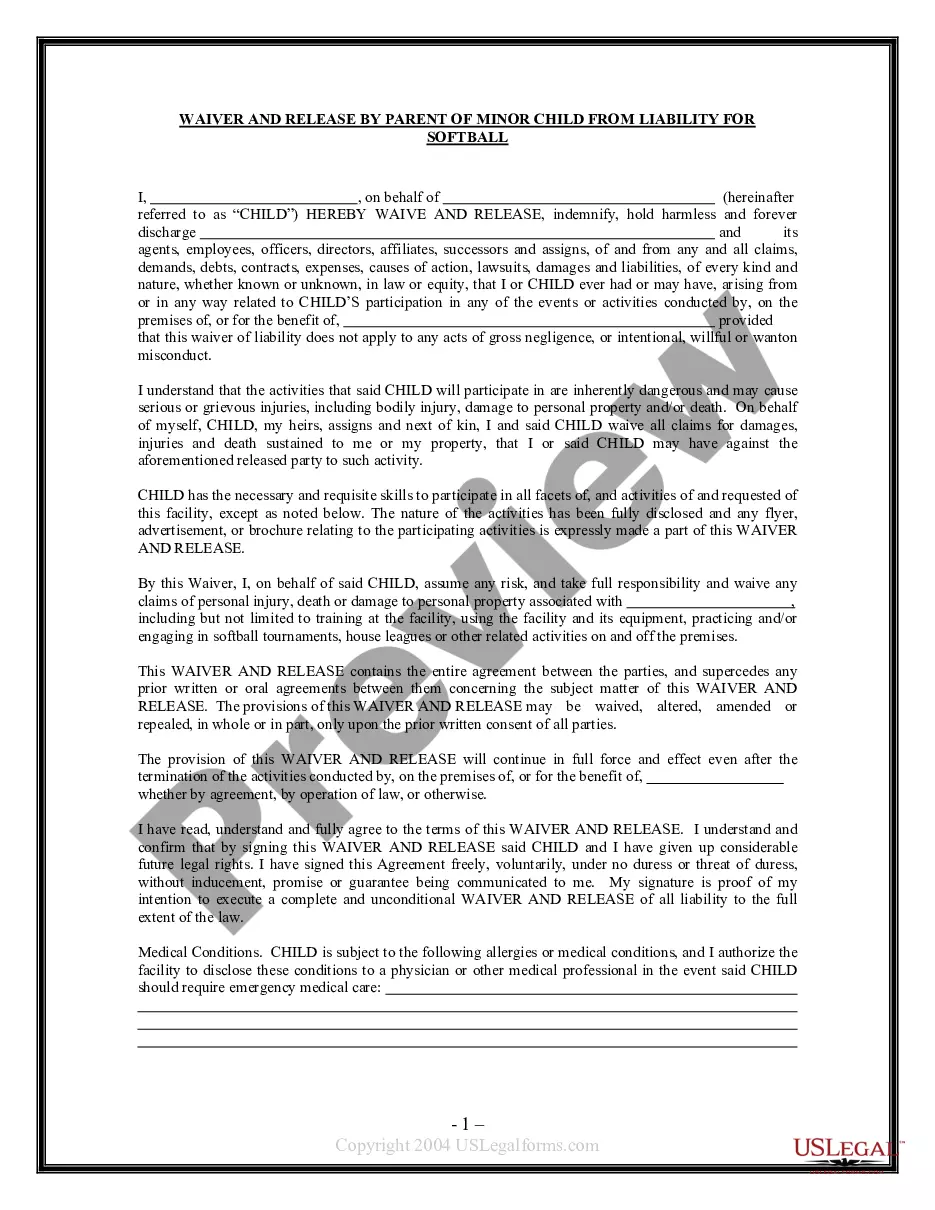
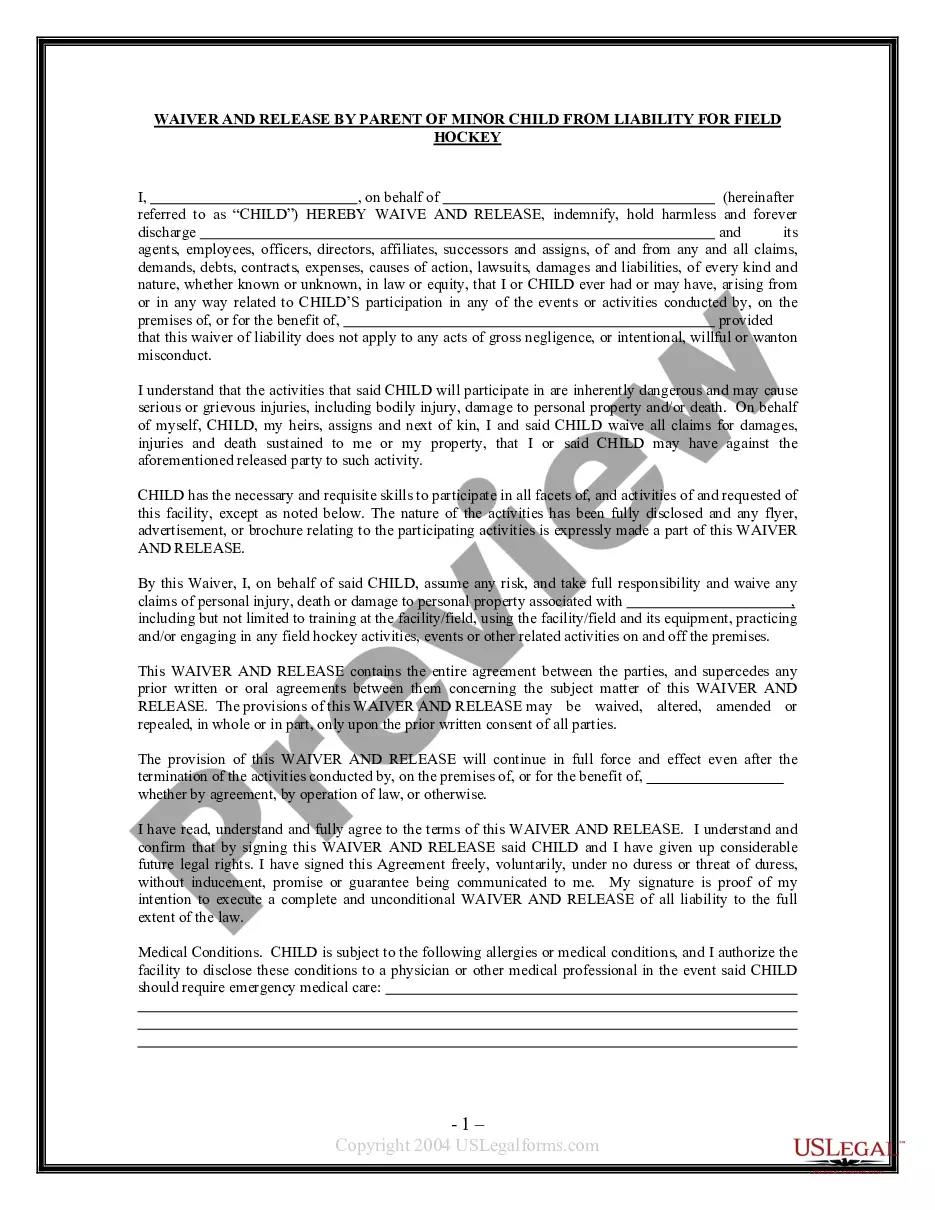
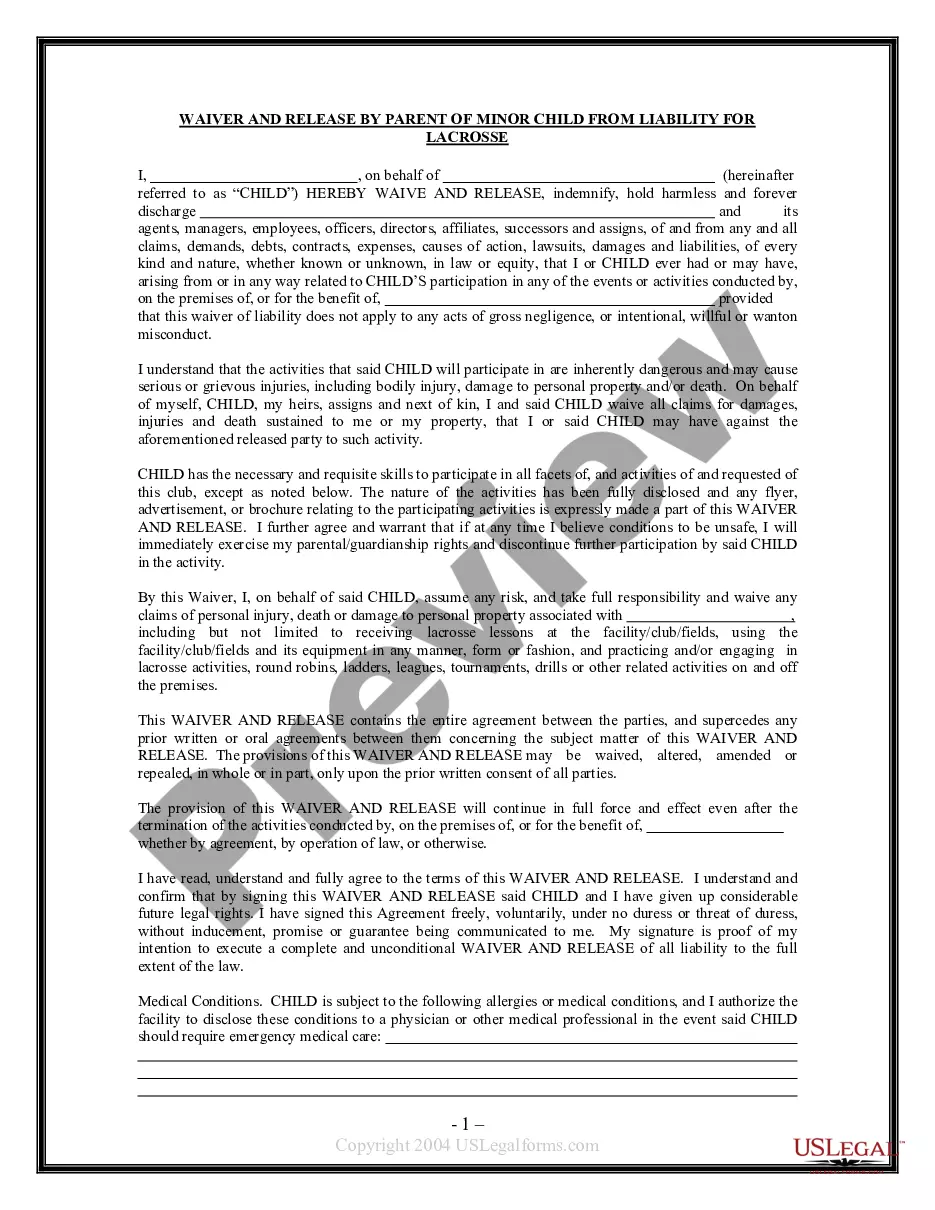


How to fill out Waiver And Release From Liability For Minor Child For Intramural Sports?
You are able to devote hrs on the web attempting to find the legal record design that suits the state and federal demands you want. US Legal Forms offers a large number of legal kinds that happen to be reviewed by pros. You can actually down load or produce the Texas Waiver and Release From Liability For Minor Child for Intramural Sports from the services.
If you have a US Legal Forms accounts, you may log in and click on the Down load key. Afterward, you may total, revise, produce, or sign the Texas Waiver and Release From Liability For Minor Child for Intramural Sports. Every legal record design you buy is your own for a long time. To have yet another version for any bought type, visit the My Forms tab and click on the corresponding key.
Should you use the US Legal Forms web site the very first time, follow the easy instructions beneath:
- Initially, make certain you have selected the best record design to the region/metropolis of your liking. See the type information to make sure you have chosen the appropriate type. If readily available, make use of the Preview key to appear through the record design at the same time.
- If you want to discover yet another model in the type, make use of the Look for area to find the design that meets your needs and demands.
- Upon having discovered the design you want, simply click Purchase now to carry on.
- Choose the rates program you want, type your qualifications, and sign up for a merchant account on US Legal Forms.
- Full the financial transaction. You may use your Visa or Mastercard or PayPal accounts to purchase the legal type.
- Choose the file format in the record and down load it to the system.
- Make adjustments to the record if necessary. You are able to total, revise and sign and produce Texas Waiver and Release From Liability For Minor Child for Intramural Sports.
Down load and produce a large number of record layouts while using US Legal Forms web site, which offers the largest variety of legal kinds. Use expert and status-particular layouts to take on your business or specific demands.
Form popularity
FAQ
Yes, liability waivers can hold up in Texas if they are correctly drafted and executed. Courts generally uphold waivers that are clear and outline the risks associated with the activity. By using a Texas Waiver and Release From Liability For Minor Child for Intramural Sports, you can enhance the likelihood that your waiver will be recognized in legal proceedings.
A hold harmless agreement is a legal document that protects an organization from liability for injuries that may occur during sports activities. This agreement often accompanies a Texas Waiver and Release From Liability For Minor Child for Intramural Sports, ensuring that parents or guardians understand the risks involved. By utilizing these agreements, organizations can foster a safer environment for youth sports.
Waivers do not completely prevent individuals from suing, but they can limit the grounds on which a lawsuit can be filed. If a waiver is enforceable, it may prevent claims for negligence or other liabilities associated with the agreed-upon activities. For activities involving minors, a Texas Waiver and Release From Liability For Minor Child for Intramural Sports can help manage these risks effectively.
Liability waivers can be legally binding if they meet specific legal criteria in Texas. They must be clear, comprehensive, and written in a way that the signers understand the risks involved. A well-crafted Texas Waiver and Release From Liability For Minor Child for Intramural Sports can help ensure that your waiver stands strong in legal situations.
Waivers signed by minors are typically not legally binding in Texas. This means that even if a parent or guardian signs on behalf of a minor, the waiver may not hold up in court. To ensure your organization is protected, consider using a Texas Waiver and Release From Liability For Minor Child for Intramural Sports, which clearly communicates the intention and risks involved.
Yes, liability waivers are generally enforceable in Texas, especially when they clearly outline the risks involved. However, the enforceability depends on the language used and the context in which the waiver is signed. Using a Texas Waiver and Release From Liability For Minor Child for Intramural Sports can provide a strong legal foundation to protect organizations from liability.
Yes, you can write your own liability waiver, but it's crucial to ensure it meets legal standards. A Texas Waiver and Release From Liability For Minor Child for Intramural Sports should be drafted clearly to include necessary elements and cover all potential risks. However, to avoid pitfalls, consider using a platform like US Legal Forms, where you can find professionally drafted templates tailored to your needs. This approach saves time and helps ensure compliance with Texas laws.
To create an effective Texas Waiver and Release From Liability For Minor Child for Intramural Sports, you need to meet three key requirements. First, the waiver must be clear and specific, stating the activities it covers. Second, it should be signed voluntarily by a parent or guardian, ensuring they understand the risks involved. Lastly, the waiver must not violate public policy, meaning it cannot absolve a party from gross negligence or intentional misconduct.