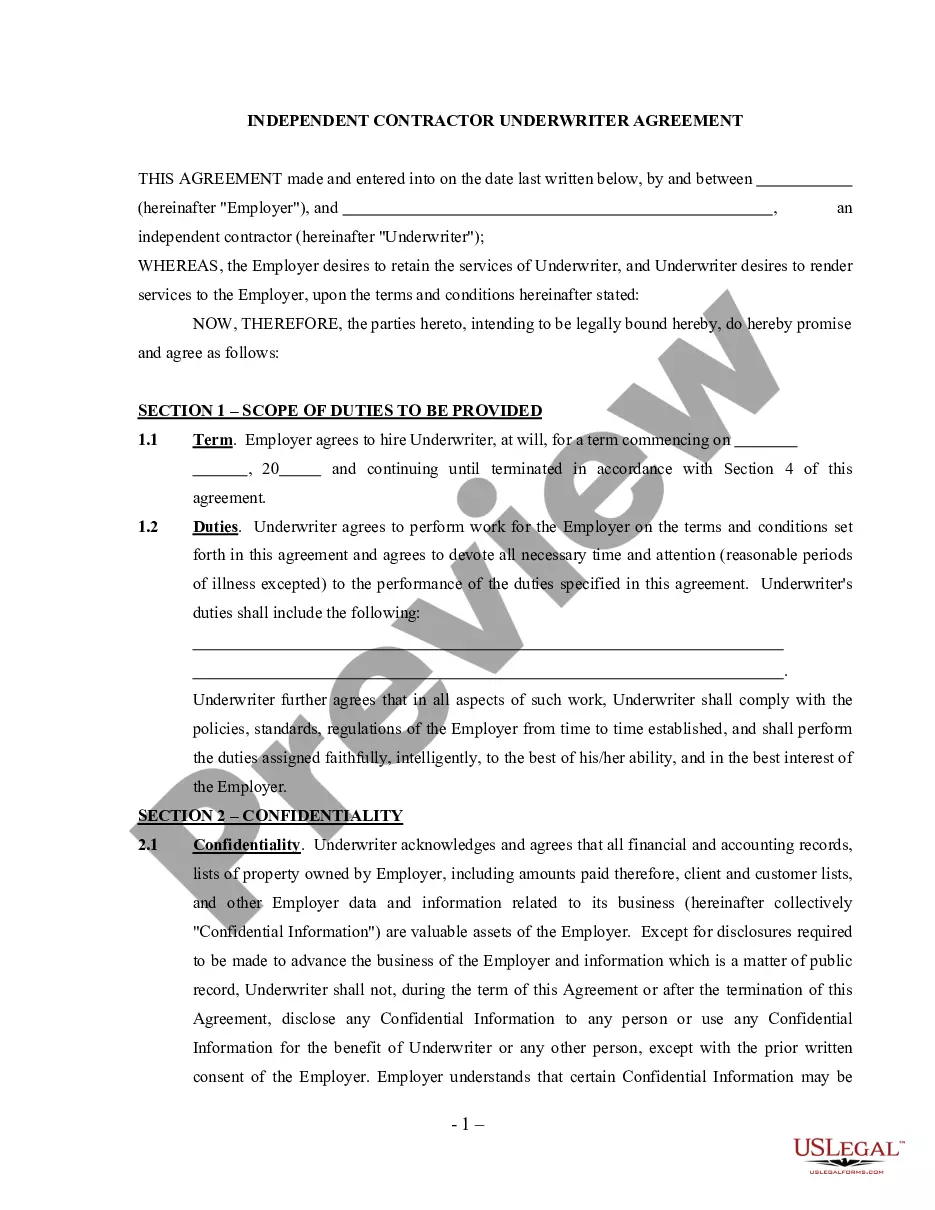
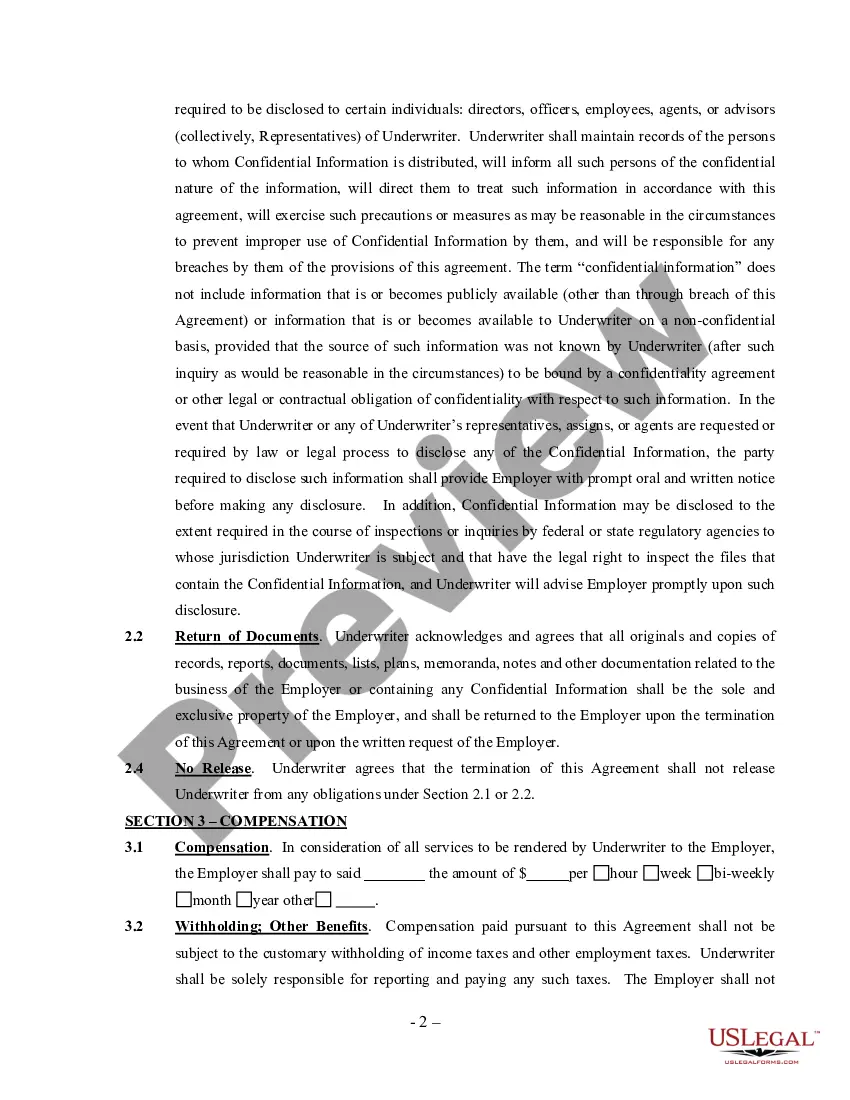
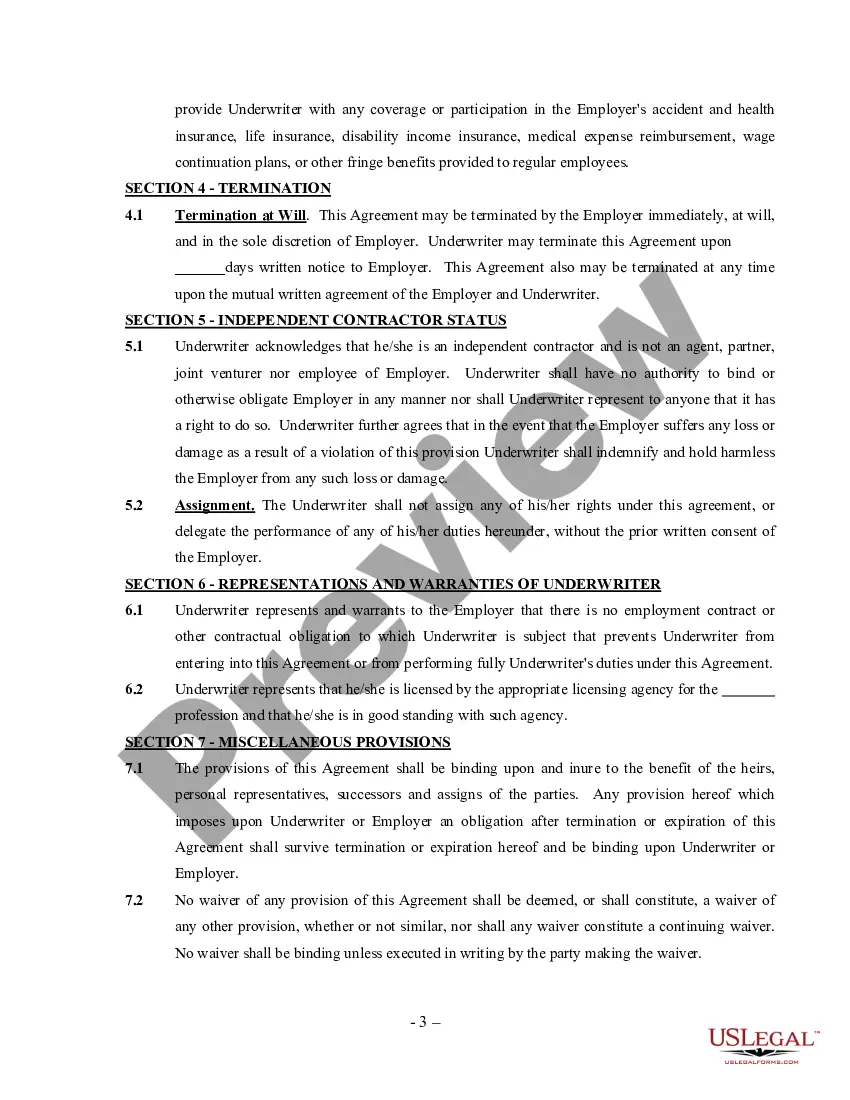
Employer hires an underwriter as an independent contractor to provide underwriting services for third parties as specified in the Agreement.
Texas Underwriter Agreement - Self-Employed Independent Contractor
State:
Multi-State
Control #:
US-INDC-191
Format:
Word;
Rich Text
Instant download
Description
Free preview
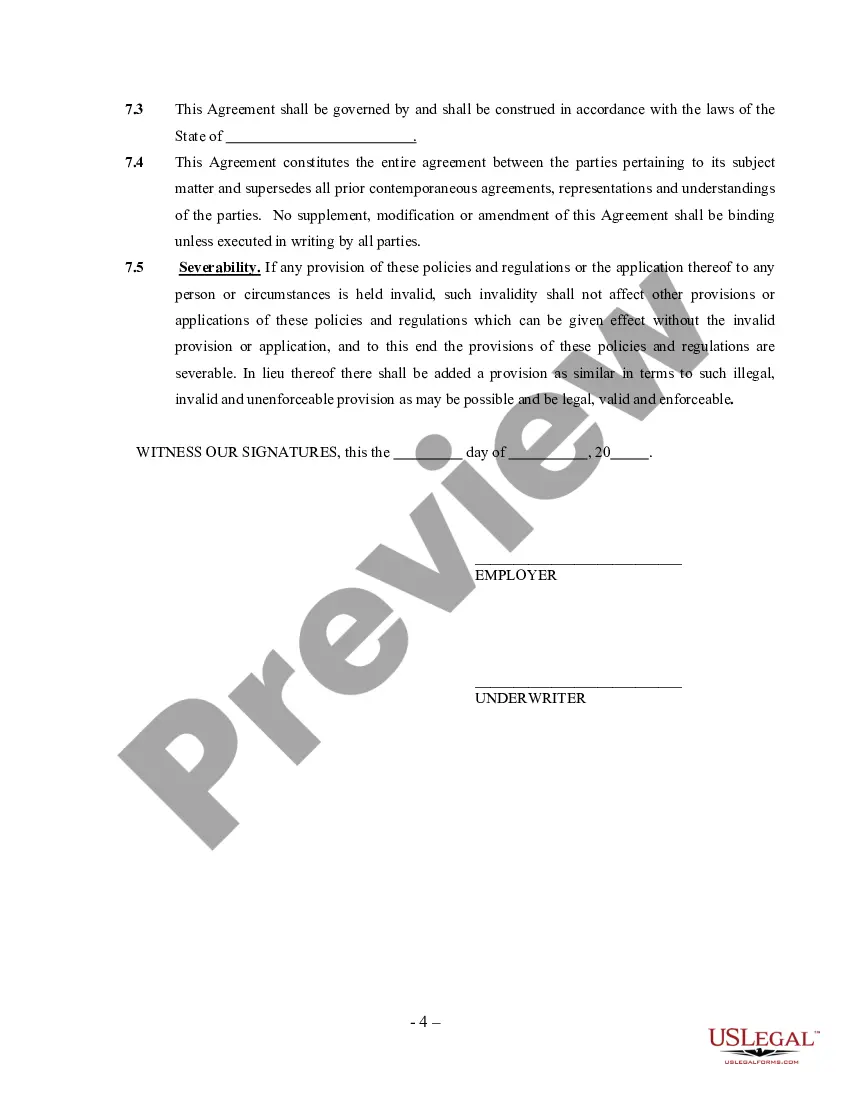
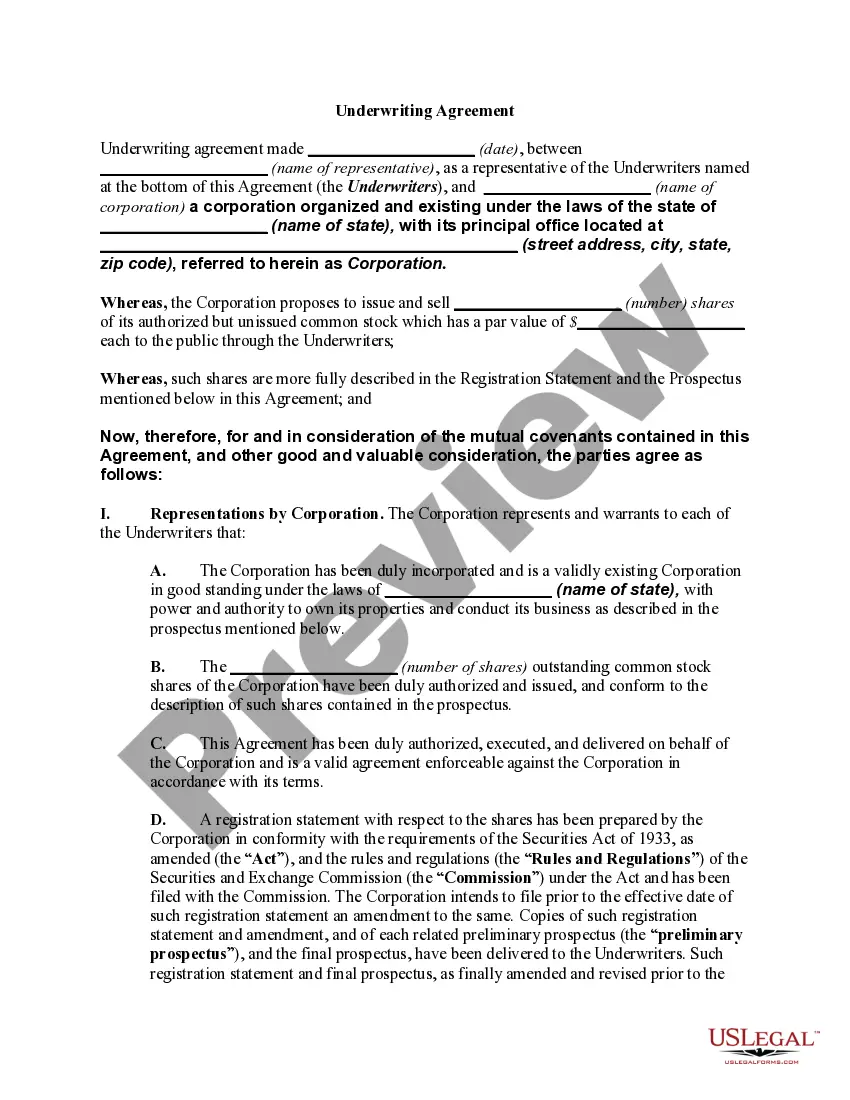
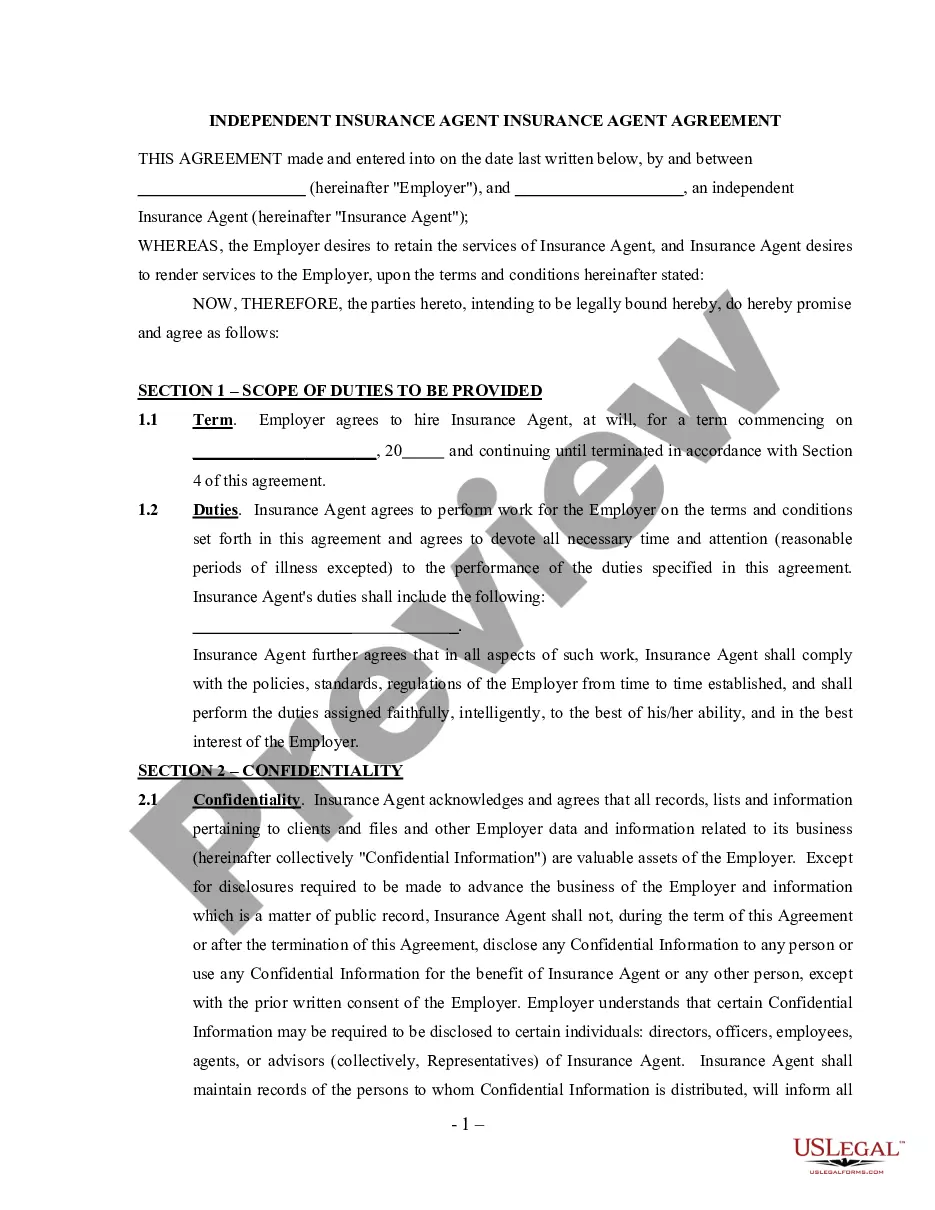
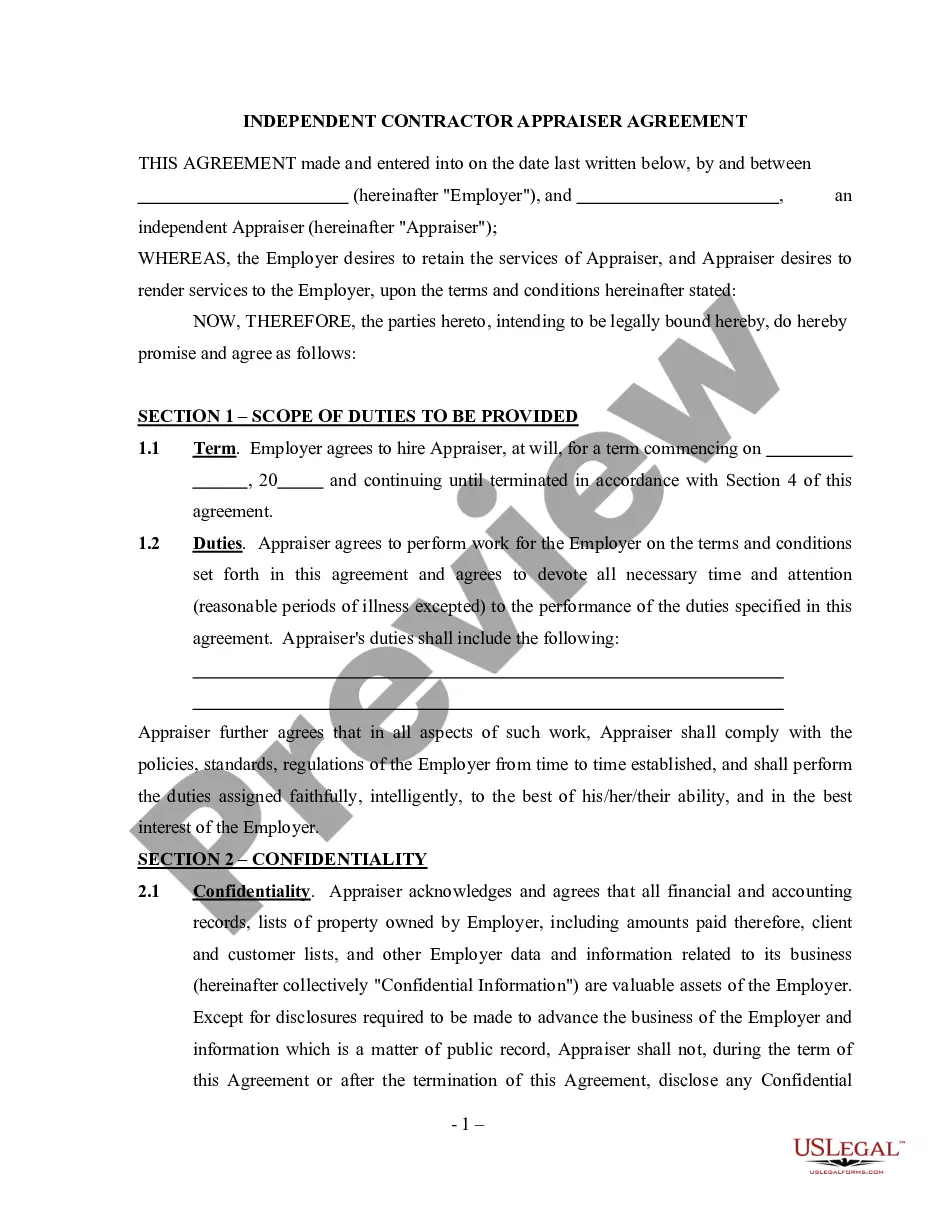


How to fill out Underwriter Agreement - Self-Employed Independent Contractor?
Are you presently in the location where you require documents for either business or personal purposes almost every day.
There are numerous legal document templates accessible online, but locating reliable versions is challenging.
US Legal Forms provides a vast array of form templates, such as the Texas Underwriter Agreement - Self-Employed Independent Contractor, designed to meet state and federal regulations.
Once you find the correct form, click Get now.
Choose the pricing plan you want, provide the necessary information to create your account, and pay for your order using your PayPal or credit card.
- If you are already acquainted with the US Legal Forms website and have a free account, simply Log In.
- Then, you can obtain the Texas Underwriter Agreement - Self-Employed Independent Contractor template.
- If you do not possess an account and wish to start using US Legal Forms, follow these steps.
- Find the form you need and ensure it is for the correct area/state.
- Utilize the Preview button to view the document.
- Check the description to confirm you have selected the right form.
- If the form is not what you are looking for, use the Search field to locate the form that fits your needs.
Form popularity
FAQ
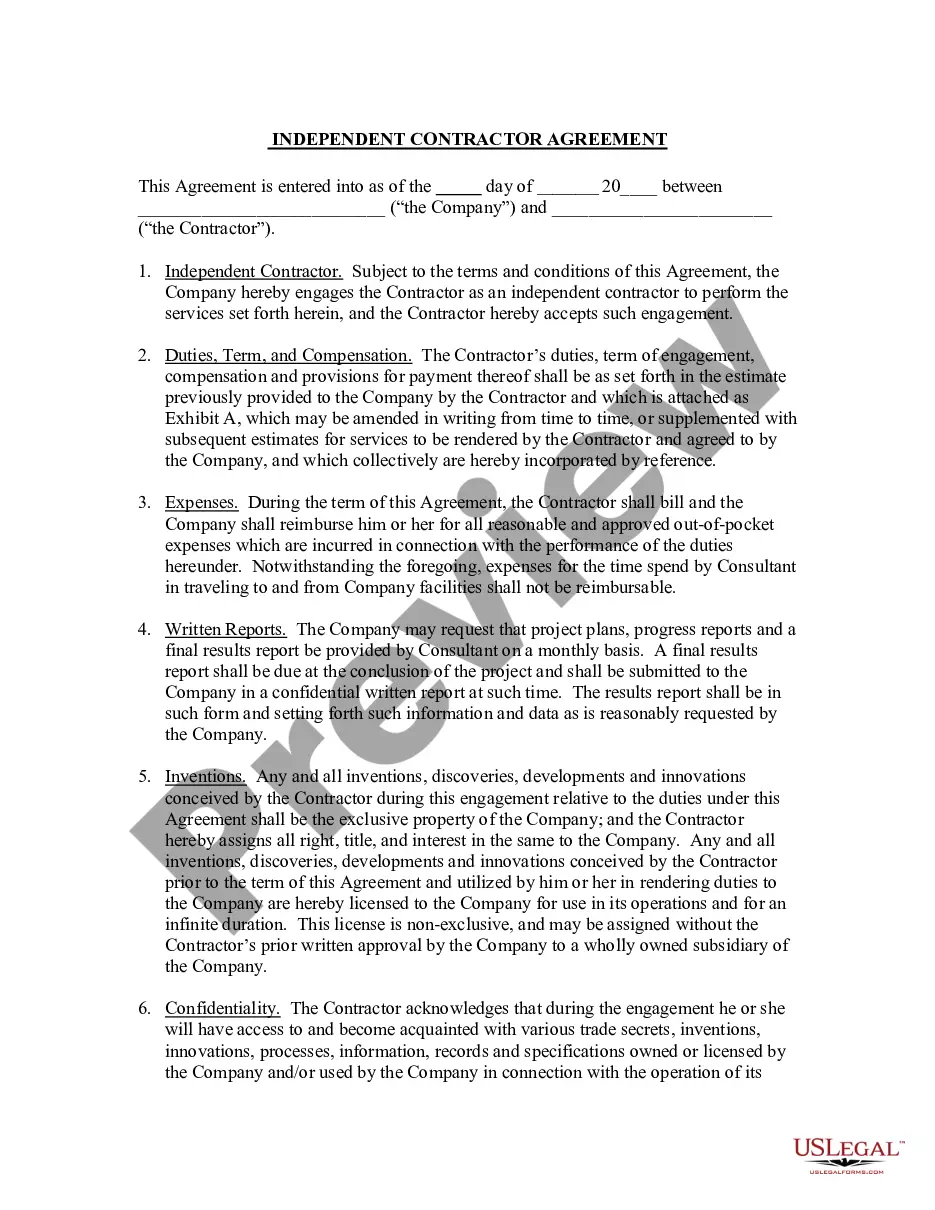
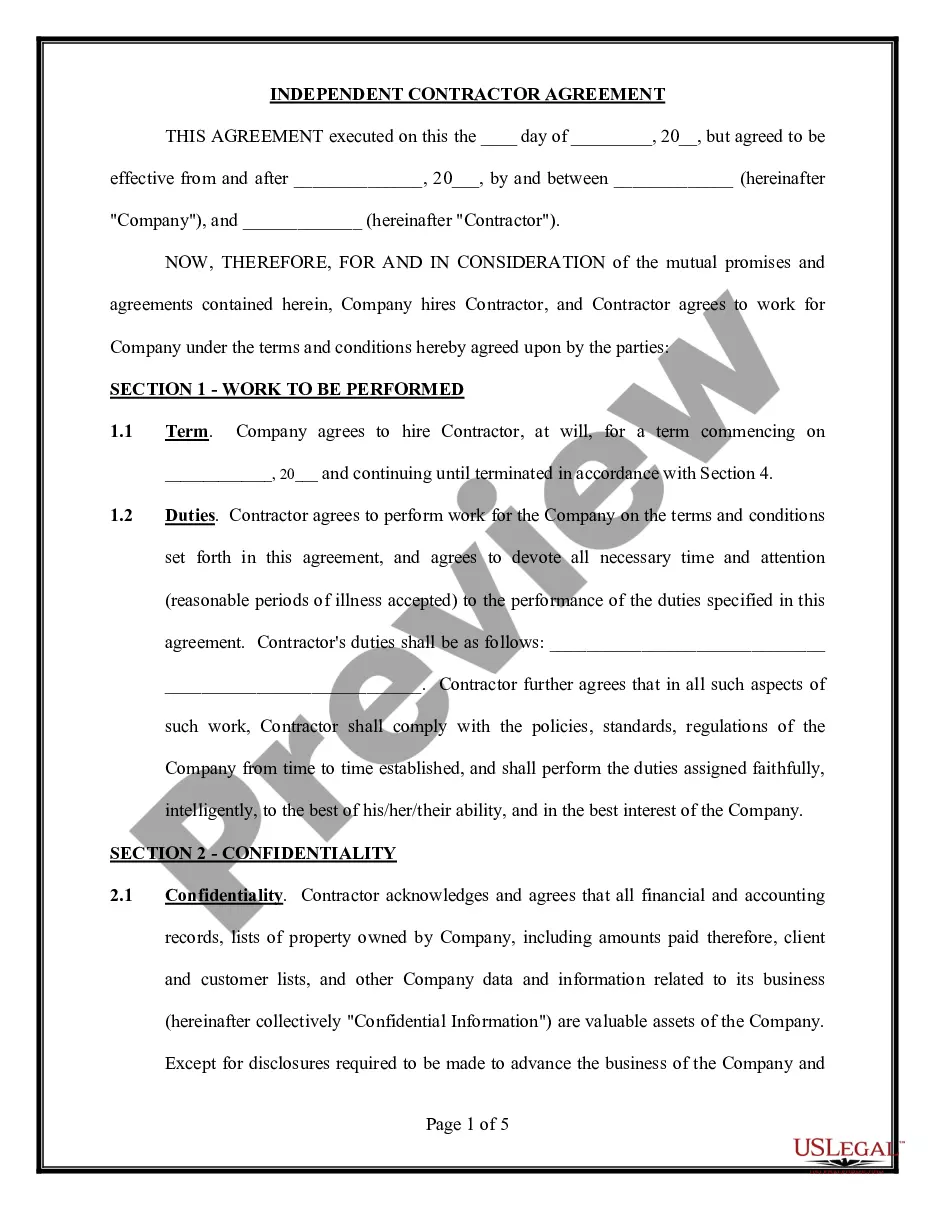
The purpose of an independent contractor agreement is to outline the terms of a working relationship. This contract protects both parties by specifying the scope of work, payment terms, and deadlines. It's a useful tool to clarify expectations and responsibilities. Using a Texas Underwriter Agreement - Self-Employed Independent Contractor can provide a solid foundation for your business dealings.
An independent contractor must make at least $600 to receive a 1099 form. This form reports income to the IRS, indicating your earnings as a self-employed individual. It's crucial to track your income diligently to ensure you receive the necessary documentation. Utilizing a Texas Underwriter Agreement - Self-Employed Independent Contractor can help you manage income reporting effectively.
The new federal rule focuses on the criteria for classifying workers as independent contractors. This includes aspects like the degree of control and opportunity for profit or loss. Understanding these rules can help you navigate your status more effectively. Referencing a Texas Underwriter Agreement - Self-Employed Independent Contractor is essential in ensuring compliance with these new regulations.
In Texas, an independent contractor qualifies if they can control how they perform their work. This includes determining their own hours, methods, and tools for completing tasks. Additionally, an independent contractor does not receive employee benefits like health insurance or retirement plans. Using a Texas Underwriter Agreement - Self-Employed Independent Contractor helps clarify these terms.
Yes, an independent contractor is considered self-employed. This designation means you manage your own business affairs, including paying your own taxes. It's essential to understand that independent contractors operate without the typical employer-employee relationship. This classification often impacts how you manage contracts, such as a Texas Underwriter Agreement - Self-Employed Independent Contractor.
Writing an independent contractor agreement involves several key components. Begin with the identification of both parties, followed by a detailed description of the services provided. Incorporate terms regarding payment, confidentiality, and termination. Consider using platforms like uslegalforms to access templates that streamline this process and ensure your contract adheres to the Texas Underwriter Agreement - Self-Employed Independent Contractor guidelines.
In Texas, the independent contractor agreement is a formal document outlining the relationship between a business and a contractor. This agreement specifies the duties, rights, and obligations of both parties, particularly focusing on expectations regarding work performance and financial arrangements. Utilizing a professional template can help ensure your agreement complies with local laws and meets the requirements of the Texas Underwriter Agreement - Self-Employed Independent Contractor.
To complete an independent contractor form, start by providing your basic information along with the contractor's details. Following this, specify the services to be rendered and the agreed payment structure. Additionally, ensure you include any pertinent tax information, which is crucial for compliance with regulations surrounding the Texas Underwriter Agreement - Self-Employed Independent Contractor.
Filling out an independent contractor agreement is straightforward. First, clearly define the scope of work, outlining the tasks you expect the contractor to perform. Next, include details about payment terms, timelines, and any relevant deadlines. Finally, both parties should sign the document to confirm the agreement, ensuring it's legally binding.
Creating an independent contractor agreement requires clarity and detail to ensure both parties understand their responsibilities. Start by defining the scope of work and the specific tasks the contractor will perform. Next, include important elements like payment terms, deadlines, and confidentiality clauses. For those looking for a structured approach, the Texas Underwriter Agreement for Self-Employed Independent Contractors on the US Legal Forms platform provides a helpful template that you can customize to meet your specific needs.