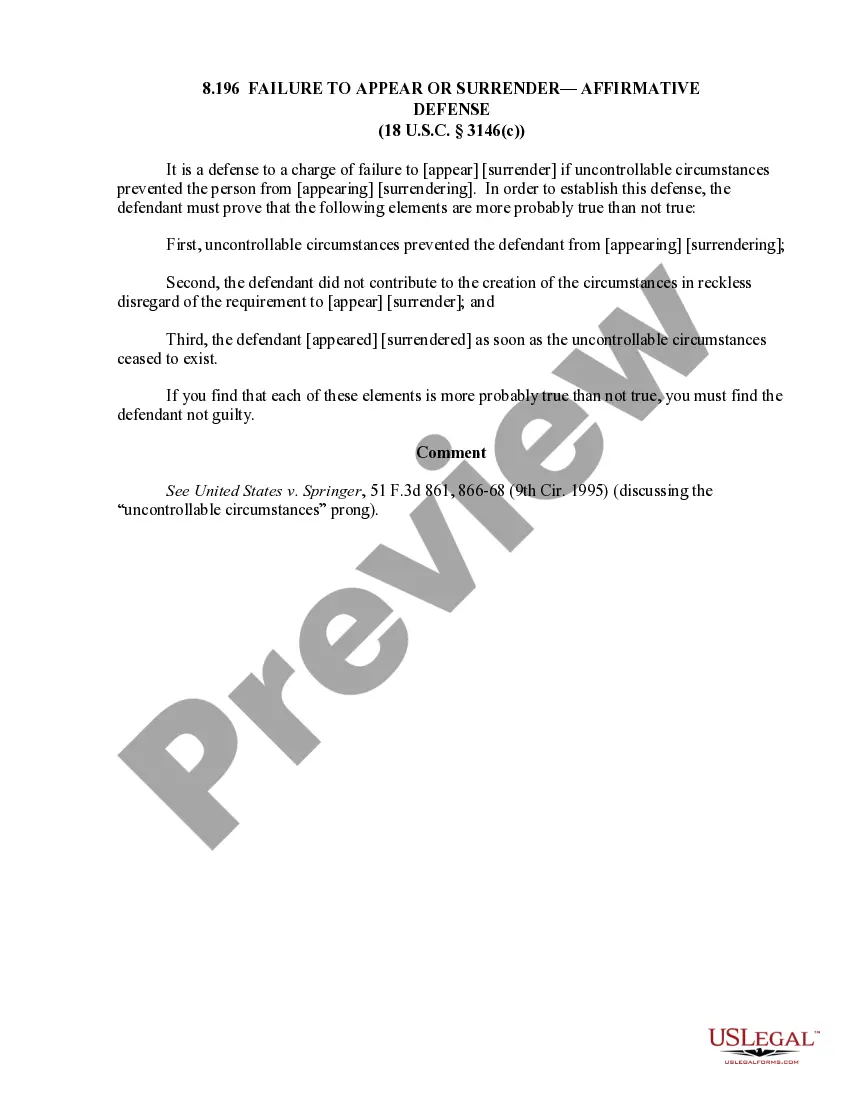
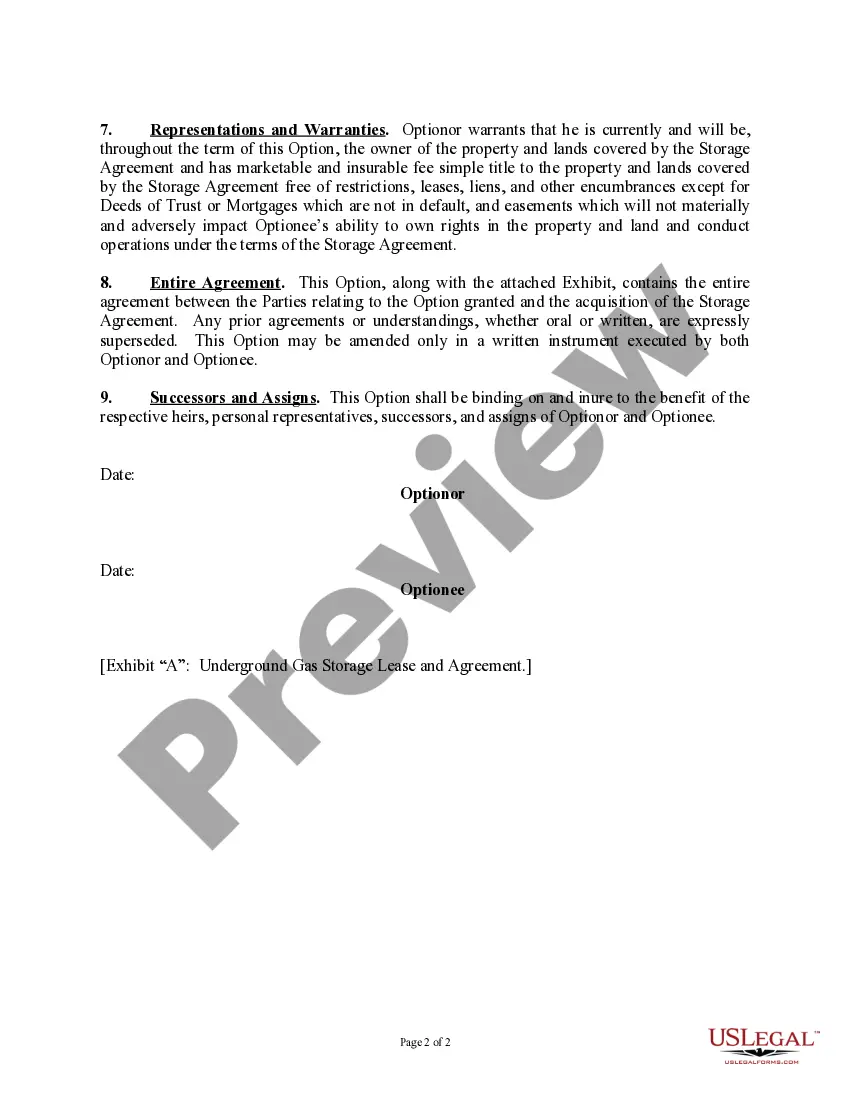
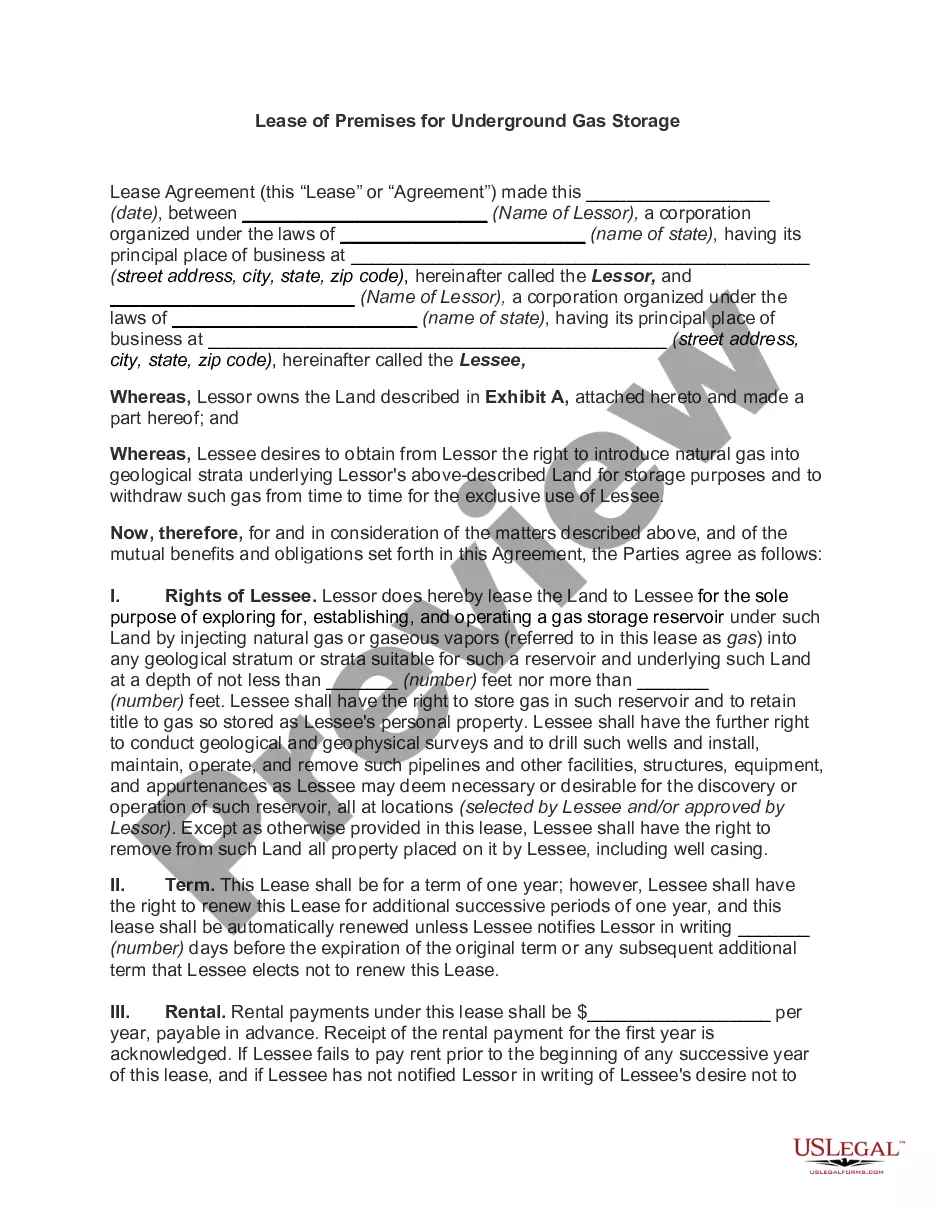
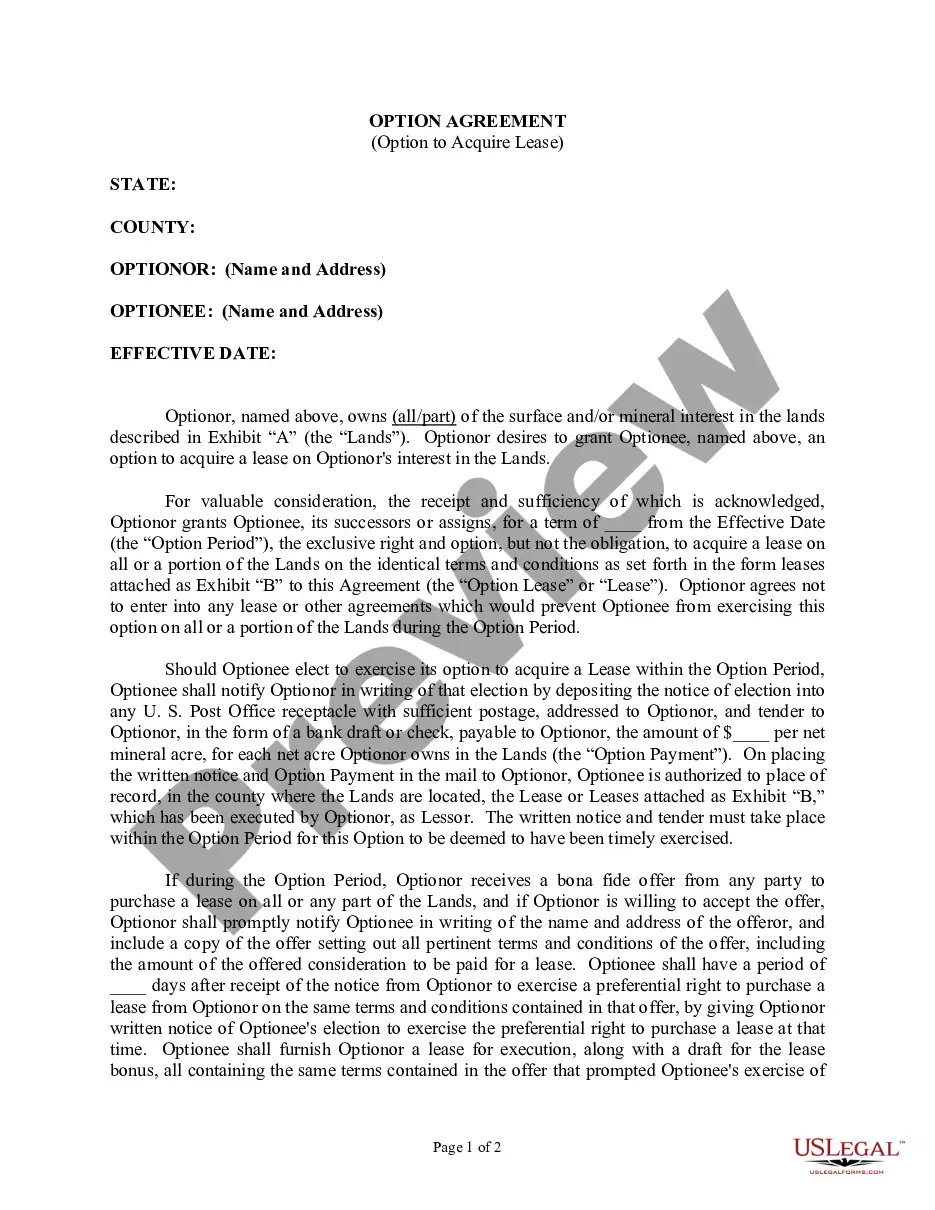
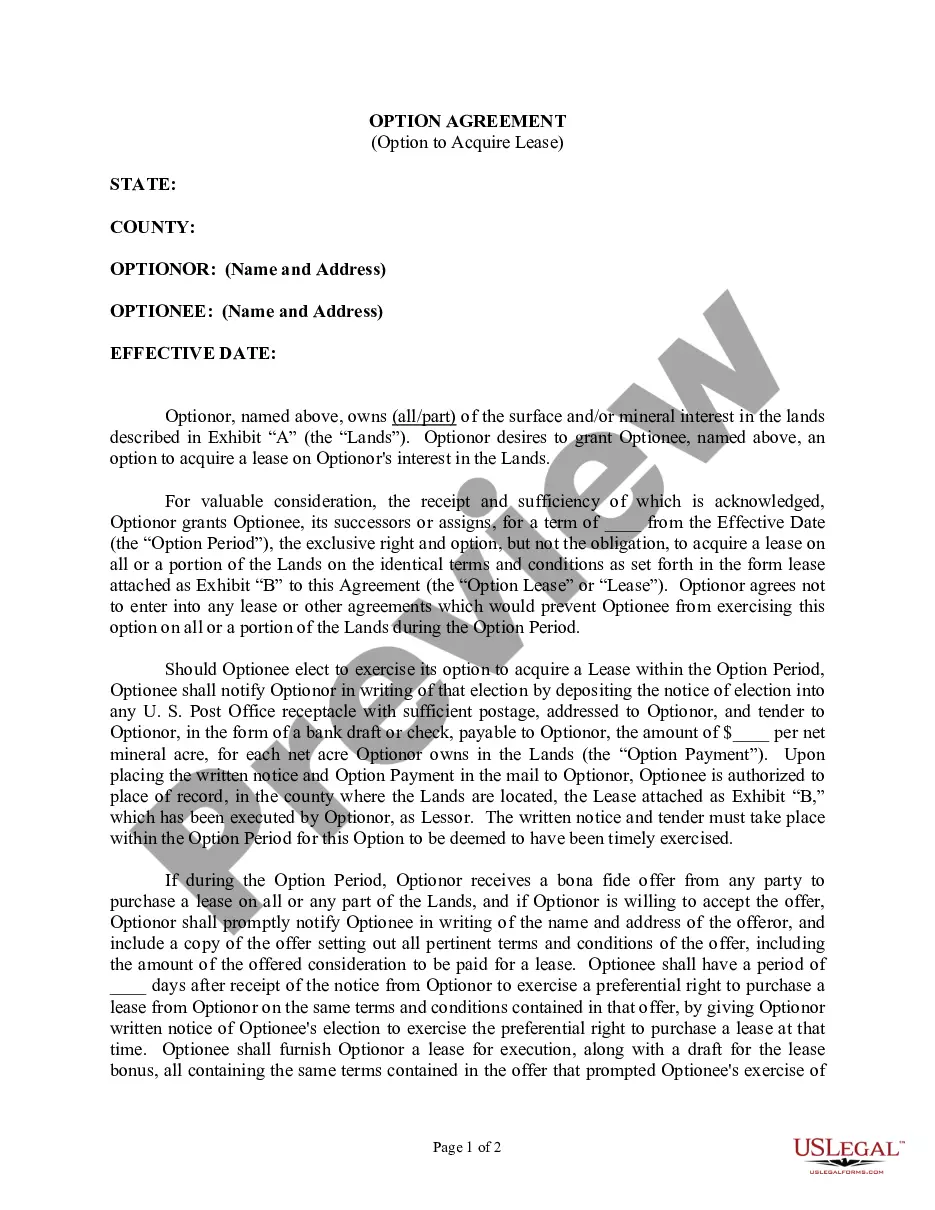
Texas Option Agreement (to Aquire Underground Gas Storage Lease)
Description
Get your form ready online
Our built-in tools help you complete, sign, share, and store your documents in one place.
Make edits, fill in missing information, and update formatting in US Legal Forms—just like you would in MS Word.
Download a copy, print it, send it by email, or mail it via USPS—whatever works best for your next step.
Sign and collect signatures with our SignNow integration. Send to multiple recipients, set reminders, and more. Go Premium to unlock E-Sign.
If this form requires notarization, complete it online through a secure video call—no need to meet a notary in person or wait for an appointment.
We protect your documents and personal data by following strict security and privacy standards.

Make edits, fill in missing information, and update formatting in US Legal Forms—just like you would in MS Word.

Download a copy, print it, send it by email, or mail it via USPS—whatever works best for your next step.

Sign and collect signatures with our SignNow integration. Send to multiple recipients, set reminders, and more. Go Premium to unlock E-Sign.

If this form requires notarization, complete it online through a secure video call—no need to meet a notary in person or wait for an appointment.

We protect your documents and personal data by following strict security and privacy standards.
Looking for another form?



How to fill out Option Agreement (to Aquire Underground Gas Storage Lease)?
Discovering the right legitimate document design can be quite a have a problem. Of course, there are a variety of web templates available on the net, but how do you get the legitimate form you require? Make use of the US Legal Forms web site. The support gives thousands of web templates, such as the Texas Option Agreement (to Aquire Underground Gas Storage Lease), which can be used for enterprise and private demands. All the forms are checked out by pros and meet up with federal and state specifications.
If you are previously authorized, log in in your accounts and then click the Down load switch to obtain the Texas Option Agreement (to Aquire Underground Gas Storage Lease). Use your accounts to search from the legitimate forms you may have ordered previously. Go to the My Forms tab of your own accounts and acquire an additional duplicate of your document you require.
If you are a new customer of US Legal Forms, listed below are easy directions that you can adhere to:
- Very first, make sure you have selected the proper form to your metropolis/area. You are able to examine the form using the Review switch and browse the form information to guarantee it will be the best for you.
- If the form is not going to meet up with your preferences, utilize the Seach discipline to find the appropriate form.
- When you are certain that the form is proper, select the Purchase now switch to obtain the form.
- Choose the pricing program you want and type in the required information. Make your accounts and pay for the order with your PayPal accounts or Visa or Mastercard.
- Choose the file format and acquire the legitimate document design in your system.
- Full, modify and produce and sign the obtained Texas Option Agreement (to Aquire Underground Gas Storage Lease).
US Legal Forms may be the biggest library of legitimate forms that you will find a variety of document web templates. Make use of the service to acquire skillfully-made papers that adhere to express specifications.
Form popularity
FAQ
Primary Term and Delay Rentals Generally, it is a negotiated two to five years. Otherwise, the predrafted Producers 88 lease form contains a ten-year term.
In Texas, the term "lease" is in some ways a misnomer. In fact, an oil and gas lease is a conveyance by the Lessor of the fee mineral estate to the Lessee, for a term. As long as the lease is in force, the Lessee is the owner of the minerals covered by the lease, and the Lessor is the owner of a royalty interest only.
The surface use agreement will specify what the oil and gas company or operator can do on the landowner's land in developing the oil and gas, where development can take place, and what compensation the landowner will receive.
Oil and Gas leasing is a contract through which a landowner sanctions the exploration for and production of oil and gas on their land in exchange for an agreed royalty price.
Will My Federal Lease Be Extended? Like virtually all modern oil and gas leases, federal leases have a fixed primary term (typically 10 years)[1] and a habendum (i.e., ?so long thereafter?) clause.
The royalty percentage is usually 12.5% to 15% but can change based on regional regulations or negotiations. Types of Leases: There are different types of oil and gas leases, and they affect royalty calculations differently.
A Texas rent-to-own lease agreement is a standard rental contract with an added option to purchase clause for the tenant. The tenant will commonly have the lease period to buy the property. When electing to buy, the details of the sale will be entered into a purchase agreement.
Recording: Sec. 5.021, Texas Property Code, any lease exceeding more than one year must be recorded in the same manner as a deed of conveyance in order to be valid against third parties without notice. Leases must be filed for record in the county in which the lease property is located.