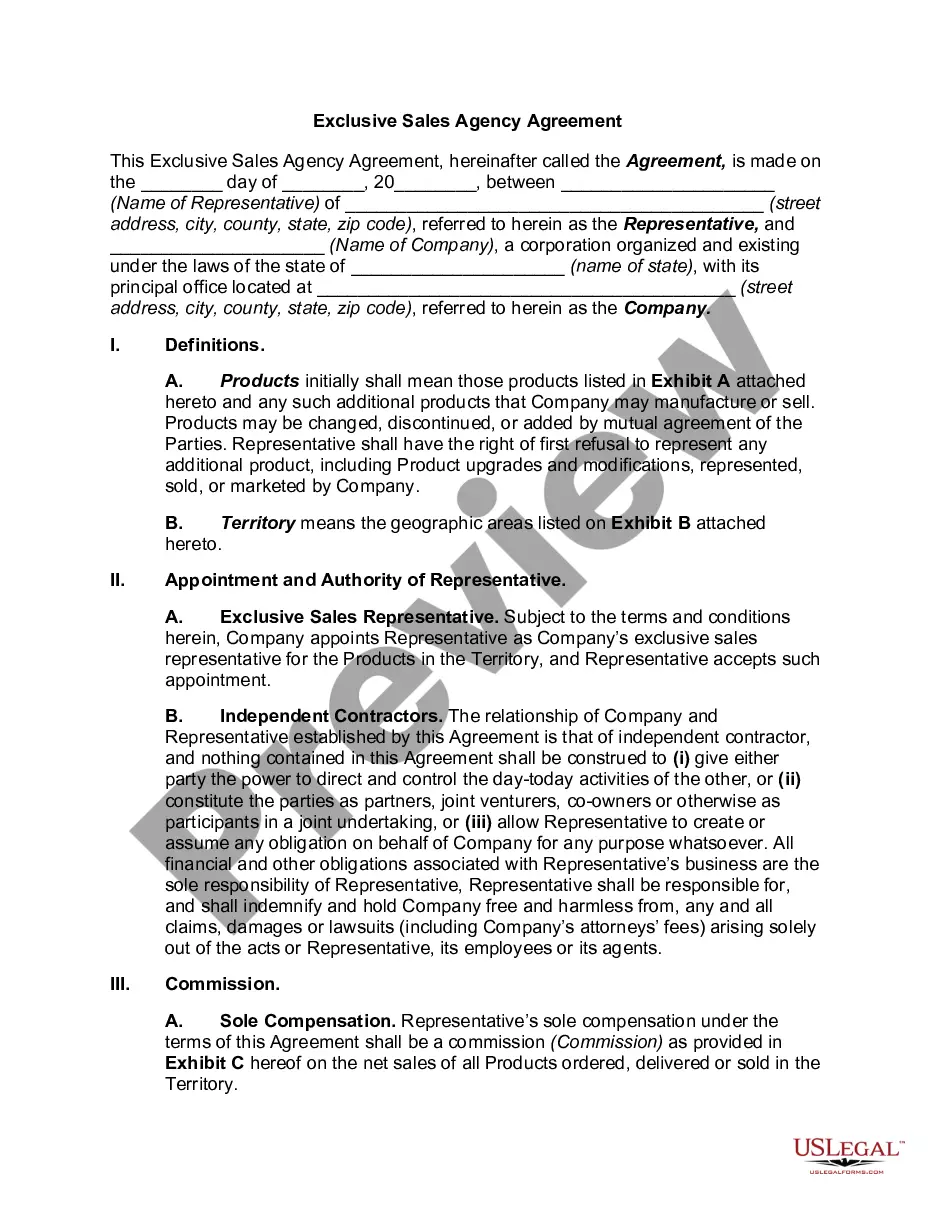
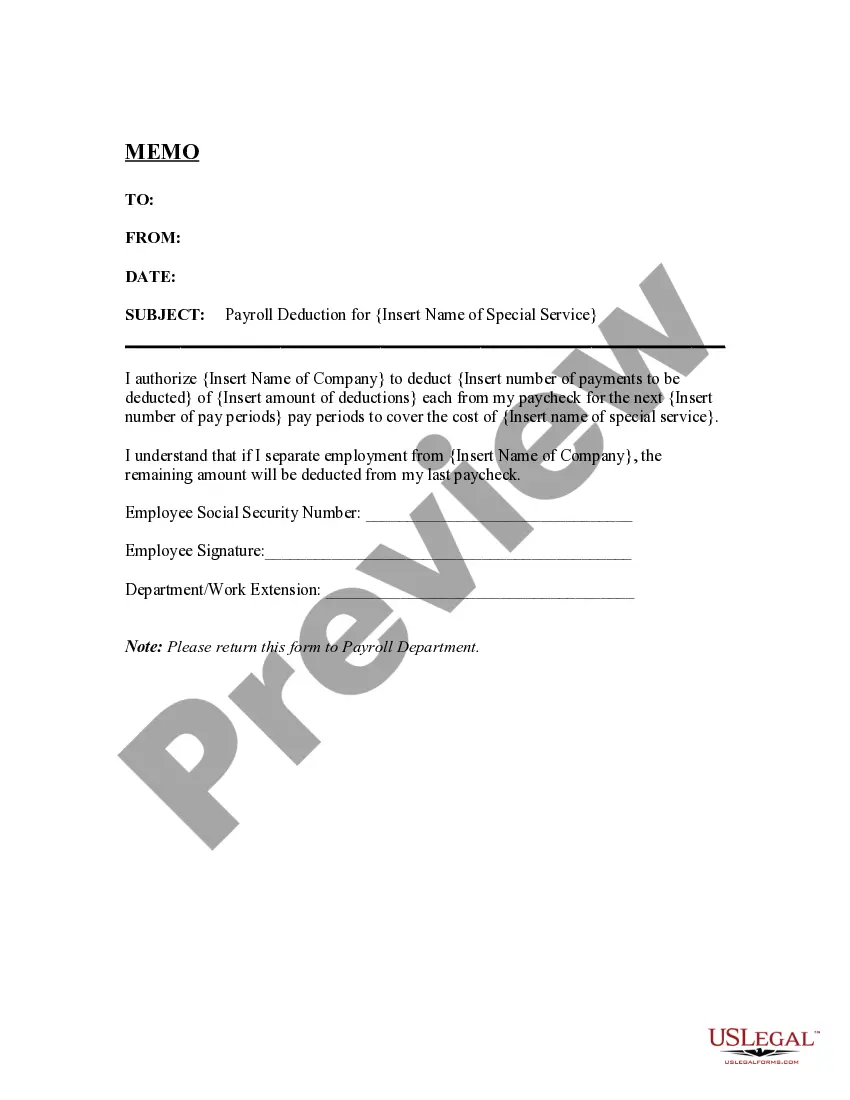
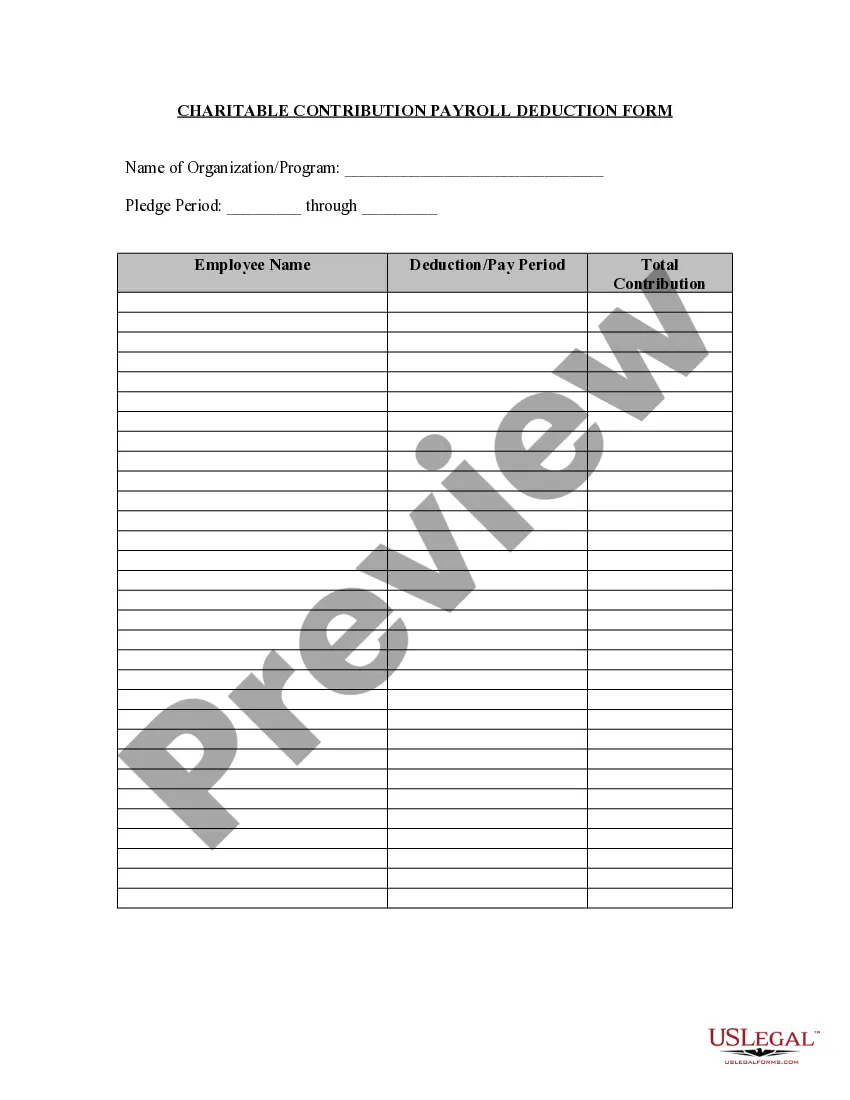
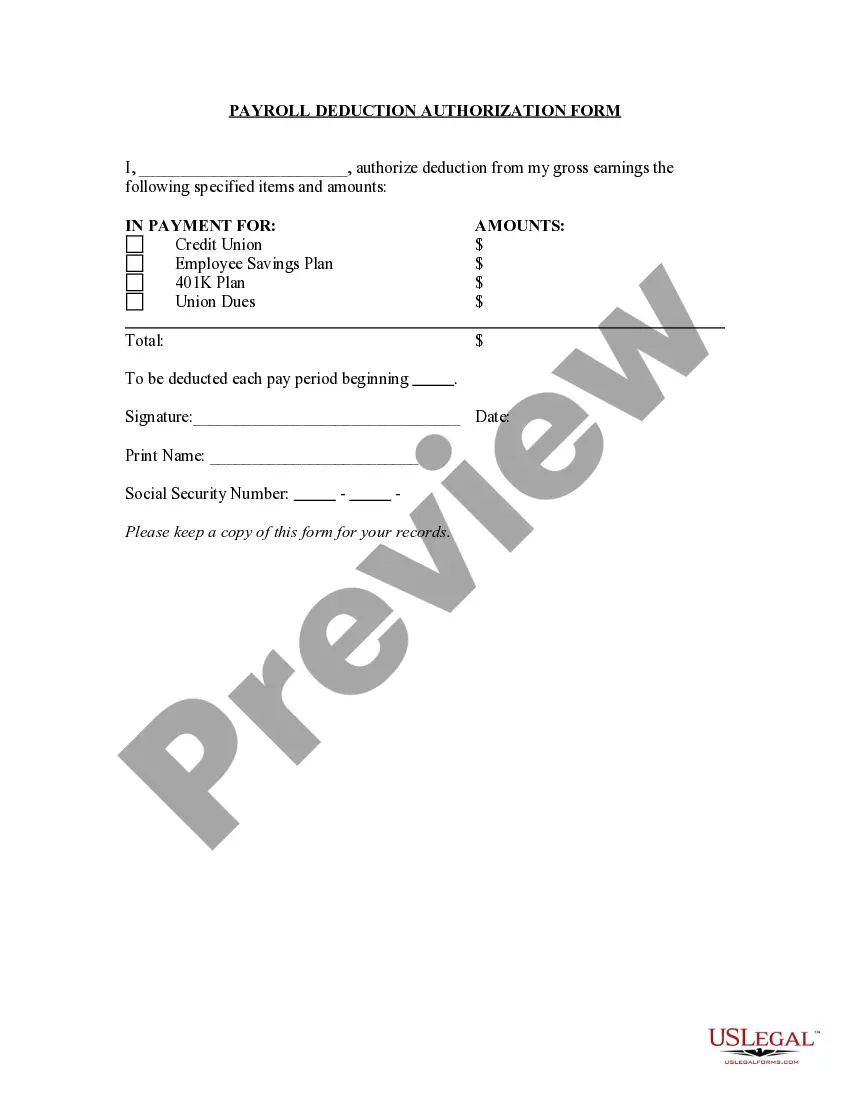
Texas Payroll Deduction - Special Services
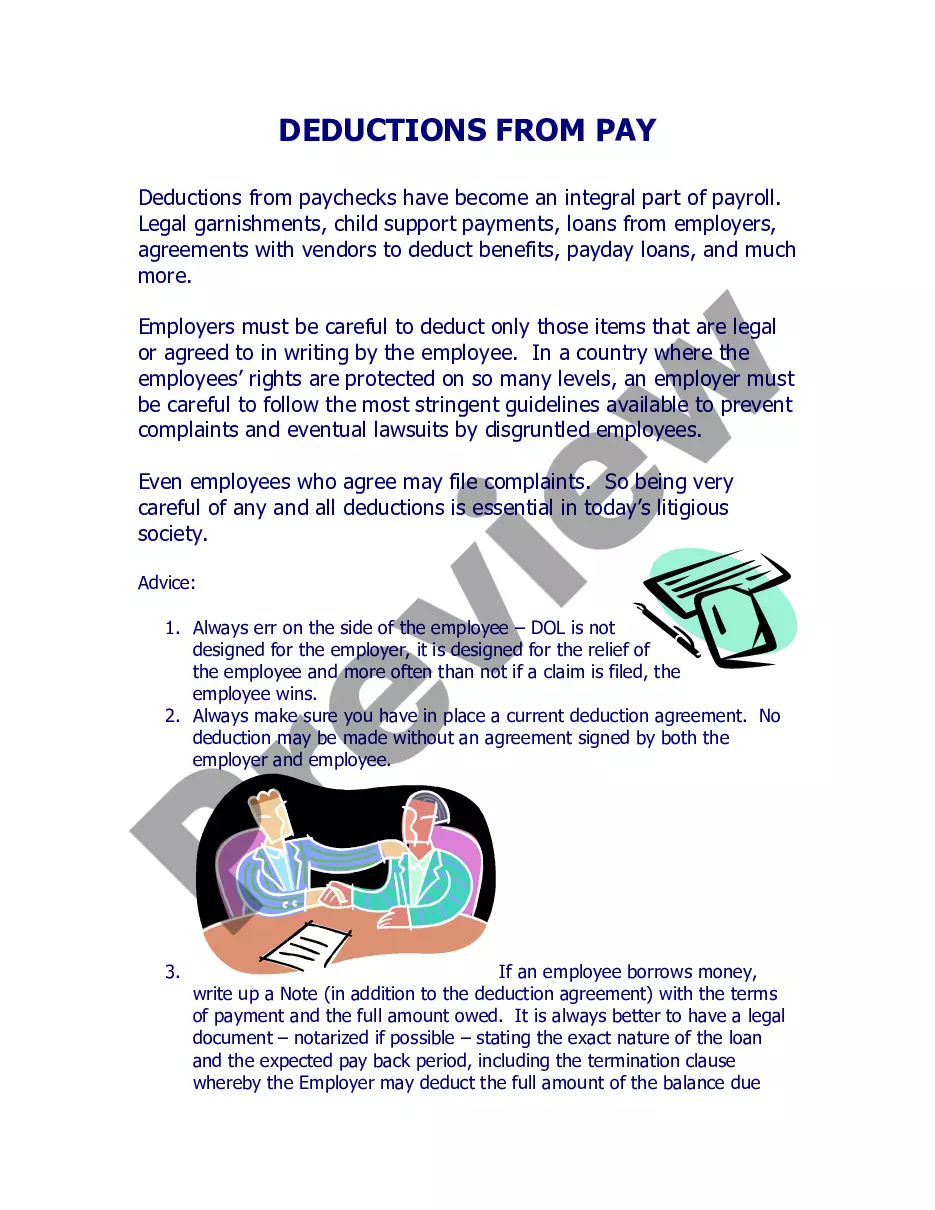
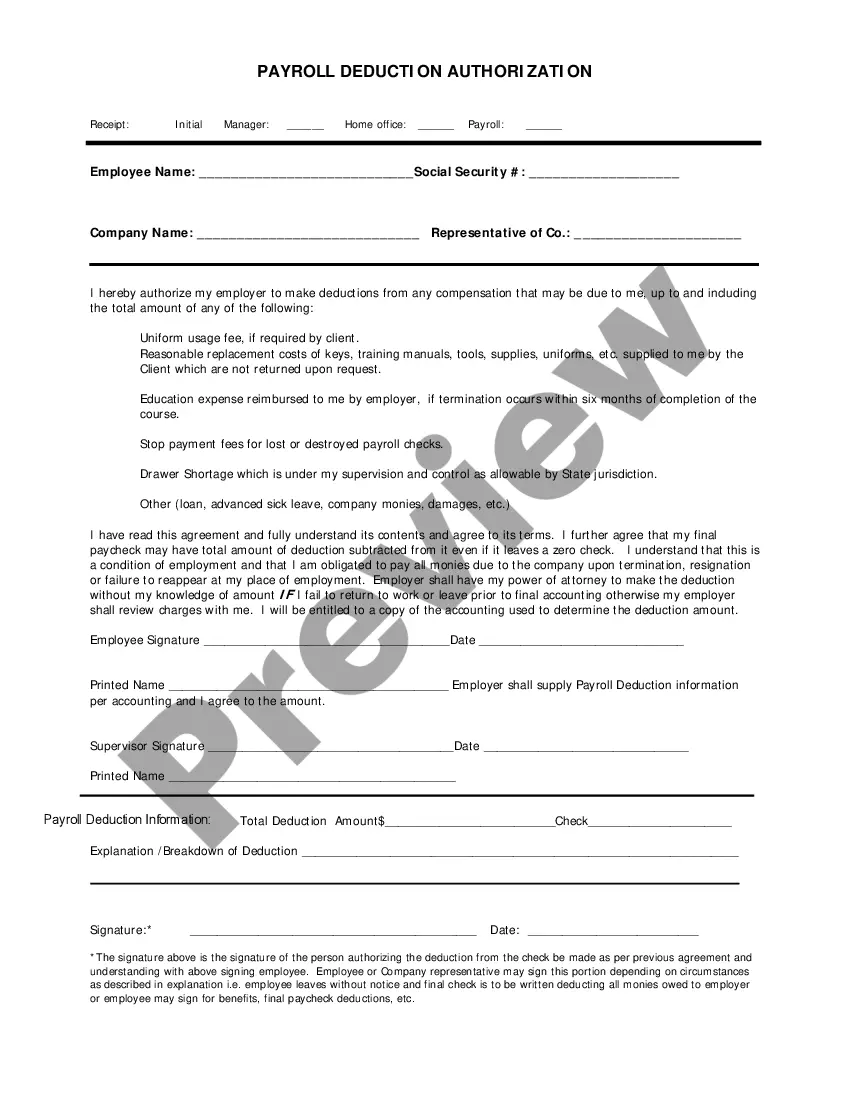
Description
Get your form ready online
Our built-in tools help you complete, sign, share, and store your documents in one place.
Make edits, fill in missing information, and update formatting in US Legal Forms—just like you would in MS Word.
Download a copy, print it, send it by email, or mail it via USPS—whatever works best for your next step.
Sign and collect signatures with our SignNow integration. Send to multiple recipients, set reminders, and more. Go Premium to unlock E-Sign.
If this form requires notarization, complete it online through a secure video call—no need to meet a notary in person or wait for an appointment.
We protect your documents and personal data by following strict security and privacy standards.

Make edits, fill in missing information, and update formatting in US Legal Forms—just like you would in MS Word.

Download a copy, print it, send it by email, or mail it via USPS—whatever works best for your next step.

Sign and collect signatures with our SignNow integration. Send to multiple recipients, set reminders, and more. Go Premium to unlock E-Sign.

If this form requires notarization, complete it online through a secure video call—no need to meet a notary in person or wait for an appointment.

We protect your documents and personal data by following strict security and privacy standards.
Looking for another form?
How to fill out Payroll Deduction - Special Services?
It is feasible to invest hours online searching for the proper document format that fulfills the national and regional requirements you require.
US Legal Forms provides a vast array of valid templates that are reviewed by experts.
You can effortlessly download or print the Texas Payroll Deduction - Special Services from our services.
First, ensure you have chosen the correct format for the state/city you select. Review the form outline to verify you have chosen the appropriate document. If available, use the Preview option to view the format as well.
- If you possess a US Legal Forms account, you can Log In and then click the Download option.
- Afterwards, you can complete, modify, print, or sign the Texas Payroll Deduction - Special Services.
- Each legal document format you obtain is your property indefinitely.
- To acquire another copy of a purchased form, go to the My documents tab and select the relevant option.
- If you are using the US Legal Forms website for the first time, follow the simple instructions listed below.
Form popularity
FAQ
What are payroll deductions?Income tax.Social security tax.401(k) contributions.Wage garnishments.Child support payments.
Unlawful deduction of wages is when a worker or employee has been unpaid or underpaid wages. There must be an actual deduction of wages, not just a proposal to deduct wages. The Employment Rights Act 1996 (ERA) protects employees and workers from having unauthorised deductions made from their wages.
Some mandatory payroll tax deductions that employers are required by law to withhold from an employee's paycheck include: Federal income tax withholding. Social Security & Medicare taxes also known as FICA taxes. State income tax withholding.
There are three basic categories of deductions employers make from pay: legally required deductions, deductions for the employer's convenience and deductions for the employee's benefit.
In the state of Texas, employers can make an employee pay for mistakes but only if the employee previously agreed in writing to allow deductions for mistakes to be taken from their paycheck. Without prior written consent, an employer cannot make an employee pay for mistakes.
In general, an employer is not permitted to deduct from an employee's wages unless the deduction is authorized by law, such as with court-ordered child support or state or federal taxes. However, if an employee agrees in writing to have wages deducted for a lawful purpose, then deductions are permitted.
In general, an employer is not permitted to deduct from an employee's wages unless the deduction is authorized by law, such as with court-ordered child support or state or federal taxes. However, if an employee agrees in writing to have wages deducted for a lawful purpose, then deductions are permitted.
There are four basic types of payroll taxes: federal income, Social Security, Medicare, and federal unemployment. Employees must pay Social Security and Medicare taxes through payroll deductions, and most employers also deduct federal income tax payments.
Pre-tax deductions: Medical and dental benefits, 401(k) retirement plans (for federal and most state income taxes) and group-term life insurance. Mandatory deductions: Federal and state income tax, FICA taxes, and wage garnishments. Post-tax deductions: Garnishments, Roth IRA retirement plans and charitable donations.
The law on wage deductionsTaking money from wages without consent or contractual provision can result in a claim for unlawful deduction of wages, even if the individual has been employed for less than two years.