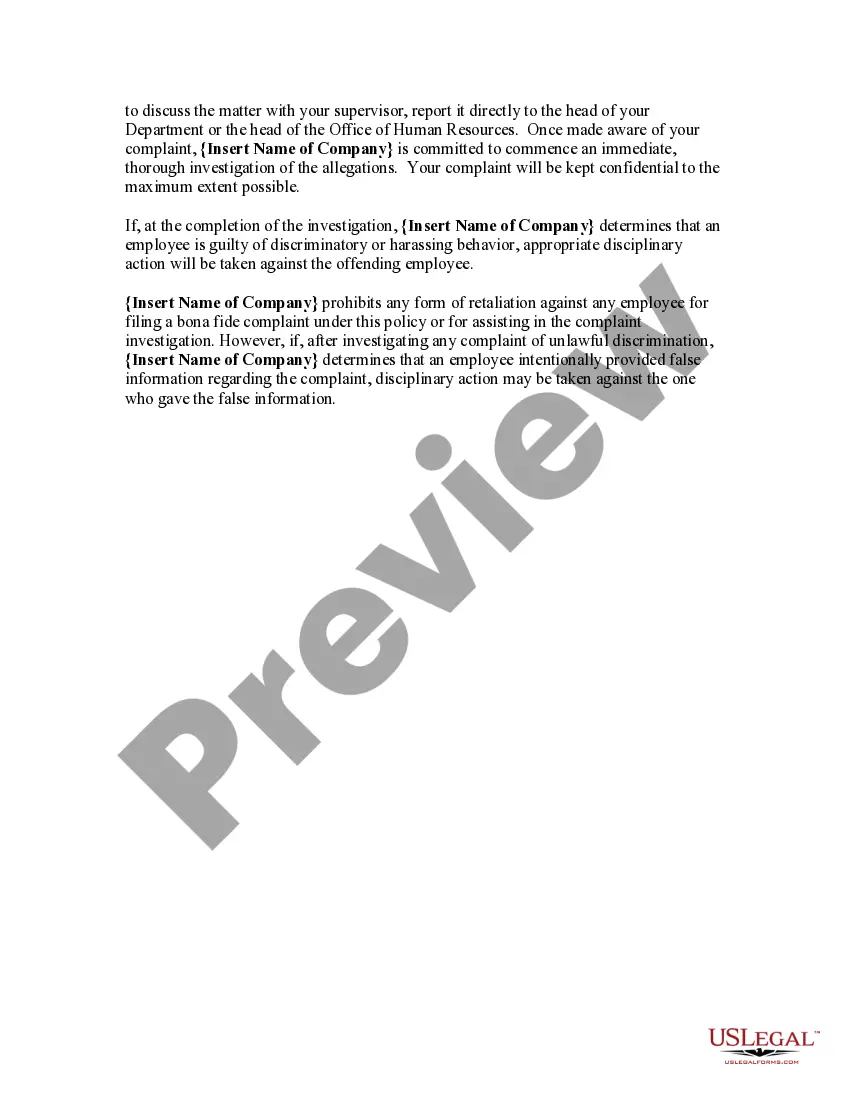
Texas Career Planning Policy
Description

Get your form ready online
Our built-in tools help you complete, sign, share, and store your documents in one place.
Make edits, fill in missing information, and update formatting in US Legal Forms—just like you would in MS Word.
Download a copy, print it, send it by email, or mail it via USPS—whatever works best for your next step.
Sign and collect signatures with our SignNow integration. Send to multiple recipients, set reminders, and more. Go Premium to unlock E-Sign.
If this form requires notarization, complete it online through a secure video call—no need to meet a notary in person or wait for an appointment.
We protect your documents and personal data by following strict security and privacy standards.

Make edits, fill in missing information, and update formatting in US Legal Forms—just like you would in MS Word.

Download a copy, print it, send it by email, or mail it via USPS—whatever works best for your next step.

Sign and collect signatures with our SignNow integration. Send to multiple recipients, set reminders, and more. Go Premium to unlock E-Sign.

If this form requires notarization, complete it online through a secure video call—no need to meet a notary in person or wait for an appointment.

We protect your documents and personal data by following strict security and privacy standards.
Looking for another form?



How to fill out Career Planning Policy?
If you need to compile, obtain, or create official document templates, utilize US Legal Forms, the largest assortment of legal forms available online.
Take advantage of the site's straightforward and user-friendly search feature to find the documents you require.
Diverse templates for business and personal purposes are organized by categories and states, or by keywords. Use US Legal Forms to get the Texas Career Planning Policy in just a few clicks.
Every legal document template you obtain is yours indefinitely. You have access to every form you have downloaded with your account. Click on the My documents section and choose a form to print or download again.
Stay competitive and download, print the Texas Career Planning Policy with US Legal Forms. There are many professional and state-specific forms available for your business or personal needs.
- If you are already a US Legal Forms subscriber, sign in to your account and click the Download button to receive the Texas Career Planning Policy.
- You can also access forms you previously downloaded from the My documents section of your account.
- If you are using US Legal Forms for the first time, follow the instructions below.
- Step 1. Ensure you have selected the form for the correct area/state.
- Step 2. Utilize the Review feature to examine the contents of the form. Be sure to read the description.
- Step 3. If you are unsatisfied with the form, use the Search box near the top of the screen to find other templates in the legal form format.
- Step 4. Once you have found the form you want, click the Get now button. Choose your preferred pricing plan and provide your information to register for an account.
- Step 5. Complete the transaction. You can use your credit card or PayPal account to finalize the payment.
- Step 6. Locate the template from the legal form and download it to your device.
- Step 7. Complete, edit, and print or sign the Texas Career Planning Policy.
Form popularity
FAQ
Career planning is the process of discovering educational, training and professional opportunities that suit your interests, passions and goals. Before searching for jobs, you should set achievable long-term goals that identify what you want to be doing along your career path at five, 10, 15, 20 years and so on.
6 Steps for Career PlanningStep 1: Explore Career Options.Step 2: Conduct Field Research.Step 3: Determine Your Job Target.Step 4: Build Your Credentials and Resume.Step 5: Prepare for Your Job Search.Step 6: Launch Your Job Search.
Plan, Do, Check, Act. PDCA (plandocheckact), shown in Figure 1, above, is a four-step strategy for carrying out change. You can use it to evaluate where you are in the career-development process and to identify your next steps.
5-Step Career Development ModelStep 1: Assessment. Get to know yourself - Begin to identify your values, interests, skills, personal traits and career satisfiers in order to identify the ingredients of a good career "fit":Step 2: Exploration.Step 3: Preparation.Step 4: Implementation.Step 5: Decision-Making.
5-Step Career Development ModelStep 1: Assessment. Get to know yourself - Begin to identify your values, interests, skills, personal traits and career satisfiers in order to identify the ingredients of a good career "fit":Step 2: Exploration.Step 3: Preparation.Step 4: Implementation.Step 5: Decision-Making.
Figuring out what career path to follow starts with knowing yourself and knowing your options.Step 1: Get to know yourself.Step 2: Explore your occupational options.Step 3: Make your decision by evaluating your career options.Step 4: Take action to achieve your career goals.
6 Steps for Career PlanningStep 1: Explore Career Options.Step 2: Conduct Field Research.Step 3: Determine Your Job Target.Step 4: Build Your Credentials and Resume.Step 5: Prepare for Your Job Search.Step 6: Launch Your Job Search.
5-Step Career Development ModelStep 1: Assessment. Get to know yourself - Begin to identify your values, interests, skills, personal traits and career satisfiers in order to identify the ingredients of a good career "fit":Step 2: Exploration.Step 3: Preparation.Step 4: Implementation.Step 5: Decision-Making.
Figuring out what career path to follow starts with knowing yourself and knowing your options.Step 1: Get to know yourself.Step 2: Explore your occupational options.Step 3: Make your decision by evaluating your career options.Step 4: Take action to achieve your career goals.
The key is to make sure we're giving consideration to all five.#1. Career Prospects. A job is about more than the role.#2. Environment. We spend so much time during every day in our jobs.#3. Wants/Needs.#4. Leadership.#5. Finances.Summary. These are not all the questions you might consider when deciding on a new role.