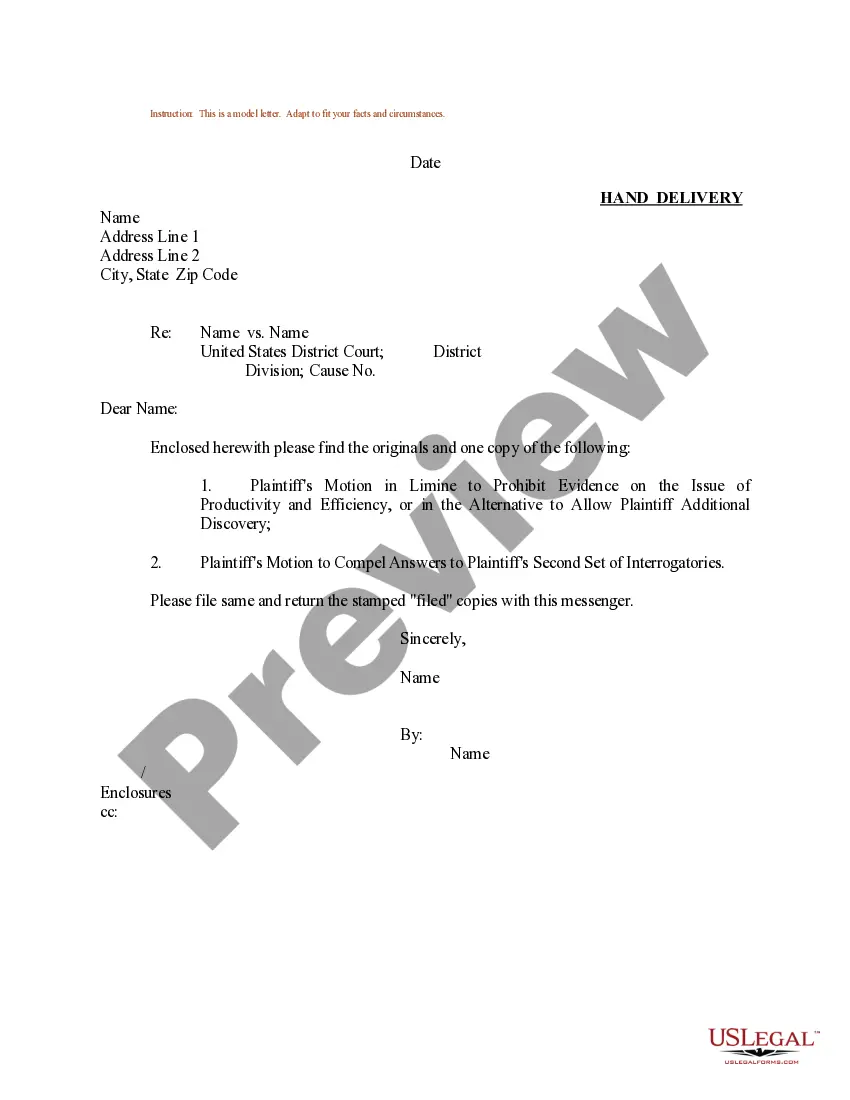
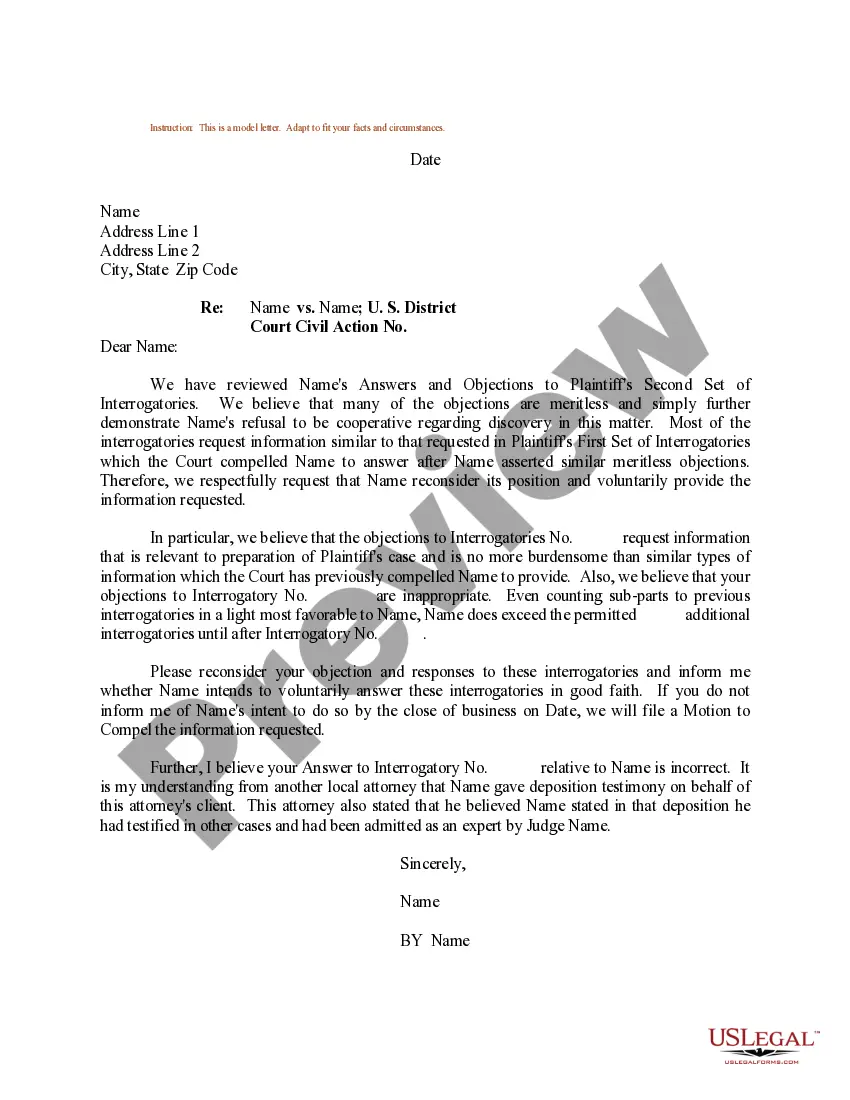
Texas Sample Letter for Plaintiff's Motion to Compel Answers to Plaintiff's Second Set of Interrogatories
Description
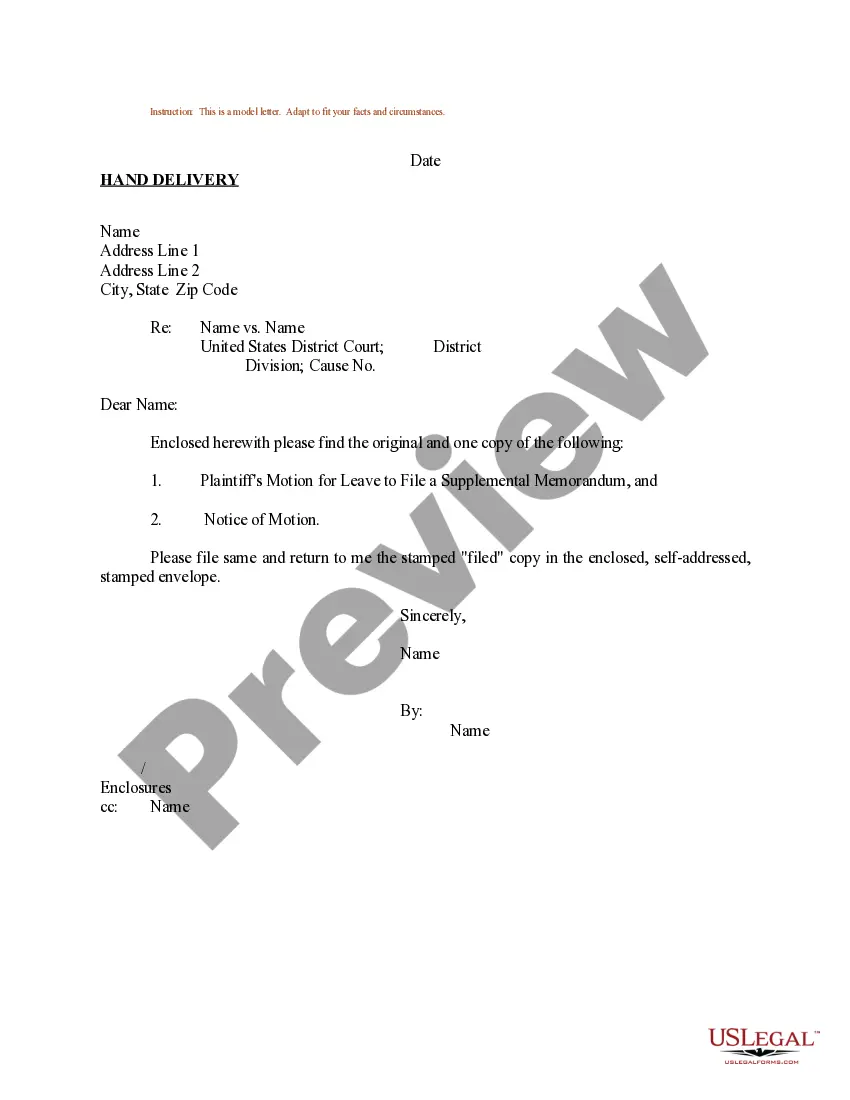
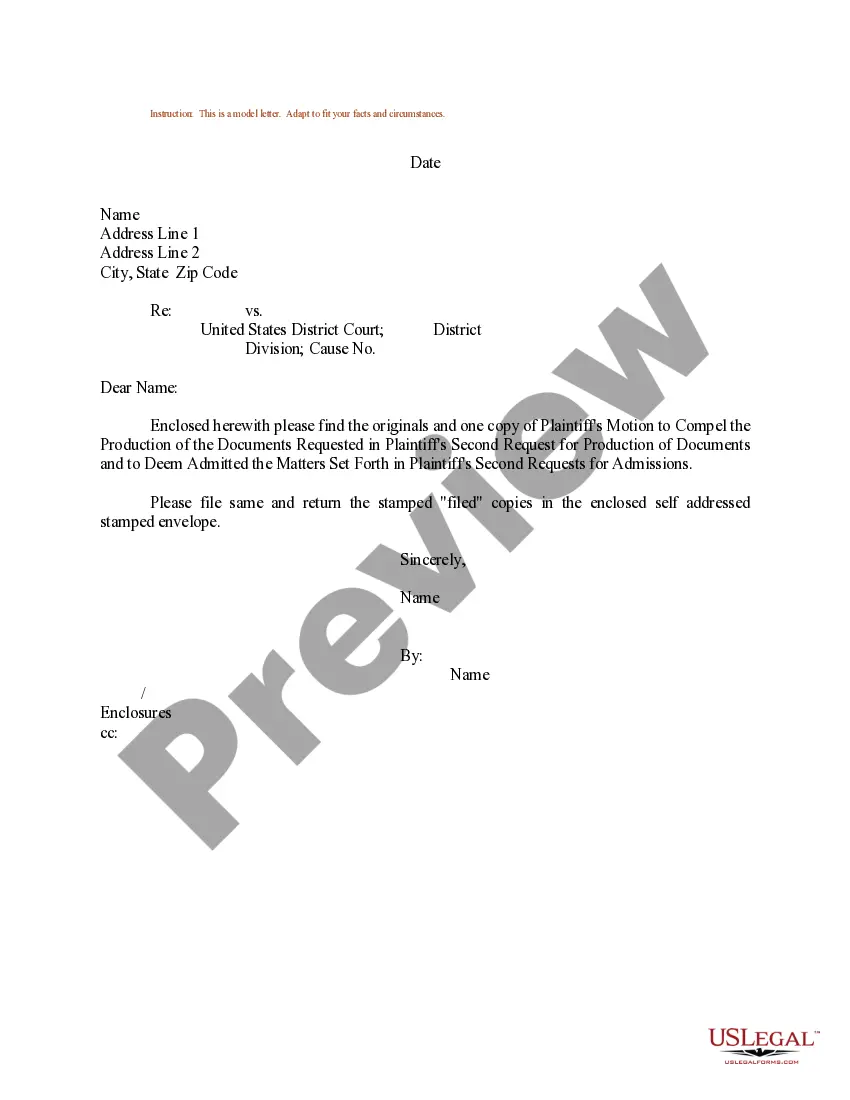
Get your form ready online
Our built-in tools help you complete, sign, share, and store your documents in one place.
Make edits, fill in missing information, and update formatting in US Legal Forms—just like you would in MS Word.
Download a copy, print it, send it by email, or mail it via USPS—whatever works best for your next step.
Sign and collect signatures with our SignNow integration. Send to multiple recipients, set reminders, and more. Go Premium to unlock E-Sign.
If this form requires notarization, complete it online through a secure video call—no need to meet a notary in person or wait for an appointment.
We protect your documents and personal data by following strict security and privacy standards.

Make edits, fill in missing information, and update formatting in US Legal Forms—just like you would in MS Word.

Download a copy, print it, send it by email, or mail it via USPS—whatever works best for your next step.

Sign and collect signatures with our SignNow integration. Send to multiple recipients, set reminders, and more. Go Premium to unlock E-Sign.

If this form requires notarization, complete it online through a secure video call—no need to meet a notary in person or wait for an appointment.

We protect your documents and personal data by following strict security and privacy standards.
Looking for another form?




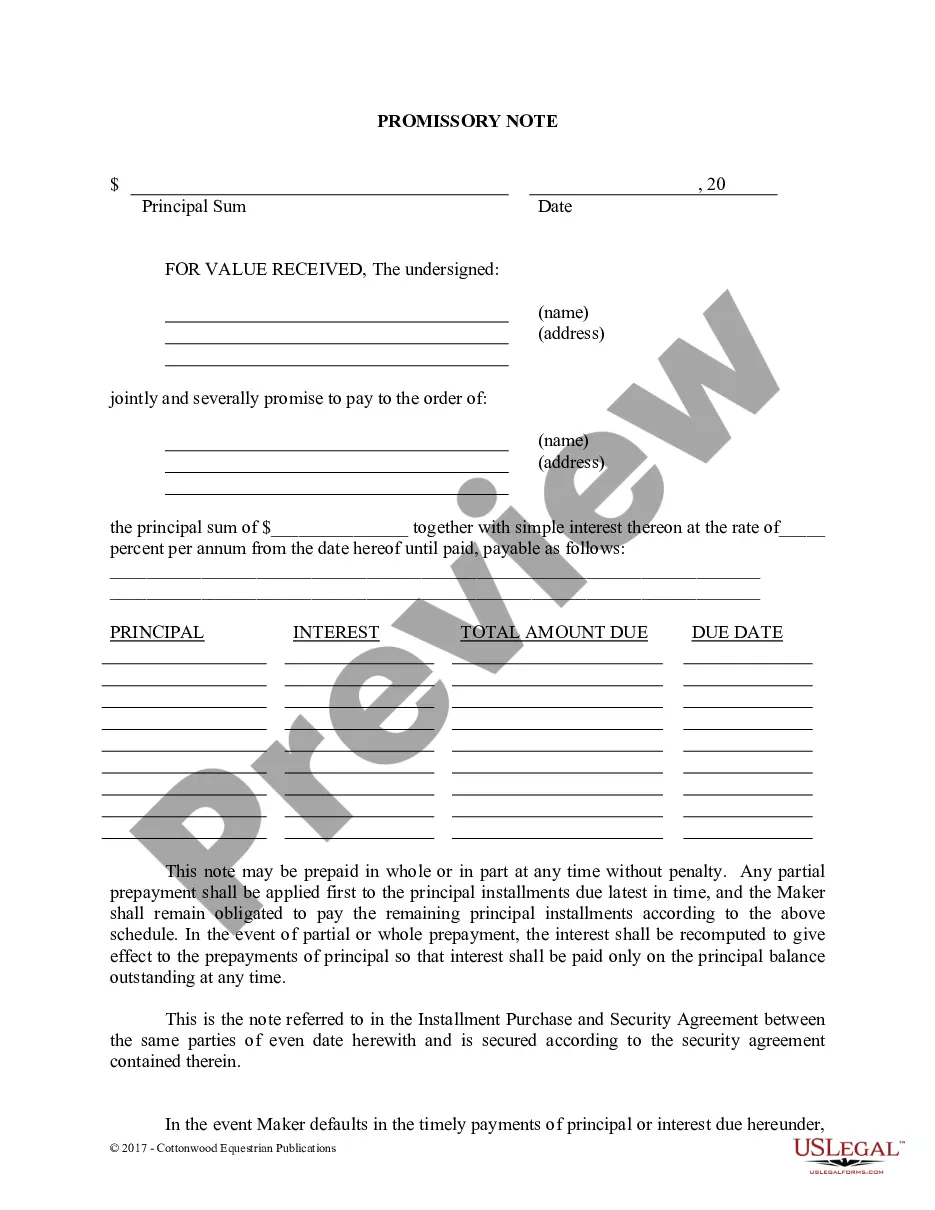



How to fill out Sample Letter For Plaintiff's Motion To Compel Answers To Plaintiff's Second Set Of Interrogatories?
Choosing the right legitimate file design can be a struggle. Naturally, there are a variety of web templates accessible on the Internet, but how do you discover the legitimate form you need? Utilize the US Legal Forms site. The support delivers a large number of web templates, such as the Texas Sample Letter for Plaintiff's Motion to Compel Answers to Plaintiff's Second Set of Interrogatories, that can be used for company and private requires. All the types are checked by specialists and satisfy state and federal requirements.
If you are currently authorized, log in for your accounts and click on the Download button to have the Texas Sample Letter for Plaintiff's Motion to Compel Answers to Plaintiff's Second Set of Interrogatories. Make use of accounts to check with the legitimate types you may have bought earlier. Visit the My Forms tab of your respective accounts and acquire an additional backup in the file you need.
If you are a brand new user of US Legal Forms, here are basic directions that you should follow:
- Initial, make certain you have selected the correct form to your town/region. You can look over the shape utilizing the Review button and read the shape explanation to make certain it is the best for you.
- In case the form is not going to satisfy your requirements, make use of the Seach discipline to obtain the proper form.
- Once you are positive that the shape would work, go through the Buy now button to have the form.
- Pick the costs strategy you need and enter the needed info. Build your accounts and pay for your order utilizing your PayPal accounts or charge card.
- Choose the file format and acquire the legitimate file design for your gadget.
- Complete, edit and printing and indicator the attained Texas Sample Letter for Plaintiff's Motion to Compel Answers to Plaintiff's Second Set of Interrogatories.
US Legal Forms may be the biggest catalogue of legitimate types that you can find a variety of file web templates. Utilize the company to acquire professionally-made documents that follow status requirements.
Form popularity
FAQ
However, you can object to interrogatories that call for legal conclusions. You can also object to questions if they are not at all related to the court case. To object, you need to write out the reasons for the objection instead of answering the question.
Deadline 45 days: Motion to Compel must be filed within 45 days from insufficient response [See Above].
Rule 37 authorizes the court to direct that parties or attorneys who fail to participate in good faith in the discovery process pay the expenses, including attorney's fees, incurred by other parties as a result of that failure.
Your answers to the interrogatories should usually be short, clear, and direct and should answer only the question that is being asked. This is not the time to set out your entire case or defense to the other side. Take the time to make sure your answers are correct and truthful.
(b) Good Faith Efforts to Confer Before a party files a motion to compel a response to discovery, the party must make a good faith effort to confer with the person or party allegedly failing to properly respond to a request for discovery in an effort to secure information or material without action by the ALJ.
This letter is often called a good faith letter. And it is needed under many courts' rules before you can file a motion to compel discovery if the other party ignores your requests or provides evasive responses or move for sanctions if your opponent refuses to comply with the court's discovery order.
A Motion to Compel is a formal request to the Court to require a party or a non-party in a lawsuit to comply with a discovery request such as a request for production, request for admission, interrogatory, or subpoena.
A motion to compel further responses to interrogatories is a prime example. (This is where you've received responses to interrogatories, believe them to be incomplete, and you want the court to order the responding party to provide further responses.)