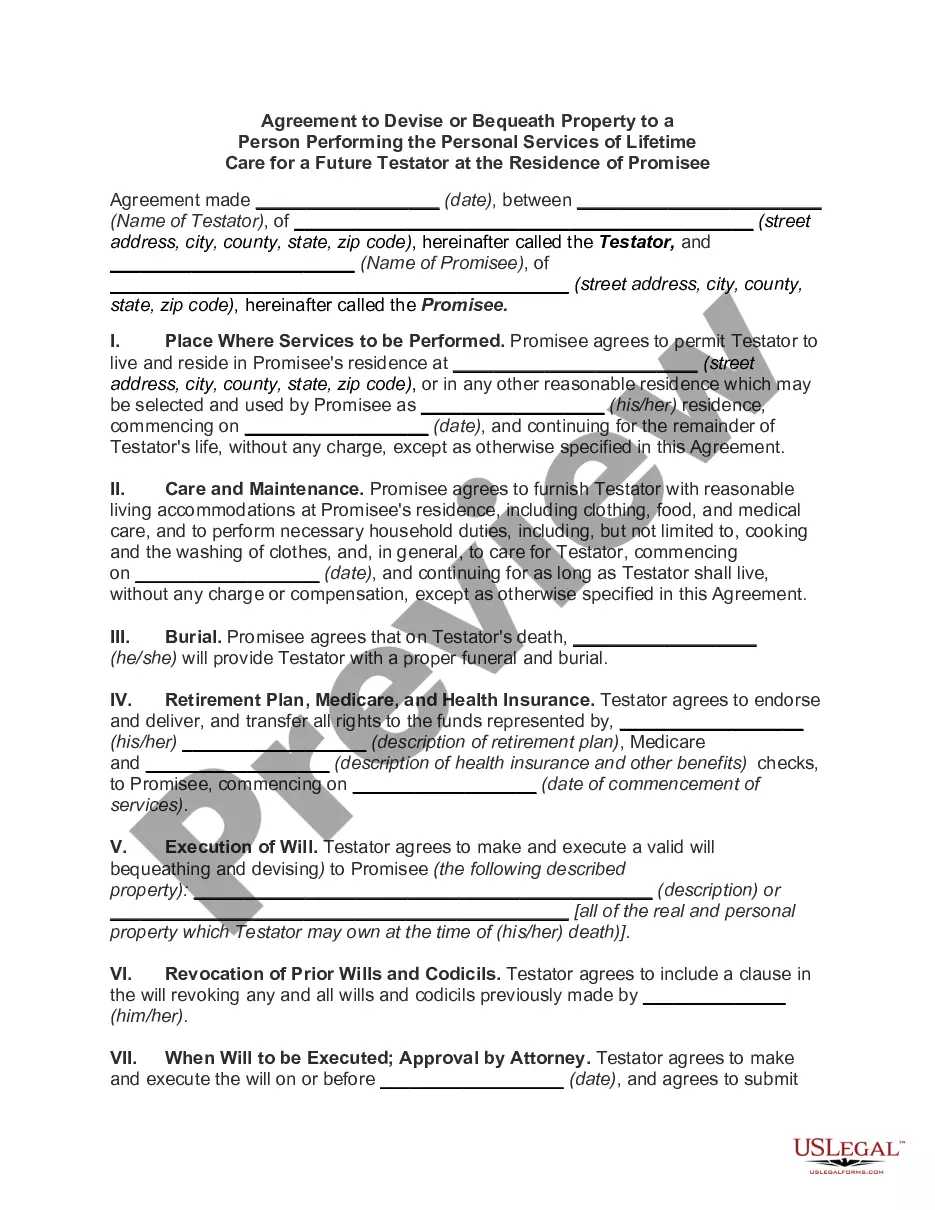
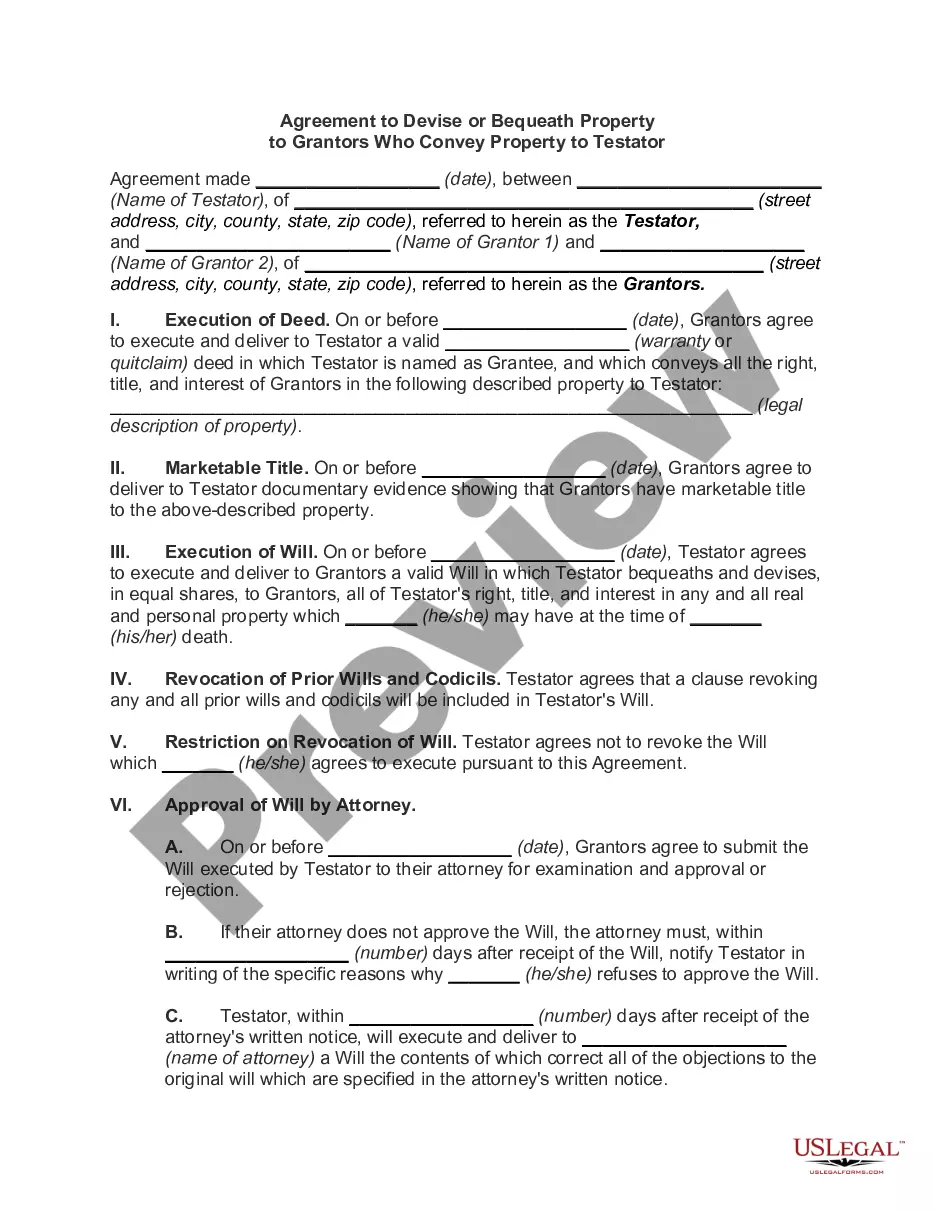
Texas Agreement to Devise or Bequeath Property to a Person Performing the Personal Services of Lifetime Care for a Future Testator
Description

Get your form ready online
Our built-in tools help you complete, sign, share, and store your documents in one place.
Make edits, fill in missing information, and update formatting in US Legal Forms—just like you would in MS Word.
Download a copy, print it, send it by email, or mail it via USPS—whatever works best for your next step.
Sign and collect signatures with our SignNow integration. Send to multiple recipients, set reminders, and more. Go Premium to unlock E-Sign.
If this form requires notarization, complete it online through a secure video call—no need to meet a notary in person or wait for an appointment.
We protect your documents and personal data by following strict security and privacy standards.

Make edits, fill in missing information, and update formatting in US Legal Forms—just like you would in MS Word.

Download a copy, print it, send it by email, or mail it via USPS—whatever works best for your next step.

Sign and collect signatures with our SignNow integration. Send to multiple recipients, set reminders, and more. Go Premium to unlock E-Sign.

If this form requires notarization, complete it online through a secure video call—no need to meet a notary in person or wait for an appointment.

We protect your documents and personal data by following strict security and privacy standards.
Looking for another form?



How to fill out Agreement To Devise Or Bequeath Property To A Person Performing The Personal Services Of Lifetime Care For A Future Testator?
You can spend numerous hours online trying to locate the legal document template that meets the state and federal requirements you need.
US Legal Forms offers a vast array of legal forms that are vetted by experts.
You can effortlessly obtain or print the Texas Agreement to Devise or Bequeath Property to a Person Performing the Personal Services of Lifetime Care for a Future Testator from our service.
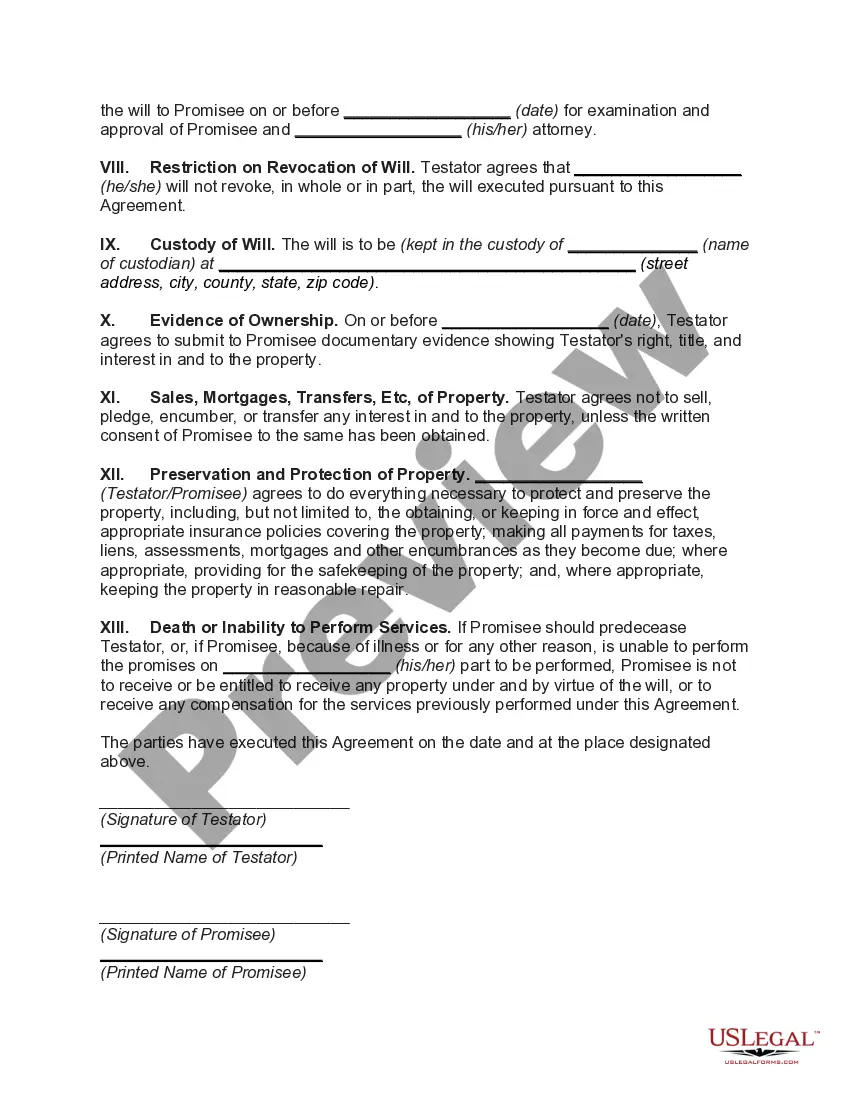
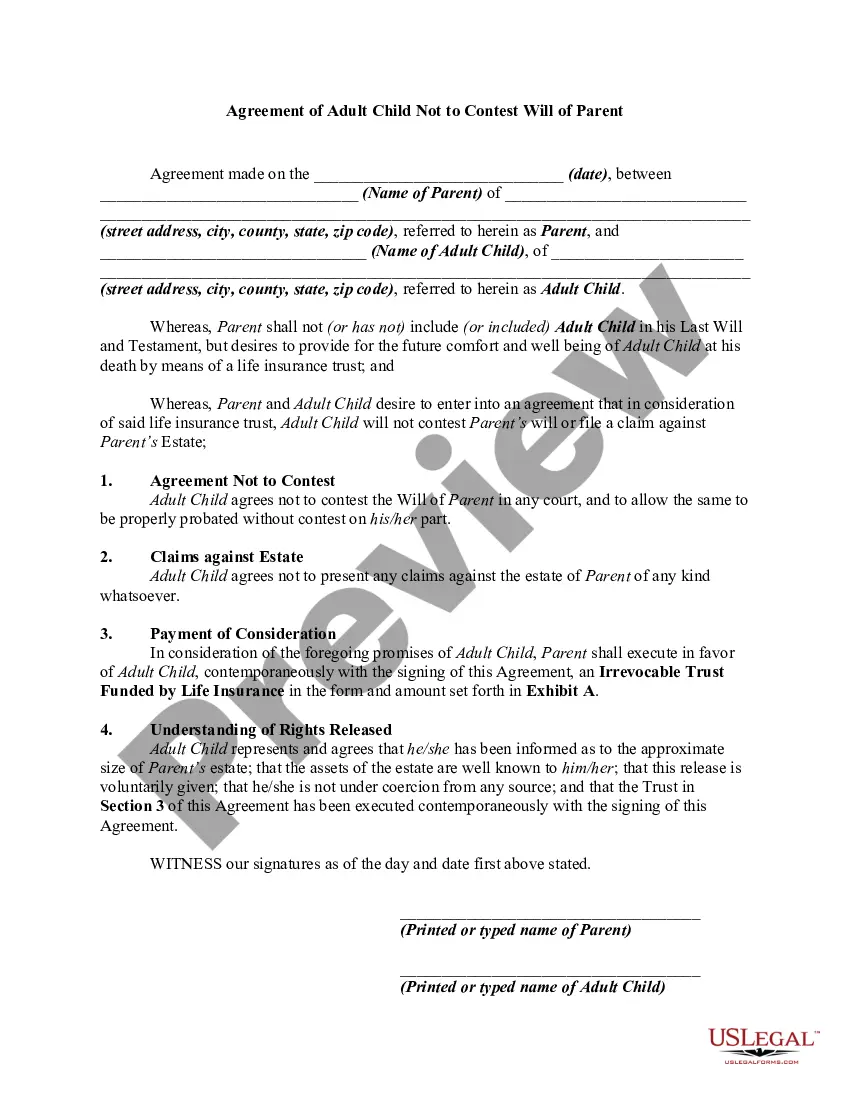
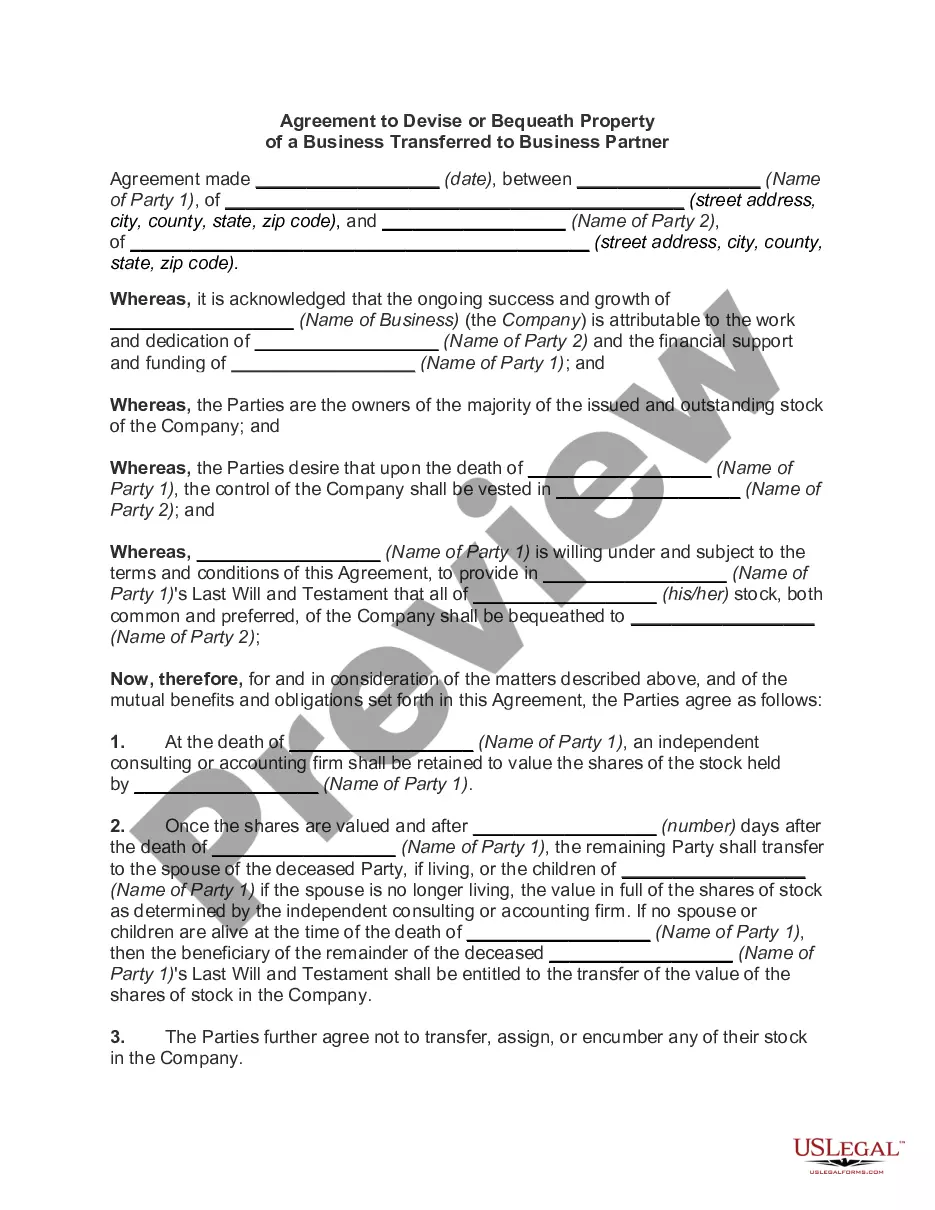
If available, utilize the Review button to view the document template as well.
- If you already have a US Legal Forms account, you may Log In and click the Download button.
- After that, you can complete, edit, print, or sign the Texas Agreement to Devise or Bequeath Property to a Person Performing the Personal Services of Lifetime Care for a Future Testator.
- Every legal document template you obtain is yours permanently.
- To get another copy of any obtained form, visit the My documents tab and click the corresponding button.
- If you are using the US Legal Forms site for the first time, follow the simple instructions below.
- First, ensure that you have selected the correct document format for your county/town that you wish.
- Review the form details to confirm you have chosen the right template.
Form popularity
FAQ
What is the difference between these two phrases? Traditionally, a devise referred to a gift by will of real property. The beneficiary of a devise is called a devisee. In contrast, a bequest referred to a gift by will of personal property or any other property that is not real property.
BENEFICIARY - A person named to receive property or other benefits.
2. The Right to Bequeath: Testamentary Freedom and the Individuality of Property. From the book Inherited Wealth.
To dispose of Personal Property owned by a decedent at the time of death as a gift under the provisions of the decedent's will. The term bequeath applies only to personal property. A testator, to give real property to someone in a testamentary provision, devises it.
Leaving Your Property Some Other Way Before you list those specific bequests, you will name a beneficiary or beneficiaries to get "everything else" in your estate-- that is, all of the property that is left over after the specific gifts are distributed.
1 : to give or leave by will (see will entry 2 sense 1) used especially of personal property a ring bequeathed to her by her grandmother. 2 : to hand down : transmit lessons bequeathed to future generations.
A gift given by means of the will of a decedent of an interest in real property.
Legal Definition of bequeath : to give by will used especially of personal property but sometimes of real property see also legacy, legatee compare devise.
Legacy, also called Bequest, in law, generally a gift of property by will or testament. The term is used to denote the disposition of either personal or real property in the event of death.
Bequests are assets given in a will or a trust. A bequest might be a specific amount of money or assets, a percentage of those assets, or what is left over after heirs and other obligations are paid from an estate.