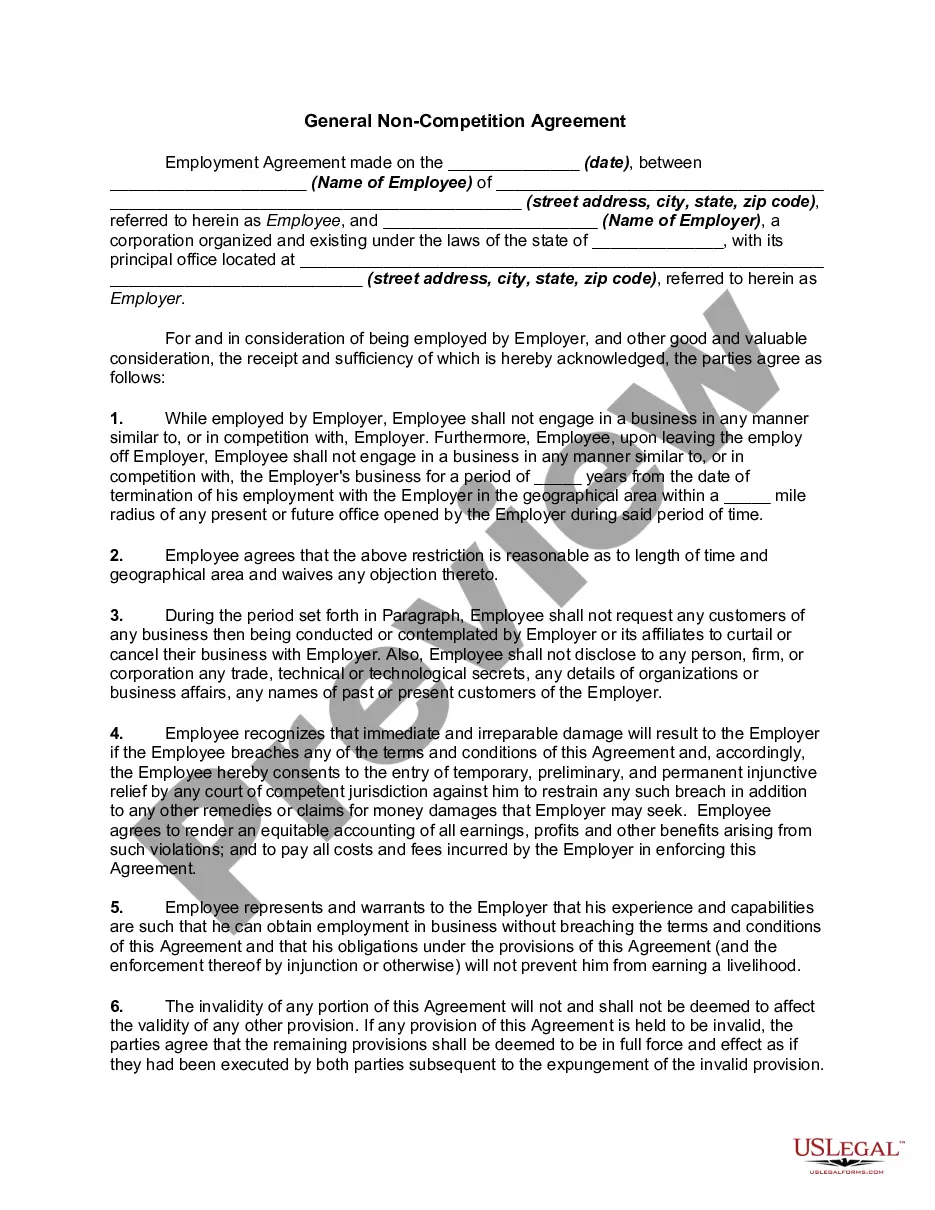
Texas General Non-Competition Agreement

State:
Multi-State
Control #:
US-04098BG
Format:
Word; 
Rich Text
Instant download

Description

Before examining the reasonableness of a noncompetition agreement, courts first consider whether the agreement is ancillary, meaning connected and subordinate to another valid contract. If there is no such contract, the court will look to see if there was valid consideration to enforce such an agreement. If there is no adequate or independent consideration present, most courts will refuse to enforce such an agreement. This is to ensure that the noncompetition agreement is not an outright restraint on trade but, rather, the result of a bargained-for exchange that furthers legitimate commercial interests.


When a businessman sells his business, the purchaser may compete with him unless there is a valid restrictive covenant or covenant not to compete. The same is true when an employee leaves the employment of a company and begins soliciting customers of his former employer or competing with his employer in a similar way. When an ongoing business is sold, it is commonly stated in the sales contract that the seller shall not go into the same area or begin a similar business within a certain geographical area or for a certain period of time or both. Such an agreement can be valid and enforceable.


Restrictions to prevent competition by a former employee are held valid when they are reasonable and necessary to protect the interests of the employer. Courts will closely examine covenants not to compete signed by individuals in order to make sure that they are not unreasonable as to time or geographical area.


When a restriction of competition is invalid because it is too long or covers too great a geographical area, Courts will generally do one of two things. Some Courts will trim the restrictive covenant down to a period of time or geographical area that the Court deems reasonable. Other Courts will refuse to enforce the restrictive covenant at all and declare it void.


Caution: Statutory law in a few states completely prohibit covenants not to compete unless the covenant meets the state's statutory guidelines.
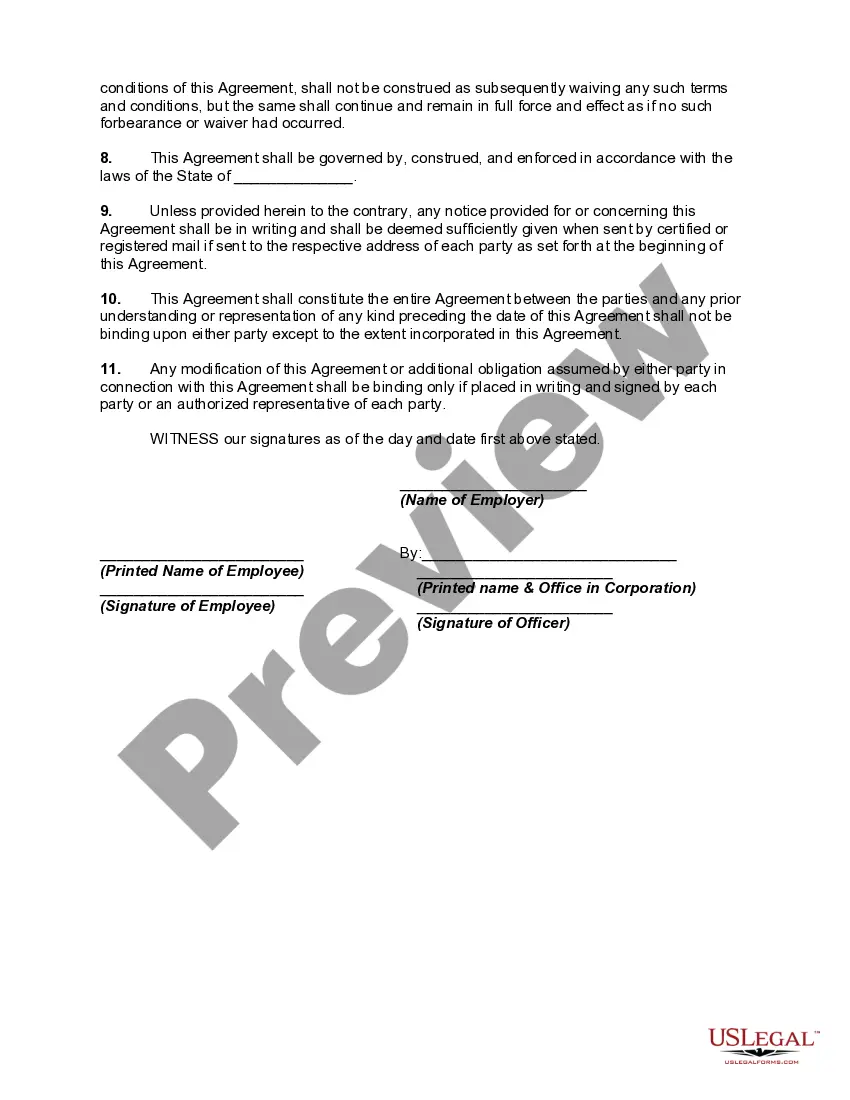
Free preview
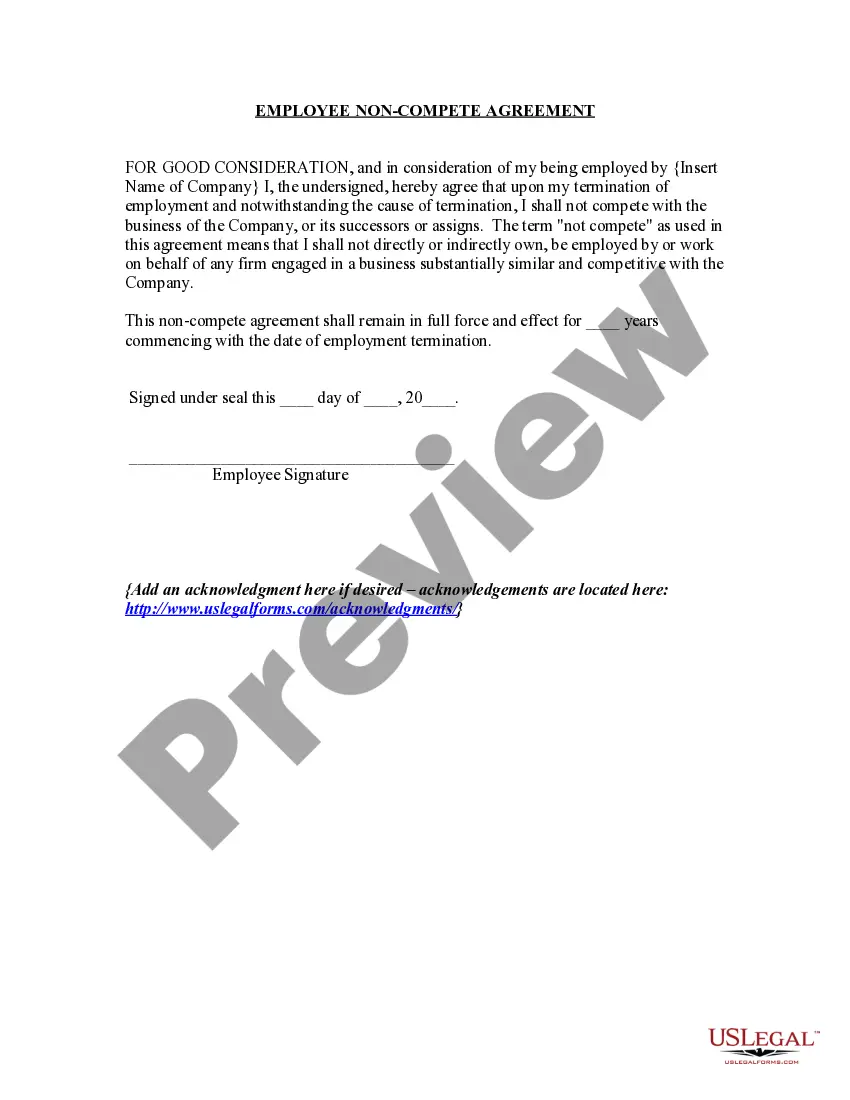
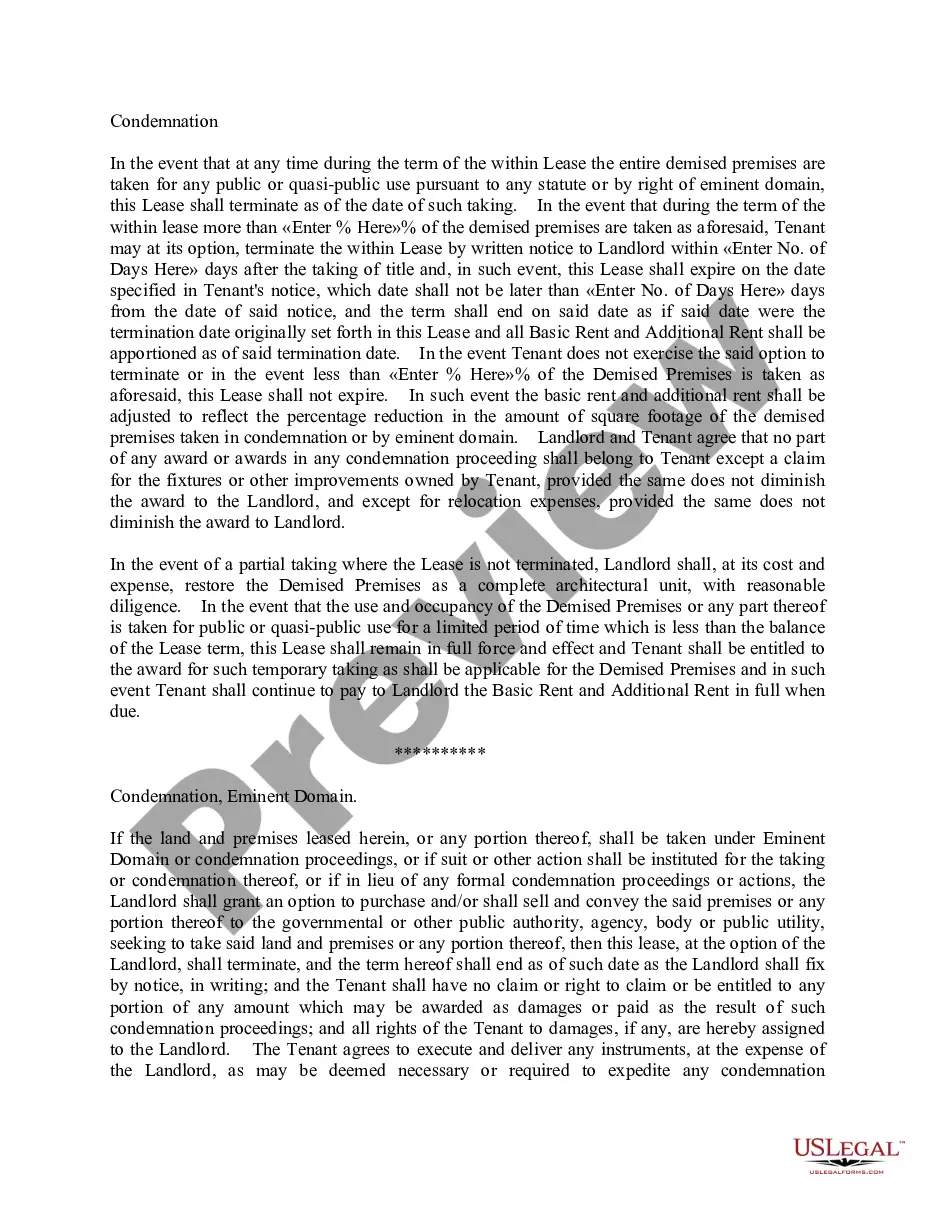
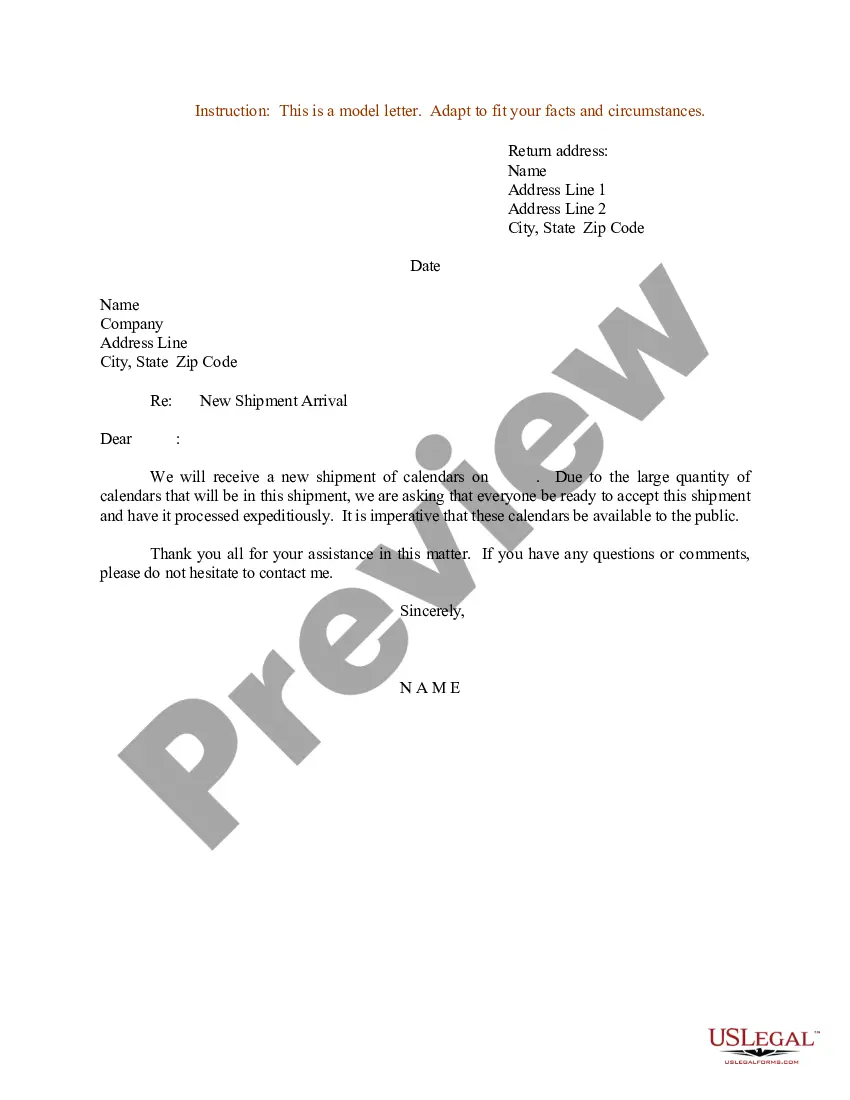
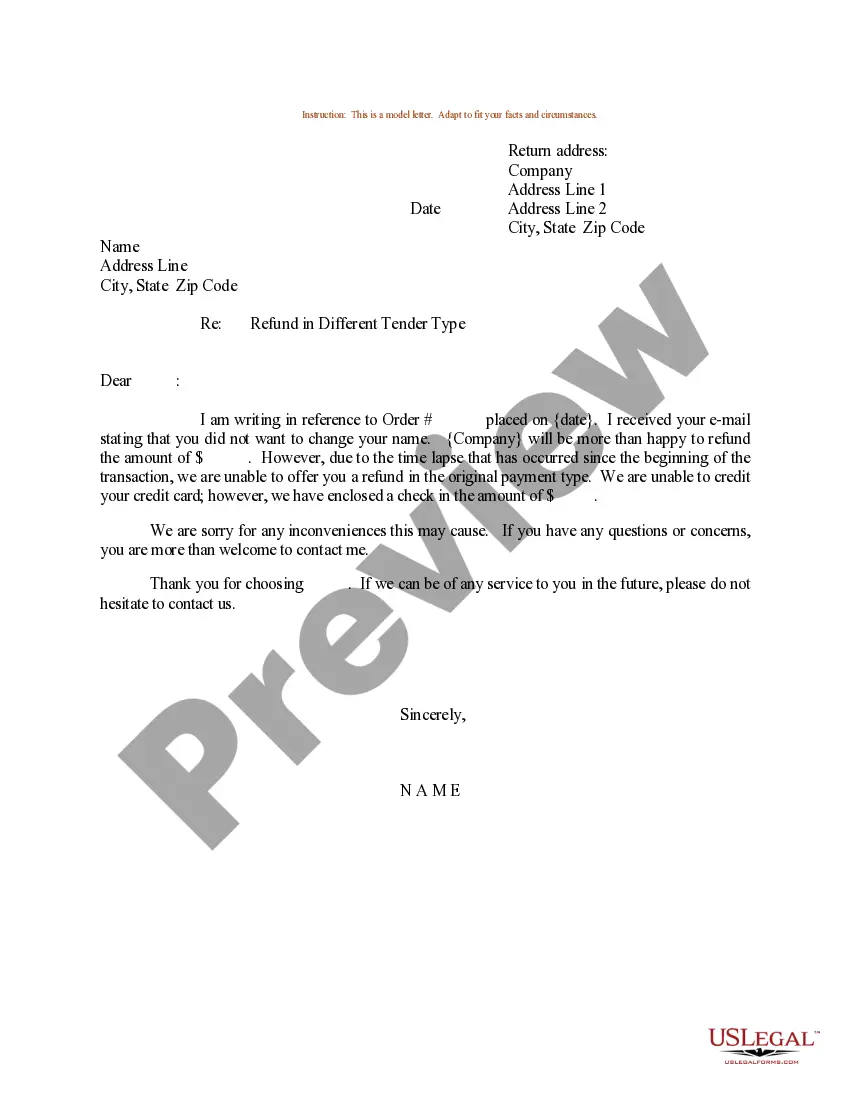
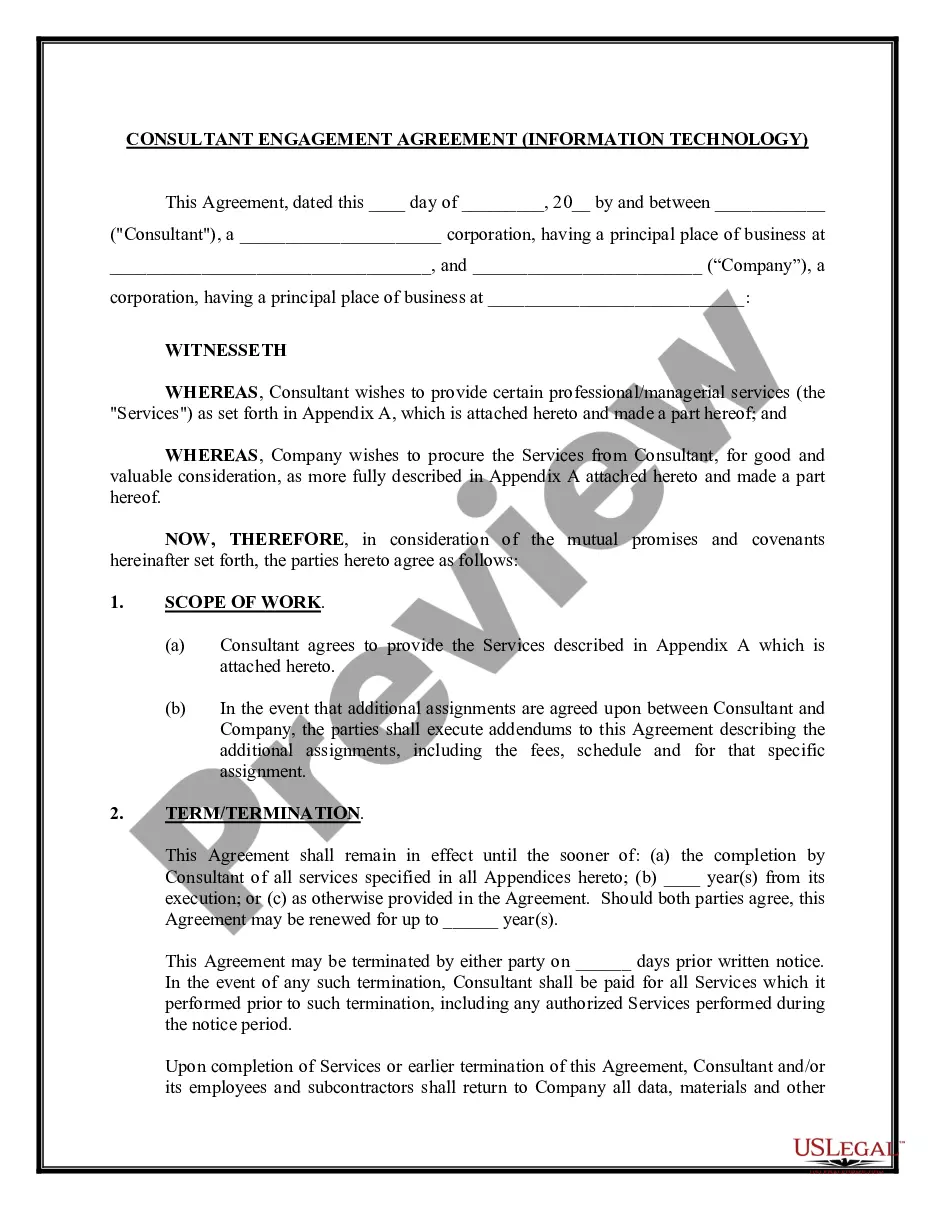
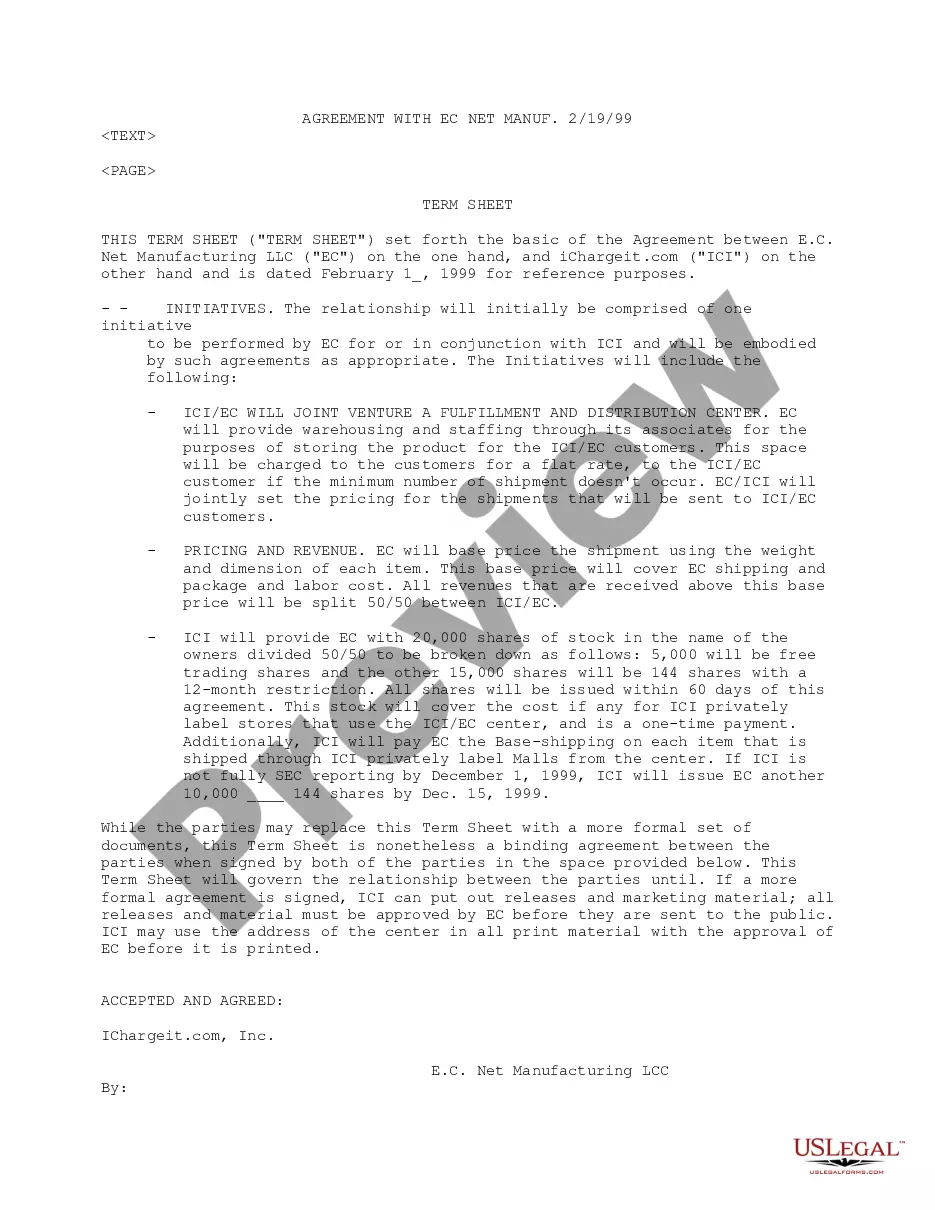
  • Preview General Non-Competition Agreement
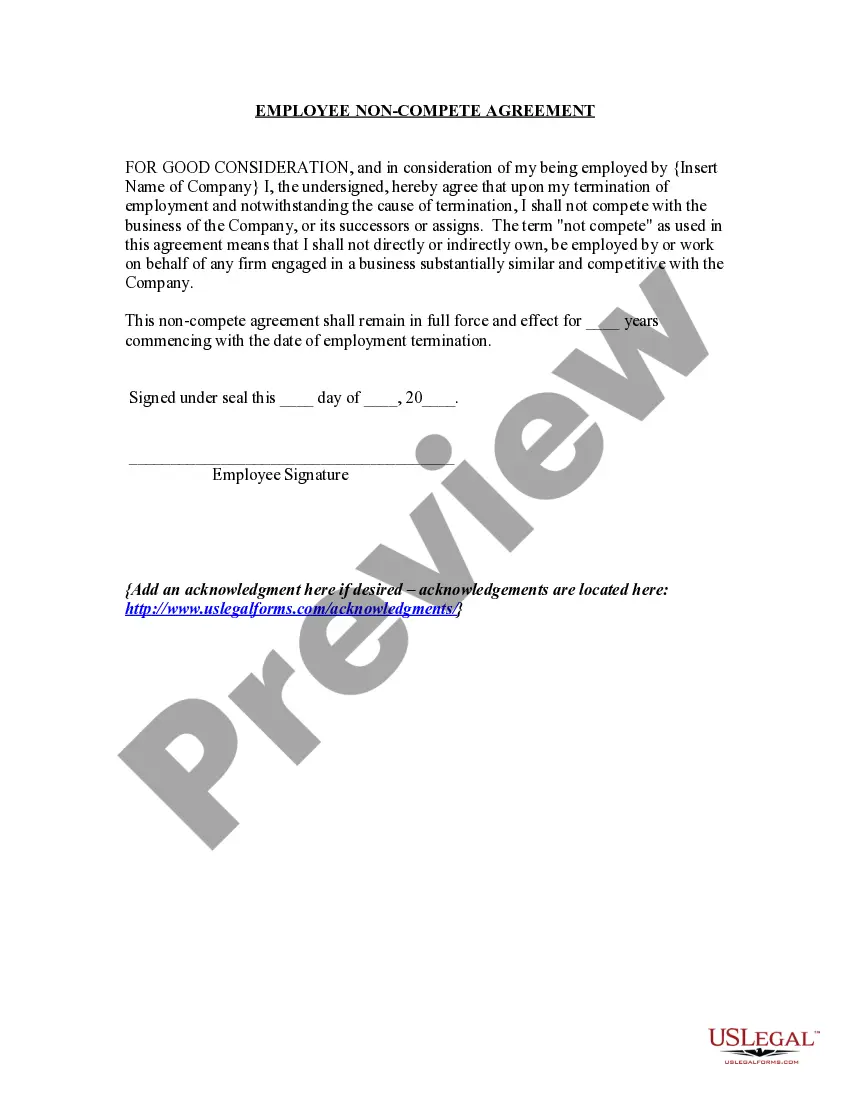
  • Preview General Non-Competition Agreement

How to fill out General Non-Competition Agreement?

Have you ever been in a situation where you need documentation for business or personal objectives almost every day.

There are numerous legal document templates accessible online, but finding reliable ones isn't easy.

US Legal Forms offers thousands of form templates, such as the Texas General Non-Competition Agreement, specifically designed to comply with federal and state regulations.

Once you find the right form, click Buy now.

Select the pricing plan you prefer, fill out the required information to create your account, and purchase the order using your PayPal or credit card.

  1. If you are already acquainted with the US Legal Forms website and have an account, simply Log In.
  2. Then, you can download the Texas General Non-Competition Agreement template.
  3. If you don’t have an account and wish to start using US Legal Forms, follow these steps.
  4. Find the form you need and ensure it is for the correct jurisdiction/state.
  5. Utilize the Preview button to review the form.
  6. Check the description to confirm you've selected the right document.
  7. If the form isn't what you’re looking for, use the Search field to locate a form that meets your needs.

Form popularity

FAQ

Non-compete agreements are typically considered enforceable if they: Have reasonable time restrictions (generally less than one year) Are limited to a certain geographic area (specific cities or counties, rather than entire states)

In its most recent case on the subject, the Texas Supreme Court ruled, that in certain circumstances, non-compete agreements are enforceable. As a result, although an employee may lose her job, the employer with a non-compete agreement will prevent her from walking across the street to work for a competitor.

Typically, the only way to fight a non-compete agreement is to go to court. If you are an employee (or former employee) who signed such an agreement, this means you must violate the agreement and wait to be sued. It may be that your former employer has never sued another employee to enforce the non-compete agreement.

A Texas non-compete or non-competition agreement is designed to limit the place and nature of work an employee can do. Most often, non-compete agreements are designed to prevent an employee from leaving their job and competing with their former employer for clients or business.

- The two most common settings for legitimate non-competition agreements are the sale of a business and an employment relationship. When a non-compete agreement is ancillary to the sale of a business, it is enforceable if reasonable in time, geographic area, and scope of activity.

You Can Void a Non-Compete by Proving Its Terms Go Too Far or Last Too Long. Whether a non-compete is unenforceable because it covers too large of a geographical area or it lasts too long can depend on many factors. Enforceability can depend on your industry, skills, location, etc.

Finally, the employer's conduct (e.g., unclean hands, or conduct inconsistent with enforcement) can sometimes provide the employee with a good way out of a noncompete. In order to get out of a non-compete agreement, you will need to prove that the non-compete agreement is unenforceable.

In its most recent case on the subject, the Texas Supreme Court ruled, that in certain circumstances, non-compete agreements are enforceable. As a result, although an employee may lose her job, the employer with a non-compete agreement will prevent her from walking across the street to work for a competitor.

The answer is: A non-compete agreement IS enforceable in Texas if it is supported by valid consideration, and is reasonable in time, geographic scope, and activities to be restrained. A Texas employer can utilize a non compete agreement to protect company goodwill and confidential information.

1. There must first, in every instance, be a separate enforceable agreement beyond the noncompete restriction itself. In other words, a standalone noncompete procured in return for a sum of money or other compensation is simply void as against Texas public policy. That is a naked restraint that will not be enforced.

Trusted and secure by over 3 million people of the world’s leading companies

Texas General Non-Competition Agreement