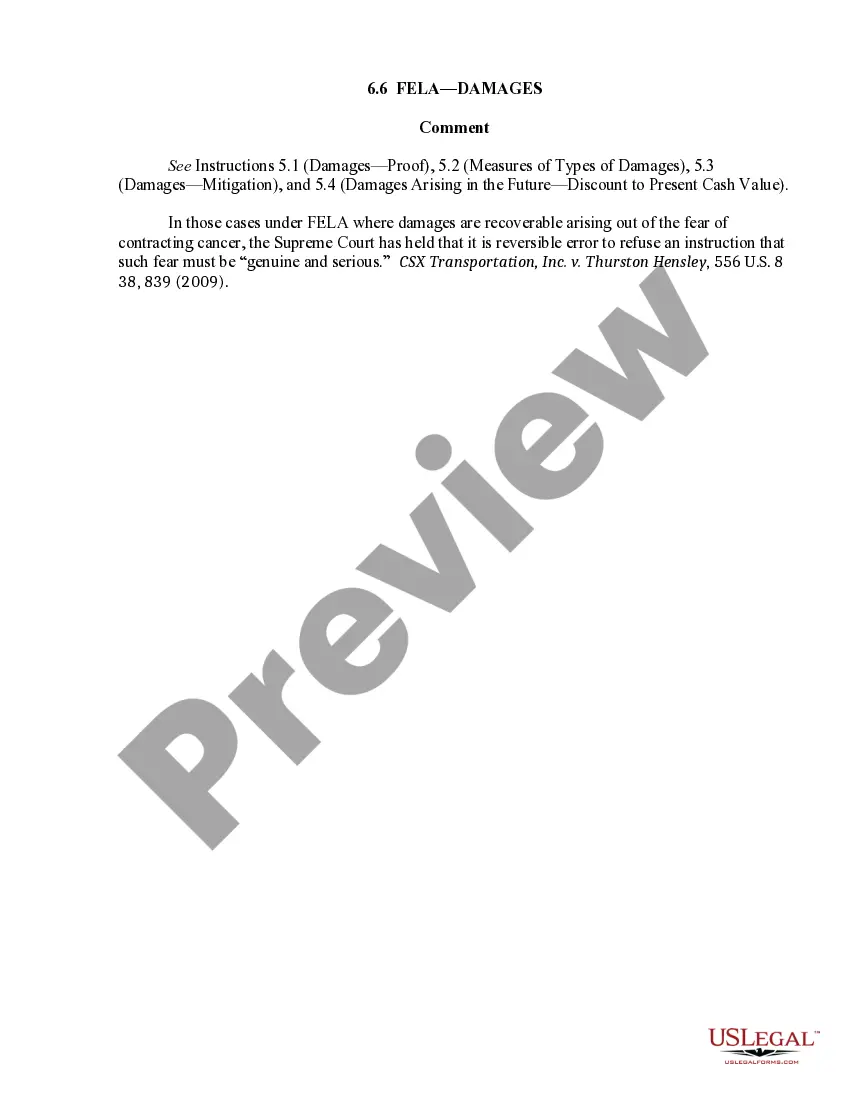
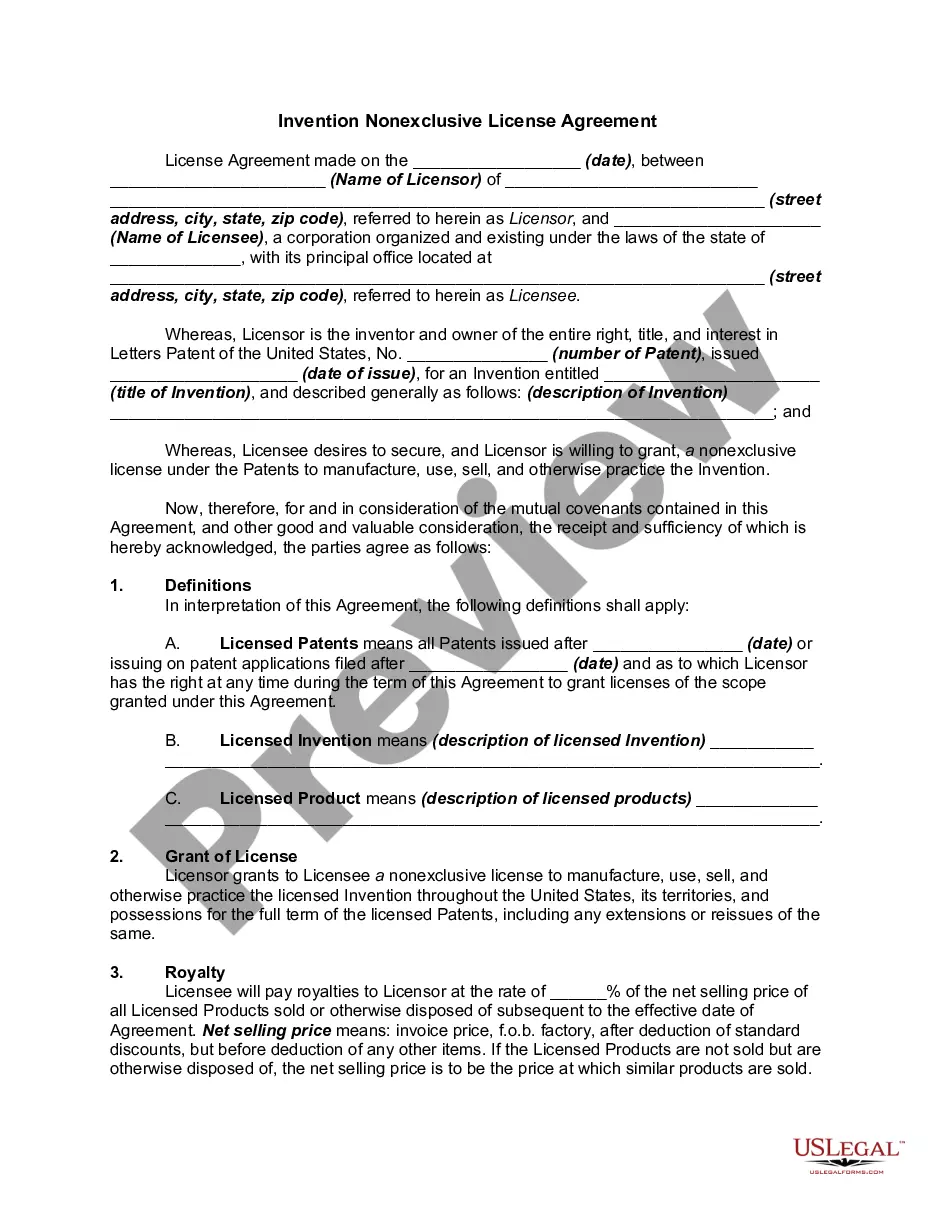
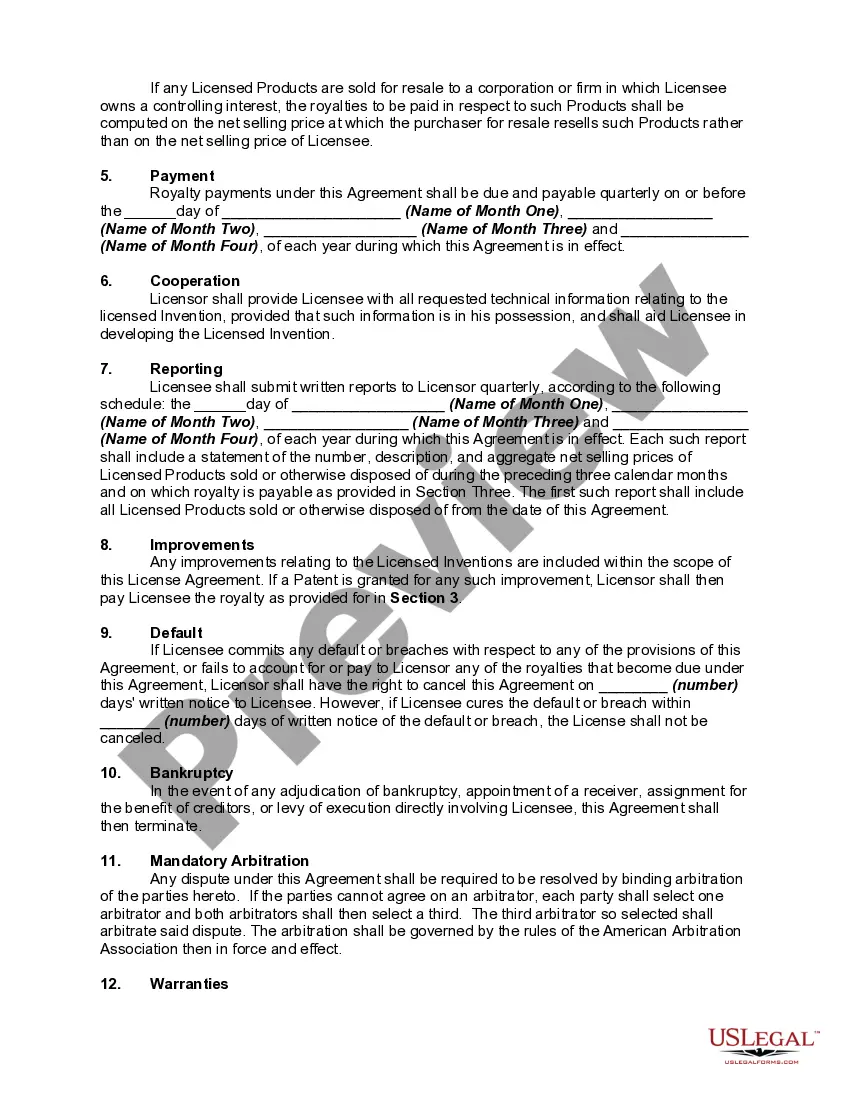
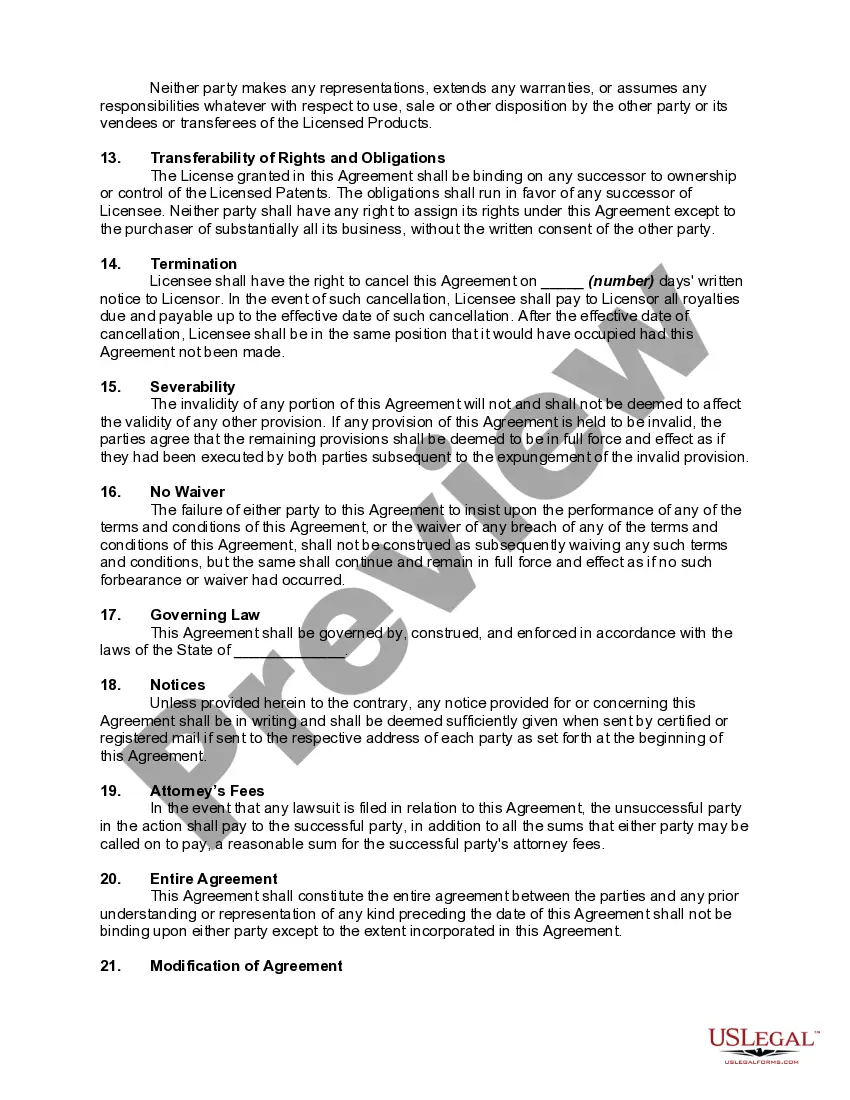
Texas Invention Nonexclusive License Agreement
Description
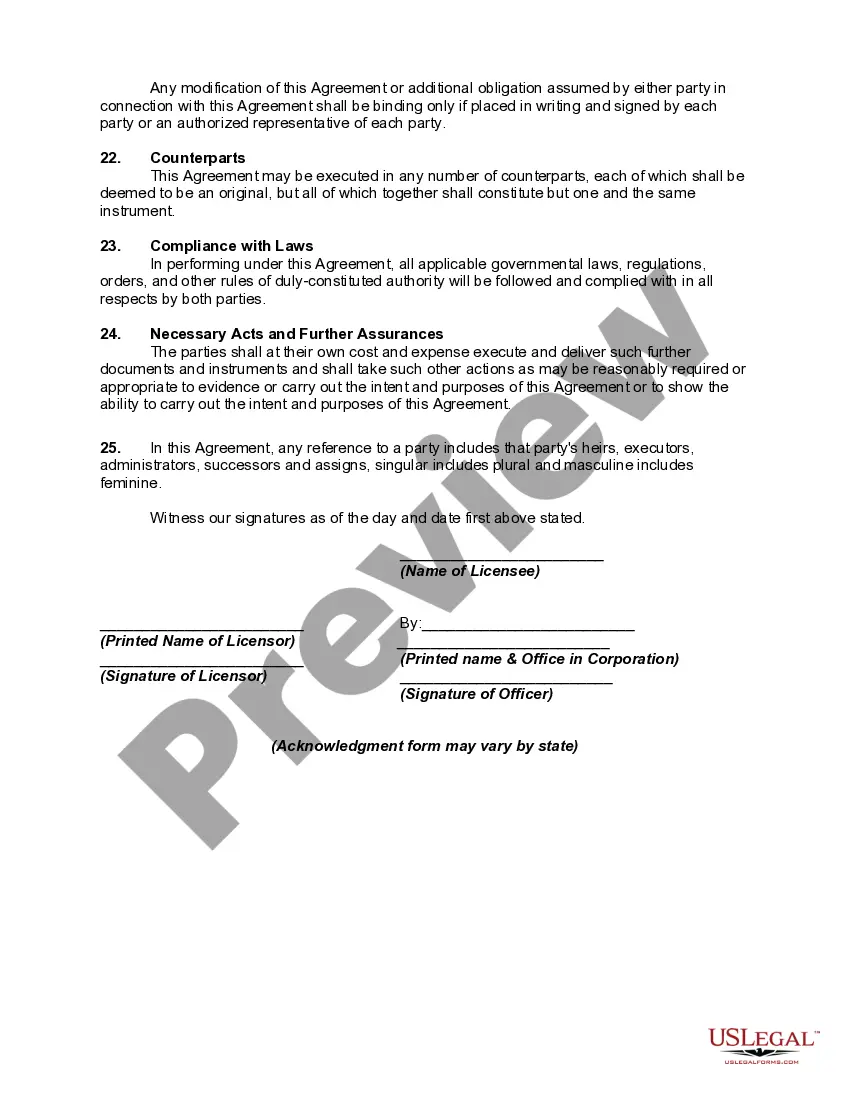
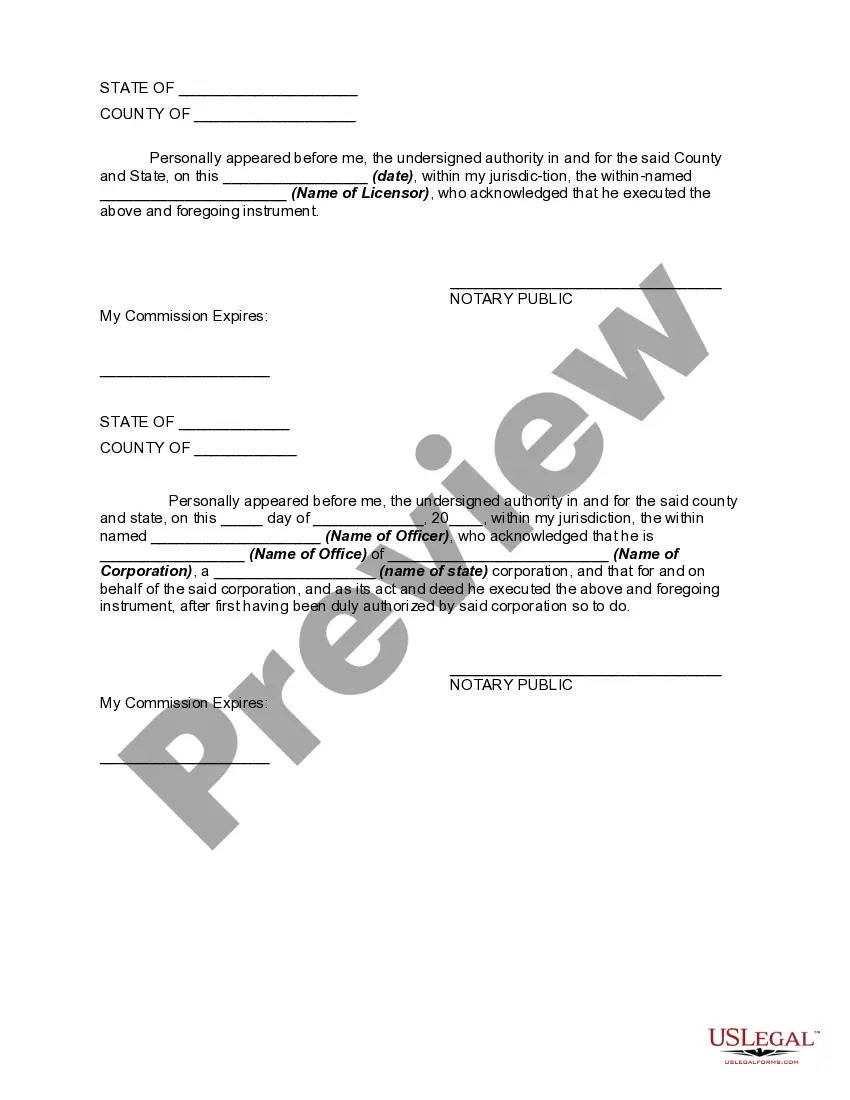
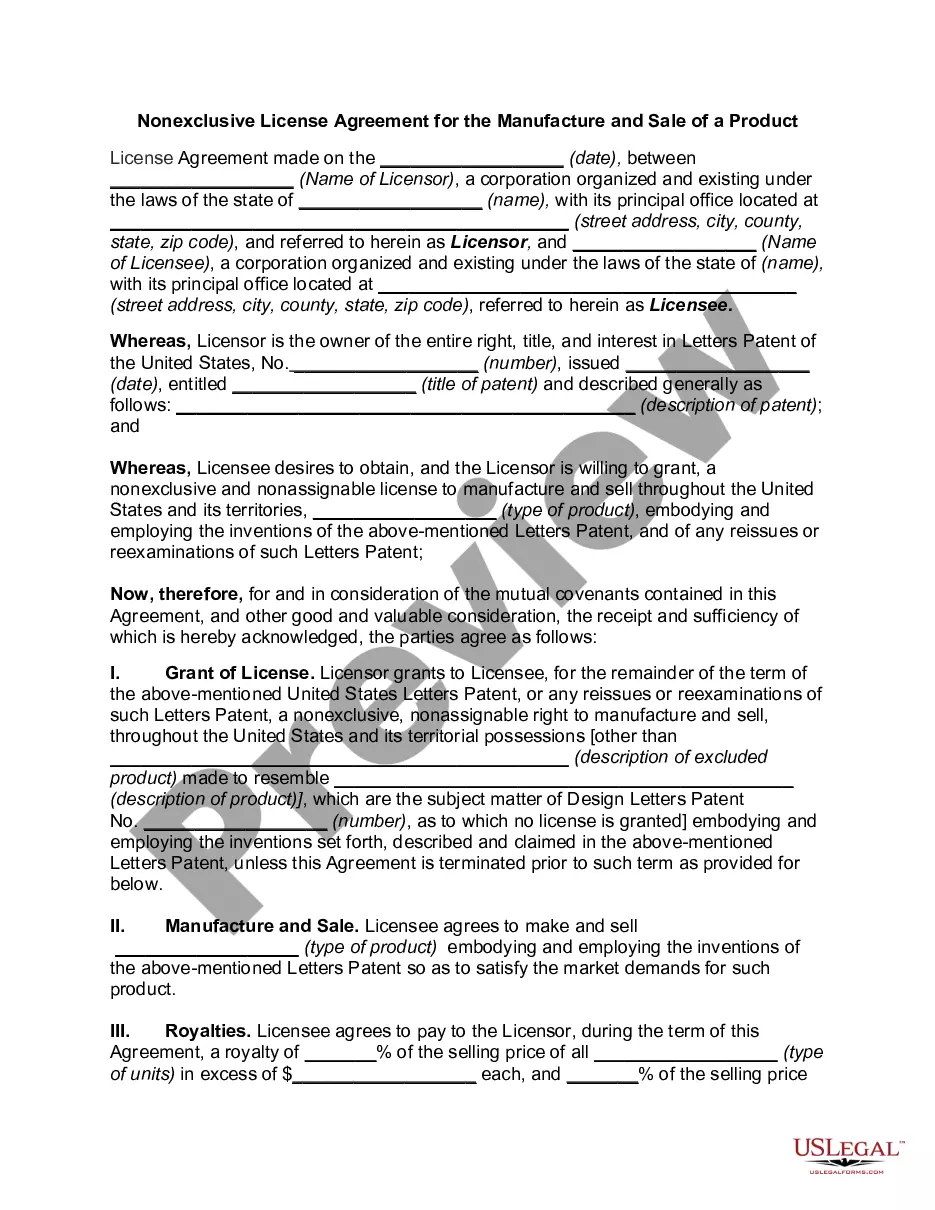
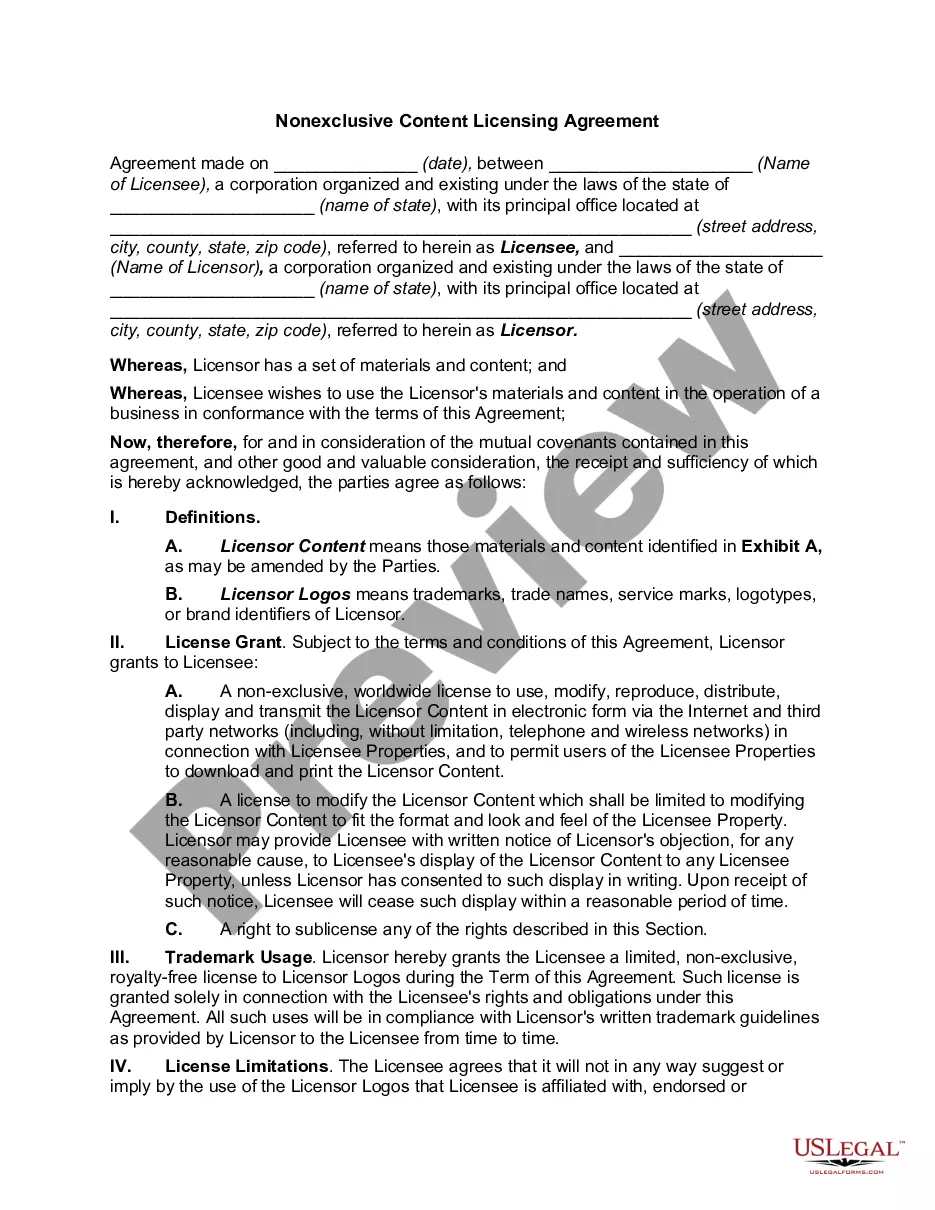
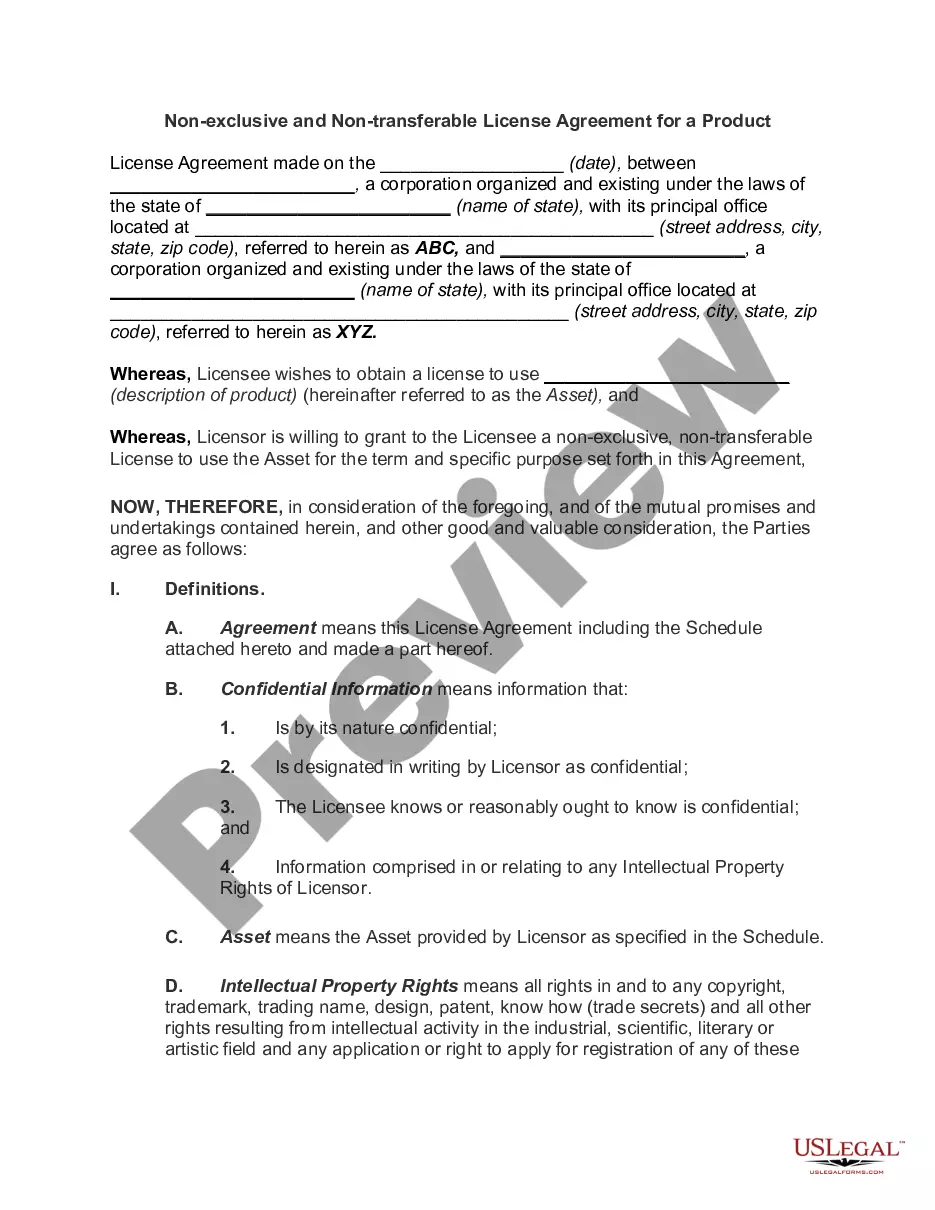
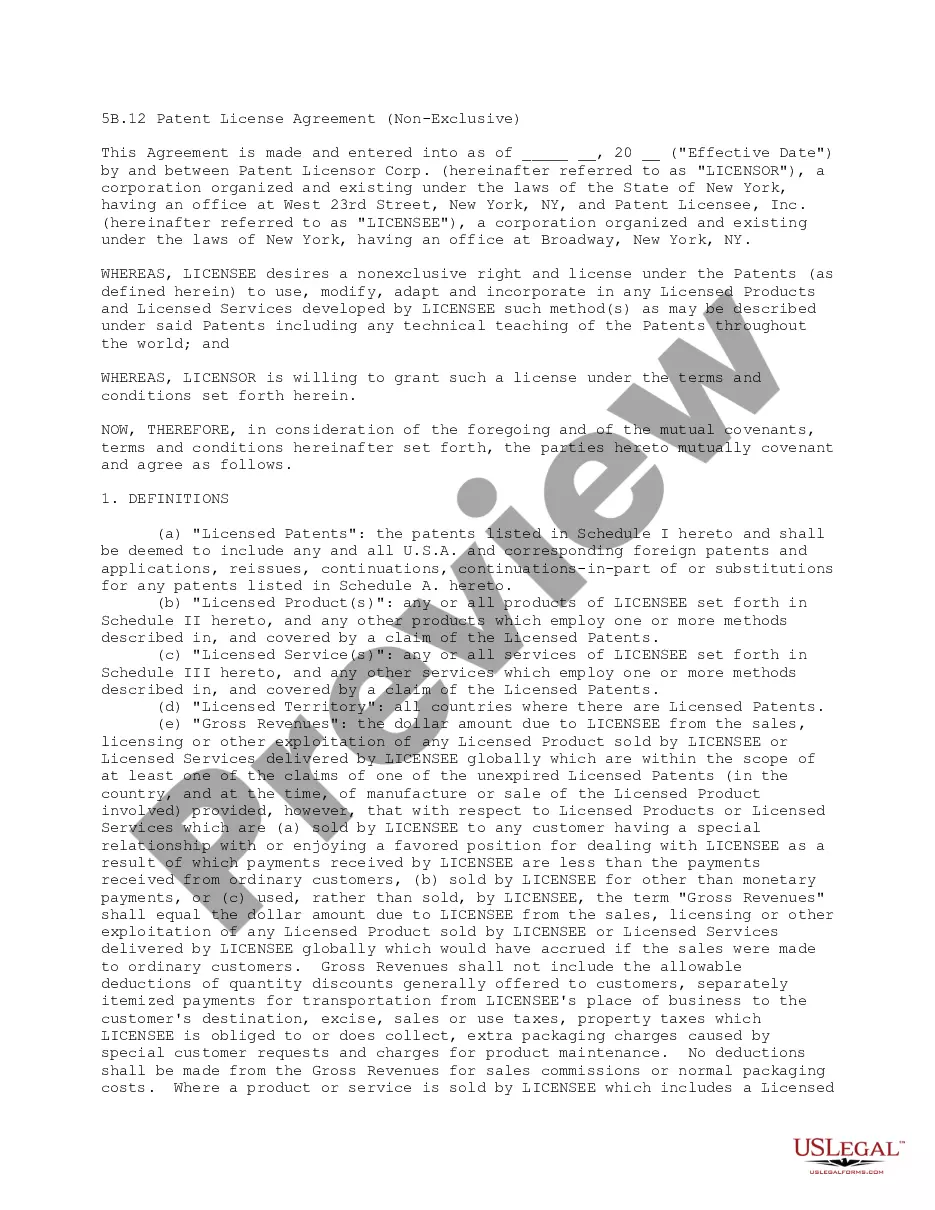
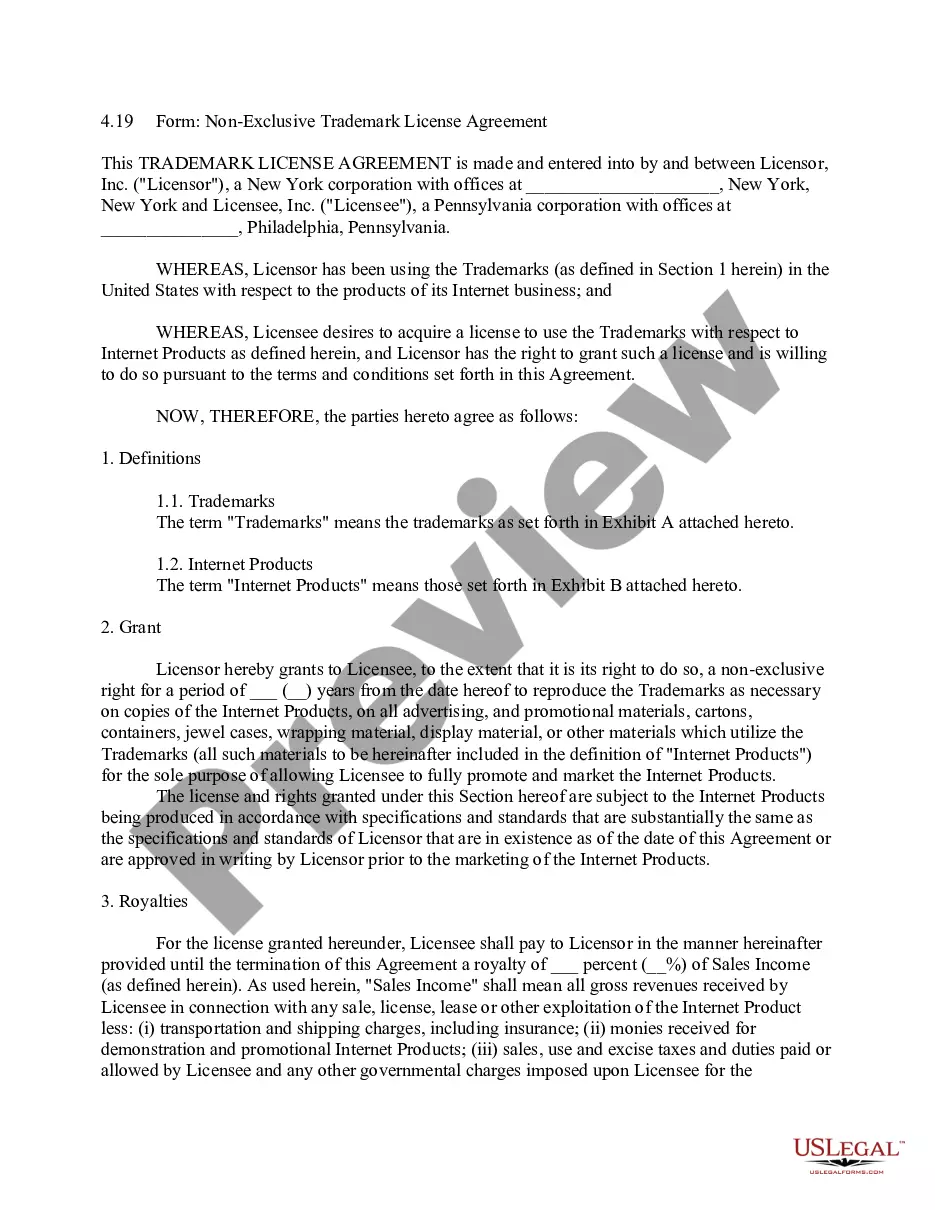

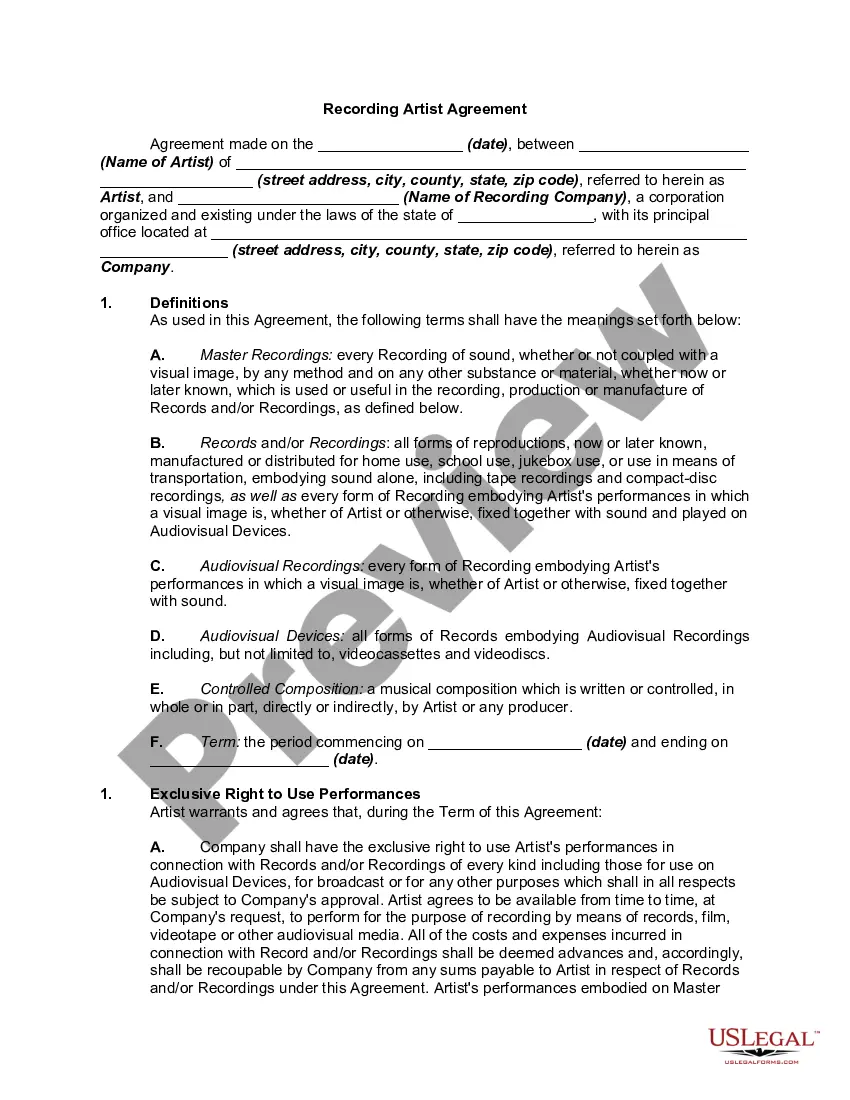


How to fill out Invention Nonexclusive License Agreement?
You can spend time online looking for the legal document format that suits the federal and state requirements you need.
US Legal Forms offers a vast selection of legal documents that can be reviewed by experts.
It is easy to download or print the Texas Invention Nonexclusive License Agreement from the service.
If available, utilize the Preview button to view the document format as well.
- If you possess a US Legal Forms account, you can Log In and click the Download button.
- Then, you can fill out, modify, print, or sign the Texas Invention Nonexclusive License Agreement.
- Every legal document format you purchase is yours permanently.
- To obtain another copy of the purchased document, navigate to the My documents tab and click the relevant button.
- If you are using the US Legal Forms website for the first time, follow the straightforward instructions below.
- First, ensure that you have selected the correct document format for the county/town of your preference.
- Review the form description to ensure you have chosen the right document.
Form popularity
FAQ
By nature, exclusive licenses grant more rights than non-exclusive licenses and usually address a number of contractual obligations regarding the IP, including registration/prosecution, defense, and enforcement of the intellectual property rights.
What type of activities does a license agreement restrict? You do not have the right to copy, loan, borrow, rent, or in any way distribute programs or apps. Doing so, is a violation of copyright law; it is also a federal crime.
Practitioners and licensing executives often refer to three basic types of voluntary licenses: non-exclusive, sole, and exclusive. A non-exclusive licence allows the licensor to retain the right to use the licensed property and the right to grant additional licenses to third parties.
A licensing agreement is a contract between two parties (the licensor and licensee) in which the licensor grants the licensee the right to use the brand name, trademark, patented technology, or ability to produce and sell goods owned by the licensor.
Exclusive license allows a licensor to share intellectual property with a licensee for a specific period of time that usually binds the licensor to not share the property with anyone else.
Examples of licenses include a company using the design of a popular character, e.g. Mickey Mouse, on their products. Another example would be a clothing manufacturer like Life is Good licensing its designs and brand in a certain country to a local company.
A copyright exclusive license is one in which ownership in one or more rights is transferred by the copyright owner. A copyright nonexclusive license occurs when the owner retains ownership of the copyright and/or may license the same right to others.
Licensing agreements are found in many different industries. An example of a licensing agreement is a contract between the copyright holders of software and another company, allowing the latter to use the computer software for their daily business operations.
Types of licensing agreement The unique feature of this type of agreement is that even the licensor is excluded to use or exploit the licensed property during the term of the agreement. Copyright, trademark and patent licenses are the best examples of an exclusive license agreement.
An exclusive license grants the licensee singular permission to exploit the intellectual property in question. No other entity, including the party granting the license (the licensor), is allowed to use the intellectual property covered by the license unless specific carve-outs are included in the agreement.