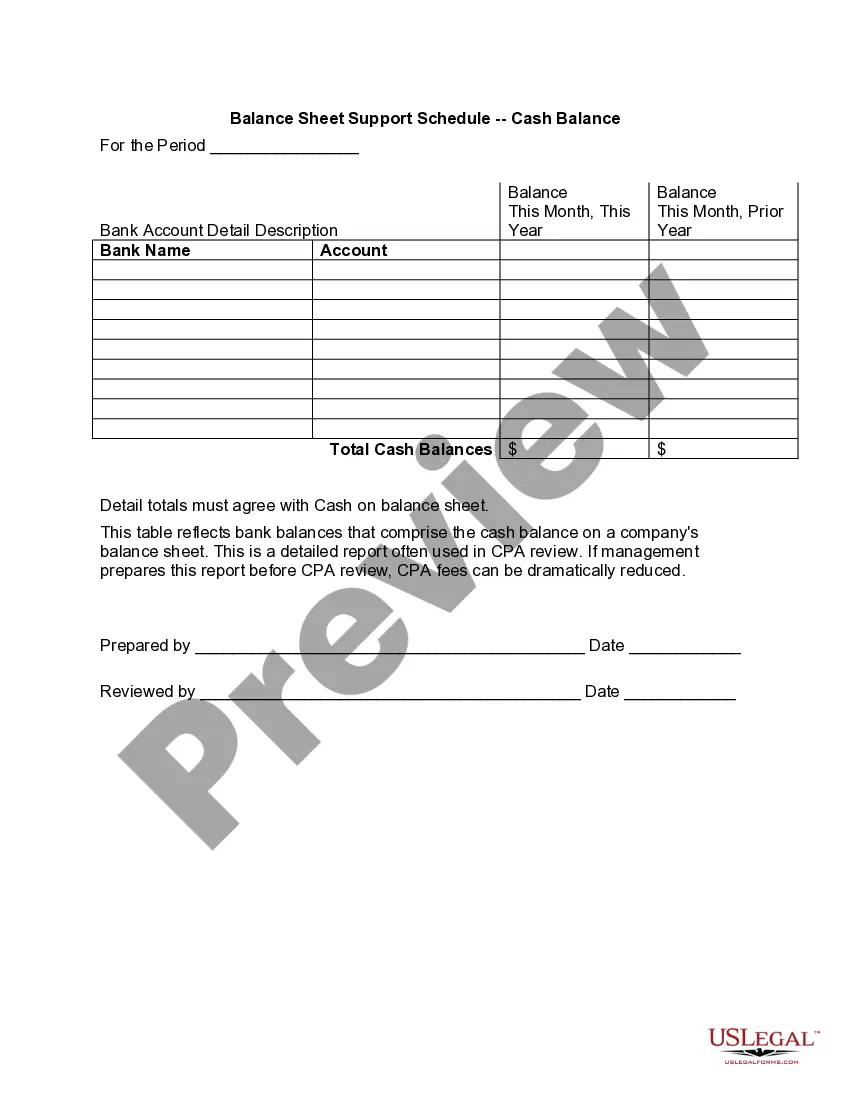
This schedule is tailored for small businesses.
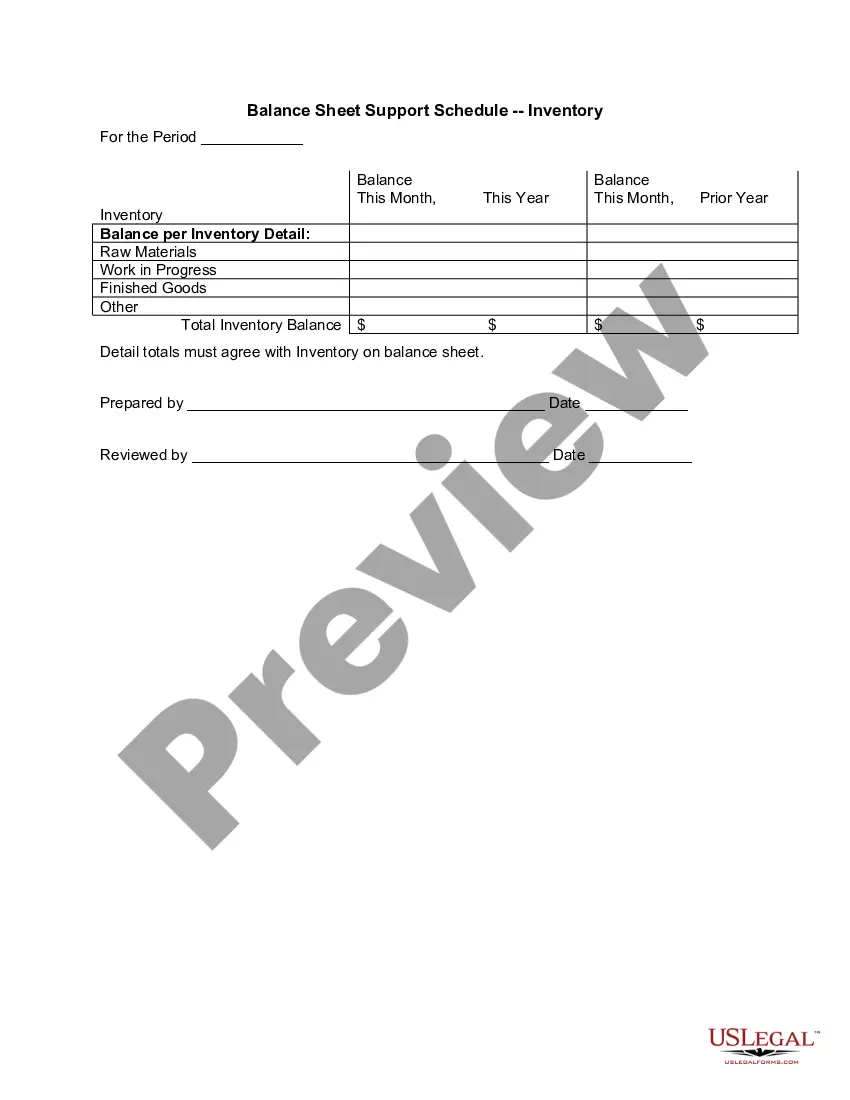
Texas Balance Sheet Support Schedule - Inventory
Category:
State:
Multi-State
Control #:
US-03145BG
Format:
Word;
Rich Text
Instant download
Description
Get your form ready online
Our built-in tools help you complete, sign, share, and store your documents in one place.
Built-in online Word editor
Make edits, fill in missing information, and update formatting in US Legal Forms—just like you would in MS Word.
Export easily
Download a copy, print it, send it by email, or mail it via USPS—whatever works best for your next step.
E-sign your document
Sign and collect signatures with our SignNow integration. Send to multiple recipients, set reminders, and more. Go Premium to unlock E-Sign.
Notarize online 24/7
If this form requires notarization, complete it online through a secure video call—no need to meet a notary in person or wait for an appointment.
Store your document securely
We protect your documents and personal data by following strict security and privacy standards.

Make edits, fill in missing information, and update formatting in US Legal Forms—just like you would in MS Word.

Download a copy, print it, send it by email, or mail it via USPS—whatever works best for your next step.

Sign and collect signatures with our SignNow integration. Send to multiple recipients, set reminders, and more. Go Premium to unlock E-Sign.

If this form requires notarization, complete it online through a secure video call—no need to meet a notary in person or wait for an appointment.

We protect your documents and personal data by following strict security and privacy standards.
Looking for another form?



How to fill out Balance Sheet Support Schedule - Inventory?
If you wish to finalize, retrieve, or print legal document templates, utilize US Legal Forms, the most extensive selection of legal forms available online.
Utilize the website's straightforward and user-friendly search to locate the documents you require.
A range of templates for business and personal purposes are organized by categories and states, or keywords.
Step 4. Once you have found the form you need, click the Get now button. Choose your preferred pricing plan and enter your information to create an account.
Step 5. Process the payment. You can use your credit card or PayPal account to complete the transaction.
- Use US Legal Forms to obtain the Texas Balance Sheet Support Schedule - Inventory in just a few clicks.
- If you are currently a US Legal Forms user, Log In to your account and click the Get button to find the Texas Balance Sheet Support Schedule - Inventory.
- You can also access forms you previously saved in the My documents section of your account.
- If you are using US Legal Forms for the first time, follow the instructions below.
- Step 1. Ensure that you have selected the form for the correct city/state.
- Step 2. Use the Preview option to review the form’s content. Remember to read the details.
- Step 3. If you are not satisfied with the form, utilize the Search field at the top of the screen to find other types of your legal form template.
Form popularity
FAQ
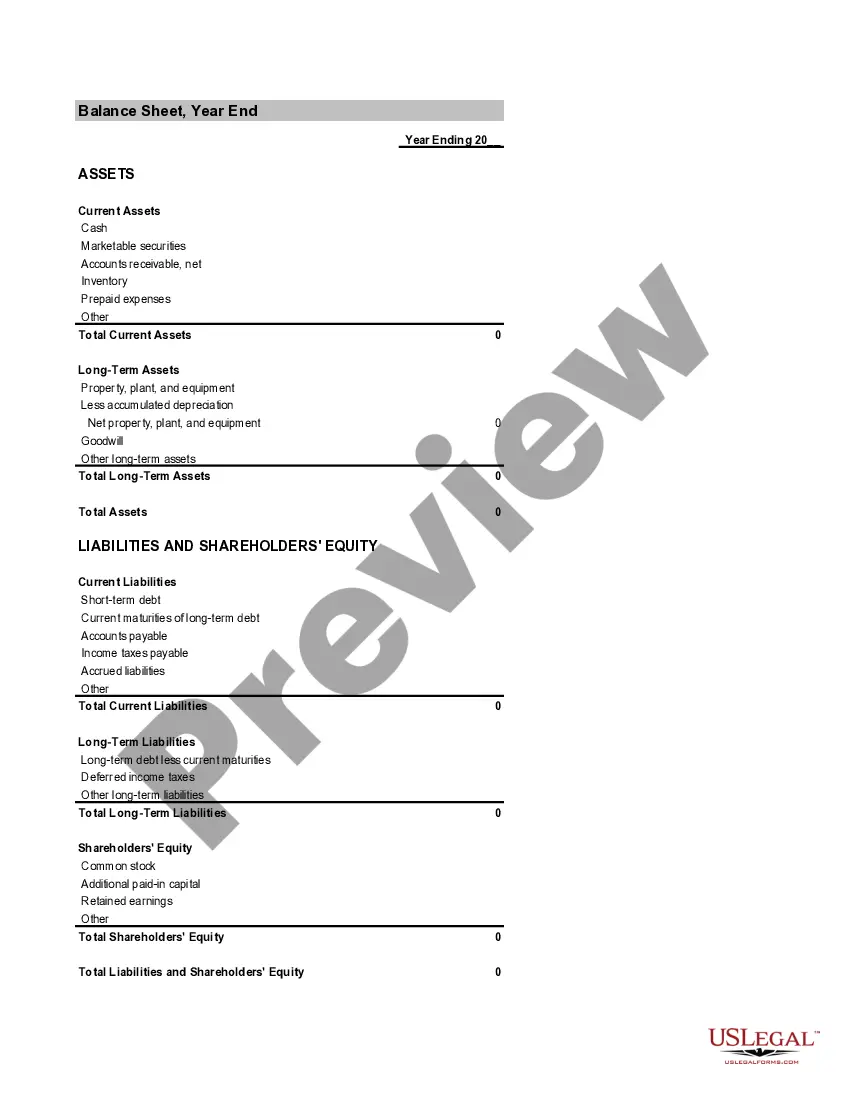
To get inventory on your balance sheet, start with a complete count of your inventory items. After valuation, record this amount under current assets on the balance sheet. The Texas Balance Sheet Support Schedule - Inventory simplifies this process by organizing and presenting your inventory data clearly. This approach not only enhances financial reporting but also guides you in managing your stock efficiently.
The formula for total inventory is relatively straightforward: Total Inventory = Beginning Inventory + Purchases - Ending Inventory. This calculation provides a comprehensive view of your stock levels over a specific period. By incorporating this formula into your Texas Balance Sheet Support Schedule - Inventory, you can monitor changes in your inventory effectively. Keeping track of inventory ensures informed decisions regarding production and sales.
To include inventory in your balance sheet, you need to conduct a thorough inventory count and value your stock. You'll record the total value of the inventory as a current asset. Utilizing a Texas Balance Sheet Support Schedule - Inventory aids in organizing this data systematically. This ensures that your balance sheet accurately reflects your resources and aids in better financial decision-making.
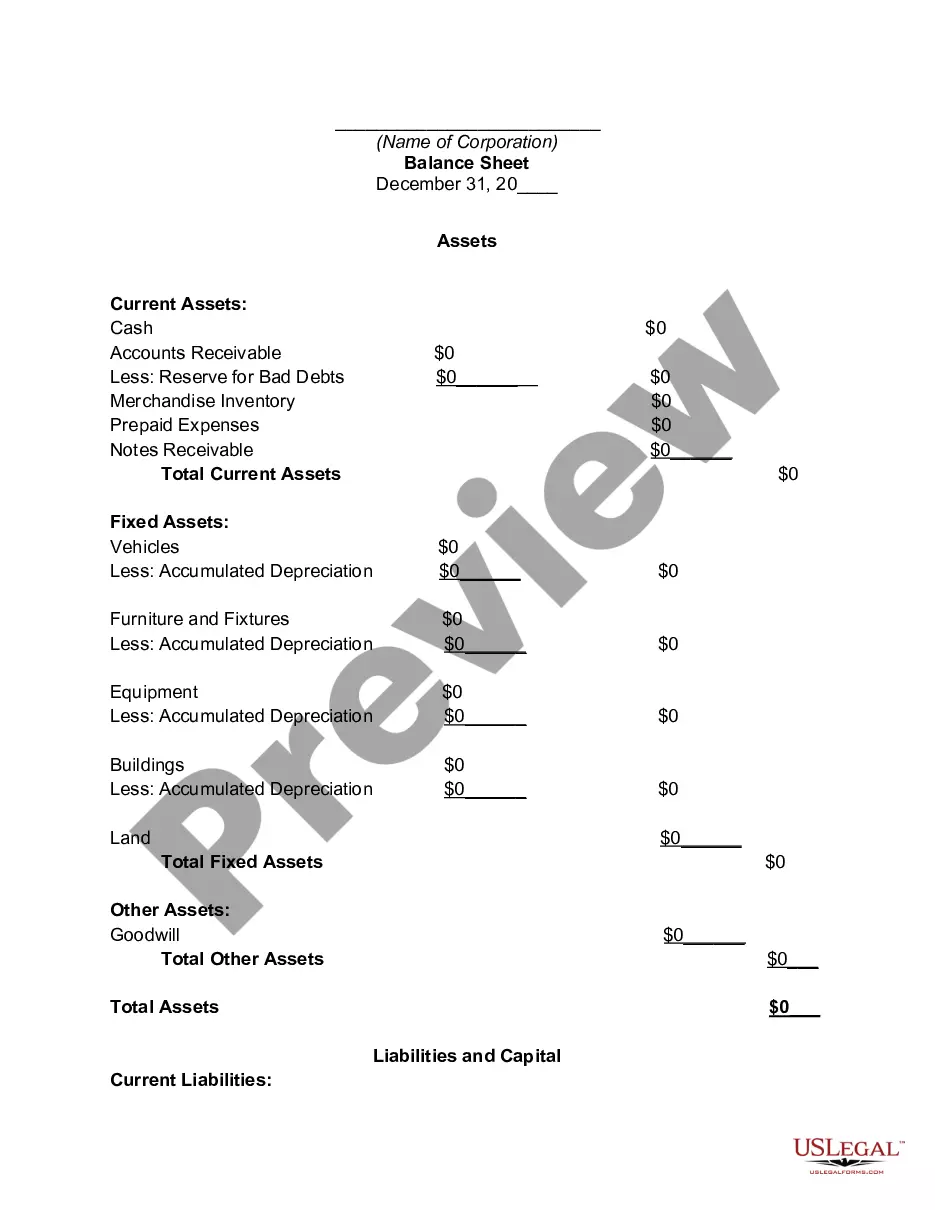
A schedule balance sheet is a detailed financial statement that provides insight into your company's assets, liabilities, and equity. This document is essential for understanding the financial health of your business. It often includes a Texas Balance Sheet Support Schedule - Inventory to highlight the value of the inventory on hand. By including inventory in your balance sheet, you gain a clearer picture of your financial position.
If there is no inventory on the balance sheet, it may indicate a change in business operations or inventory management. It's essential to explain this situation in your notes or disclosures section. Even a lack of inventory can impact financial analysis and business decisions. Consider the Texas Balance Sheet Support Schedule - Inventory for comprehensive financial oversight.
To record inventory on the balance sheet, determine its value by choosing a suitable valuation method such as FIFO or LIFO. Next, place this value in the current assets section of your balance sheet. Recording inventory accurately is crucial for financial reporting. Using the Texas Balance Sheet Support Schedule - Inventory can streamline this process.
To show inventory on a balance sheet, you first need to categorize it under current assets. Typically, this is displayed as a separate line item. Ensure you list the inventory value based on the accounting method you use. The Texas Balance Sheet Support Schedule - Inventory can help you organize this information effectively.
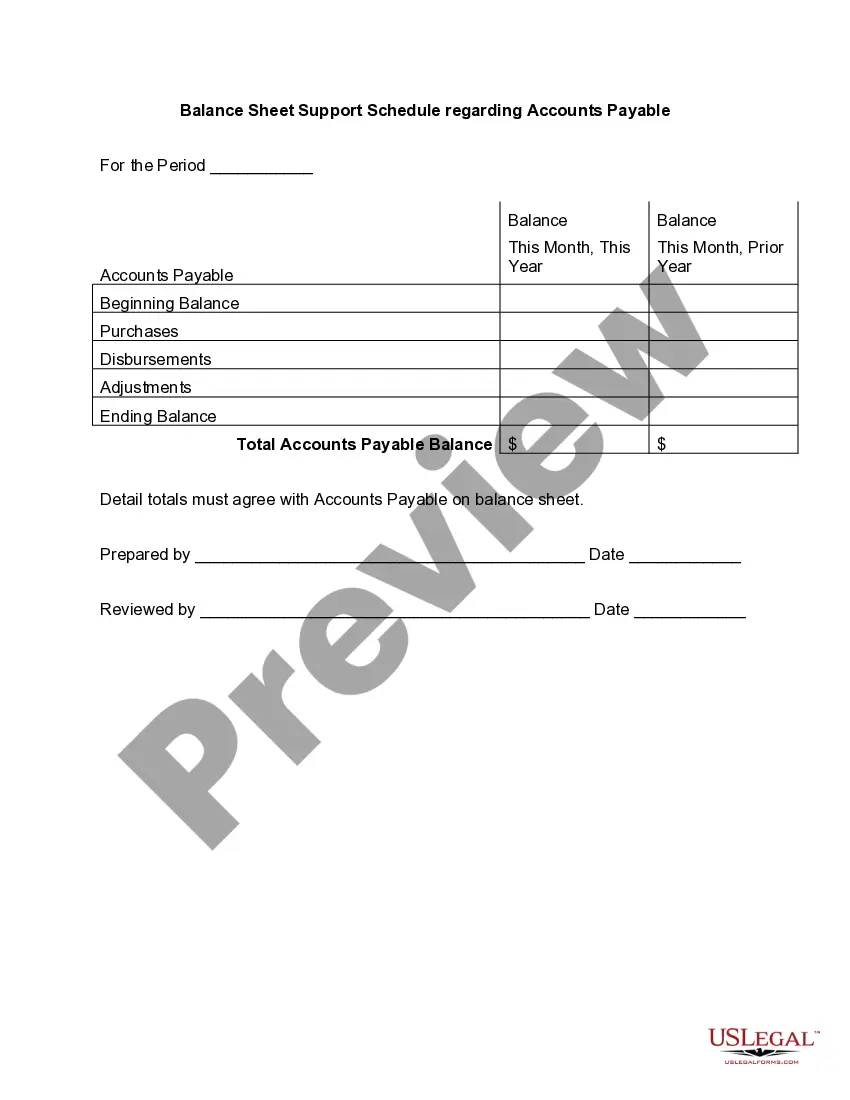
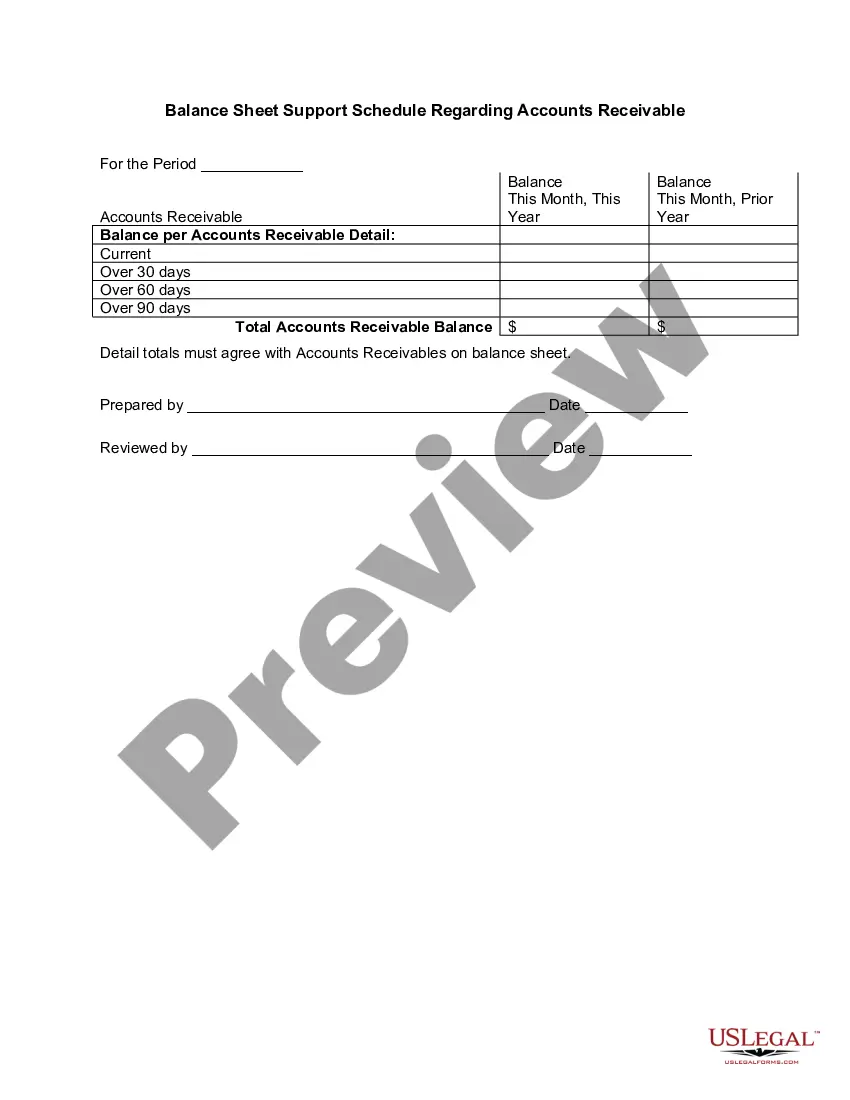
Preparing schedules for a balance sheet involves documenting all financial activities in an organized manner. Create detailed schedules for each category, such as assets, liabilities, and equity. Utilizing a Texas Balance Sheet Support Schedule - Inventory will help ensure that all inventory and financial details are presented clearly and accurately.
To list inventory on a balance sheet, include its total value under the current assets section. Ensure you account for all inventory types, such as raw materials and finished goods. You can benefit from the Texas Balance Sheet Support Schedule - Inventory, which helps you systematically organize your inventory listings.
To report inventory on a balance sheet, first establish the total value of your inventory. This total should be listed under current assets, clearly indicating its contribution to total assets. The Texas Balance Sheet Support Schedule - Inventory is an excellent resource for organizing and verifying your inventory details.