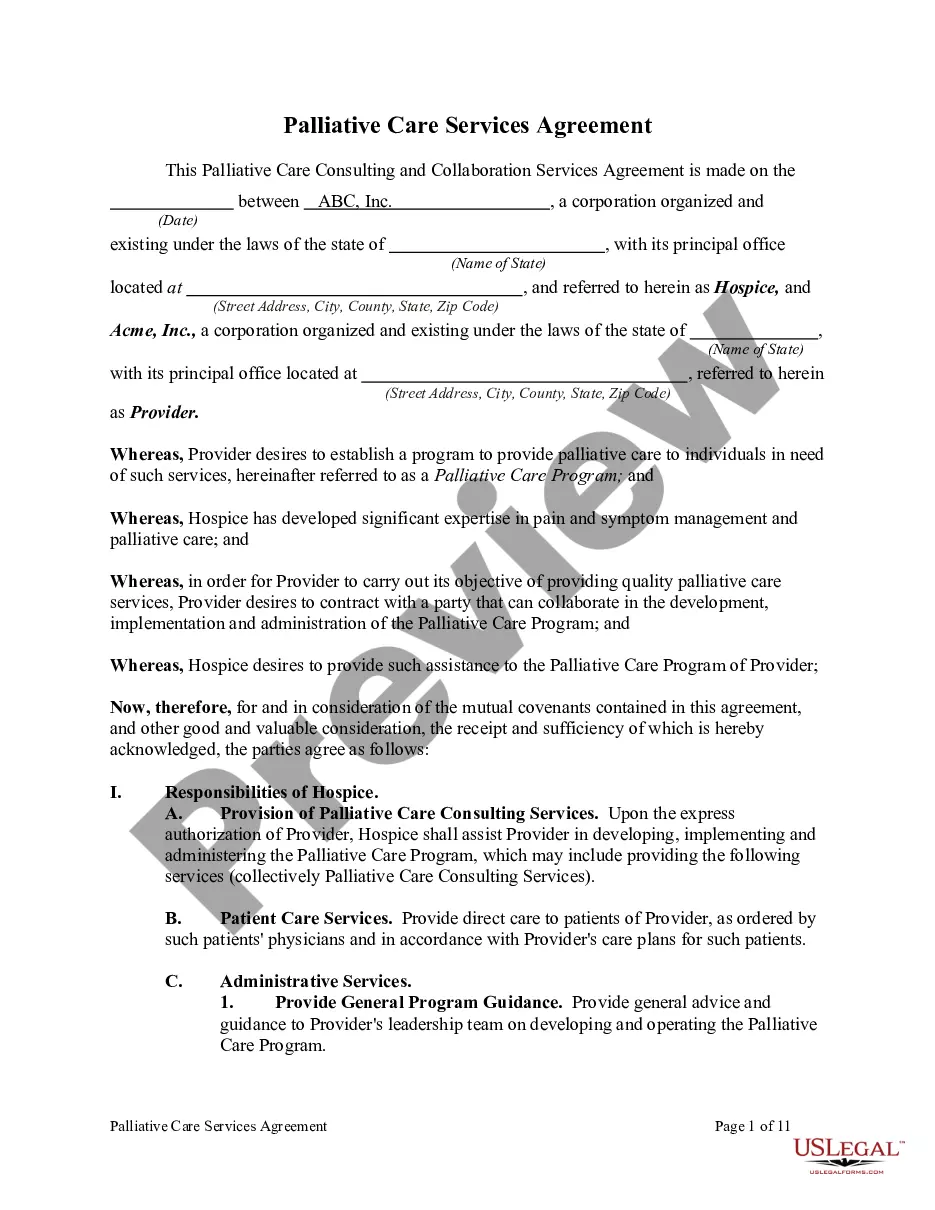
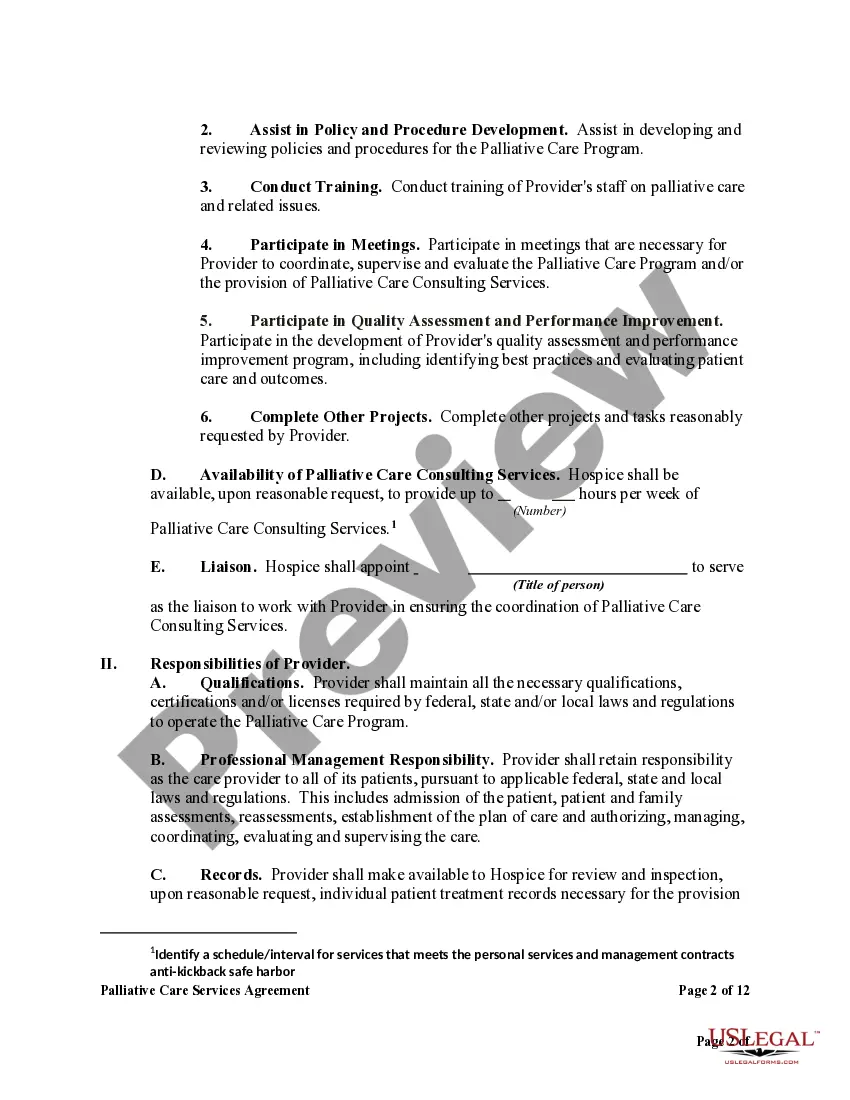
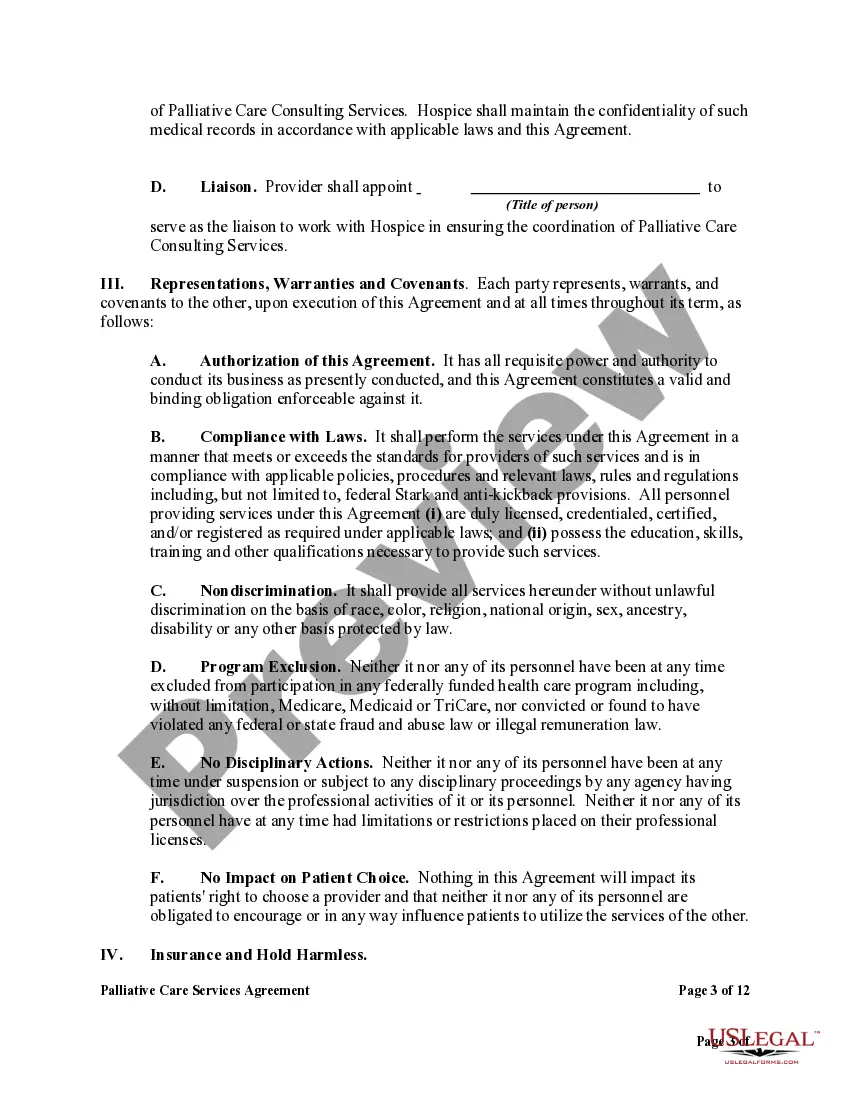
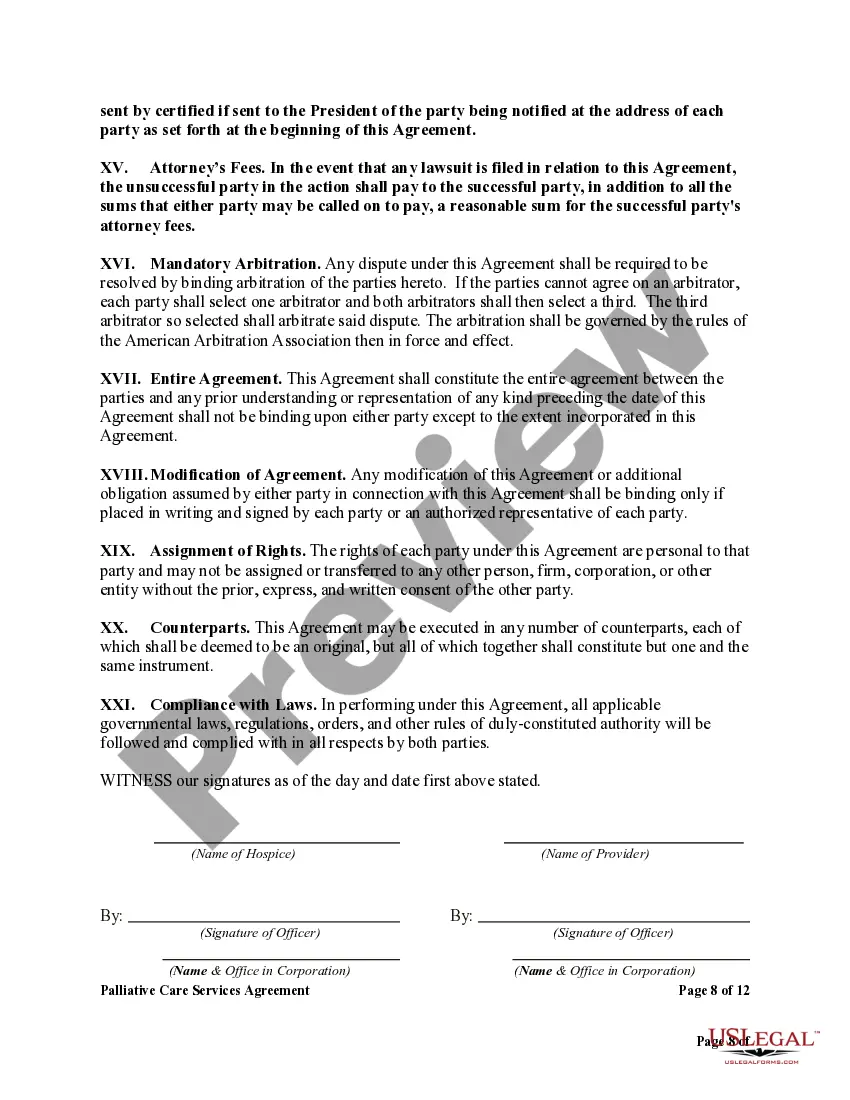
Texas Palliative Care Services Agreement
Description




Get your form ready online
Our built-in tools help you complete, sign, share, and store your documents in one place.
Make edits, fill in missing information, and update formatting in US Legal Forms—just like you would in MS Word.
Download a copy, print it, send it by email, or mail it via USPS—whatever works best for your next step.
Sign and collect signatures with our SignNow integration. Send to multiple recipients, set reminders, and more. Go Premium to unlock E-Sign.
If this form requires notarization, complete it online through a secure video call—no need to meet a notary in person or wait for an appointment.
We protect your documents and personal data by following strict security and privacy standards.

Make edits, fill in missing information, and update formatting in US Legal Forms—just like you would in MS Word.

Download a copy, print it, send it by email, or mail it via USPS—whatever works best for your next step.

Sign and collect signatures with our SignNow integration. Send to multiple recipients, set reminders, and more. Go Premium to unlock E-Sign.

If this form requires notarization, complete it online through a secure video call—no need to meet a notary in person or wait for an appointment.

We protect your documents and personal data by following strict security and privacy standards.
Looking for another form?


How to fill out Palliative Care Services Agreement?
If you need to finalize, obtain, or print sanctioned document templates, utilize US Legal Forms, the largest range of legal forms accessible online.
Employ the site’s straightforward and user-friendly search to find the documents you require.
Various templates for business and personal use are organized by categories and states, or keywords.
Every legal document template you purchase is yours indefinitely. You have access to every form you saved in your account. Navigate to the My documents section and select a form to print or download again.
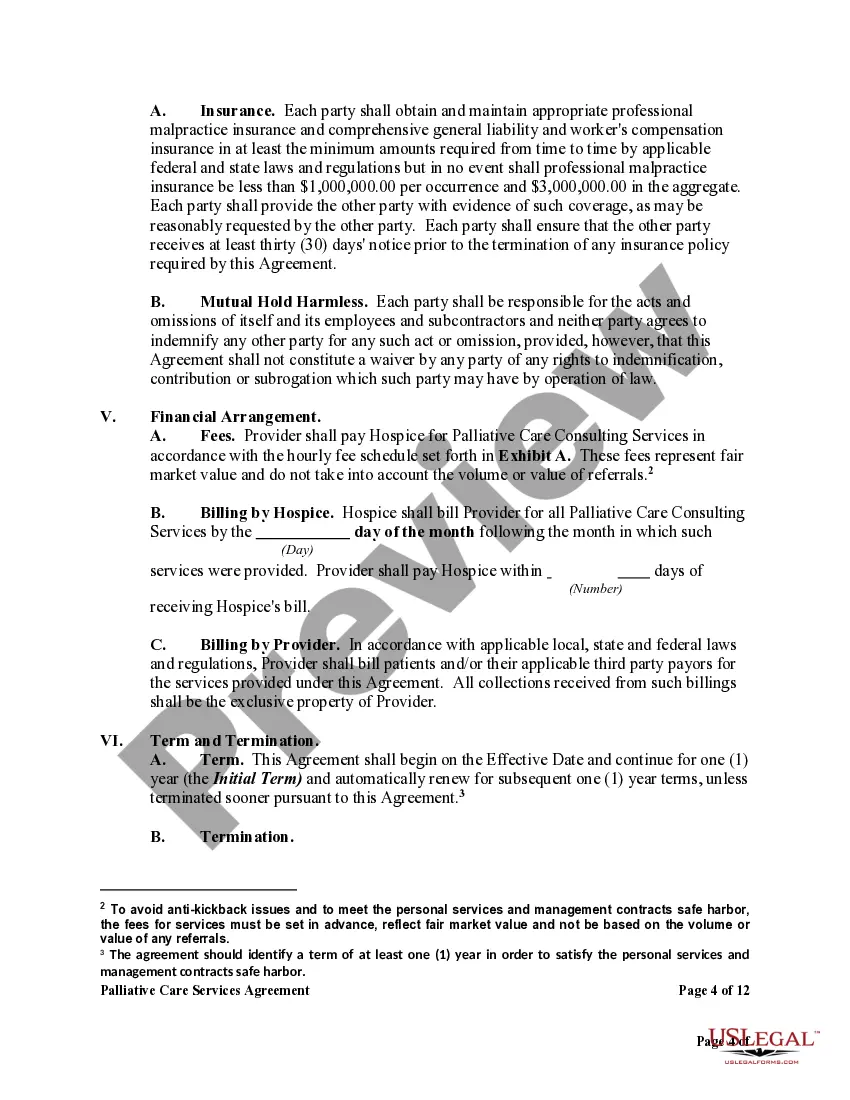
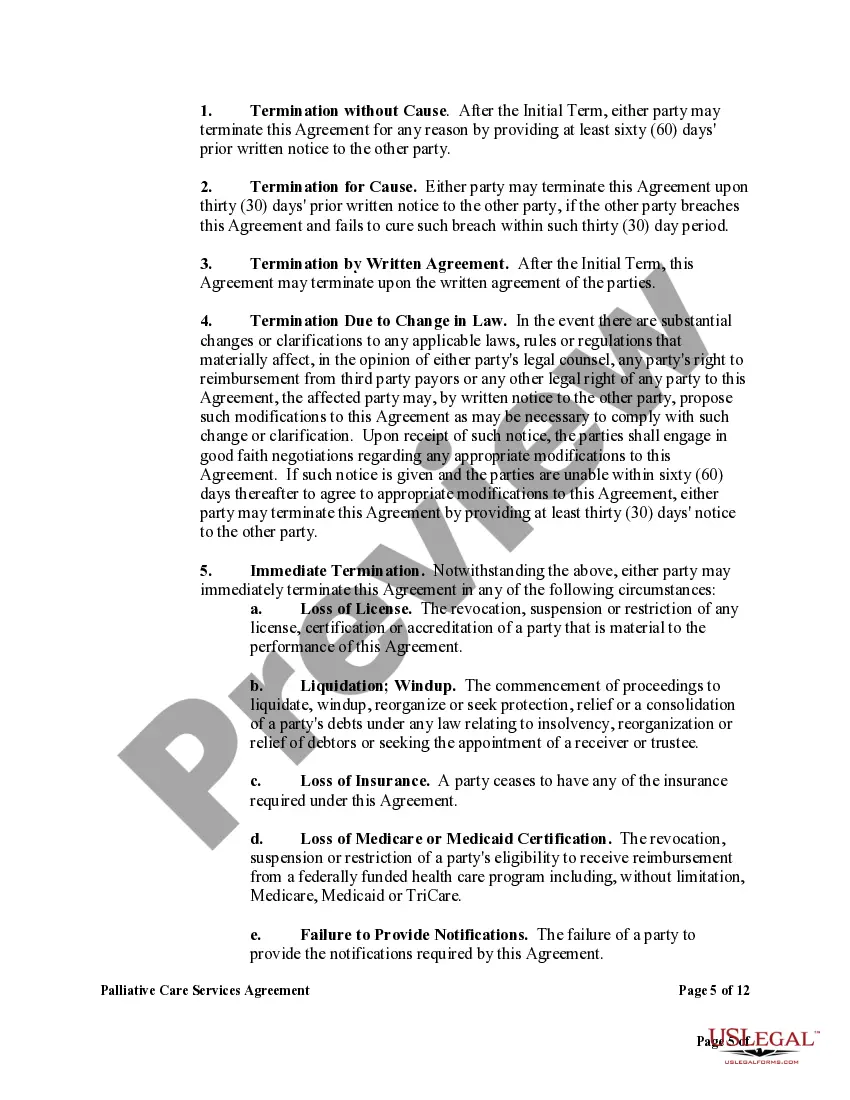
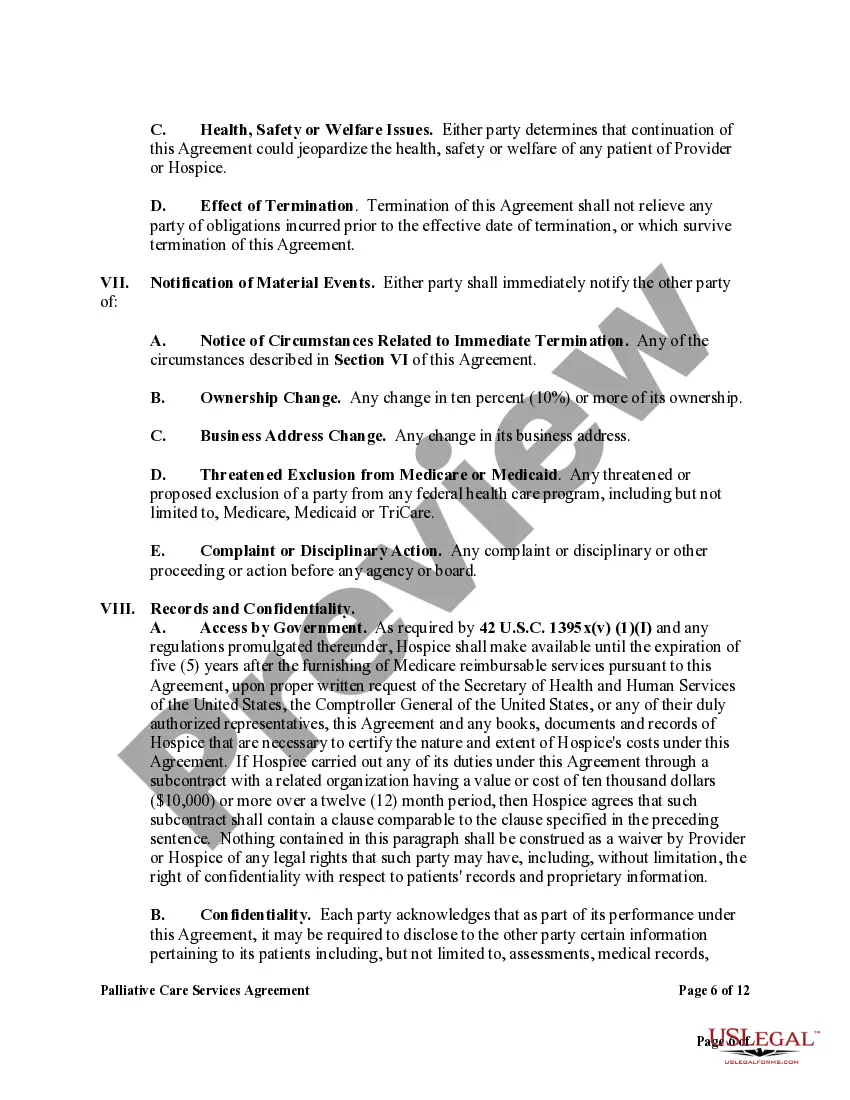
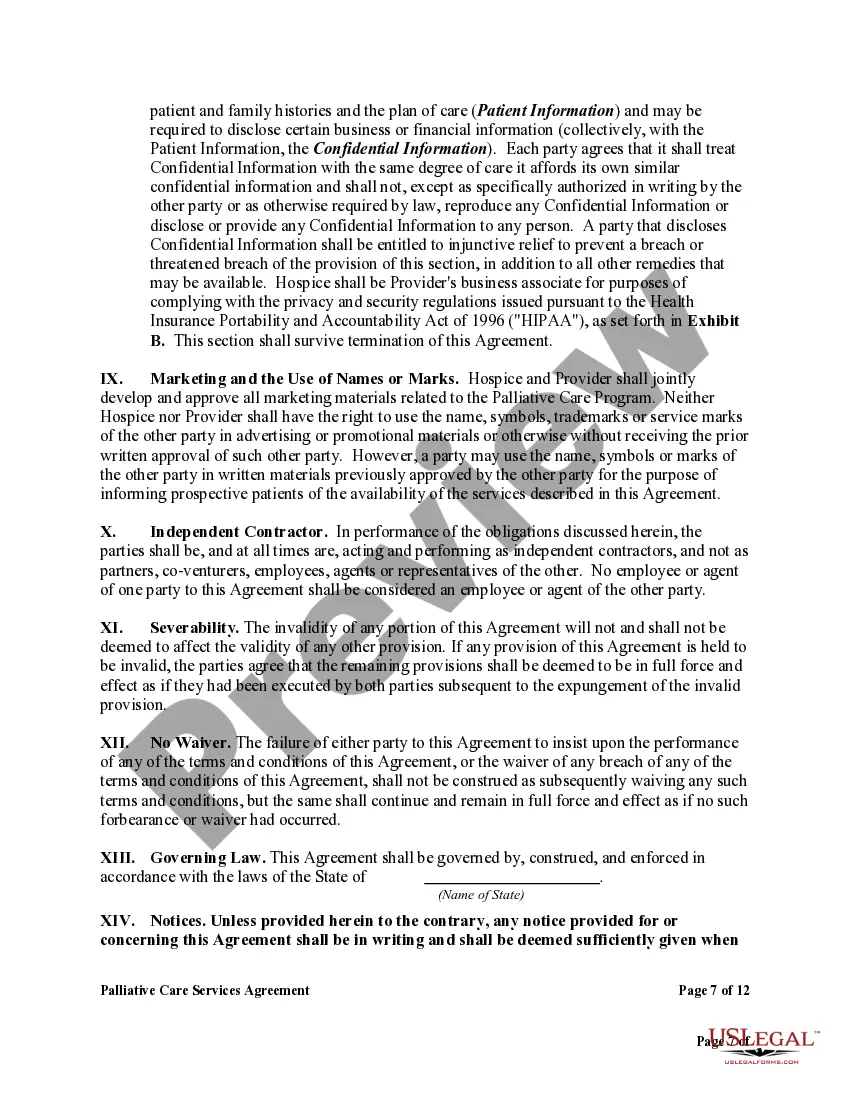
Complete and download, and print the Texas Palliative Care Services Agreement with US Legal Forms. There are millions of professional and state-specific forms available for your business or personal needs.
- Use US Legal Forms to acquire the Texas Palliative Care Services Agreement in just a few clicks.
- If you are already a US Legal Forms member, Log In to your account and click the Download button to obtain the Texas Palliative Care Services Agreement.
- You can also access previously saved forms from the My documents section of your account.
- If this is your first time using US Legal Forms, please follow the steps outlined below.
- Step 1. Ensure you have selected the form for your correct region/state.
- Step 2. Use the Preview option to view the contents of the form. Remember to read the information.
- Step 3. If you are not satisfied with the template, utilize the Search field at the top of the screen to find alternative versions of the legal form template.
- Step 4. After locating the form you need, click the Purchase now button. Choose the payment plan you prefer and enter your credentials to register for an account.
- Step 5. Complete the transaction. You can use your credit card or PayPal account to finalize the transaction.
- Step 6. Select the format of the legal form and download it to your device.
- Step 7. Fill out, revise and print or sign the Texas Palliative Care Services Agreement.
Form popularity
FAQ
In Texas, hospice care is regulated by the Texas Health and Human Services Commission. The commission oversees compliance with state and federal regulations, including the Texas Palliative Care Services Agreement. This ensures that hospice providers meet high standards of care and support for patients and their families. For more information about these regulations, you can explore resources available on the commission's website.
Hospice and palliative care both focus on providing relief from symptoms, but they serve different purposes. Palliative care in Texas is available at any stage of a serious illness, while hospice is specifically for patients nearing the end of life. The Texas Palliative Care Services Agreement encourages individuals to seek palliative care early, helping improve their overall comfort during treatment. Understanding this distinction is crucial for making informed healthcare decisions.
In Texas, anyone diagnosed with a serious illness, regardless of age, may qualify for palliative care. The Texas Palliative Care Services Agreement allows for access to this specialized care at any stage of illness. Patients experiencing symptoms that negatively impact their quality of life should consider seeking these services. Discussing options with healthcare providers is a great first step.
Yes, Texas offers extensive palliative care services for patients facing serious illnesses. In fact, the Texas Palliative Care Services Agreement aims to improve the quality of life for individuals through coordinated care options. This includes pain management, emotional support, and assistance with navigating complex medical decisions. Patients and families can find resources across various healthcare facilities statewide.
Several states have made significant strides in offering quality palliative care services. Among them, Texas stands out for its comprehensive Texas Palliative Care Services Agreement, which ensures accessible options for various patient needs. Other states like California and New York also feature robust palliative care programs, but their regulations differ. It's essential for families to consider state-specific resources when seeking care.
The 7Cs of palliative care reiterate the importance of comprehensive and compassionate support for patients with life-limiting illnesses. By focusing on continuity, collaboration, coordination, commitment, and customization, providers can enhance patient experiences. Make sure to incorporate these C's into your Texas Palliative Care Services Agreement to ensure a well-rounded and effective approach to care.
The nine principles of palliative care emphasize patient-centered care, assessing and managing pain, involving families in the care process, offering spiritual support, and providing bereavement care. By adhering to these principles, healthcare providers can deliver better care experiences. Implementing these principles into your Texas Palliative Care Services Agreement can result in a more focused approach to patient health.
The three main types of palliative care are inpatient care, outpatient care, and home-based care. Each type caters to different patient needs and settings, allowing for flexibility in care delivery. Understanding these options can help you effectively structure your Texas Palliative Care Services Agreement to suit your needs.
Billing for palliative care services typically involves using specific codes that reflect the nature of the services provided. It is crucial to comply with insurance regulations and guidelines. If you're unsure about billing practices, consider utilizing resources from US Legal Forms to help you effectively navigate the billing process within your Texas Palliative Care Services Agreement.
The five core values of palliative care include respect for patient autonomy, effective communication, a focus on quality of life, a team-based approach, and comprehensive symptom management. These values guide healthcare professionals in their interactions with patients and families. Incorporating these core values into your Texas Palliative Care Services Agreement can lead to improved patient satisfaction and outcomes.