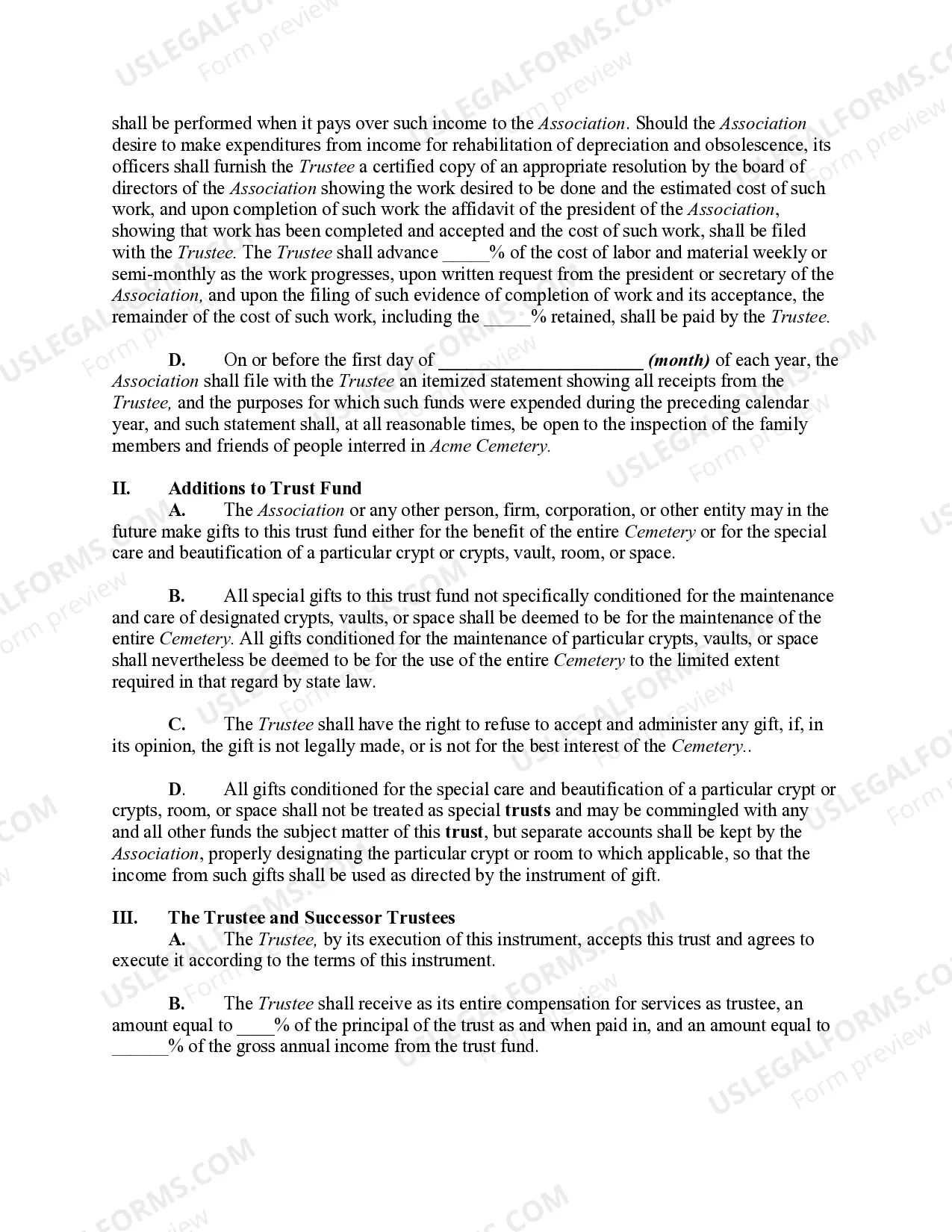
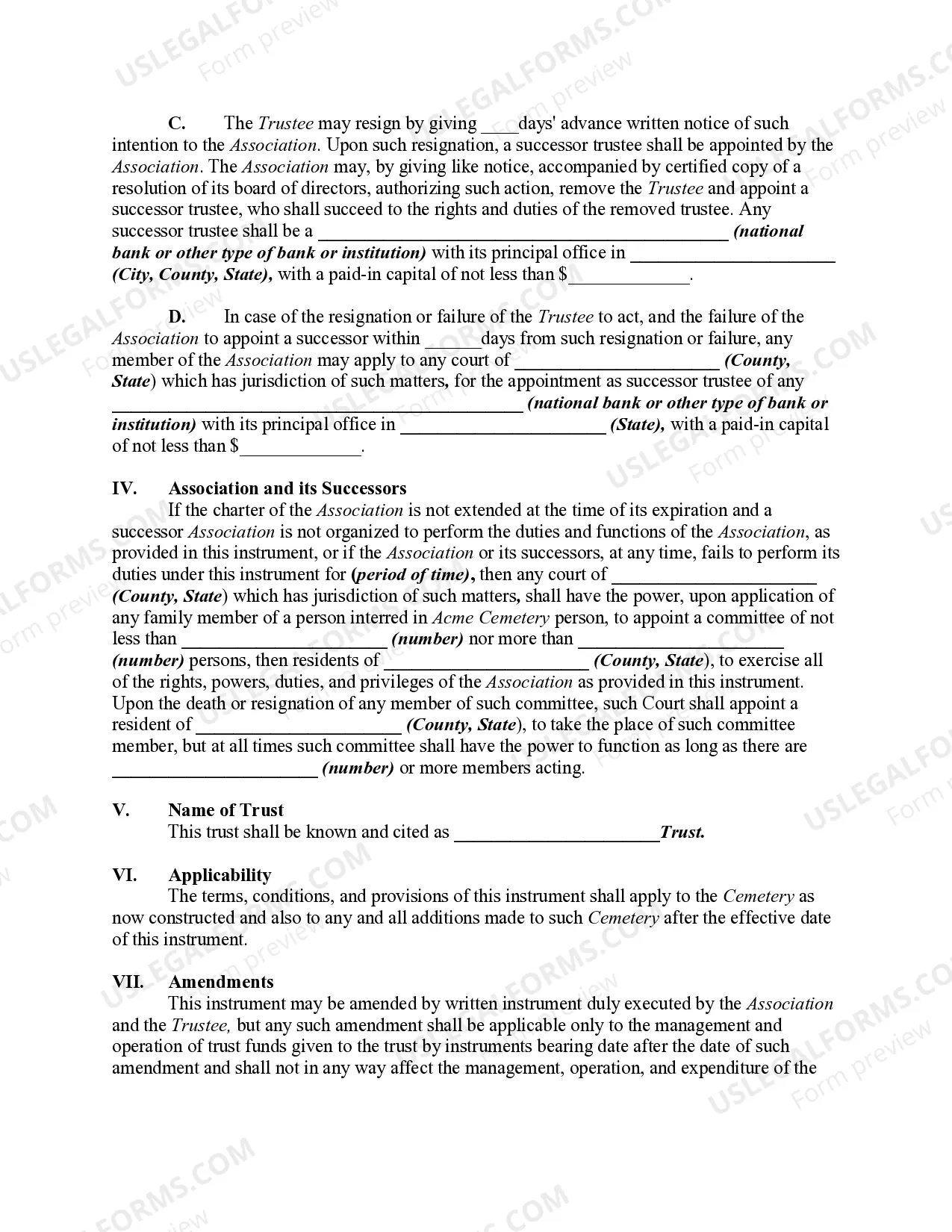
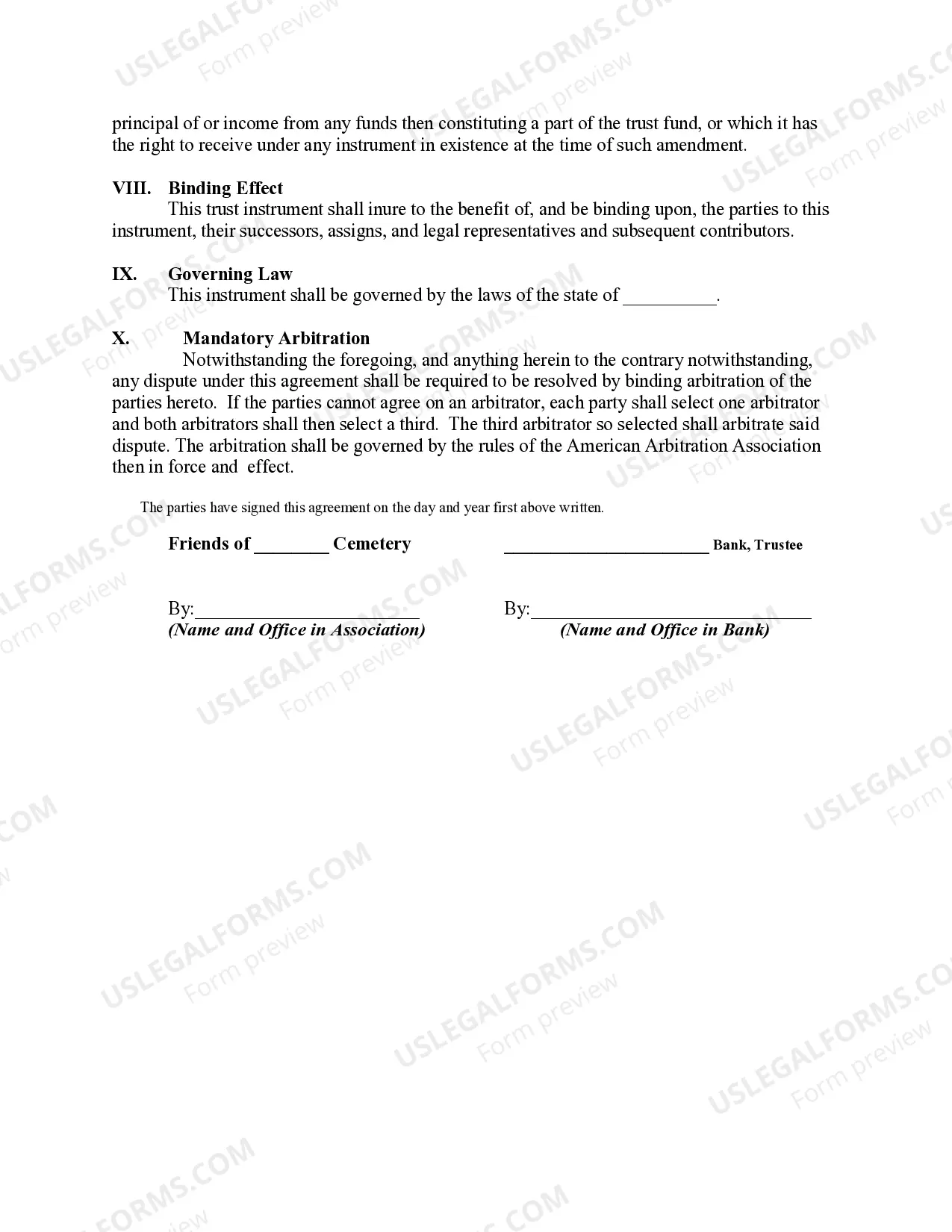
Texas Special Cemetery Gift Trust Fund
Description
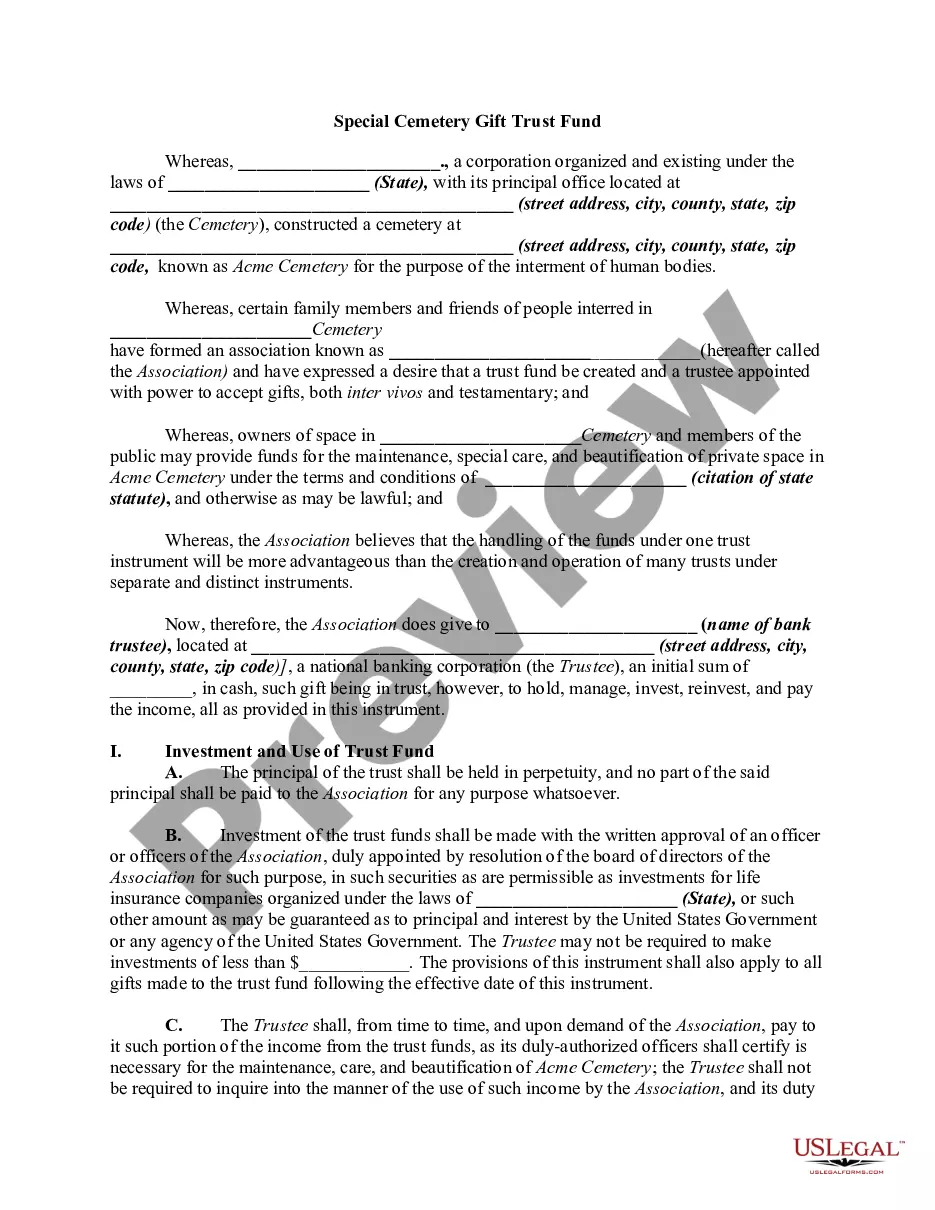

Get your form ready online
Our built-in tools help you complete, sign, share, and store your documents in one place.
Make edits, fill in missing information, and update formatting in US Legal Forms—just like you would in MS Word.
Download a copy, print it, send it by email, or mail it via USPS—whatever works best for your next step.
Sign and collect signatures with our SignNow integration. Send to multiple recipients, set reminders, and more. Go Premium to unlock E-Sign.
If this form requires notarization, complete it online through a secure video call—no need to meet a notary in person or wait for an appointment.
We protect your documents and personal data by following strict security and privacy standards.

Make edits, fill in missing information, and update formatting in US Legal Forms—just like you would in MS Word.

Download a copy, print it, send it by email, or mail it via USPS—whatever works best for your next step.

Sign and collect signatures with our SignNow integration. Send to multiple recipients, set reminders, and more. Go Premium to unlock E-Sign.

If this form requires notarization, complete it online through a secure video call—no need to meet a notary in person or wait for an appointment.

We protect your documents and personal data by following strict security and privacy standards.
Looking for another form?



How to fill out Special Cemetery Gift Trust Fund?
Have you ever found yourself in a situation where you need to have documents for various organizational purposes or particular tasks frequently.
There are numerous authentic document templates accessible online, but finding forms you can trust isn’t always simple.
US Legal Forms offers a vast array of form templates, such as the Texas Special Cemetery Gift Trust Fund, designed to comply with both state and federal regulations.
Once you find the correct form, simply click Download now.
Choose the pricing plan you want, fill in the necessary information to create your account, and complete the purchase using your PayPal or credit card.
- If you are already familiar with the US Legal Forms website and have an account, just Log In.
- Then, you can download the Texas Special Cemetery Gift Trust Fund template.
- If you do not have an account and wish to start using US Legal Forms, follow these instructions.
- Find the form you need and ensure it is for the correct state/region.
- Use the Preview button to review the form.
- Check the description to make sure you've selected the right document.
- If the form isn’t what you’re looking for, utilize the Search field to find the form that meets your needs.
Form popularity
FAQ
In Texas, a cemetery is defined as land used for burying human remains, including grave sites, mausoleums, and crypts. To qualify as a cemetery, the property must be designated for such purposes and often must adhere to local and state regulations. Many cemeteries are associated with a Texas Special Cemetery Gift Trust Fund, which helps ensure that funds are available for ongoing maintenance and care. Understanding what constitutes a cemetery can help you make informed decisions about burial and memorial options for your loved ones.
A perpetual care cemetery in Texas is a burial ground that provides ongoing maintenance of gravesites, ensuring that the cemetery remains a respectful resting place for the deceased. These cemeteries are often supported by a Texas Special Cemetery Gift Trust Fund, which allows funds to grow and sustain long-term care. With a commitment to preserving the landscape and honoring the memory of individuals, these cemeteries benefit families looking for lasting peace of mind. Choosing a perpetual care cemetery means investing in the future maintenance of your loved ones' final resting place.
To transfer ownership of a cemetery plot in Texas, you must contact the cemetery and provide necessary documentation. This often includes a deed or trust that indicates the transfer and may require a formal application. Utilizing a Texas Special Cemetery Gift Trust Fund can streamline this process and ensure that the transfer aligns with your final wishes.
Yes, natural burials are allowed in Texas, and they focus on environmentally friendly practices. A Texas Special Cemetery Gift Trust Fund can assist in organizing such burials, allowing for biodegradable caskets or shrouds, and dedicating specific land for the purpose. This option preserves the environment while giving families a meaningful way to honor their loved ones.
In Texas, you can be buried on your own property, provided you follow certain regulations. This includes notifying local authorities and adhering to health standards. Additionally, using a Texas Special Cemetery Gift Trust Fund can help manage financial aspects related to personal burial arrangements, ensuring peace of mind for you and your family.
Cemetery upkeep in Texas is generally the responsibility of the cemetery owner or operator. This includes ensuring the grounds are well-maintained and that burial sites are respected. Engaging with the Texas Special Cemetery Gift Trust Fund can alleviate financial burdens, creating sustainable funding for ongoing maintenance and care of cemeteries.
Health and Safety Code 773.064 in Texas addresses concerns related to emergency medical services, but it is unrelated to cemetery laws. For cemetery-related inquiries, it’s essential to focus on the laws and codes specifically governing burial practices, such as those connected to the Texas Special Cemetery Gift Trust Fund, which ensures proper funding for cemetery care.
Typically, local governments, nonprofit organizations, and cemetery associations are responsible for maintaining old cemeteries. However, when these entities lack resources, community members may step in to fund upkeep and restoration efforts. The Texas Special Cemetery Gift Trust Fund plays a vital role in supporting these initiatives by offering financial assistance for ongoing maintenance.
Burial laws in Texas involve regulations regarding where and how individuals can be buried, including permits required for cemeteries. These laws ensure that burial sites are managed correctly and that the deceased are treated with dignity. Familiarity with these regulations, along with the Texas Special Cemetery Gift Trust Fund, can provide guidance on long-term care and financial planning.
To file a complaint against a cemetery in Texas, you should contact the Texas Department of Banking or your local health department. Provide detailed information about your concerns, including any relevant evidence or documentation. Filing such complaints is crucial, as they can address misconduct and reinforce the purpose of the Texas Special Cemetery Gift Trust Fund for maintaining standards.