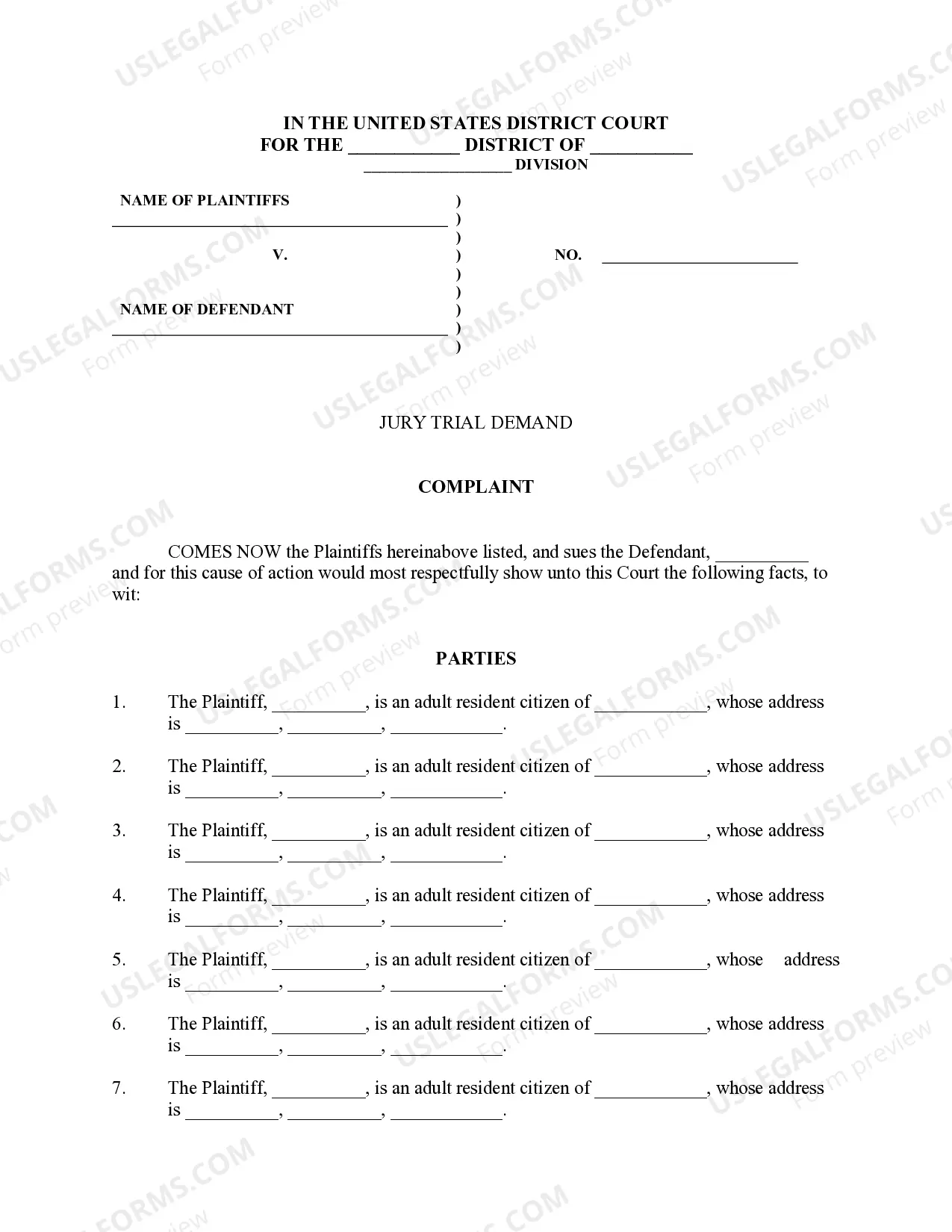
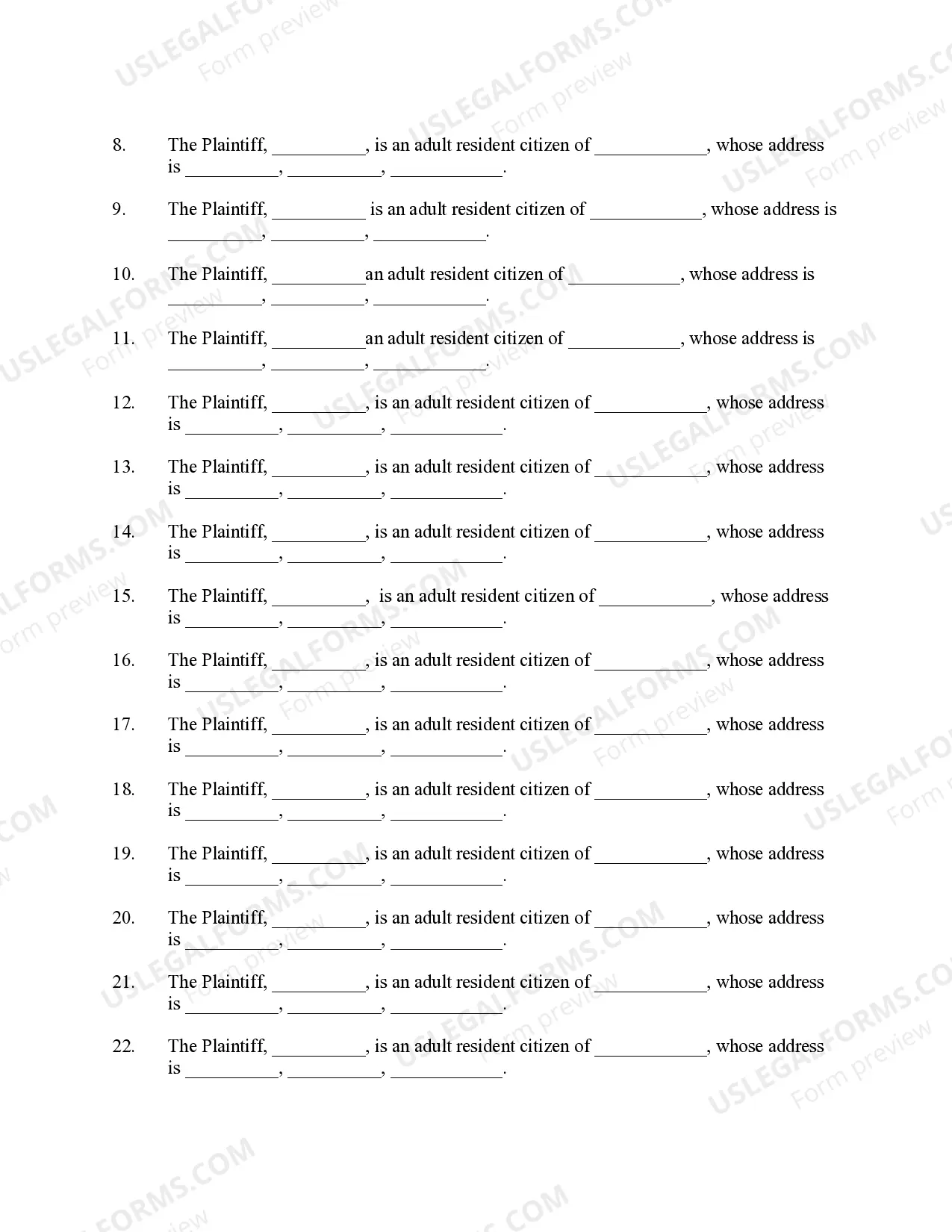
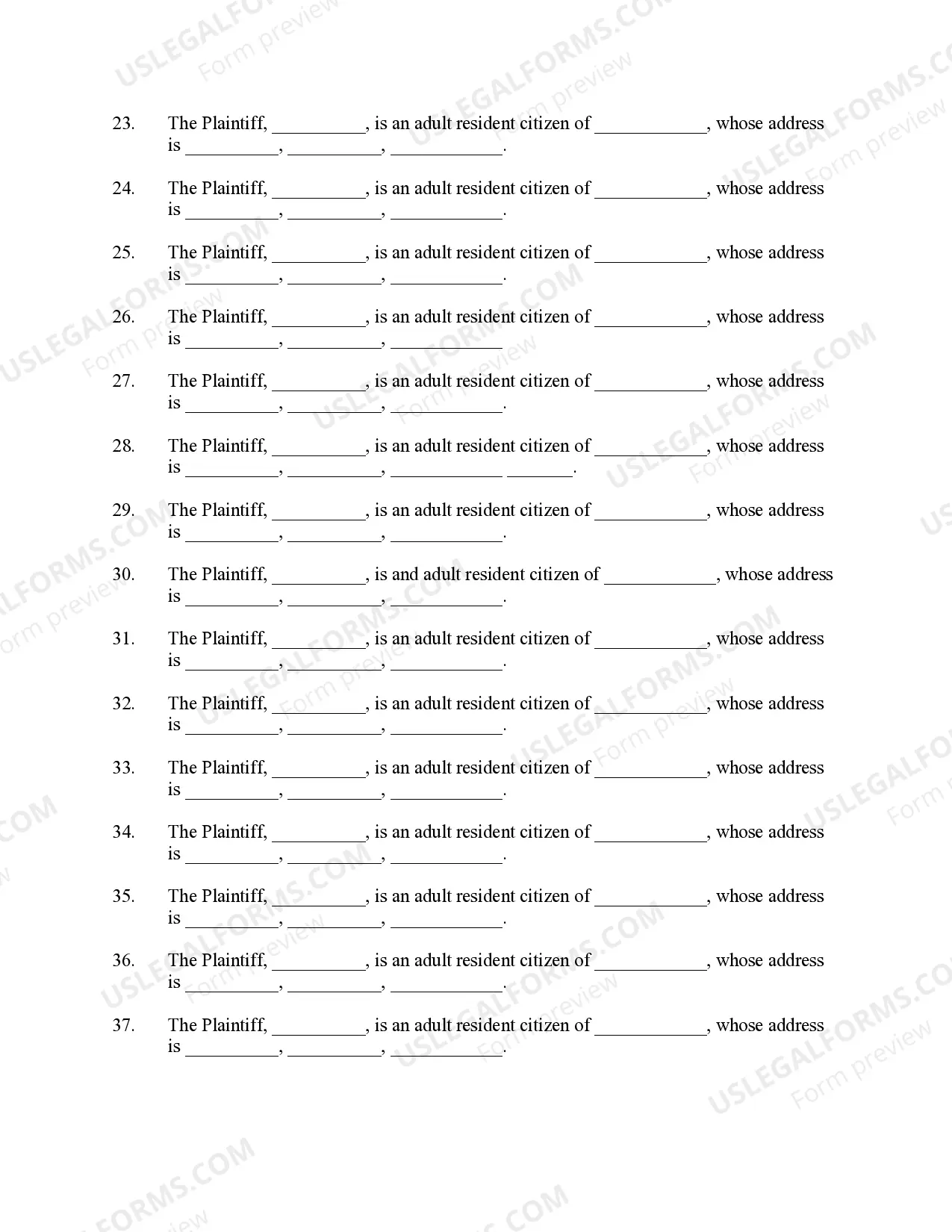
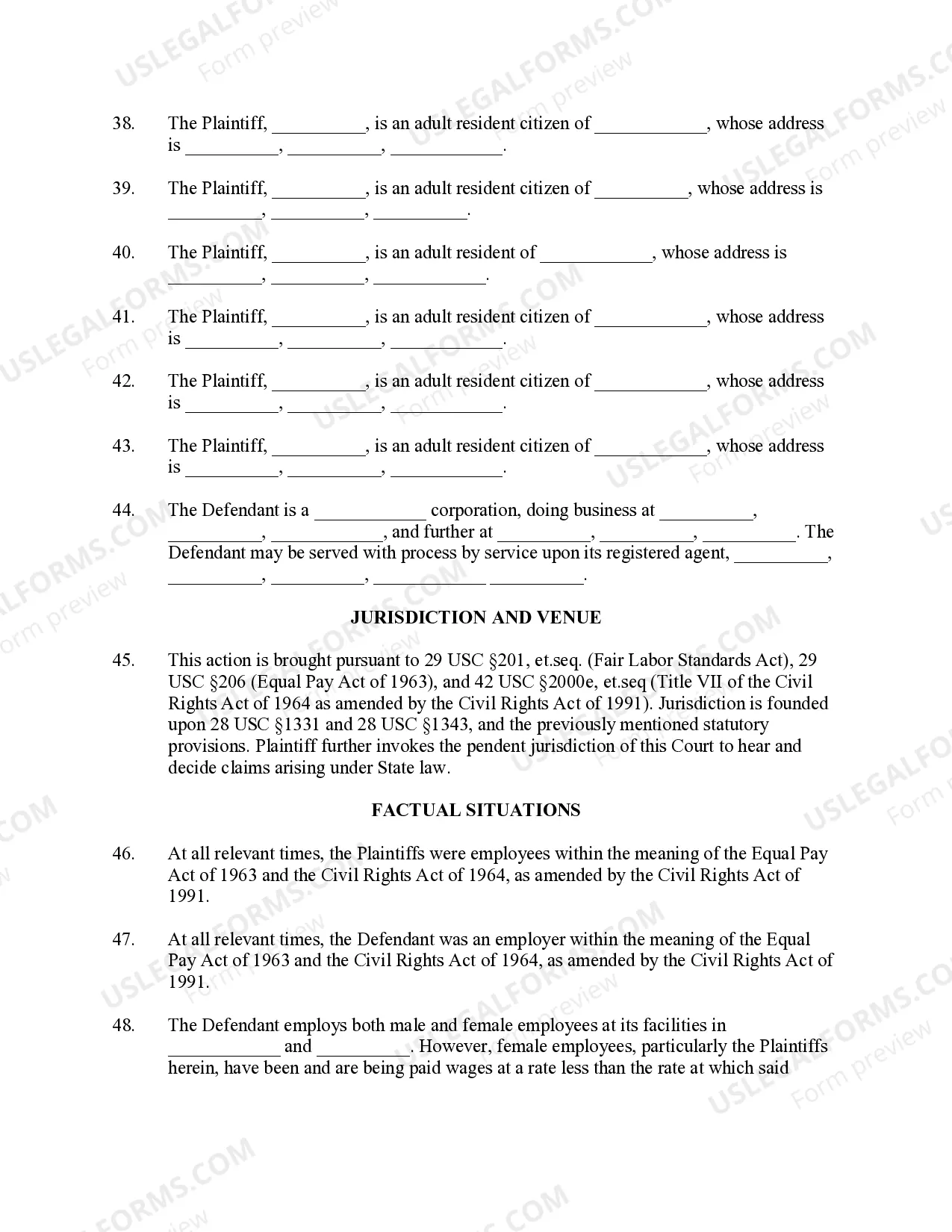
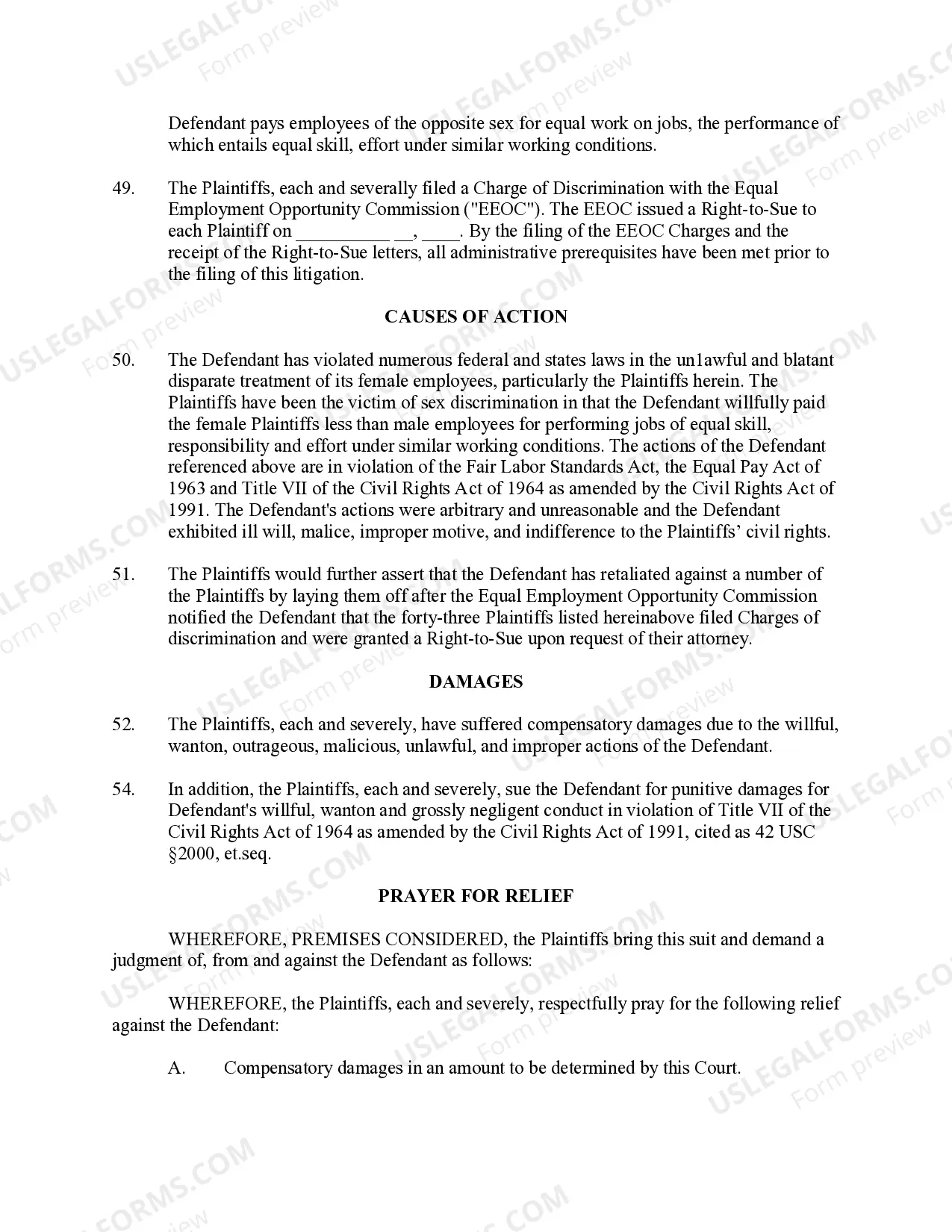
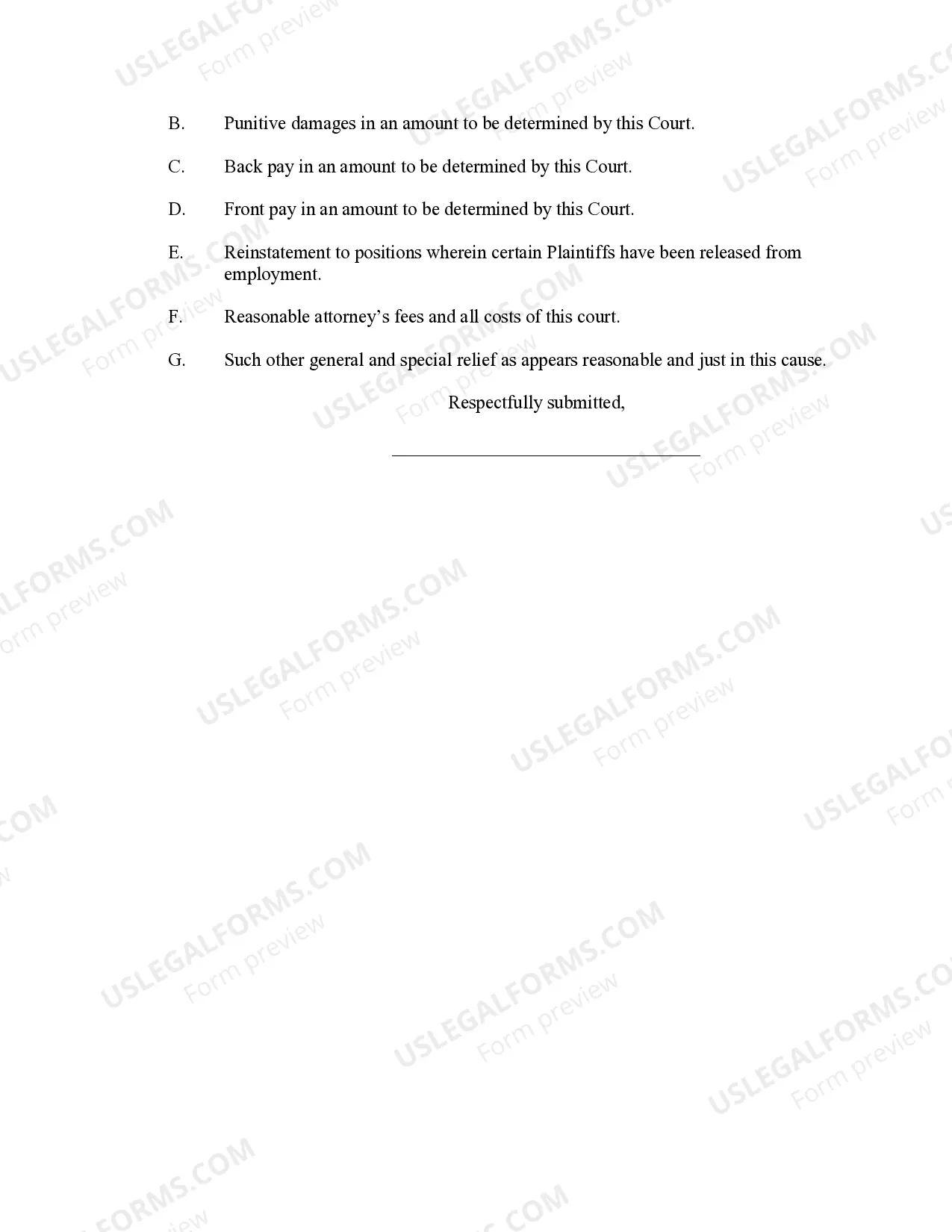
This is a Complaint pleading for use in litigation of the title matter. Adapt this form to comply with your facts and circumstances, and with your specific state law. Not recommended for use by non-attorneys.
Texas Complaint regarding FLSA Equal Pay Act Title VII Civil Rights Act - Jury Trial Demand
Instant download
Description
Free preview




Get your form ready online
Our built-in tools help you complete, sign, share, and store your documents in one place.
Built-in online Word editor
Make edits, fill in missing information, and update formatting in US Legal Forms—just like you would in MS Word.
Export easily
Download a copy, print it, send it by email, or mail it via USPS—whatever works best for your next step.
E-sign your document
Sign and collect signatures with our SignNow integration. Send to multiple recipients, set reminders, and more. Go Premium to unlock E-Sign.
Notarize online 24/7
If this form requires notarization, complete it online through a secure video call—no need to meet a notary in person or wait for an appointment.
Store your document securely
We protect your documents and personal data by following strict security and privacy standards.

Make edits, fill in missing information, and update formatting in US Legal Forms—just like you would in MS Word.

Download a copy, print it, send it by email, or mail it via USPS—whatever works best for your next step.

Sign and collect signatures with our SignNow integration. Send to multiple recipients, set reminders, and more. Go Premium to unlock E-Sign.

If this form requires notarization, complete it online through a secure video call—no need to meet a notary in person or wait for an appointment.

We protect your documents and personal data by following strict security and privacy standards.
Looking for another form?









How to fill out Complaint Regarding FLSA Equal Pay Act Title VII Civil Rights Act - Jury Trial Demand?
It is feasible to spend time online searching for the valid document template that meets the federal and state requirements you need.
US Legal Forms provides a vast array of valid forms that can be examined by professionals.
You can effortlessly obtain or print the Texas Complaint regarding FLSA Equal Pay Act Title VII Civil Rights Act - Jury Trial Demand from our platform.
If available, utilize the Review button to check the document template as well. If you wish to find another version of your form, use the Lookup field to locate the template that satisfies your requirements. Once you have found the template you need, click Get now to proceed. Choose the pricing plan you prefer, enter your details, and register for an account on US Legal Forms. Complete the transaction. You can use your Visa or Mastercard or PayPal account to pay for the valid document. Select the format of your document and download it to your system. Make adjustments to your document if necessary. You can fill out, modify, and sign and print the Texas Complaint regarding FLSA Equal Pay Act Title VII Civil Rights Act - Jury Trial Demand. Download and print a multitude of document layouts using the US Legal Forms website, which offers the largest variety of valid forms. Use professional and state-specific templates to address your business or personal needs.
- If you already have a US Legal Forms account, you can sign in and then click the Download button.
- After that, you can fill out, alter, print, or sign the Texas Complaint regarding FLSA Equal Pay Act Title VII Civil Rights Act - Jury Trial Demand.
- Every valid document template you purchase is yours indefinitely.
- To obtain another copy of the purchased form, visit the My documents section and click the corresponding button.
- If you are using the US Legal Forms website for the first time, follow the simple instructions below.
- First, ensure you have selected the correct document template for the region/city of your choice.
- Review the document details to confirm you have selected the right form.
Form popularity
FAQ
Filing a complaint with the Texas Workforce Commission involves a few straightforward steps. First, collect all relevant information regarding your issue, including dates, involved parties, and any supporting documents. You can then submit your Texas Complaint regarding FLSA Equal Pay Act Title VII Civil Rights Act - Jury Trial Demand online, by mail, or in person at a local office. US Legal Forms offers resources that can simplify this process and help ensure you complete your complaint correctly.
To file a complaint about labor in Texas, start by gathering all necessary documentation related to your case. You can submit your Texas Complaint regarding FLSA Equal Pay Act Title VII Civil Rights Act - Jury Trial Demand through the relevant state or federal agencies. It's important to follow the specific procedures outlined by these agencies to ensure your complaint is processed efficiently. Consider using US Legal Forms for easy access to the required forms and guidance throughout the process.
The United States Supreme Court has never directly ruled on whether there is a Seventh Amendment right to a jury trial under Title VII. However, many recent cases from the Supreme Court, by analogy, arguably do provide such a right to a jury trial.
Employers found guilty of violating the Equal Pay Act will be liable for compensatory damages. If an employee is able to prove that the employer willfully violated the law, the employer may also be required to pay punitive damages.
The Equal Pay Act requires that men and women in the same workplace be given equal pay for equal work. The jobs need not be identical, but they must be substantially equal. Job content (not job titles) determines whether jobs are substantially equal.
An example of a violation of the Equal Pay Act is when a male manager receives a higher salary than a female manager with the same job title or duties.
Title VII broadly prohibits sex discrimination in compensation, whereas the EPA prohibits employers from paying men and women in the same workplace unequal wages for equal work.
The California Equal Pay Act does contain four exemptions that an employer can use as a defense to gender pay differences: (1) a seniority system (differences in pay based on the length of service with the employer); (2) a merit system (e.g. differences in pay based on written performance evaluations); (3) a system ...
The Equal Pay Act (EPA) protects individuals of all sexes. All forms of compensation are covered, including salary, overtime pay, bonuses, life insurance, vacation and holiday pay, cleaning or gasoline allowances, hotel accommodations, reimbursement for travel expenses, and benefits.
Title VII, the ADEA, and the ADA prohibit compensation discrimination on the basis of race, color, religion, sex, national origin, age, or disability. Unlike the EPA, there is no requirement under Title VII, the ADEA, or the ADA that the jobs must be substantially equal.