Texas Substitute Trustee's Deed
Description


Key Concepts & Definitions
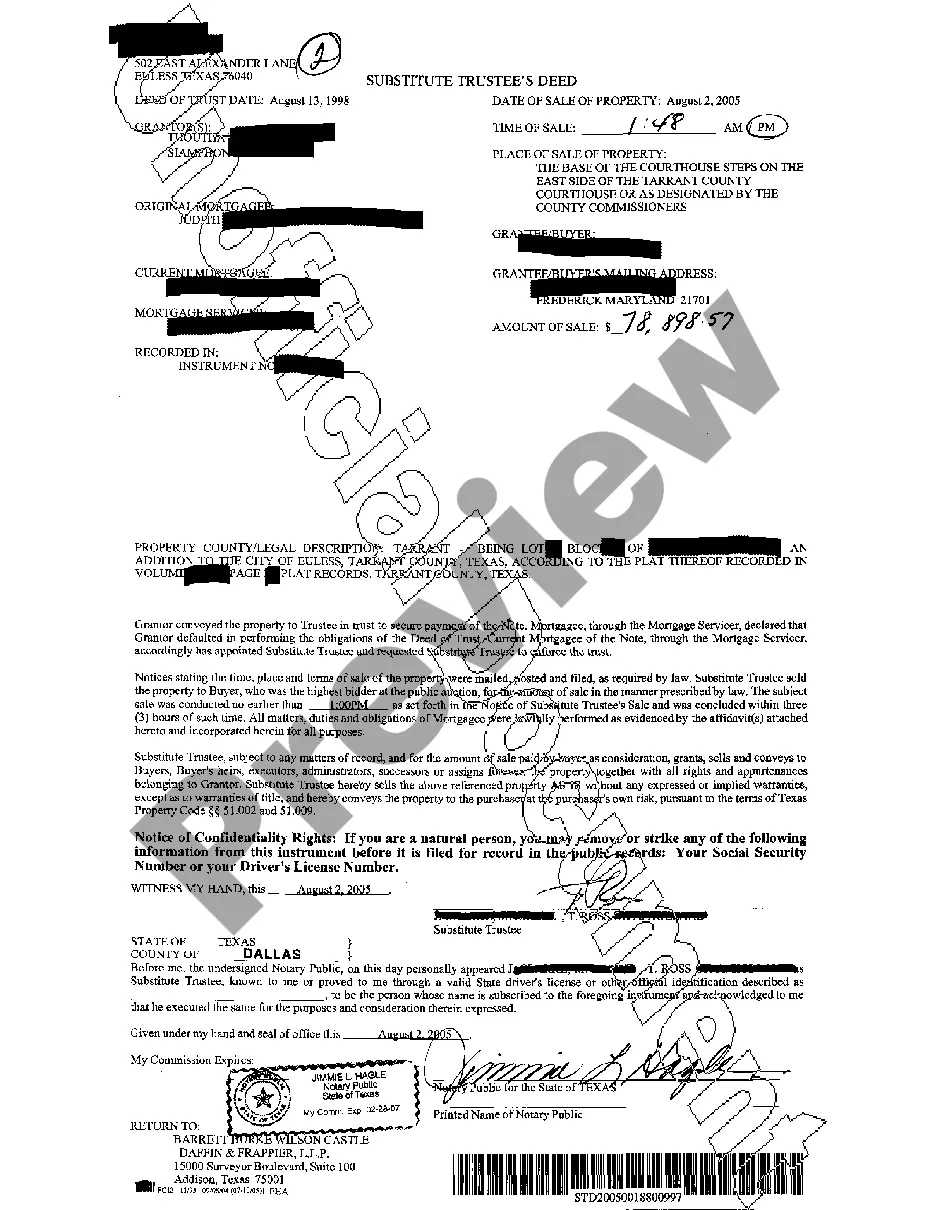
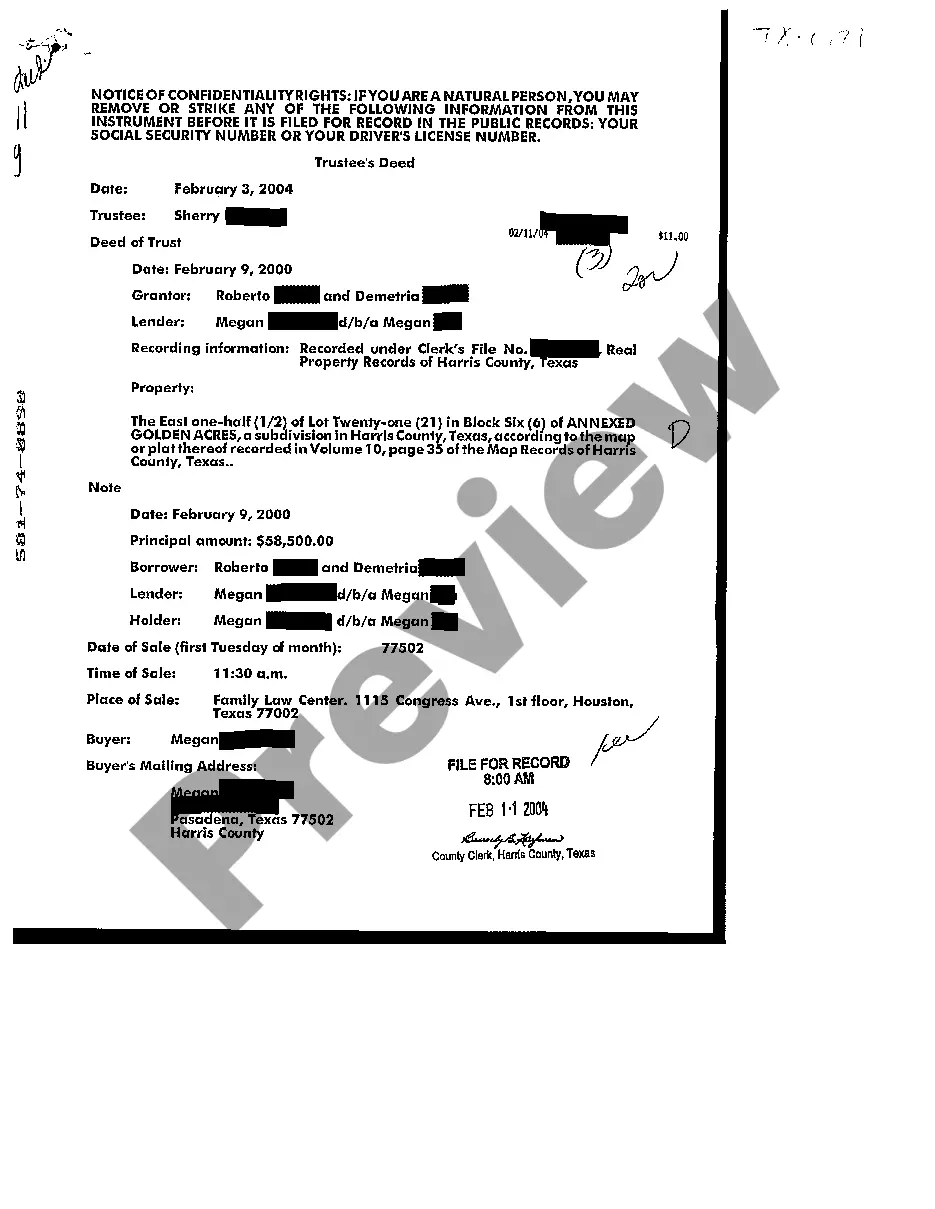
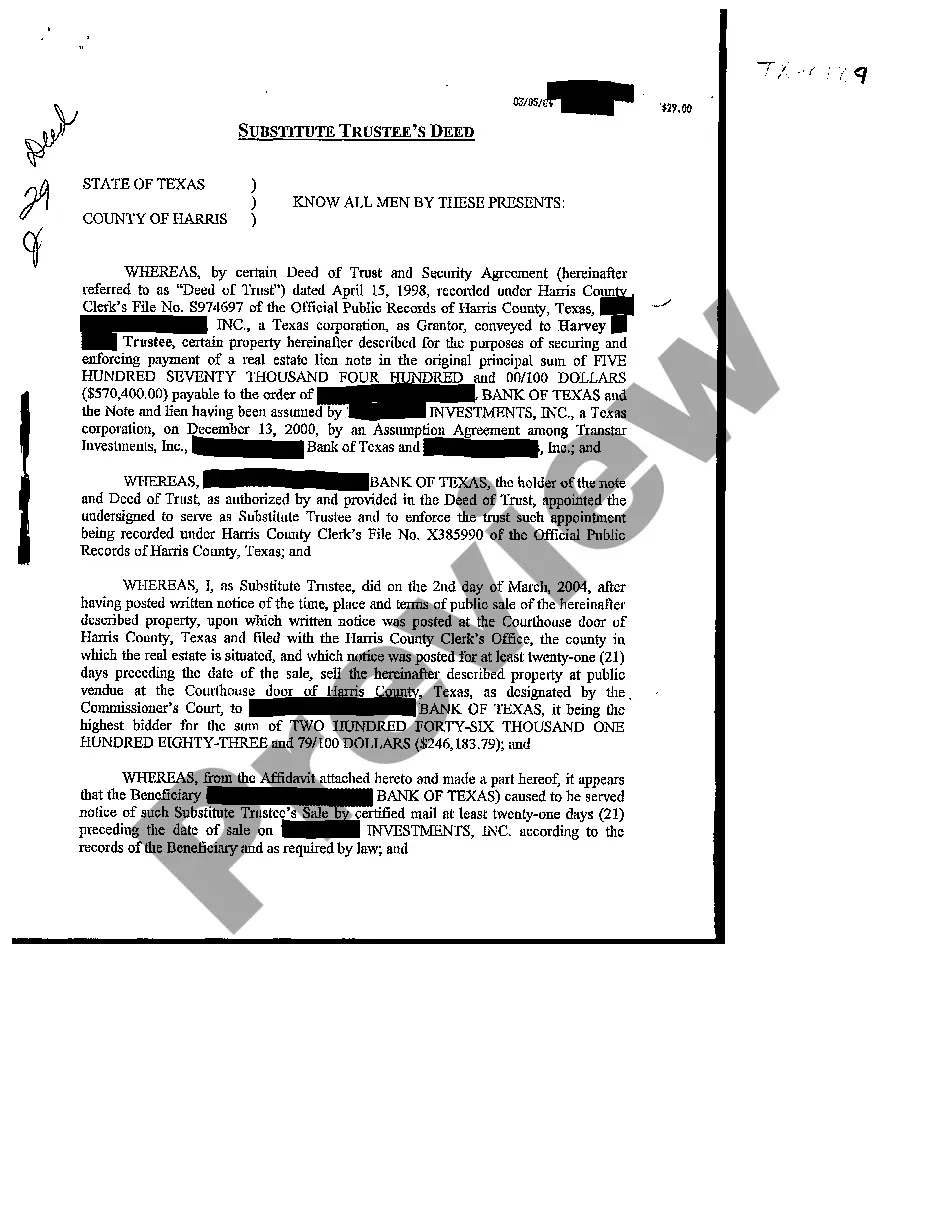
Substitute Trustee's Deed: A legal document executed by a substitute trustee that transfers title in foreclosure sales. This occurs in nonjudicial foreclosure states, where original trustees are replaced by a new trustee, often for efficiency in foreclosure processing.
Foreclosure Processing: The legal steps through which a lender recovers a property due to a borrower's failure to make mortgage payments.
Trustee Substitution: The process of replacing the original trustee with a new or substitute trustee, typically to handle foreclosure proceedings in certain states under property law.
Step-by-Step Guide to the Role of a Substitute Trustee in Foreclosure
- Appointment: A lender appoints a substitute trustee to handle the foreclosure, replacing the original trustee often due to specialization in foreclosure sales.
- Issuing Notices: The new trustee issues required legal notices about the foreclosure to the borrower and publicizes the upcoming foreclosure sale.
- Conducting the Sale: The substitute trustee conducts the sale of the property, typically at a public auction.
- Executing the Deed: After the sale, the substitute trustee executes the trustee's deed to the purchaser, completing the transfer of property.
- Full Reconveyance: If the foreclosure is halted or resolved, a full reconveyance may occur, where the borrower retains or reacquires the property.
Risk Analysis in the Use of Substitute Trustees
- Legal Errors: Substitute trustees may make procedural errors during foreclosure, risking invalid sales or lawsuits.
- Borrower Rights: Inadequate notice or violation of borrower rights can lead to disputes and potential reversal of foreclosure sales.
- Reputation Risks: Lenders face reputational risks if substitute trustees mishandle foreclosures, affecting customer trust and future business.
Common Mistakes & How to Avoid Them
- Inadequate Monitoring: Lenders should closely monitor the actions of substitute trustees to ensure compliance with all applicable laws and guidelines.
- Poor Communication: Effective communication with borrowers by the substitute trustee can prevent misunderstandings and potential legal challenges.
- Incorrect Documentation: Ensure all foreclosure documents are correctly prepared and executed to avoid legal complications.
FAQ
Q: What rights do borrowers have during foreclosure?
A: Borrowers have rights including receiving notice of the foreclosure, time to respond, and the ability to pay the overdue amount to stop the foreclosure.
Q: Can a substitute trustee's action be contested in court?
A: Yes, actions of a substitute trustee can be contested if it's believed that procedural errors affected the legality of the foreclosure.
How to fill out Texas Substitute Trustee's Deed?
Access to quality Texas Substitute Trustee's Deed templates online with US Legal Forms. Avoid hours of lost time browsing the internet and lost money on forms that aren’t up-to-date. US Legal Forms gives you a solution to exactly that. Find above 85,000 state-specific authorized and tax templates you can download and complete in clicks in the Forms library.
To receive the sample, log in to your account and click on Download button. The file is going to be saved in two places: on the device and in the My Forms folder.
For those who don’t have a subscription yet, have a look at our how-guide listed below to make getting started easier:
- Verify that the Texas Substitute Trustee's Deed you’re looking at is appropriate for your state.
- View the form utilizing the Preview option and read its description.
- Go to the subscription page by clicking Buy Now.
- Select the subscription plan to keep on to register.
- Pay out by card or PayPal to complete making an account.
- Select a preferred file format to save the document (.pdf or .docx).
You can now open up the Texas Substitute Trustee's Deed sample and fill it out online or print it and do it by hand. Consider giving the papers to your legal counsel to be certain everything is filled out correctly. If you make a mistake, print and fill sample once again (once you’ve created an account all documents you download is reusable). Create your US Legal Forms account now and get a lot more forms.
Form popularity
FAQ
The trustee will then issue a reconveyance deed, which gives the legal title of the property to you.Instead, the original trustee, or sometimes the loan servicing company, will appoint a new Substitute Trustee to handle the foreclosure. To do this, they must file an Appointment of Substitute Trustees.
A substitute trustee is a person named by the lender under the terms of the security instrument (deed of trust) to exercise the power of sale (Tex. Prop. Code § 51.0001(7)). The power to appoint a substitute trustee must be expressly designated by the lender in the deed of trust, otherwise the appointment is invalid.
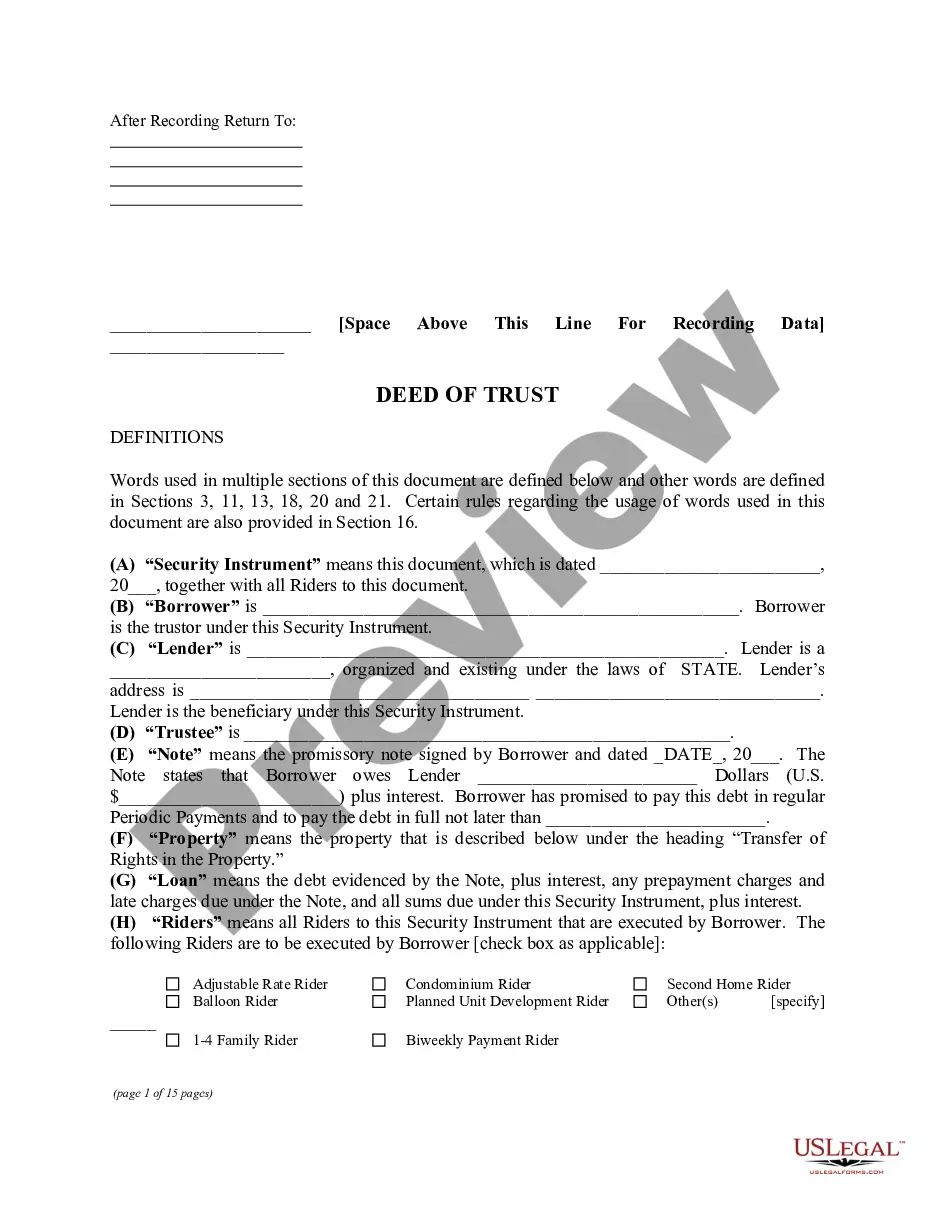
A document known as a substitution of trustee and full reconveyance identifies the person who has the authority to reconvey the property and remove the lien.Once the document is registered, it establishes the borrower as the sole owner of the property, which is now free and clear of the previous mortgage.
Trustee's deeds convey real estate out of a trust.This type of conveyance is named for the person using the form the trustee who stands in for the beneficiary of the trust and holds title to the property.
A Substitution of Trustee is a form filed when a successor trustee takes the place of a previous trustee. For example: if you assume a loan the Substitution of Trustee/Deed of Reconveyance is recorded in the name of the original borrower, not the current homeowner.
A substitution of trustee is a legal document that provides public notice regarding a foreclosure. California is one of several states that allows for mortgage foreclosure through a private transaction called a trustee's sale.
Notices are entitled Notice of Trustee's Sale or Notice of Substitute Trustee's Sale. They provide information about the debt, the legal description of the property, and designate a three-hour period during which the sale will be held.
In Texas, the trustee is specifically appointed within the deed of trust document. Usually, the beneficiary of a deed of trust chooses the trustee. Technically, a trustee can be any individual or entity that is willing to serve in that capacity.