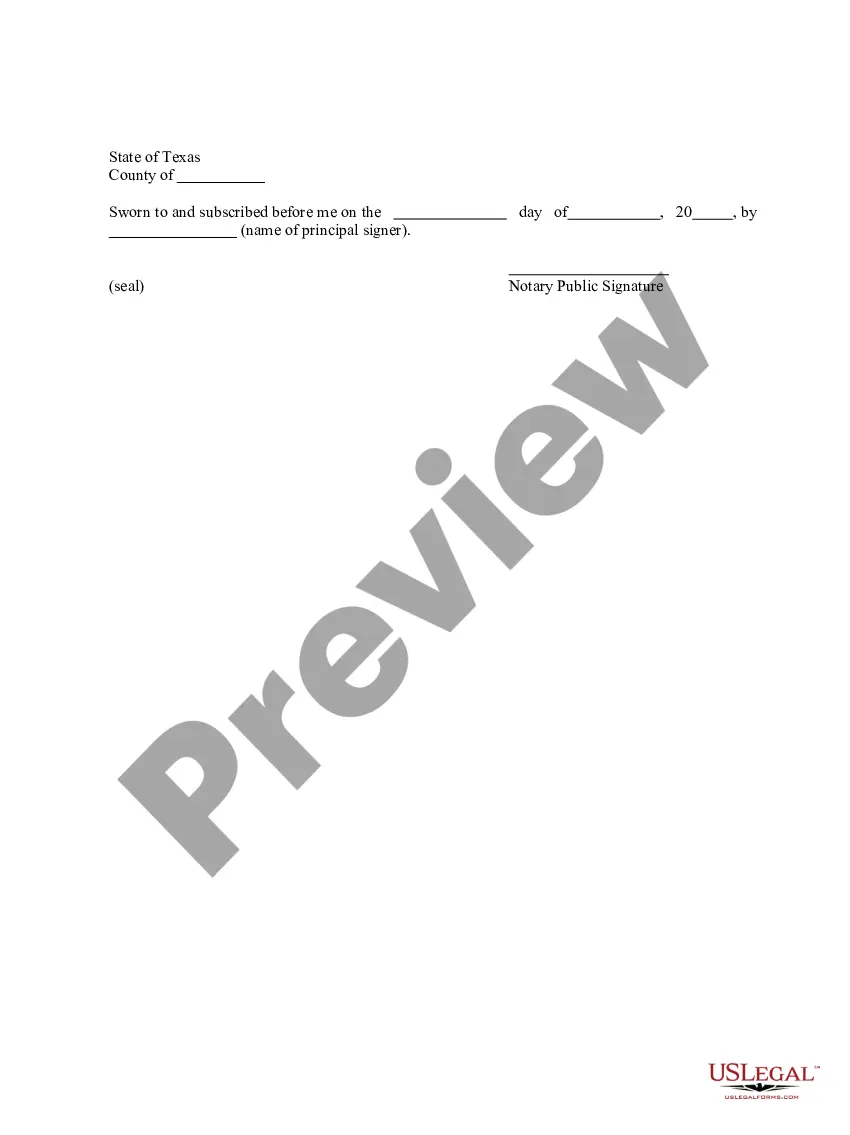
Texas Jurat Acknowledgment
What this document covers
The Jurat Acknowledgment is a legal document used to affirm that a specific statement or declaration was made by the signer under oath. This form differs from other notarial acts because it not only verifies the identity of the signer but also their intention to provide truthful testimony regarding the contents of the document. The Jurat often appears in legal proceedings where sworn testimony is required.
Form components explained
- Name of the principal signer.
- Date of the acknowledgment.
- Location where the acknowledgment is made (state and county).
- Signature of the notary public.
- Seal of the notary public, when applicable.

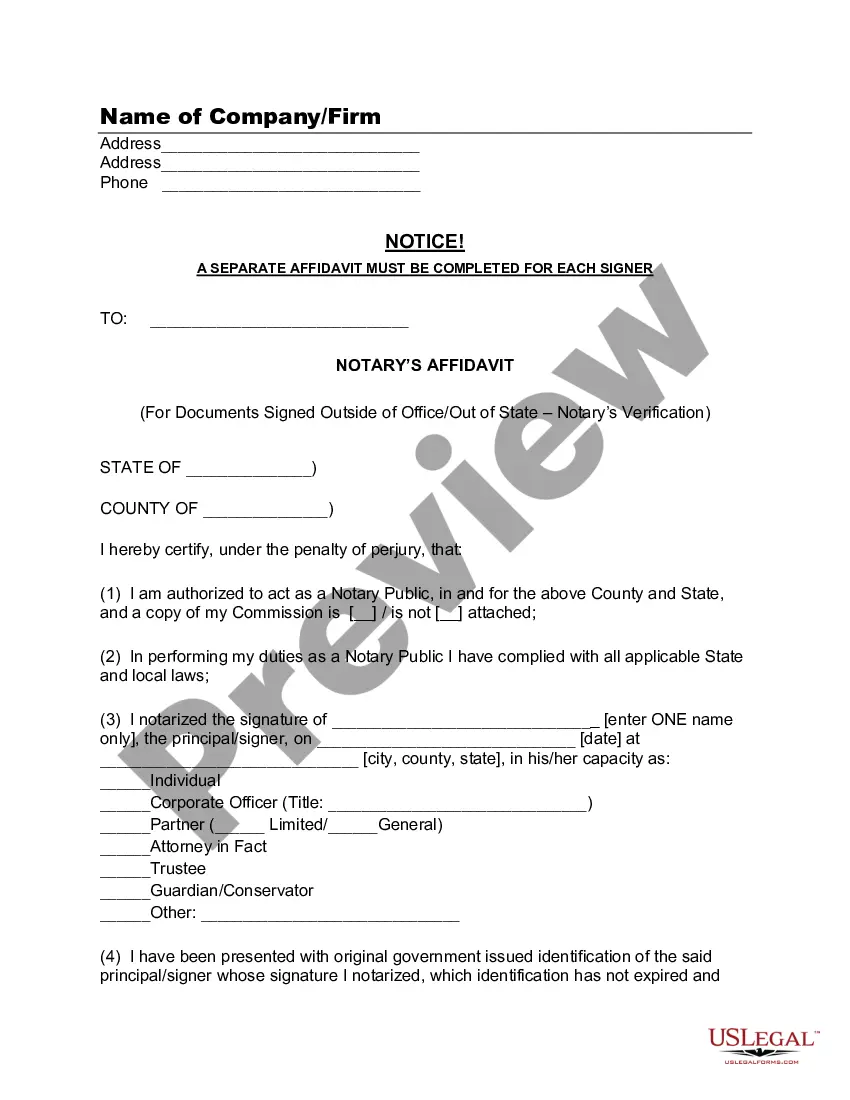
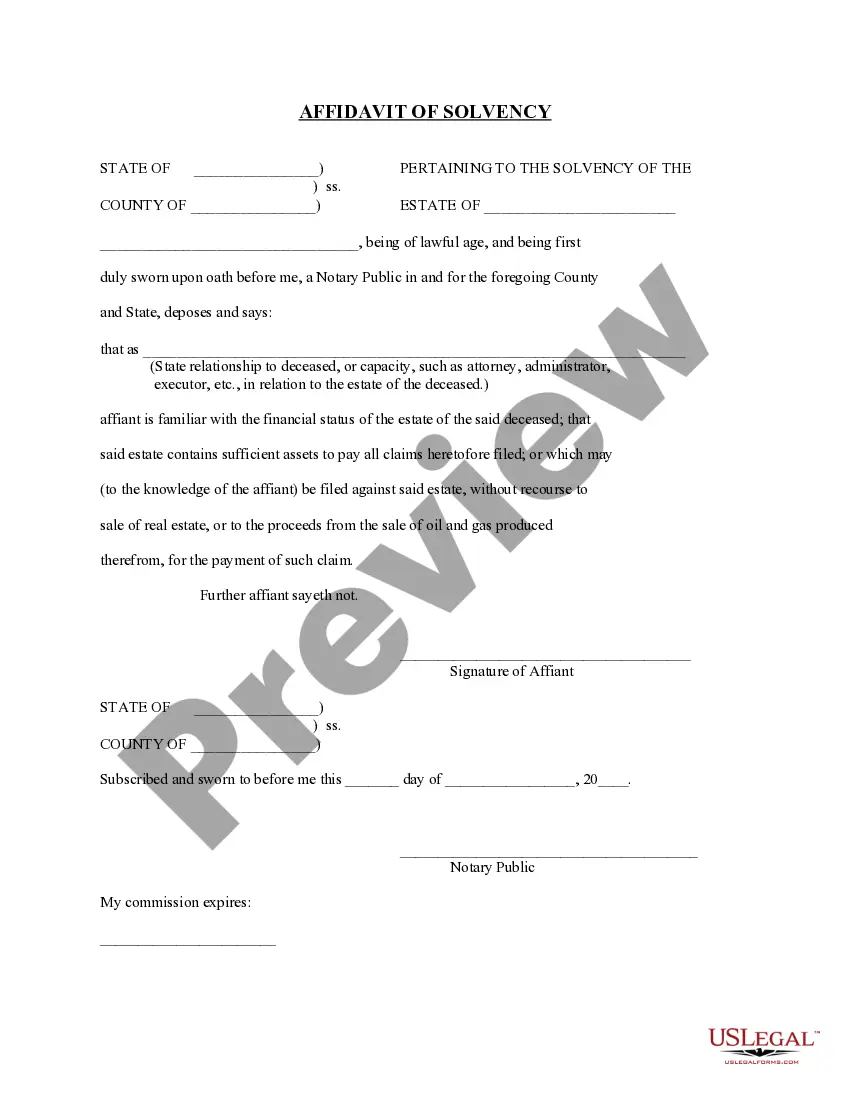
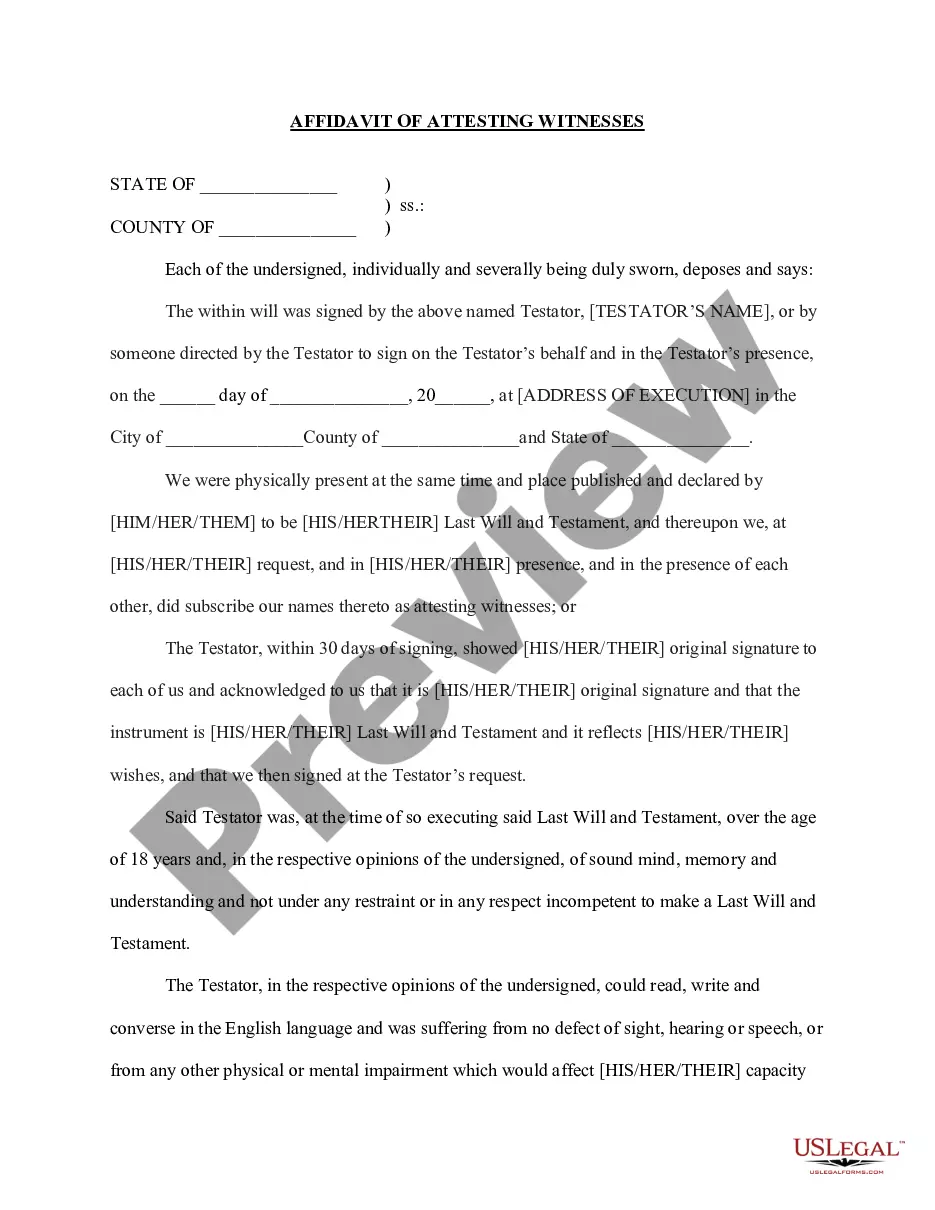
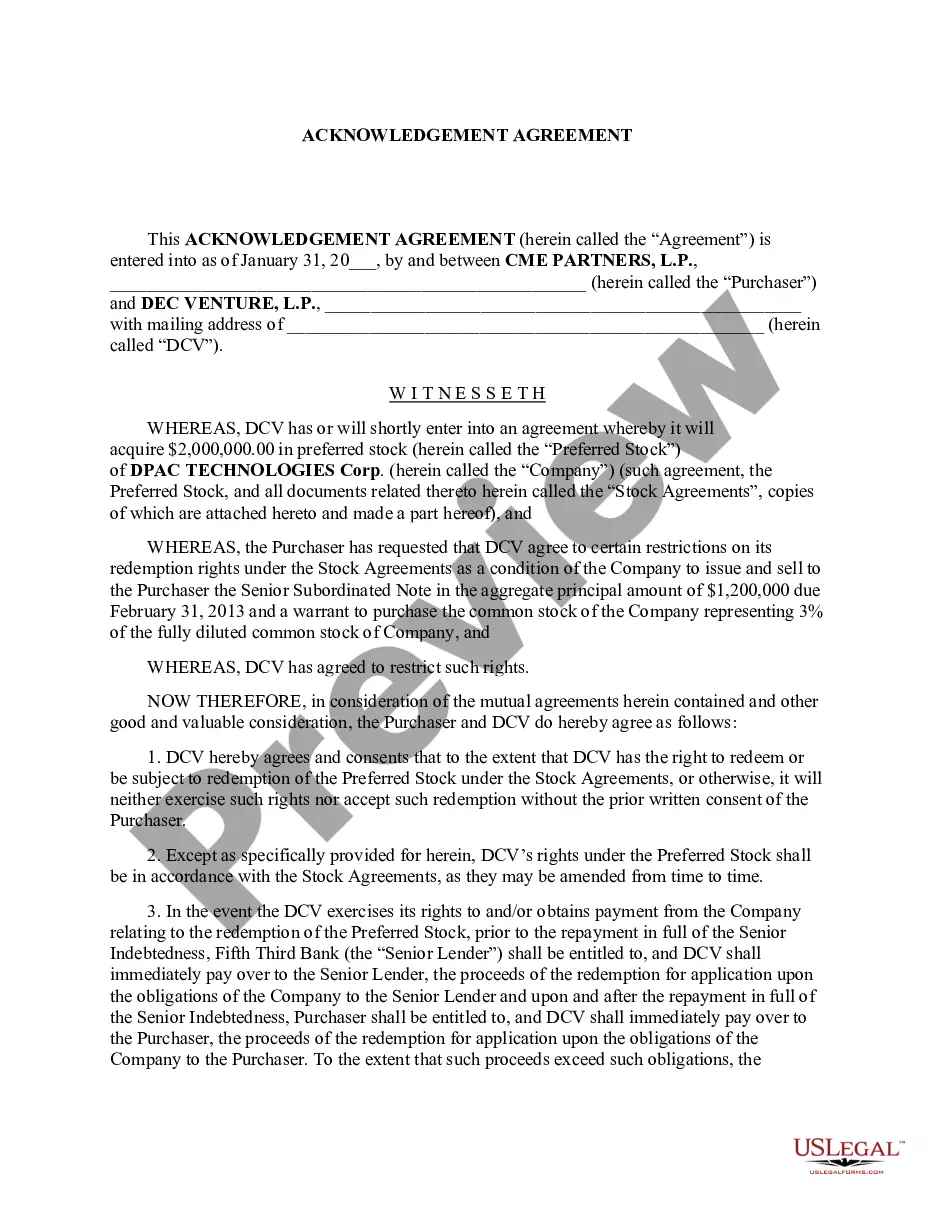
Situations where this form applies
This form should be used when a person needs to affirm the truthfulness of a statement made in a document before a notary public. Common scenarios include signing affidavits, court documents, or any written statements requiring verification of identity and intent to provide truthful information.
Who needs this form
- Individuals who need to provide sworn statements.
- Legal professionals preparing documents that require a jurat.
- Any party needing to affirm the authenticity of a statement for legal proceedings.
Instructions for completing this form
- Identify the name of the principal signer.
- Enter the date of the acknowledgment.
- Specify the state and county of the signing.
- Obtain the notary public's signature and seal.
- Ensure all information is accurate and complete before submitting the document.
Notarization guidance
To make this form legally binding, it must be notarized. Our online notarization service, powered by Notarize, lets you verify and sign documents remotely through an encrypted video session.
Get your form ready online
Our built-in tools help you complete, sign, share, and store your documents in one place.
Make edits, fill in missing information, and update formatting in US Legal Forms—just like you would in MS Word.
Download a copy, print it, send it by email, or mail it via USPS—whatever works best for your next step.
Sign and collect signatures with our SignNow integration. Send to multiple recipients, set reminders, and more. Go Premium to unlock E-Sign.
If this form requires notarization, complete it online through a secure video call—no need to meet a notary in person or wait for an appointment.
We protect your documents and personal data by following strict security and privacy standards.

Make edits, fill in missing information, and update formatting in US Legal Forms—just like you would in MS Word.

Download a copy, print it, send it by email, or mail it via USPS—whatever works best for your next step.

Sign and collect signatures with our SignNow integration. Send to multiple recipients, set reminders, and more. Go Premium to unlock E-Sign.

If this form requires notarization, complete it online through a secure video call—no need to meet a notary in person or wait for an appointment.

We protect your documents and personal data by following strict security and privacy standards.
Avoid these common issues
- Failing to sign the form in the presence of the notary.
- Not providing the correct date or location for the acknowledgment.
- Leaving fields blank or incomplete.
Why use this form online
- Convenience of obtaining the form instantly from anywhere.
- Editable templates allow customization to meet specific needs.
- Access to forms prepared by licensed attorneys ensures legal compliance.
Looking for another form?
Form popularity
FAQ
For an oath: "Do you solemnly state that the evidence you shall give in this issue (or matter) shall be the truth, the whole truth, and nothing but the truth, so help you God?"
The appropriate verbal wording for an oath for a jurat is as follows: Do you solemnly swear that the statements in this document are true to the best of your knowledge and belief, so help you God?
When you see (here insert the name and character of the officer) next to a blank as shown below, it means you should insert Your name, Notary Public in the blank.
As nouns the difference between oath and jurat is that oath is a solemn pledge or promise to a god, king, or another person, to attest to the truth of a statement or contract while jurat is (legal) the written statement by a notary public that he or she has administered and witnessed an oath or affirmation.
The Texas Jurat is no different from the standard notarial certificate found in most states across the country; it contains a statement which dictates that the principal signer has sworn to (or affirmed) the truthfulness of a statement (an affidavit) and that they have signed in the notary public's presence.
Step 1: Require Personal Appearance. Step 2: Check Over The Document. Step 3: Carefully Identify The Signer. Step 4: Record Your Journal Entry. Step 5: Complete The Notarial Certificate. A Last Note: Never Give Advice.
The signer was physically in front of you when you performed the notarization. You verified the signer's identity, if required by your state, using a method acceptable in your state. You witnessed the signer sign the document in front of you.
For an acknowledgment, the signer must always: Be positively identified by the Notary. The Notary must always identify the signer for an acknowledgement; whether the signer personally knows the Notary, presents an ID document, or is identified by a credible witness depends on the circumstances.
The certificate of a notary public, justice of the peace, or other authorized officer, attached to a deed, mortgage, or other instrument, setting forth that the parties thereto personally appeared before him on such a date and acknowledged the instrument to be their free and voluntary act and deed. Read v.