Texas Foreign Judgment Enrollment
Understanding this form
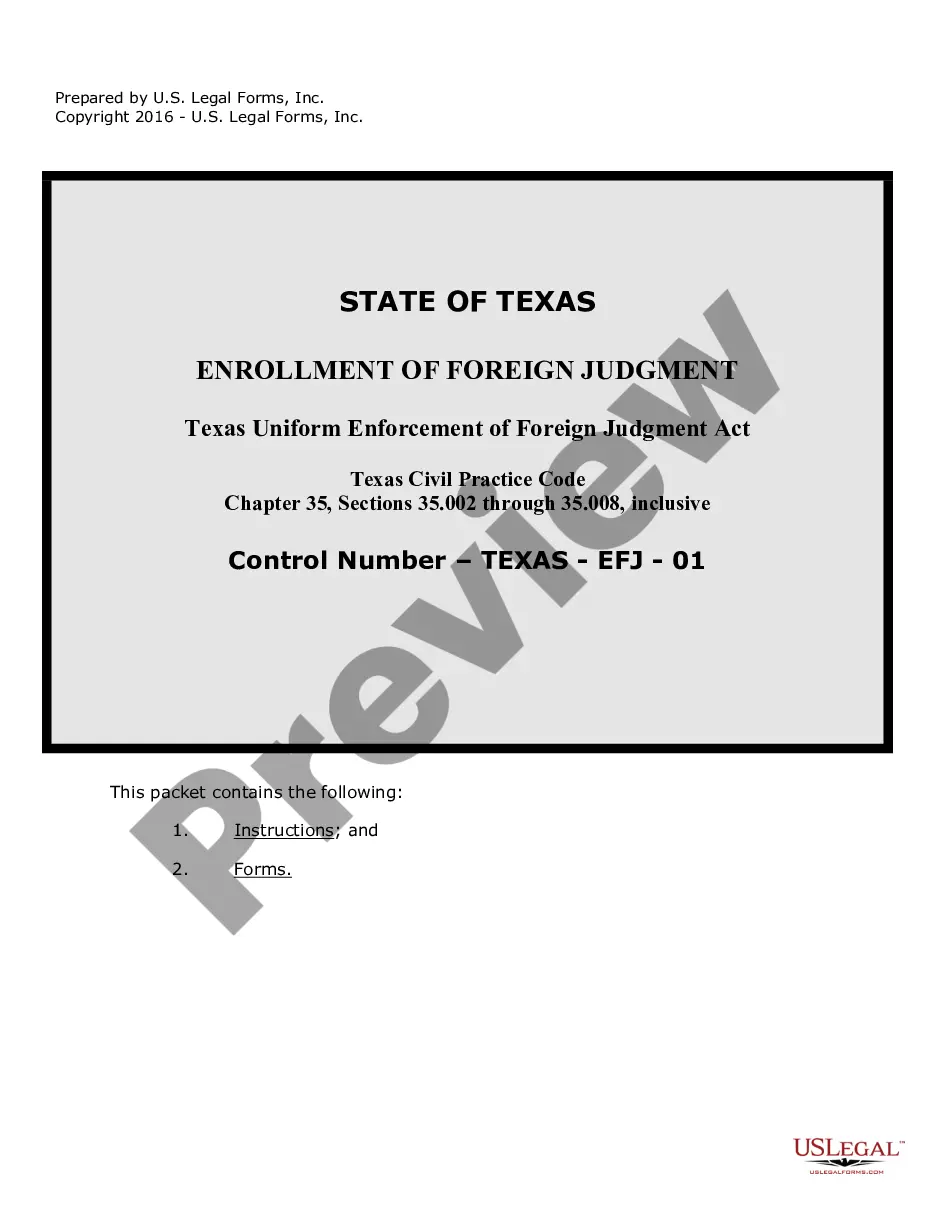
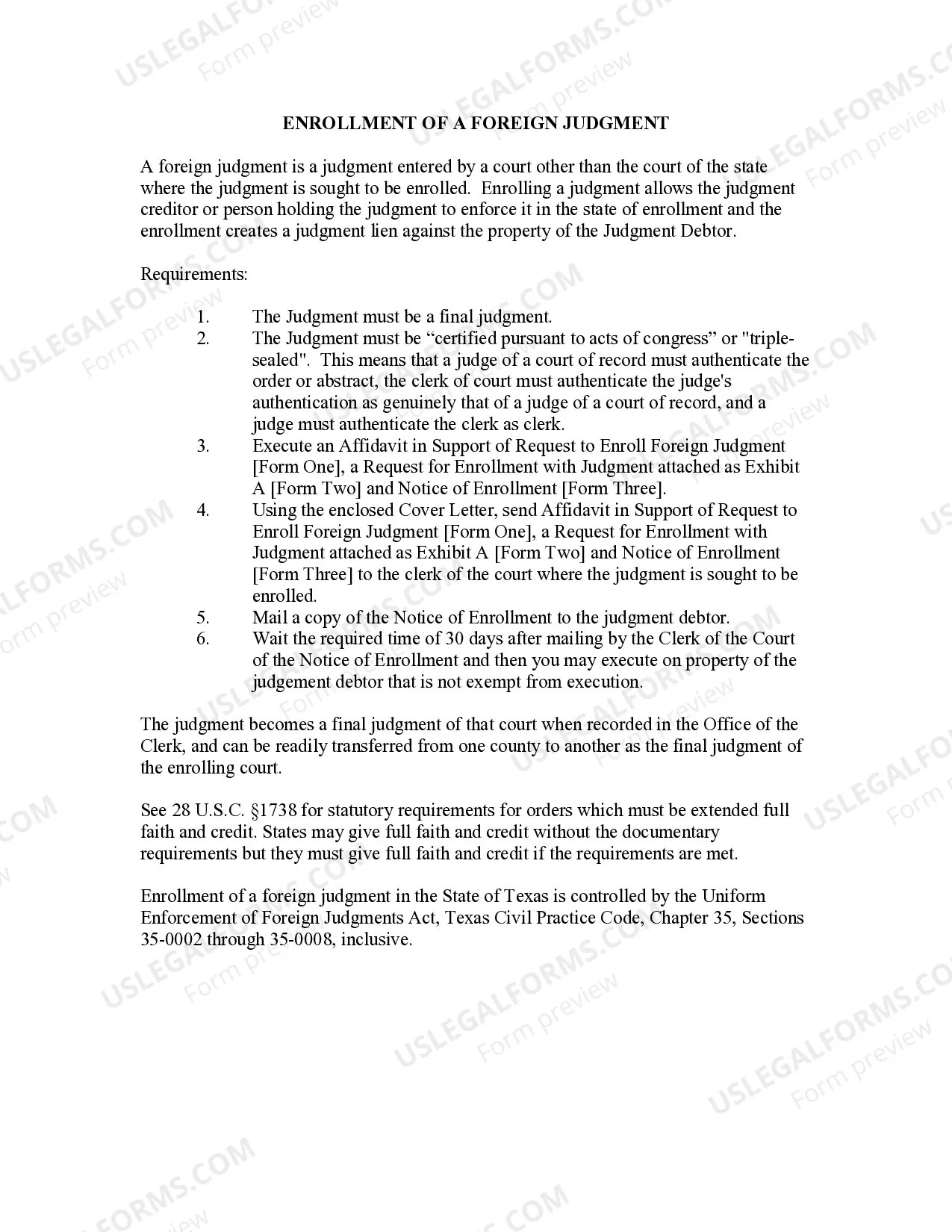
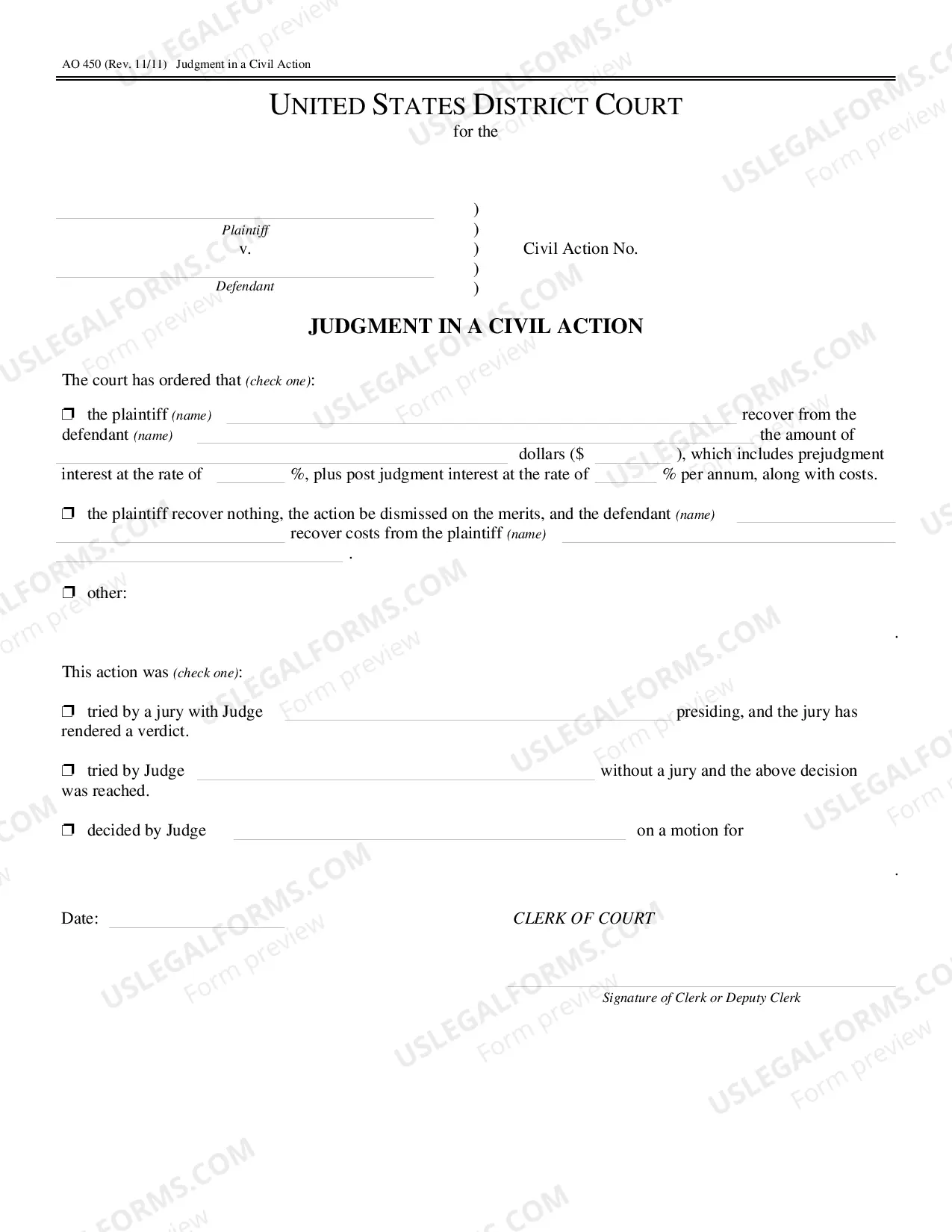
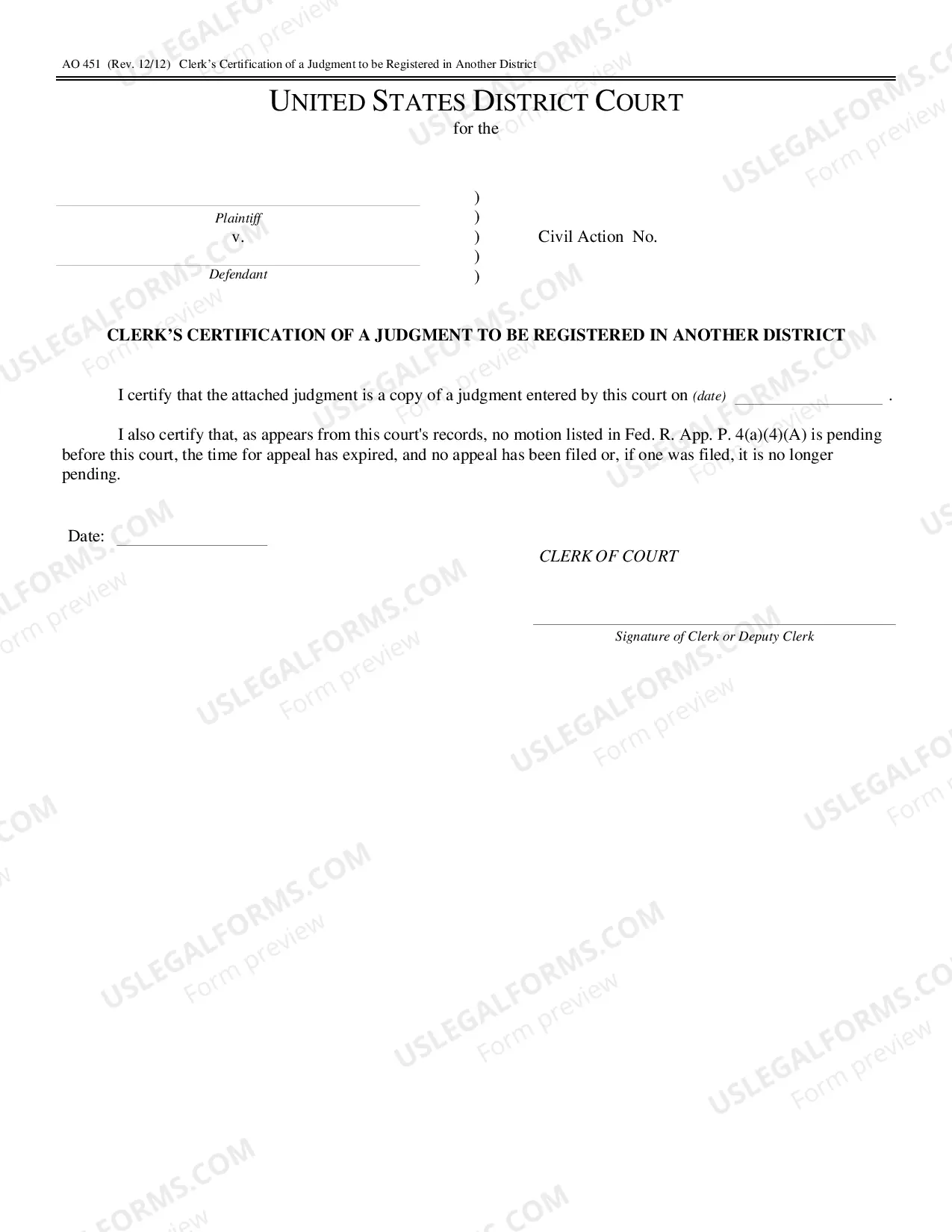
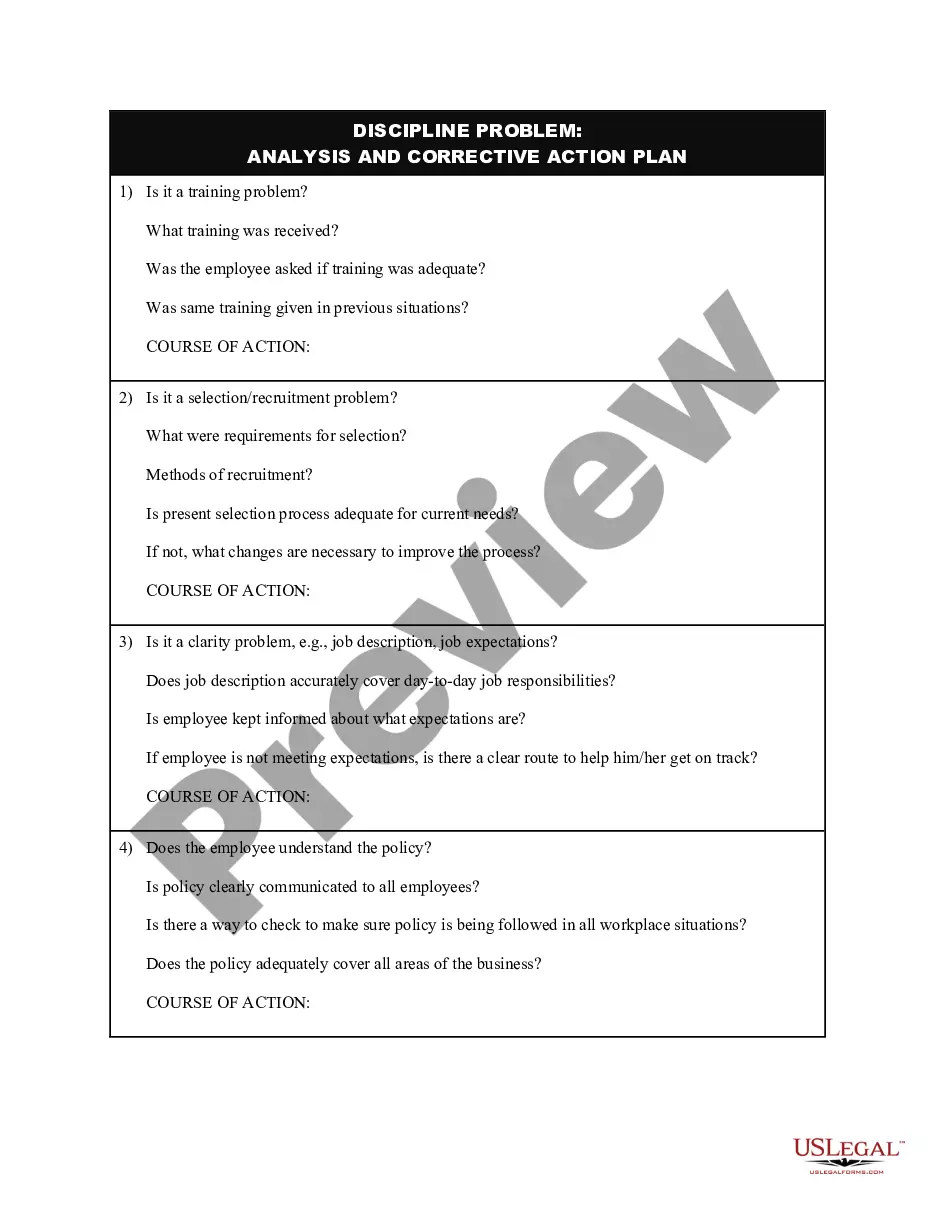
The Texas Foreign Judgment Enrollment form allows a creditor to enroll a judgment from another state in Texas. This legal process enables the judgment holder to enforce the judgment in Texas, creating a lien against the debtor's property. The form is distinct from similar forms because it specifically addresses judgments from out-of-state courts under the Texas Uniform Enforcement of Foreign Judgments Act.
Form components explained
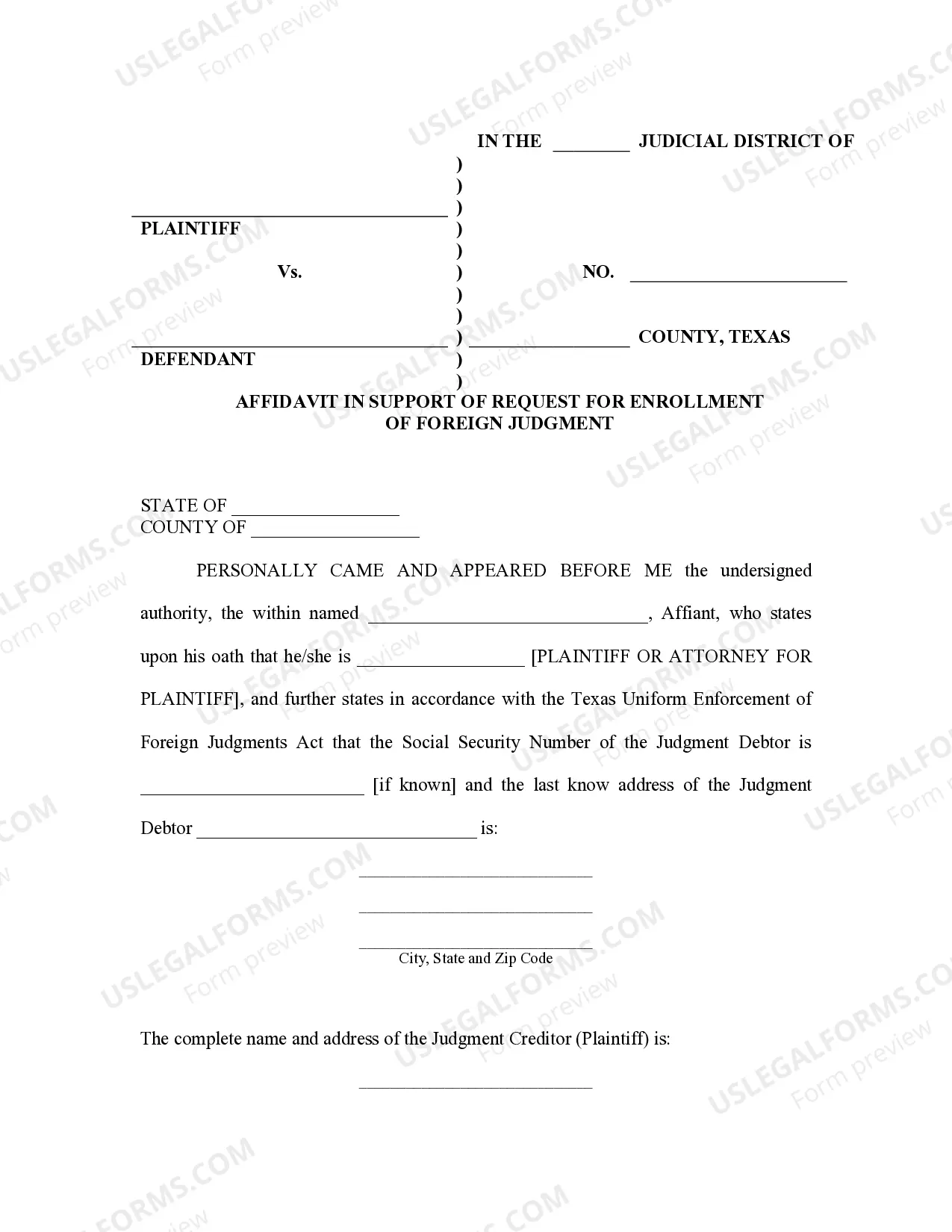
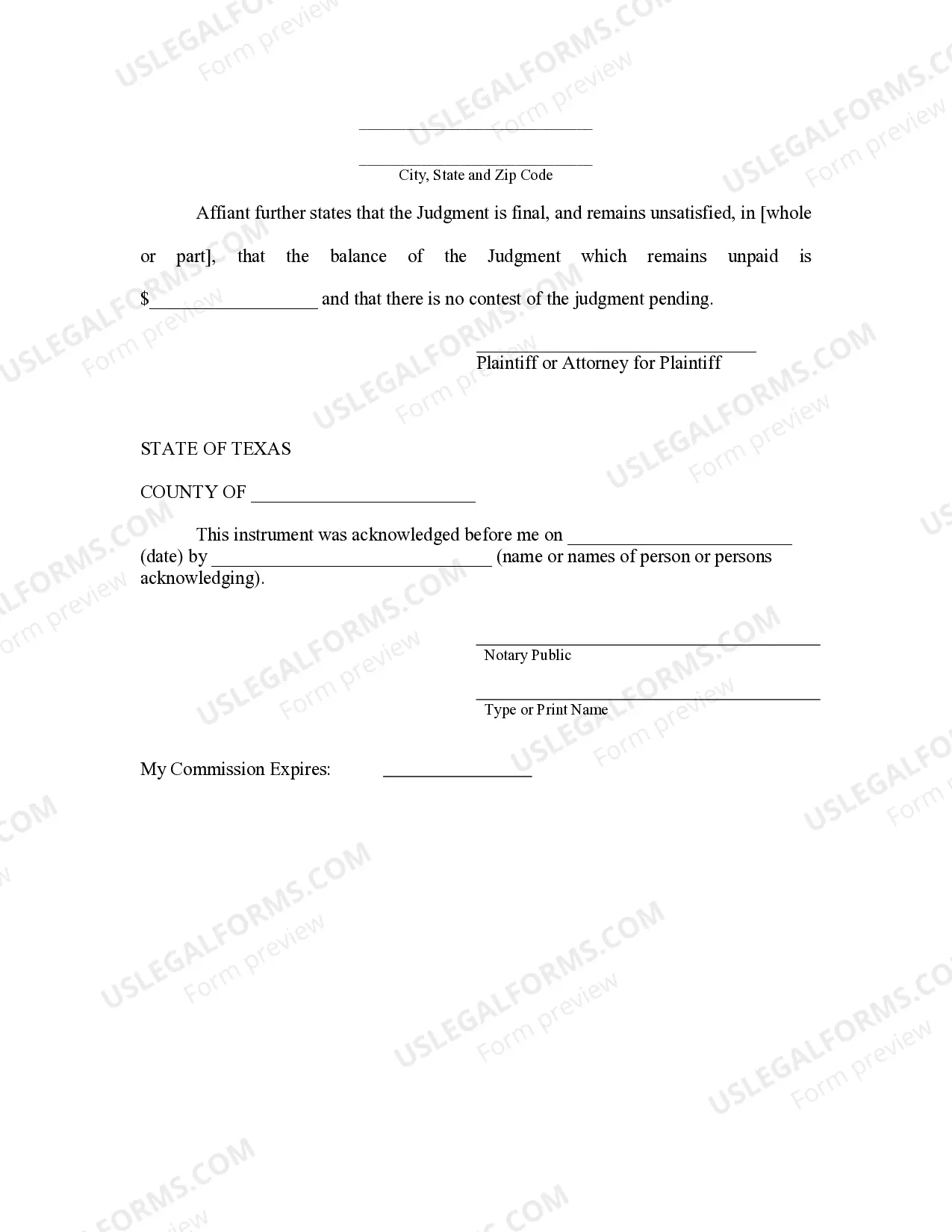
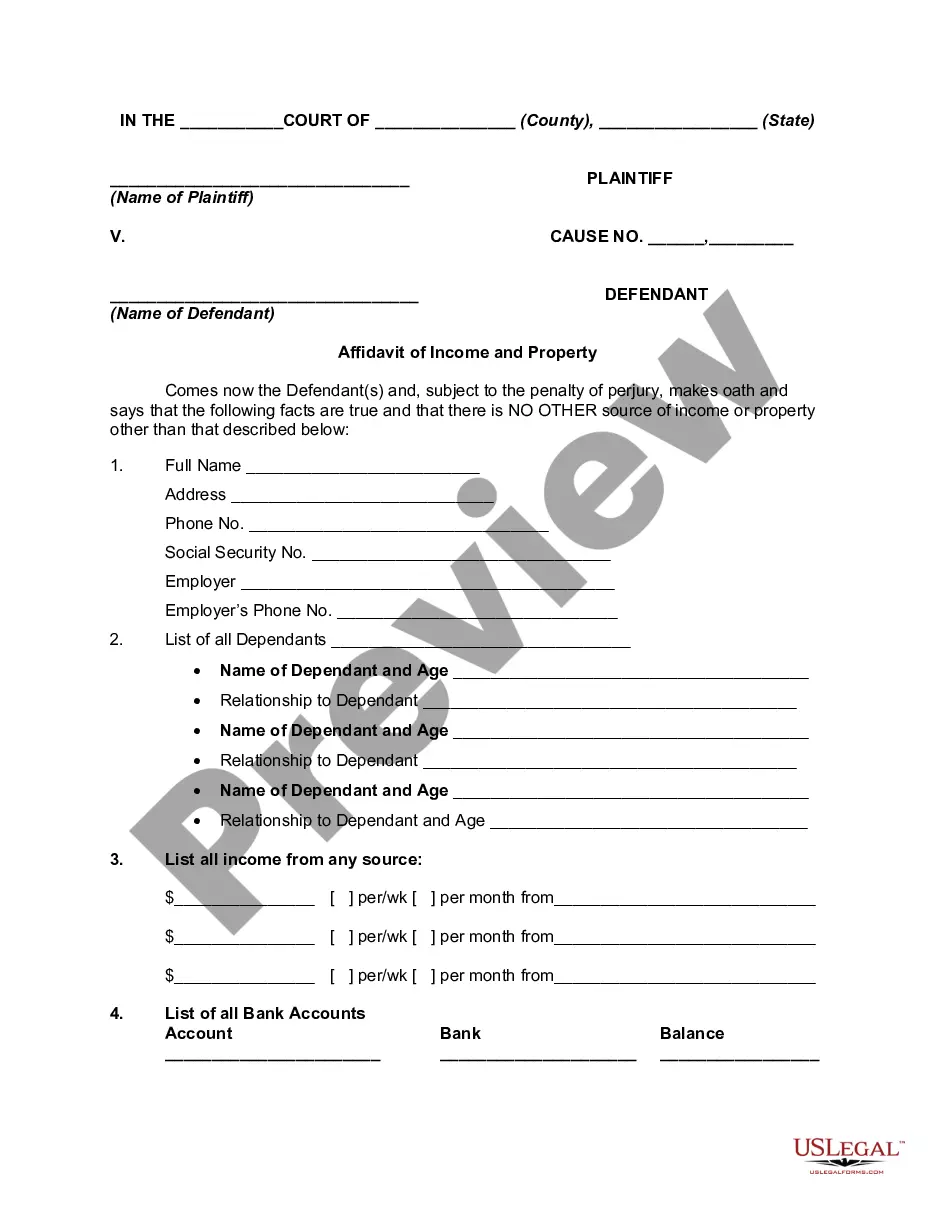
- Affidavit in Support of Request to Enroll Foreign Judgment
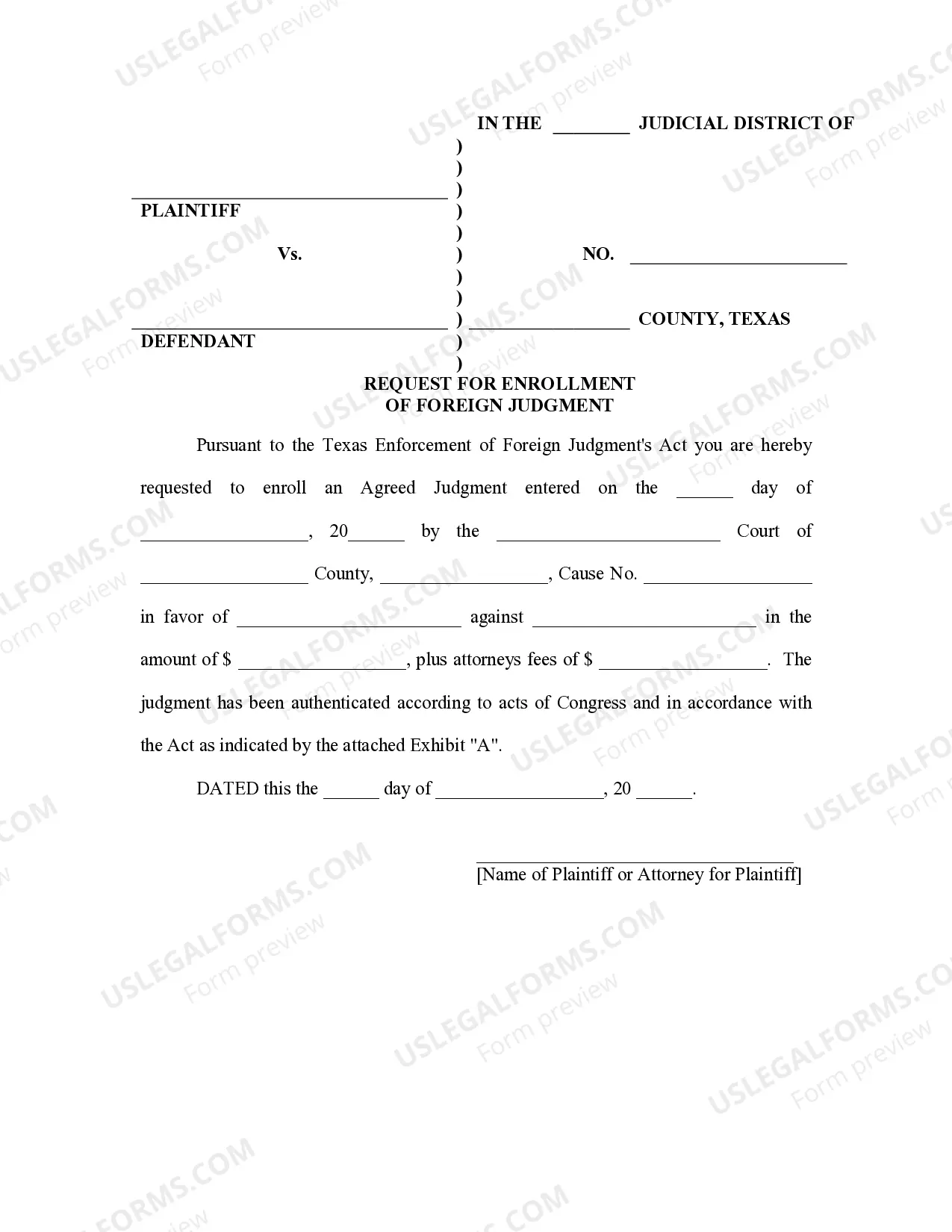
- Request for Enrollment with Judgment as Exhibit A
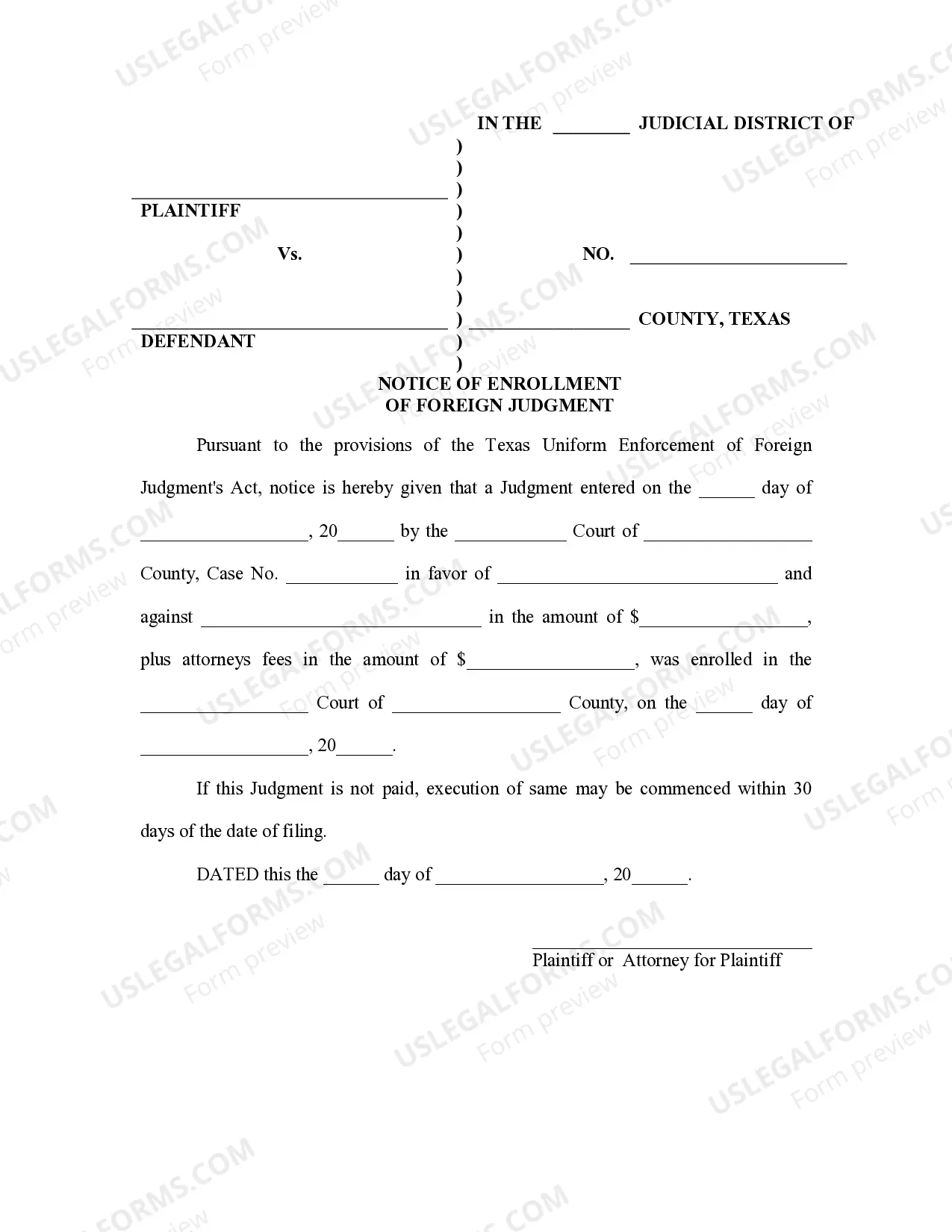
- Notice of Enrollment
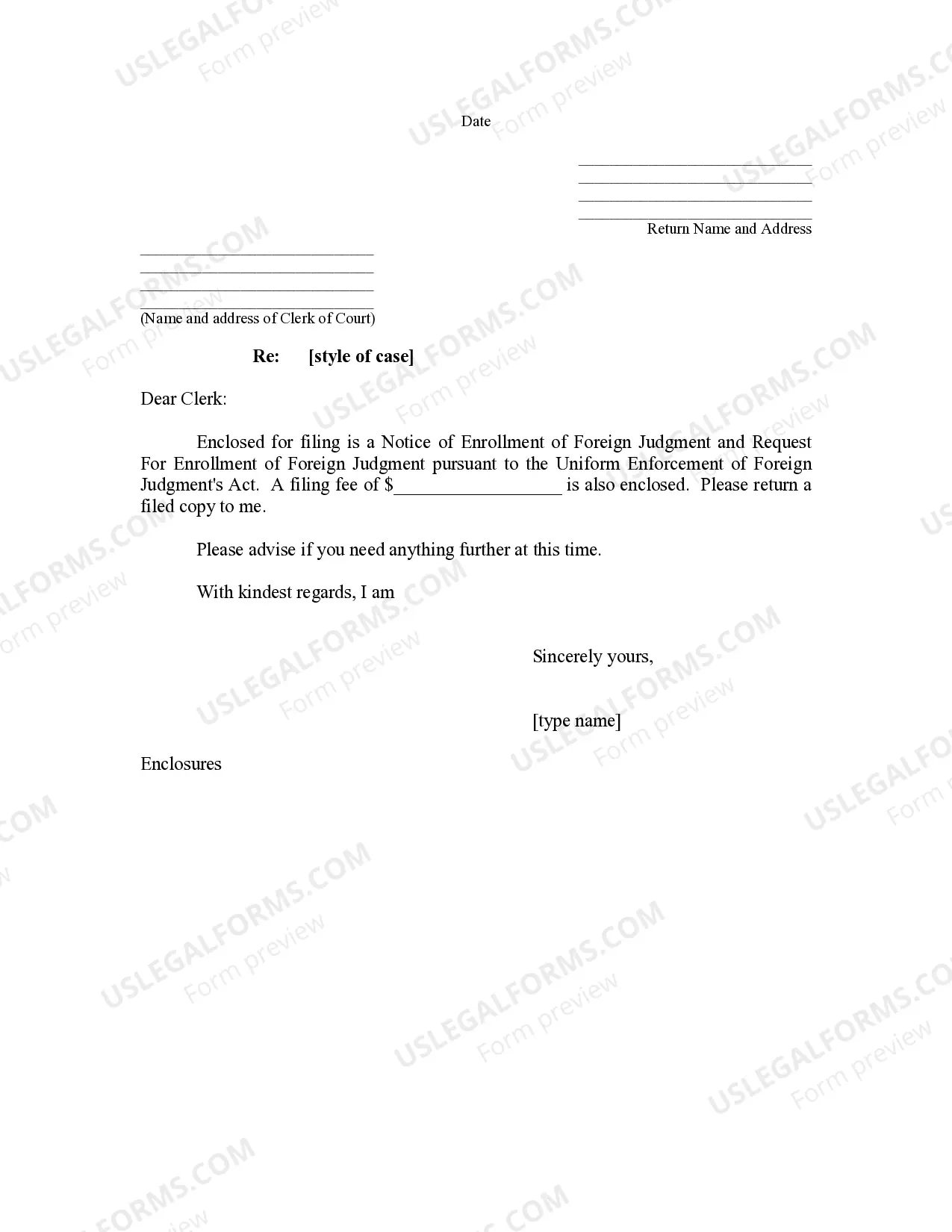
- Instructions for completing and filing the documents

When to use this document
This form should be used when a creditor has obtained a final judgment in another state and wishes to enforce it in Texas. This might occur when the debtor has moved to Texas or when the creditor needs to collect debts from property located in Texas.
Who can use this document
- Judgment creditors seeking to enforce a judgment from another state
- Attorneys representing clients with foreign judgments
- Individuals with a final, certified judgment from outside Texas
Steps to complete this form
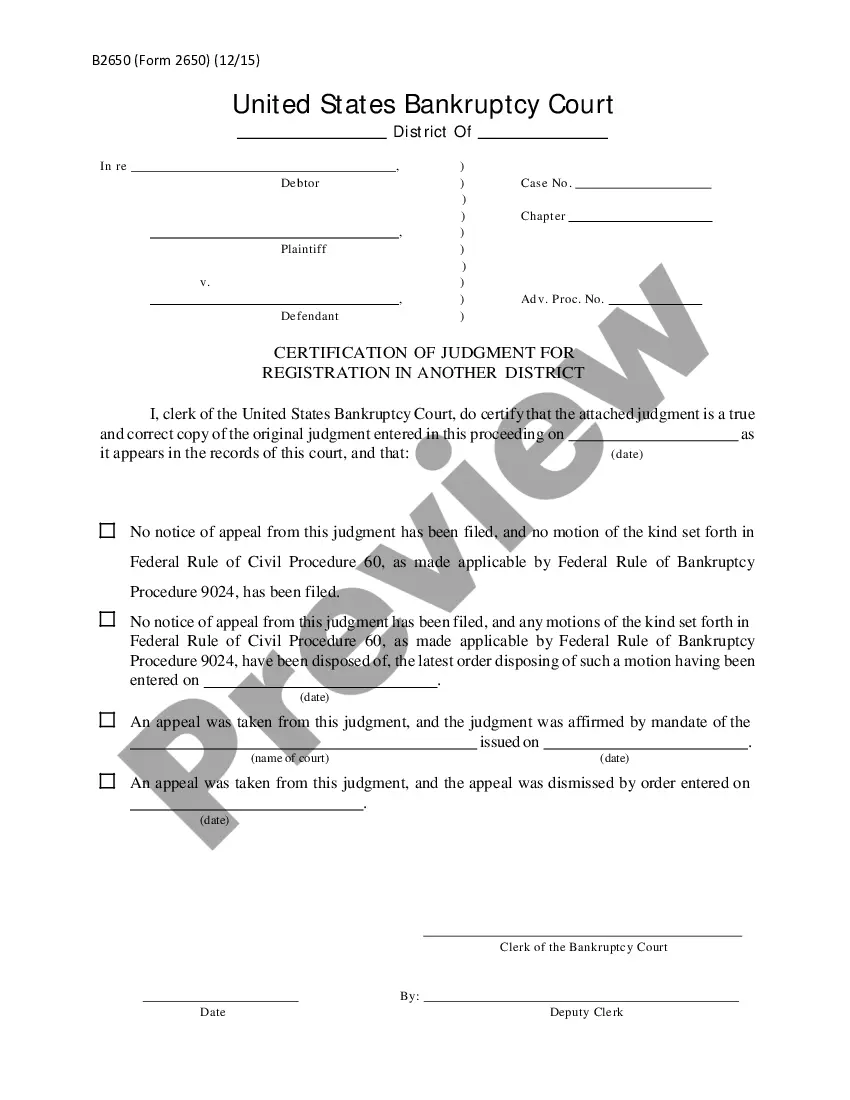
- Obtain a certified copy of the foreign judgment.
- Fill out the Affidavit in Support of Request to Enroll Foreign Judgment.
- Attach the Request for Enrollment document with the foreign judgment as Exhibit A.
- Complete and sign the Notice of Enrollment.
- File the documents with the clerk of the court in the appropriate Texas county.
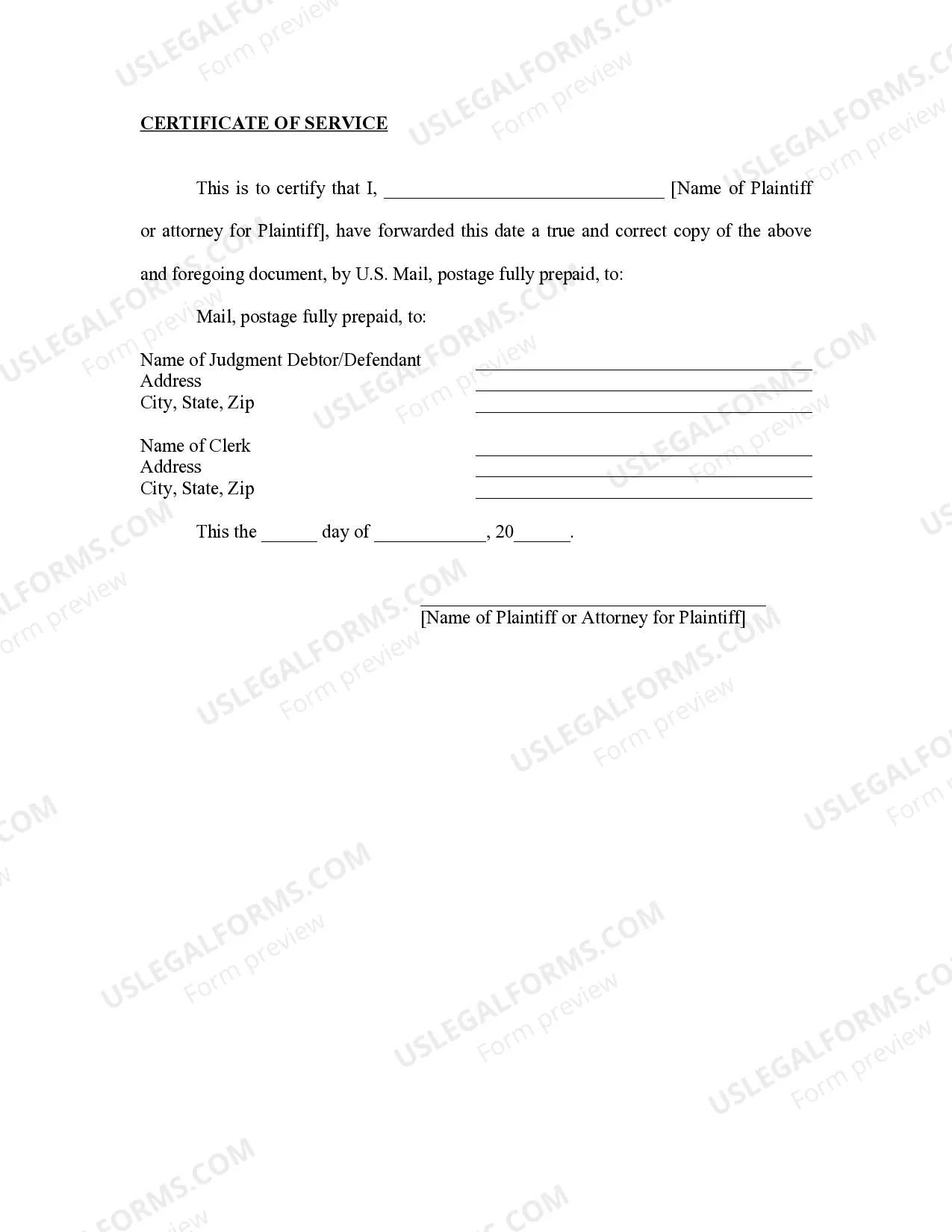
- Mail a copy of the Notice of Enrollment to the judgment debtor.
Notarization guidance
This form must be notarized to be legally valid. US Legal Forms provides secure online notarization powered by Notarize, allowing you to complete the process through a verified video call.
Get your form ready online
Our built-in tools help you complete, sign, share, and store your documents in one place.
Make edits, fill in missing information, and update formatting in US Legal Forms—just like you would in MS Word.
Download a copy, print it, send it by email, or mail it via USPS—whatever works best for your next step.
Sign and collect signatures with our SignNow integration. Send to multiple recipients, set reminders, and more. Go Premium to unlock E-Sign.
If this form requires notarization, complete it online through a secure video call—no need to meet a notary in person or wait for an appointment.
We protect your documents and personal data by following strict security and privacy standards.

Make edits, fill in missing information, and update formatting in US Legal Forms—just like you would in MS Word.

Download a copy, print it, send it by email, or mail it via USPS—whatever works best for your next step.

Sign and collect signatures with our SignNow integration. Send to multiple recipients, set reminders, and more. Go Premium to unlock E-Sign.

If this form requires notarization, complete it online through a secure video call—no need to meet a notary in person or wait for an appointment.

We protect your documents and personal data by following strict security and privacy standards.
Mistakes to watch out for
- Failing to obtain a certified copy of the foreign judgment.
- Not including all necessary forms or attachments.
- Assuming a judgment is automatically enforceable without enrollment.
- Neglecting to wait the required 30 days after filing before taking further action.
Why complete this form online
- Immediate access to essential documents.
- Customizable fields make form completion simple.
- Guidelines are provided for each step, ensuring compliance with Texas law.
Looking for another form?

Form popularity
FAQ
Like the foreign state judgment, the foreign country judgment may be domesticated in Texas by filing a properly authenticated copy of the judgment along with an affidavit containing the names and addresses of the judgment creditor and judgment debtor as well as the judgment creditor's attorney in the state of Texas,
A foreign judgment can be authenticated in accordance with an act of congress or a statute of this state, which then may be filed in the office of the clerk of any court of competent jurisdiction of this state. TEX. CIV. PRAC. & REM.
In order to avail themselves of the UEFJ Act, a judgment creditor needs to give notice to the judgment debtor that the judgment is being domesticated in Georgia; a petition or affidavit is filed with the clerk of court in the county where the foreign judgment is to be domesticated; finally, unless there is an objection
The process requires registering a certified copy of the foreign judgment with the clerk of the court in the jurisdiction where you want to enforce the judgment. You will also need to file an affidavit attesting to certain facts, as specified in the court's procedural rules.
Hence, a decree passed by a superior court of a foreign country cannot be enforced in India if it contravenes an earlier conclusive judgment passed by a competent court in a suit between the same parties, as it is enforced as a domestic decree.
Generally, U.S. judgments cannot be enforced in a foreign country without first being recognized by a court in that foreign country.It can generally be said that non-default judgments not involving tort claims or punitive damages are more likely to be enforced.
The 1964 Foreign Judgment Act allowed the states to enforce a judgment from another state without the expense of litigation.Entitle this notice document as NOTICE OF FILING FOREIGN JUDGMENT and include the affidavit and exemplified copy of the judgment.
Without following the strict requirements of the UEFJA, and properly domesticating the foreign judgment, the judgment is nothing more than a piece of paper. Domestication is the process that allows a creditor to attach the judgment as a lien to the debtor's property, and otherwise enforce it.