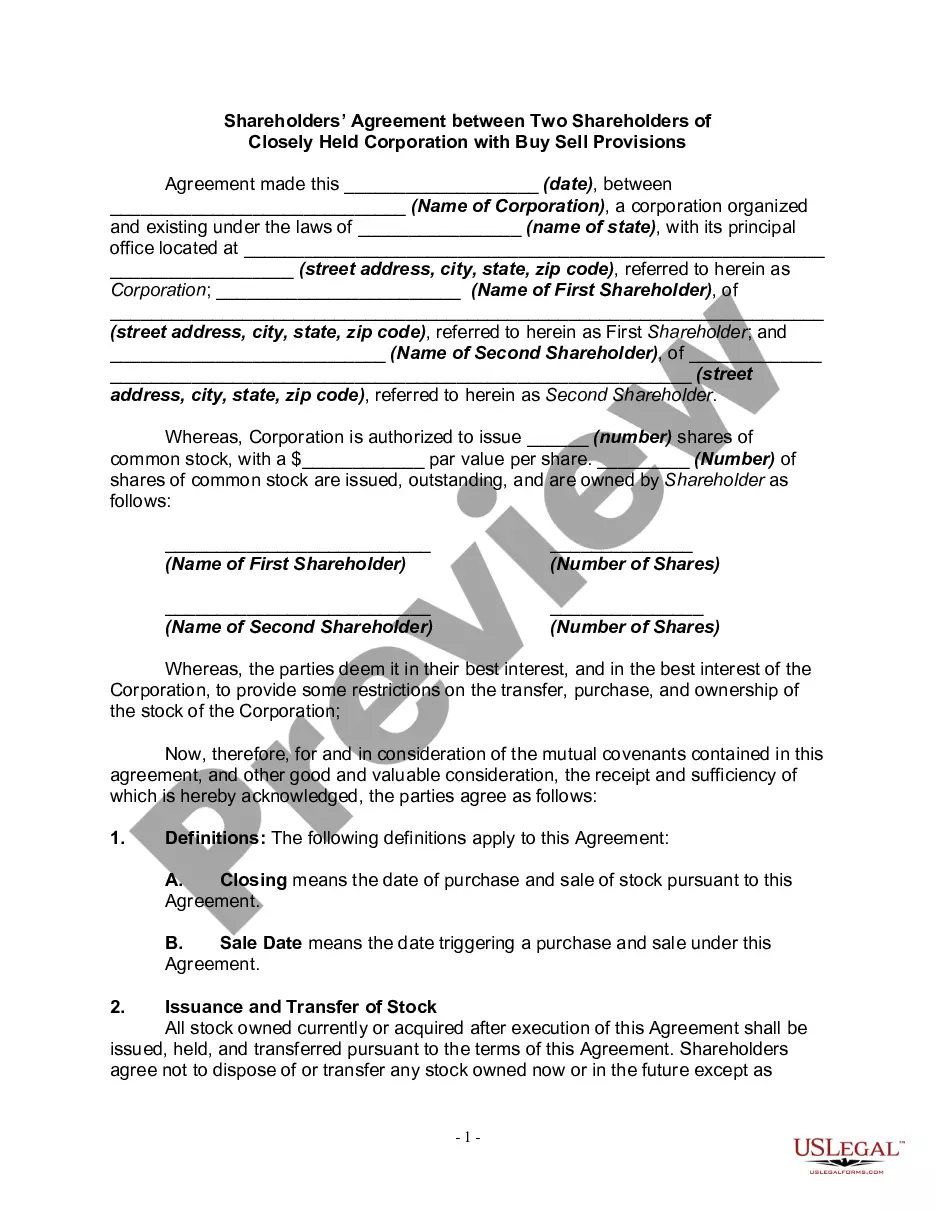
Texas Living Trust for Husband and Wife with One Child
What is this form?
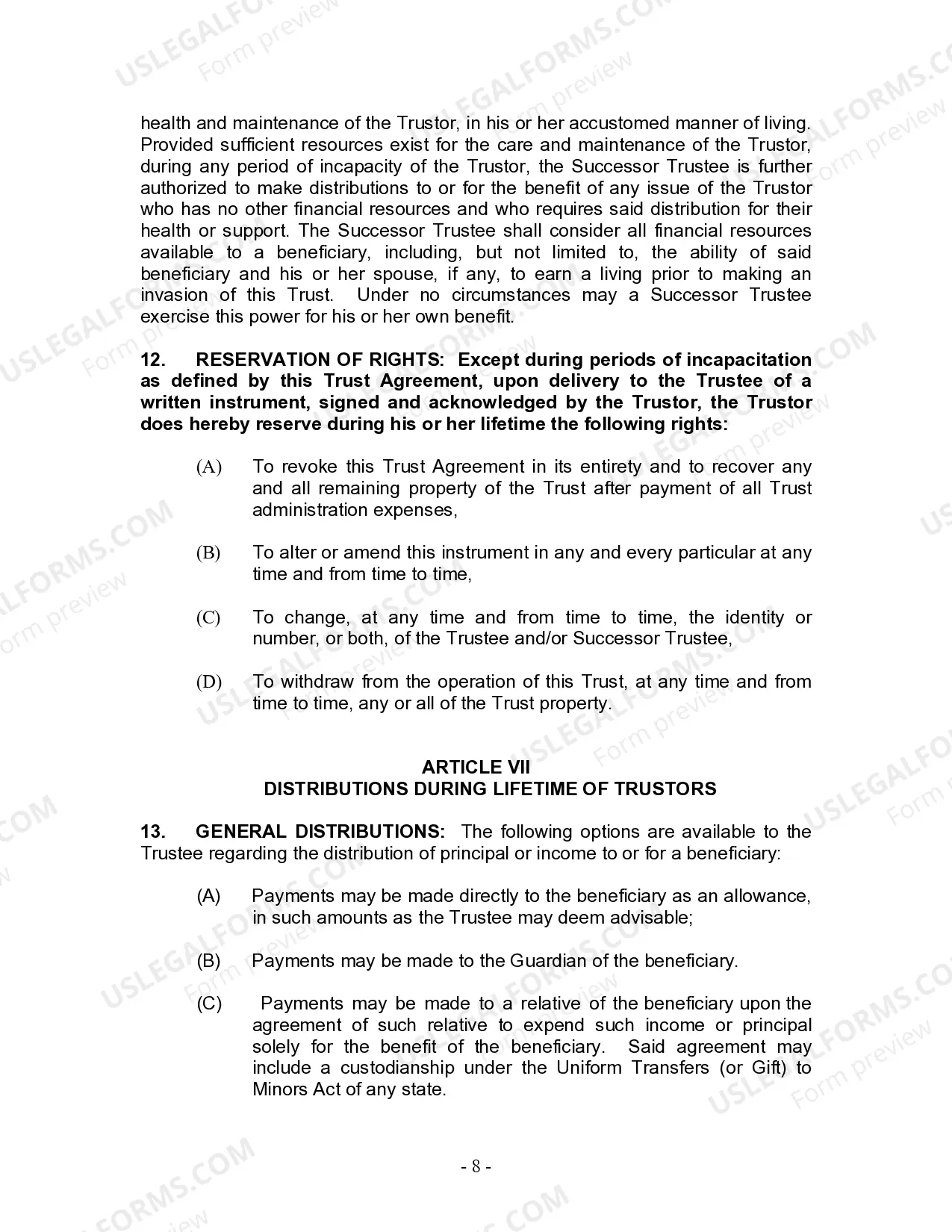
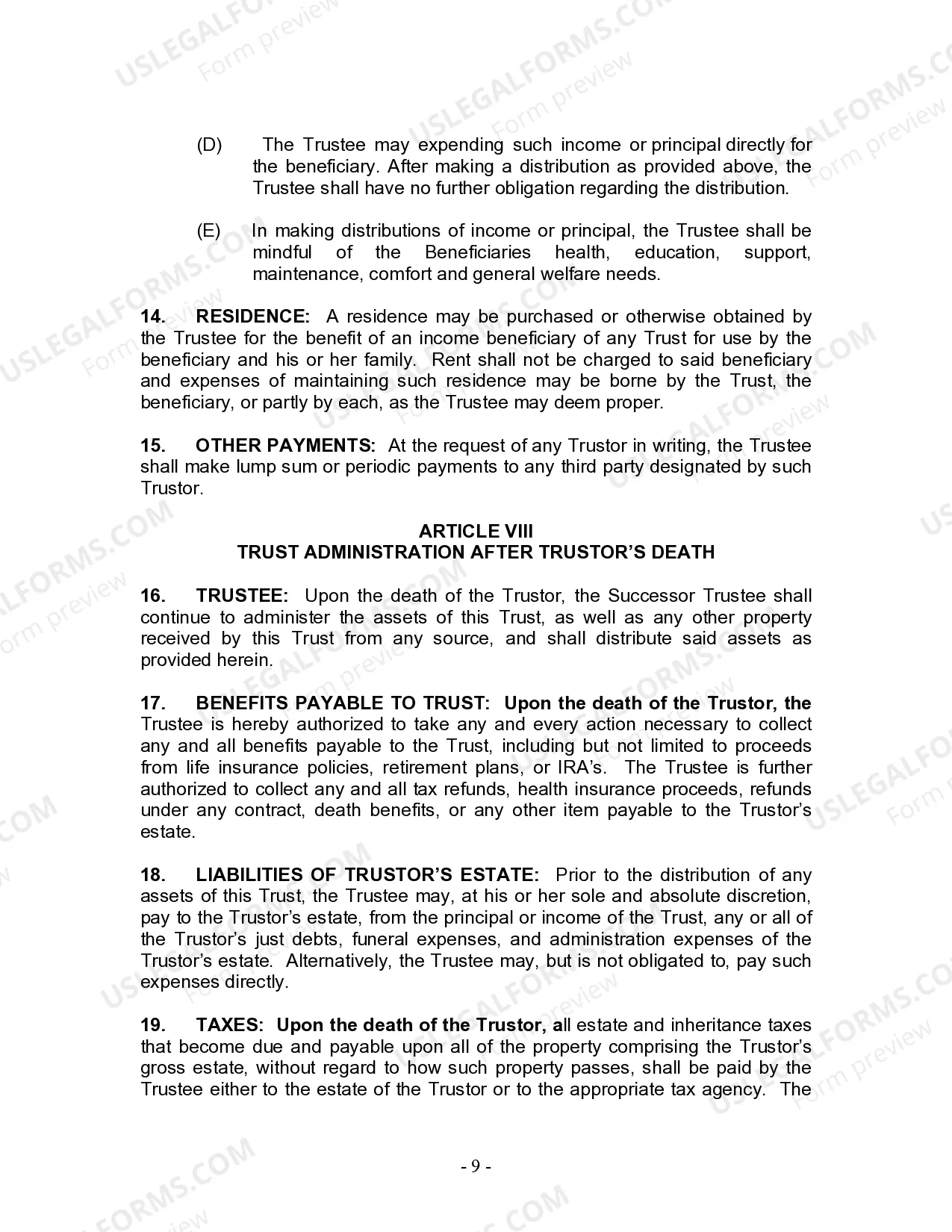
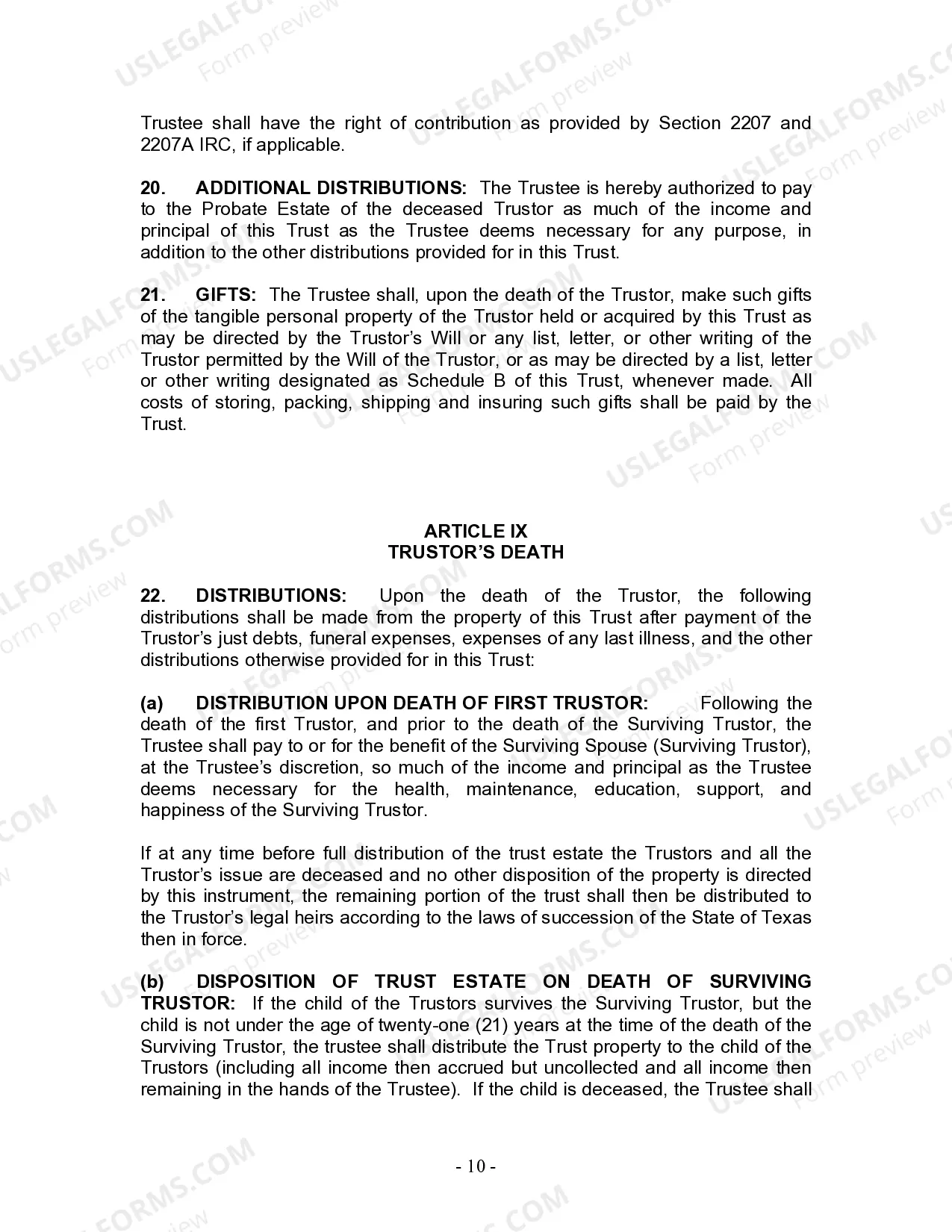
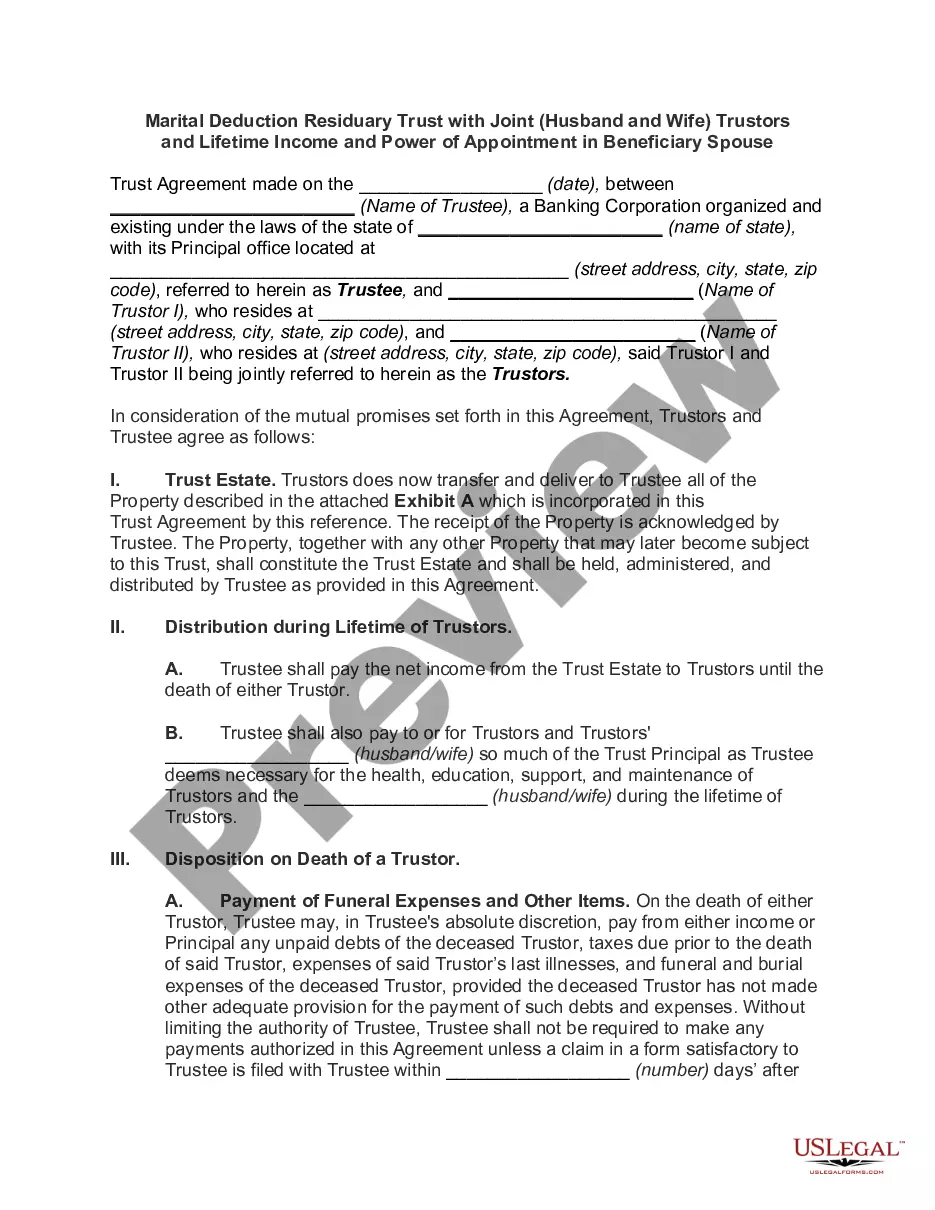
This form is a Living Trust specifically designed for a husband and wife with one child. A Living Trust allows individuals to manage their assets during their lifetime and determine how those assets will be distributed upon their death, thereby avoiding the probate process. In this type of trust, the creators can act as their own trustees, retaining complete control over their assets while ensuring a smooth transition for their heirs after death.
Key components of this form
- Name of Trust: Specifies the title under which the trust operates.
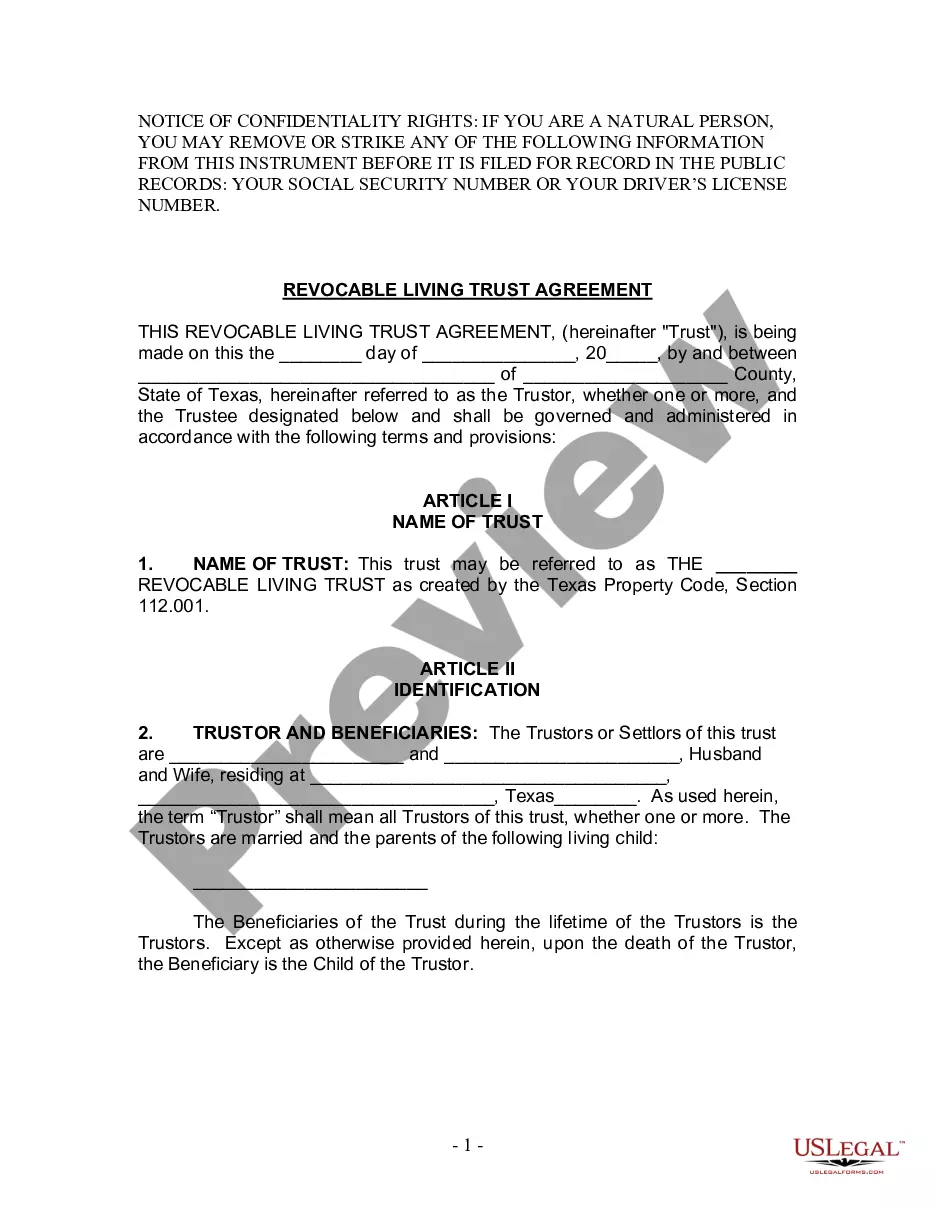
- Identification of Trustors and Beneficiaries: Identifies the husband and wife as Trustors and their child as the beneficiary.
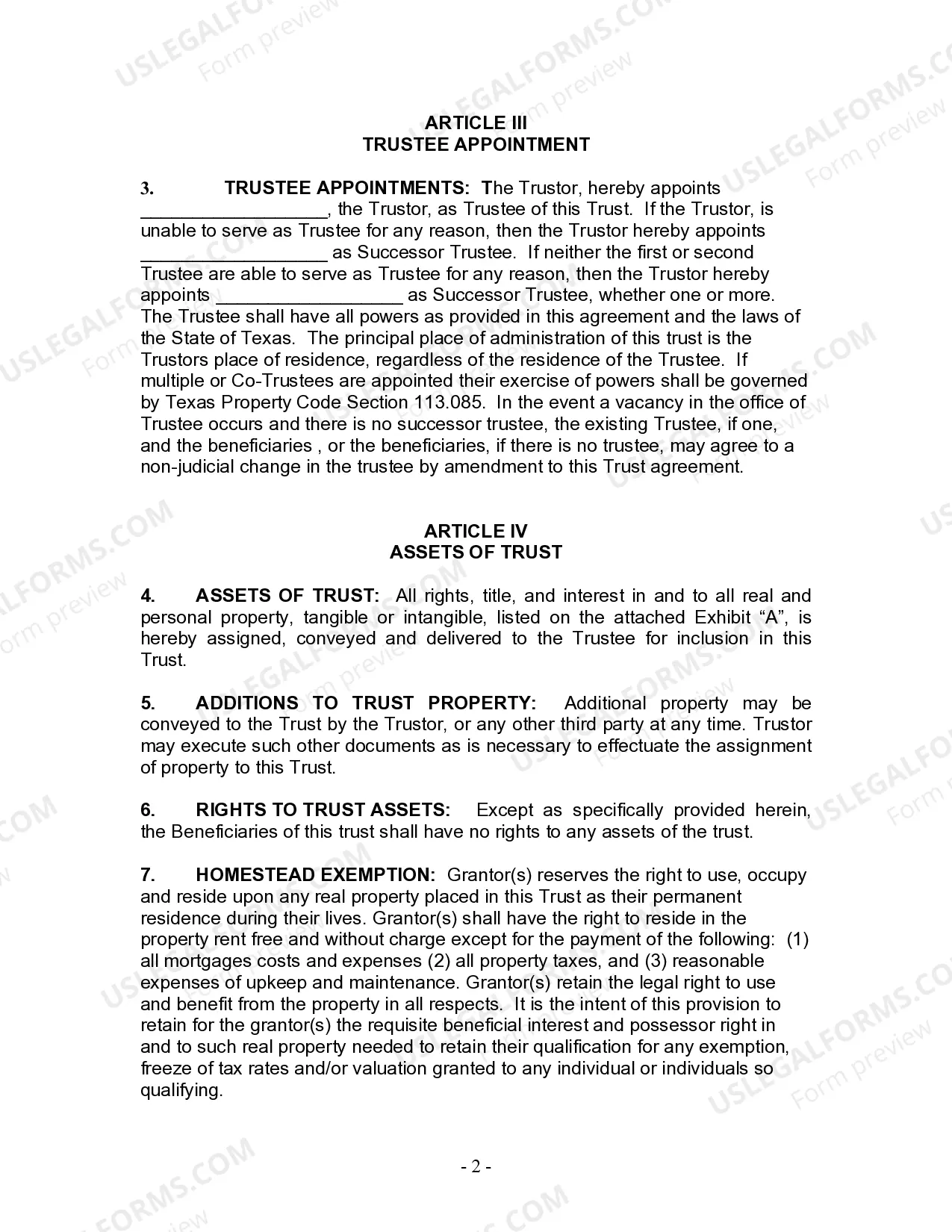
- Trustee Appointment: Details the designation of the trustee and successor trustees.
- Assets of Trust: Describes the property that will be included in the trust.
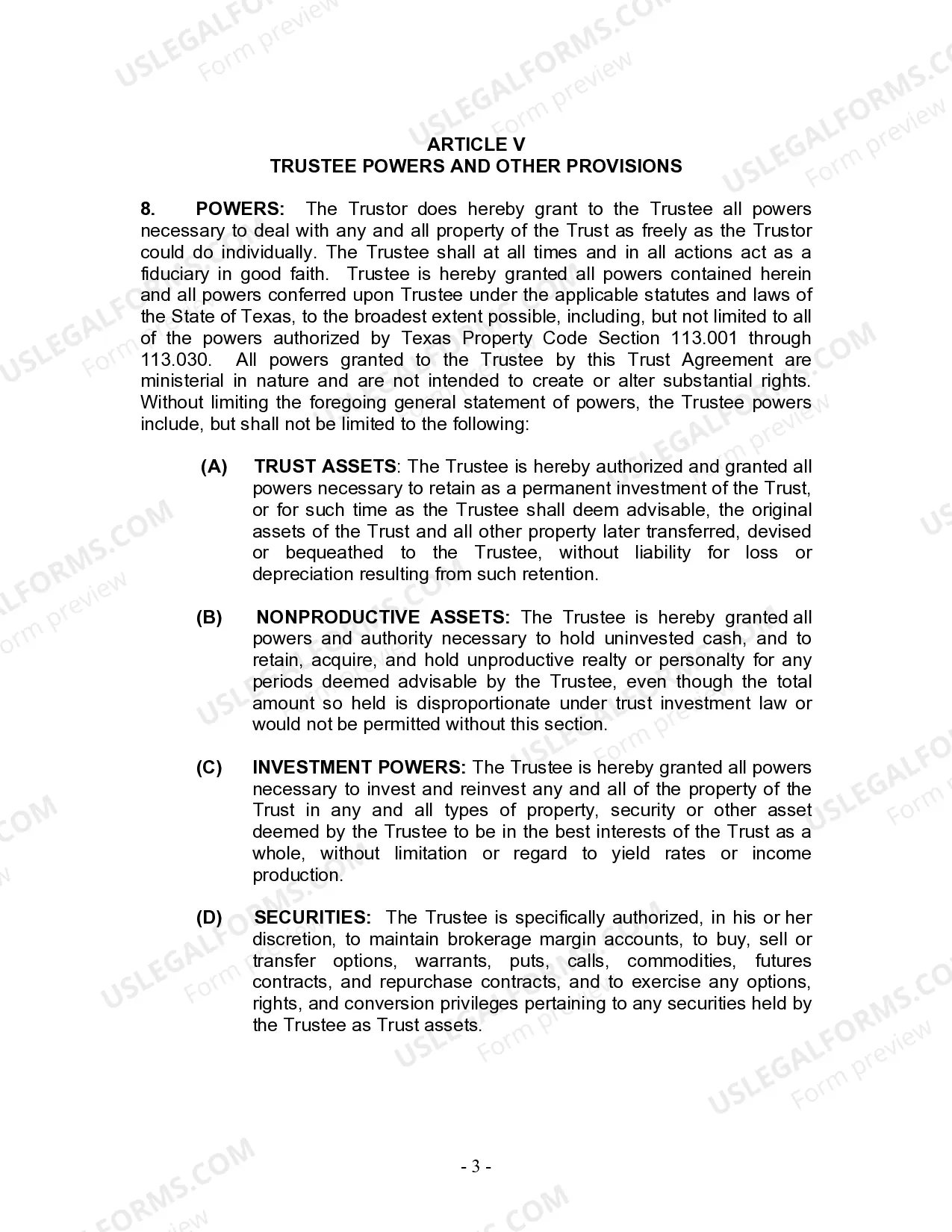
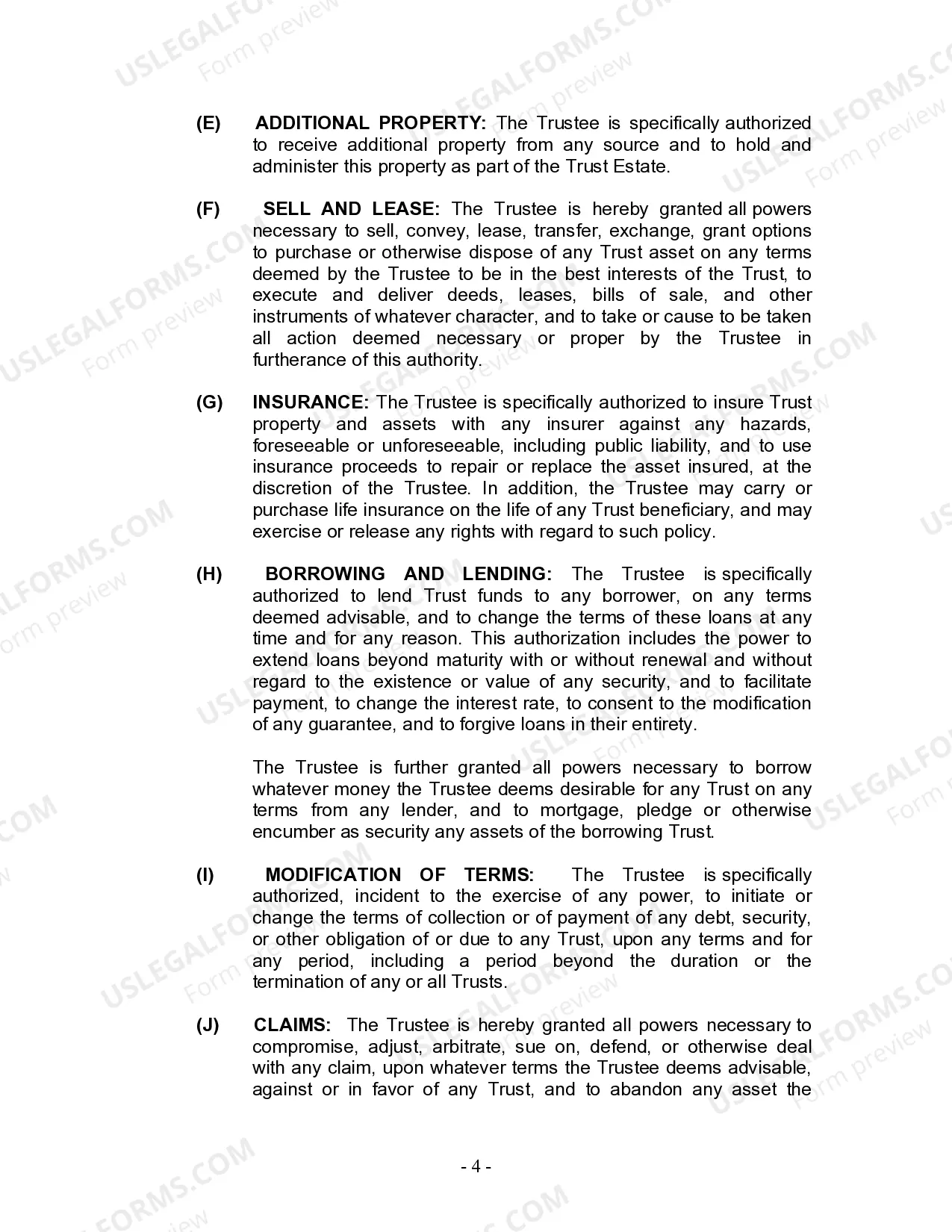
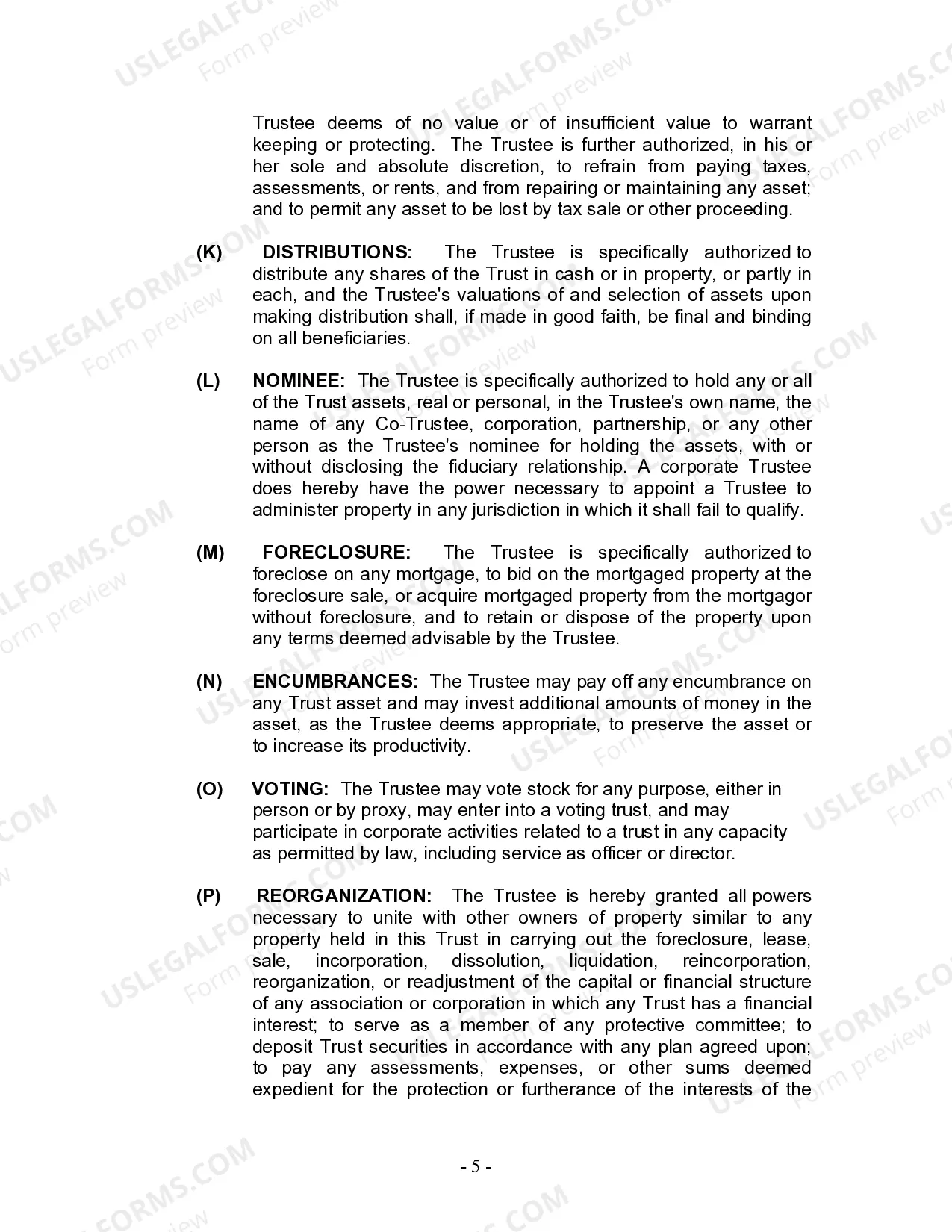
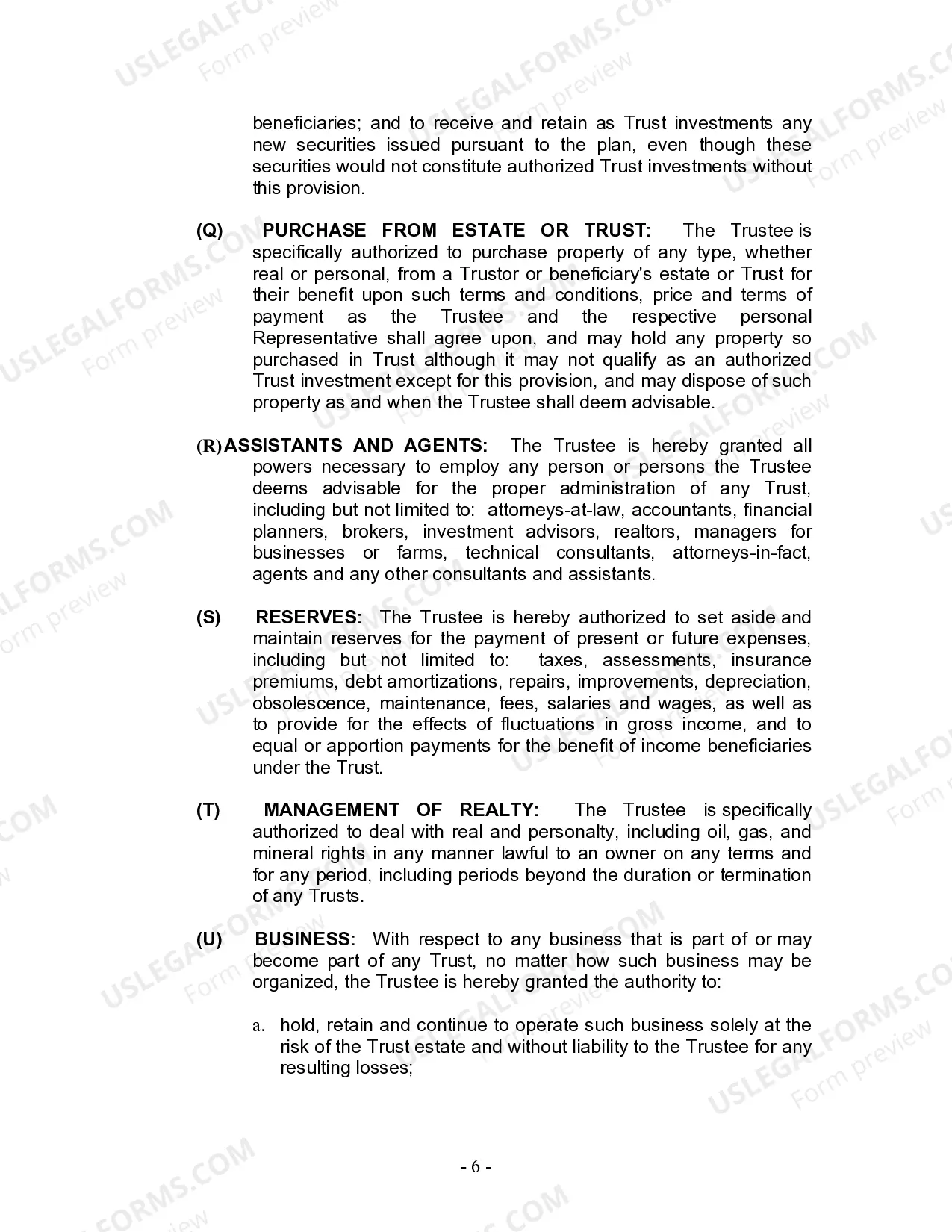
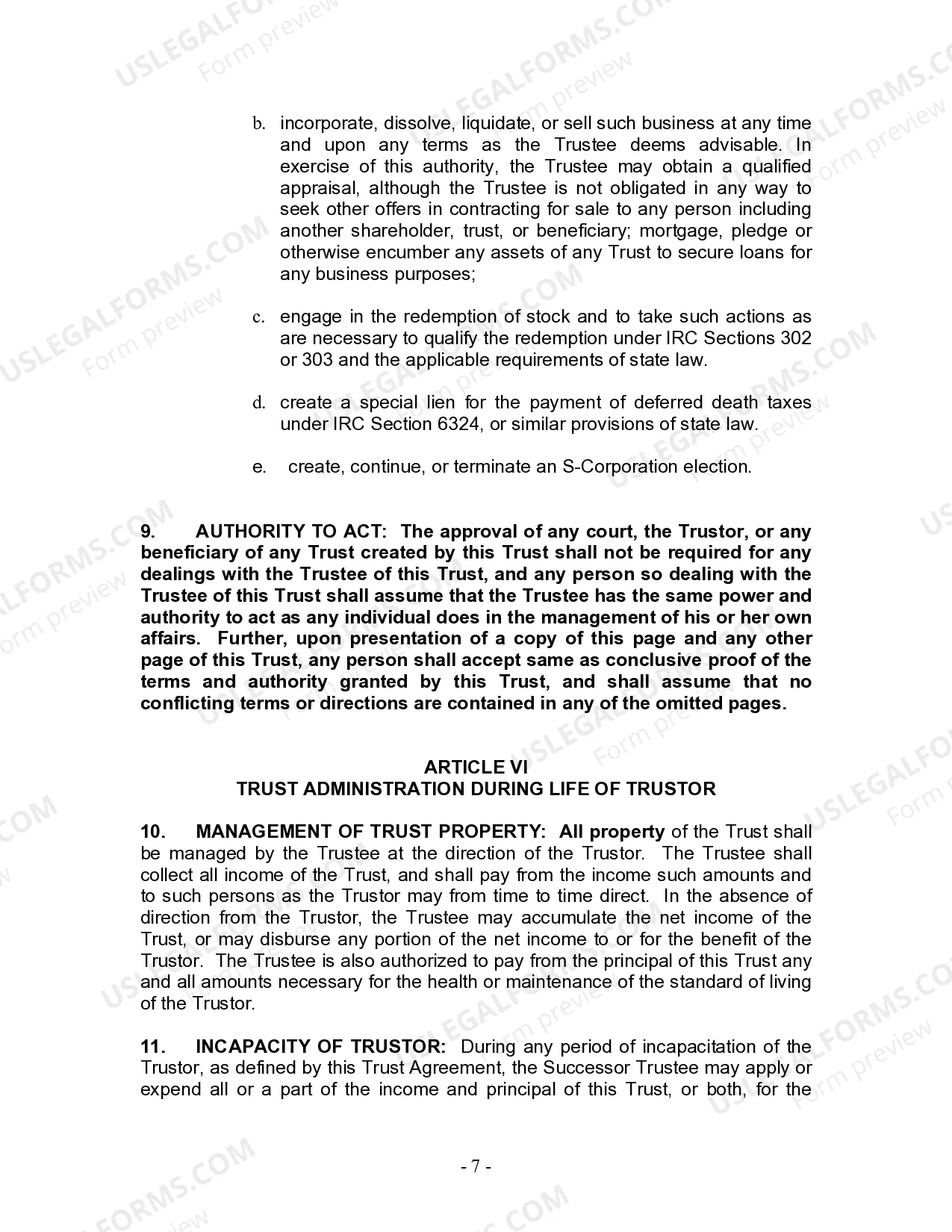
- Trustee Powers: Outlines the powers and responsibilities of the trustee regarding management and distribution of trust assets.
- Distributions: Lays out the terms for how assets will be distributed during the lifetime of the trustors and after their death.

When to use this document
This Living Trust should be used when a husband and wife wish to ensure their assets are managed according to their wishes during their lifetime and passed on to their child upon their deaths. It is particularly useful for avoiding probate and ensuring a smoother transition of wealth, while also providing for the management of assets in case either spouse becomes incapacitated.
Who can use this document
- Married couples with one child who want to establish a plan for their assets.
- Couples looking to simplify the estate planning process and avoid probate.
- Individuals who want to retain control over their assets while providing for their child's future.
- Couples who wish to designate a trustee to manage their assets in case of incapacity.
How to complete this form
- Identify the parties: Fill in the names of the husband and wife as well as their child's name.
- Designate the trustee: Appoint the husband or wife as the primary trustee and any successors.
- List the assets: Detail the property and assets that will be included in the trust in the designated section.
- Specify distributions: Clearly outline how assets should be distributed to beneficiaries upon death.
- Sign the document: Ensure both spouses sign the trust agreement in the presence of a notary public, if required.
Notarization guidance
Yes, this form must be notarized to be legally valid in Texas. US Legal Forms offers integrated online notarization services, ensuring a secure and convenient process that can be completed virtually without requiring travel.
Get your form ready online
Our built-in tools help you complete, sign, share, and store your documents in one place.
Make edits, fill in missing information, and update formatting in US Legal Forms—just like you would in MS Word.
Download a copy, print it, send it by email, or mail it via USPS—whatever works best for your next step.
Sign and collect signatures with our SignNow integration. Send to multiple recipients, set reminders, and more. Go Premium to unlock E-Sign.
If this form requires notarization, complete it online through a secure video call—no need to meet a notary in person or wait for an appointment.
We protect your documents and personal data by following strict security and privacy standards.

Make edits, fill in missing information, and update formatting in US Legal Forms—just like you would in MS Word.

Download a copy, print it, send it by email, or mail it via USPS—whatever works best for your next step.

Sign and collect signatures with our SignNow integration. Send to multiple recipients, set reminders, and more. Go Premium to unlock E-Sign.

If this form requires notarization, complete it online through a secure video call—no need to meet a notary in person or wait for an appointment.

We protect your documents and personal data by following strict security and privacy standards.
Avoid these common issues
- Failing to adequately describe the assets included in the trust.
- Not appointing a successor trustee, which can create complications if the initial trustee becomes incapacitated.
- Not signing the trust document in accordance with state requirements, potentially nullifying the trust.
Advantages of online completion
- Downloadable and printable for ease of access and completion at any time.
- Guidance provided to ensure all necessary information is included.
- Customizable fields allow for specific circumstances to be addressed effectively.
- Reliable templates drafted by licensed attorneys ensure legal compliance.
What to keep in mind
- A Living Trust allows for effective estate management and probate avoidance.
- It is specifically designed for married couples with children.
- The trust can be modified or revoked at any time during the Trustors' lifetime.
- Proper completion and notarization are essential for the trust's legality.
Looking for another form?
Form popularity
FAQ
The laws in Texas surrounding intestate wills for married individuals without children are much simpler. The surviving spouse automatically receives all community property.If there are no surviving parents, siblings or descendants of siblings, the spouse gets the remainder of the estate's separate real property.
Some Trusts Protect Assets from Divorce. In California, trusts established before marriage are considered separate property. Other trusts including domestic or foreign asset protection trusts, revocable trusts and irrevocable trusts also protect assets in the event of divorce.
Joint trusts are easier to fund and maintain.In a joint trust, after the death of the first spouse, the surviving spouse has complete control of the assets. When separate trusts are used, the deceased spouses' trust becomes irrevocable and the surviving spouse has limited control over assets.
Aside from being used as an estate planning tool, trusts can be used for asset protection in divorce.If a spouse established a trust prior to the marriage, the assets placed in that trust are typically considered separate property as long as the funds are not combined with marital funds at any point.
Generally, trusts are considered the separate property of the beneficiary spouse and the assets in a trust are not subject to equitable distribution unless they contain marital property.Putting marital assets into a trust does not make those assets separate property.
Under Texas law, income from the separate estate of one spouse is community property and therefore, the revenues from Carlos' trust estate were community property.
Texas defines separate property as property owned before marriage or acquired by gift or inheritance.In general, principal distributions from a trust are a beneficiary's separate property.
Typically, when a married couple utilizes a Revocable Living Trust based estate plan, each spouse creates and funds his or her own separate Revocable Living Trust. This results in two trusts. However, in the right circumstances, a married couple may be better served by creating a single Joint Trust.