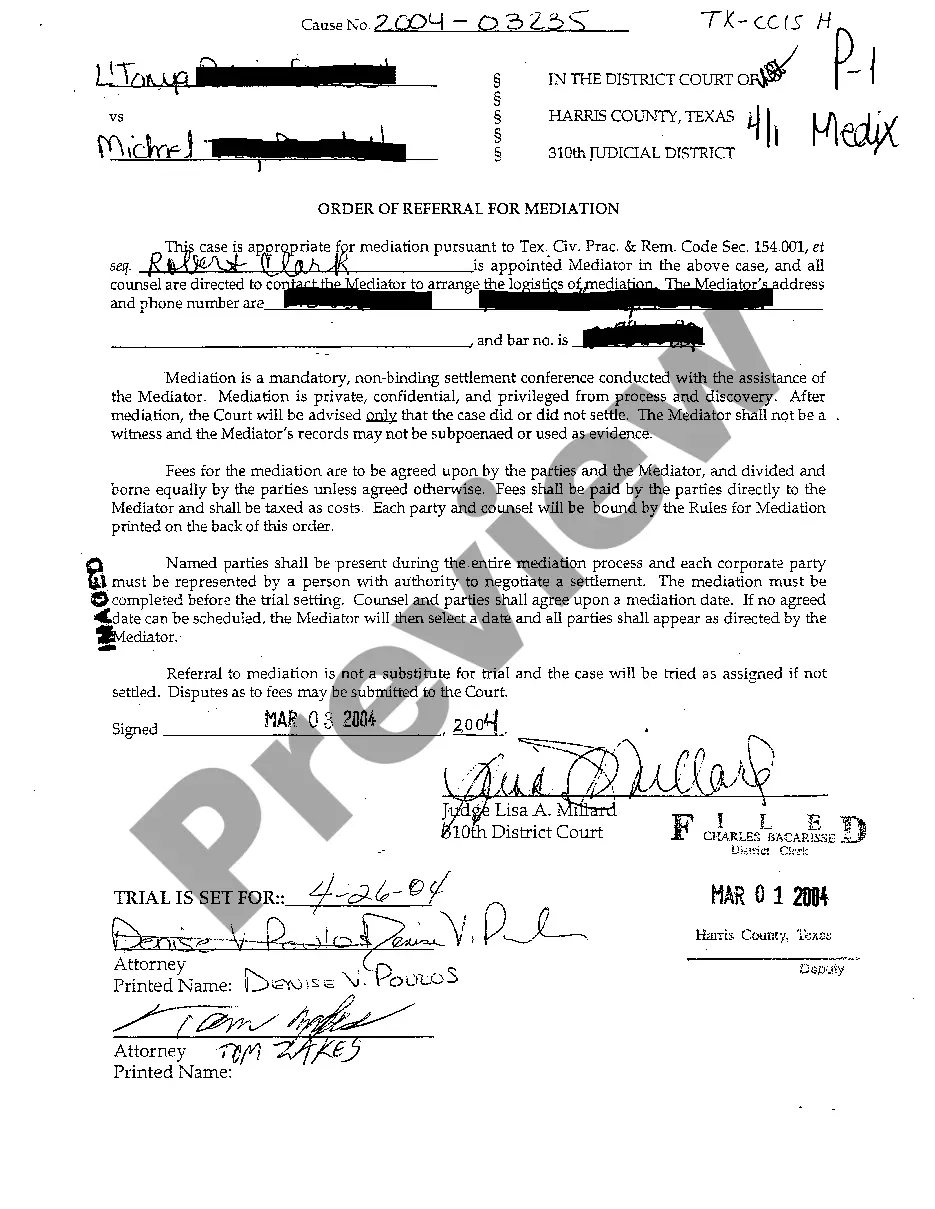
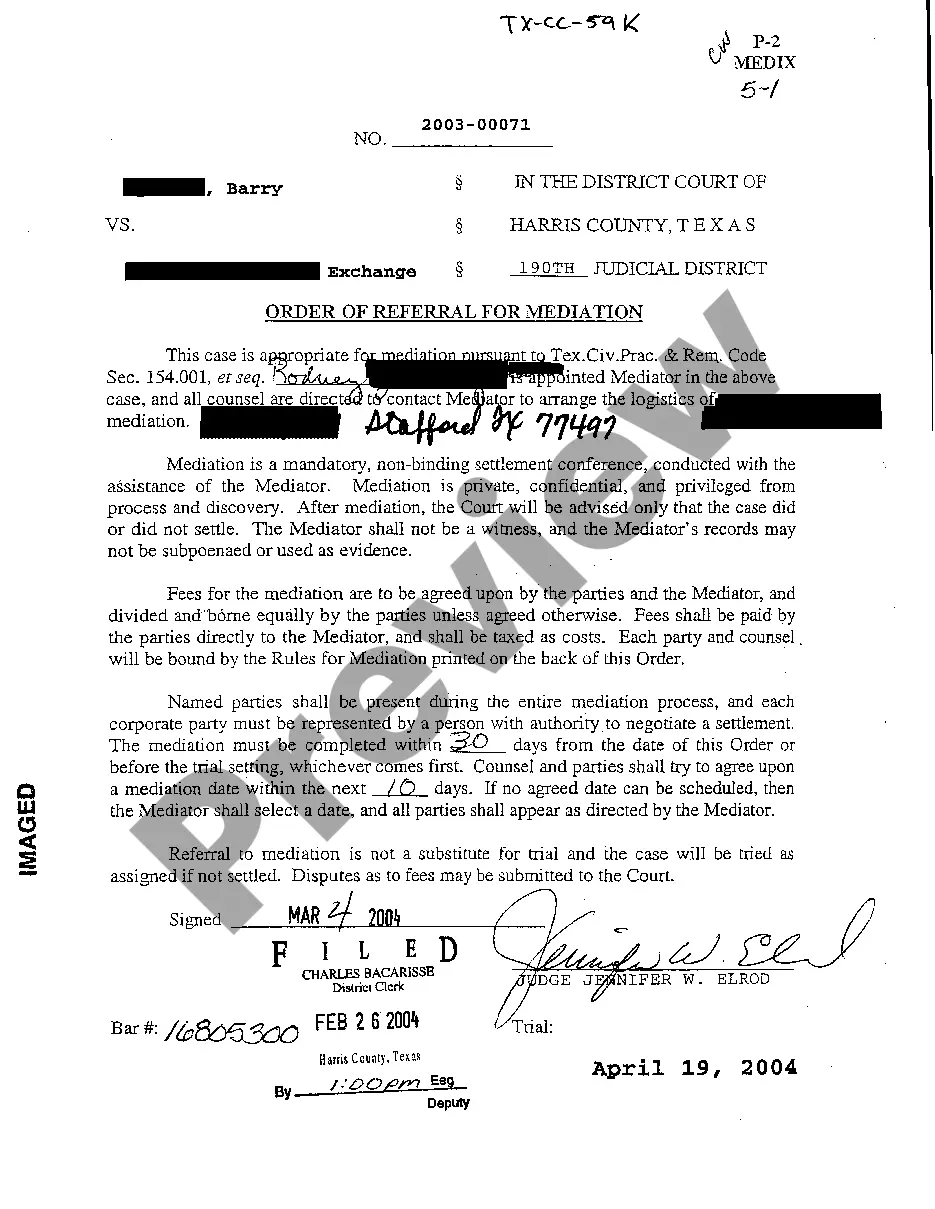
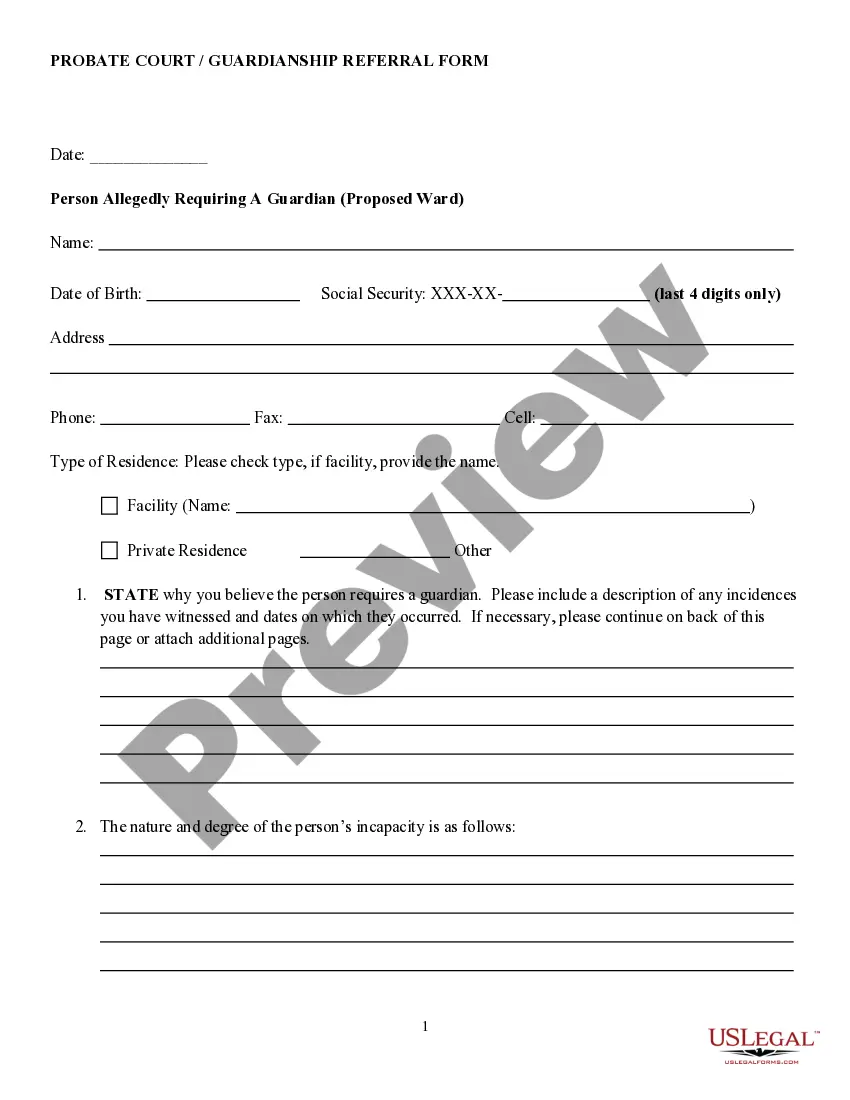
Texas Order of Referral For Mediation
Notarization requirements for this form
Notarization is not commonly needed for this form. However, certain documents or local rules may make it necessary. Our notarization service, powered by Notarize, allows you to finalize it securely online anytime, day or night.
Form popularity
FAQ
There are essentially 5 steps to a successful mediation. They are comprised of the introduction; statement of the problem; information gathering; identification of the problems; bargaining; and finally, settlement.
Don't rule out all opening statements because you have had bad experiences with them before. Think about whether there is anything either side could say that would be productive. Avoid saying alienating things, and say difficult things in the least alienating way possible.
A Position Statement is a permanent record of a party's position, ever present throughout the mediation.Position Statements should be provided by each party to every other party, and the mediator. Often a date for simultaneous exchange is suggested by the mediator or agreed between the parties.
Don't just repeat your Statement of Claim or Defence. Do outline the main issues in the case, and your position on each of those issues. Do consider addressing any weaknesses up-front. Do include any settlement offers that have been made to date.
Mediation sessions usually begin with the introduction of the mediator to the two parties.The mediator will then explain the role of the mediator -- to be an impartial facilitator, not an advocate or judge of either party, and to assist the parties in arriving at their own solutions.
Decide When to Mediate. Learn About Your Mediator. Analyze Your Case Early and Often. Prepare an Effective and Persuasive Mediation Statement. Consider a Conference Call with the Mediator before the Mediation. Decide Who Will Attend and Who Will Speak at the Mediation. Master Mediation Etiquette.
Key components. Your summary should include a brief case description and the legal issues involved in it. Story and theme. Think of your mediation summary as a story; write it persuasively to help the other side understand. Tone. Evidence. Risk. Go online for help writing mediation advocacy. Conclusion.
Planning. Before the mediation process begins, the mediator helps the parties decide where they should meet and who should be present. Mediator's introduction. Opening remarks. Joint discussion. Caucuses. Negotiation.
There are essentially 5 steps to a successful mediation. They are comprised of the introduction; statement of the problem; information gathering; identification of the problems; bargaining; and finally, settlement.