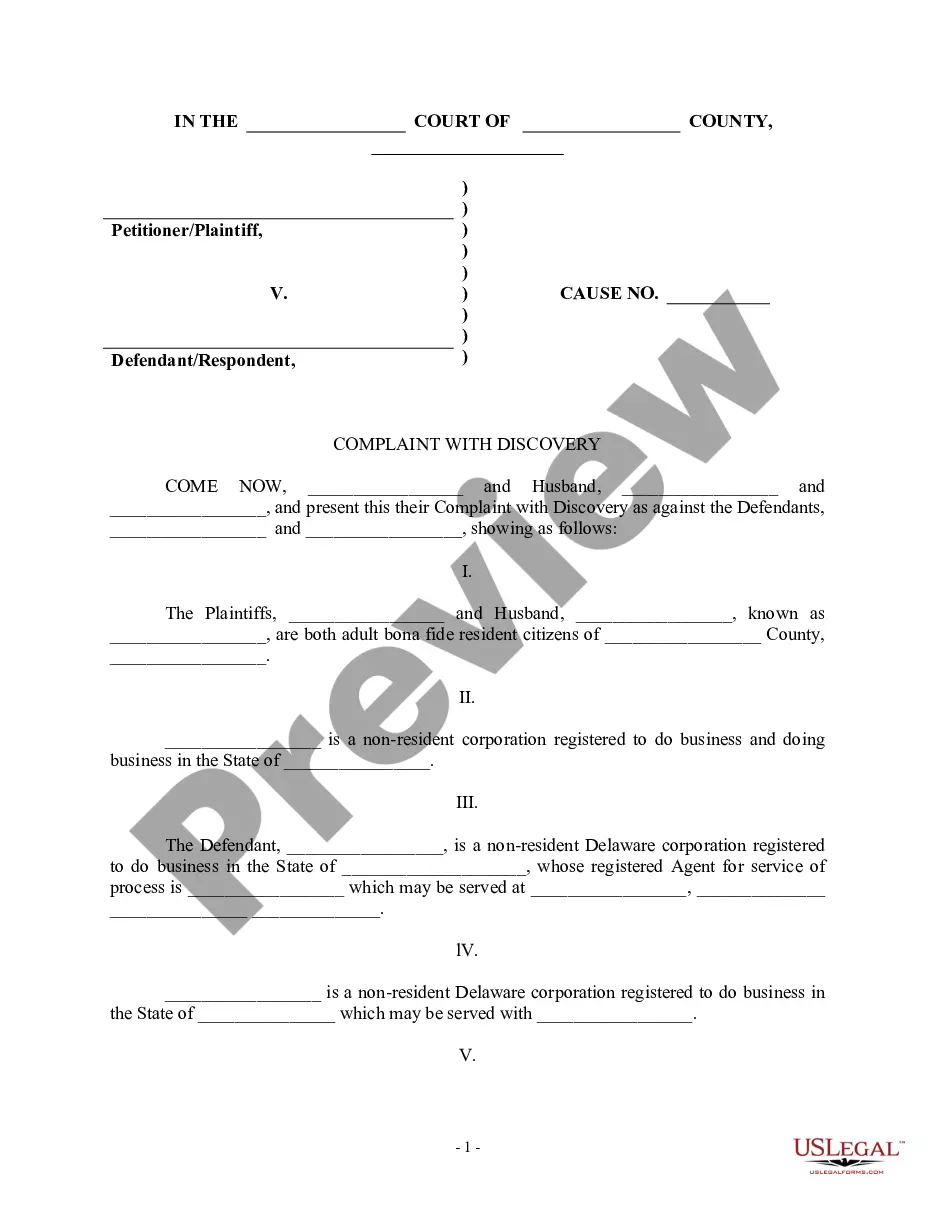
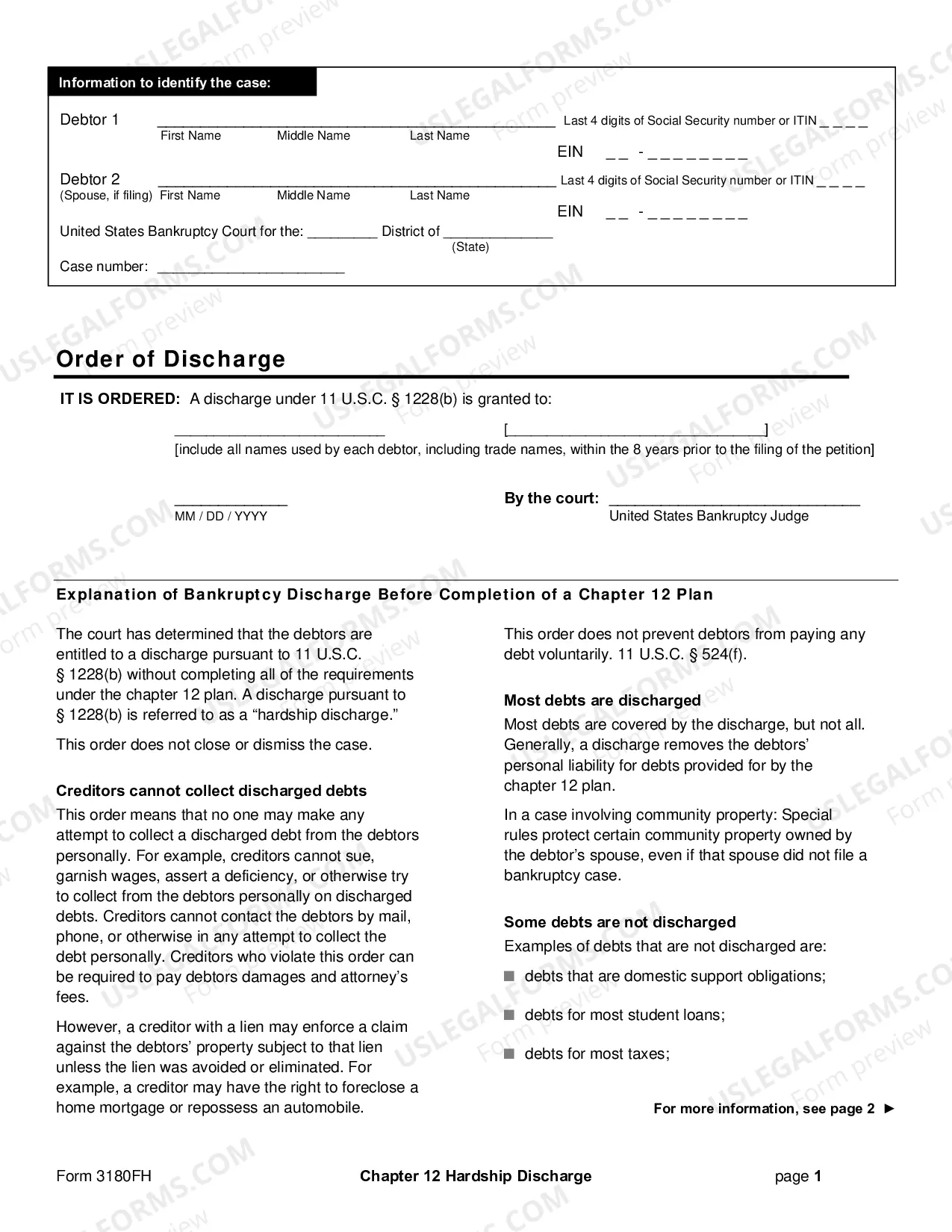
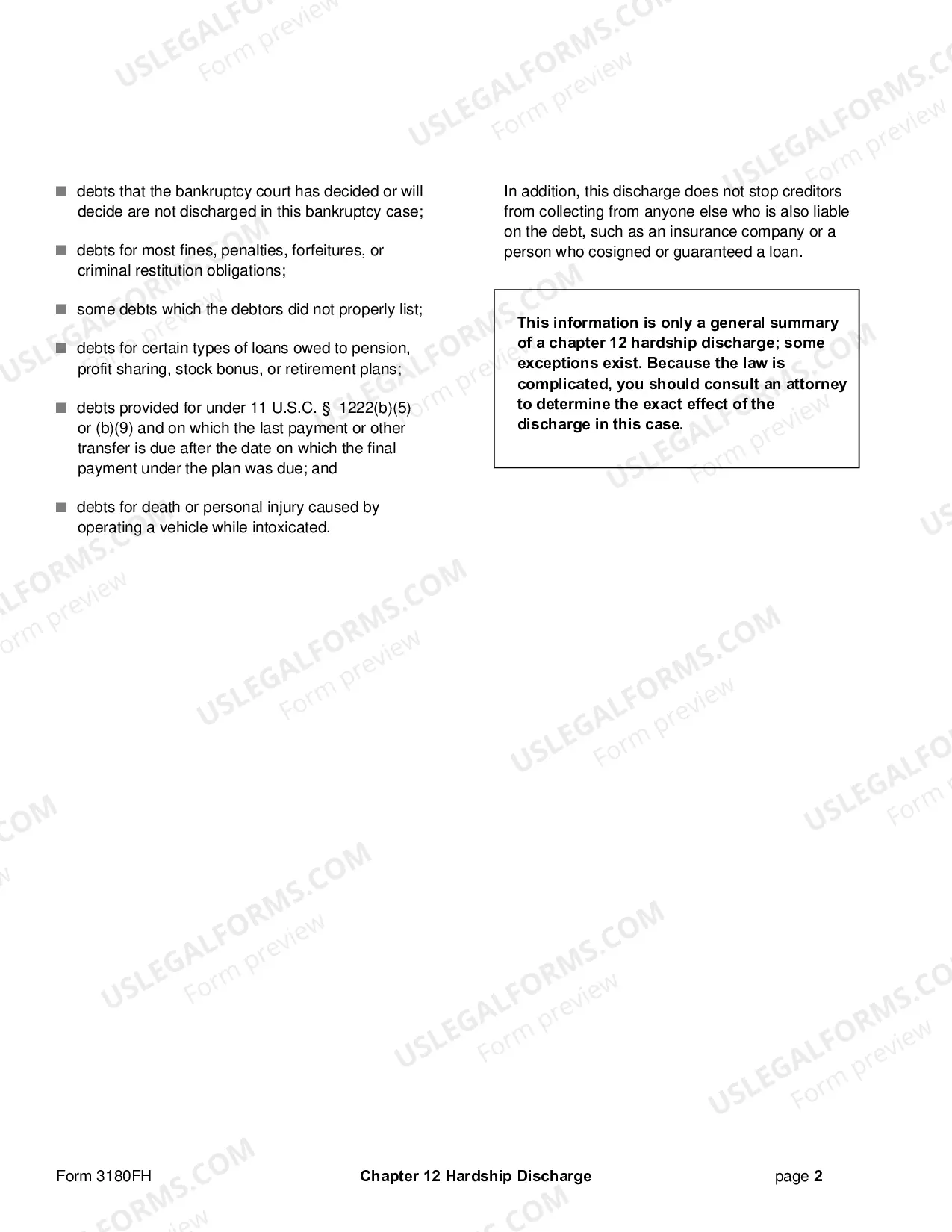
Texas Chapter 12 Hardship Discharge
Description
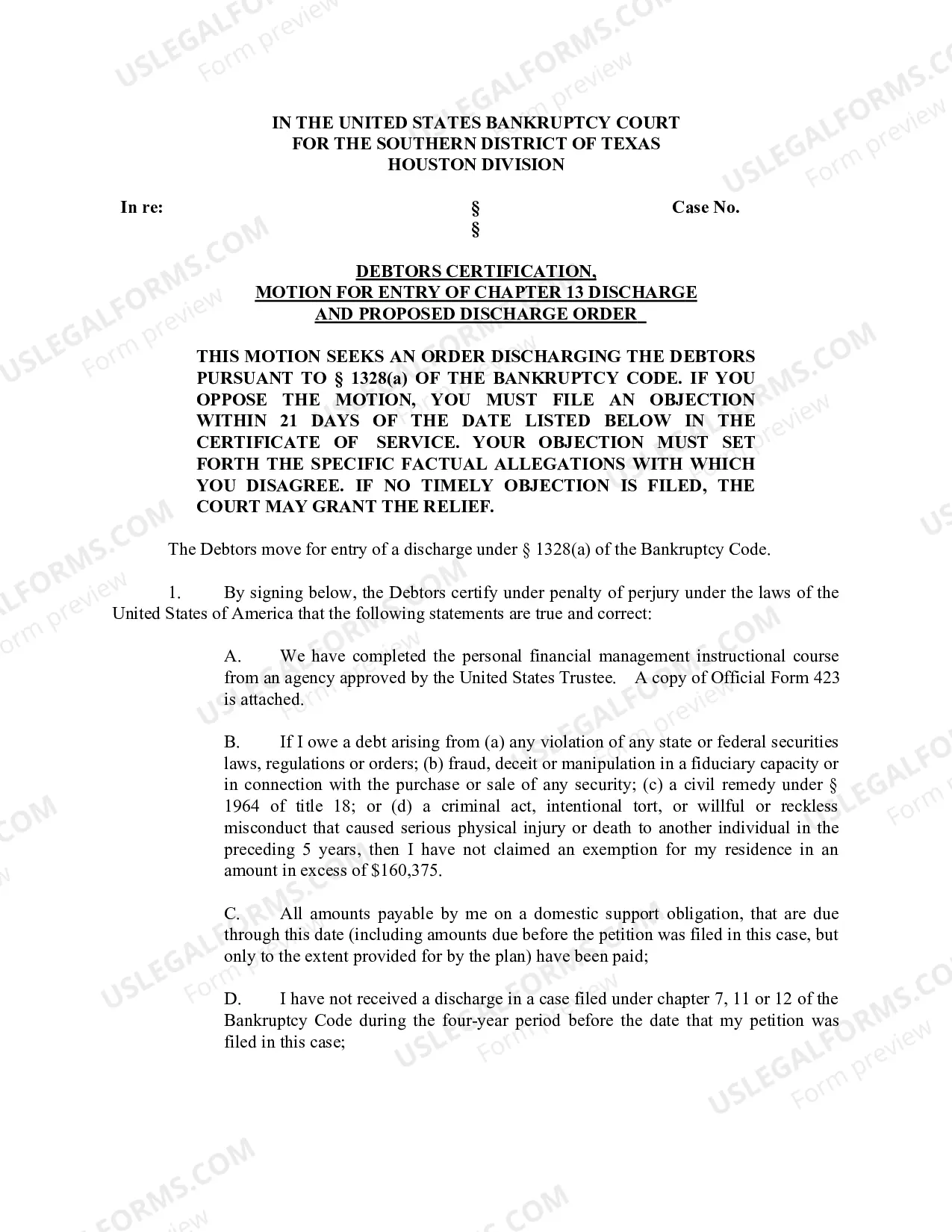
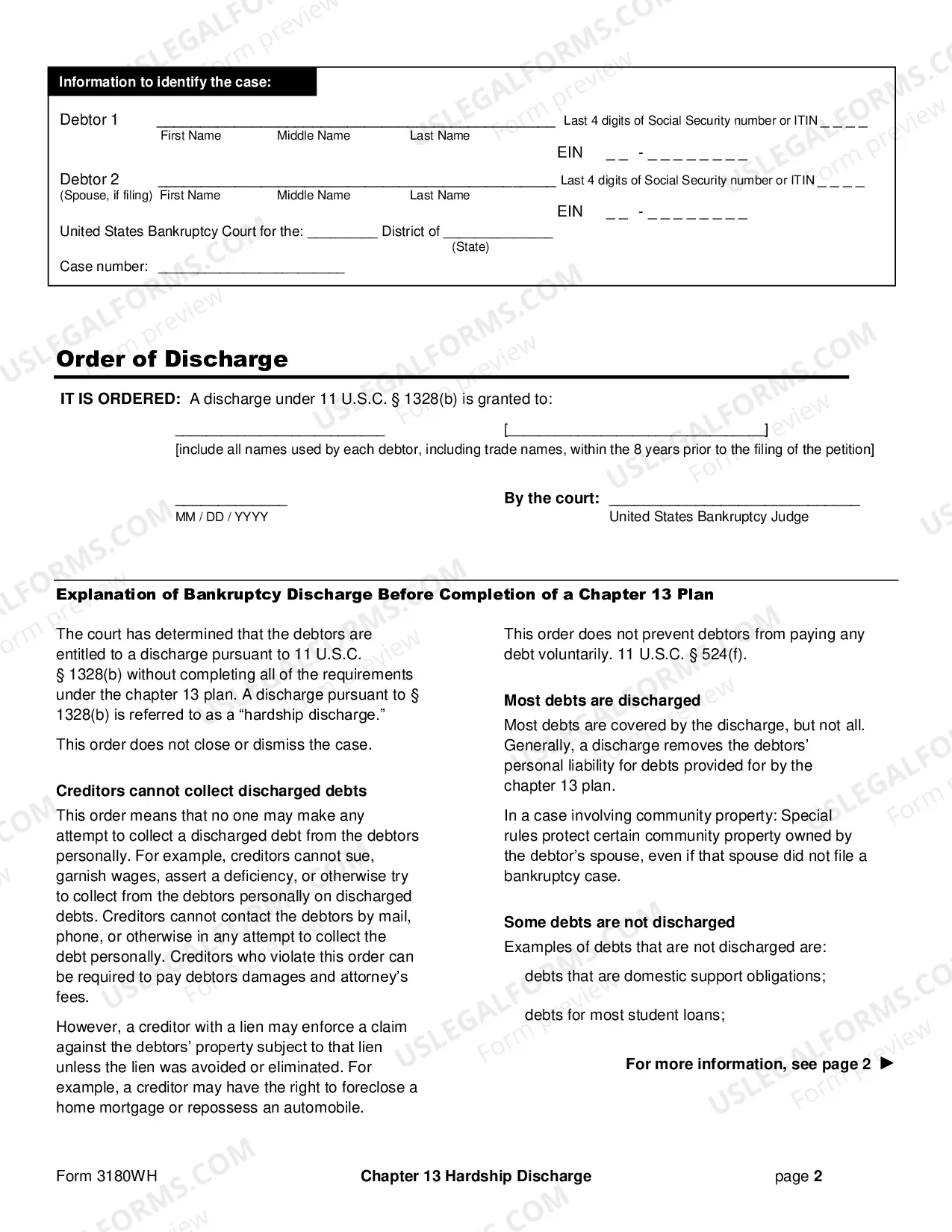
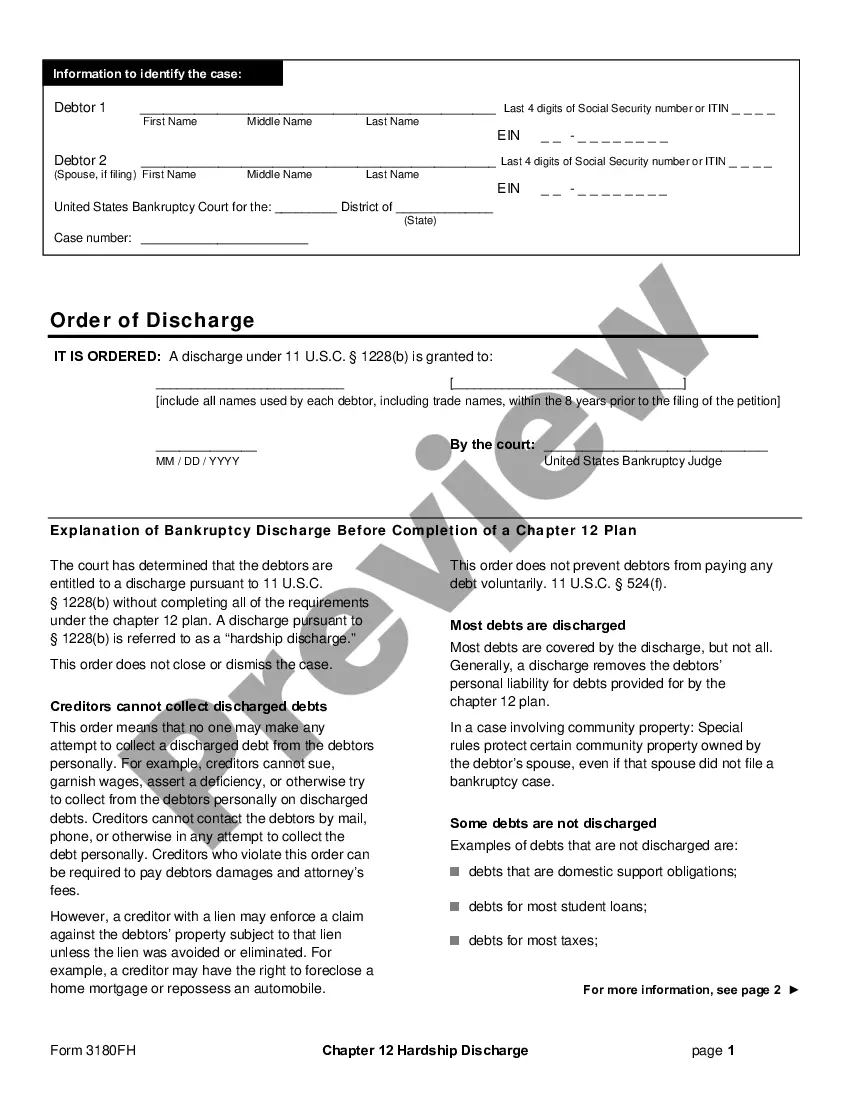
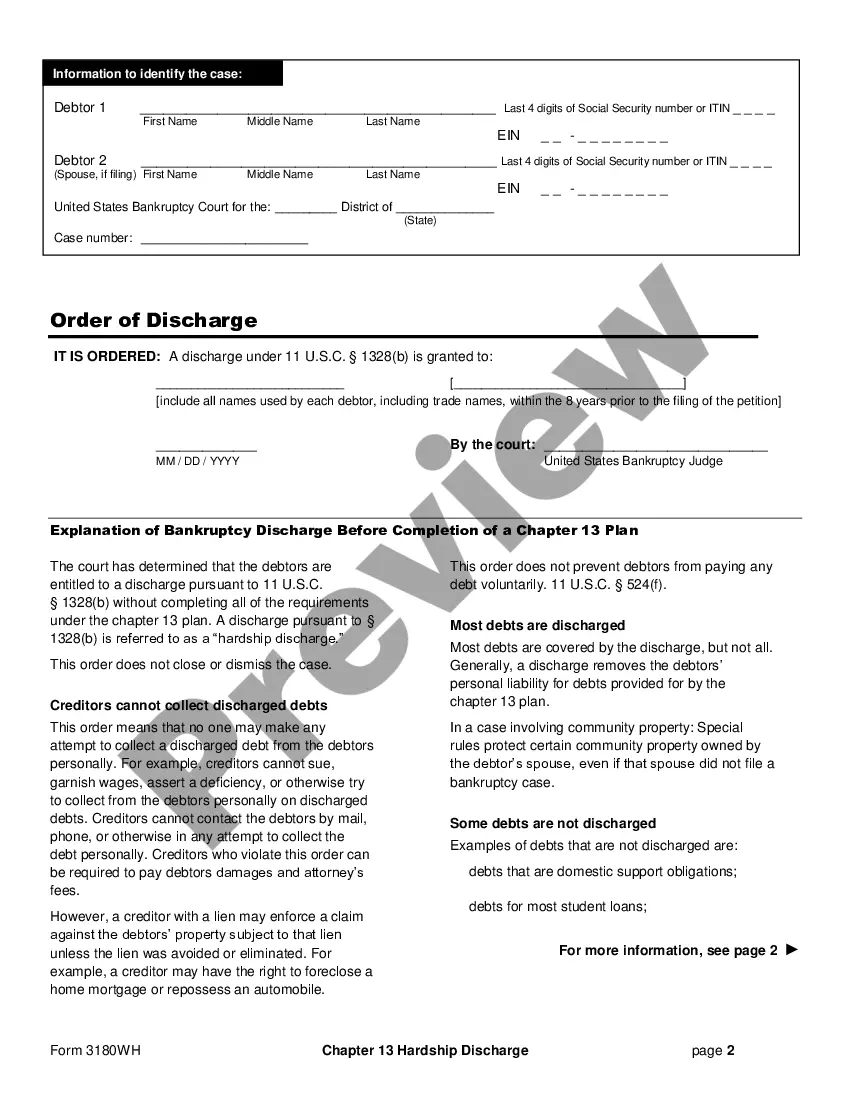
Get your form ready online
Our built-in tools help you complete, sign, share, and store your documents in one place.
Make edits, fill in missing information, and update formatting in US Legal Forms—just like you would in MS Word.
Download a copy, print it, send it by email, or mail it via USPS—whatever works best for your next step.
Sign and collect signatures with our SignNow integration. Send to multiple recipients, set reminders, and more. Go Premium to unlock E-Sign.
If this form requires notarization, complete it online through a secure video call—no need to meet a notary in person or wait for an appointment.
We protect your documents and personal data by following strict security and privacy standards.

Make edits, fill in missing information, and update formatting in US Legal Forms—just like you would in MS Word.

Download a copy, print it, send it by email, or mail it via USPS—whatever works best for your next step.

Sign and collect signatures with our SignNow integration. Send to multiple recipients, set reminders, and more. Go Premium to unlock E-Sign.

If this form requires notarization, complete it online through a secure video call—no need to meet a notary in person or wait for an appointment.

We protect your documents and personal data by following strict security and privacy standards.
Looking for another form?
How to fill out Texas Chapter 12 Hardship Discharge?
Preparing legal paperwork can be a real stress unless you have ready-to-use fillable templates. With the US Legal Forms online library of formal documentation, you can be confident in the blanks you find, as all of them comply with federal and state laws and are checked by our specialists. So if you need to fill out Texas Chapter 12 Hardship Discharge, our service is the perfect place to download it.
Obtaining your Texas Chapter 12 Hardship Discharge from our catalog is as easy as ABC. Previously authorized users with a valid subscription need only sign in and click the Download button after they find the correct template. Later, if they need to, users can take the same document from the My Forms tab of their profile. However, even if you are unfamiliar with our service, registering with a valid subscription will take only a few minutes. Here’s a quick instruction for you:
- Document compliance verification. You should attentively examine the content of the form you want and check whether it satisfies your needs and complies with your state law regulations. Previewing your document and reviewing its general description will help you do just that.
- Alternative search (optional). If you find any inconsistencies, browse the library through the Search tab above until you find an appropriate template, and click Buy Now when you see the one you need.
- Account registration and form purchase. Create an account with US Legal Forms. After account verification, log in and select your most suitable subscription plan. Make a payment to proceed (PayPal and credit card options are available).
- Template download and further usage. Select the file format for your Texas Chapter 12 Hardship Discharge and click Download to save it on your device. Print it to complete your papers manually, or take advantage of a multi-featured online editor to prepare an electronic version faster and more effectively.
Haven’t you tried US Legal Forms yet? Subscribe to our service today to obtain any official document quickly and easily whenever you need to, and keep your paperwork in order!
Form popularity
FAQ
Hardship vs Dependency. Terminology can get confusing because "hardship" and "dependency" discharges are often both loosely labeled "hardship." Specifically, a hardship discharge is when the financial needs of family member(s) require more than the military member can provide while remaining in the military.
It's designed so you'll pay the amount you can afford. Therefore, the court will only let you complete your Chapter 13 bankruptcy early under two conditions: You can pay all of your claims, including unsecured debts, in full, or you can prove a financial hardship.
If your Chapter 13 plan payment is too high, you can sometimes get it lowered if you encounter a reduction in household income. If your income reduces, you are many times also allowed to reduce your plan payment. This is accomplished usually by filing a Motion to Modify your Chapter 13 plan.
To obtain the hardship discharge the debtor must first show an inability to continue making the scheduled Chapter 13 plan payments. In other words, something has happened to you financially that reduced your income or ability to pay your creditors. The change in finances must be beyond the debtor's control.
Some examples of dischargeable debts in Chapter 13 include credit card debt, medical bills, utility bills, and personal loans. Unsecured Debts ? Unsecured debts are not linked to any collateral, such as utility bills and medical bills.
What happens when a creditor files an objection? A creditor's objection does not automatically prevent a discharge of debt. The debtor gets a chance to file an answer to the objection, and the court may hold a hearing to decide the issue. This is called an adversary proceeding, and it works much like any other lawsuit.
Terminology can get confusing because "hardship" and "dependency" discharges are often both loosely labeled "hardship." Specifically, a hardship discharge is when the financial needs of family member(s) require more than the military member can provide while remaining in the military.
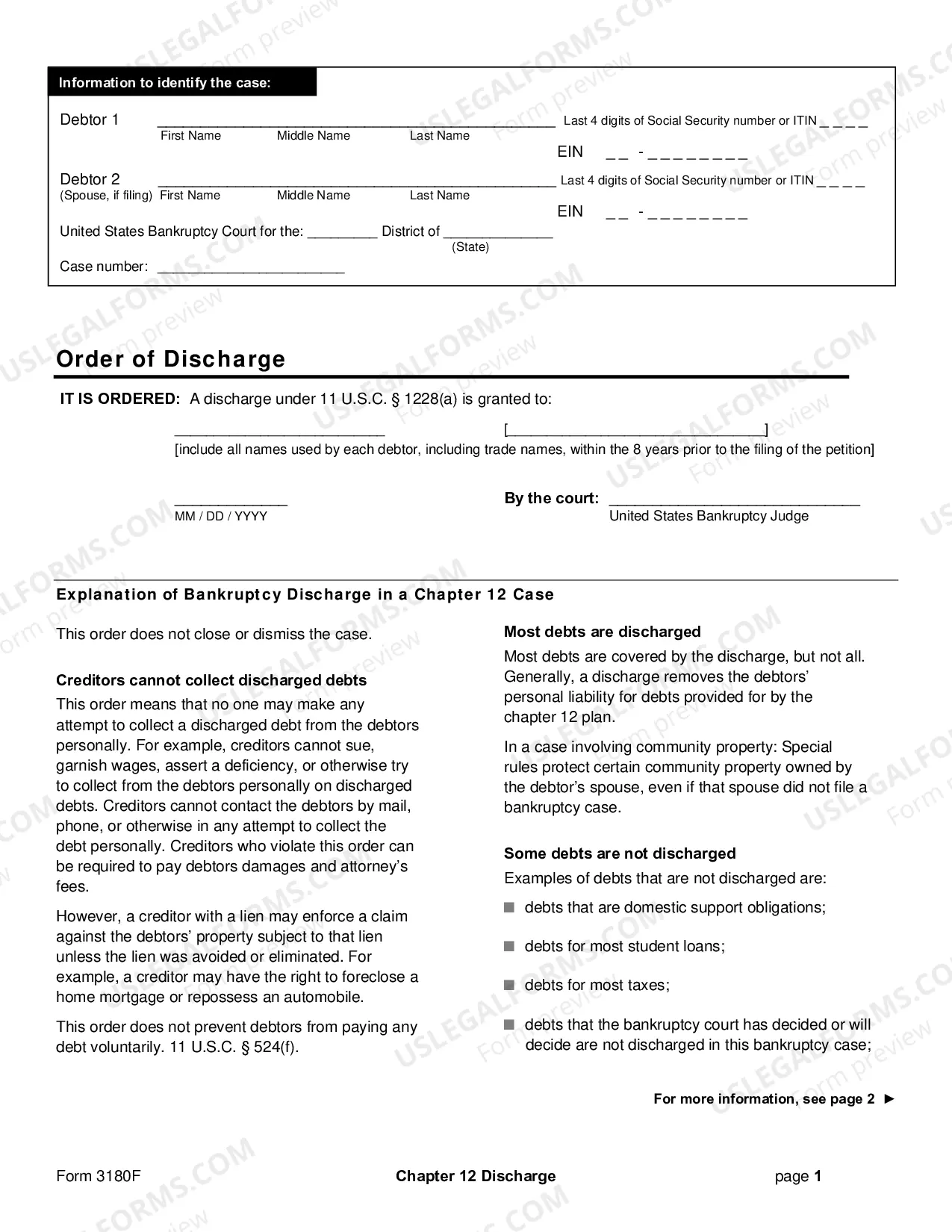
The Chapter 12 Discharge Those creditors who were provided for in full or in part under the plan may no longer initiate or continue any legal or other action against the debtor to collect the discharged obligations. Certain categories of debts are not discharged in chapter 12 proceedings. 11 U.S.C.