Texas Residential Lease Renewal Agreement
What is this form?
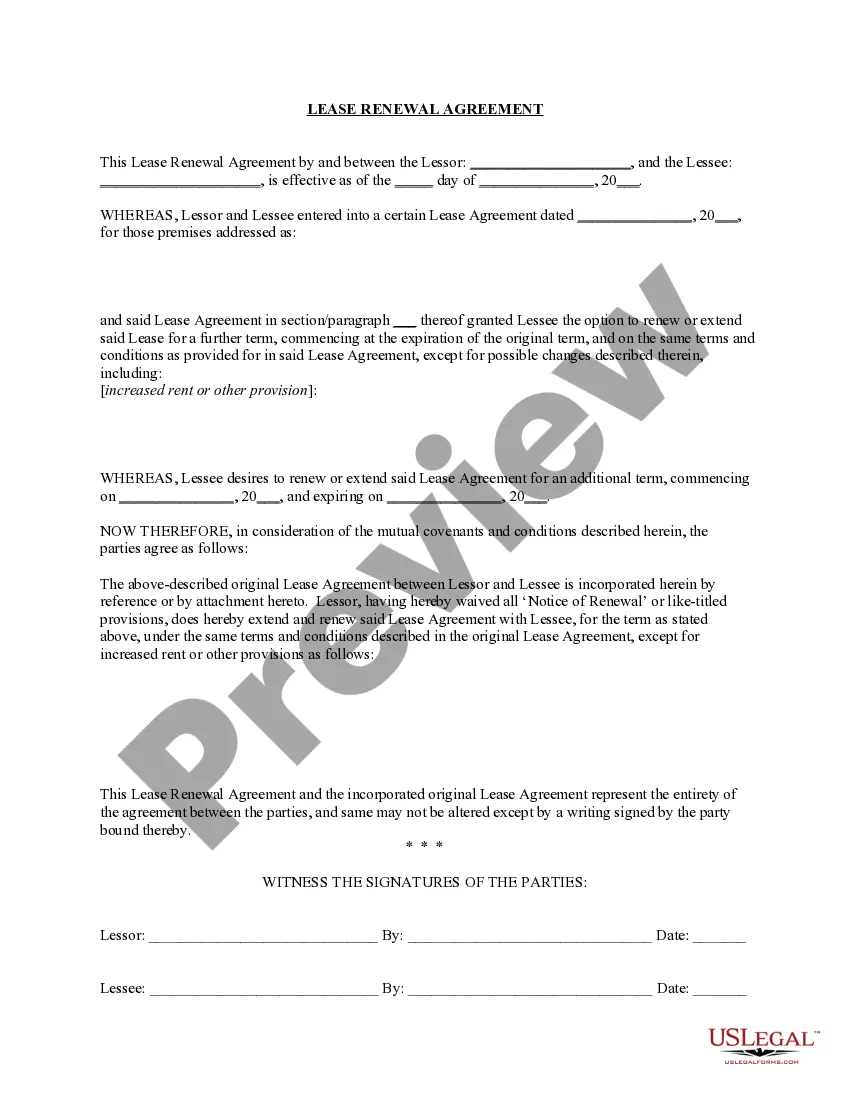
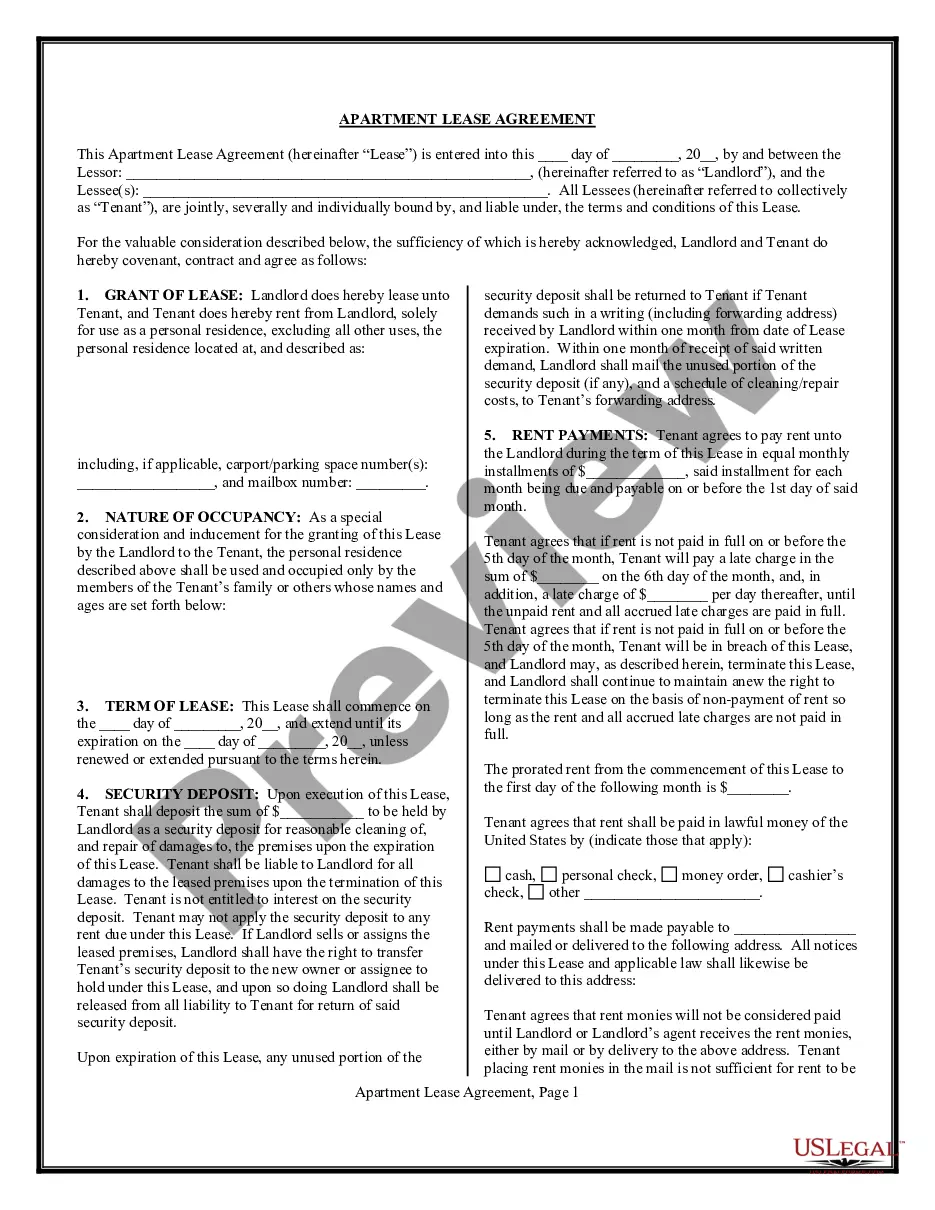
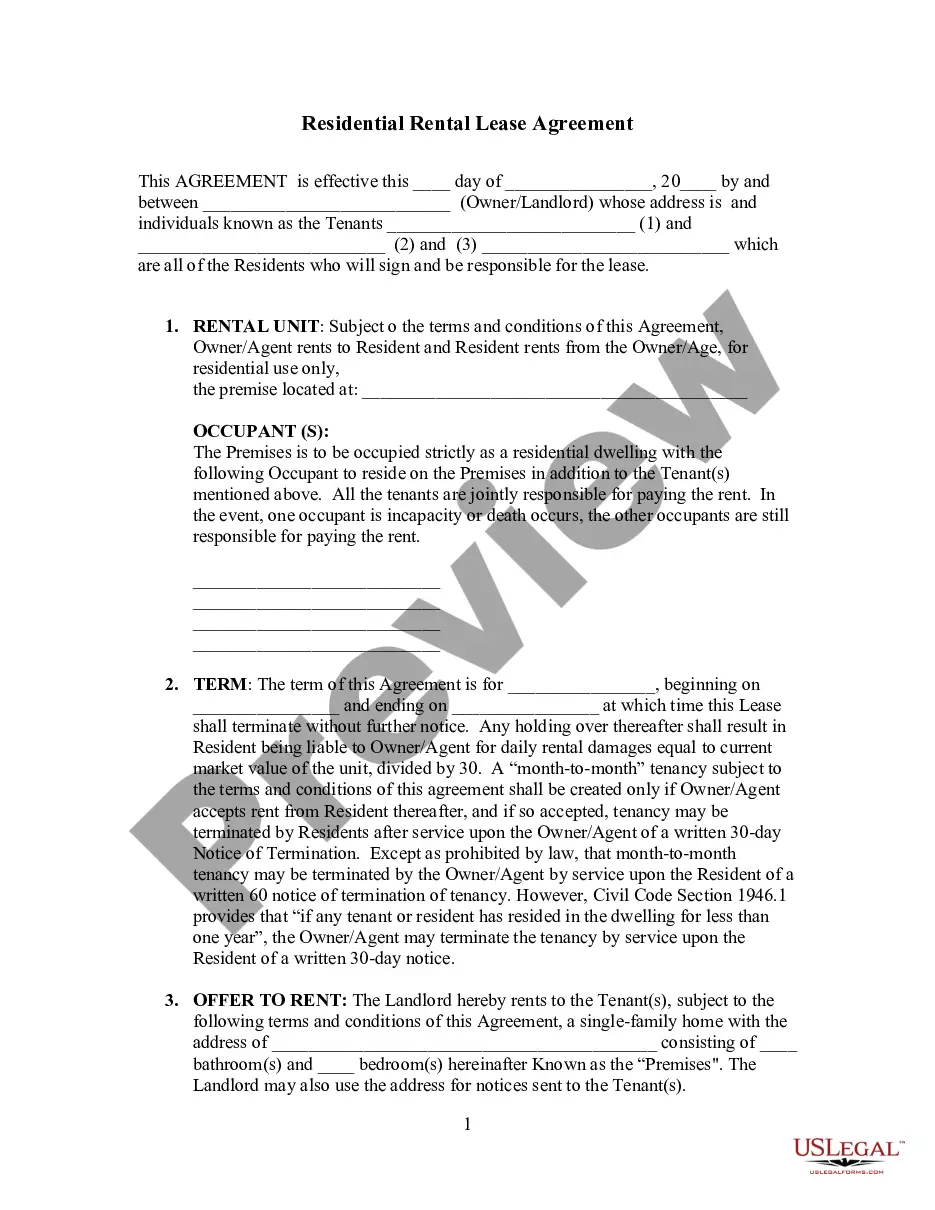
The Residential Lease Renewal Agreement is a legal document used to extend an existing lease for an additional term, potentially with modifications. This agreement ensures that both parties, the lessor and lessee, reaffirm their intentions to continue the rental arrangement under terms that comply with state law. It is important to note that this form is specifically tailored for residential or non-commercial leases, setting it apart from other lease documents that may have different purposes or legal requirements.
What’s included in this form
- Date the renewal agreement becomes effective.
- Identification of the lessor and lessee by name.
- Reference to the original lease agreement's date.
- Description of the property being leased.
- Signatures of both parties to validate the agreement.
Common use cases
This form should be used when the parties involved wish to renew an existing residential lease. It is particularly useful when either party wants to extend the lease duration, update certain lease terms, or ensure compliance with any new state laws that may affect the rental agreement. Utilizing this agreement can help avoid misunderstandings and maintain a clear record of the rental terms.
Who should use this form
- Landlords or property owners looking to extend lease agreements with tenants.
- Tenants who wish to continue living in their rented property after the original lease ends.
- Individuals involved in a residential rental arrangement seeking clarity and legal standing for the lease renewal.
Instructions for completing this form
- Identify the parties: Clearly fill in the names of the lessor and lessee.
- Specify the property: Insert the address of the rented property.
- Enter the original lease date: Include the date of the initial lease agreement.
- Indicate the effective renewal date: Write the date the renewal takes effect.
- Acquire signatures: Both the lessor and lessee should sign and date the agreement.
Does this form need to be notarized?
This form does not typically require notarization unless specified by local law. However, certain jurisdictions may have specific regulations, so it is advisable to verify local requirements before proceeding.
Get your form ready online
Our built-in tools help you complete, sign, share, and store your documents in one place.
Make edits, fill in missing information, and update formatting in US Legal Forms—just like you would in MS Word.
Download a copy, print it, send it by email, or mail it via USPS—whatever works best for your next step.
Sign and collect signatures with our SignNow integration. Send to multiple recipients, set reminders, and more. Go Premium to unlock E-Sign.
If this form requires notarization, complete it online through a secure video call—no need to meet a notary in person or wait for an appointment.
We protect your documents and personal data by following strict security and privacy standards.

Make edits, fill in missing information, and update formatting in US Legal Forms—just like you would in MS Word.

Download a copy, print it, send it by email, or mail it via USPS—whatever works best for your next step.

Sign and collect signatures with our SignNow integration. Send to multiple recipients, set reminders, and more. Go Premium to unlock E-Sign.

If this form requires notarization, complete it online through a secure video call—no need to meet a notary in person or wait for an appointment.

We protect your documents and personal data by following strict security and privacy standards.
Common mistakes
- Failing to include the original lease date.
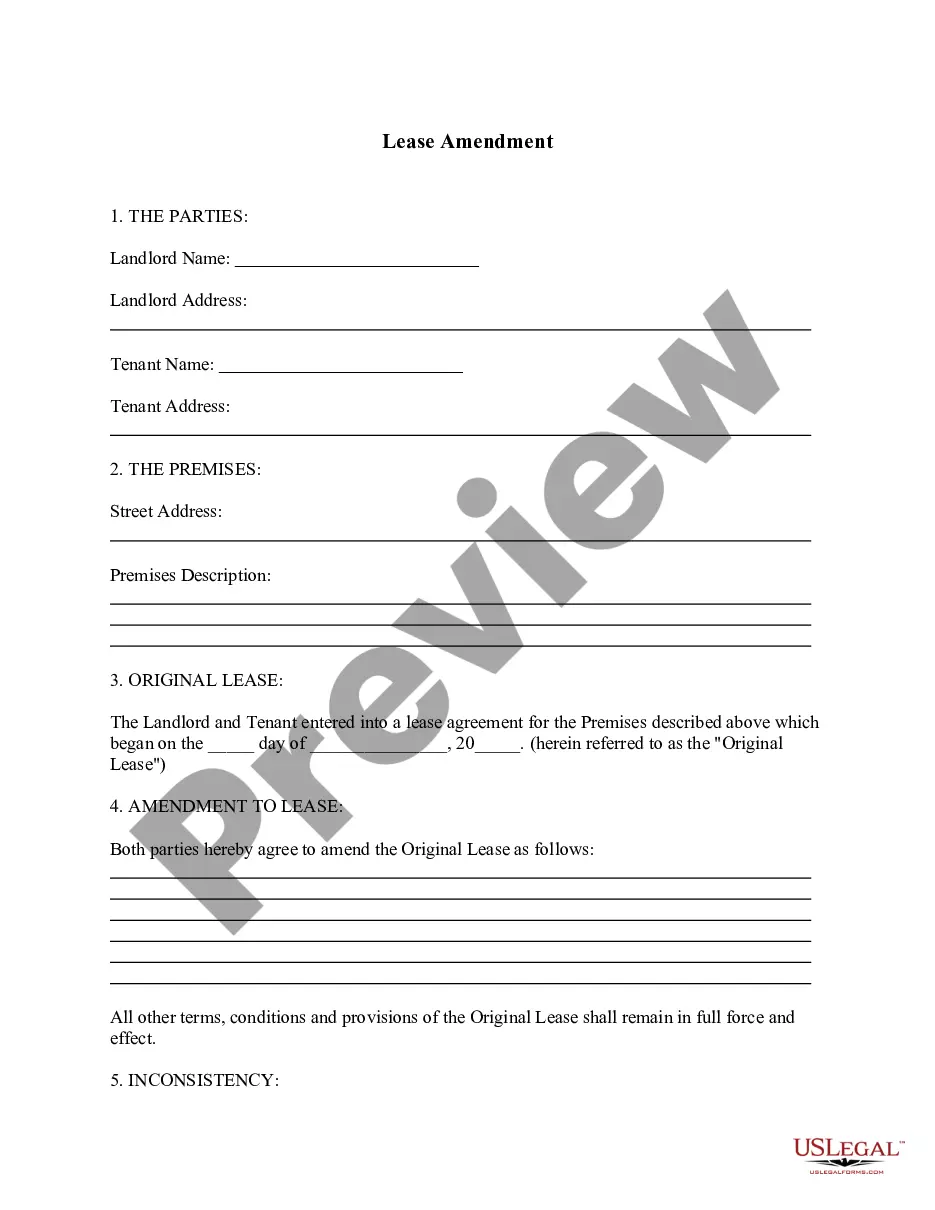
- Not specifying any changes to the original lease terms.
- Omitting signatures from either party.
- Using an outdated version of the form that does not comply with current state laws.
Benefits of using this form online
- Convenience: Easily download and print the form at your convenience.
- Editability: Customize the document to reflect specific lease terms and conditions.
- Reliability: Access legally vetted templates created by qualified attorneys.
Legal use & context
- The Residential Lease Renewal Agreement is legally binding once signed by both parties.
- Compliance with state laws is critical for enforceability.
- This form provides legal protection for both landlords and tenants during the renewal process.
What to keep in mind
- The Residential Lease Renewal Agreement allows the extension of a residential lease.
- It is essential for both lessor and lessee to understand their rights and obligations during the renewal process.
- Proper completion and adherence to state laws ensure the legality of the document.
Looking for another form?

Form popularity
FAQ
A lease extension refers to a legal agreement that extends the term of an existing lease or rental agreement. Extensions are not a requirement in a business relationship but are often granted just before an original agreement is set to expire.
Unless a new lease is entered into, all other terms of the original lease remain in effect. So for example, if your new lease is unsigned by the tenant but calls for a 1-year extension of the lease term, that extension would not be enforceable later if the tenant leaves the apartment after only three months.
By definition, a lease renewal is a new lease agreement, whereas a lease extension is a continuation of the original lease agreement. Generally speaking, the practical effect of either is that the parties to the lease continue the landlord-tenant relationship beyond the expiration of the original term of the lease.
By definition, a lease renewal is a new lease agreement, whereas a lease extension is a continuation of the original lease agreement. Generally speaking, the practical effect of either is that the parties to the lease continue the landlord-tenant relationship beyond the expiration of the original term of the lease.
Your name, current address and contact information. Date the lease extension request is submitted. Length of the lease extension, including the proposed end date. Reasons for extension. Date by which you need a decision, usually 10 days to two weeks.
You can: renew your lease for another term, agree to a month-to-month lease, or move out of your apartment (with proper notice) and find a new rental.
The names and contact information for the landlord and tenant. The address of the rental property and unit number, if applicable. A reference to (or copy of) the original lease. The renewal terms or any changes to the terms of the original lease.
Can a landlord renew your lease without your signature? NO! Your landlord cannot renew your lease agreement with out your signature. Both parties must sign the renewal lease or it is invalid.
Lease Renewal Agreements are used to extend a lease for another term. They offer the ability to renew the lease for the same length and to memorialize any changes to the lease, if needed.
Yes, a lease can automatically renew in California. If neither the tenant or the landlord give notice that they want to terminate the tenancy when the lease expires, the lease can be renewed.