Texas Letter from Landlord to Tenant for Failure to keep all plumbing fixtures in the dwelling unit as clean as their condition permits - Remedy or lease terminates
What this document covers
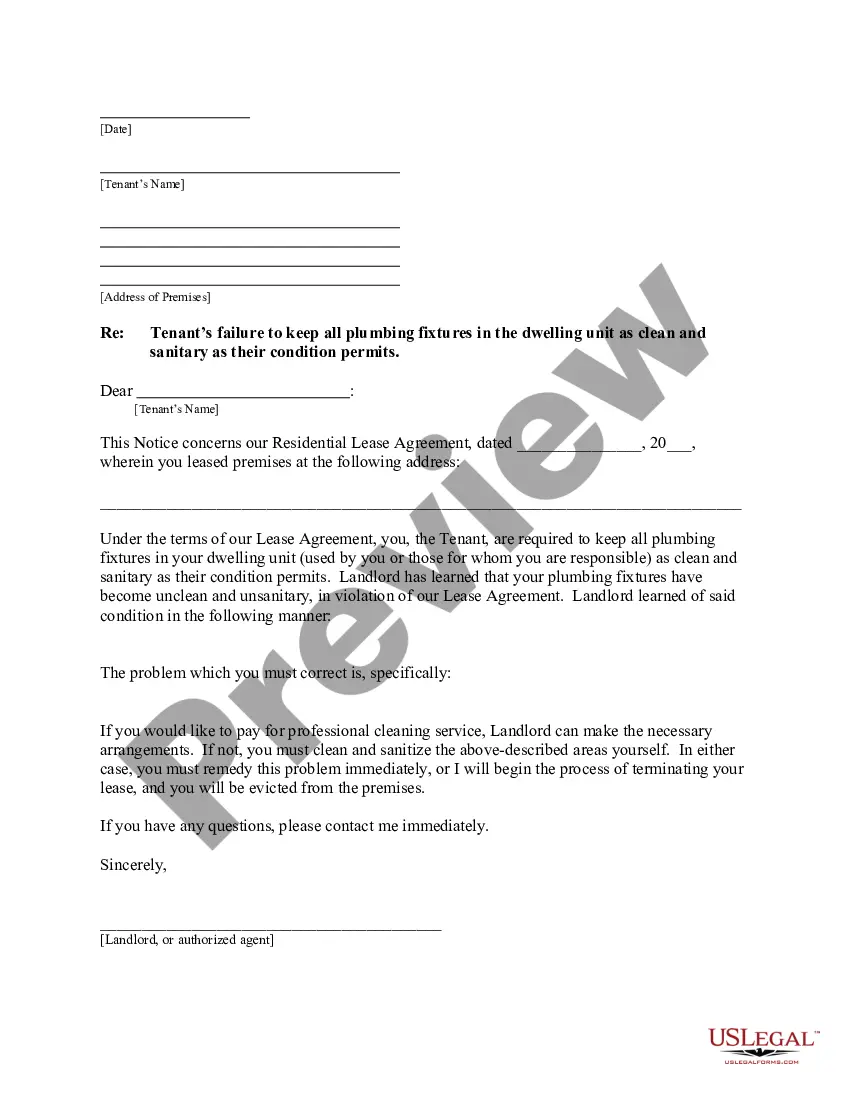
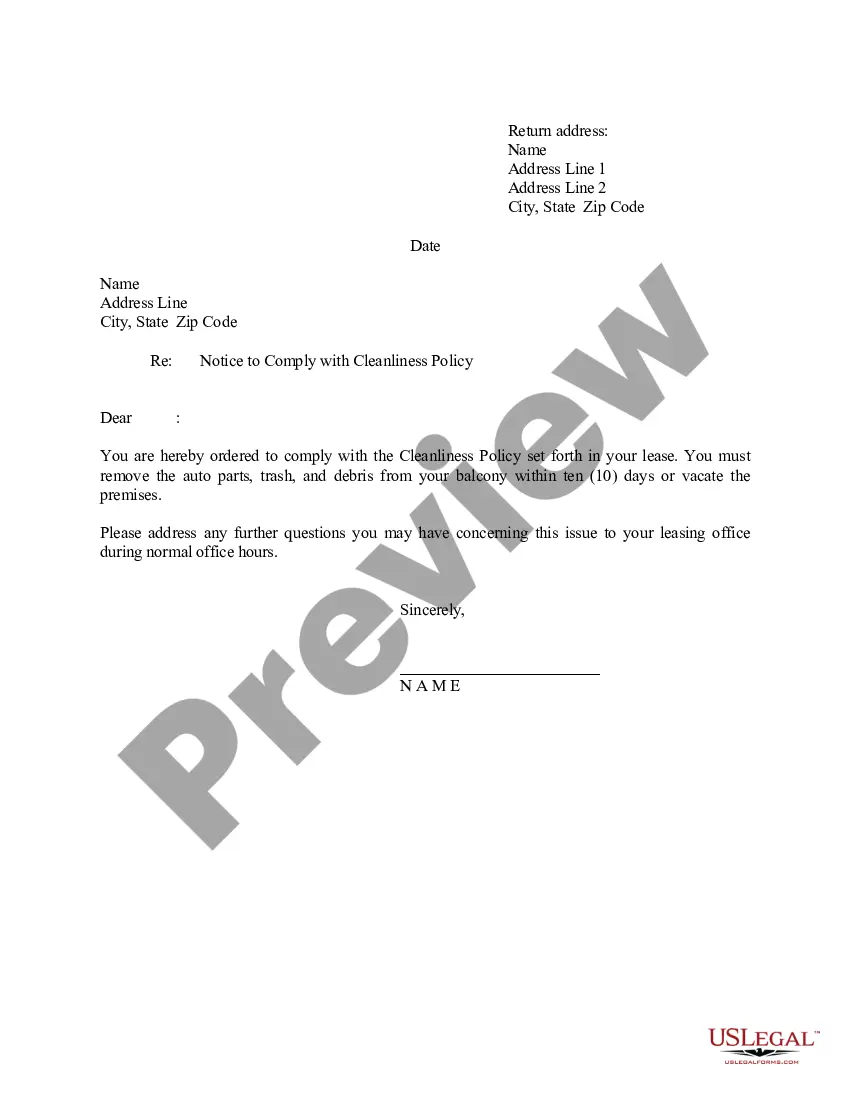
This form is a notice from the landlord to the tenant regarding the tenant's failure to maintain plumbing fixtures in the rental dwelling. The letter serves as a warning that if the tenant does not keep the plumbing in satisfactory condition, the landlord reserves the right to terminate the lease. This document is specifically tailored for situations where poor maintenance may lead to legal repercussions, distinguishing it from general tenant notices or other maintenance requests.
What’s included in this form
- Statement of the landlord's observations regarding plumbing conditions.
- Notice of tenantâs responsibilities under the lease agreement.
- Warning about lease termination due to continued failure to maintain plumbing.
- Landlord's contact information for further communication.
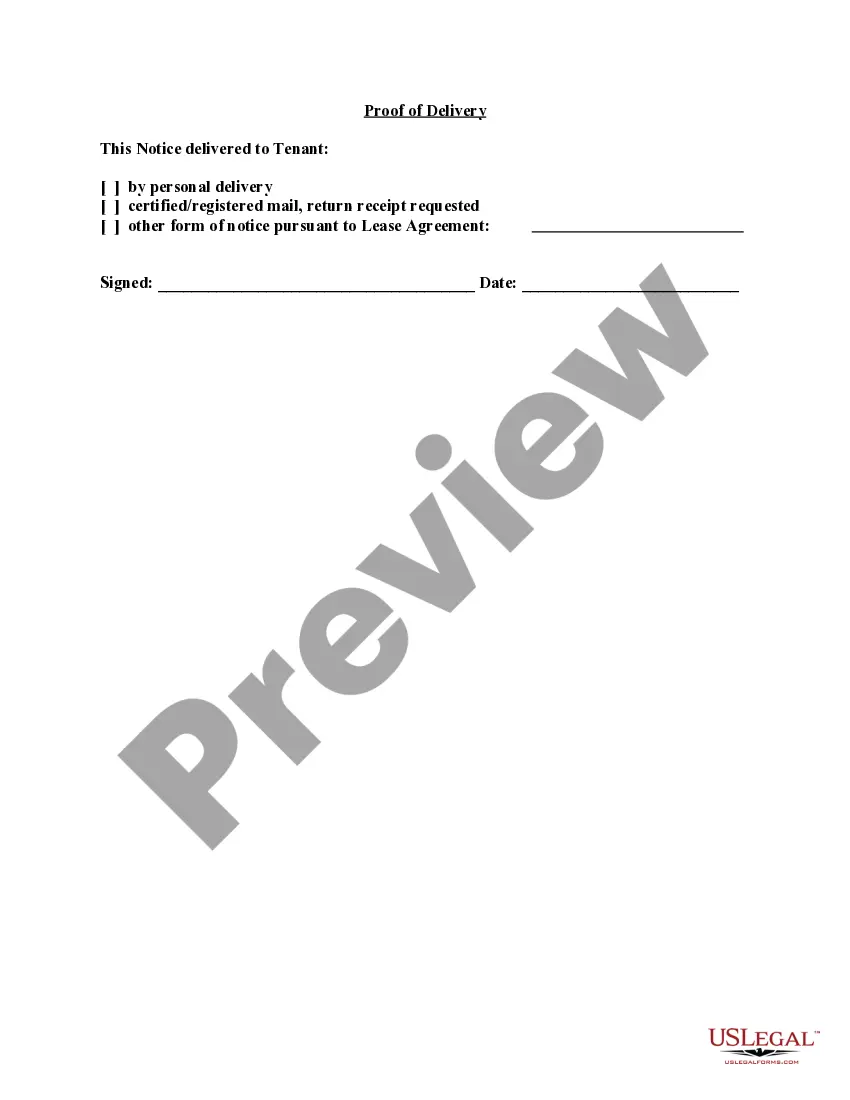
- Proof of delivery section for record-keeping purposes.



When to use this form
This form should be used when a landlord notices that plumbing fixtures have not been adequately maintained by the tenant. It is appropriate to issue this notice when the landlord has previously communicated maintenance issues and the tenant has not responded or made necessary repairs. This letter serves to formally document the issue and outlines potential consequences under the lease agreement.
Who can use this document
- Landlords seeking to notify tenants of maintenance violations.
- Property managers acting on behalf of landlords.
- Tenants who want to understand their responsibilities regarding plumbing maintenance as outlined in their lease.
Steps to complete this form
- Identify the parties involved: include the landlord's name and tenant's name.
- Describe the plumbing issues observed and the expected maintenance duties of the tenant.
- Clearly state the warning about the potential lease termination if conditions do not improve.
- Provide your contact information for the tenant to reach out with questions.
- Document the method of delivery to the tenant, ensuring compliance with local regulations.
Is notarization required?
This form does not typically require notarization unless specified by local law. Ensure you follow your stateâs regulations regarding notary requirements for landlord-tenant communications.
Get your form ready online
Our built-in tools help you complete, sign, share, and store your documents in one place.
Make edits, fill in missing information, and update formatting in US Legal Forms—just like you would in MS Word.
Download a copy, print it, send it by email, or mail it via USPS—whatever works best for your next step.
Sign and collect signatures with our SignNow integration. Send to multiple recipients, set reminders, and more. Go Premium to unlock E-Sign.
If this form requires notarization, complete it online through a secure video call—no need to meet a notary in person or wait for an appointment.
We protect your documents and personal data by following strict security and privacy standards.

Make edits, fill in missing information, and update formatting in US Legal Forms—just like you would in MS Word.

Download a copy, print it, send it by email, or mail it via USPS—whatever works best for your next step.

Sign and collect signatures with our SignNow integration. Send to multiple recipients, set reminders, and more. Go Premium to unlock E-Sign.

If this form requires notarization, complete it online through a secure video call—no need to meet a notary in person or wait for an appointment.

We protect your documents and personal data by following strict security and privacy standards.
Typical mistakes to avoid
- Failing to provide specific examples of the maintenance issues.
- Not including required contact information for follow-up.
- Using vague language that does not clearly communicate expectations.
- Neglecting to document how the notice is delivered to the tenant.
Benefits of completing this form online
- Convenience of accessing the form anytime, anywhere.
- Editable templates allow for personalization to meet specific needs.
- Assurance that the document is drafted in compliance with legal standards.
Legal use & context
- This notice is legally enforceable as long as it adheres to state and local regulations.
- It provides a formal means for landlords to document communication with tenants.
- Failure to provide such notice may limit the landlord's ability to terminate the lease.
What to keep in mind
- This form helps landlords communicate plumbing issues to tenants.
- It outlines the potential consequences of failing to maintain fixtures.
- Proper completion and delivery of this notice are crucial for legal compliance.
Looking for another form?

Form popularity
FAQ
When you rent, your landlord is responsible for maintaining the functional aspects of your home such as plumbing, electricity, and heating. Landlords must also generally take action when flooding, a clogged pipe, pest infestation, or other problems occur.
If there is a problem, such as a burst pipe resulting from the landlord's failure to maintain the property, the tenant cannot be held responsible. If a tenant has detected a problem and reported it to the landlord, it is the owner's responsibility to fix them.
In general, tenants do not have the right to withhold rent if the landlord does not carry out repairs. Doing so could jeopardise the tenant's right to remain in the accommodation. In certain circumstances, however, a tenant can pay for repairs and deduct the cost from future rent.
As stated in the Landlord and Tennant Act 1985, it is the landlord's responsibility to maintain their drainage, pipes and other areas of plumbing. If a drain becomes blocked through tenant misuse however, then the tenant is liable for the cost of repairs.
If the landlord won't make repairs needed to protect your health, safety, or security, and you follow the procedures required by law, you may be entitled to: End the lease; Have the problem repaired and deduct the cost of the repair from your rent; or. File suit to force the landlord to make the repairs.
You can submit a complaint online, or you can call their office at (512) 463-2642 or toll-free (Texas only) at (888) 452-4778.
Tenant Rights to Withhold Rent in Texas Tenants may withhold rent or exercise the right to repair and deduct if a landlord fails to take care of important repairs, such as a broken heater.
The NSW tenant factsheet states that urgent repairs, including blocked toilets, are the responsibility of the landlord. When urgent repairs are required, the tenant must notify the landlord as soon as possible - preferably in writing.