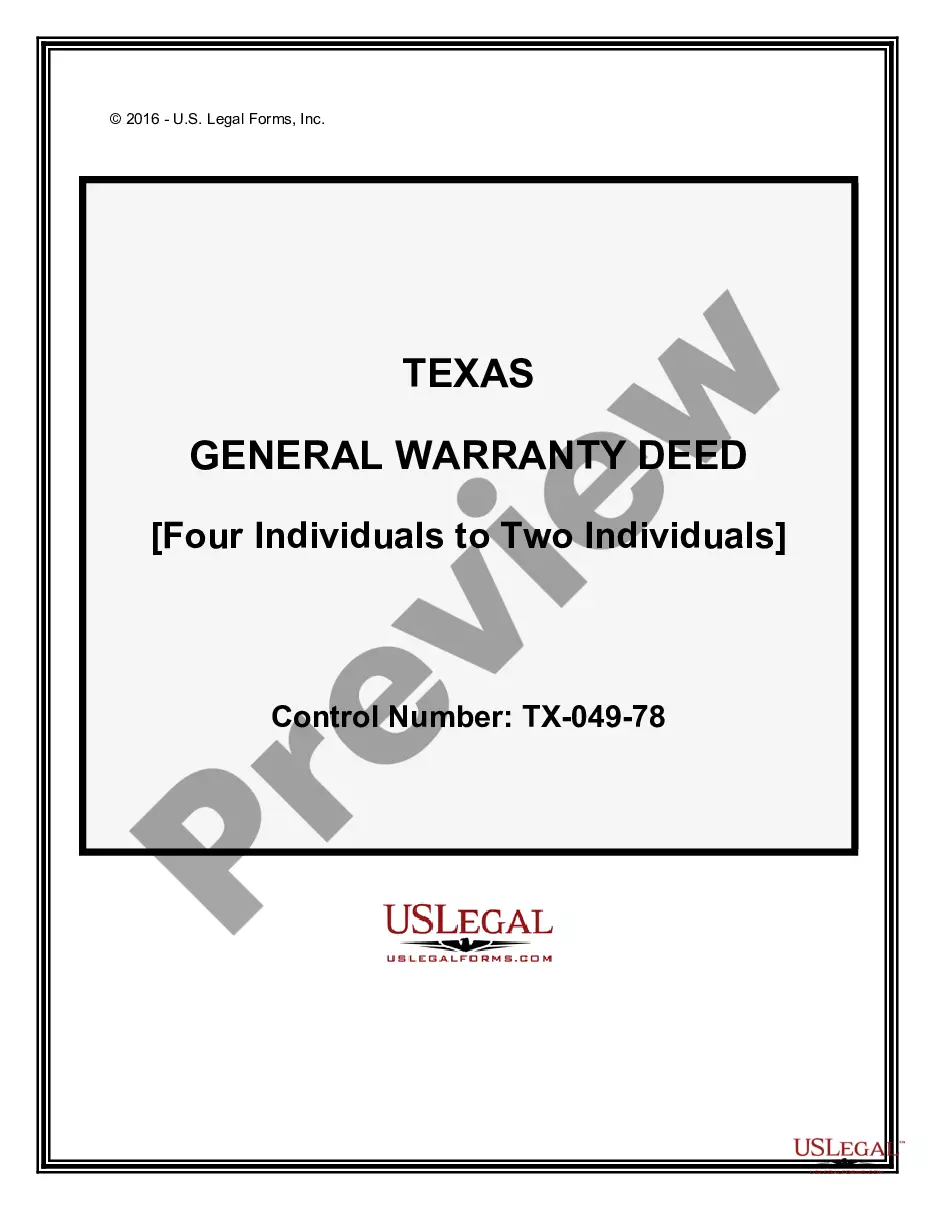
Texas General Warranty Deed - Four Individuals to Two Individuals
What this document covers
The General Warranty Deed is a legal document that transfers property from four individuals (the Grantors) to two individuals (the Grantees). This deed provides a guarantee that the Grantors hold clear title to the property, ensuring that no other parties have claims against it. This specific type of deed allows Grantees to take ownership as either tenants in common or joint tenants with the right of survivorship, making it distinct from other forms of property transfer, such as quitclaim deeds, which do not provide such warranties.
What’s included in this form
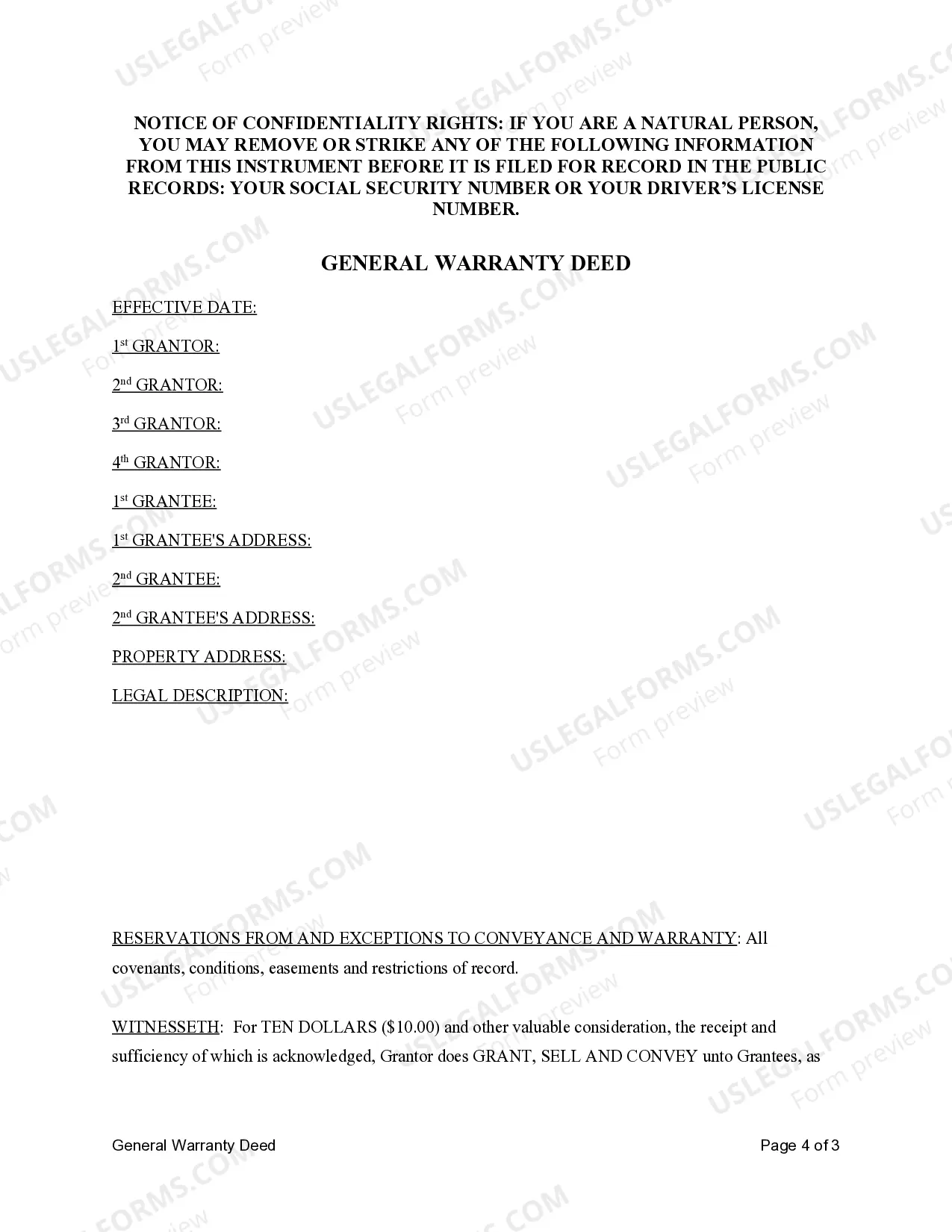
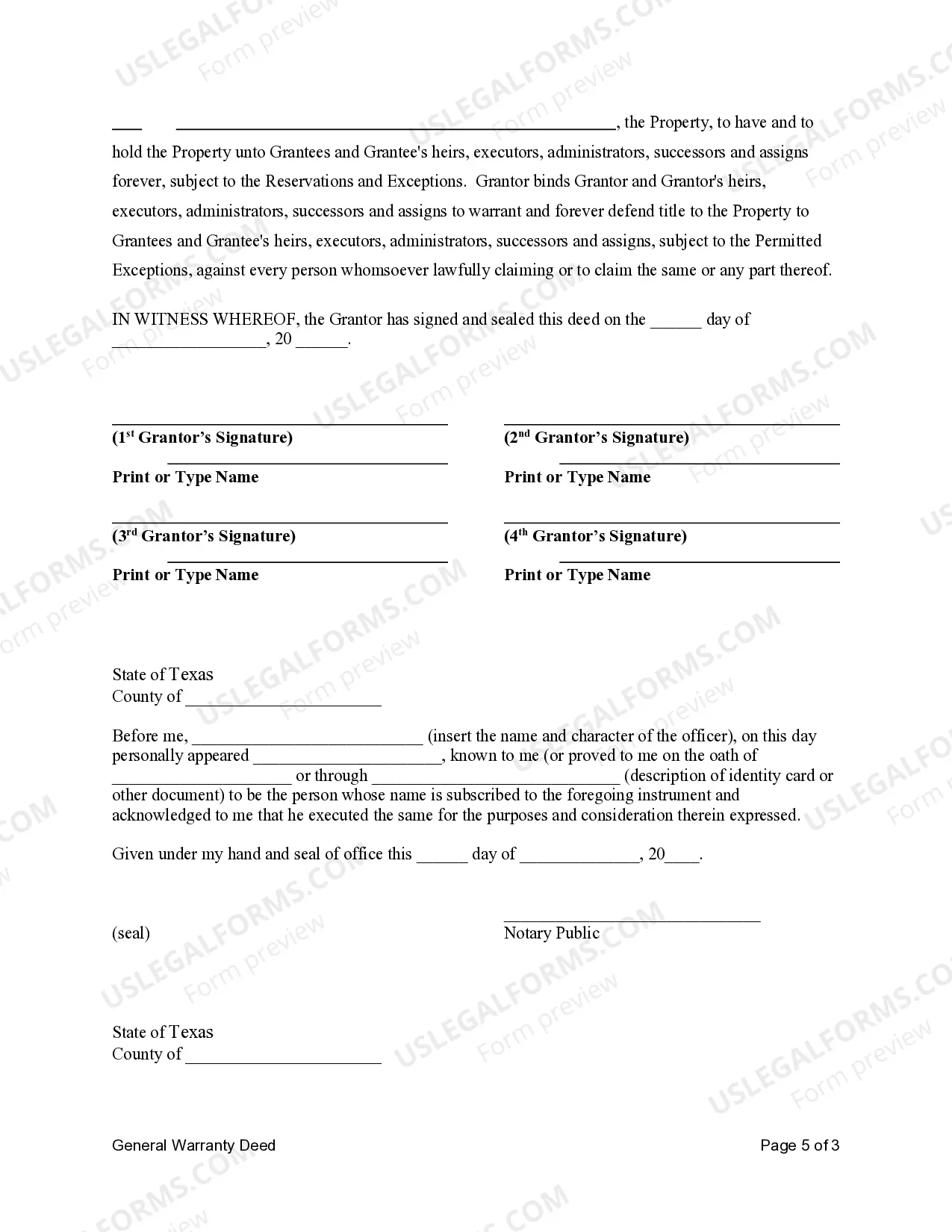
- Identification of Grantors and Grantees: Clearly names the four individuals transferring ownership and the two receiving it.
- Legal description of the property: Provides specific details about the property being transferred.
- Warranties of title: Guarantees that the Grantors have the legal right to transfer the property.
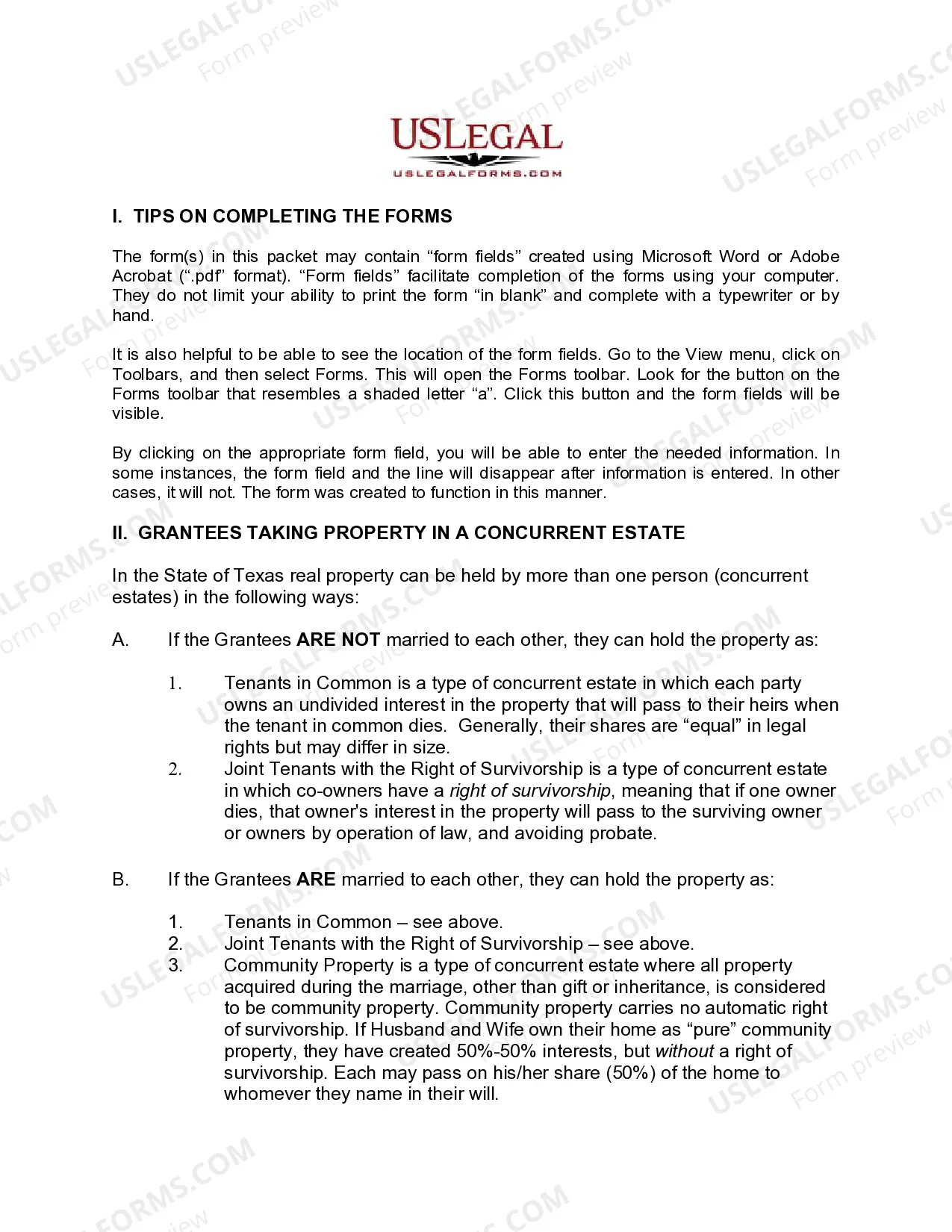
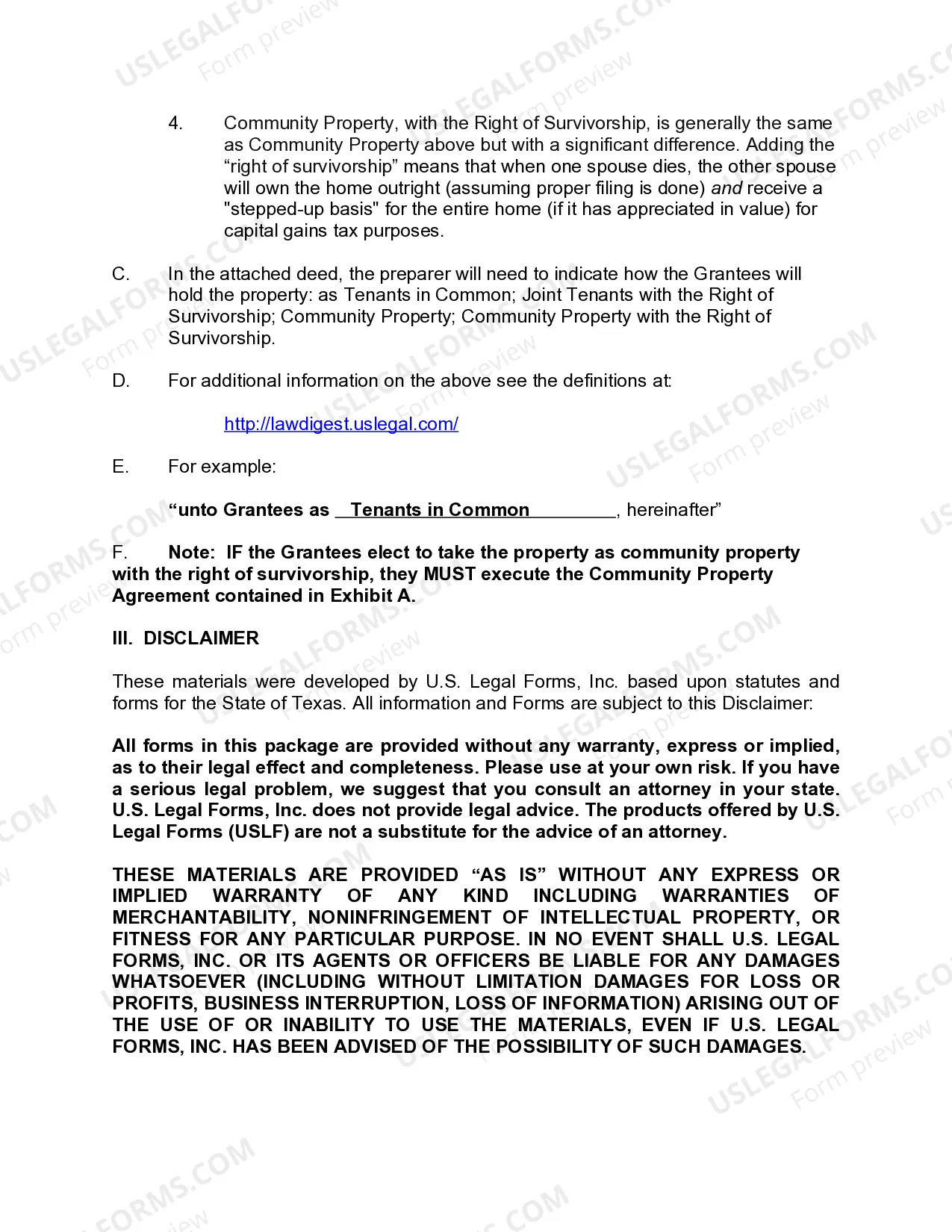
- Property ownership structure: Outlines how the Grantees will hold the property (e.g., tenants in common or joint tenants with the right of survivorship).
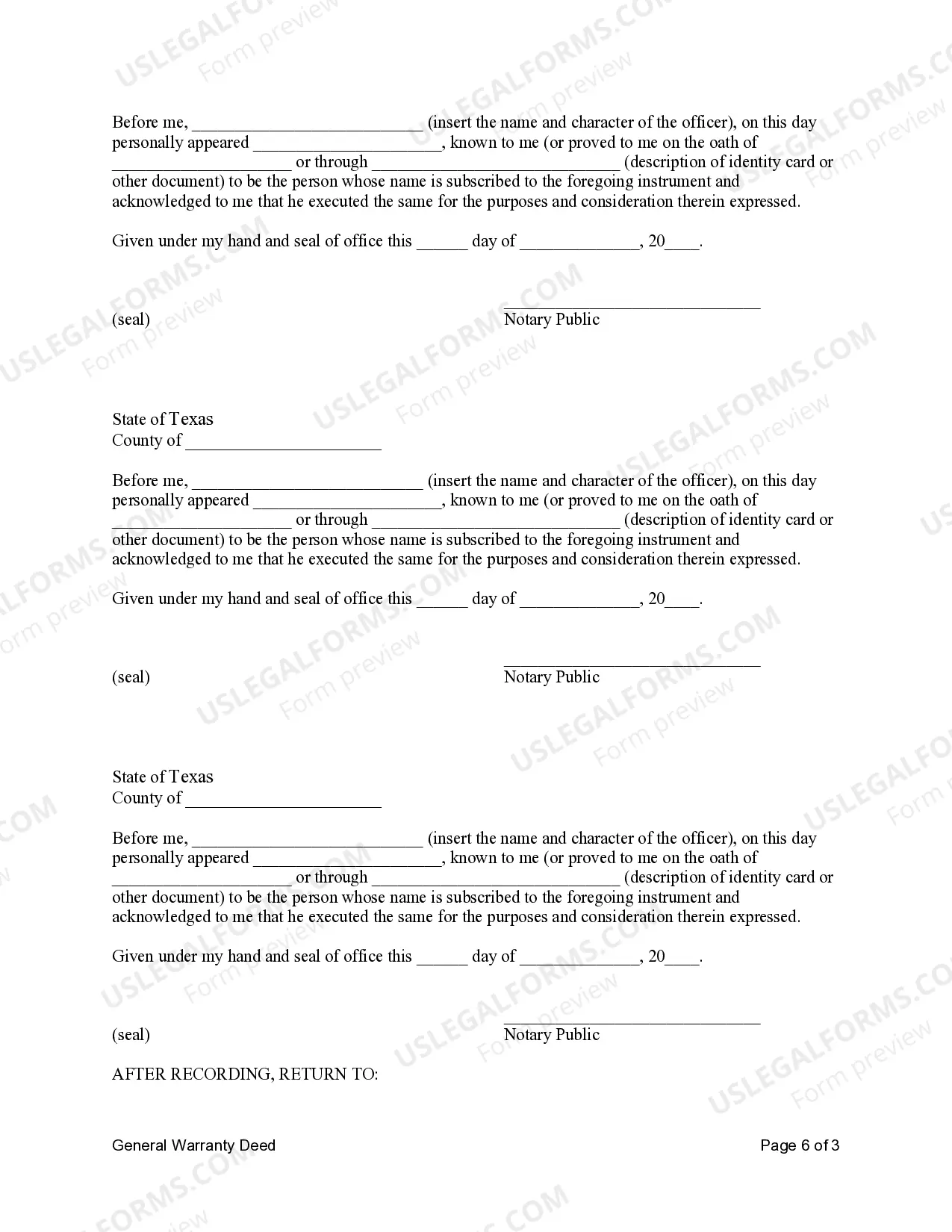
- Signatures: Requires signatures of all Grantors to validate the deed.






When to use this document
This form is necessary when four individuals wish to convey property to two recipients. It is commonly used in real estate transactions involving partnered ownership, such as family members or business partners wanting to clearly outline their ownership rights and responsibilities regarding a shared property. It is particularly useful when establishing long-term property arrangements that include rights of survivorship.
Who needs this form
This form is intended for:
- Individuals looking to transfer property ownership between four Grantors and two Grantees.
- Co-owners who want to create a clear legal designation of property rights and responsibilities.
- Parties interested in ensuring legal protection against future claims on the property.
Instructions for completing this form
- Identify the parties: Enter the full names of the four Grantors and two Grantees.
- Specify the property: Provide a legal description of the property being transferred.
- Indicate ownership type: Choose between tenants in common or joint tenants with the right of survivorship for the Grantees.
- Complete the document: Fill out all required fields carefully using a computer or by hand.
- Obtain signatures: Ensure all Grantors sign the deed to validate the transfer.
Is notarization required?
This form does not typically require notarization unless specified by local law. However, it is recommended to consider notarization to further validate the document and enhance its legal standing.
Get your form ready online
Our built-in tools help you complete, sign, share, and store your documents in one place.
Make edits, fill in missing information, and update formatting in US Legal Forms—just like you would in MS Word.
Download a copy, print it, send it by email, or mail it via USPS—whatever works best for your next step.
Sign and collect signatures with our SignNow integration. Send to multiple recipients, set reminders, and more. Go Premium to unlock E-Sign.
If this form requires notarization, complete it online through a secure video call—no need to meet a notary in person or wait for an appointment.
We protect your documents and personal data by following strict security and privacy standards.

Make edits, fill in missing information, and update formatting in US Legal Forms—just like you would in MS Word.

Download a copy, print it, send it by email, or mail it via USPS—whatever works best for your next step.

Sign and collect signatures with our SignNow integration. Send to multiple recipients, set reminders, and more. Go Premium to unlock E-Sign.

If this form requires notarization, complete it online through a secure video call—no need to meet a notary in person or wait for an appointment.

We protect your documents and personal data by following strict security and privacy standards.
Avoid these common issues
- Failing to provide accurate legal descriptions of the property.
- Not indicating the ownership type correctly, which could affect rights after death.
- Overlooking the need for all Grantors to sign the deed.
Benefits of completing this form online
- Convenient access: Download the form anytime and complete it at your convenience.
- Editability: Easily fill in the required information using your computer.
- Compliance: The form is drafted by legal professionals, ensuring adherence to state laws.
Legal use & context
- Establishes clear ownership rights, reducing disputes about property claims.
- Provides full warranties of title, granting extra protection to Grantees.
- Can aid in the future transfer of property by establishing a clear record of ownership.
What to keep in mind
- The General Warranty Deed effectively transfers property from four individuals to two, ensuring legal security in ownership.
- Proper completion of the form requires careful attention to details such as property description and ownership type.
- Using this form online offers convenience and ensures compliance with state regulations.
Legal terms and meanings
- Grantor: The individual or entity transferring property ownership.
- Grantee: The individual or entity receiving property ownership.
- Tenants in Common: A form of property ownership where each owner holds an individual share, passing it to their heirs.
- Joint Tenants with Right of Survivorship: A form of co-ownership where surviving owners automatically receive the deceased owner's share.
Looking for another form?

Form popularity
FAQ
To make the form legally binding, you must sign it in front of a notary public. You must then file your signed and notarized deed with the county office that's in charge of recording property documents. Once the grantee signs the warranty deed, he/she legally has ownership and claim to the property.
If you've recently married and already own a home or other real estate, you may want to add your new spouse to the deed for your property so the two of you own it jointly. To add a spouse to a deed, all you have to do is literally fill out, sign and record a new deed in your county recorder's office.
The Texas General Warranty Deed is a form that transfers real estate ownership in the clearest possible manner promising the new owner that there are no title defects such as liens or encumbrances.
Write the county where the property is located on line provided next to the words "County of" beneath the words "The State of Texas." Write the name and address of the grantor on the lines provided after the words "Know all men by these presents, That I."
Adding someone to your house deed requires the filing of a legal form known as a quitclaim deed. When executed and notarized, the quitclaim deed legally overrides the current deed to your home. By filing the quitclaim deed, you can add someone to the title of your home, in effect transferring a share of ownership.
In Texas, you can't add your spouse's name to an existing deed, but you can create a new deed by transferring the property from yourself to you and your spouse jointly. You can do this by using either a deed without warranty or a quit claim deed.
Adding someone to your house deed requires the filing of a legal form known as a quitclaim deed. When executed and notarized, the quitclaim deed legally overrides the current deed to your home. By filing the quitclaim deed, you can add someone to the title of your home, in effect transferring a share of ownership.
In Texas, you can't add your spouse's name to an existing deed, but you can create a new deed by transferring the property from yourself to you and your spouse jointly. You can do this by using either a deed without warranty or a quit claim deed.
The name and address of the seller (called the grantor) The name and address of the buyer (called the grantee) A legal description of the property (found on the previous deed) A statement that the grantor is transferring the property to the grantee.