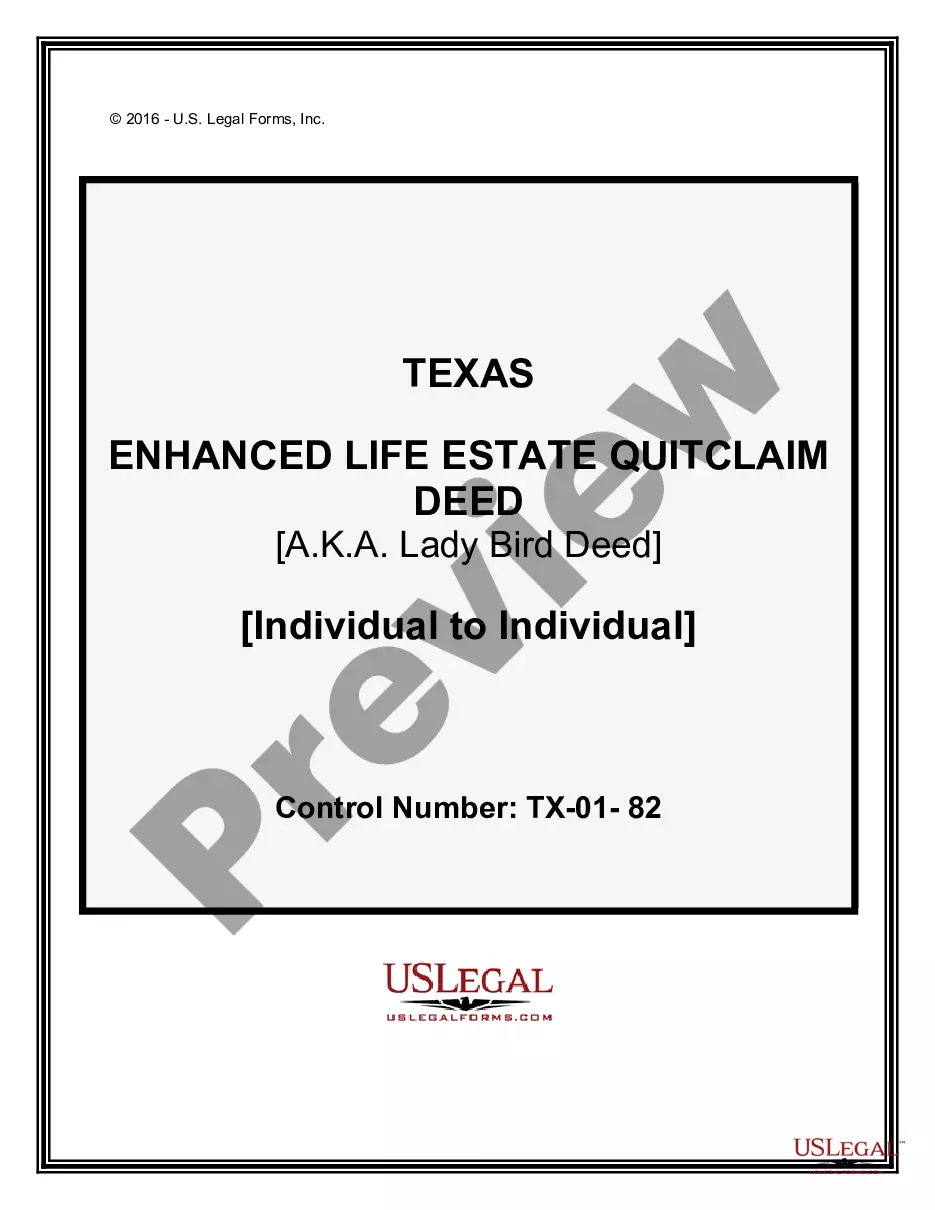
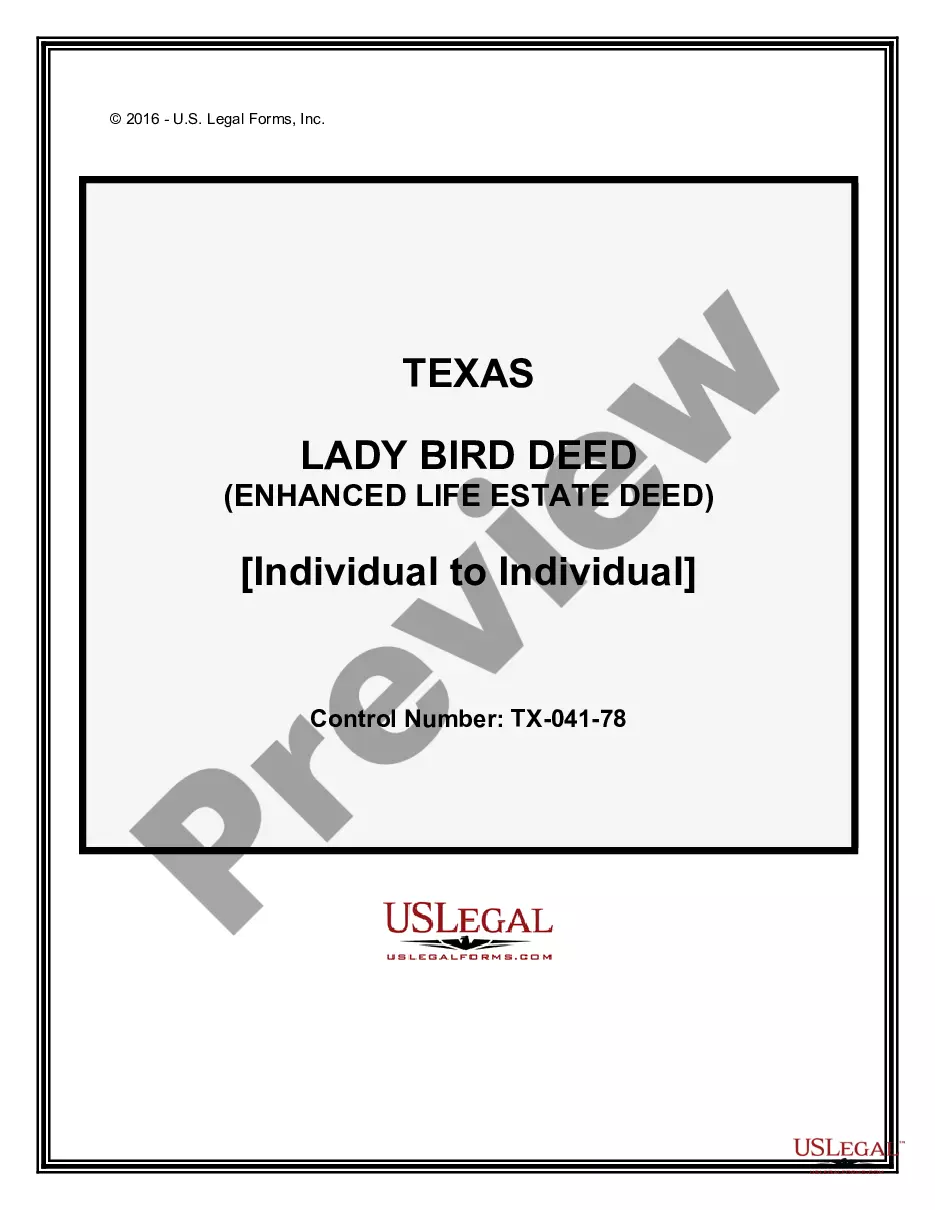
Texas Enhanced Life Estate or Lady Bird Quitclaim Deed - Individual to Individual

Overview of this form
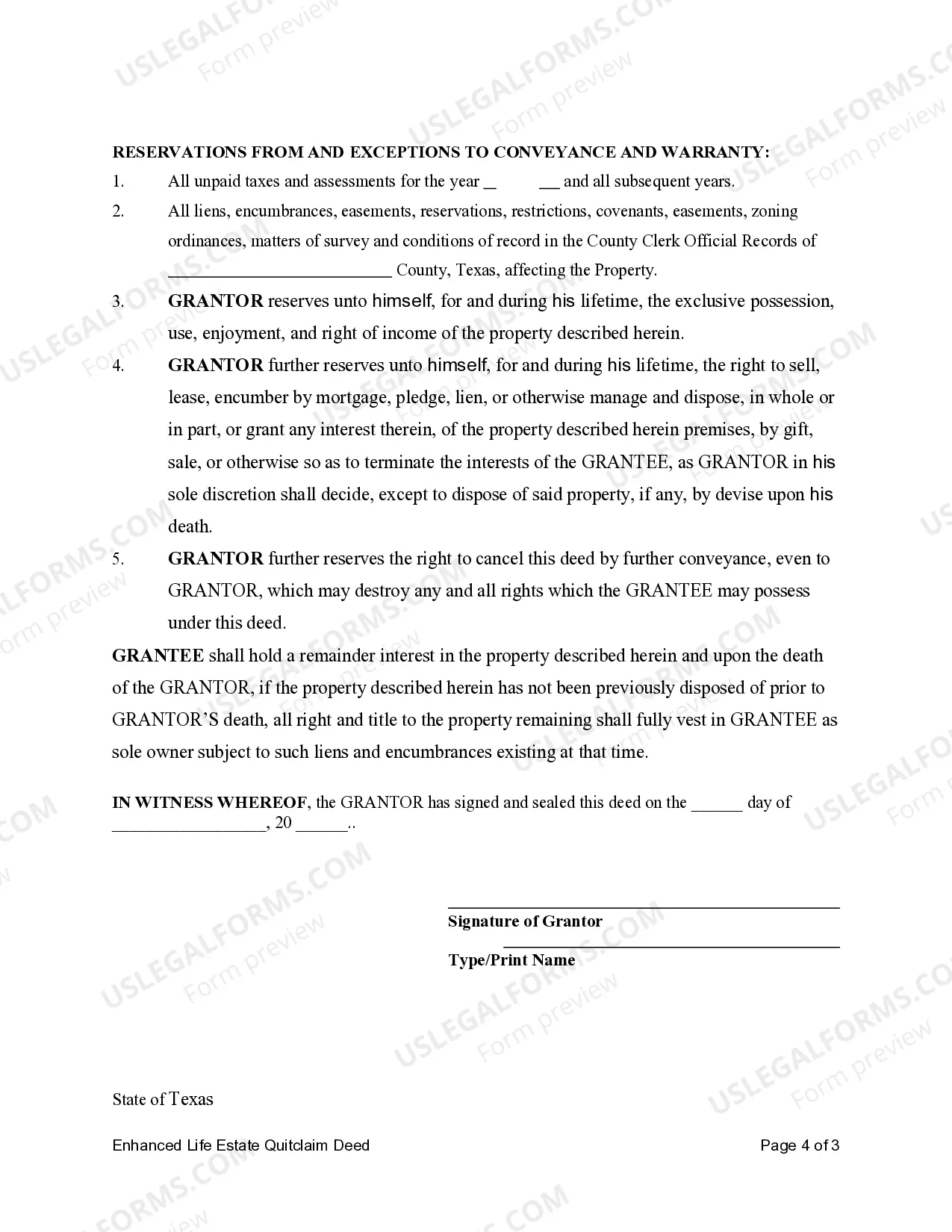
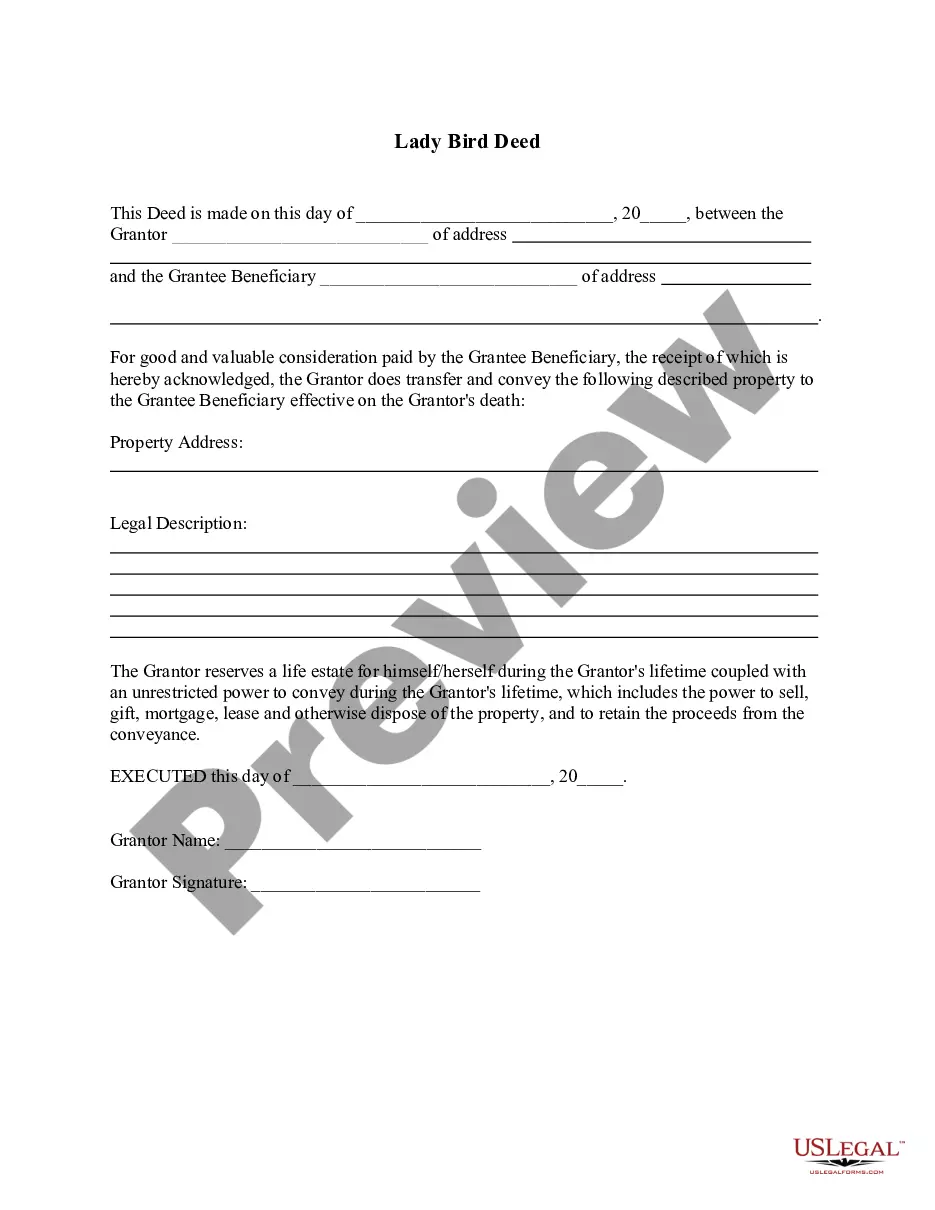
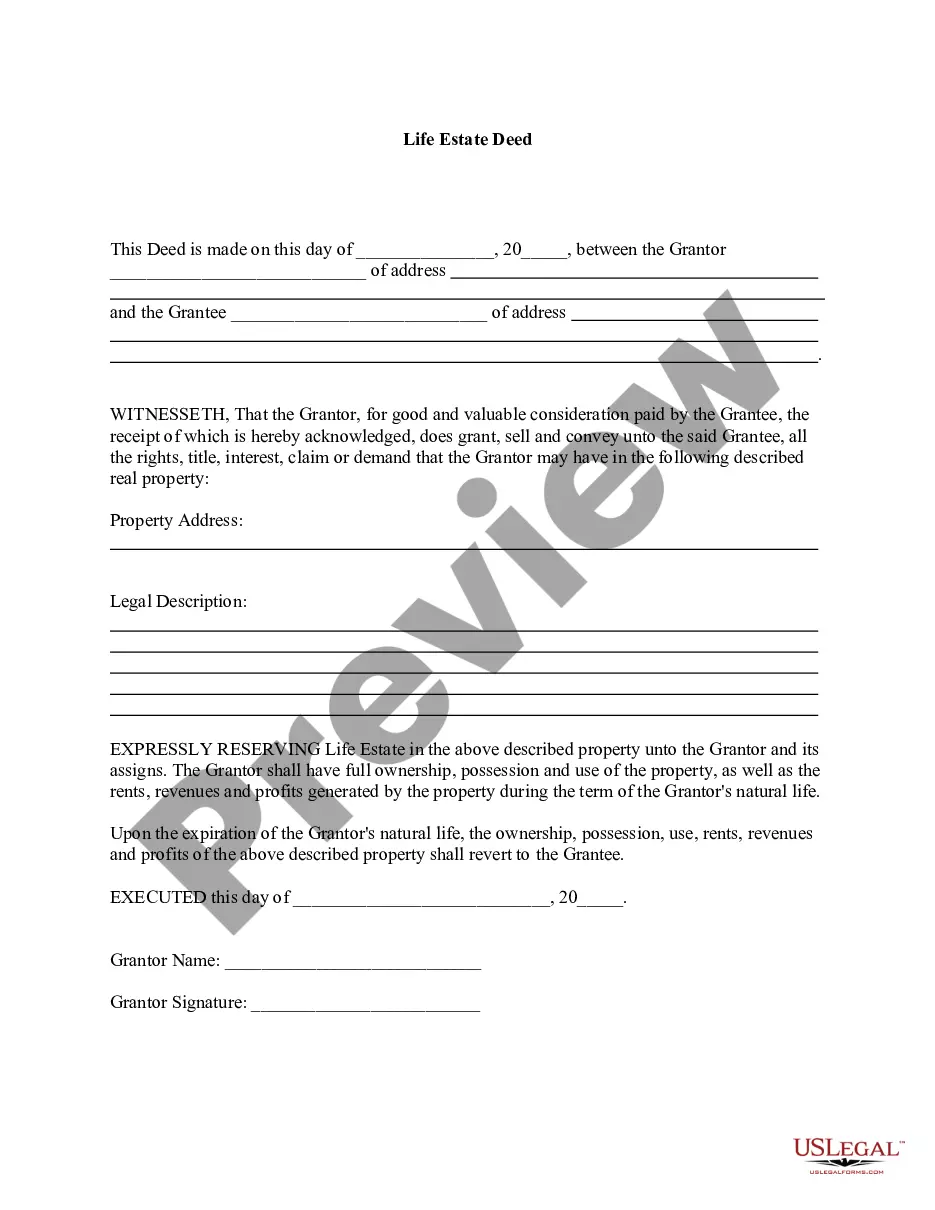
The Enhanced Life Estate or Lady Bird Quitclaim Deed is a legal document that allows an individual (the Grantor) to transfer property to another individual (the Grantee) while retaining certain rights to the property during the Grantorâs lifetime. It is commonly referred to as a Lady Bird Deed. Unlike traditional quitclaim deeds, this form permits the Grantor to manage the property, including selling or altering it, without needing consent from the Grantee. This deed is particularly useful for estate planning, as it allows for a seamless transfer of property upon the Grantor's death without going through probate.
Form components explained
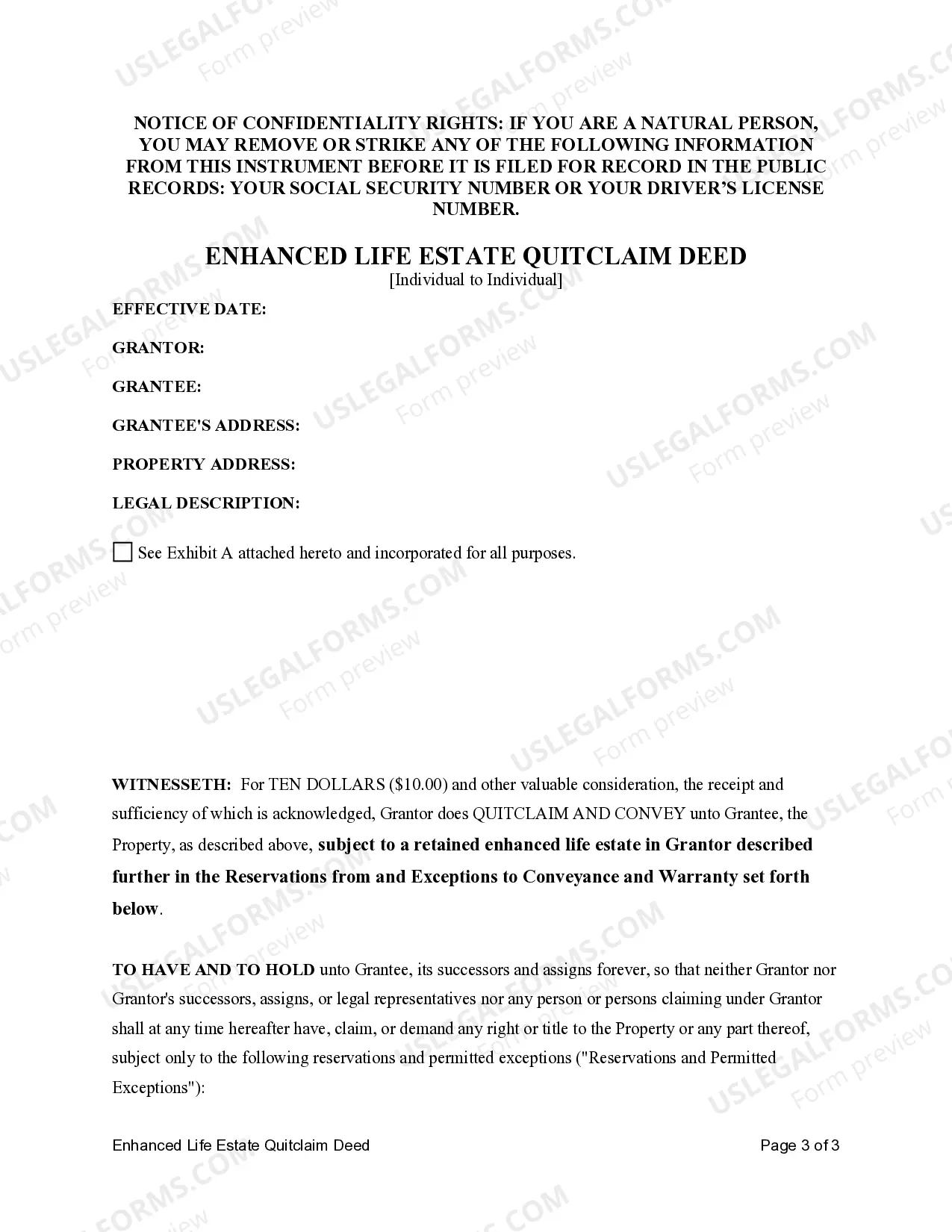
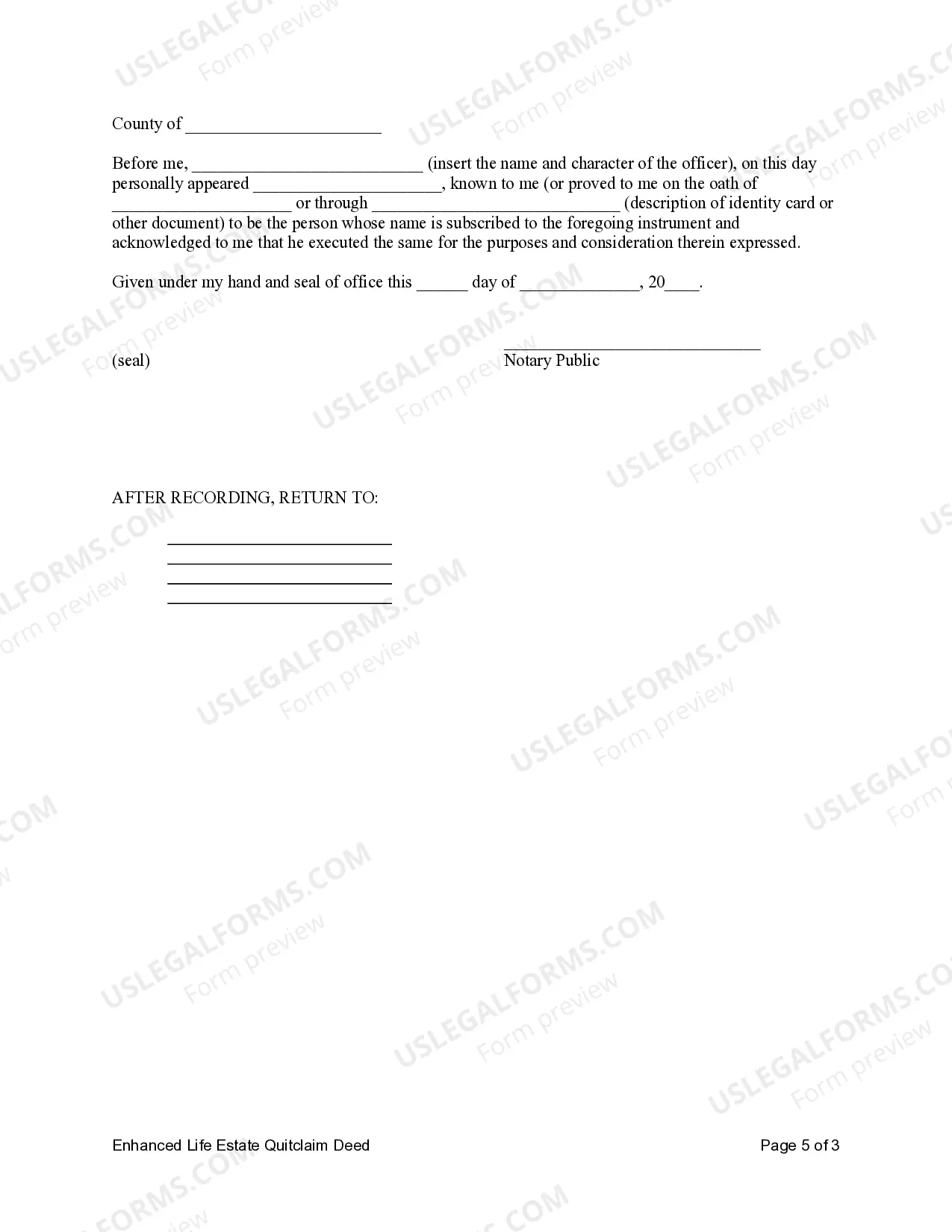
- Identification of the Grantor and Grantee
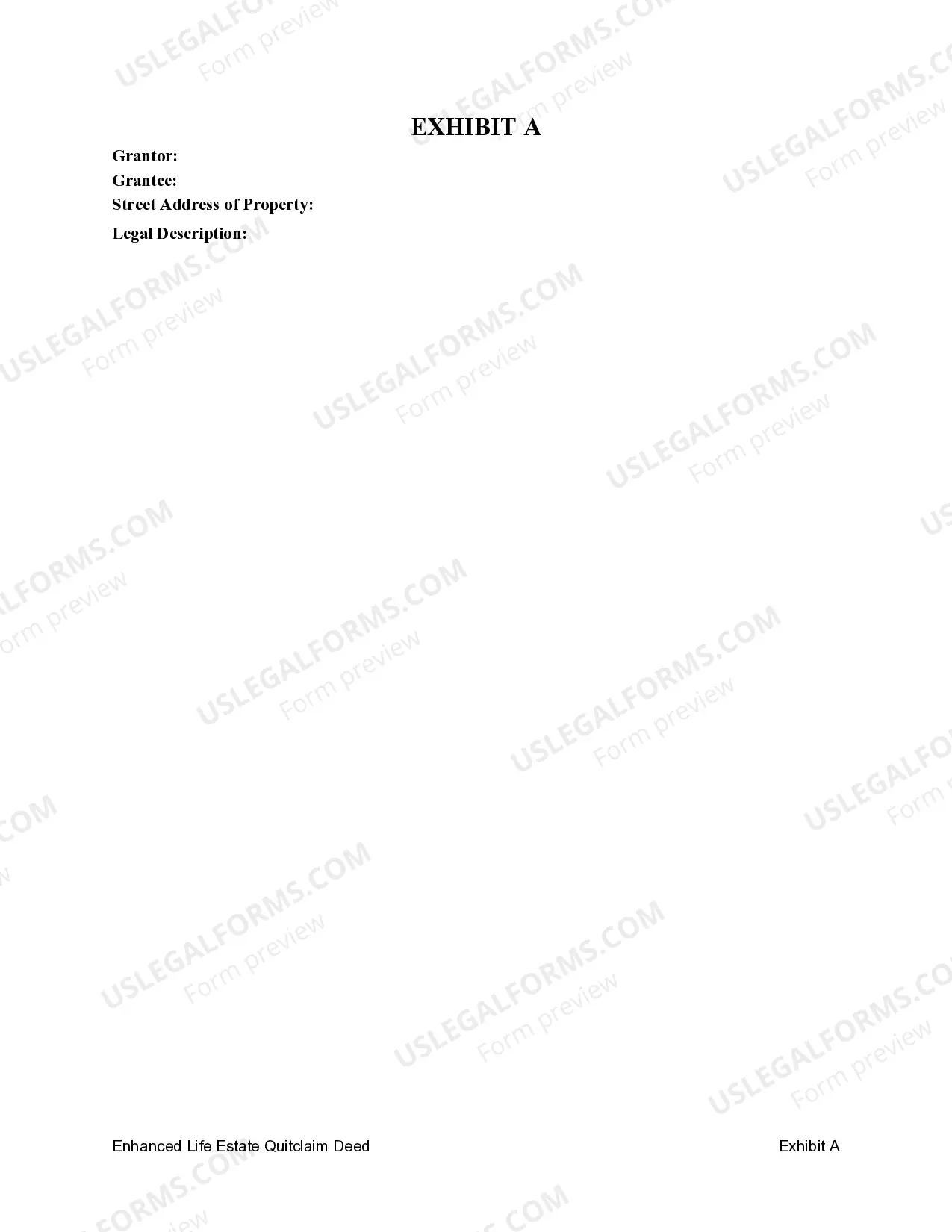
- Description of the property being transferred
- Retention of enhanced life estate rights by the Grantor
- Terms regarding the management and transfer of property rights
- Signature line for the Grantor

When to use this document
This form is commonly used in situations where an individual wishes to transfer property to a family member or friend while retaining the right to live on the property or manage it during their lifetime. It is ideal for those wanting to simplify the inheritance process by allowing the property to pass directly to the Grantee without the complexities of probate.
Who should use this form
- Homeowners looking to transfer property to a family member while retaining lifetime rights.
- Individuals planning their estate to avoid probate for property transfers.
- Persons needing a legal way to convey property with flexible management rights.
Instructions for completing this form
- Identify the parties involved by filling in the names of the Grantor and Grantee.
- Provide a detailed description of the property being transferred.
- Specify the rights retained by the Grantor, including the ability to manage or sell the property.
- Enter the date of the agreement and get the Grantor's signature to finalize the deed.
Does this document require notarization?
This form does not typically require notarization unless specified by local law. However, verifying local regulations is advisable to ensure compliance.
Get your form ready online
Our built-in tools help you complete, sign, share, and store your documents in one place.
Make edits, fill in missing information, and update formatting in US Legal Forms—just like you would in MS Word.
Download a copy, print it, send it by email, or mail it via USPS—whatever works best for your next step.
Sign and collect signatures with our SignNow integration. Send to multiple recipients, set reminders, and more. Go Premium to unlock E-Sign.
If this form requires notarization, complete it online through a secure video call—no need to meet a notary in person or wait for an appointment.
We protect your documents and personal data by following strict security and privacy standards.

Make edits, fill in missing information, and update formatting in US Legal Forms—just like you would in MS Word.

Download a copy, print it, send it by email, or mail it via USPS—whatever works best for your next step.

Sign and collect signatures with our SignNow integration. Send to multiple recipients, set reminders, and more. Go Premium to unlock E-Sign.

If this form requires notarization, complete it online through a secure video call—no need to meet a notary in person or wait for an appointment.

We protect your documents and personal data by following strict security and privacy standards.
Common mistakes to avoid
- Failing to complete all necessary fields accurately.
- Not including a complete and proper description of the property.
- Overlooking the requirement for the Grantor's signature.
Benefits of completing this form online
- Convenient access to legal forms from anywhere with an internet connection.
- Edit and customize forms easily to fit specific needs.
- Forms are crafted by licensed attorneys, ensuring accuracy and compliance with state laws.
What to keep in mind
- The Enhanced Life Estate or Lady Bird Quitclaim Deed allows property transfer while retaining control during the Grantor's lifetime.
- The form is particularly useful for Texas residents engaged in estate planning.
- Attention to detail is essential when completing the form to avoid legal complications.
Looking for another form?
Form popularity
FAQ
A lady bird deed is an estate planning tool that enables a Medicaid beneficiary to protect their home as an inheritance from their state's Medicaid Estate Recovery Program. A lady bird (ladybird) deed (also called an enhanced life estate deed, lady bird trust or a transfer on death deed) is a type of life estate deed.
This right to rescind is what distinguishes a Lady Bird Deed from a standard Life Estate Deed.A properly written, signed and filed Enhanced Life Estate Deed does supersede the terms of the owner's Will, so long as the grantor has not exercised the retained right to reclaim ownership while living.
They are both quit claim deeds. A lady bird deed is more flexible and is advised in most circumstances.
A Lady Bird deed avoids probate, so the home is not part of the probate estate and Medicaid cannot go after it.
While you can draft a Ladybird Deed on your own, it is always best to have something like this done by an experienced attorney. These are documents that need to be done correctly, or it can create additional issues for your loved ones.
Quitclaim deeds are most often used to transfer property between family members. Examples include when an owner gets married and wants to add a spouse's name to the title or deed, or when the owners get divorced and one spouse's name is removed from the title or deed.
Warranties.A ladybird deed may transfer title with warranties in the deed whereby the grantor warrants that he has full ownership of the property at the time of the conveyance. Quitclaim language, however, could also be used in a ladybird deed, with the seller deeding whatever interest he has to pass at his death.
Avoid probate of the property. keep the right to use and profit from the property for your lifetime. keep the right to sell the property at any time. avoid making a gift that might be subject to federal gift tax. avoid jeopardizing your eligibility for Medicaid.