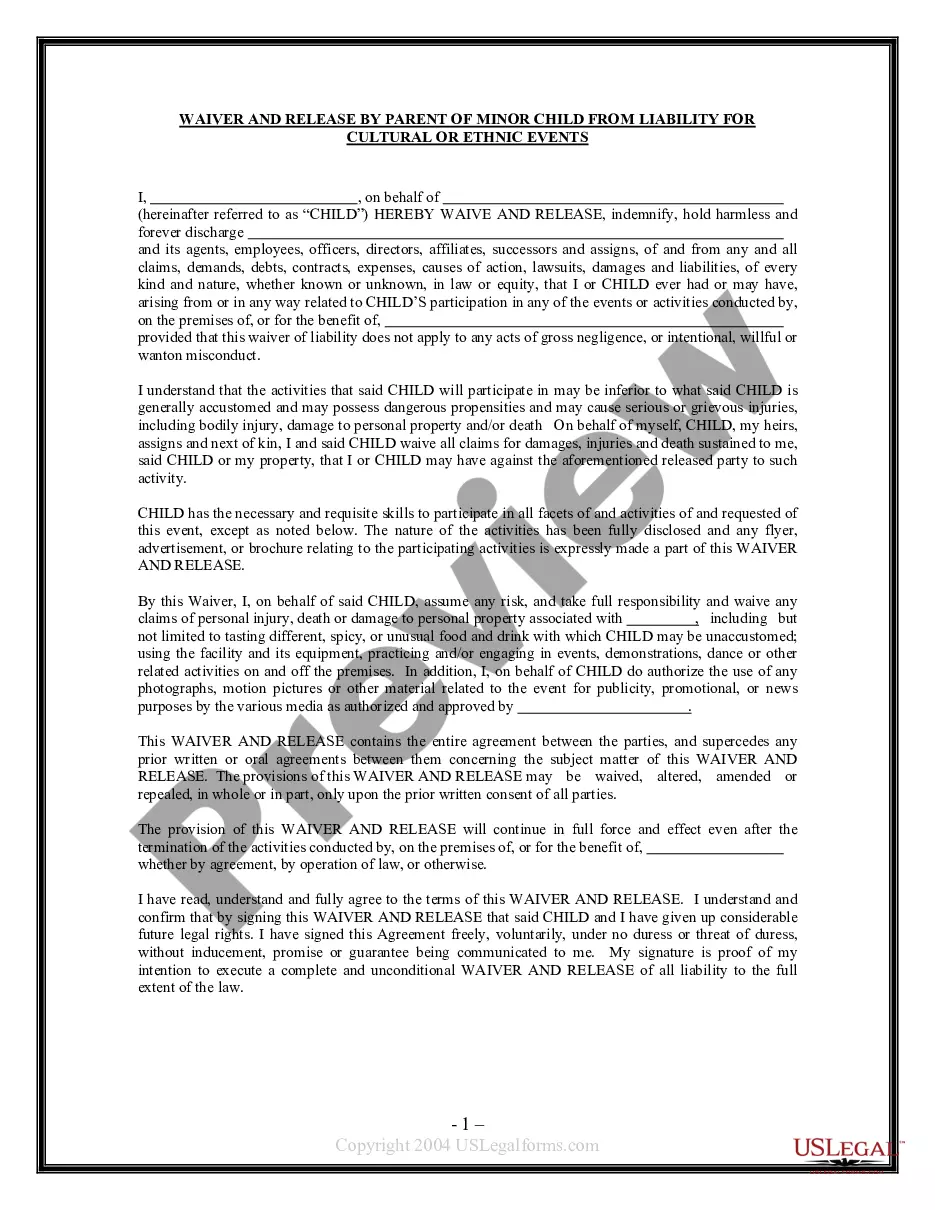
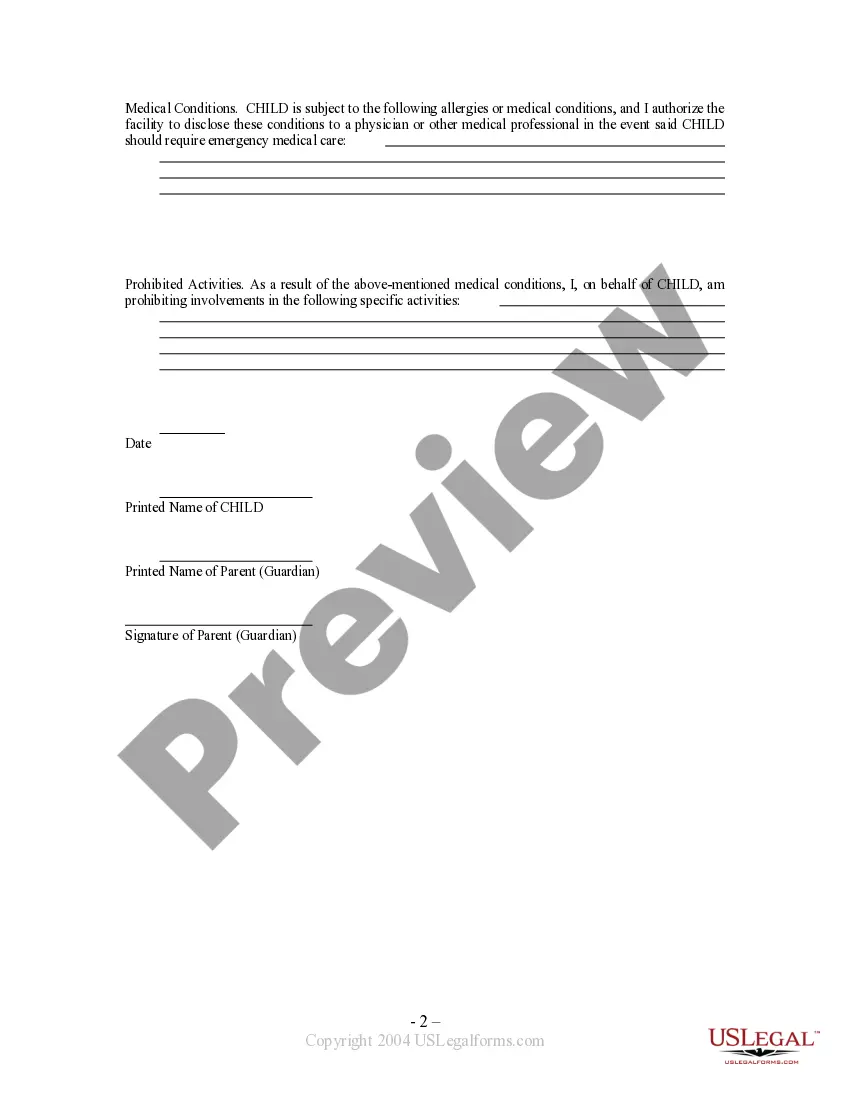
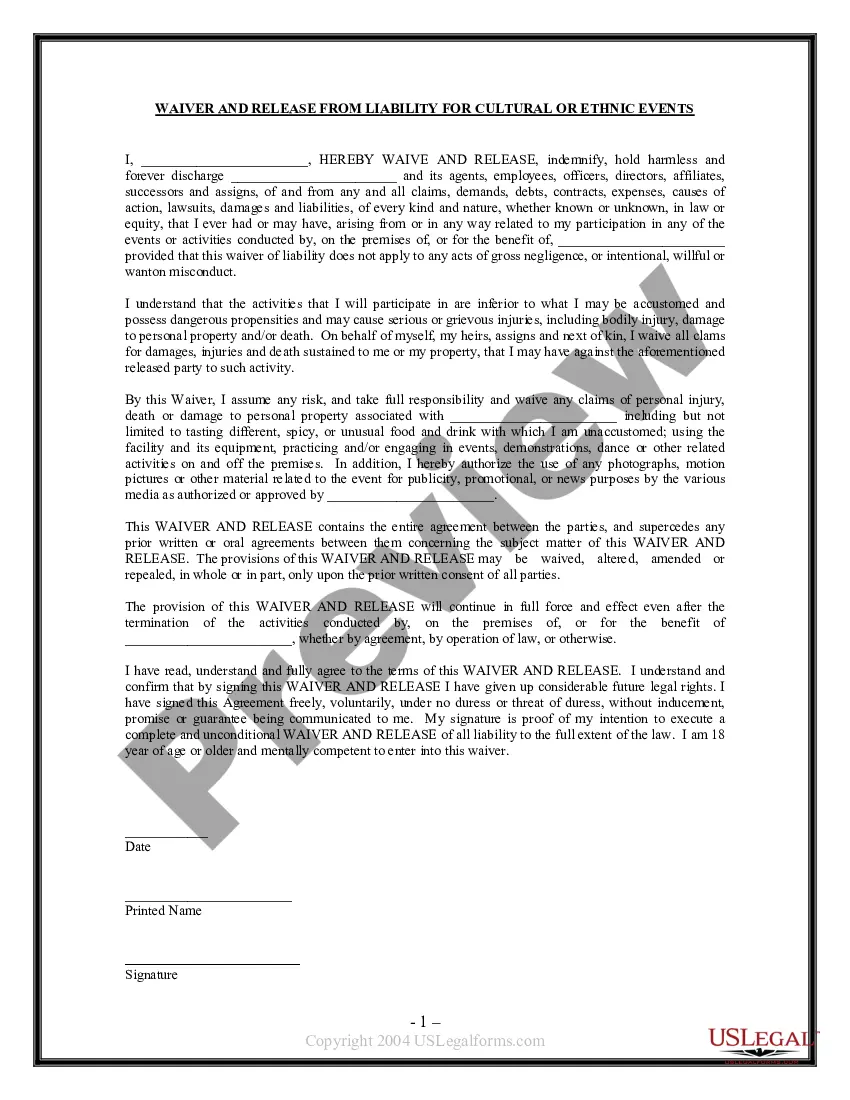
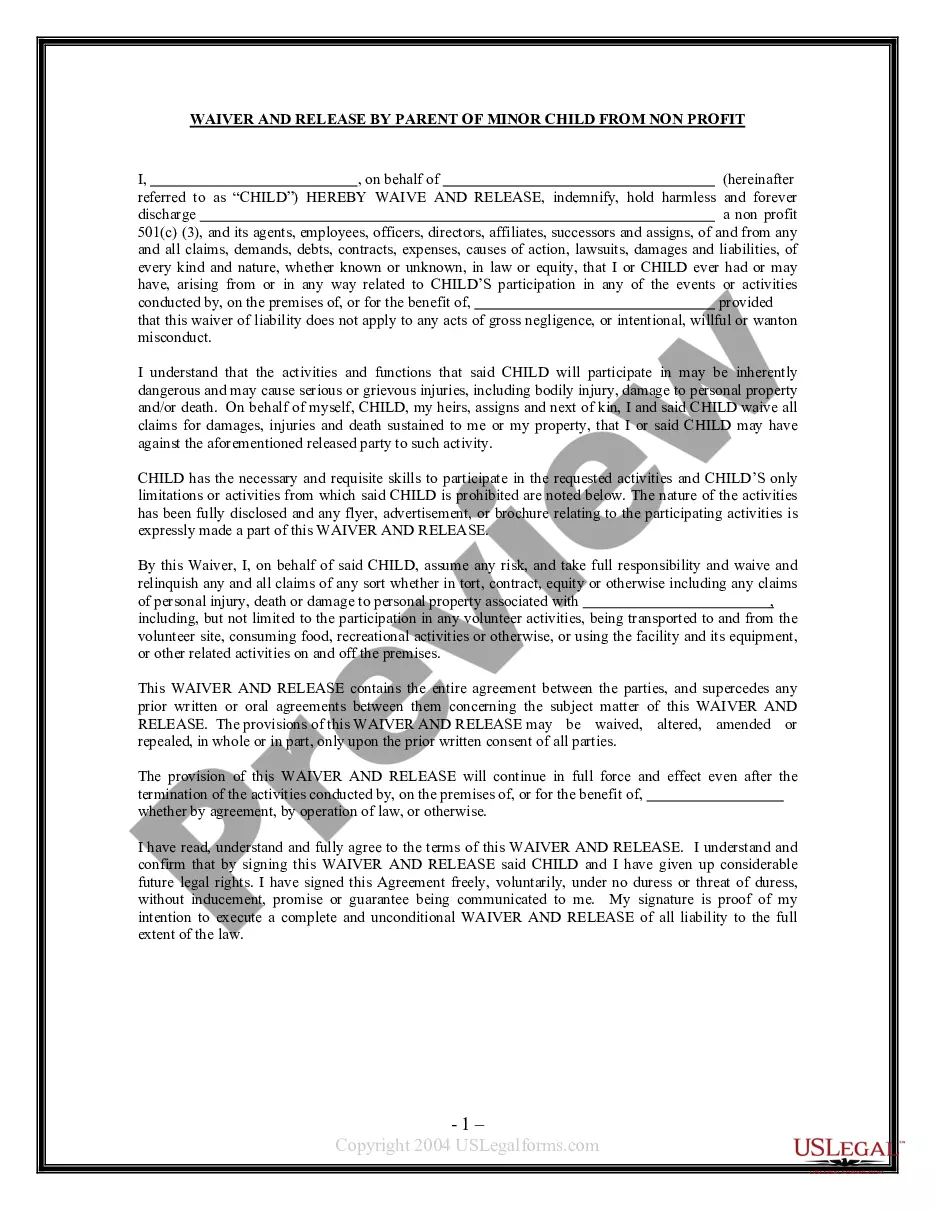
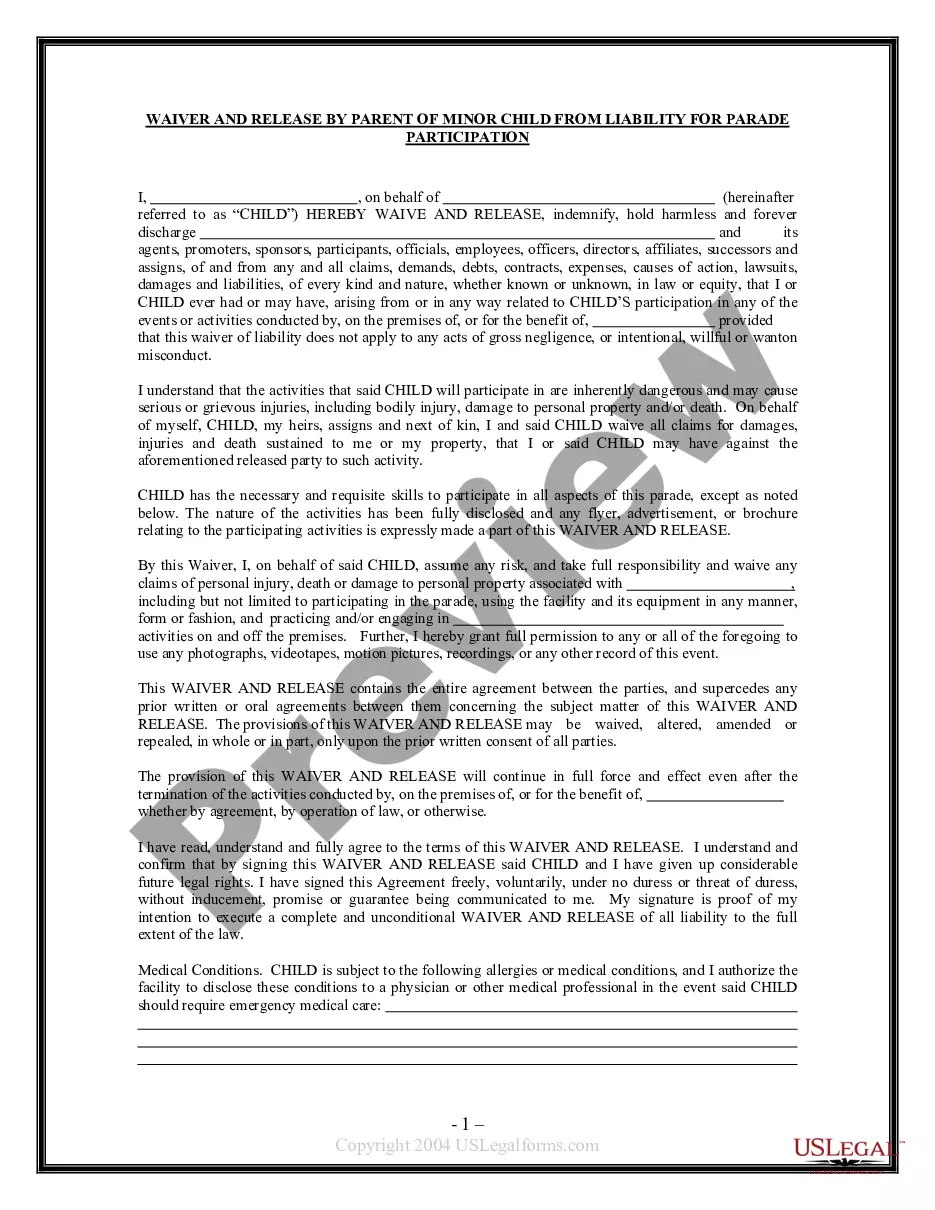
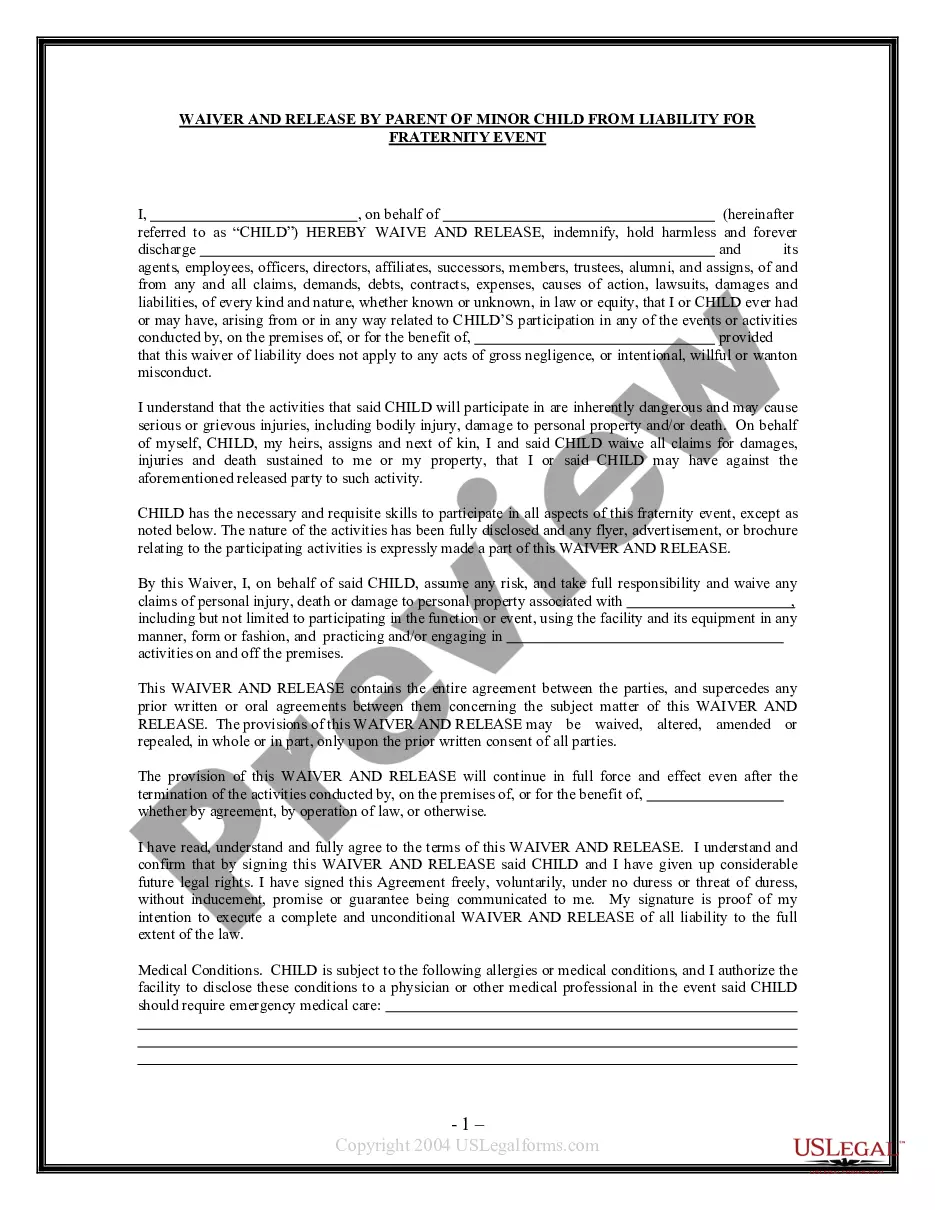
This form allows a parent or guardian to release a cultural or ethnic events facility from liability for injuries which may be incurred by a minor child while on the premises, taking part in activities, etc.
Tennessee Waiver and Release From Liability For Minor Child for Cultural or Ethnic Events
Category:
State:
Multi-State
Control #:
US-WAV-20M
Format:
Word;
Rich Text
Instant download
Description
Free preview

How to fill out Waiver And Release From Liability For Minor Child For Cultural Or Ethnic Events?
US Legal Forms - one of the largest collections of legal documents in the United States - provides a broad selection of legal form templates that you can download or create.
By using the website, you can access numerous forms for business and personal purposes, organized by categories, states, or keywords. You can find the latest versions of forms like the Tennessee Waiver and Release From Liability For Minor Child for Cultural or Ethnic Events in no time.
If you hold a monthly subscription, Log In and download the Tennessee Waiver and Release From Liability For Minor Child for Cultural or Ethnic Events from the US Legal Forms library. The Download button will appear on every form you view. You can access all previously saved forms in the My documents tab of your account.
Select the file format and download the form to your device.
Make adjustments. Fill out, modify, print, and sign the saved Tennessee Waiver and Release From Liability For Minor Child for Cultural or Ethnic Events. Each document you added to your account does not expire and is yours indefinitely. Therefore, to download or print another copy, simply go to the My documents section and click on the form you need.
- Ensure you have selected the correct form for your city/region. Select the Preview button to review the form's details.
- Examine the form description to confirm you have chosen the right form.
- If the form does not meet your needs, use the Search field at the top of the screen to find the one that does.
- If you are satisfied with the form, validate your choice by clicking the Buy now button.
- Then, choose the pricing plan you prefer and provide your details to register for an account.
- Complete the transaction. Use your credit card or PayPal account to finalize the transaction.
Form popularity
FAQ
In Tennessee, you can waive certain types of negligence through a liability waiver, but not all forms. The Tennessee Waiver and Release From Liability For Minor Child for Cultural or Ethnic Events can limit liability for ordinary negligence, but cannot protect against gross negligence or willful misconduct. It's crucial to consult with a legal professional to ensure compliance with state laws.
Liability waivers can be legally binding if they meet specific legal standards. The Tennessee Waiver and Release From Liability For Minor Child for Cultural or Ethnic Events must be drafted carefully to ensure that all participants understand their rights and responsibilities. A well-structured waiver can effectively protect event organizers from legal claims.
Generally, waivers are not enforceable against minors in Tennessee. However, the Tennessee Waiver and Release From Liability For Minor Child for Cultural or Ethnic Events allows parents or guardians to sign on behalf of their minor children, providing some level of protection for organizers. It's essential to ensure that the waiver is clear and signed correctly to uphold its validity.
A parental consent release and waiver of liability is a document that allows a parent or guardian to consent to their child's participation in an activity while acknowledging the associated risks. This is crucial for events involving minors, such as those covered by the Tennessee Waiver and Release From Liability For Minor Child for Cultural or Ethnic Events. This document helps protect organizers from legal claims related to injuries.
To be effective, a waiver of liability must include three key elements. First, it should clearly state the risks involved in the activity. Second, it must be voluntarily signed by the participant or their guardian. Finally, the language must be straightforward and specific, making it clear that the participant is waiving their right to sue.
Liability waivers can hold up well in court if they are carefully constructed and comply with state law. The Tennessee Waiver and Release From Liability For Minor Child for Cultural or Ethnic Events should be clear, concise, and signed by all parties involved. Courts generally look for clear intent and understanding from the participant regarding the waiver.
Yes, a properly drafted waiver can limit your ability to sue for injuries sustained during events. The Tennessee Waiver and Release From Liability For Minor Child for Cultural or Ethnic Events is designed to inform participants of the risks and protect organizers from legal claims. However, this does not apply if there is evidence of gross negligence or intentional misconduct.
In Tennessee, liability waivers can be enforceable if they meet certain legal criteria. The Tennessee Waiver and Release From Liability For Minor Child for Cultural or Ethnic Events must clearly outline the risks involved and be signed voluntarily. It's essential for the language in the waiver to be clear and unambiguous to ensure enforceability in court.