Tennessee Right of Way Agreement
Description
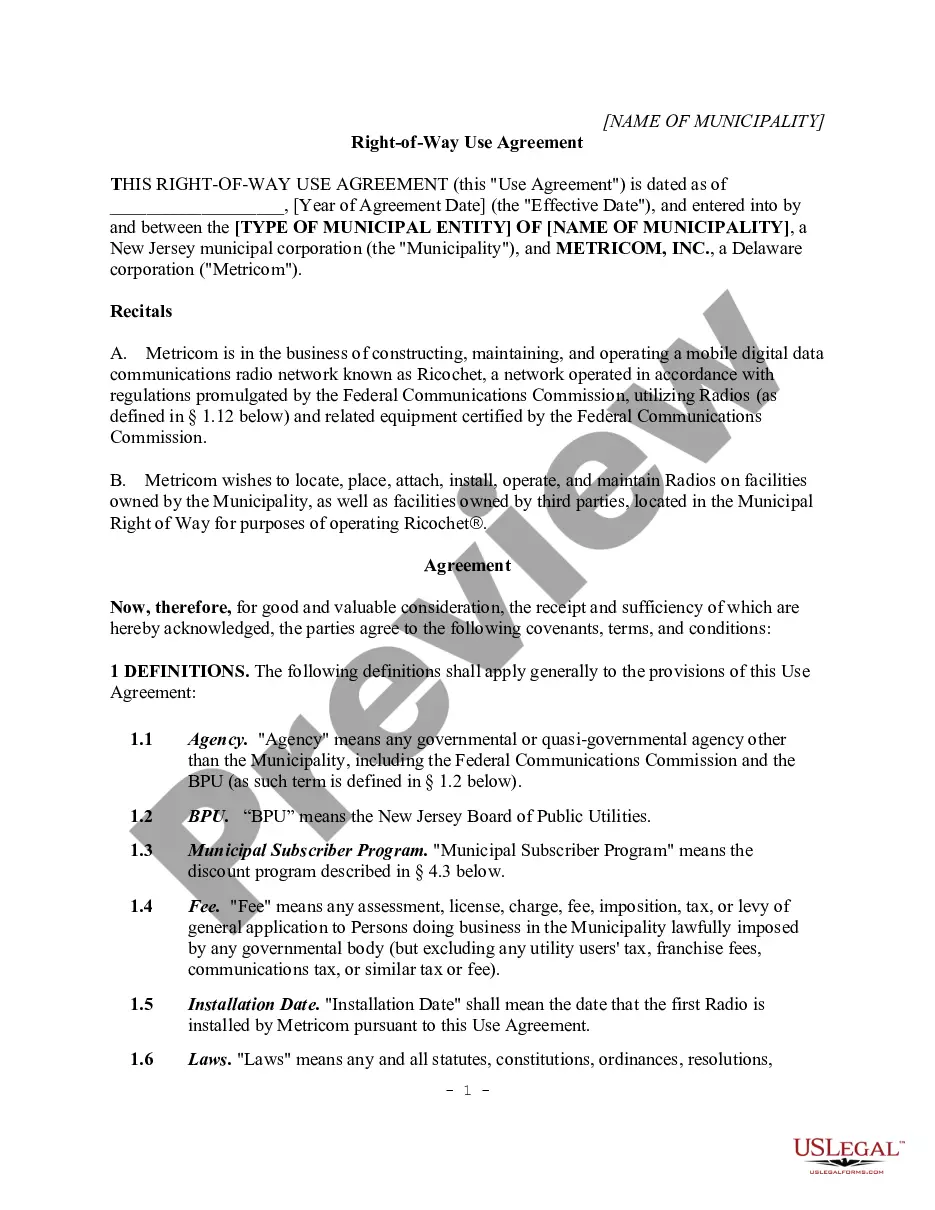
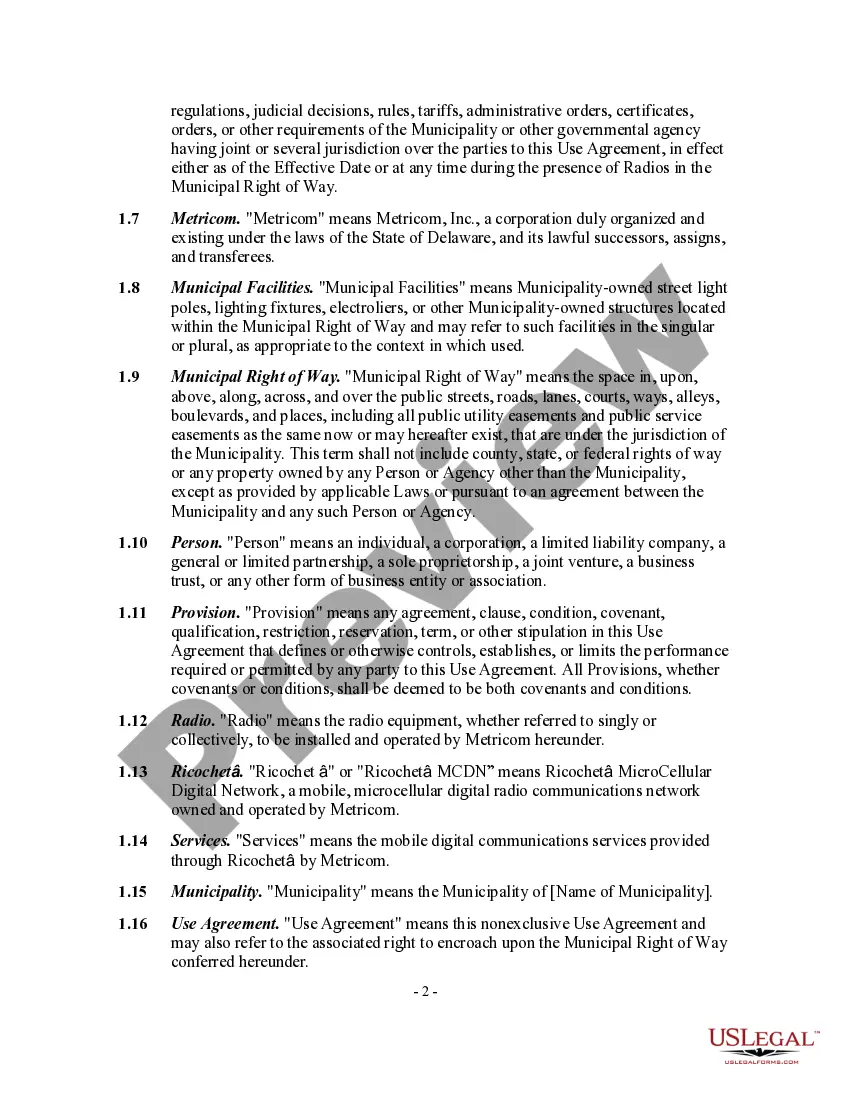
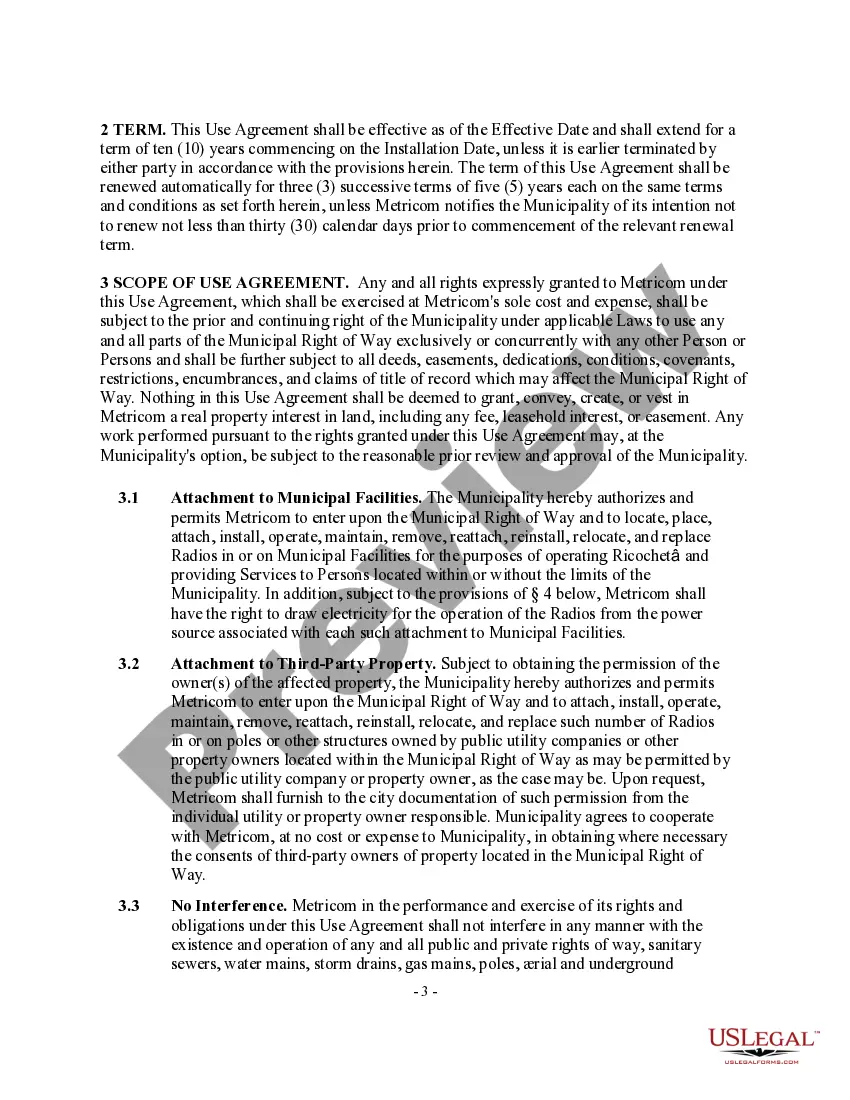
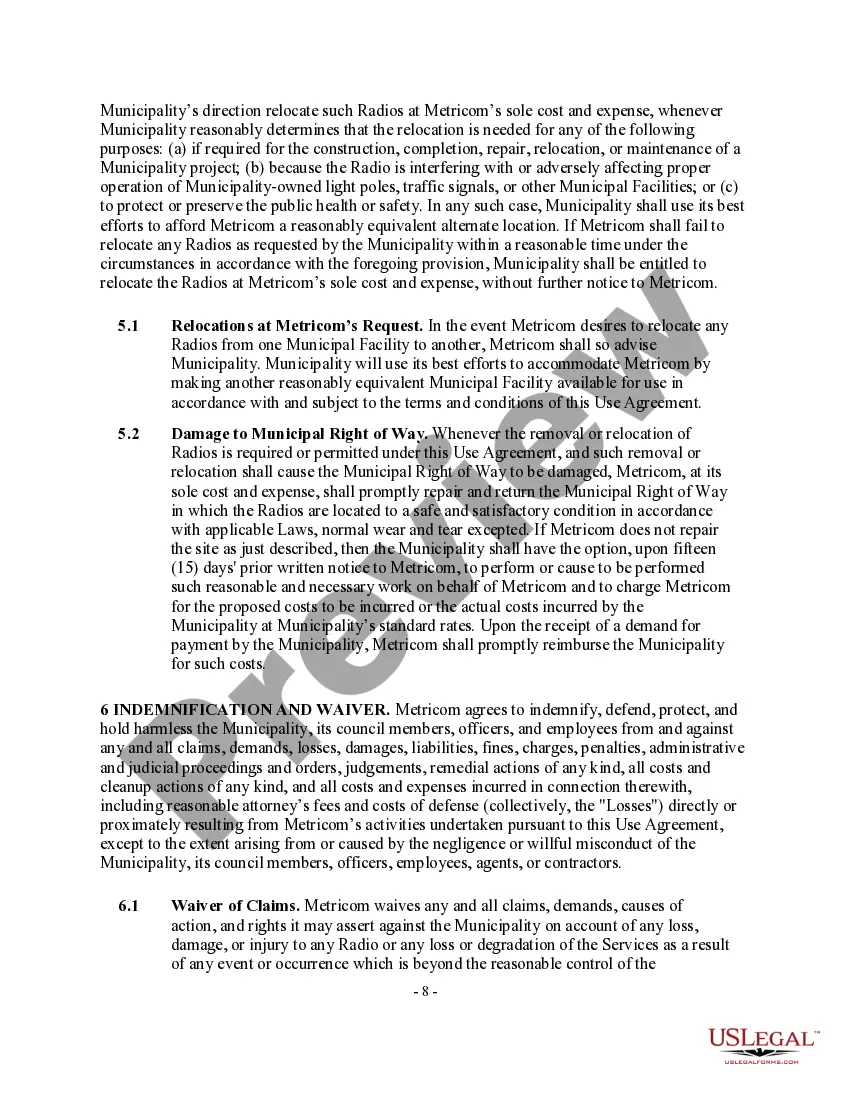
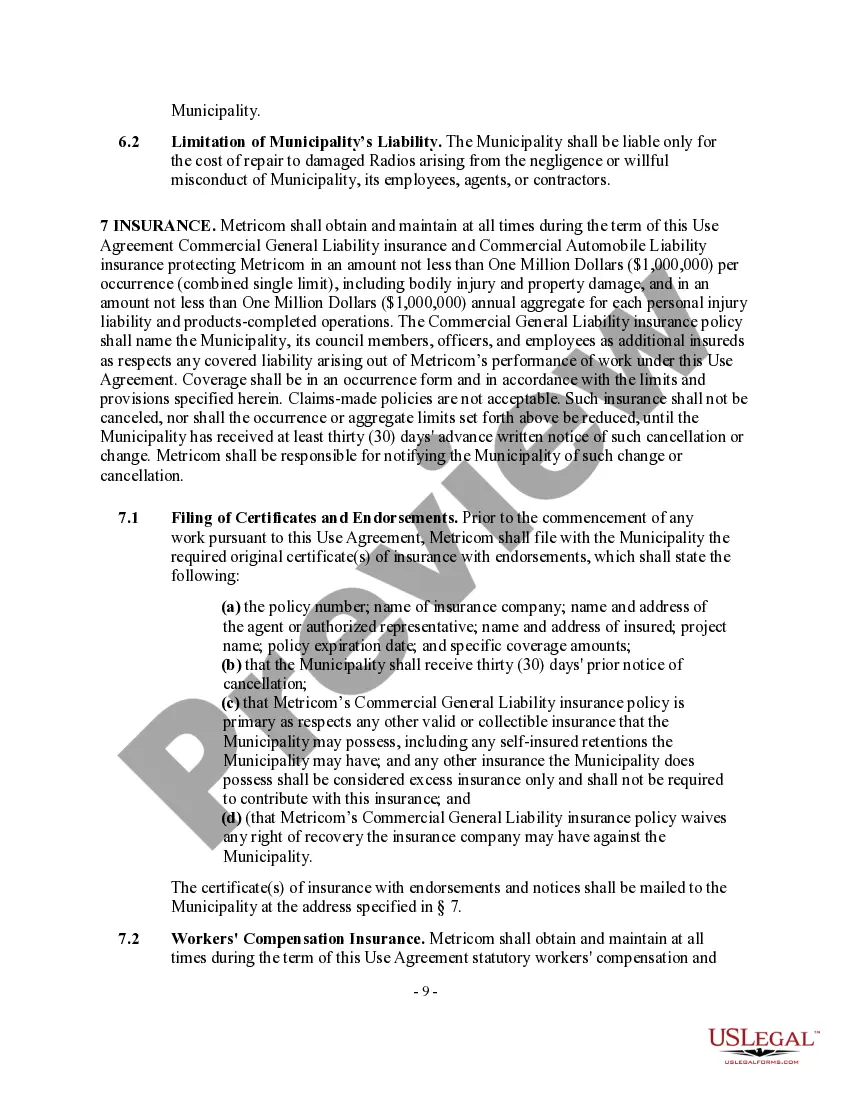
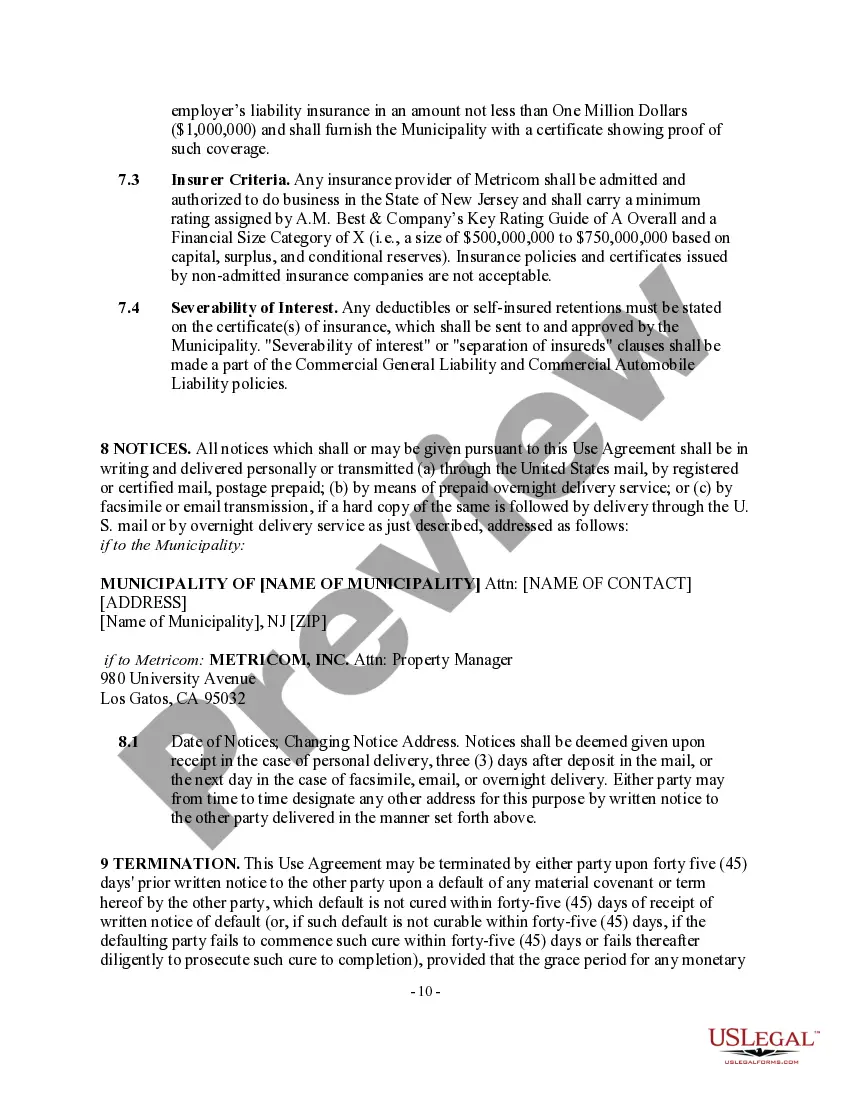

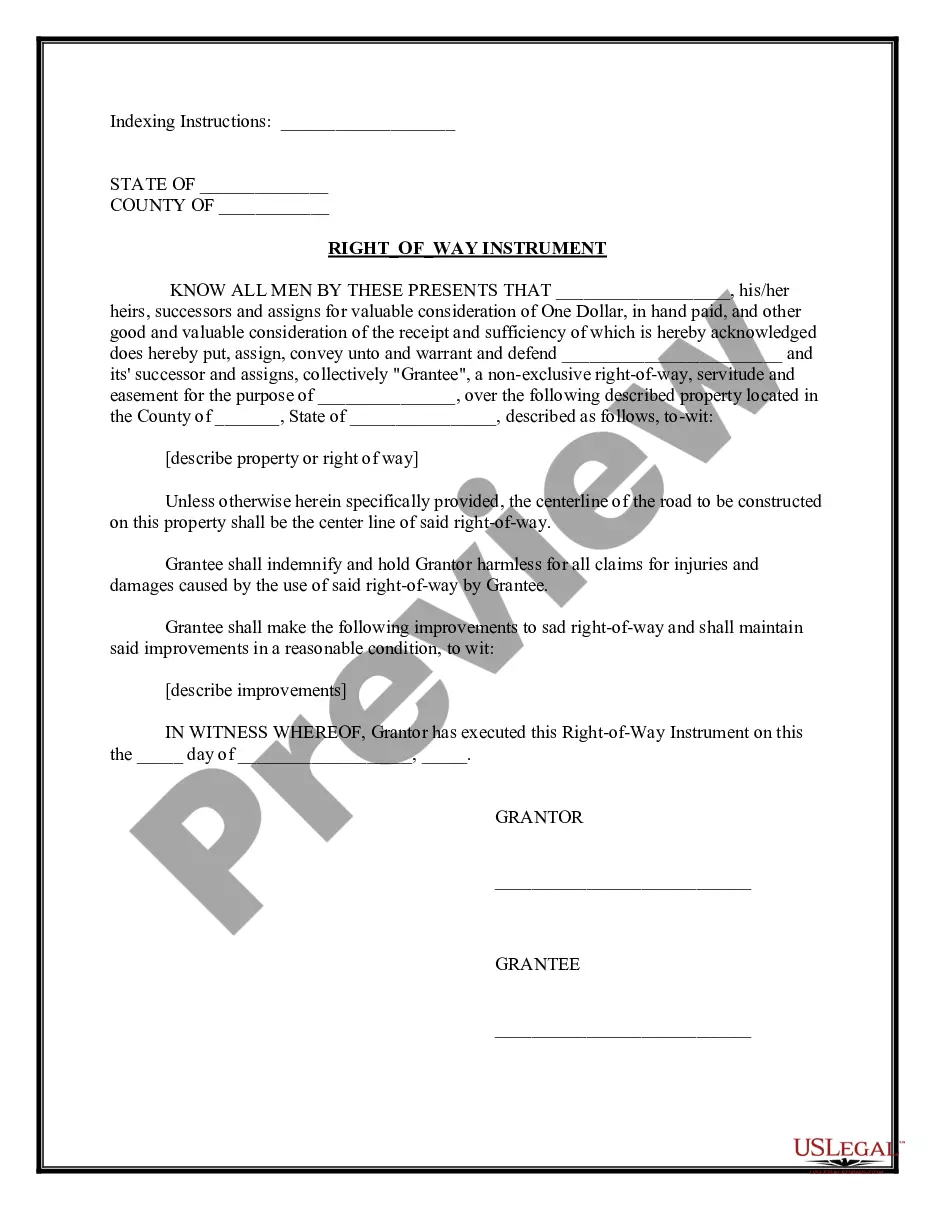
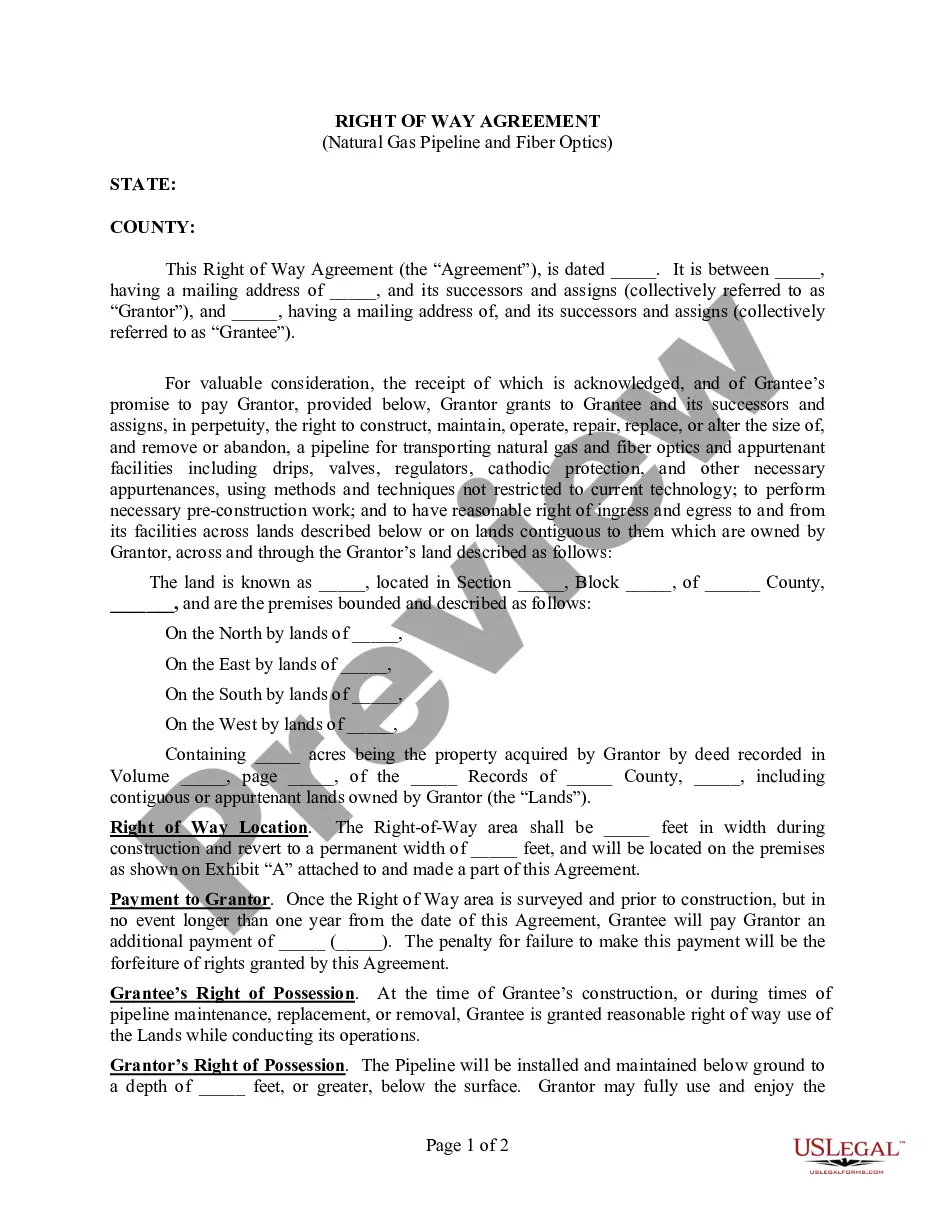
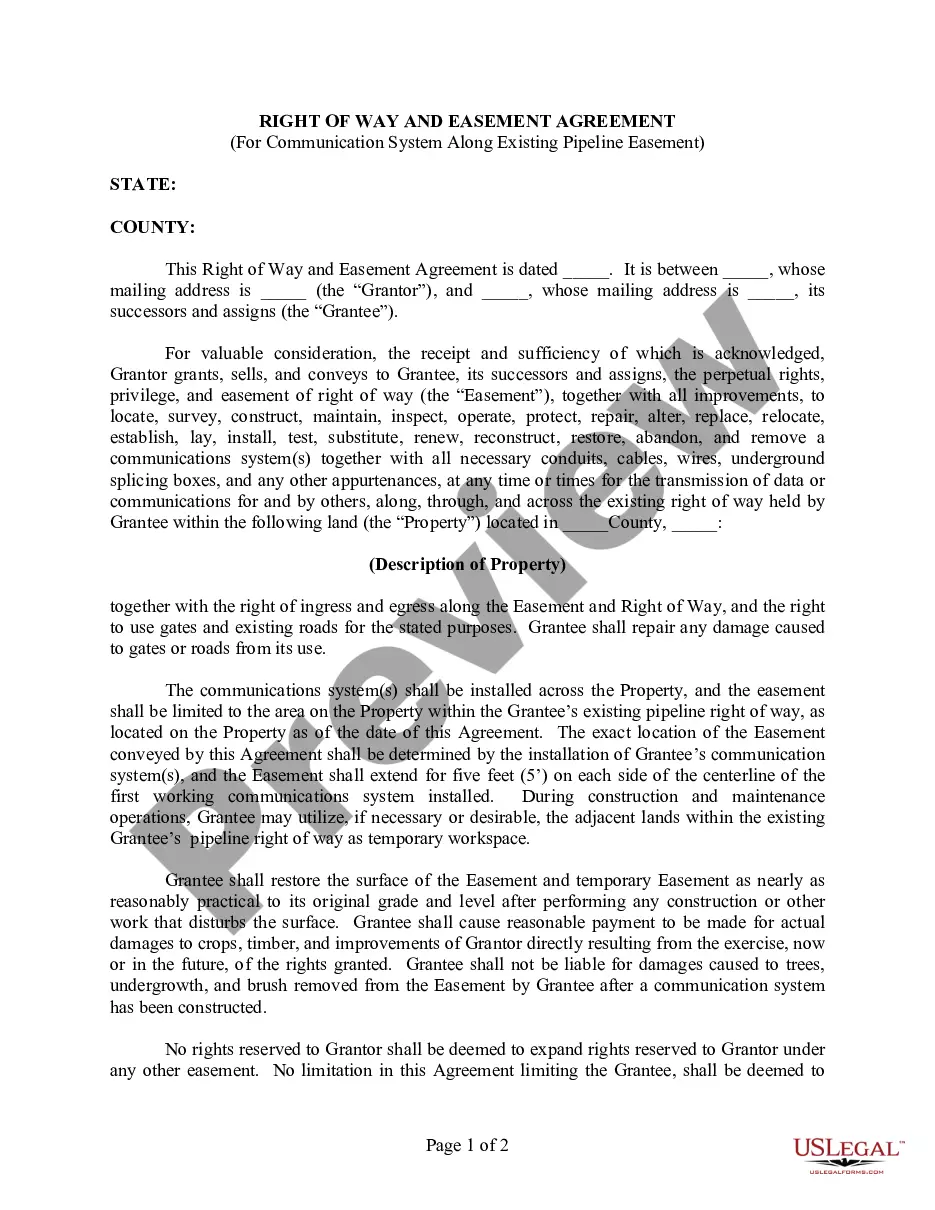
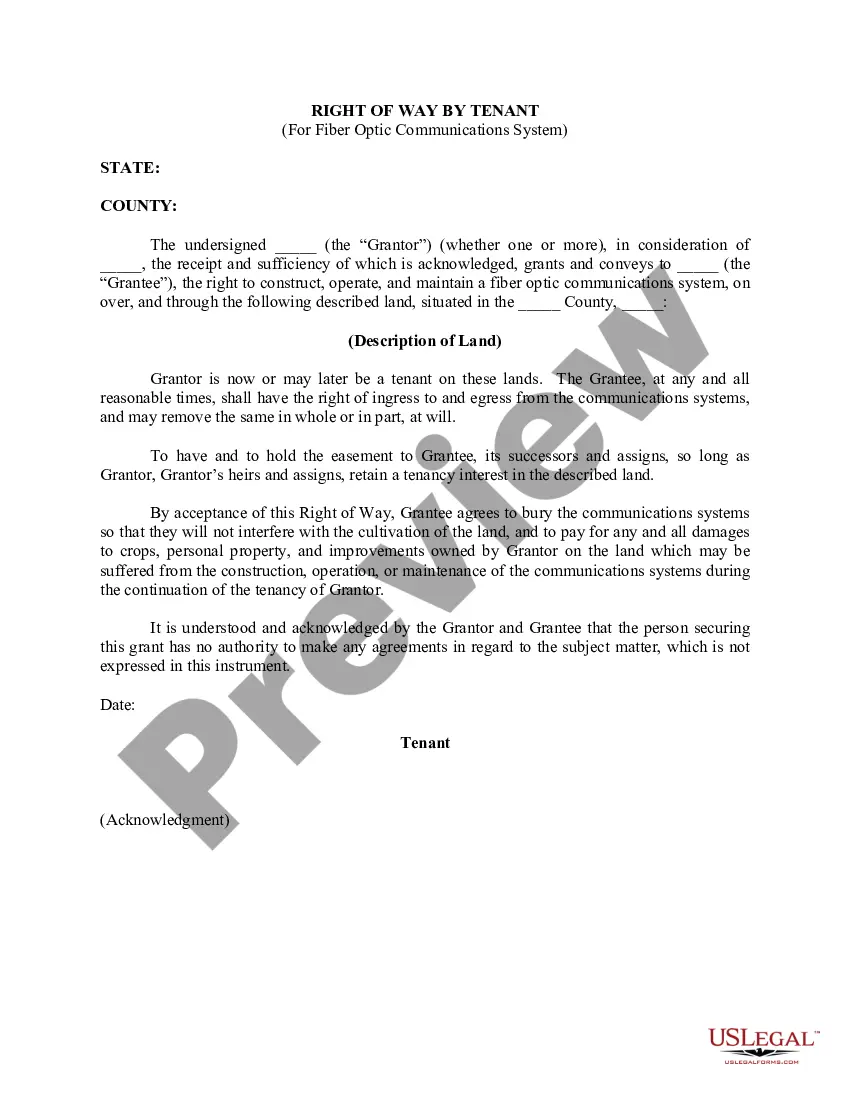
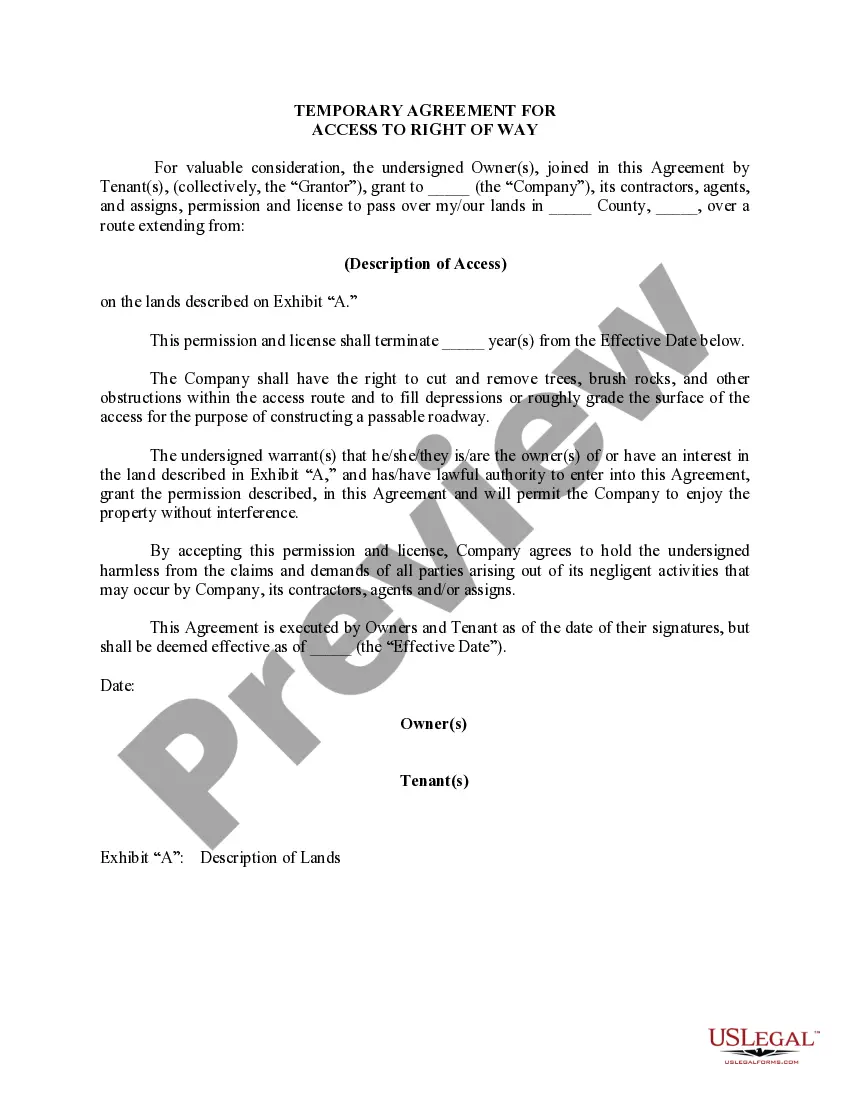

How to fill out Right Of Way Agreement?
US Legal Forms - one of the most important collections of legal documents in the USA - offers a range of legal document templates that you can download or print. By utilizing the site, you can discover thousands of forms for business and personal purposes, organized by categories, states, or keywords. You can find the most recent versions of forms like the Tennessee Right of Way Agreement in just a few minutes.
If you already have an account, Log In and download the Tennessee Right of Way Agreement from your US Legal Forms library. The Download button will appear on every form you view. You can access all previously downloaded forms in the My documents section of your account.
If you are using US Legal Forms for the first time, here are simple instructions to help you get started: Make sure you have selected the correct form for your region/area. Click the Review button to examine the form's content. Check the form details to confirm that you have chosen the right form. If the form does not meet your needs, use the Search bar at the top of the screen to find one that does.
Access the Tennessee Right of Way Agreement with US Legal Forms, the most extensive library of legal document templates. Utilize a vast array of professional and state-specific templates that cater to your business or personal needs and requirements.
- If you are satisfied with the form, confirm your selection by clicking the Get now button.
- Then, choose the pricing plan you want and provide your details to create an account.
- Process the transaction. Use your credit card or PayPal account to finalize the transaction.
- Select the format and download the form to your device.
- Make adjustments. Fill out, edit, print, and sign the downloaded Tennessee Right of Way Agreement.
- Every template you add to your account has no expiration date and is yours permanently. Therefore, if you wish to download or print another copy, just go to the My documents section and click on the form you need.
Form popularity
FAQ
In most cases, a property owner cannot block a right of way that has been legally established. Doing so can lead to legal conflicts and potential liability. If you have a concern about a right of way, it is essential to review your Tennessee Right of Way Agreement and understand your rights and limitations. Consulting with a legal expert can provide clarity and help you address any issues effectively.
The right of way rules in Tennessee dictate how landowners and public entities can utilize paths or corridors across private property. Generally, these rules require clear communication and documented agreements, such as a Tennessee Right of Way Agreement, to protect the interests of all parties involved. Understanding these rules helps prevent disputes and ensures compliance with local regulations. Always consider seeking legal advice to ensure adherence to these rules.
In Tennessee, the property right of way law establishes the legal framework for the use of land by individuals or entities for specific purposes, such as utilities or road access. This law recognizes that certain rights can be granted to allow passage or access across private property. A Tennessee Right of Way Agreement formalizes these rights, ensuring that both parties understand their obligations. It is crucial to consult legal resources or professionals to navigate these laws effectively.
Generally, a property owner cannot block a right-of-way, as it is essential for public passage. Blocking access can lead to legal repercussions under Tennessee law. Understanding your rights and obligations under a Tennessee Right of Way Agreement is crucial if you encounter this situation. It is advisable to consult with a legal expert to discuss your specific circumstances.
In most cases, an owner cannot block a right of way, as this restricts access for the public. Tennessee law supports the right of way to ensure that individuals can travel without obstruction. If you are facing issues regarding a right of way, a Tennessee Right of Way Agreement can provide essential information about your rights. Seeking legal counsel can also help you address any concerns effectively.
In Tennessee, right-of-way maintenance is usually the responsibility of local governments or public agencies. However, specific agreements may place some of that responsibility on adjacent landowners. To navigate these responsibilities effectively, it can be helpful to refer to a Tennessee Right of Way Agreement. If you require legal advice, consider consulting with professionals who specialize in this area.
Yes, there is a difference between a right-of-way and an easement. A right-of-way allows the public or specific individuals to pass through a property, while an easement grants limited use of a property for a specific purpose. Understanding these distinctions is vital when dealing with land use issues. A Tennessee Right of Way Agreement can help clarify these terms and their implications for your property.
Typically, a landowner cannot legally block off a right of way road, as it would interfere with public access. Laws in Tennessee protect these rights to ensure the public can navigate safely. If you are unsure about the legality of a specific situation, a Tennessee Right of Way Agreement can provide guidance. Consulting a legal expert can also help clarify what actions you can take.
Maintenance responsibilities for a right-of-way often fall to the local government or the entity that owns the land. In some cases, adjacent landowners may also share maintenance duties, depending on local laws and agreements. Understanding these responsibilities is crucial, and a Tennessee Right of Way Agreement can clarify who is accountable for maintenance in your area. If you need assistance, consider reaching out to legal professionals.
Yes, generally it is illegal to block a right of way, as this can impede public access. Right of way laws in Tennessee protect the public's ability to travel and access properties. If you are facing a blocked right of way, it is important to understand your rights under the Tennessee Right of Way Agreement. Consulting a legal expert can provide clarity on the laws specific to your situation.