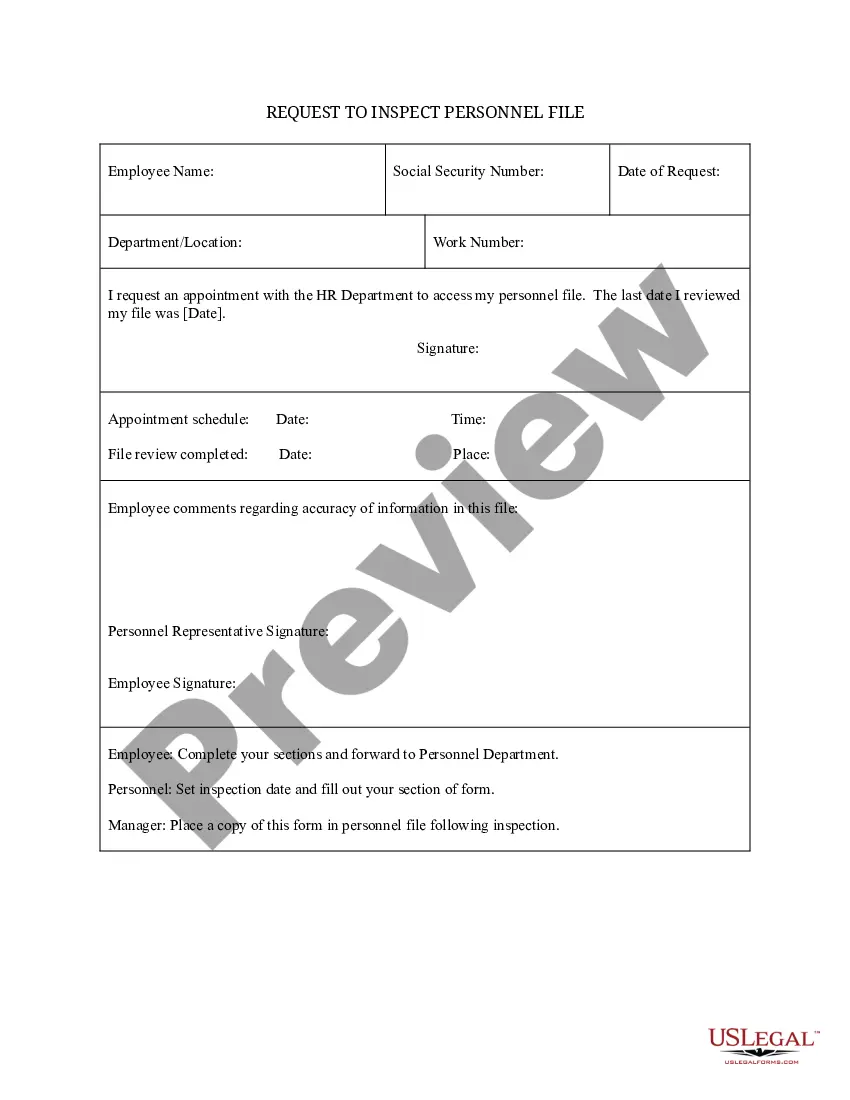
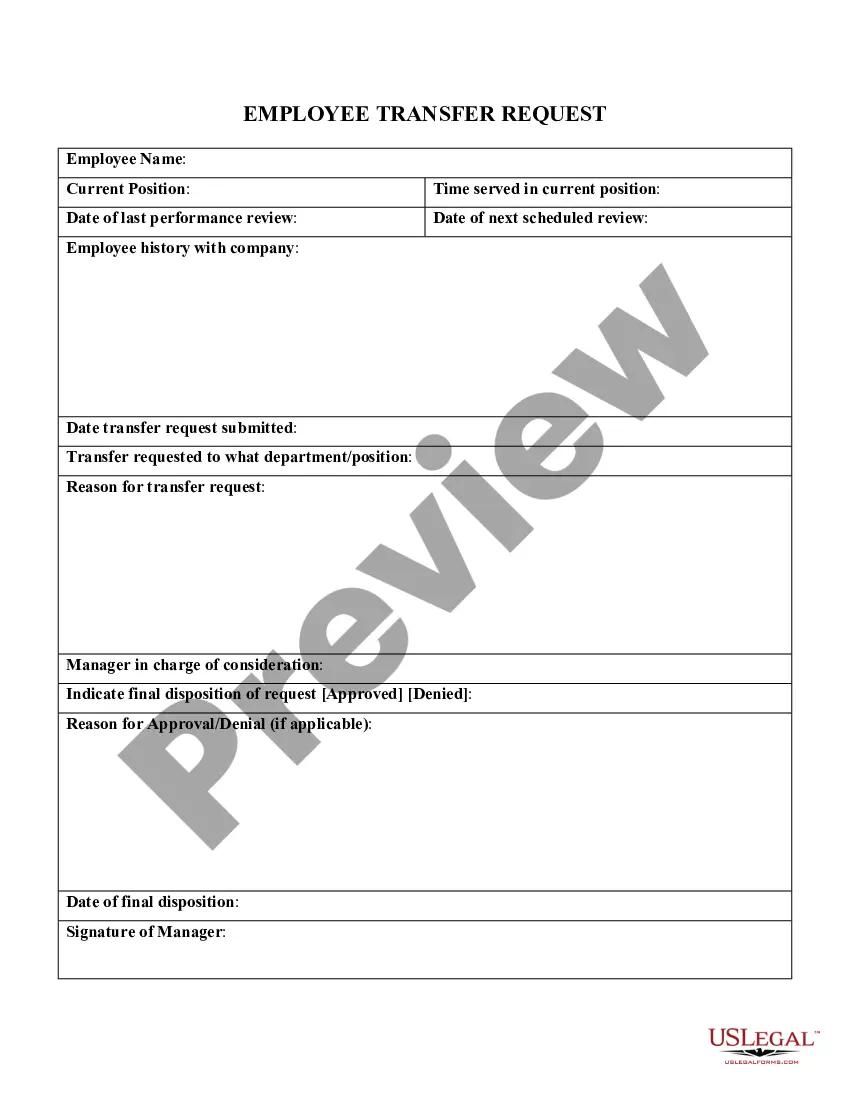
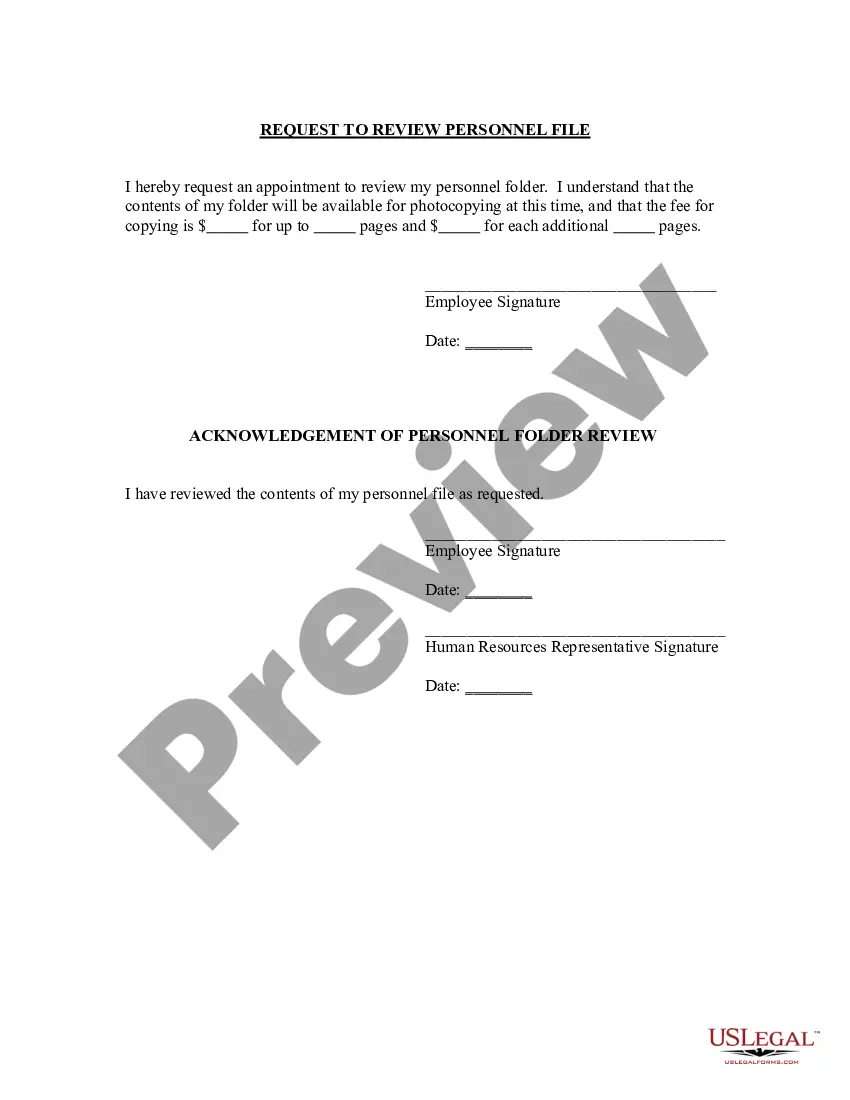
Tennessee Request to Inspect Personnel File
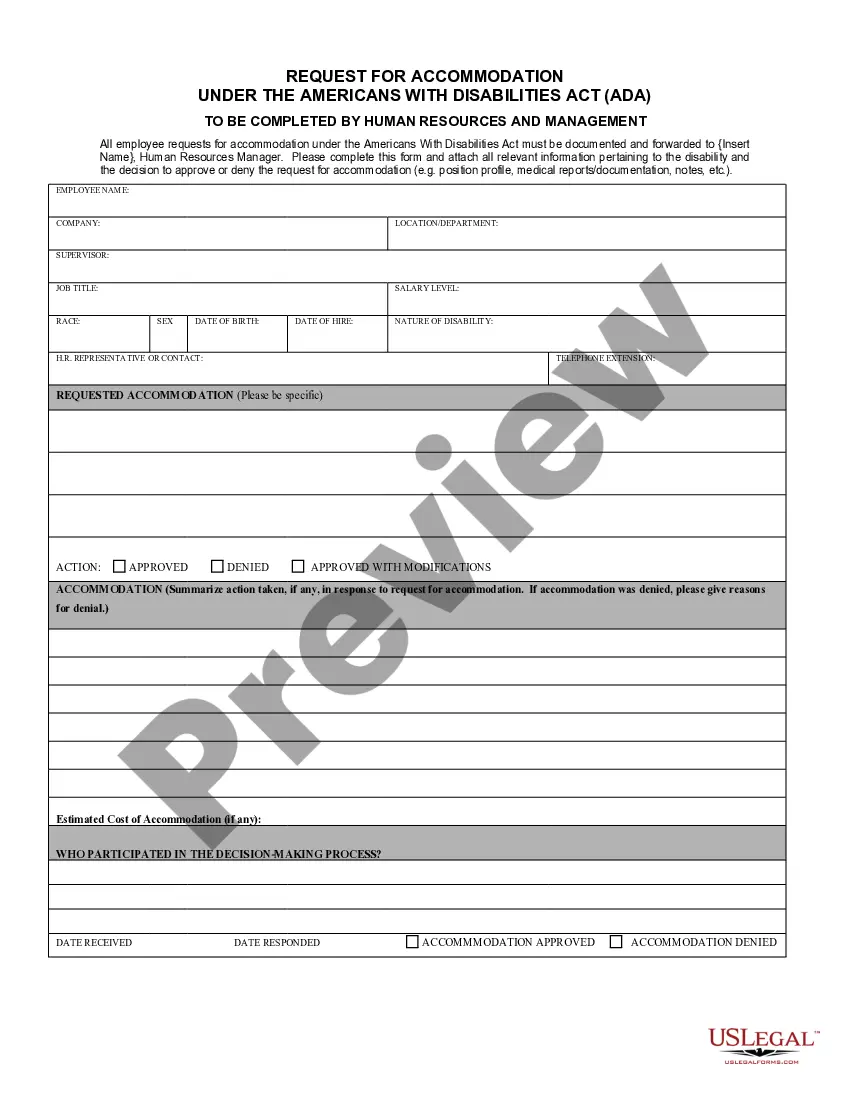
Description
Get your form ready online
Our built-in tools help you complete, sign, share, and store your documents in one place.
Make edits, fill in missing information, and update formatting in US Legal Forms—just like you would in MS Word.
Download a copy, print it, send it by email, or mail it via USPS—whatever works best for your next step.
Sign and collect signatures with our SignNow integration. Send to multiple recipients, set reminders, and more. Go Premium to unlock E-Sign.
If this form requires notarization, complete it online through a secure video call—no need to meet a notary in person or wait for an appointment.
We protect your documents and personal data by following strict security and privacy standards.

Make edits, fill in missing information, and update formatting in US Legal Forms—just like you would in MS Word.

Download a copy, print it, send it by email, or mail it via USPS—whatever works best for your next step.

Sign and collect signatures with our SignNow integration. Send to multiple recipients, set reminders, and more. Go Premium to unlock E-Sign.

If this form requires notarization, complete it online through a secure video call—no need to meet a notary in person or wait for an appointment.

We protect your documents and personal data by following strict security and privacy standards.
Looking for another form?

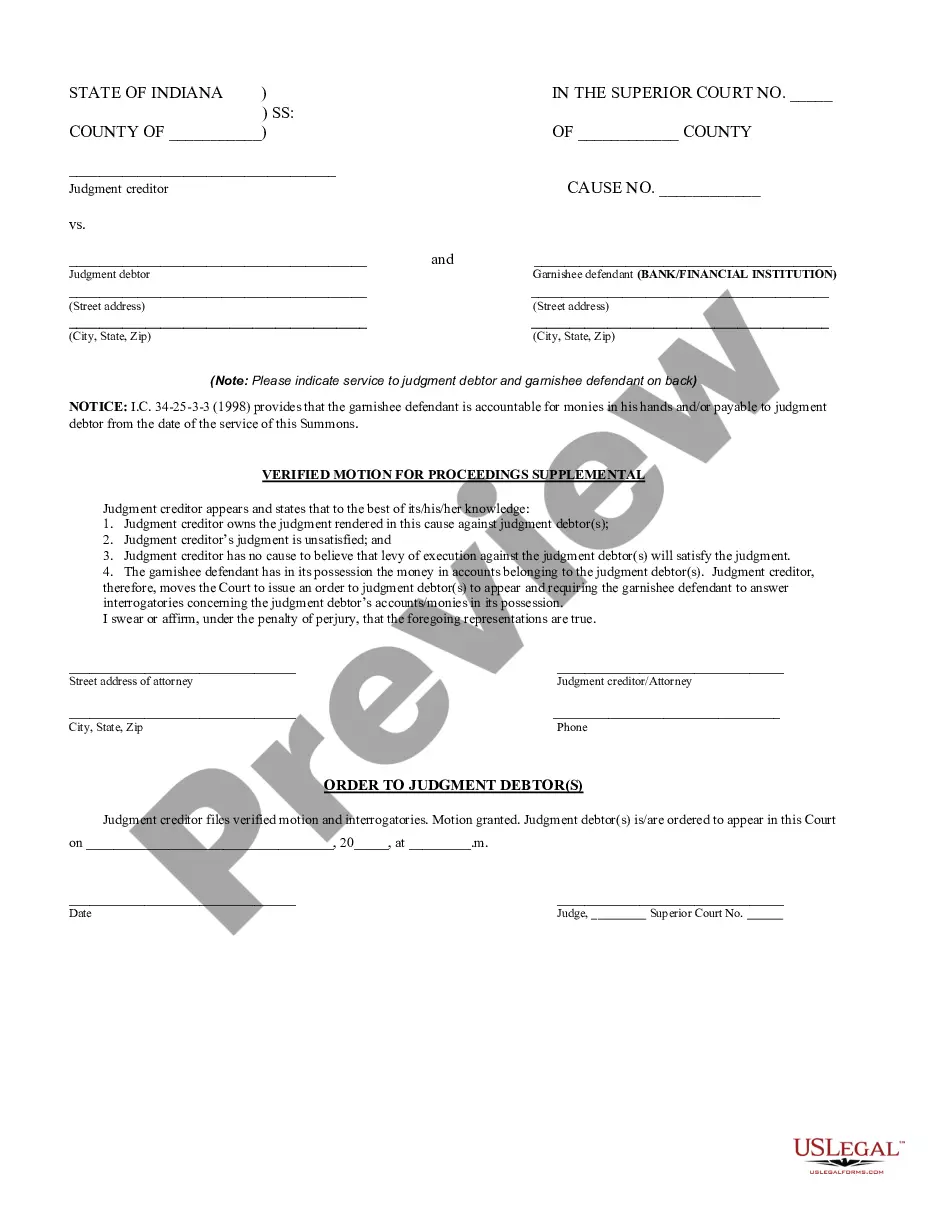


How to fill out Request To Inspect Personnel File?
If you need to fully, download, or print approved document templates, utilize US Legal Forms, the most extensive collection of legal forms, accessible online.
Leverage the site's user-friendly and convenient search to find the documentation you require.
Various templates for business and personal purposes are organized by categories and states, or keywords.
Step 4. Once you locate the form you need, click the Get now button. Choose the pricing plan you prefer and enter your details to create an account.
Step 5. Complete the transaction. You can use your credit card or PayPal account to finish the purchase.
- Use US Legal Forms to obtain the Tennessee Request to Review Personnel File in just a few clicks.
- If you are already a US Legal Forms client, Log In to your account and click the Download button to receive the Tennessee Request to Review Personnel File.
- You can also access forms you previously downloaded in the My documents section of your account.
- If this is your first time using US Legal Forms, follow the steps below.
- Step 1. Ensure you have chosen the form for the correct area/state.
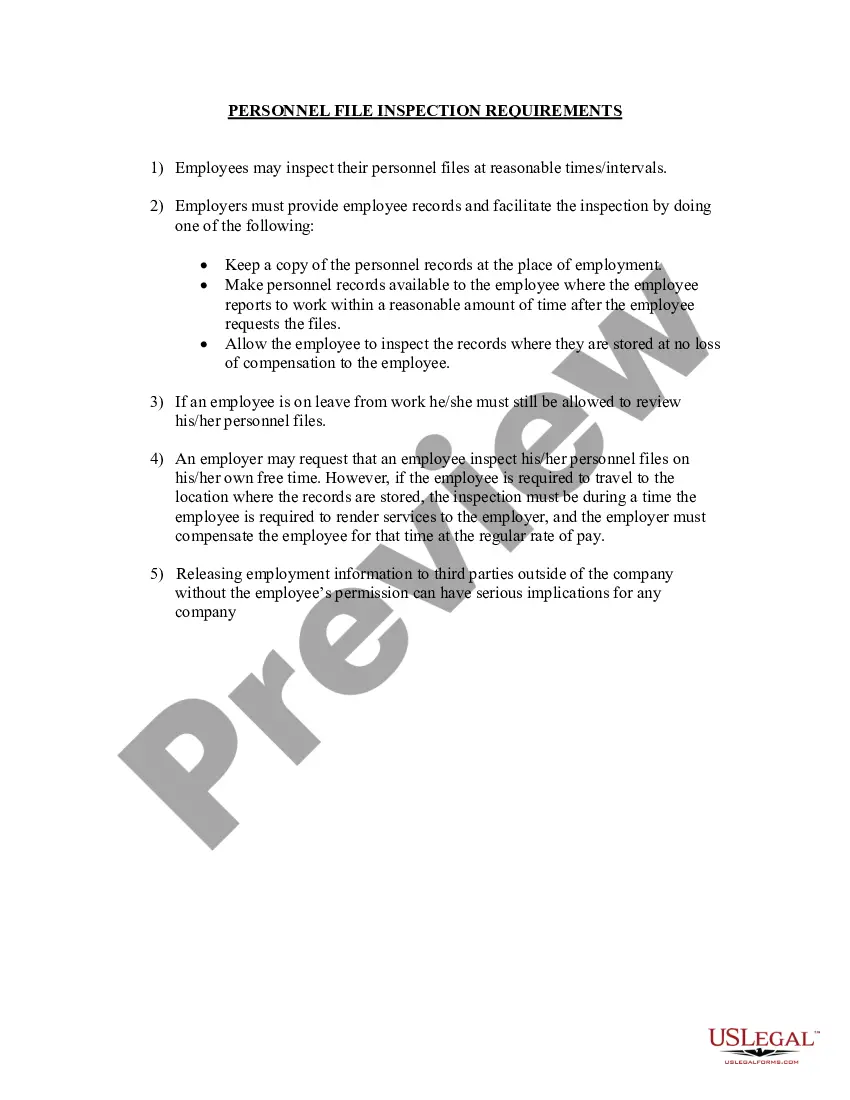
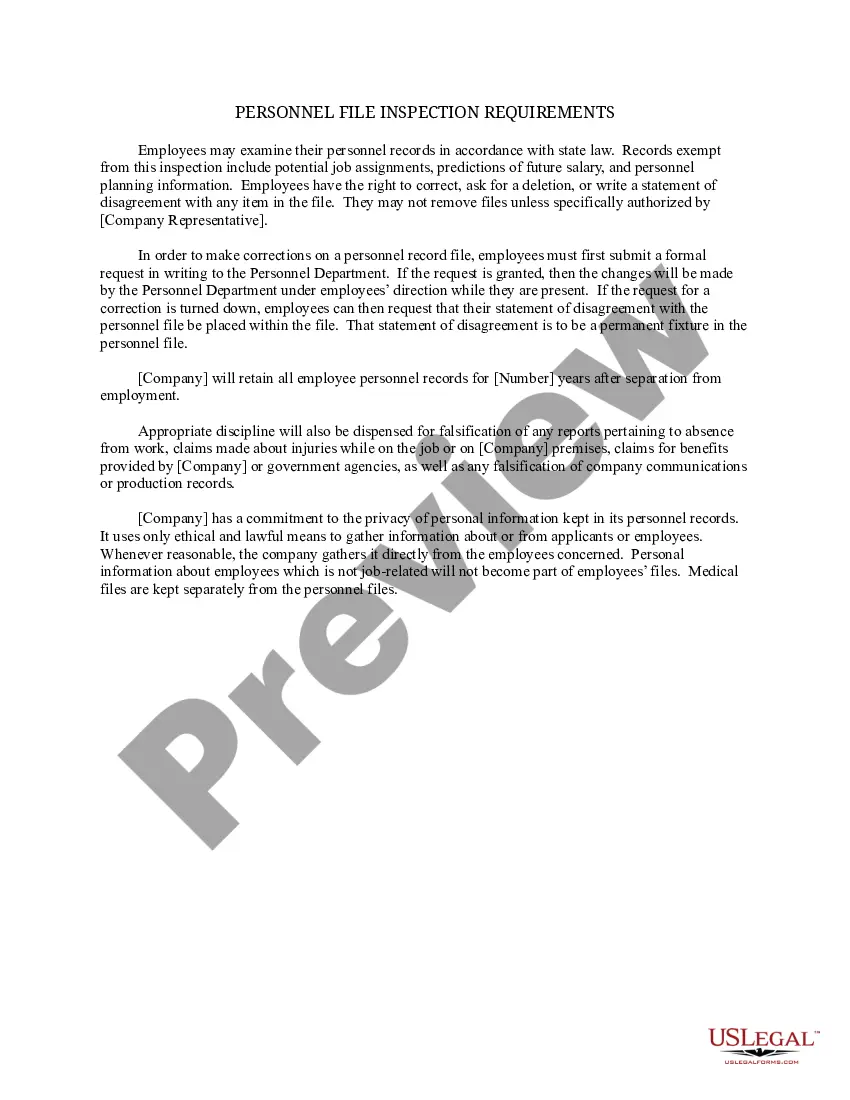
- Step 2. Utilize the Preview feature to review the form's content. Don't forget to examine the description.
- Step 3. If you are not satisfied with the form, use the Search field at the top of the page to find other types of the legal form template.
Form popularity
FAQ
If your employer refuses your request for your personnel file, you should first review your rights under Tennessee law to ensure you’re making a valid request. You might consider using the Tennessee Request to Inspect Personnel File as formal documentation of your inquiry. If needed, seeking legal advice can help you understand your next steps and protect your rights.
Fair Reasons for Dismissal However, the Fair Work Commission has determined that you should not dismiss any employee without a valid, sound, and defensible reason given the circumstances, and a fair dismissal process, in order to minimise the risks of a subsequent unfair dismissal claim.
Employers may legally terminate an employee at any time for any reason, or for no reason without incurring legal liability. However, an employer may not discriminate against any employee on the basis of the employee's race, sex, age, religion, color, national origin, or disability.
Personnel files usually contain documents that the employee has already reviewed and so he or she is familiar with their content. This includes documents such as job applications, performance evaluations, letters of recognition, training records, and forms that relate to transfers and promotion.
The number one item that should not be kept in the employee's personnel file is medical information. Under California regulations, medical information should be kept separate from the personnel file to protect the employee's confidential information.
Examples of items that should not be included in the personnel file are:Pre-employment records (with the exception of the application and resume)Monthly attendance transaction documents.Whistleblower complaints, notes generated from informal discrimination complaint investigations, Ombuds, or Campus Climate.More items...
In an at-will employment state like Tennessee, an employer can terminate an employee for almost any reason at all, good or bad. But when a company unlawfully lays off or fires an employee, it's called a wrongful termination or wrongful dismissal, and the employee does have legal recourse.
Employers should keep all job-related documentation such as hiring records, performance reviews, disciplinary actions and job descriptions in an employee's general personnel file. Consider whether the document would be relevant to a supervisor who may review this file when making employment decisions.
Regarding employment and payroll data, under the Fair Labor Standards Act (FLSA) and others, you must: For at least 3 years: keep payroll records, certificates, agreements, notices, collective bargaining agreements, employment contracts, and sales and purchase records.
Examples of wrongful termination include terminating an employee: Due to their participation in an investigation into illegal practices. As a result of them reporting discrimination, harassment, ADA violations, or illegal activities (whistleblowers)