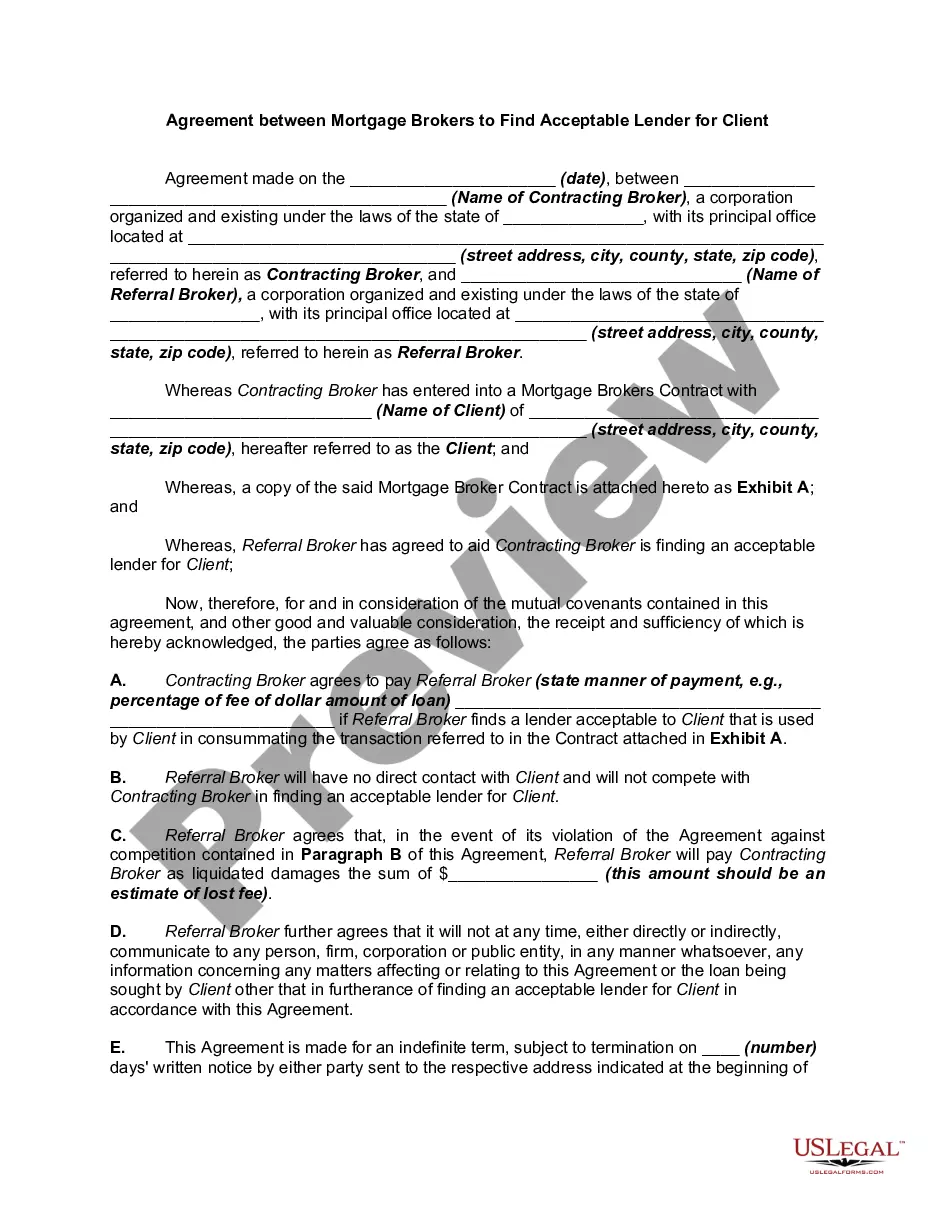
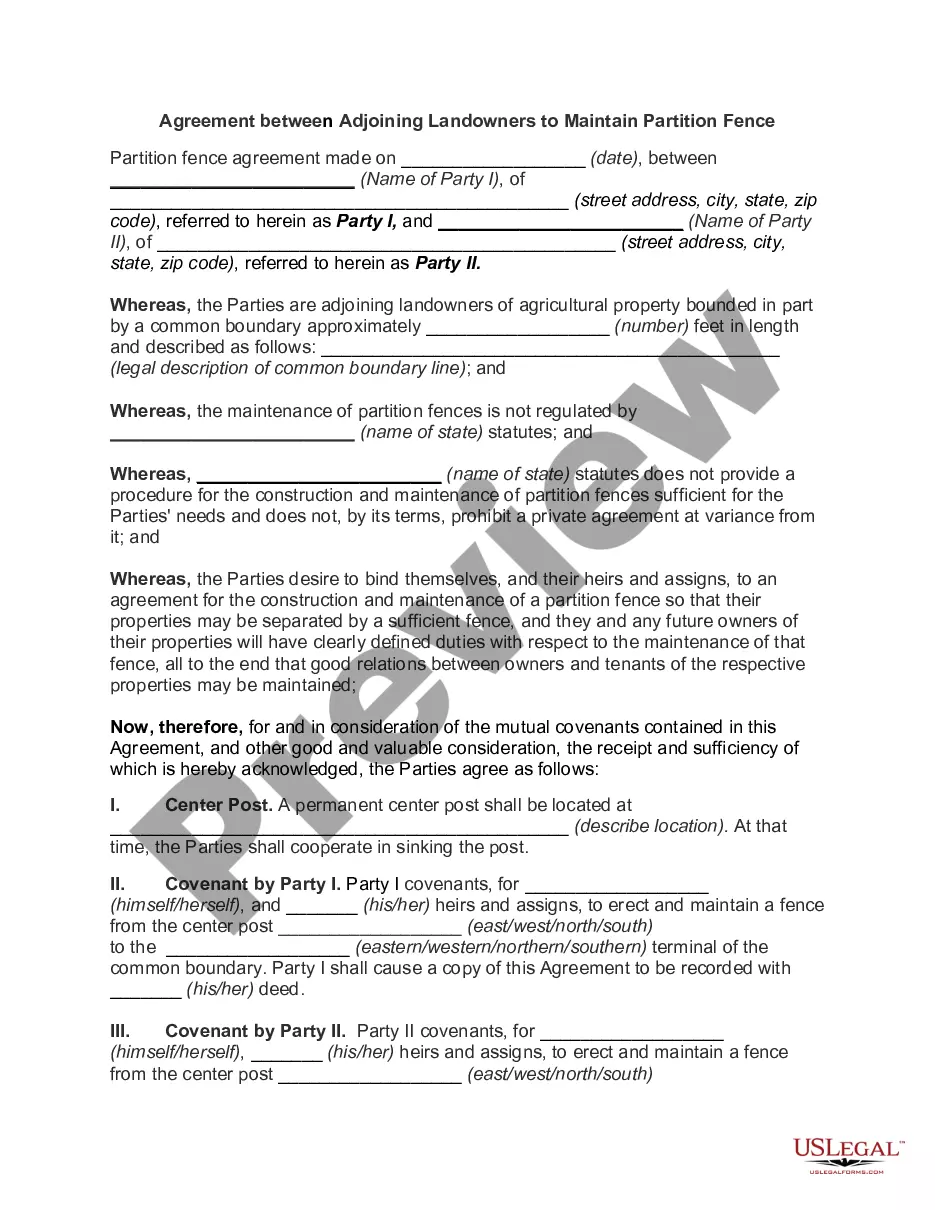
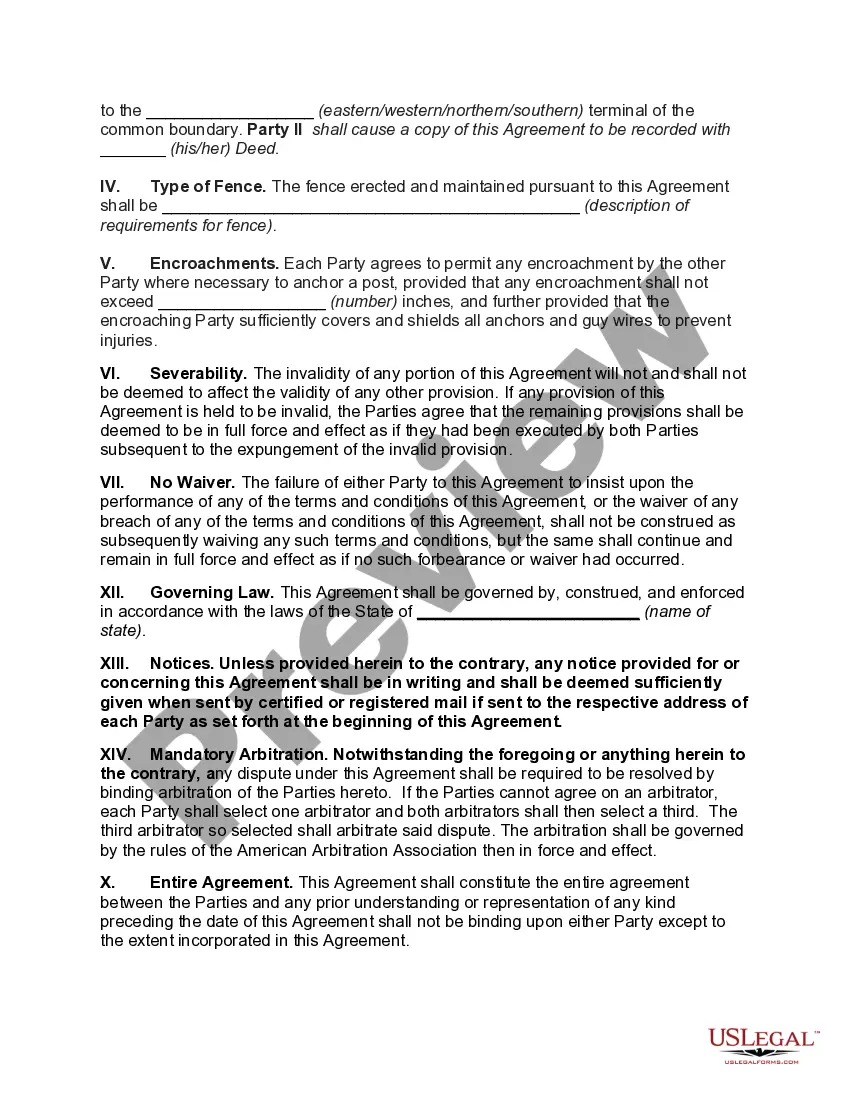
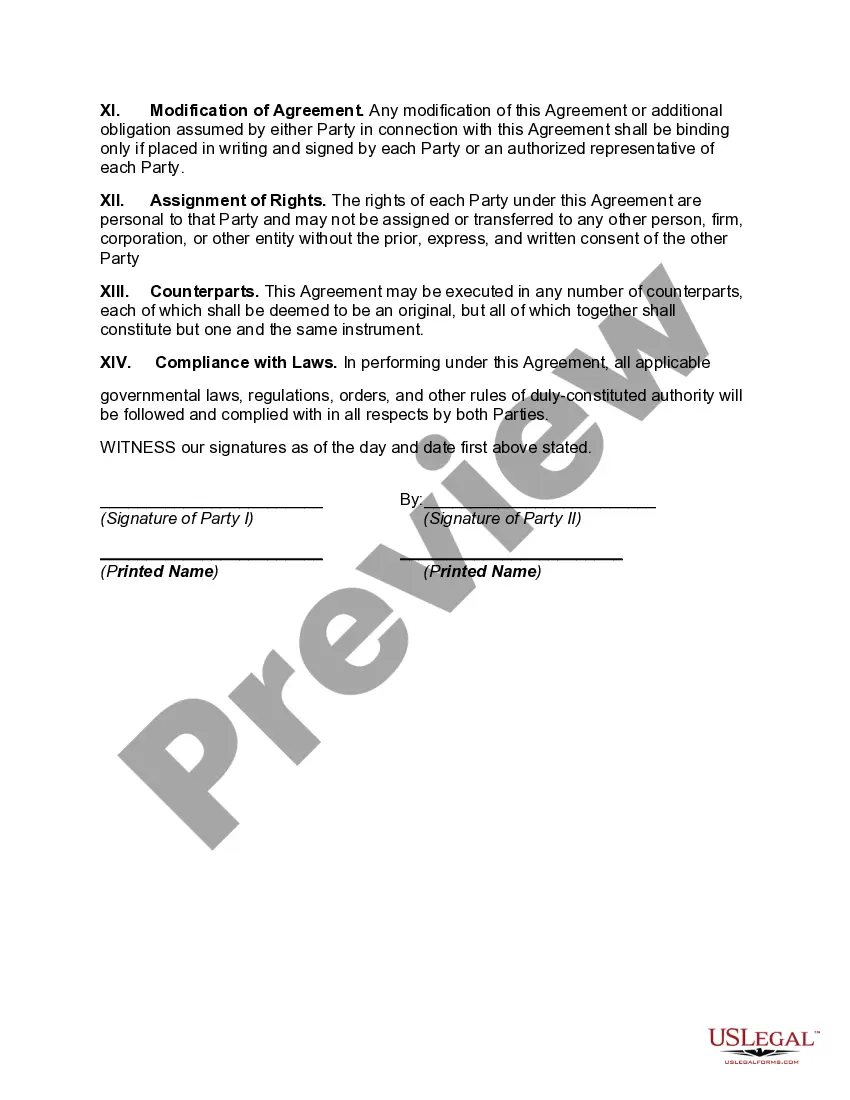
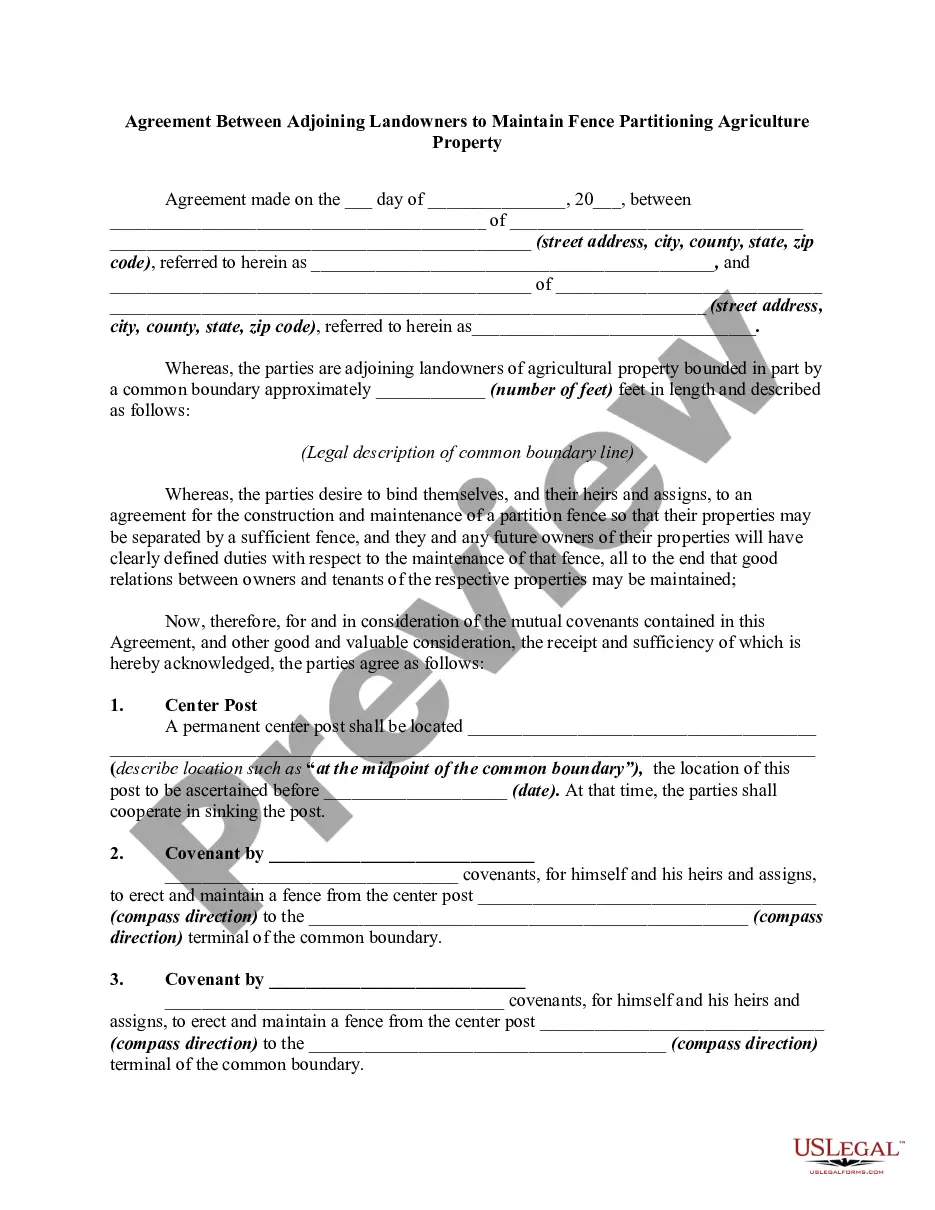
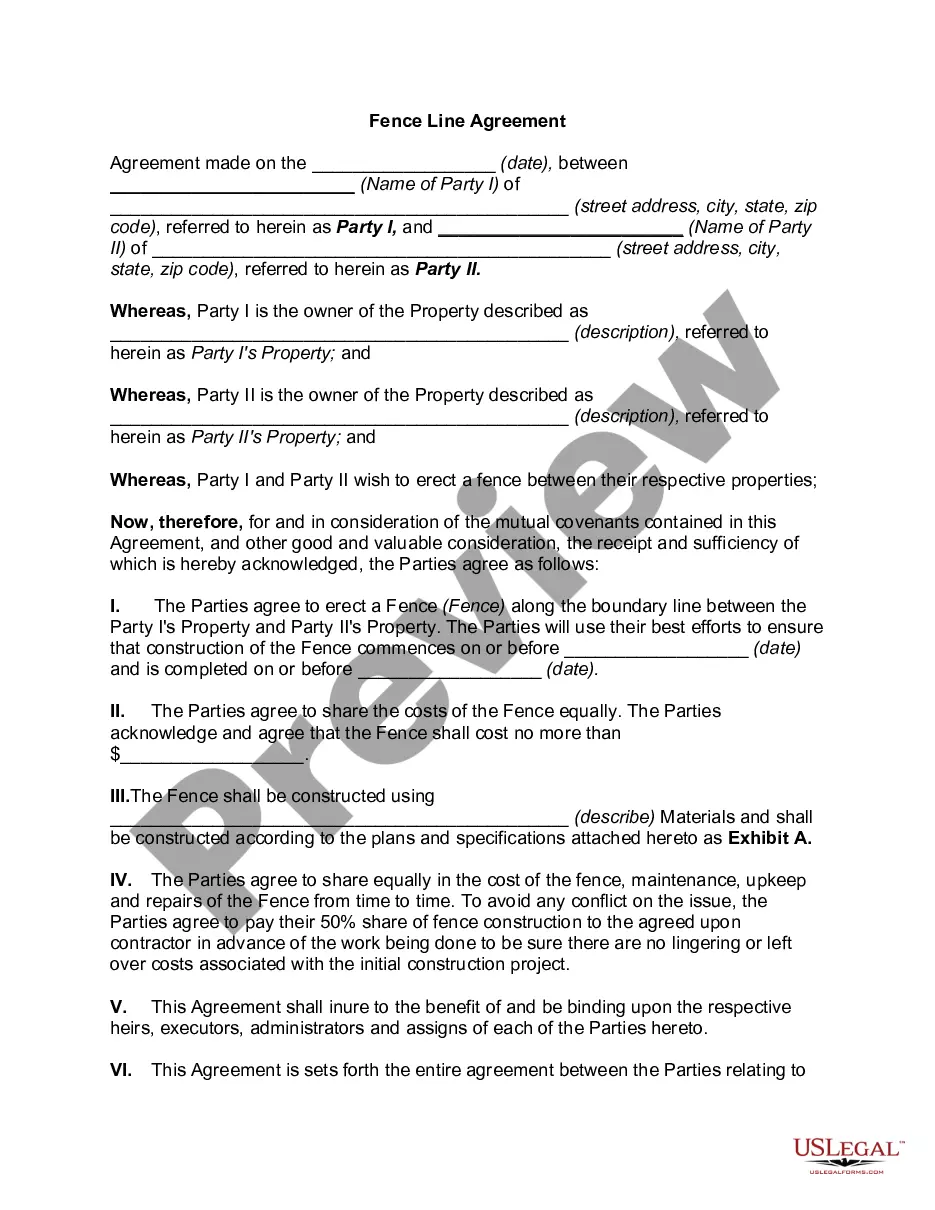
Tennessee Agreement between Adjoining Landowners to Maintain Partition Fence
Description
Get your form ready online
Our built-in tools help you complete, sign, share, and store your documents in one place.
Make edits, fill in missing information, and update formatting in US Legal Forms—just like you would in MS Word.
Download a copy, print it, send it by email, or mail it via USPS—whatever works best for your next step.
Sign and collect signatures with our SignNow integration. Send to multiple recipients, set reminders, and more. Go Premium to unlock E-Sign.
If this form requires notarization, complete it online through a secure video call—no need to meet a notary in person or wait for an appointment.
We protect your documents and personal data by following strict security and privacy standards.

Make edits, fill in missing information, and update formatting in US Legal Forms—just like you would in MS Word.

Download a copy, print it, send it by email, or mail it via USPS—whatever works best for your next step.

Sign and collect signatures with our SignNow integration. Send to multiple recipients, set reminders, and more. Go Premium to unlock E-Sign.

If this form requires notarization, complete it online through a secure video call—no need to meet a notary in person or wait for an appointment.

We protect your documents and personal data by following strict security and privacy standards.
Looking for another form?
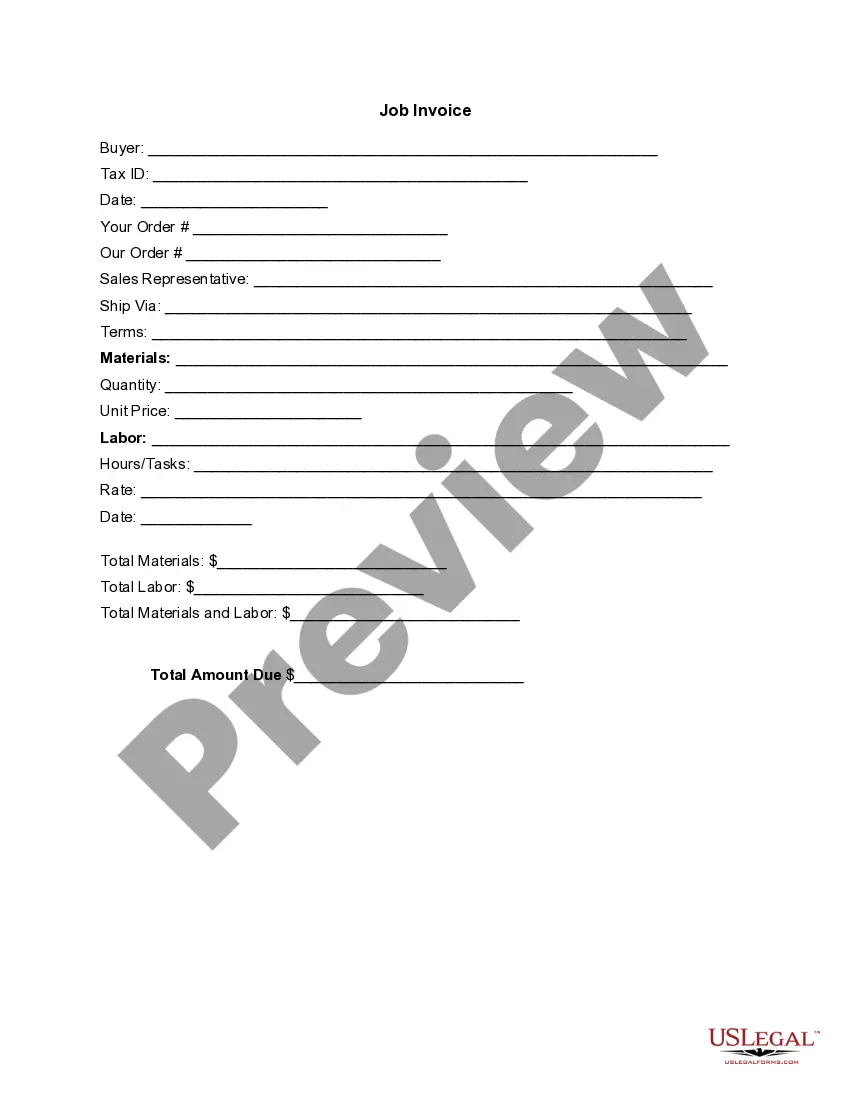



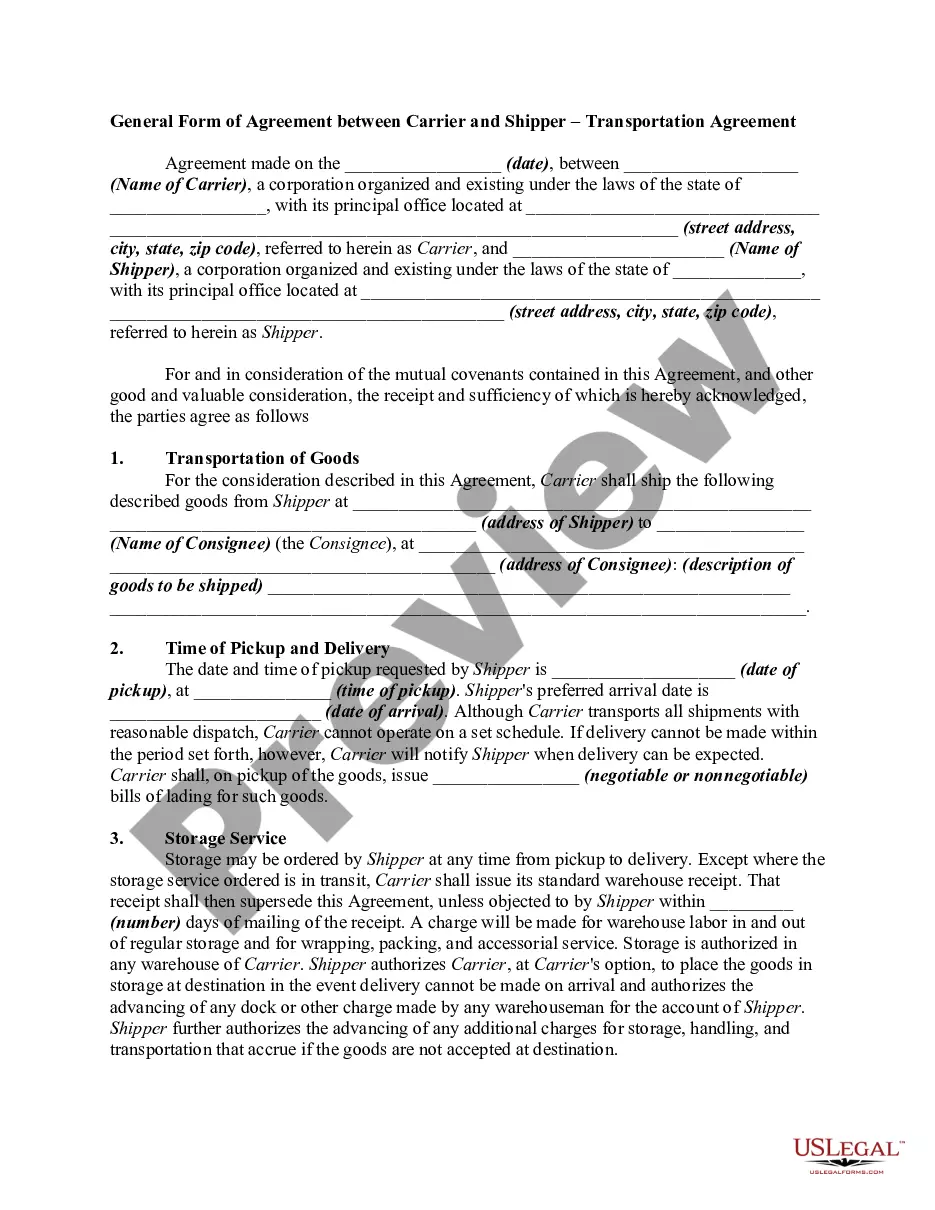
How to fill out Agreement Between Adjoining Landowners To Maintain Partition Fence?
Choosing the right lawful document format might be a have difficulties. Of course, there are plenty of themes available on the net, but how would you find the lawful develop you require? Use the US Legal Forms website. The service delivers 1000s of themes, like the Tennessee Agreement between Adjoining Landowners to Maintain Partition Fence, which can be used for enterprise and personal demands. Each of the varieties are checked out by experts and satisfy state and federal specifications.
In case you are presently authorized, log in in your accounts and click on the Acquire switch to obtain the Tennessee Agreement between Adjoining Landowners to Maintain Partition Fence. Utilize your accounts to check from the lawful varieties you may have purchased formerly. Visit the My Forms tab of your own accounts and get an additional duplicate of your document you require.
In case you are a whole new user of US Legal Forms, allow me to share easy instructions that you should comply with:
- Initial, make sure you have selected the right develop for your metropolis/region. You can look through the shape making use of the Preview switch and read the shape information to make certain this is the right one for you.
- When the develop is not going to satisfy your preferences, utilize the Seach industry to get the correct develop.
- When you are positive that the shape is acceptable, select the Get now switch to obtain the develop.
- Choose the pricing strategy you want and enter in the needed information and facts. Make your accounts and pay for the order making use of your PayPal accounts or credit card.
- Choose the data file formatting and obtain the lawful document format in your system.
- Comprehensive, modify and print and indication the acquired Tennessee Agreement between Adjoining Landowners to Maintain Partition Fence.
US Legal Forms is definitely the most significant local library of lawful varieties for which you can discover different document themes. Use the service to obtain appropriately-made papers that comply with condition specifications.
Form popularity
FAQ
Tennessee Fence Law Basics For example, partition fences are the responsibility of both property owners even if only one neighbor needs a fence. Costs for the building and maintenance of the fence are to be shared equally by each landowner. That means you could be forced to pay for a fence you neither need nor want.
Tennessee common law uses a hierarchy of boundary markers when determining the true boundary between tracts of land. Chancery courts first look to natural monuments referenced in the deed for boundary authority, which include mountains, rivers, streams, trees, rocks, paths, fords, etc.
§ 44-8-202. Partition fences may be erected and repaired at the expense, jointly, of the occupants or owners; or if a person makes a fence a partition fence, by joining to it or using it as such, that person shall pay to the person erecting it that person's proportion of the expense.
Contrary to common belief, there is not a designated side of the fence to each property. The most common way to find out who owns what side, is to refer to the Title Plan or Land Registry. In this, the T mark is used to indicate who the boundary belongs to and therefore who is responsible for its upkeep.
GENERAL FENCE RESTRICTIONS The height of your fence should not be above 42 inches for your front yard. It should also be 25 feet from the property line at the front yard. For the rear and side yards of your property, there is no limit in height. This is because you cannot limit vision from the road to the lot.
As a rule, if a fence is not a boundary fence, it must be built at least two feet inside your property line. The best options for building near a neighbor's existing fence are placing the new one right up against the current one or leaving enough space between the fences for someone to mow.
When looking at the plans, the ownership is indicated by a ?T? marked on the plans on one side of a boundary. If the ?T? is written on your side of the boundary, you're responsible for maintaining it. If there's an H (although actually it's two joined Ts) the boundary is the joint responsibility of both parties.
In 1947, all remnants of the "fencing-out" or "open range" system was abolished. Tennessee law now prohibits owners from letting their livestock knowingly or negligently run at large. Special rules apply in determining liability in disputes between adjoining landowners when livestock escape through a partition fence.