Tennessee Covenant Not to Sue by Parents Regarding a Claim of Their Minor Child

State:
Multi-State
Control #:
US-02926BG
Format:
Word; 
Rich Text
Instant download

Description

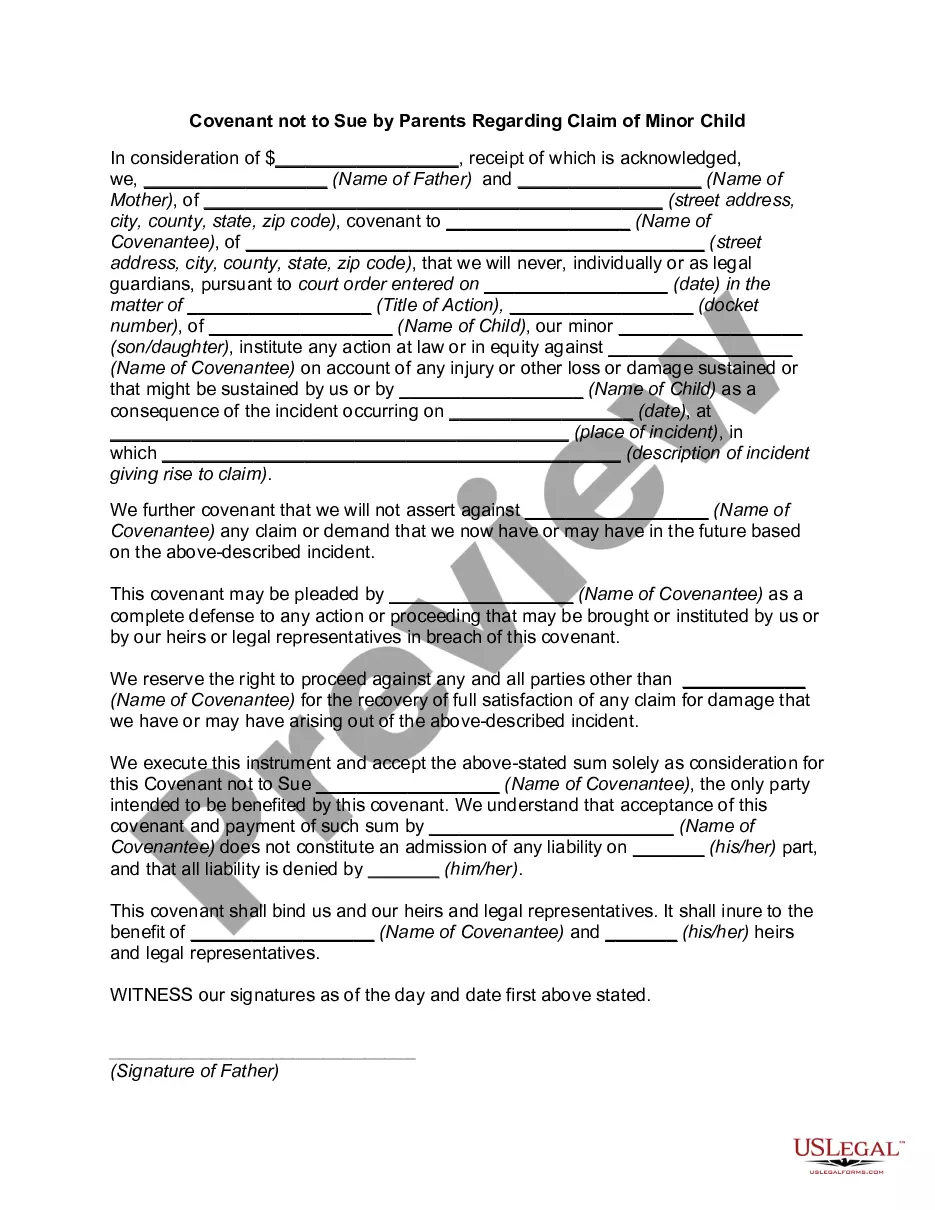
A covenant not to sue is a covenant entered into by a party who had a cause of action at the time of making it, and by which he agrees not to sue the party liable to such action. Covenants of this nature, are either covenants perpetual not to sue, or covenants not to sue for a limited time; for example, seven years.


A covenant not to sue is not a release. The difference is one of intent and grows out of the construction placed on the terms of the instrument, since a covenant not to sue is not a present abandonment or relinquishment of a right or claim but merely an agreement not to enforce an existing cause of action, and, although it may operate as a release between the parties to the agreement, it will not release a claim against joint obligors or joint tortfeasors. In the case of a release, there is an immediate discharge, whereas, in the case of a covenant not to sue, there is merely an agreement not to prosecute a suit.


This form is a generic example that may be referred to when preparing such a form for your particular state. It is for illustrative purposes only. Local laws should be consulted to determine any specific requirements for such a form in a particular jurisdiction.
Free preview
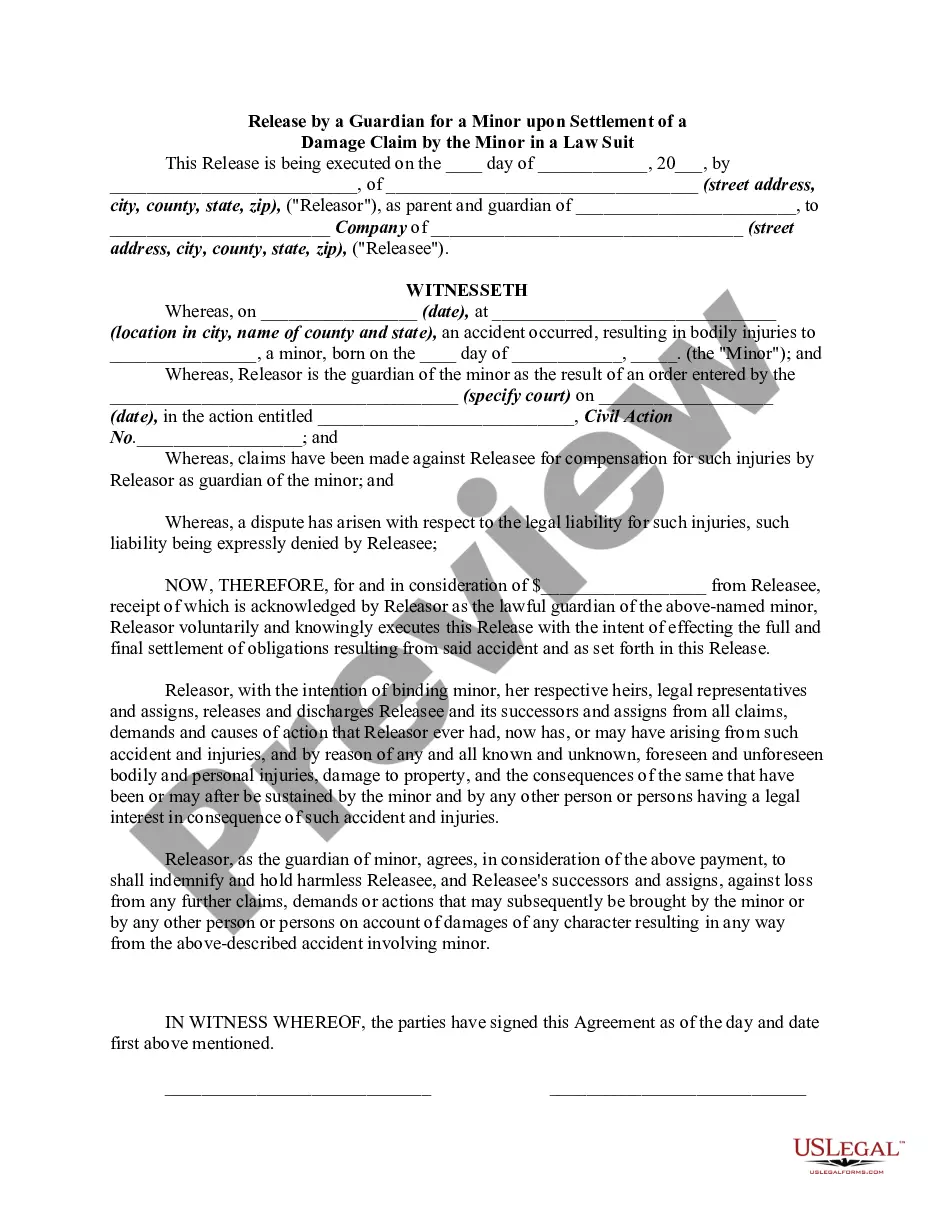
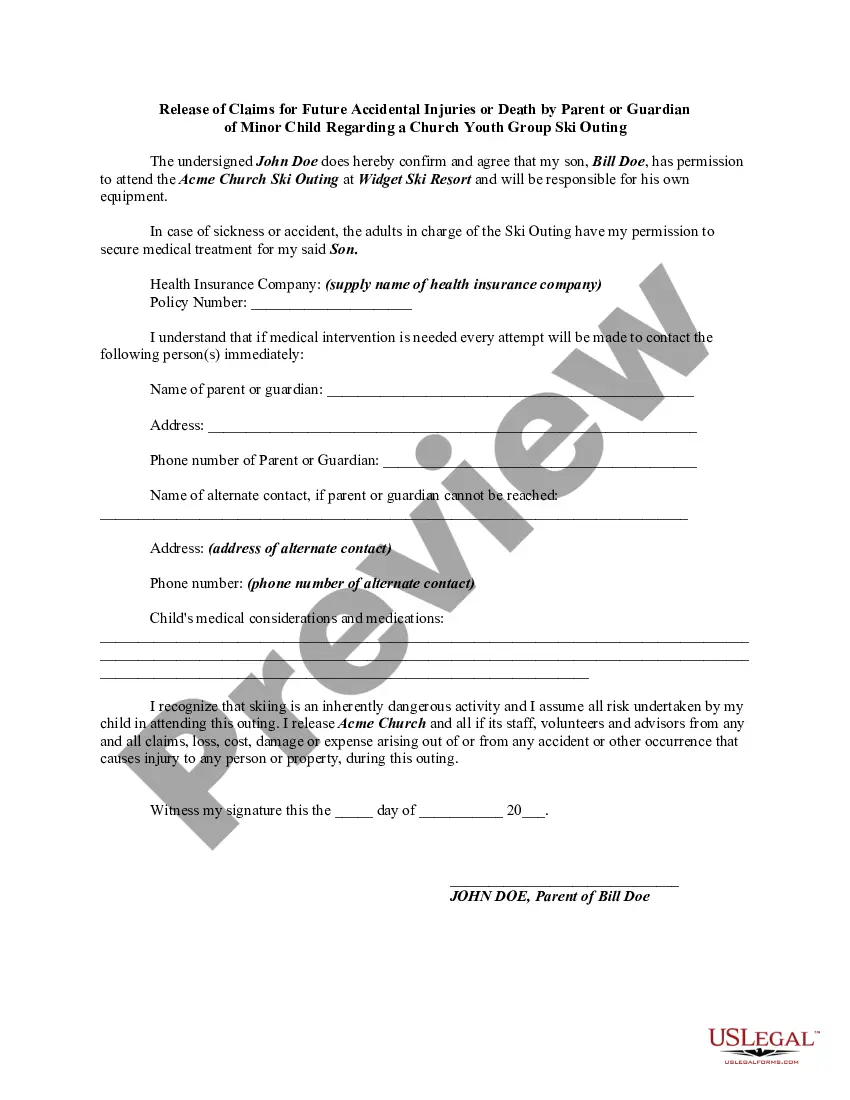
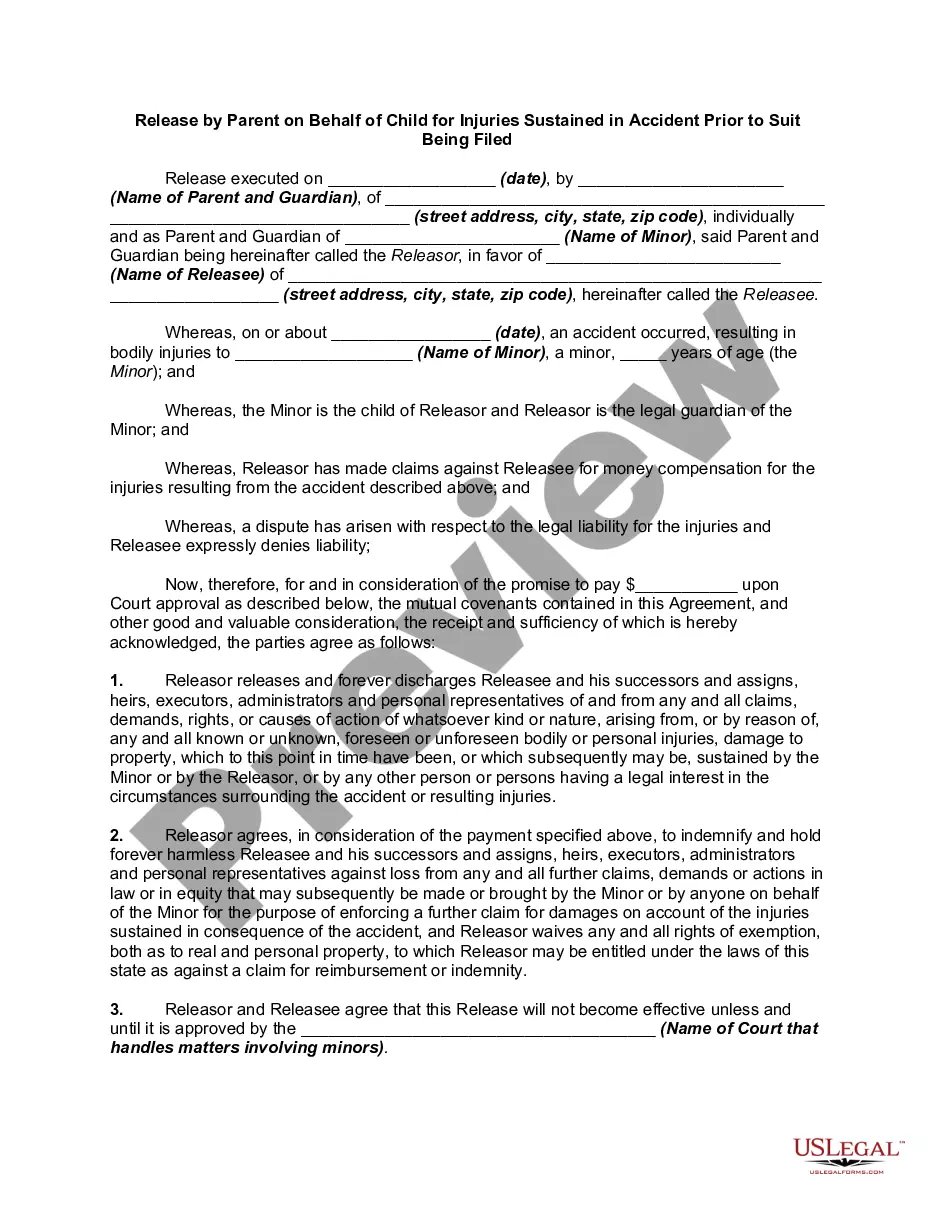
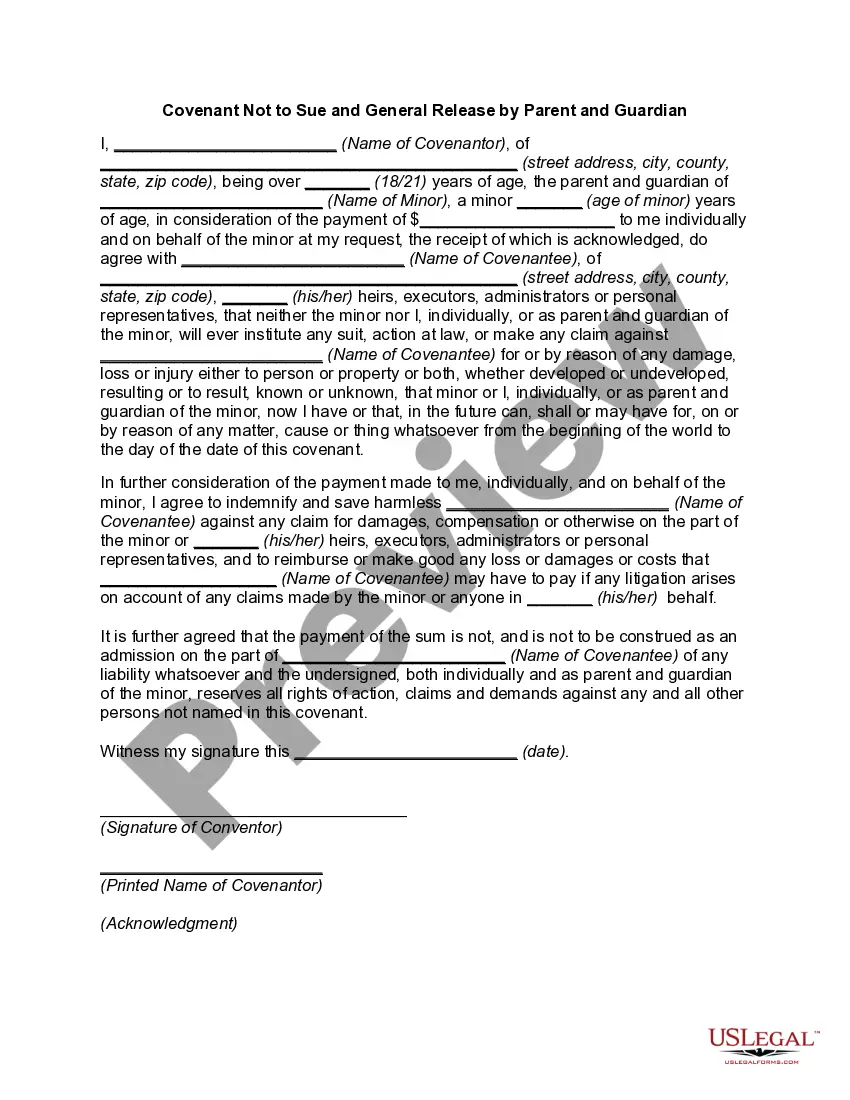
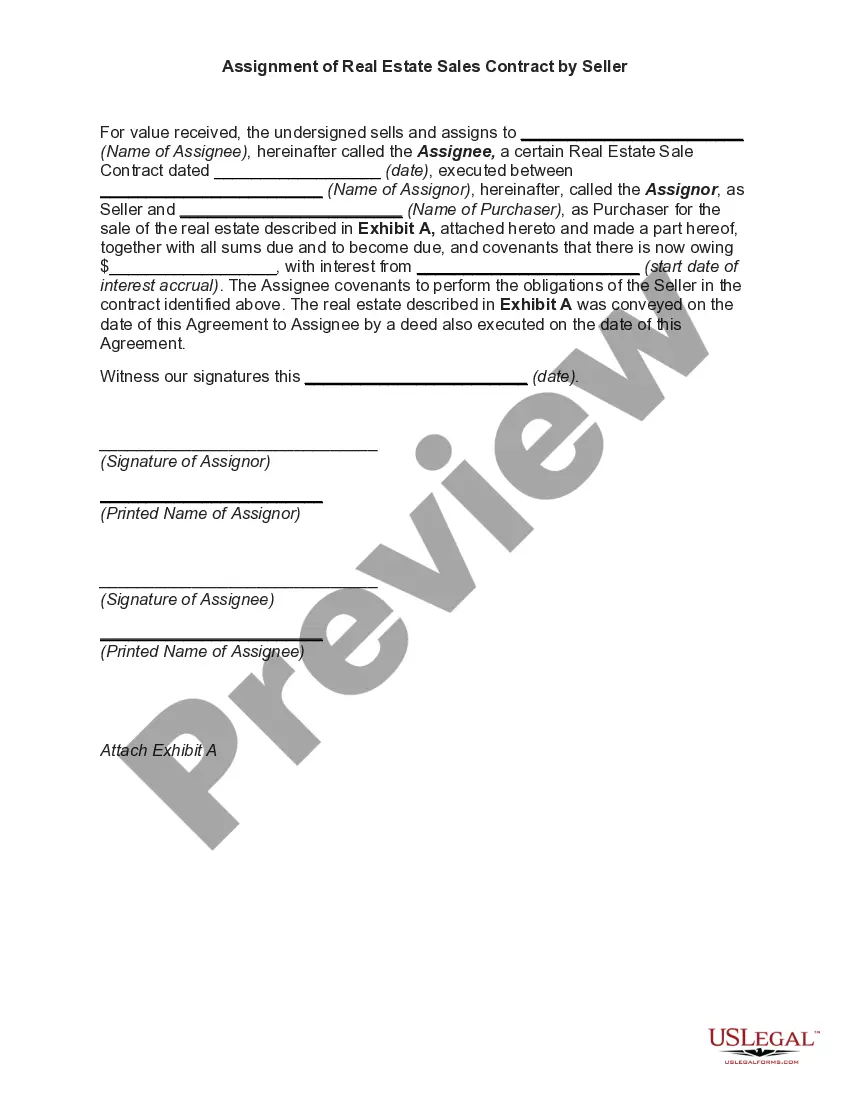
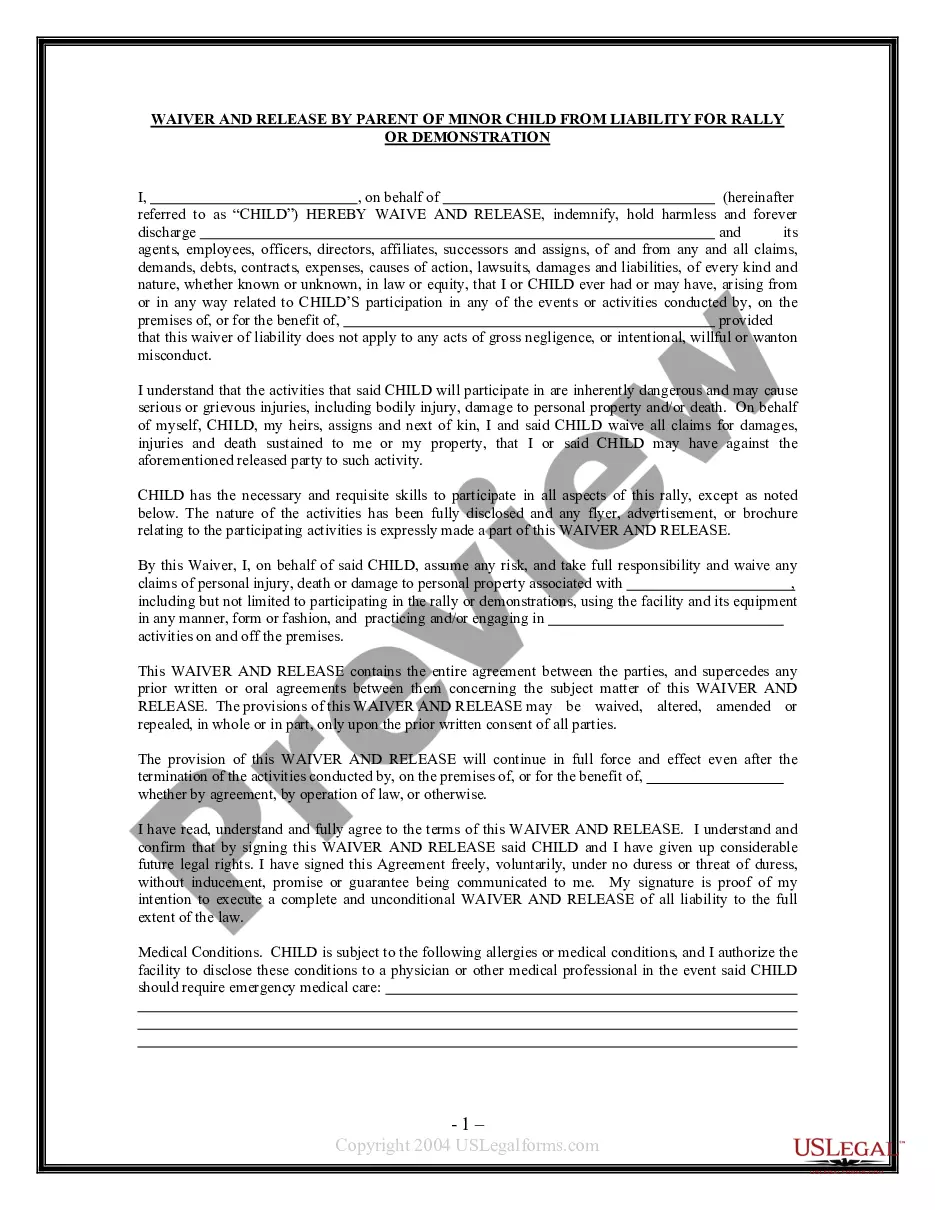
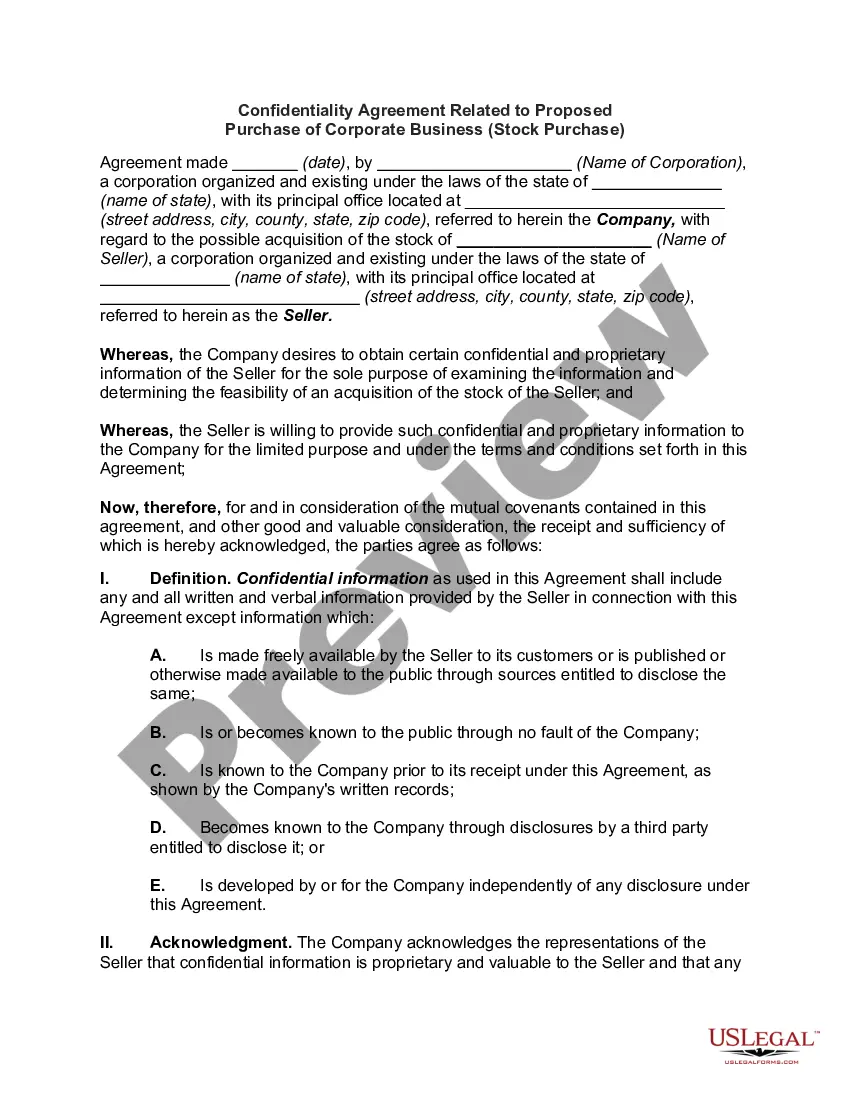
  • Preview Covenant Not to Sue by Parents Regarding a Claim of Their Minor Child
  • Preview Covenant Not to Sue by Parents Regarding a Claim of Their Minor Child

How to fill out Covenant Not To Sue By Parents Regarding A Claim Of Their Minor Child?

If you wish to compile, obtain, or generate legal document templates, utilize US Legal Forms, the largest collection of legal forms available online.

Take advantage of the site’s user-friendly search feature to locate the documents you require.

Numerous templates for business and personal purposes are arranged by categories and states, or keywords.

Step 4. After you have found the form you need, click the Acquire now button. Choose the pricing plan you prefer and enter your details to set up an account.

Step 5. Process the transaction. You can use your credit card or PayPal account to complete the transaction.

  1. Use US Legal Forms to find the Tennessee Covenant Not to Sue by Parents Regarding a Claim of Their Minor Child with just a few clicks.
  2. If you are already a US Legal Forms user, Log In to your account and click the Obtain button to locate the Tennessee Covenant Not to Sue by Parents Regarding a Claim of Their Minor Child.
  3. You can also access forms you previously downloaded in the My documents section of your account.
  4. If you are using US Legal Forms for the first time, follow the instructions below.
  5. Step 1. Ensure you have selected the form for the correct city/state.
  6. Step 2. Use the Preview option to review the form’s details. Don’t forget to read through the information.
  7. Step 3. If you are dissatisfied with the form, utilize the Search field at the top of the screen to discover alternative versions of the legal form template.

Form popularity

FAQ

Yes, a parent can pursue legal action for back child support if payments have not been made as agreed upon in a court order. Filing for support recovery requires proper documentation and adherence to court rules. Courts generally take unpaid support seriously, and it can result in significant consequences for the non-compliant parent. Assistance through resources like the Tennessee Covenant Not to Sue by Parents Regarding a Claim of Their Minor Child may guide you through this process.

The new child custody law in Tennessee emphasizes shared parenting, encouraging both parents to participate in their children's lives actively. This approach aims to promote stability and emotional well-being for the child. Through mediation and other cooperative methods, the legislation supports amicable custody arrangements. Understanding the Tennessee Covenant Not to Sue by Parents Regarding a Claim of Their Minor Child will help parents navigate this evolving legal landscape.

Primary custody in Tennessee is determined by the court based on the child's best interests, rather than a strict guideline favoring one parent over another. Factors like the child's age, the emotional bond with each parent, and the stability of the home environment are considered. While mothers are often granted primary custody, fathers can equally obtain it depending on circumstances. Knowledge of the Tennessee Covenant Not to Sue by Parents Regarding a Claim of Their Minor Child can be beneficial during custody discussions.

In Tennessee, a father generally cannot take a child away from the mother without consent, especially if there is a court order in place. Leaving without permission could lead to legal repercussions, including accusations of parental kidnapping. It is essential to respect custody arrangements and communicate openly. Learning about the Tennessee Covenant Not to Sue by Parents Regarding a Claim of Their Minor Child can provide useful insights into parental rights.

A settlement agreement covenant not to sue is a legal contract that prevents one party from filing a lawsuit against another regarding specific claims. In the realm of family law, this might pertain to disputes involving minor children, ensuring parents resolve issues amicably. It can also provide clarity on various responsibilities and rights. Familiarizing yourself with the Tennessee Covenant Not to Sue by Parents Regarding a Claim of Their Minor Child may simplify matters.

Tennessee does not automatically enforce a 50/50 custody arrangement; rather, custody decisions depend on the child's best interests. Courts evaluate numerous factors, including the relationships with each parent, the child's needs, and the stability of each home. While equal custody is possible, it is not guaranteed. A thorough understanding of the Tennessee Covenant Not to Sue by Parents Regarding a Claim of Their Minor Child can be helpful when navigating these decisions.

Yes, in many cases, parents can be held liable for the negligent or intentional acts of their minor children in Tennessee. This liability often stems from a parent's duty to supervise their child and ensure they behave appropriately. The Tennessee Covenant Not to Sue by Parents Regarding a Claim of Their Minor Child may help address certain legal aspects surrounding this liability. It is wise to understand your rights and responsibilities carefully.

In Tennessee, children can express their preferences regarding which parent they wish to live with around the age of 12. However, the court considers various factors before making a custody decision, including the child's best interests. Ultimately, the court has the final say, even if the child has a clear preference. Consulting an attorney familiar with Tennessee Covenant Not to Sue by Parents Regarding a Claim of Their Minor Child can provide assistance.

In certain situations, parents can be held liable for the actions of their children, especially if negligence is involved. The Tennessee Covenant Not to Sue by Parents Regarding a Claim of Their Minor Child addresses some aspects of this liability. Understanding these potential legal consequences is important for all parents. Utilizing platforms like US Legal Forms can provide valuable resources for families dealing with such issues.

Yes, children do have the right to sue, but they must do so through a parent or guardian until they reach adulthood. The legal framework of the Tennessee Covenant Not to Sue by Parents Regarding a Claim of Their Minor Child impacts how children can pursue claims. Ensuring that proper legal representation is in place can help navigate these situations effectively. Consulting with legal professionals can clarify the process.

Trusted and secure by over 3 million people of the world’s leading companies

Tennessee Covenant Not to Sue by Parents Regarding a Claim of Their Minor Child