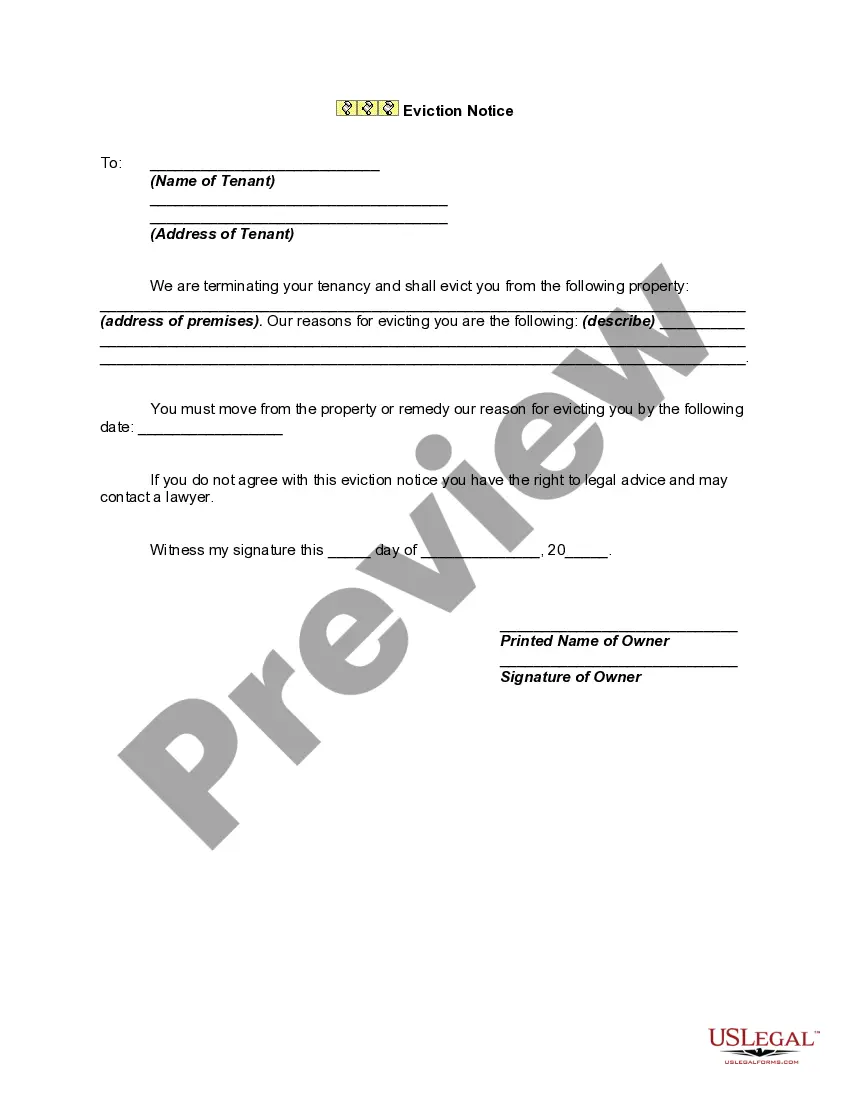
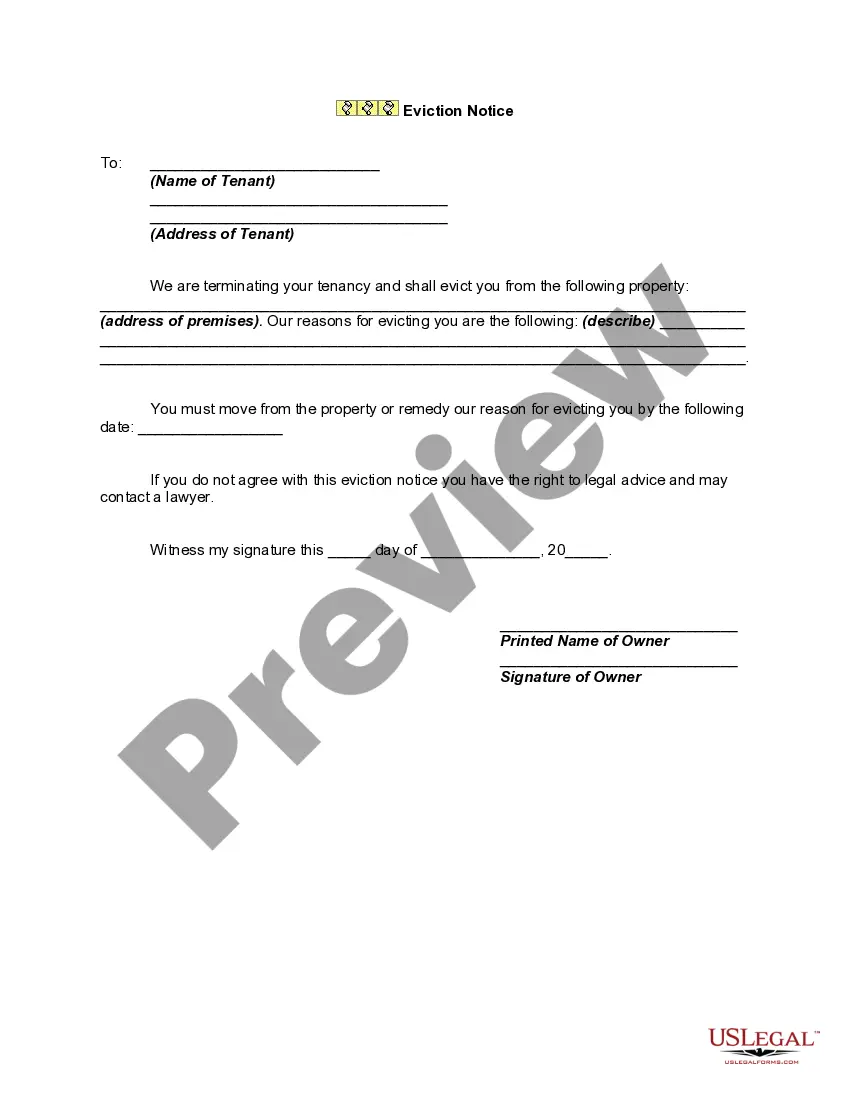
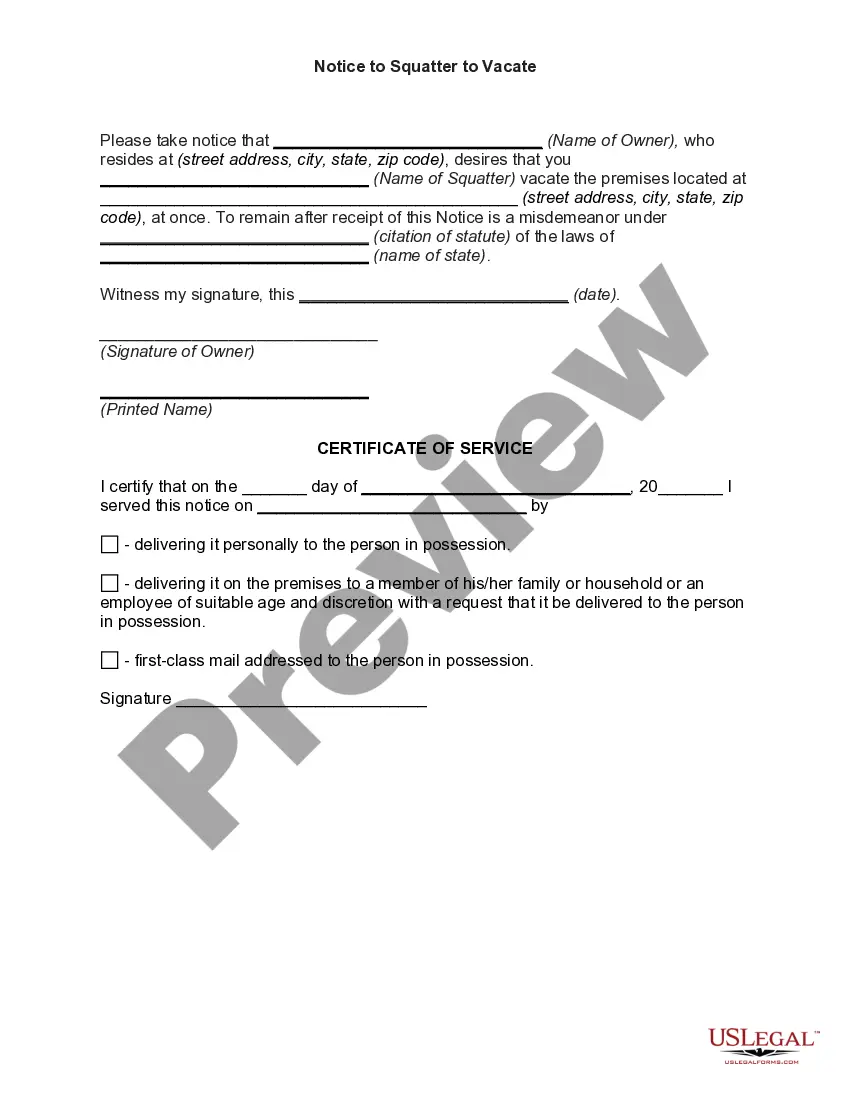
Tennessee Eviction Notice for Spouse
Description

Get your form ready online
Our built-in tools help you complete, sign, share, and store your documents in one place.
Make edits, fill in missing information, and update formatting in US Legal Forms—just like you would in MS Word.
Download a copy, print it, send it by email, or mail it via USPS—whatever works best for your next step.
Sign and collect signatures with our SignNow integration. Send to multiple recipients, set reminders, and more. Go Premium to unlock E-Sign.
If this form requires notarization, complete it online through a secure video call—no need to meet a notary in person or wait for an appointment.
We protect your documents and personal data by following strict security and privacy standards.
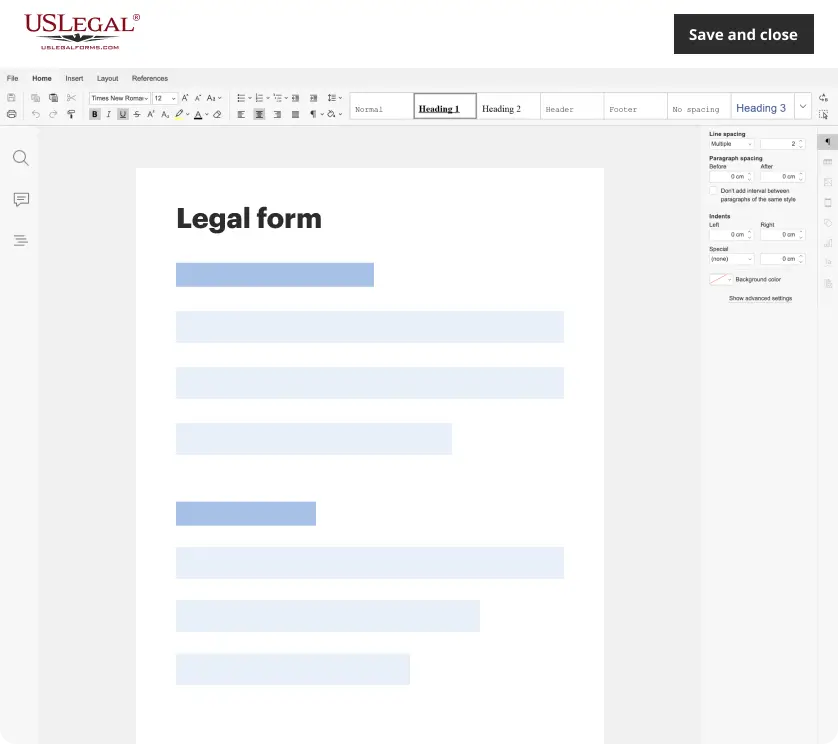
Make edits, fill in missing information, and update formatting in US Legal Forms—just like you would in MS Word.
Download a copy, print it, send it by email, or mail it via USPS—whatever works best for your next step.
Sign and collect signatures with our SignNow integration. Send to multiple recipients, set reminders, and more. Go Premium to unlock E-Sign.

If this form requires notarization, complete it online through a secure video call—no need to meet a notary in person or wait for an appointment.
We protect your documents and personal data by following strict security and privacy standards.
Looking for another form?

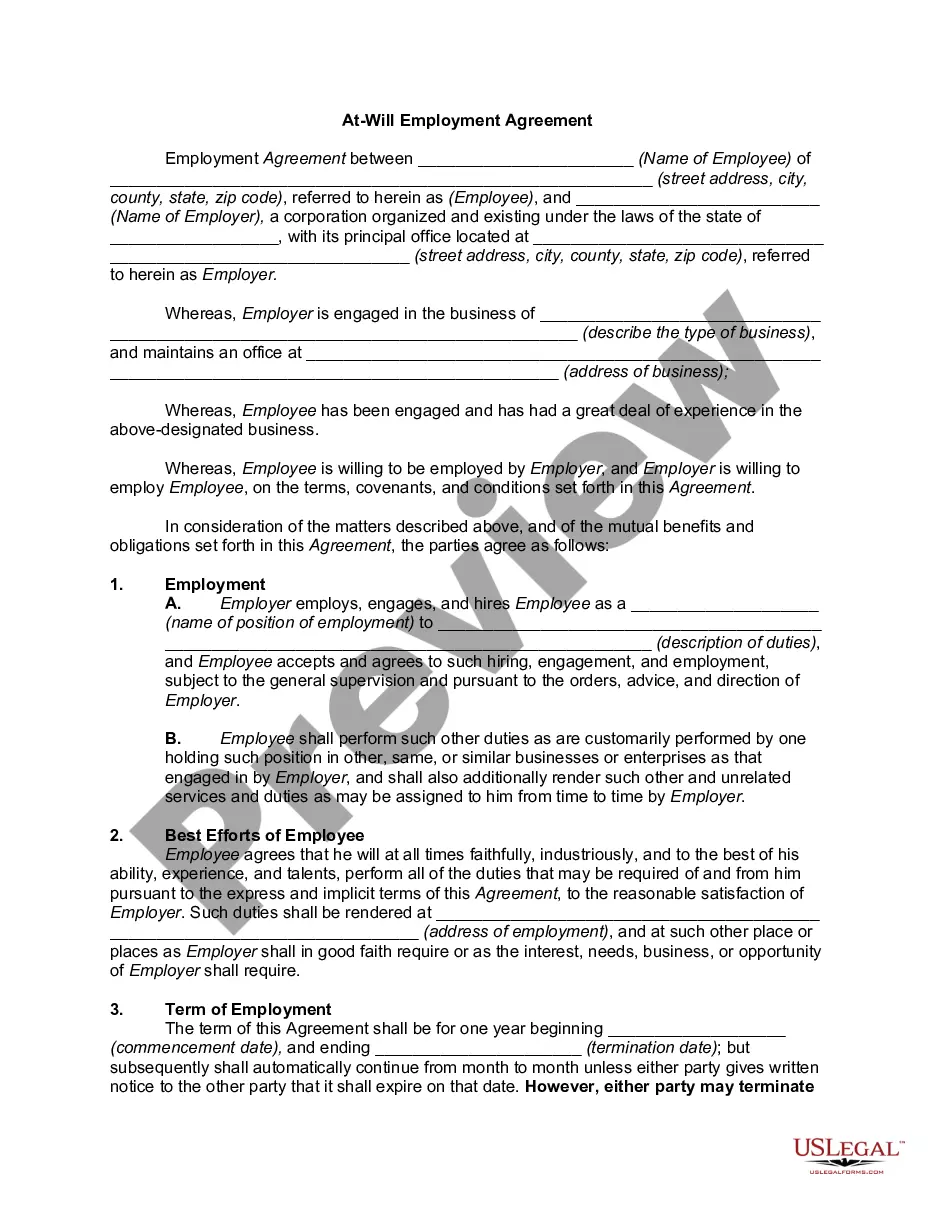
How to fill out Eviction Notice For Spouse?
Are you currently in a situation where you require documents for either professional or personal purposes every day.
There are numerous legal document templates available online, but finding reliable ones can be challenging.
US Legal Forms offers thousands of form templates, such as the Tennessee Eviction Notice for Spouse, which are designed to comply with federal and state regulations.
Utilize US Legal Forms, the most extensive collection of legal forms, to save time and avoid mistakes.
The service provides professionally crafted legal document templates that can be used for various purposes. Create an account on US Legal Forms and start making your life a bit easier.
- If you are already familiar with the US Legal Forms website and have an account, simply Log In.
- Then, you can download the Tennessee Eviction Notice for Spouse template.
- If you do not have an account and want to start using US Legal Forms, follow these steps.
- Find the form you need and ensure it is for the correct state/region.
- Use the Review button to examine the form.
- Check the description to confirm that you have selected the correct form.
- If the form is not what you are looking for, use the Search field to find the form that meets your needs and requirements.
- Once you find the right form, click on Purchase now.
- Choose the pricing plan you want, complete the required information to create your account, and place an order using your PayPal or credit card.
- Select a convenient file format and download your copy.
- You can find all the document templates you have purchased in the My documents menu. You can obtain another copy of the Tennessee Eviction Notice for Spouse at any time, if necessary. Just click on the desired form to download or print the document template.
Form popularity
FAQ
California is a ?community property state,? which means property a couple acquires during their marriage belongs to both parties. In many cases, this includes their home, which means one spouse cannot force the other to move out simply because they are in the process of divorcing.
Tennessee Eviction Process Timeline Notice Received by TenantsAverage TimelineIssuing an Official Notice3-30 daysIssuing and Serving of Summons and ComplaintAt least 6 days before the hearingCourt Hearing and Judgment for Possession6 days after Service of Summons and ComplaintIssuance of Writ of Possession10 days1 more row ?
In Tennessee, a landlord can evict a tenant without a lease or with a lease that has ended (known as a ?holdover tenant? or ?tenant at will?). To do so, they must first terminate the tenancy by giving proper notice to move out (30 days for tenants that pay month-to-month).
You might urgently need to stop them coming back so you can be safe in your home. You should apply for a: 'non-molestation order' to protect you or your children from being harmed by your ex-partner. 'occupation order' to give you the right to stay in your home and stop your ex-partner coming back.
If your spouse has abandoned you, you have the right to seek a legal separation order known as a divorce from bed and board. Despite the name, this order does not end your marriage. It could entitle you to certain benefits of a divorce, such as alimony, child custody, and child support.
Both parties have a right to stay in the home. No one can force you to leave your residence without a court order unless there is domestic violence. A temporary orders hearing must be held to get such a court order in a divorce.
You can move back into the marital residence so long as no court order precludes you from doing so, but you must be cautioned about any potential confrontation which may result.
If you have a valid agreement in place that addresses who will stay in the house and who will move out, you have leverage through that agreement for keeping your spouse out. Without such an agreement you may have to get a court order from the judge to keep them out if they insist on moving back in.