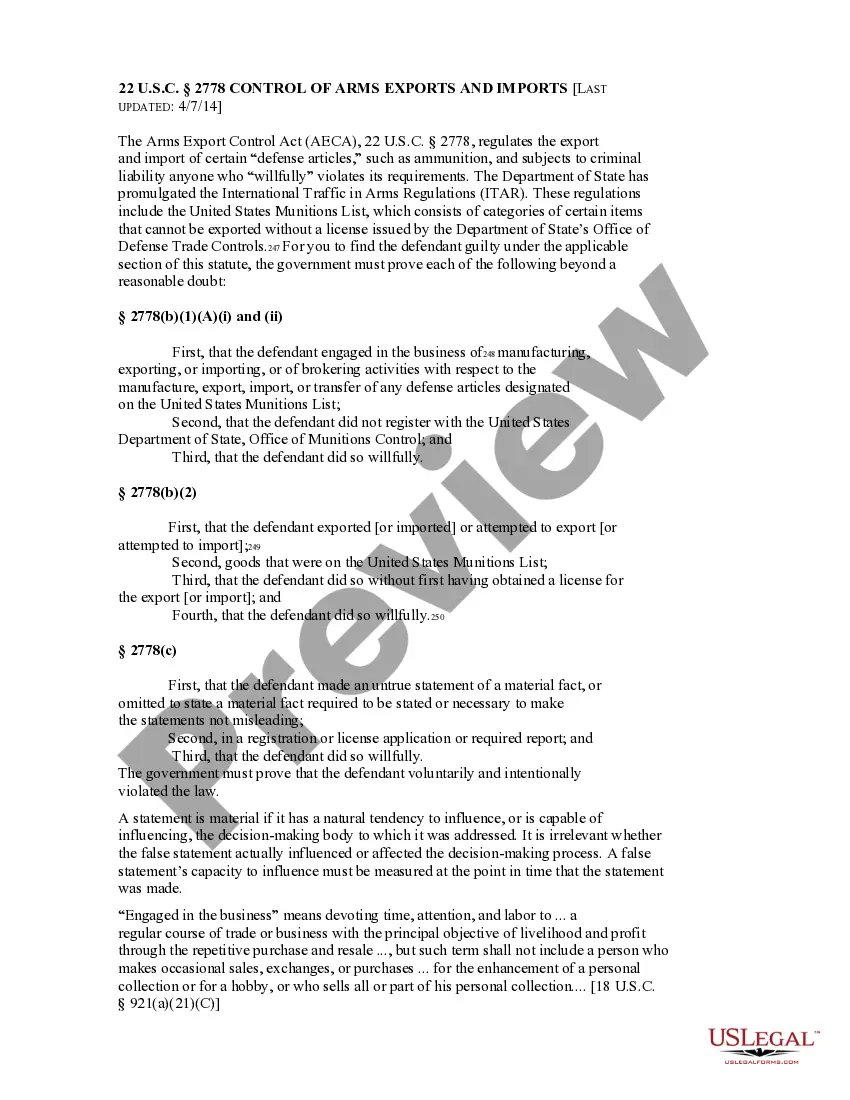
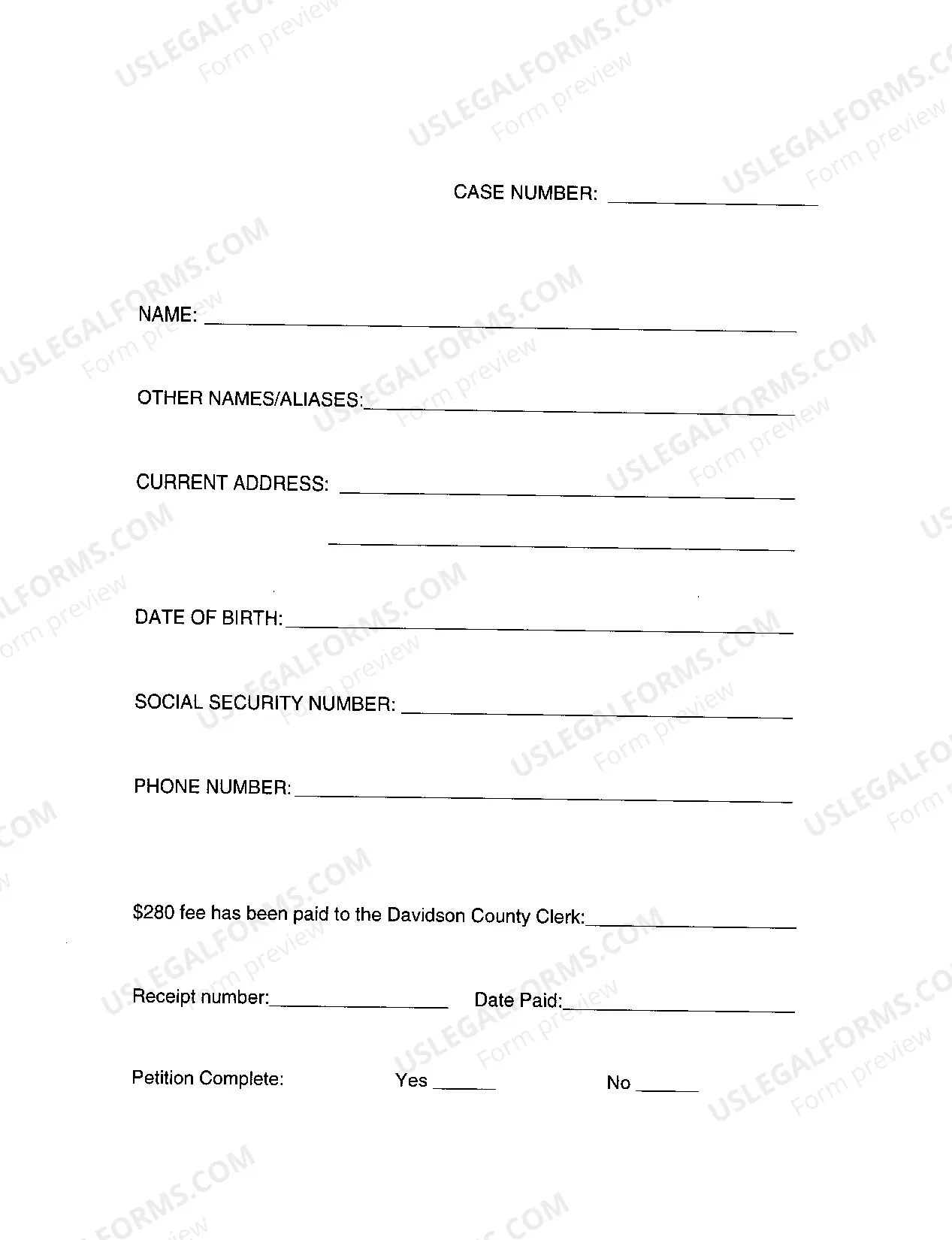
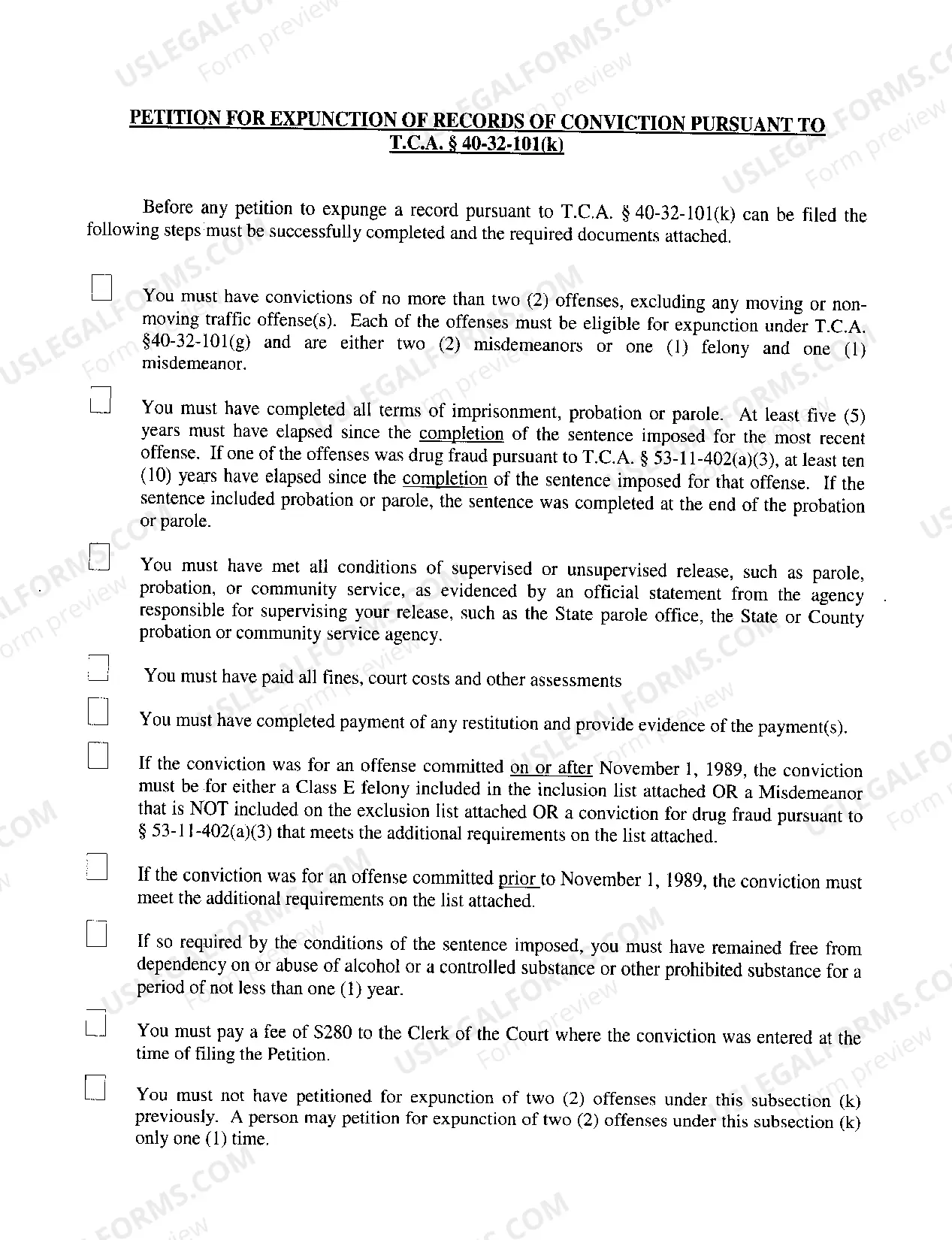
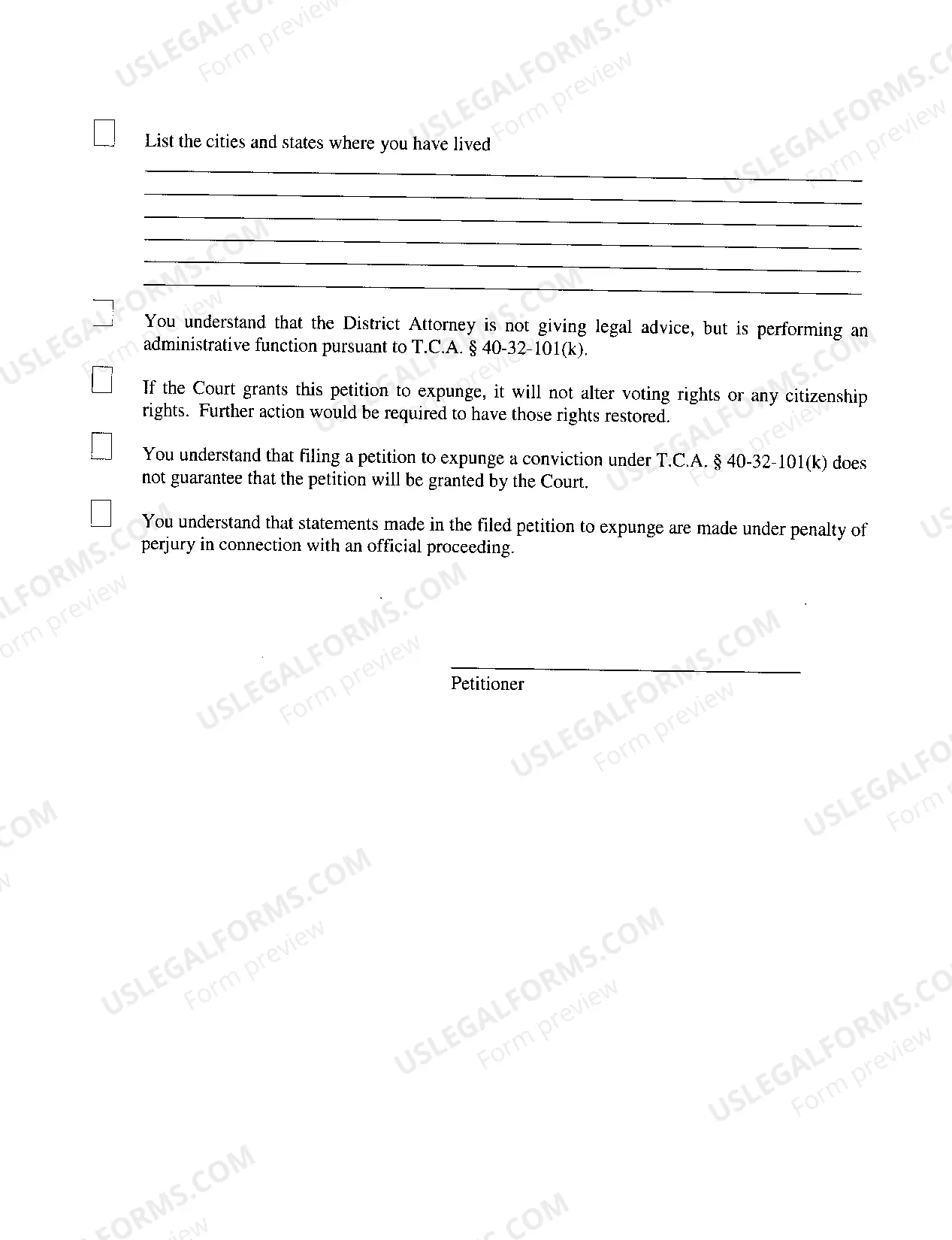
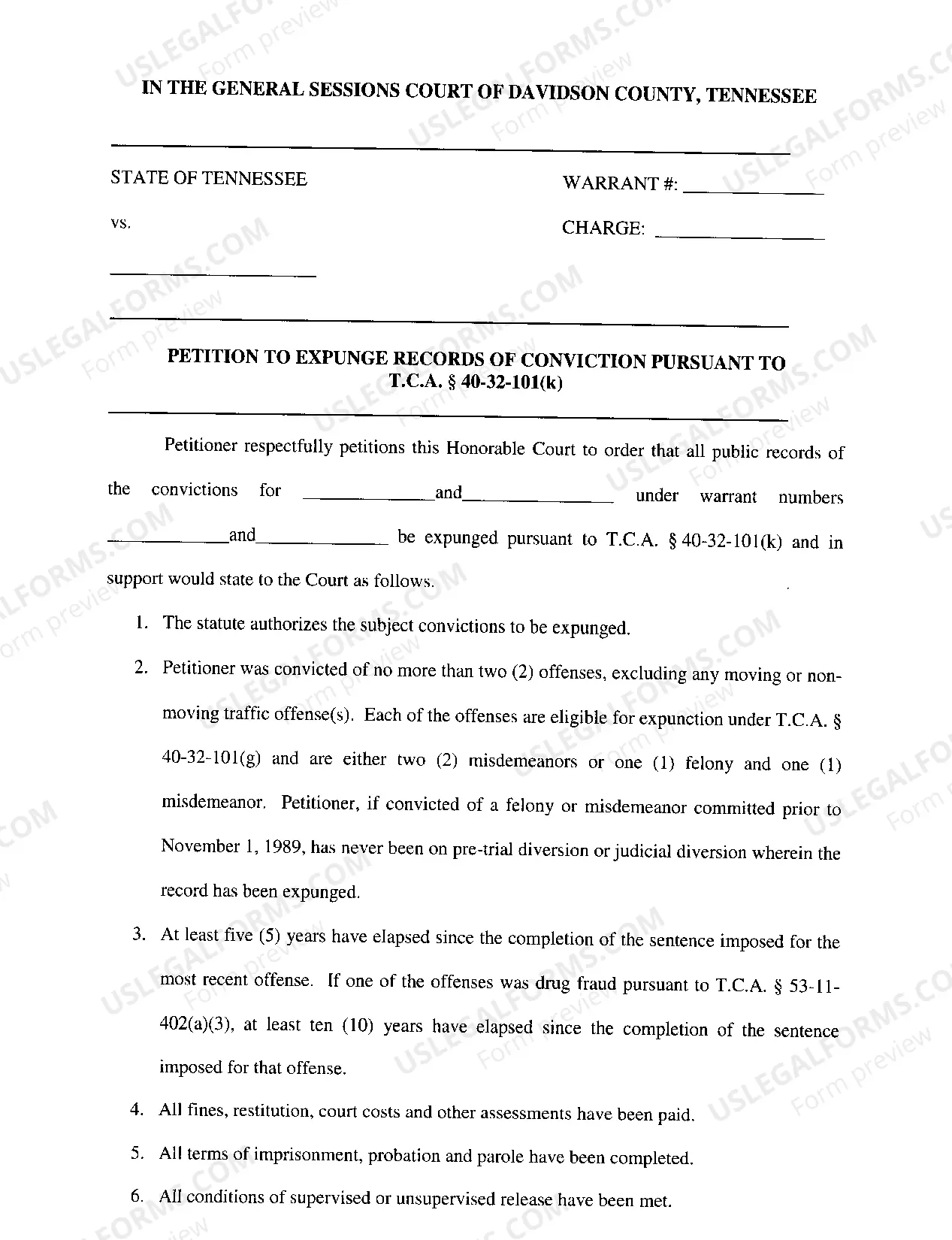
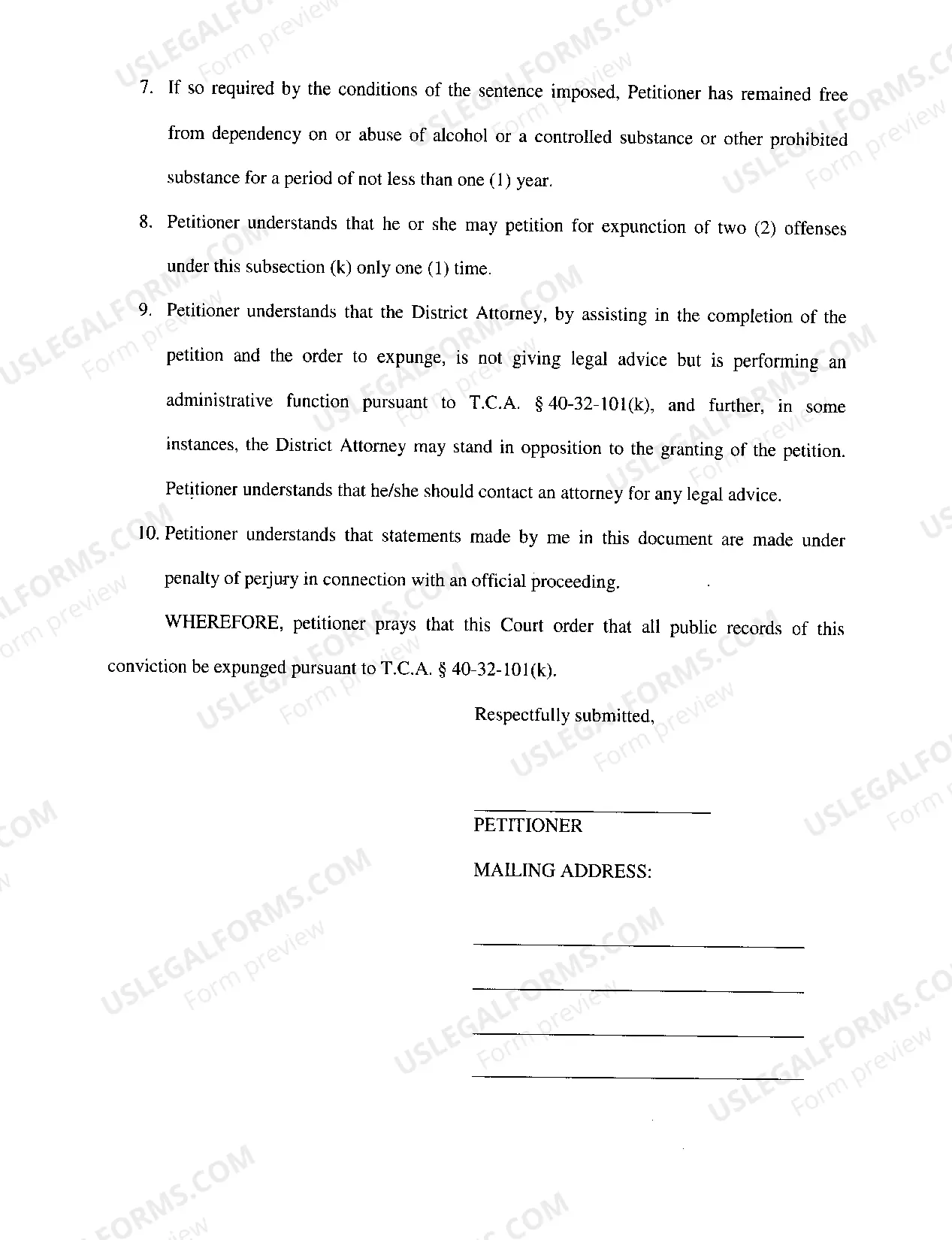
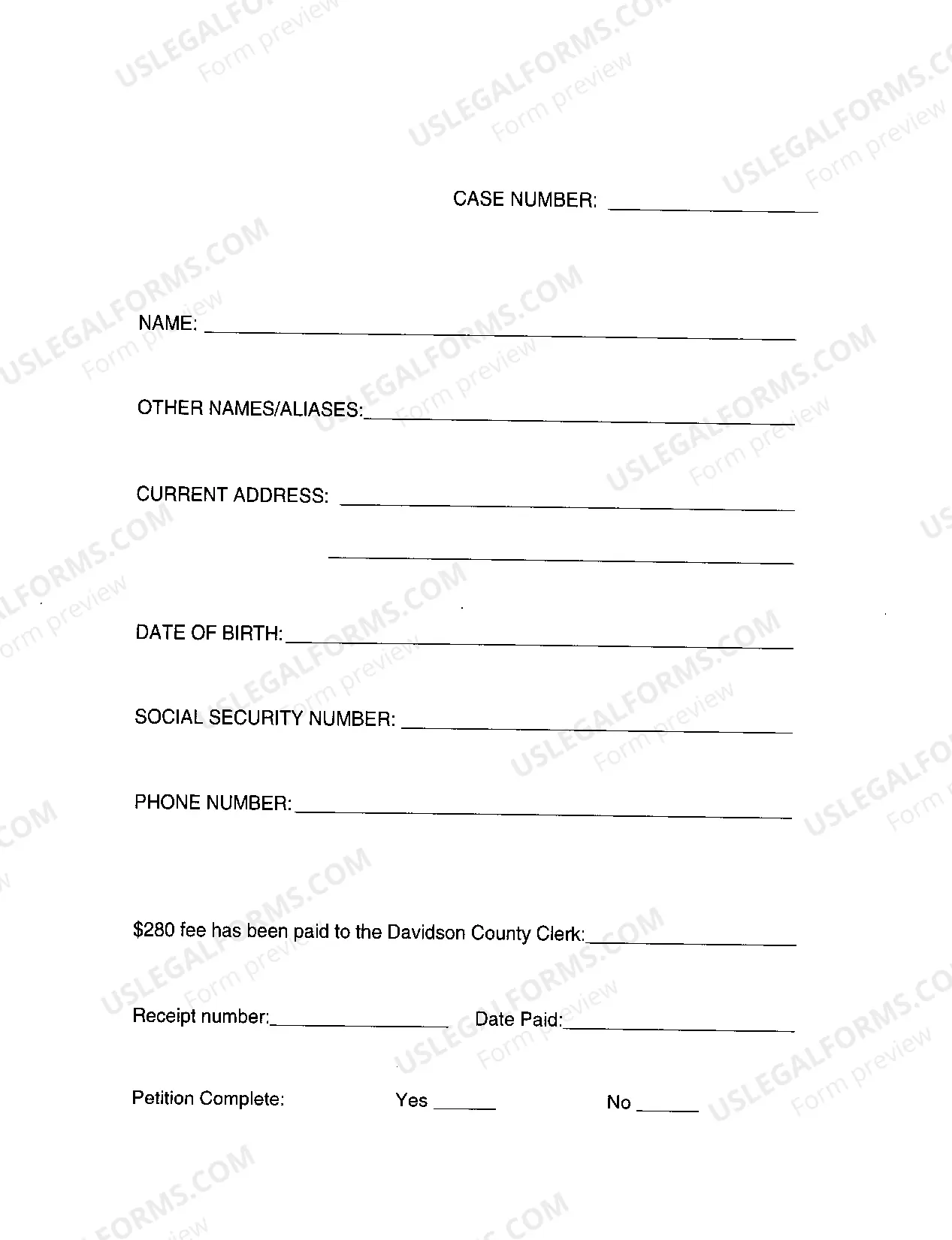
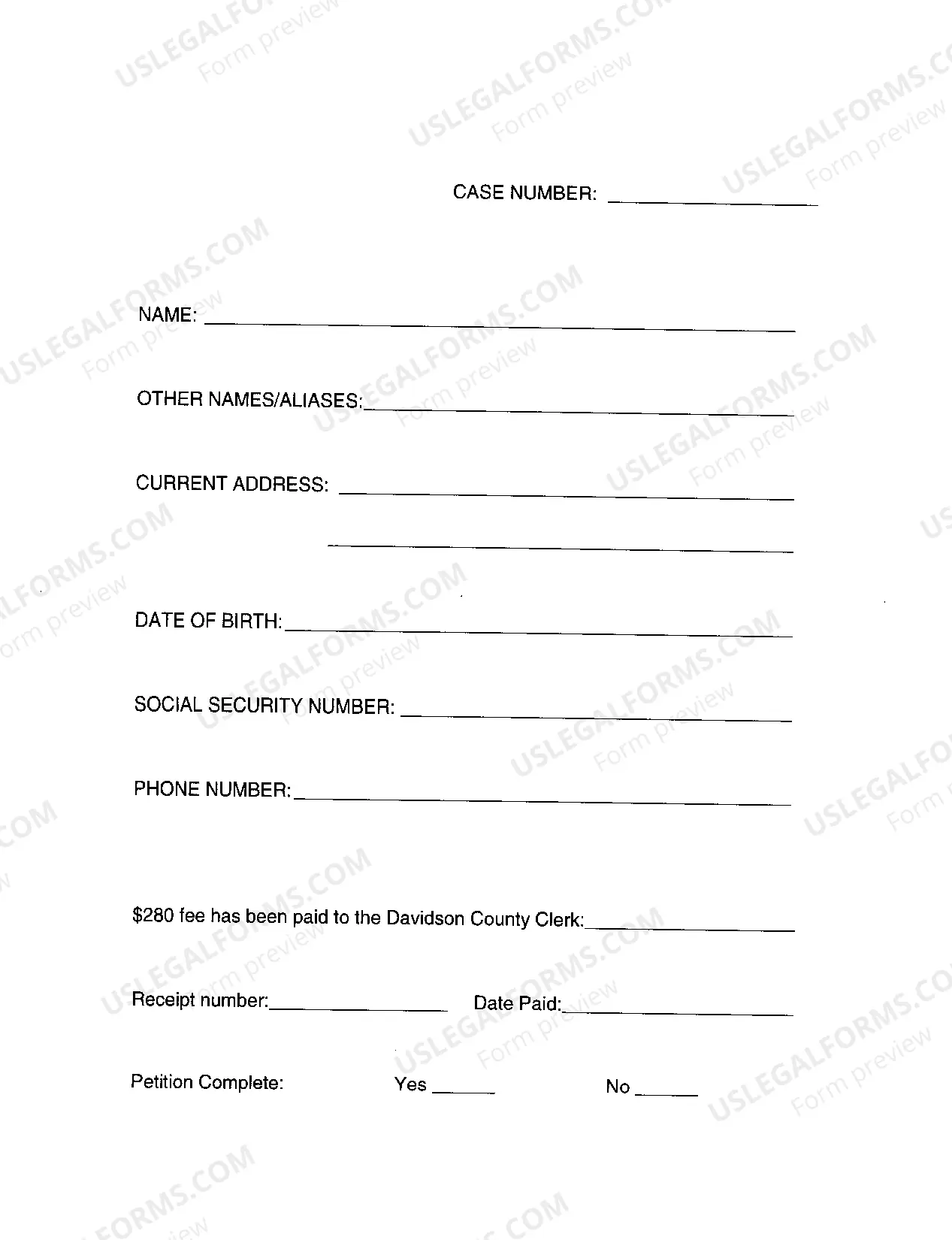
Tennessee 40-32-101(k) Expungement Packet General Sessions
Description
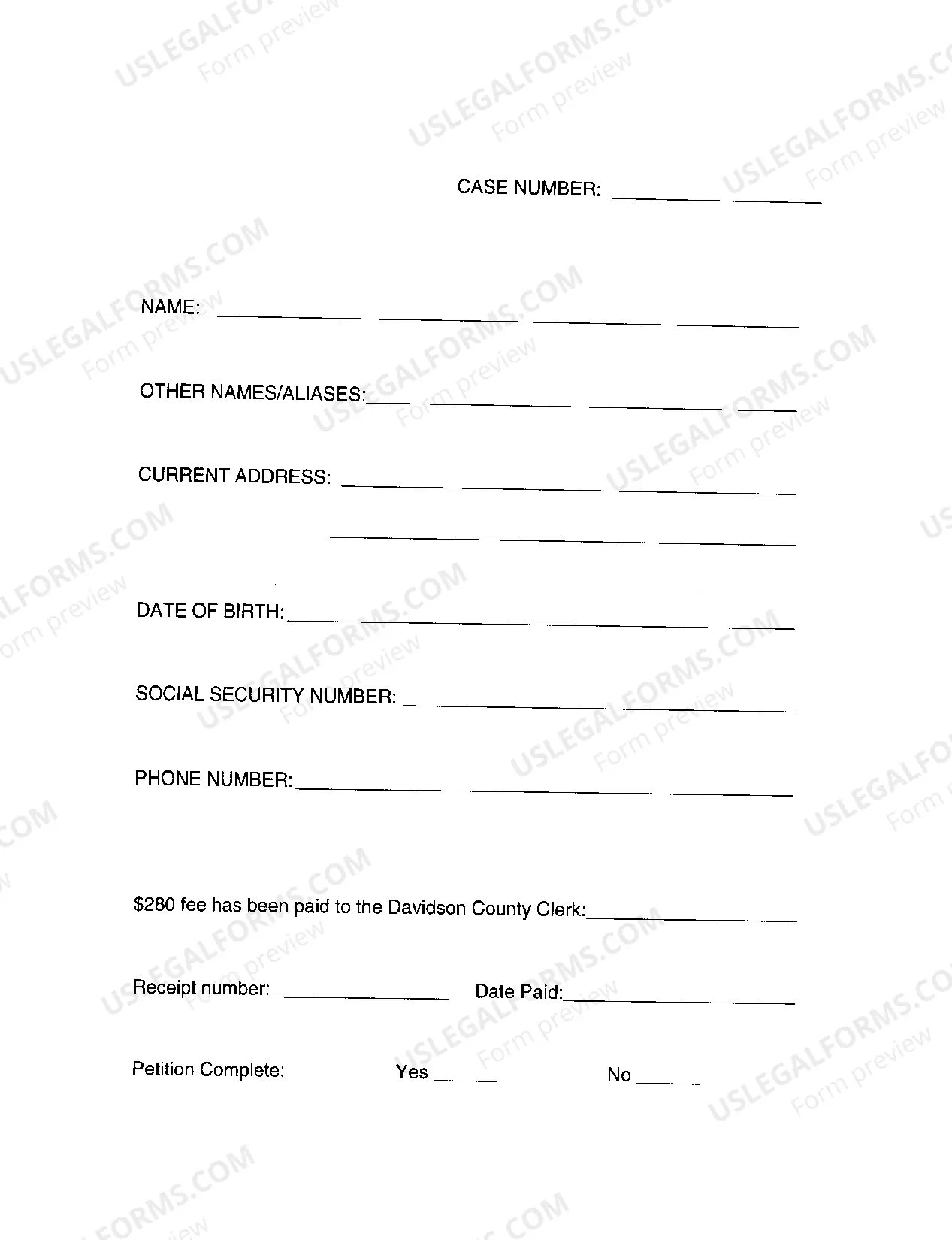
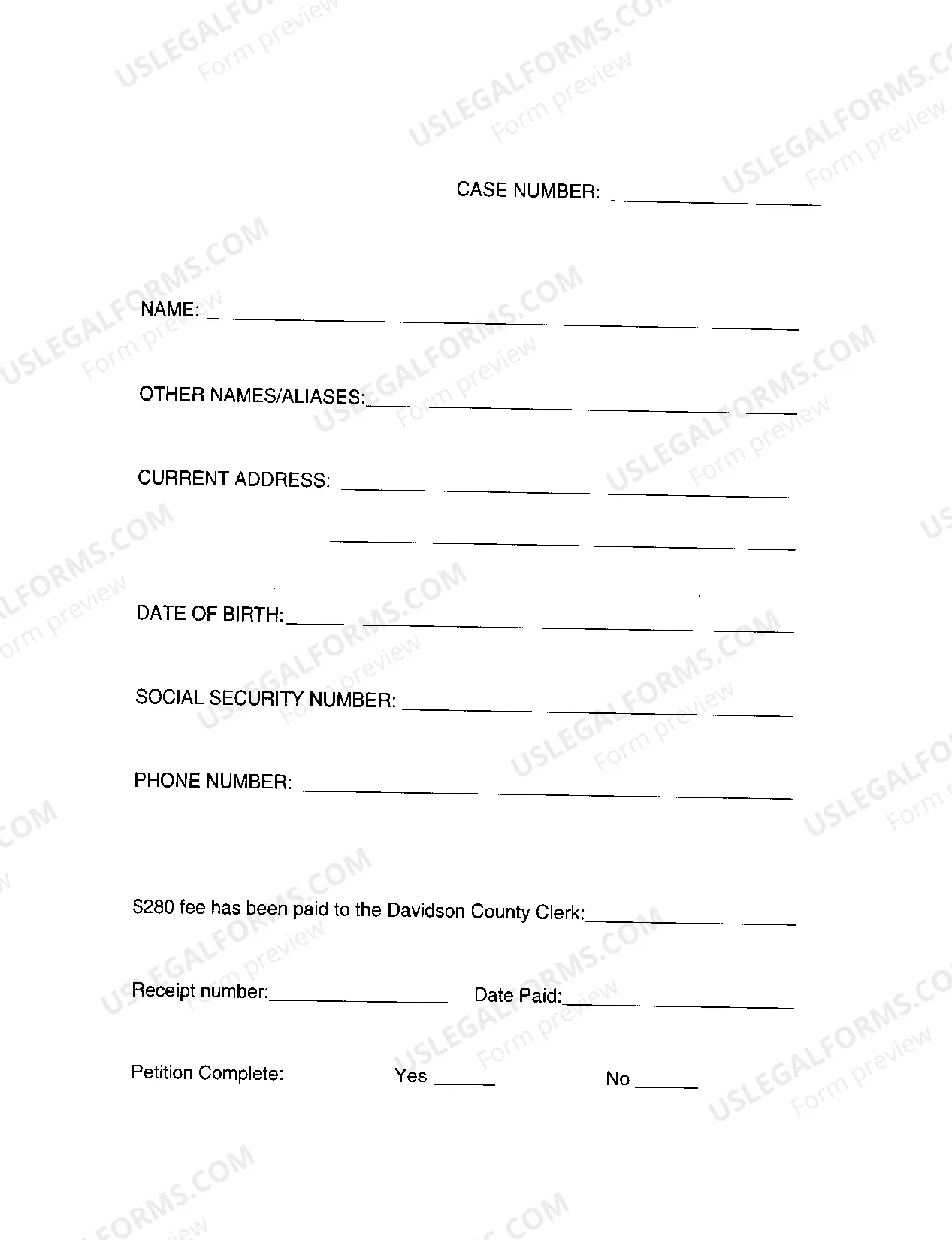
Get your form ready online
Our built-in tools help you complete, sign, share, and store your documents in one place.
Make edits, fill in missing information, and update formatting in US Legal Forms—just like you would in MS Word.
Download a copy, print it, send it by email, or mail it via USPS—whatever works best for your next step.
Sign and collect signatures with our SignNow integration. Send to multiple recipients, set reminders, and more. Go Premium to unlock E-Sign.
If this form requires notarization, complete it online through a secure video call—no need to meet a notary in person or wait for an appointment.
We protect your documents and personal data by following strict security and privacy standards.

Make edits, fill in missing information, and update formatting in US Legal Forms—just like you would in MS Word.

Download a copy, print it, send it by email, or mail it via USPS—whatever works best for your next step.

Sign and collect signatures with our SignNow integration. Send to multiple recipients, set reminders, and more. Go Premium to unlock E-Sign.

If this form requires notarization, complete it online through a secure video call—no need to meet a notary in person or wait for an appointment.

We protect your documents and personal data by following strict security and privacy standards.
Looking for another form?
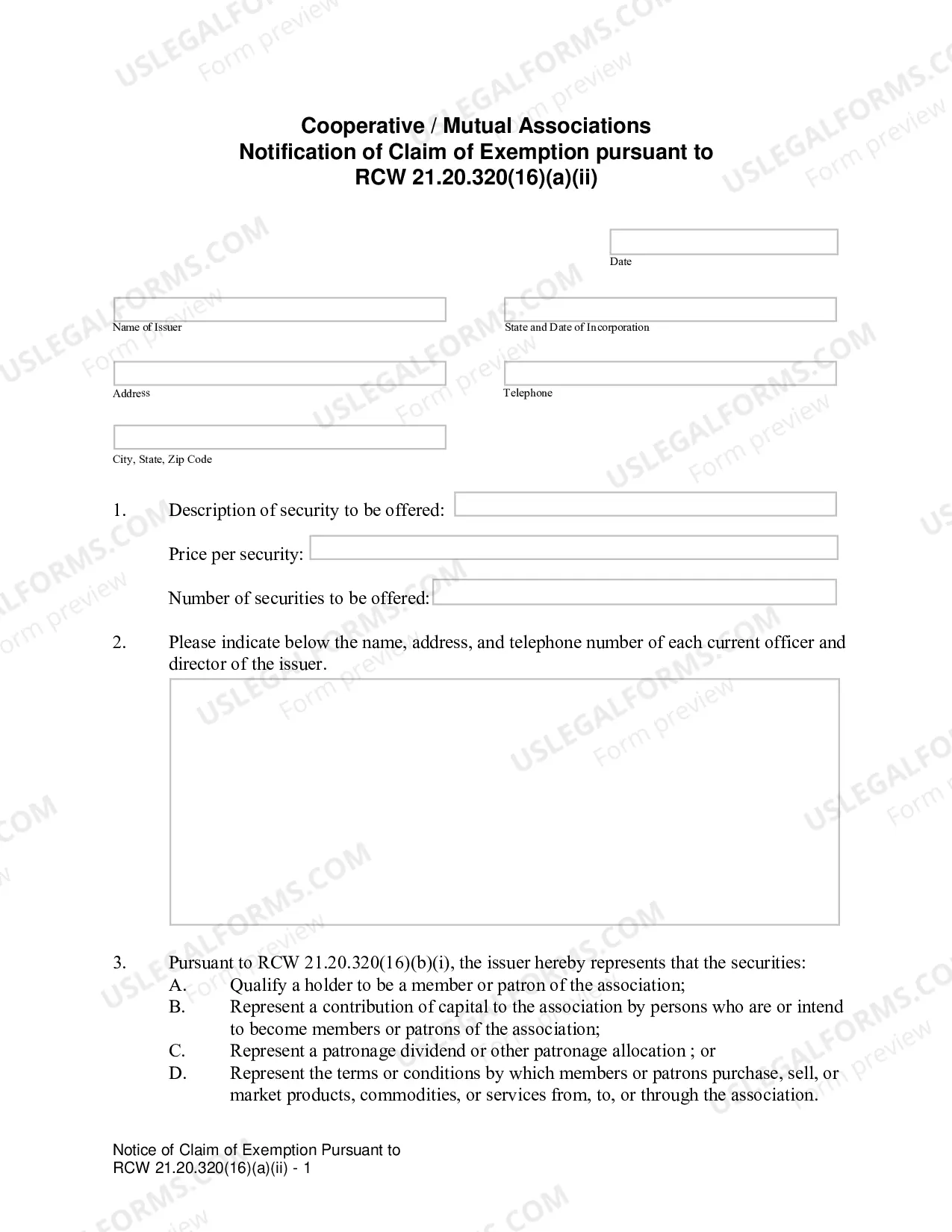

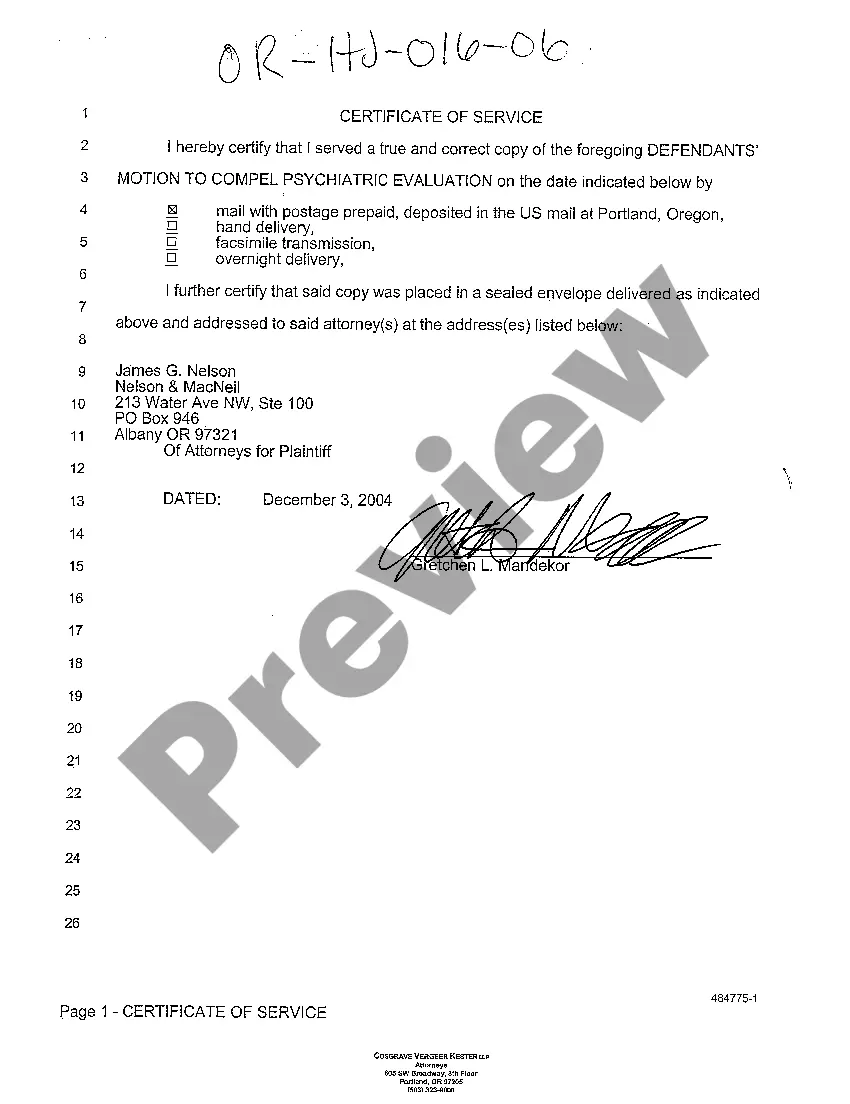
How to fill out Tennessee 40-32-101(k) Expungement Packet General Sessions?
US Legal Forms is the most simple and profitable way to find appropriate legal templates. It’s the most extensive online library of business and personal legal documentation drafted and checked by attorneys. Here, you can find printable and fillable blanks that comply with federal and local laws - just like your Tennessee 40-32-101(k) Expungement Packet General Sessions.
Getting your template takes just a few simple steps. Users that already have an account with a valid subscription only need to log in to the web service and download the document on their device. Later, they can find it in their profile in the My Forms tab.
And here’s how you can get a professionally drafted Tennessee 40-32-101(k) Expungement Packet General Sessions if you are using US Legal Forms for the first time:
- Read the form description or preview the document to make sure you’ve found the one meeting your needs, or locate another one using the search tab above.
- Click Buy now when you’re certain about its compatibility with all the requirements, and choose the subscription plan you prefer most.
- Create an account with our service, log in, and purchase your subscription using PayPal or you credit card.
- Select the preferred file format for your Tennessee 40-32-101(k) Expungement Packet General Sessions and download it on your device with the appropriate button.
After you save a template, you can reaccess it anytime - just find it in your profile, re-download it for printing and manual completion or import it to an online editor to fill it out and sign more efficiently.
Take advantage of US Legal Forms, your reliable assistant in obtaining the corresponding official documentation. Try it out!
Form popularity
FAQ
How long does it take for my expunged records to clear the system? It takes 60 working days from the date the judge signs the order.
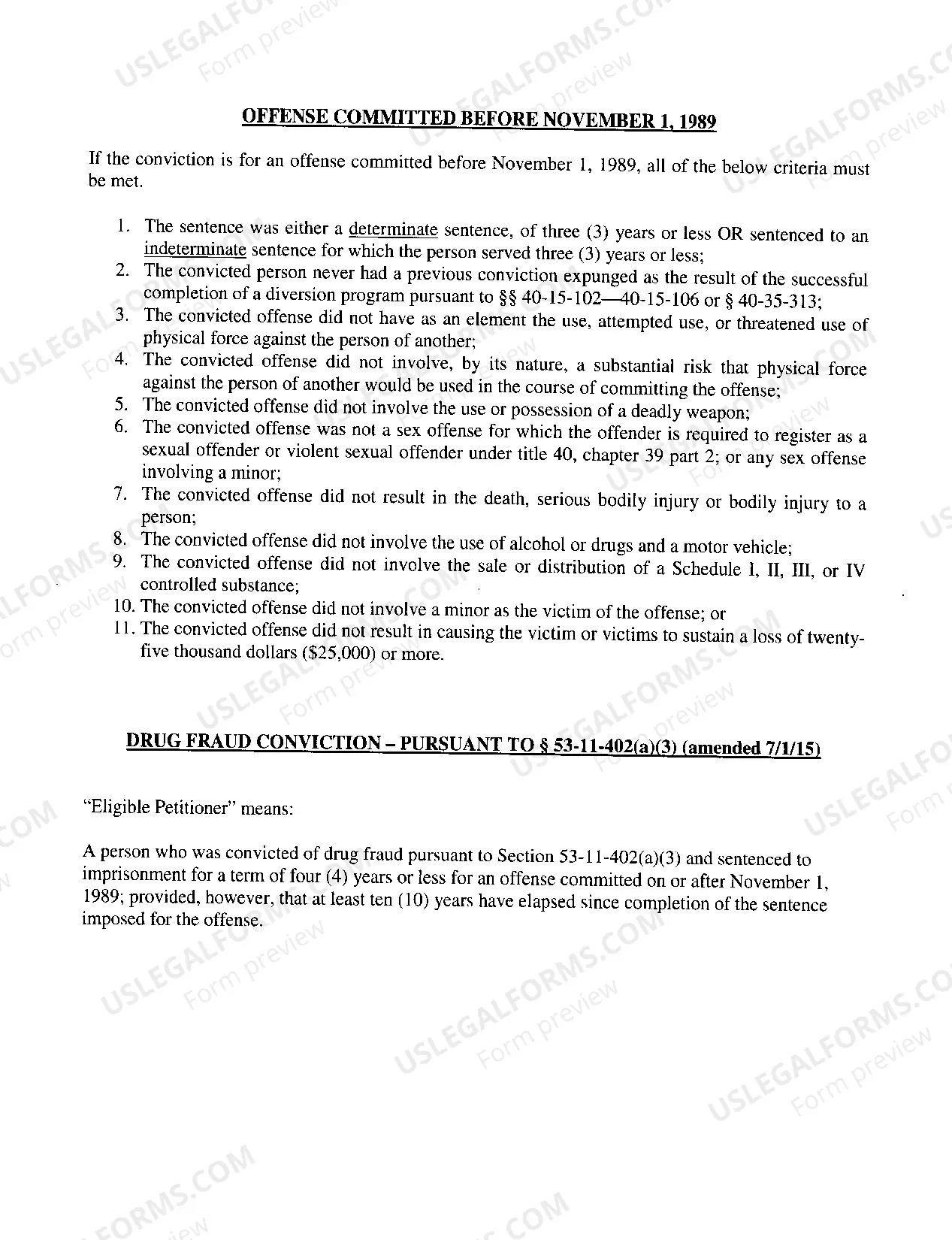
You must wait 5 years to file a petition for expungement of your Tennessee conviction. A petition to have your crime erased from your Tennessee criminal history may be filed 5 years after the completion of your sentence. You must complete all court obligations associated with the crime prior to expungement.
The Tennessee Code states that the following people can see the expunged record if the accused has another conviction in the future: The clerk of the court. The district attorney general. The defendant and their attorney. The circuit or criminal court judge.
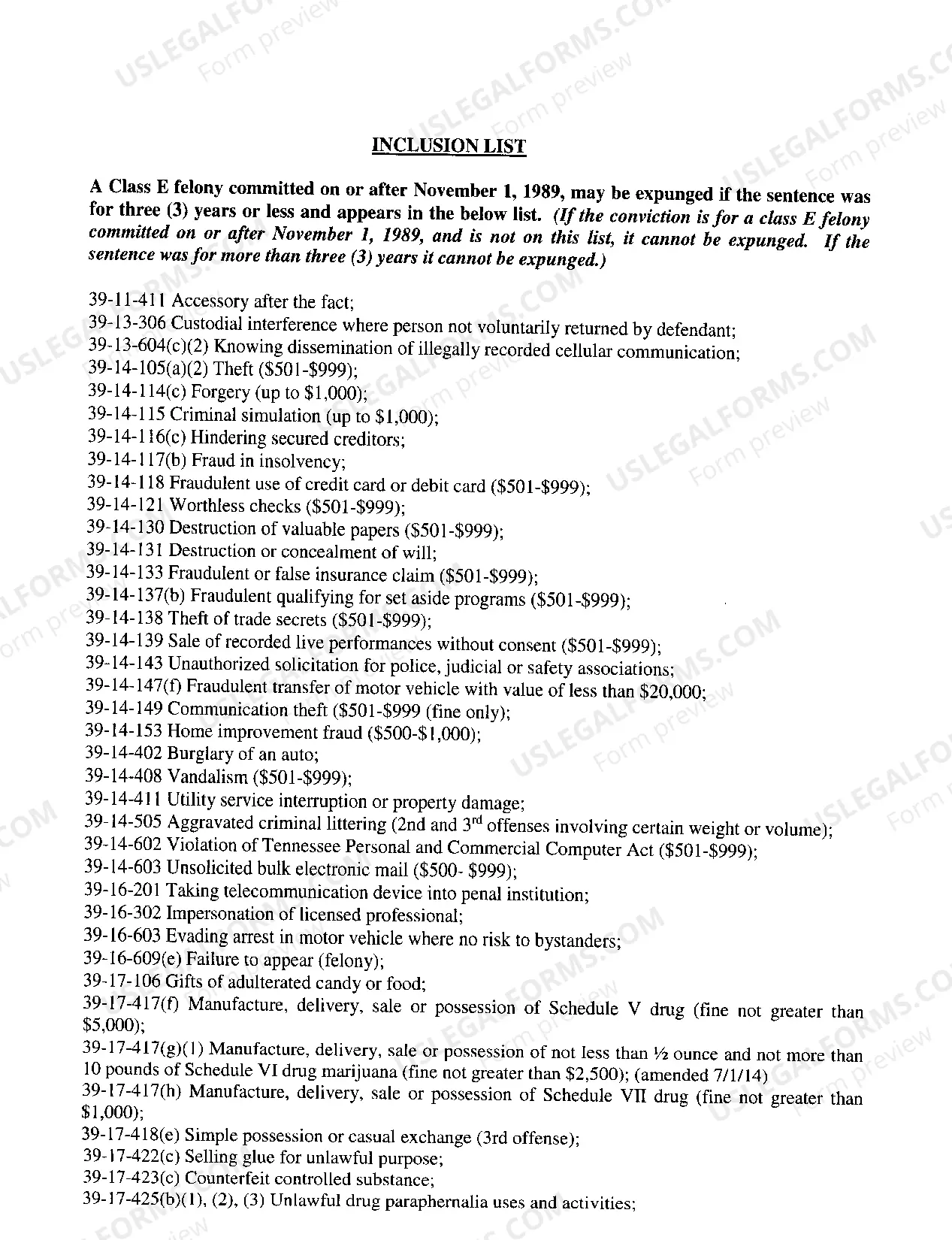
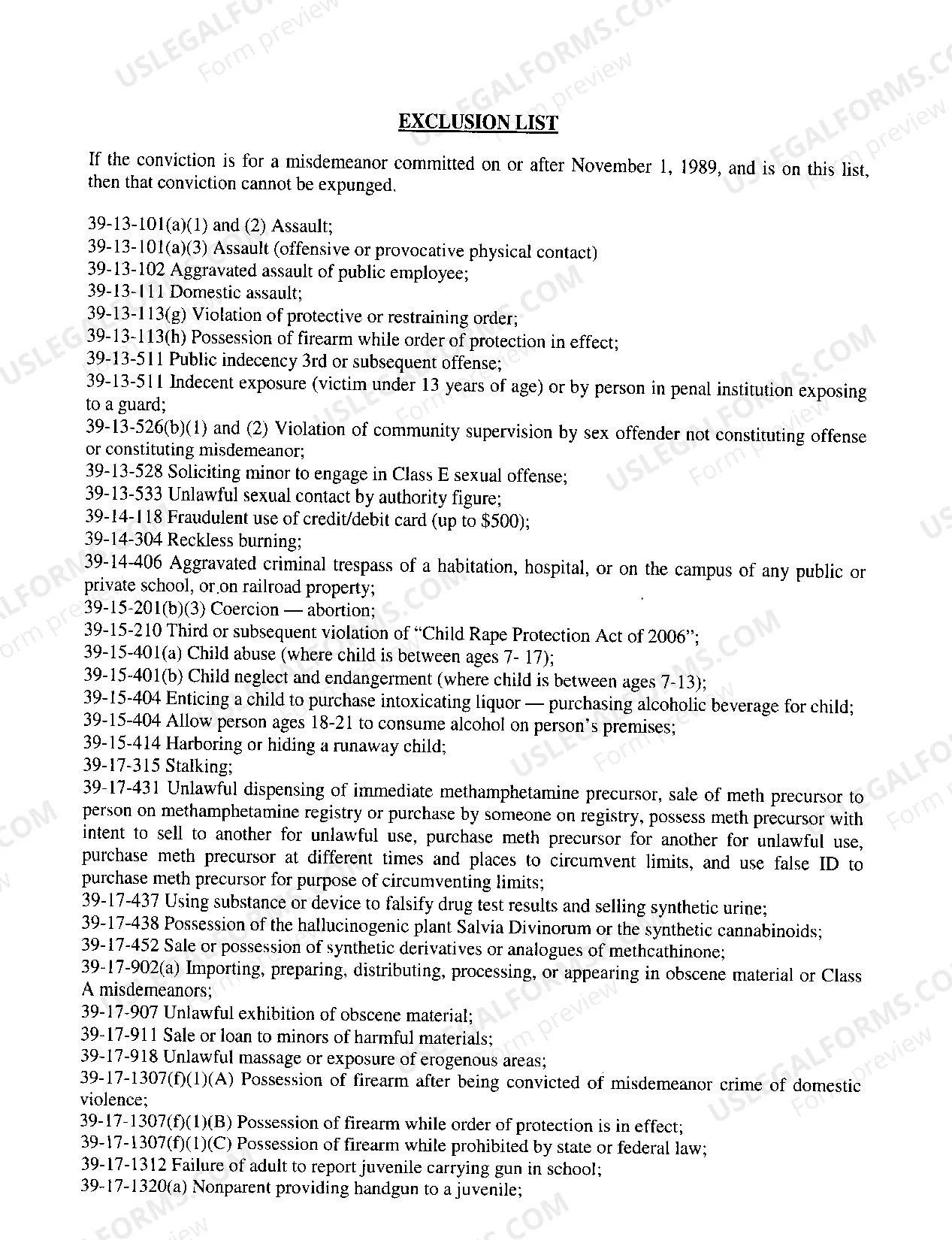
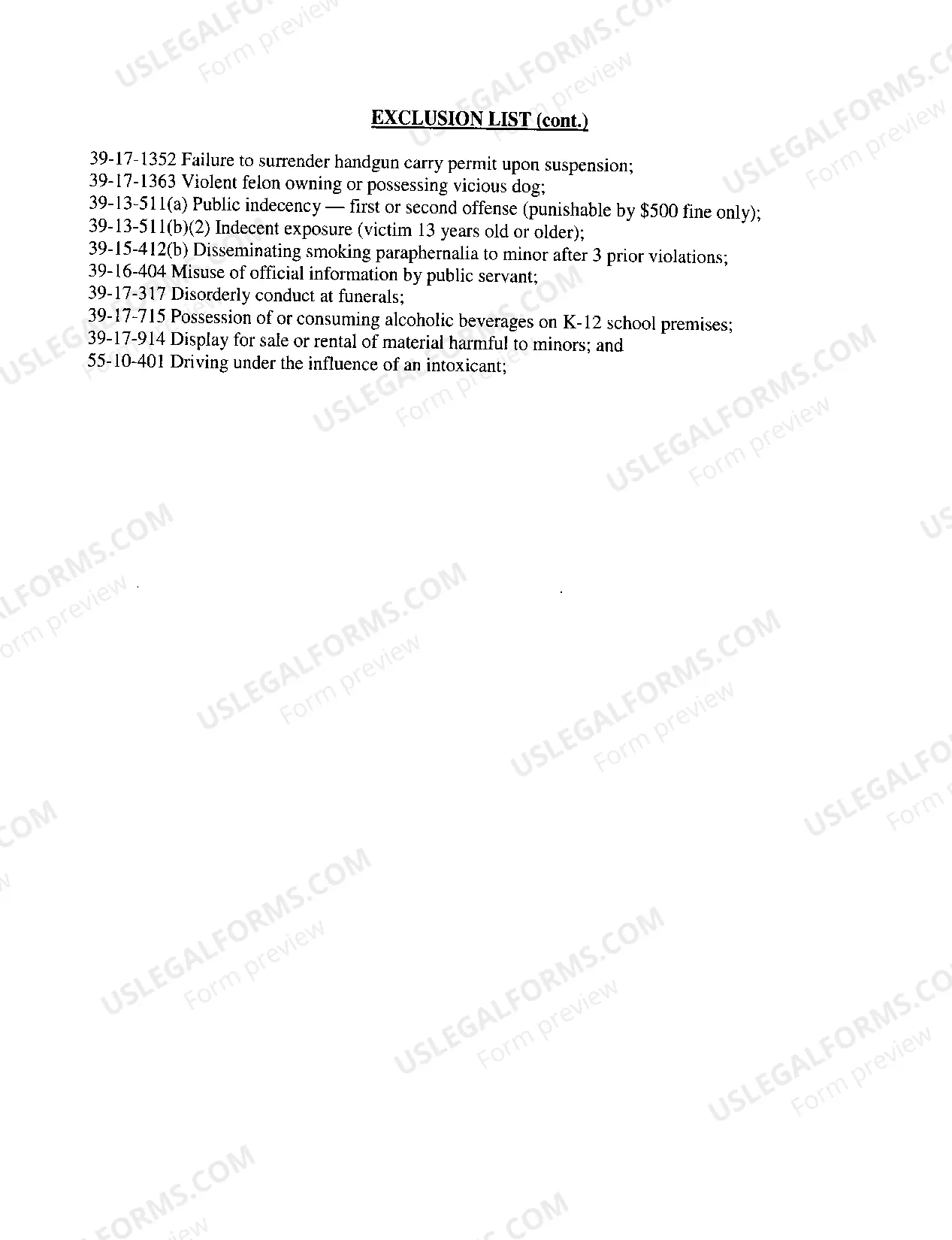
In Tennessee, certain offenses cannot be expunged, including the following: Assault. Domestic assault. Aggravated assault. Aggravated burglary. Stalking. Unlawful sexual contact. Child abuse. Child neglect and endangerment.
On July 1, 2012, a new law went into effect that allows people convicted of certain crimes in Tennessee to have a single offense expunged from their records, pursuant to T.C.A. § 40-32-101(g). Crimes eligible are most misdemeanors and some Class E, D, and C felonies.
Authorized terms of imprisonment and fines for felonies and misdemeanors. (a) A sentence for a felony is a determinate sentence. (5) Class E felony, not less than one (1) year nor more than six (6) years.
Section 40-2-101 - Effective 7/1/2023 Felonies (a) A person may be prosecuted, tried and punished for an offense punishable with death or by imprisonment in the penitentiary during life, at any time after the offense is committed.
40-32-101(g). Only certain crimes are eligible for expunction; they must be non-violent, non-DUI and non-sexual crimes. Crimes eligible are most misdemeanors and some Class E felonies, including forgery, theft, vandalism, and fraudulent or false insurance claim, among others.