Tennessee Payment Bond
Understanding this form
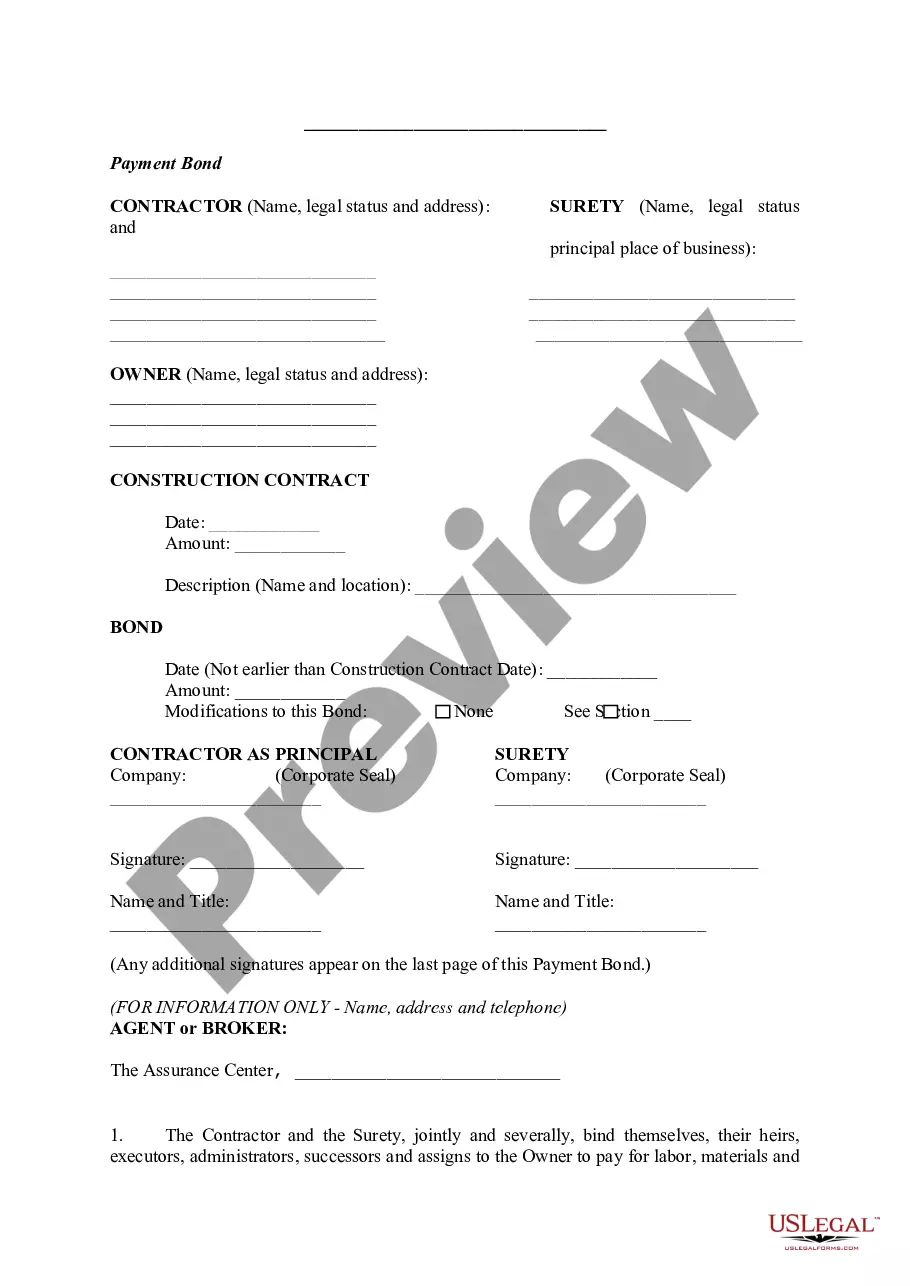
A Payment Bond is a legal document that ensures the contractor (Principal) and the surety (bond company) are committed to paying all debts for labor and materials related to a construction contract. It protects the property owner by guaranteeing payment to subcontractors and workers, which distinguishes it from other types of bonds like performance bonds. This form is essential in construction projects to ensure financial security for all parties involved.
Key components of this form
- Contractor and Surety details: Names, legal status, and addresses.
- Owner information: Name, legal status, and address.
- Construction Contract details: Date, amount, and description of the project.
- Bond information: Effective date and total bond amount.
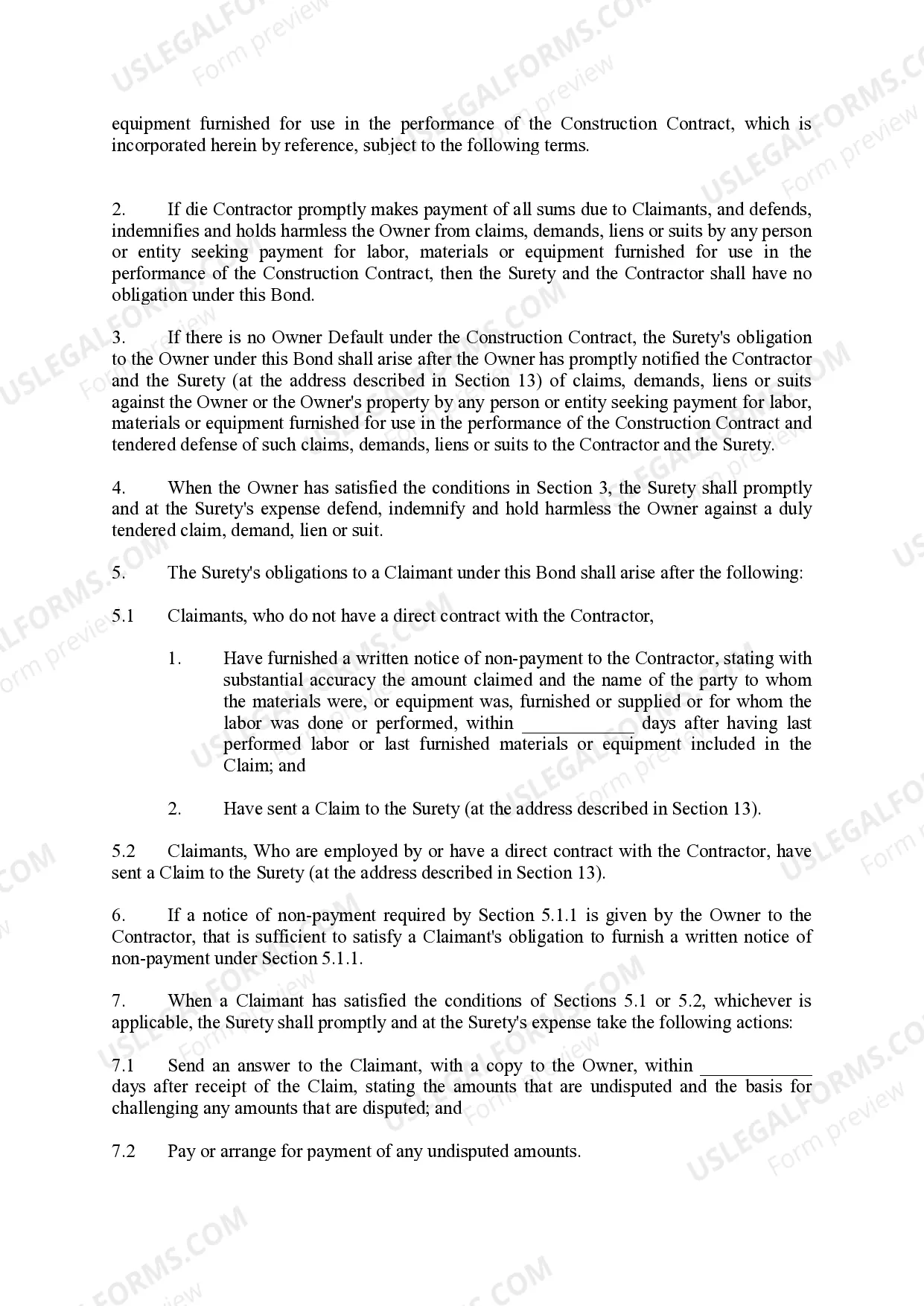
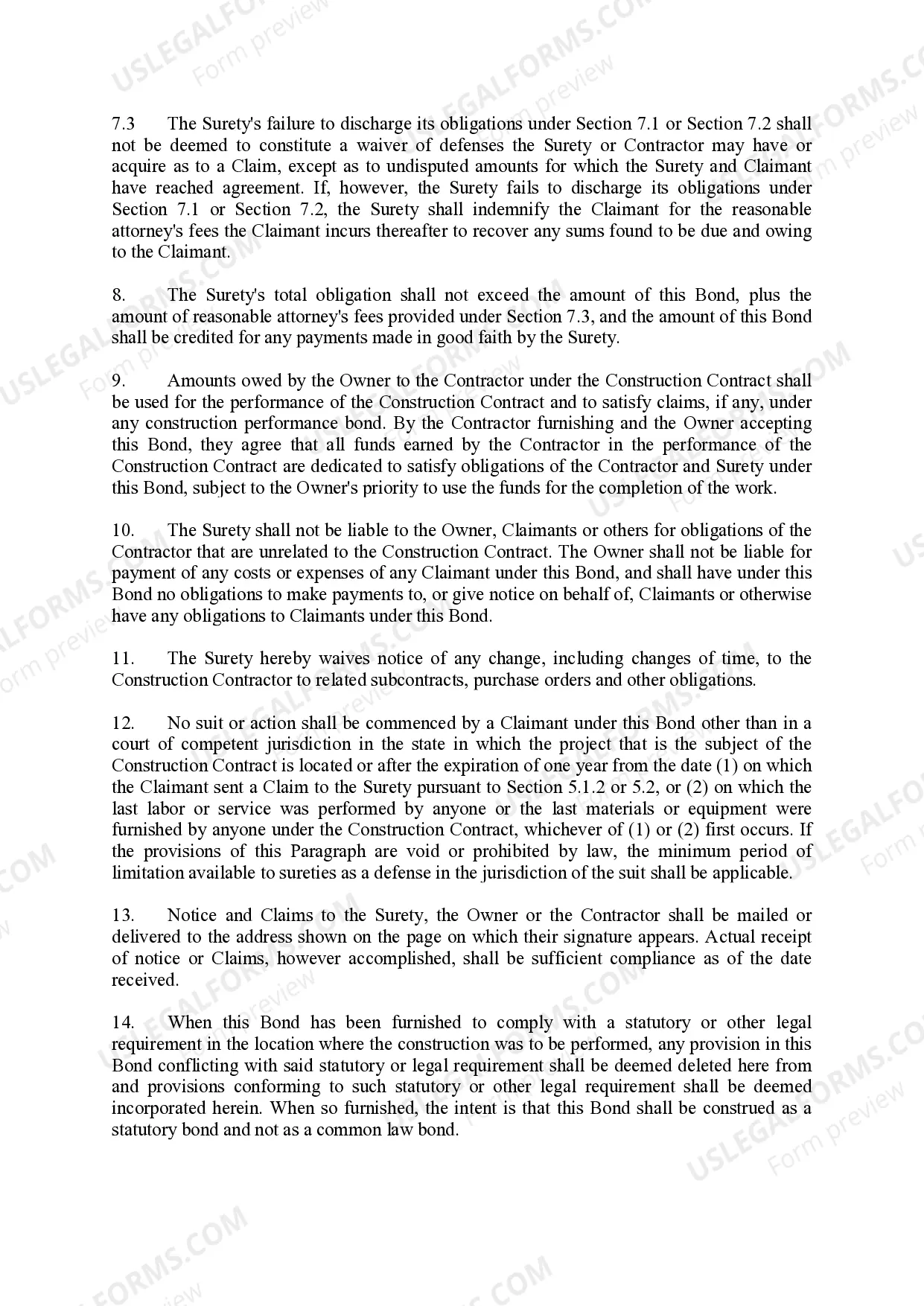
- Obligations and rights of all parties involved, including Claimants.
- Notice and claims procedures for claims made under the bond.

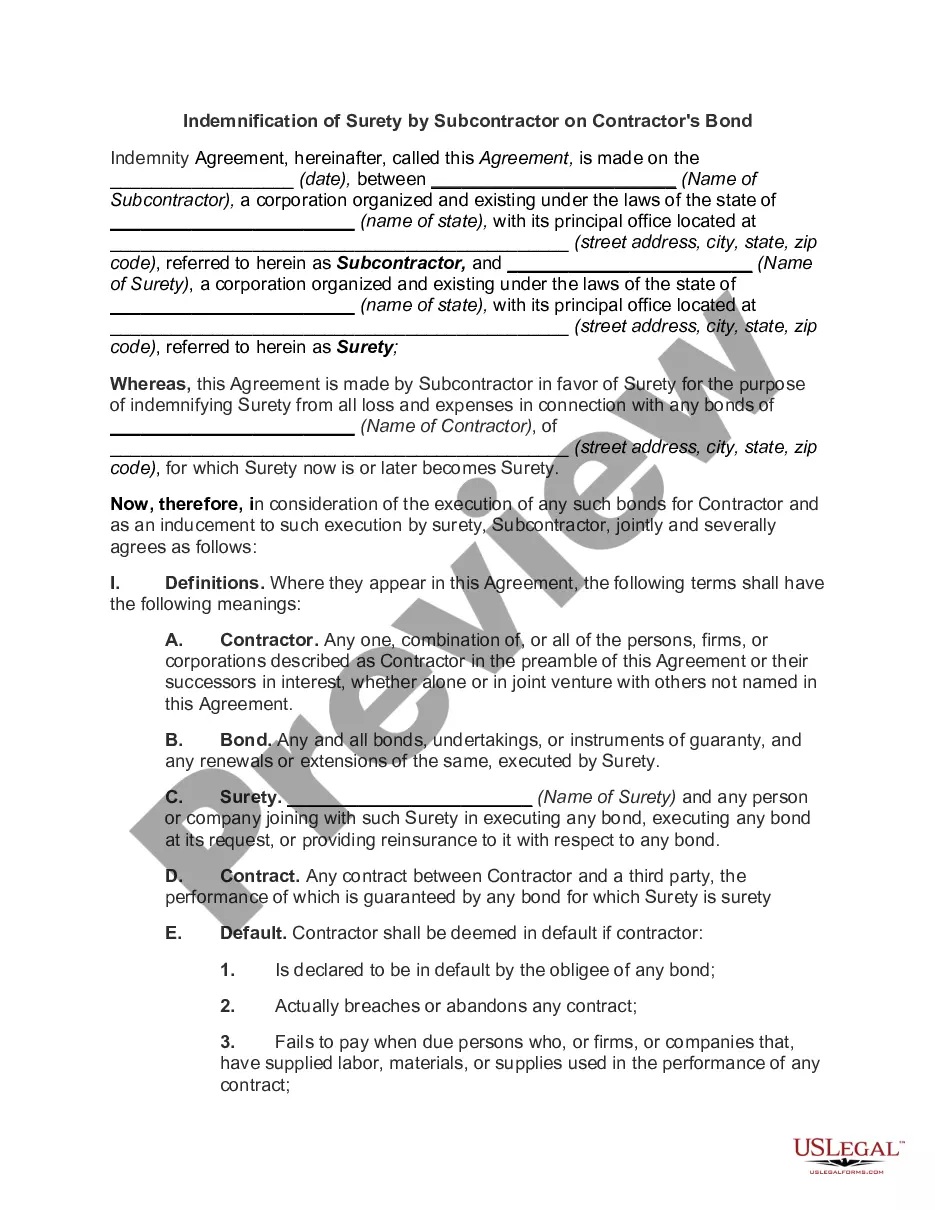

Common use cases
This form should be used whenever a contractor is required to provide assurance of payment for labor and materials to subcontractors and suppliers on a construction project. It is commonly required by property owners or lenders before the commencement of construction to protect against potential payment disputes or defaults. Using this form helps ensure that all parties are protected and clarifies the responsibilities of the contractor and surety in case of non-payment.
Intended users of this form
- Contractors who are entering into a construction contract and need to assure payment to subcontractors and suppliers.
- Property owners who require a Payment Bond to protect their financial investment in construction projects.
- Surety companies that provide the bond to oversee and guarantee payment obligations.
- Subcontractors and suppliers who want assurance of payment for their services or materials provided.
Instructions for completing this form
- Provide the names, legal statuses, and addresses of the Contractor, Surety, and Owner.
- Enter the details of the Construction Contract, including the date, total amount, and a short description.
- Specify the effective date of the Bond and the total bond amount.
- Sign the document in the presence of a witness or notary, if required.
- Ensure all parties (Contractor, Surety, and Owner) agree to and understand the obligations outlined.
Notarization guidance
This form does not typically require notarization unless specified by local law. However, it is advisable to check specific state regulations and obtain notarization if required, to ensure full legal validity.
Get your form ready online
Our built-in tools help you complete, sign, share, and store your documents in one place.
Make edits, fill in missing information, and update formatting in US Legal Forms—just like you would in MS Word.
Download a copy, print it, send it by email, or mail it via USPS—whatever works best for your next step.
Sign and collect signatures with our SignNow integration. Send to multiple recipients, set reminders, and more. Go Premium to unlock E-Sign.
If this form requires notarization, complete it online through a secure video call—no need to meet a notary in person or wait for an appointment.
We protect your documents and personal data by following strict security and privacy standards.

Make edits, fill in missing information, and update formatting in US Legal Forms—just like you would in MS Word.

Download a copy, print it, send it by email, or mail it via USPS—whatever works best for your next step.

Sign and collect signatures with our SignNow integration. Send to multiple recipients, set reminders, and more. Go Premium to unlock E-Sign.

If this form requires notarization, complete it online through a secure video call—no need to meet a notary in person or wait for an appointment.

We protect your documents and personal data by following strict security and privacy standards.
Typical mistakes to avoid
- Failing to include all required parties' details, such as legal names and addresses.
- Neglecting to specify the accurate amount and details of the Construction Contract.
- Not obtaining the necessary signatures or forgetting to have the document notarized when required.
- Overlooking specific state requirements affecting the bond's enforceability.
Benefits of completing this form online
- Easy access allows for quick completion and download.
- Forms are drafted by licensed attorneys, ensuring legal compliance.
- Editability allows contractors to customize the form for specific projects.
- Secure storage of completed forms for future reference.
Legal use & context
- The Payment Bond serves to protect the Owner from financial loss if the Contractor fails to pay for labor and materials.
- It is typically enforceable in court as a binding contract if all conditions are met.
- Understanding the terms within the bond is crucial, as they dictate the rights and responsibilities of all parties involved.
Summary of main points
- A Payment Bond is essential for ensuring contractor payment obligations are met.
- It protects property owners and subcontractors from unpaid claims.
- Correct completion and understanding of the form are critical for legality and enforceability.
Looking for another form?
Form popularity
FAQ
Payment bond costs can vary but are often around 3% of the contract amount assuming the applicant has sound financials. For example, if your bond requirement is for $200,000, then a 3% premium would translate to a $6,000 bond cost.
On average, the cost for a surety bond falls somewhere between 1% and 15% of the bond amount. That means you may be charged between $100 and $1,500 to buy a $10,000 bond policy. Most premium amounts are based on your application and credit health, but there are some bond policies that are written freely.
The cost of a performance bond usually is less than 1% of the contract price; however, if the contract is under $1 million, the premium may run between 1% and 2%. Bonds may be more costly, depending upon the credit-worthiness of the contractor. Labor and material payment bonds are companions to the performance bond.
The Performance Bond secures the contractor's promise to perform the contract in accordance with its terms and conditions, at the agreed upon price, and within the time allowed. The Payment Bond protects certain laborers, material suppliers and subcontractors against nonpayment.
To get a Tennessee surety bond, people generally go to a surety bonding company. You are able to get a surety bond through a general insurance company, but choosing a surety bond company often means you can get better quotes. Learn about how to choose the best surety bond company.
A payment bond is a surety bond posted by a contractor to guarantee that its subcontractors and material suppliers on the project will be paid. They are required in contracts over $35,000 with the Federal Government and must be 100% of the contract value. They are often required in conjunction with performance bonds.
The Payment Bond protects certain laborers, material suppliers and subcontractors against nonpayment. Since mechanic's liens cannot be placed against public property, the payment bond may be the only protection these claimants have if they are not paid for the goods and services they provide to the project.
The cost of a performance bond usually is less than 1% of the contract price; however, if the contract is under $1 million, the premium may run between 1% and 2%. Bonds may be more costly, depending upon the credit-worthiness of the contractor. Labor and material payment bonds are companions to the performance bond.
A payment bond is a surety bond posted by a contractor to guarantee that its subcontractors and material suppliers on the project will be paid. They are required in contracts over $35,000 with the Federal Government and must be 100% of the contract value. They are often required in conjunction with performance bonds.