Tennessee Acknowledgment for Copy Certification of Electronic Document
About this form
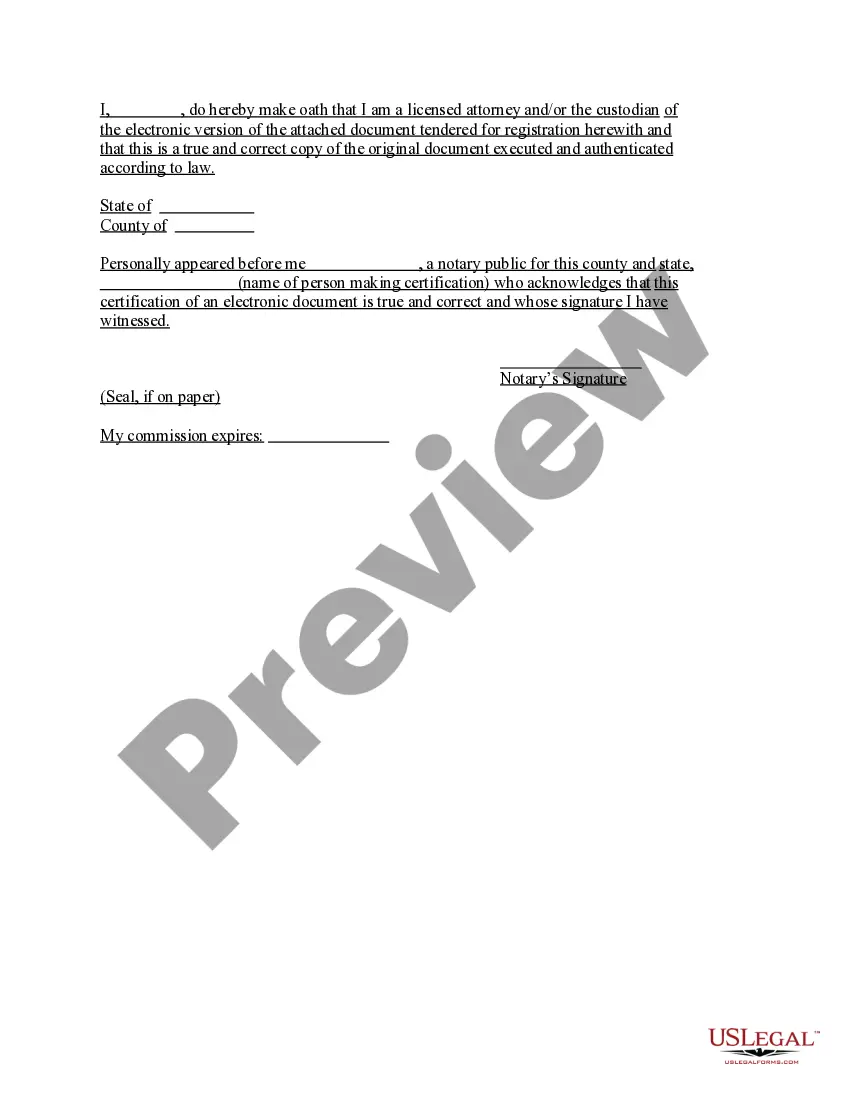
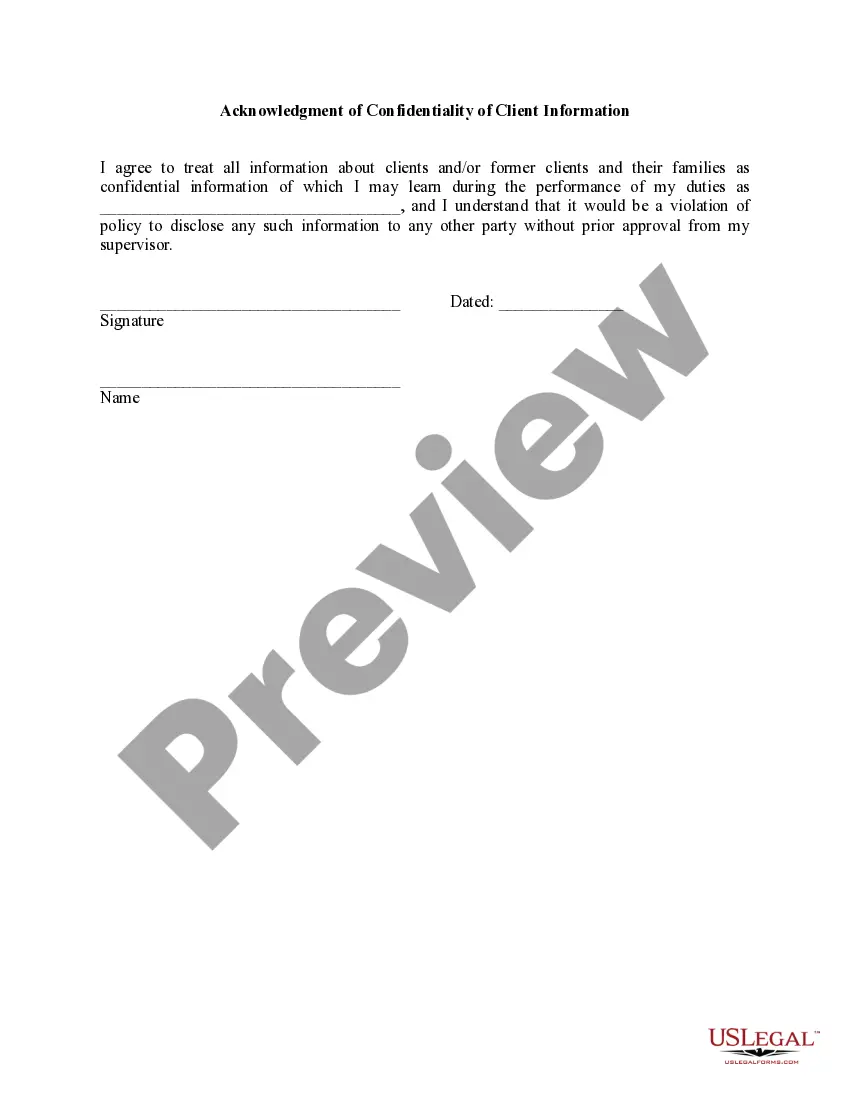
The Acknowledgment for Copy Certification of Electronic Document is a legal form used to certify that a copy of an electronic document is accurate and true to the original. This form is important for ensuring that electronic records can be legally recognized as valid copies, particularly in situations where original physical documents may not be available. It differs from other certification forms by focusing specifically on electronic documents and the legal requirements surrounding their authenticity.
Key parts of this document
- Oath statement affirming the role of the certifying attorney or custodian.
- Identification of the electronic document being certified.
- Certification section to confirm the truthfulness of the copy.
- Notary acknowledgment section, attesting to the authenticity of the signature.
- Expiration date for the notary's commission, if applicable.

Situations where this form applies
This form is typically used in situations where an electronic document needs to be authenticated for legal purposes. Examples include presenting electronic contracts in court, ensuring compliance with regulatory requirements, or when clients need to provide verified documents to financial institutions or government entities. It is essential when the original electronic documents cannot be provided directly.
Who needs this form
This form is intended for:
- Licensed attorneys who are responsible for certifying electronic documents.
- Curtitors or custodians of electronic records needing formal acknowledgment.
- Entities requiring certified copies for legal or administrative processes.
Instructions for completing this form
- Identify the person making the certification and their role (e.g., attorney or custodian).
- Clearly state the title and description of the electronic document being certified.
- Complete the sections affirming the accuracy and truthfulness of the copy.
- Provide space for the notary public to sign and acknowledge the certification.
- Include the notary's signature and seal, if required, ensuring compliance with local laws.
Is notarization required?
This form must be notarized to be legally valid. US Legal Forms provides secure online notarization powered by Notarize, allowing you to complete the process through a verified video call.
Get your form ready online
Our built-in tools help you complete, sign, share, and store your documents in one place.
Make edits, fill in missing information, and update formatting in US Legal Forms—just like you would in MS Word.
Download a copy, print it, send it by email, or mail it via USPS—whatever works best for your next step.
Sign and collect signatures with our SignNow integration. Send to multiple recipients, set reminders, and more. Go Premium to unlock E-Sign.
If this form requires notarization, complete it online through a secure video call—no need to meet a notary in person or wait for an appointment.
We protect your documents and personal data by following strict security and privacy standards.

Make edits, fill in missing information, and update formatting in US Legal Forms—just like you would in MS Word.

Download a copy, print it, send it by email, or mail it via USPS—whatever works best for your next step.

Sign and collect signatures with our SignNow integration. Send to multiple recipients, set reminders, and more. Go Premium to unlock E-Sign.

If this form requires notarization, complete it online through a secure video call—no need to meet a notary in person or wait for an appointment.

We protect your documents and personal data by following strict security and privacy standards.
Mistakes to watch out for
- Failing to have the signature notarized if required by law.
- Providing an incomplete or vague description of the electronic document.
- Not identifying the person making the certification properly.
- Ignoring the expiration date of the notary's commission, leading to invalid certifications.
Why use this form online
- Convenience of downloading and completing the form at your own pace.
- Editable fields to ensure accuracy and completeness before finalizing the document.
- Access to templates drafted by licensed attorneys, ensuring legal compliance.
Looking for another form?

Form popularity
FAQ
The purpose of an acknowledgment is for a signer, whose identity has been verified, to declare to a Notary or notarial officer that he or she has willingly signed a document.
It depends. You may notarize a document that does not have pre-printed notarial wording as long as the signer tells you what type of notarization is needed.As nonattorneys, Notaries cannot decide the type of notarization to perform on a document because the choice can have important legal ramifications.
The certificate of a notary public, justice of the peace, or other authorized officer, attached to a deed, mortgage, or other instrument, setting forth that the parties thereto personally appeared before him on such a date and acknowledged the instrument to be their free and voluntary act and deed. Read v.
In general, a contract does not need to be notarized or witnessed to be binding.But for most contracts, we do not generally require them to be witnessed or notarized, to be "legal." The notary removes the issue as to the identity of the parties signing the contract.
Unlike jurats, an acknowledgment does not need to be signed in the presence of a notary. However, the affiant does need to swear or affirm that they signed under their own free will.
California allows its commissioned notaries to perform electronic notarizations only. With the DocVerify e-Notary platform, notaries will be enabled to electronically notarize a document or a set of documents without the use of paper or a rubber stamp.
Only you, as the notary, may make corrections to the notary certificate. Illegible/ Expired Notary Seal: Stamp impressions that are too dark, too light, incomplete, smudged, or in any way unreadable may cause an otherwise acceptable document to be rejected for its intended use.
N. the section at the end of a document where a notary public verifies that the signer of the document states he/she actually signed it. The acknowledgment or due proof of the instrument by witnesses, must be made before it can be put upon record.
This is a form that shows that a notary public has established the identity of the signer(s) and witnessed the signature of a document. It only demonstrates that the document has been signed and does not make any claims about the information in the document.