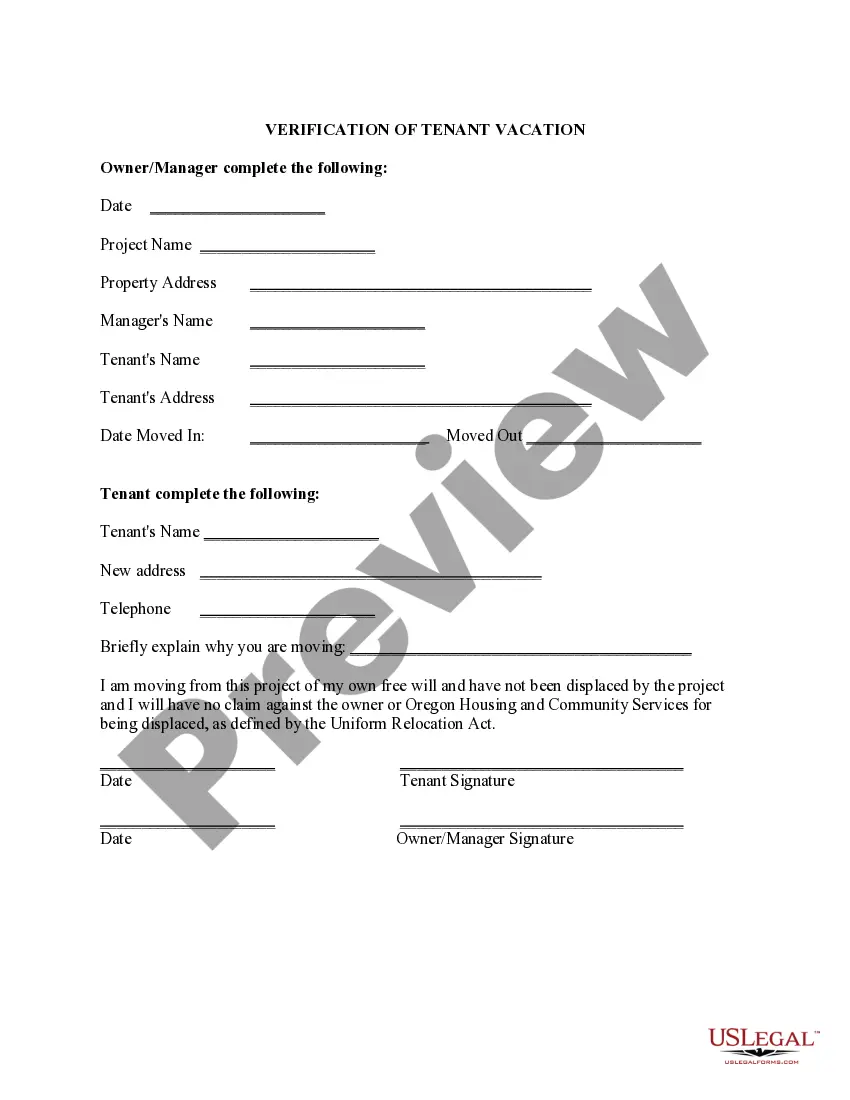
Tennessee 14 Day Notice to Terminate for Reoccurring Breach - Residential
What this document covers
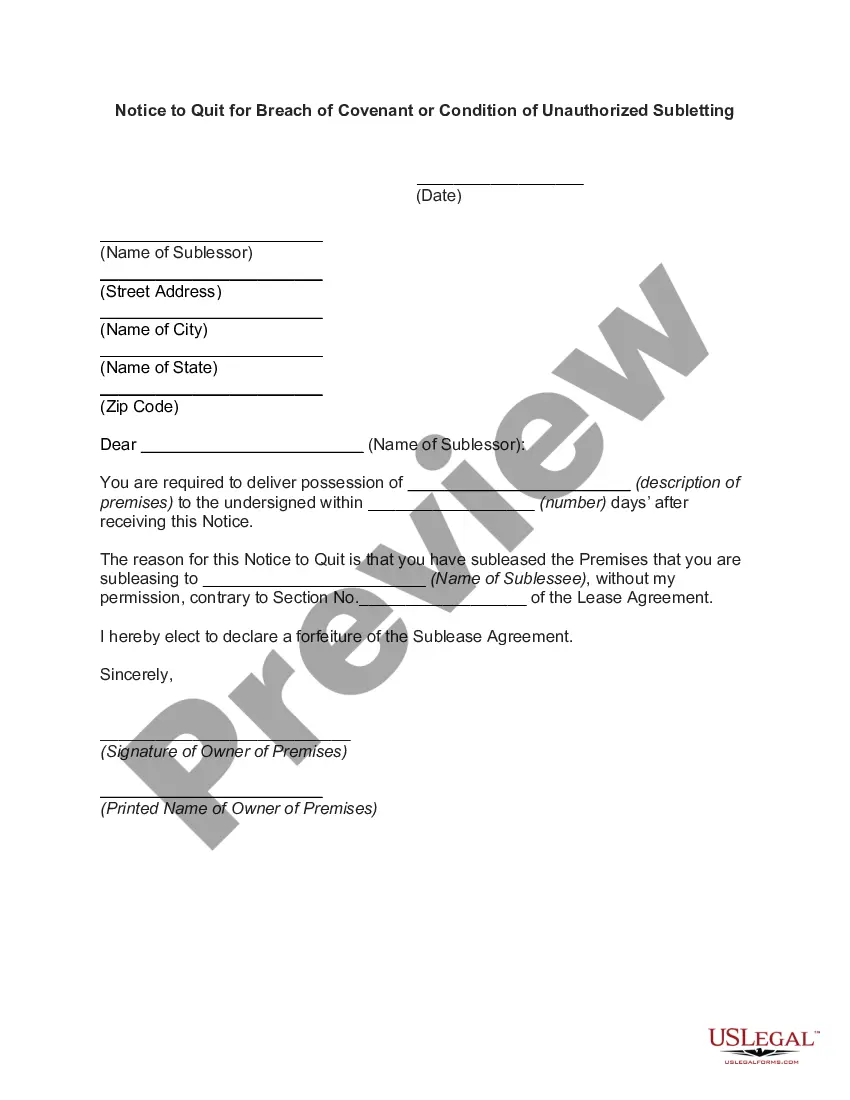
The 14 Day Notice to Terminate for Reoccurring Breach - Residential is a legal document used by landlords to notify tenants of a recurring breach of the rental agreement. Unlike general eviction notices, this specific form addresses situations where a tenant has previously breached the lease and has committed similar actions again within a six-month period. It provides the tenant with a clear notice that they must vacate the premises within 14 days if the issue is not remedied.
What’s included in this form
- Identification of the tenant and landlord, including addresses.
- Description of the recurring non-compliance with the lease.
- Deadline by which the tenant must vacate the property.
- Notice of potential legal action if the tenant fails to comply.
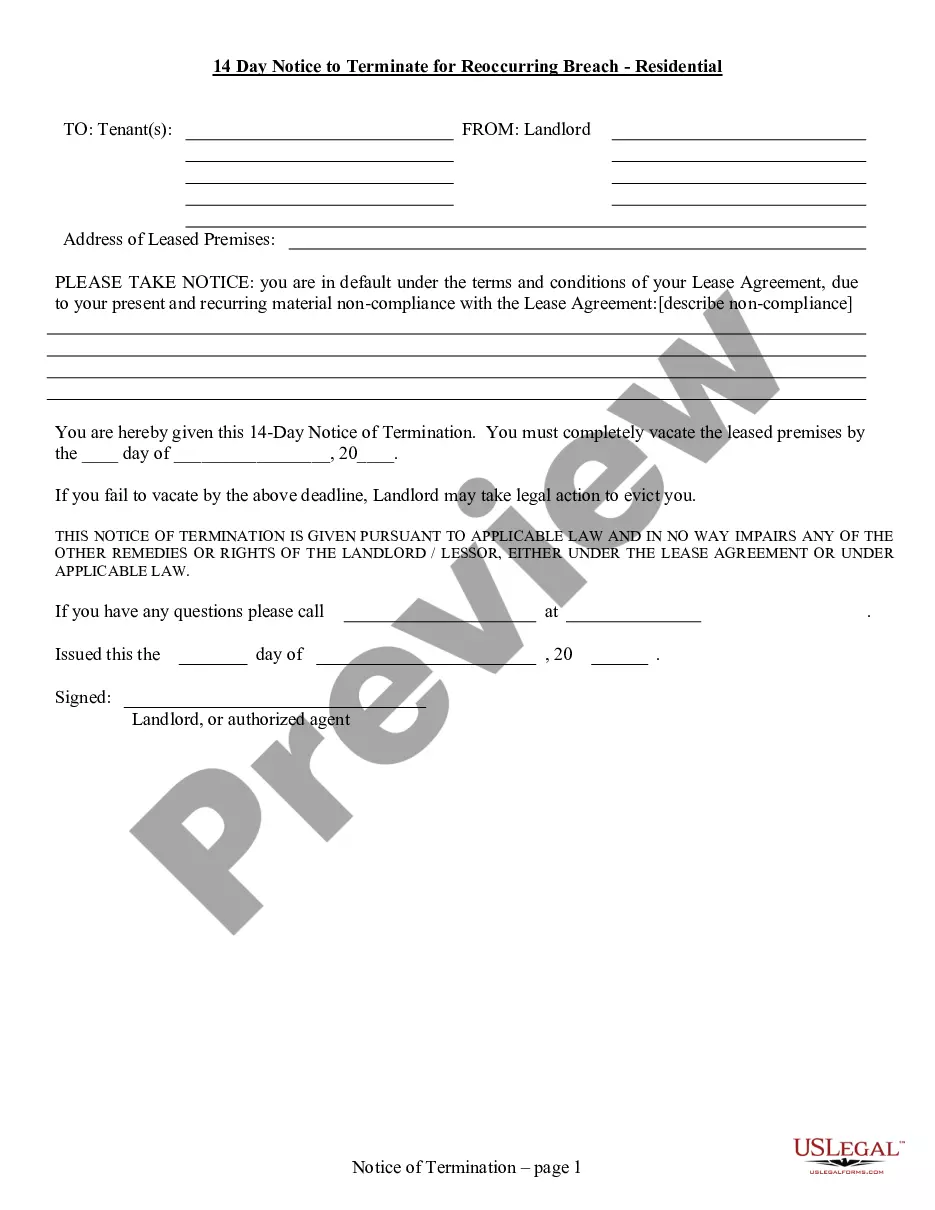
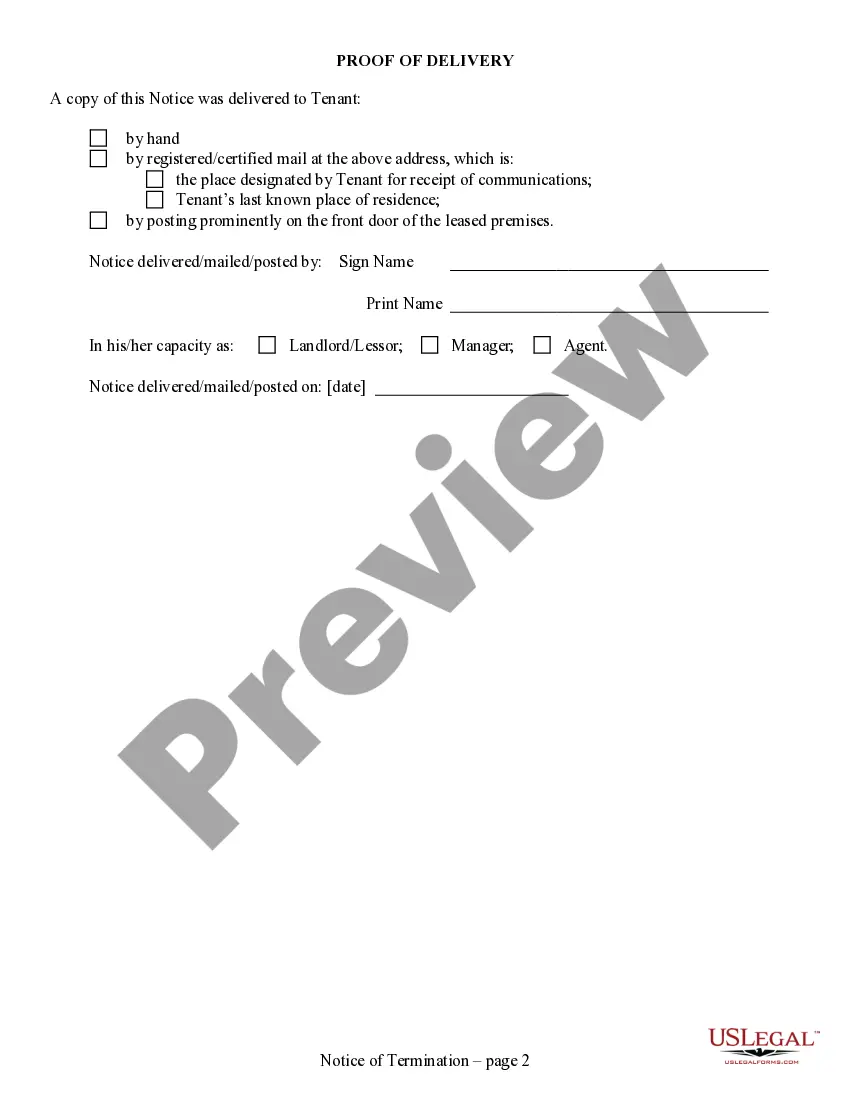
- Proof of delivery options for the notice to the tenant.



Common use cases
This form should be used when a tenant has exhibited a pattern of repeated violations of the lease agreement that the landlord has previously addressed. Typical scenarios include persistent late rent payments, unauthorized pets, or property damage that has not been remedied. If the issue persists after prior warnings, this notice allows the landlord to initiate the termination of the rental agreement.
Who should use this form
- Landlords managing residential properties.
- Property managers enforcing lease agreements.
- Landlords seeking to take formal action against tenants for recurring lease violations.
Instructions for completing this form
- Identify the parties involved by entering the full names of the tenant(s) and landlord.
- Describe the specific acts or omissions constituting the breach.
- Specify the deadline by which the tenant must vacate the premises.
- Complete the date of issuance and sign the notice.
- Ensure proof of delivery method is documented, including how and when the notice was delivered to the tenant.
Does this document require notarization?
This form does not typically require notarization unless specified by local law. However, having it notarized can provide additional assurance of its authenticity.
Get your form ready online
Our built-in tools help you complete, sign, share, and store your documents in one place.
Make edits, fill in missing information, and update formatting in US Legal Forms—just like you would in MS Word.
Download a copy, print it, send it by email, or mail it via USPS—whatever works best for your next step.
Sign and collect signatures with our SignNow integration. Send to multiple recipients, set reminders, and more. Go Premium to unlock E-Sign.
If this form requires notarization, complete it online through a secure video call—no need to meet a notary in person or wait for an appointment.
We protect your documents and personal data by following strict security and privacy standards.

Make edits, fill in missing information, and update formatting in US Legal Forms—just like you would in MS Word.

Download a copy, print it, send it by email, or mail it via USPS—whatever works best for your next step.

Sign and collect signatures with our SignNow integration. Send to multiple recipients, set reminders, and more. Go Premium to unlock E-Sign.

If this form requires notarization, complete it online through a secure video call—no need to meet a notary in person or wait for an appointment.

We protect your documents and personal data by following strict security and privacy standards.
Avoid these common issues
- Failing to provide a clear description of the lease breach.
- Not specifying the correct date by which the tenant must vacate the property.
- Omitting proof of delivery or not following the required delivery method.
- Not allowing sufficient time for the tenant to remedy the breach before issuing the notice.
Benefits of using this form online
- Convenient access to professionally drafted legal forms.
- Edit and customize the form easily to suit specific situations.
- Immediate downloads allow for quick action when dealing with tenant issues.
Looking for another form?

Form popularity
FAQ
Legally Removing People. Send a certified letter asking them to leave in 30 days or less. While a house guest is not technically a tenant, certain tenant-landlord laws still apply to the relationship if they've been with your for more than 30 days. Talk to an attorney who will help you draft and send an eviction notice
Step 1: Written Notice. The first thing a landlord must do is provide the tenant with a written notice that an eviction will occur in 30 days if the tenant does not comply with the terms of the lease within 14 days. Step 2: Eviction Papers. Step 3: The Eviction Hearing. Step 4: Period for Appeal. Step 5: Writ of Possession.
Give these tenants notice to move with the proper waiting period (30 day notice). If the tenants don't want to move, the landlords can file for eviction with the courts. The landlord can prepare documents explaining they acquired the property without plans to keep the tenants or why they must leave.
You are responsible for: paying your rent on time, paying any late fees, keeping the place clean and safe, not letting anyone else damage it, not breaking the law, disposing of your garbage, and following your landlord's rules. If you break your lease, then it may become a legal issue.
Notice Requirements for Tennessee Landlords A landlord can simply give you a written notice to move, allowing you 30 days as required by Tennessee law and specifying the date on which your tenancy will end.
Tennessee Eviction Law First, a landlord can't attempt to force a tenant to leave by turning off power or utilities or locking him out of the premises. The landlord must go through legal channels, including serving the roommate an eviction notice, and he can use one of three possible time frames to do this.
If a tenant breaches a tenancy agreement it is possible that their landlord will try and evict them from the property. The sort of breaches of tenancy which result in a landlord seeking a court order for possession include:Damage to the property (eg broken windows)
In most states, a 30 Day Notice to Vacate is sufficient if the tenant does not have a lease. Landlords, property managers, and Tennessee property management companies - click on the button to get your FREE Tennessee Landlord Notice to Vacate Form Download!