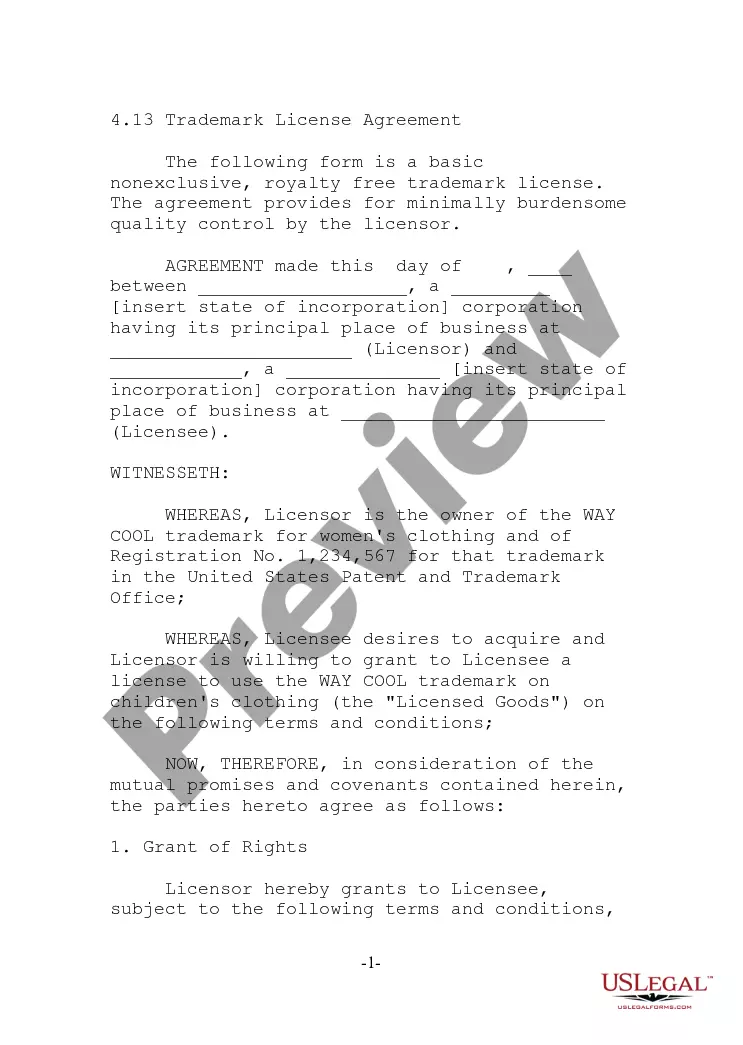
South Dakota Basic Nonexclusive Royalty Free Trademark License Agreement
Description




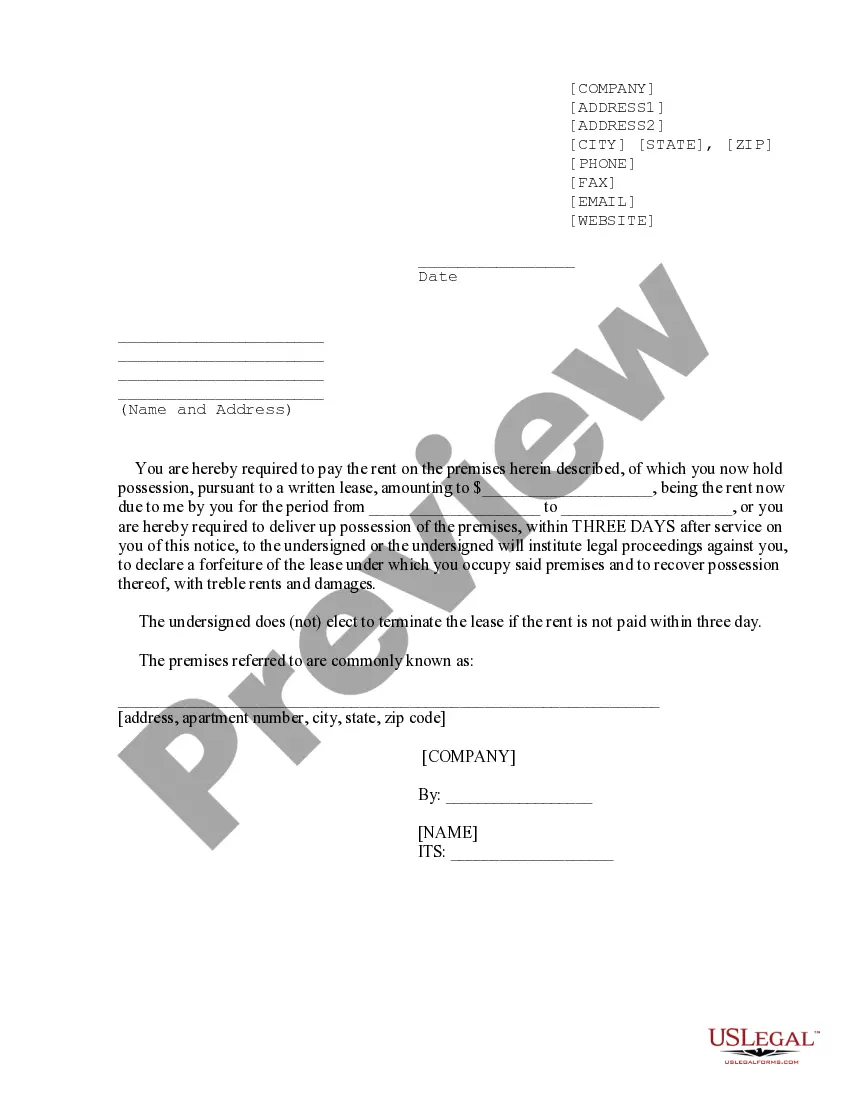


How to fill out Basic Nonexclusive Royalty Free Trademark License Agreement?
US Legal Forms - one of several biggest libraries of lawful types in the USA - delivers a variety of lawful record themes it is possible to down load or print. Using the site, you will get thousands of types for company and specific functions, sorted by groups, states, or search phrases.You will discover the newest variations of types just like the South Dakota Basic Nonexclusive Royalty Free Trademark License Agreement within minutes.
If you currently have a monthly subscription, log in and down load South Dakota Basic Nonexclusive Royalty Free Trademark License Agreement from the US Legal Forms catalogue. The Obtain switch can look on every kind you see. You have accessibility to all in the past downloaded types from the My Forms tab of your own accounts.
In order to use US Legal Forms initially, here are easy recommendations to get you started out:
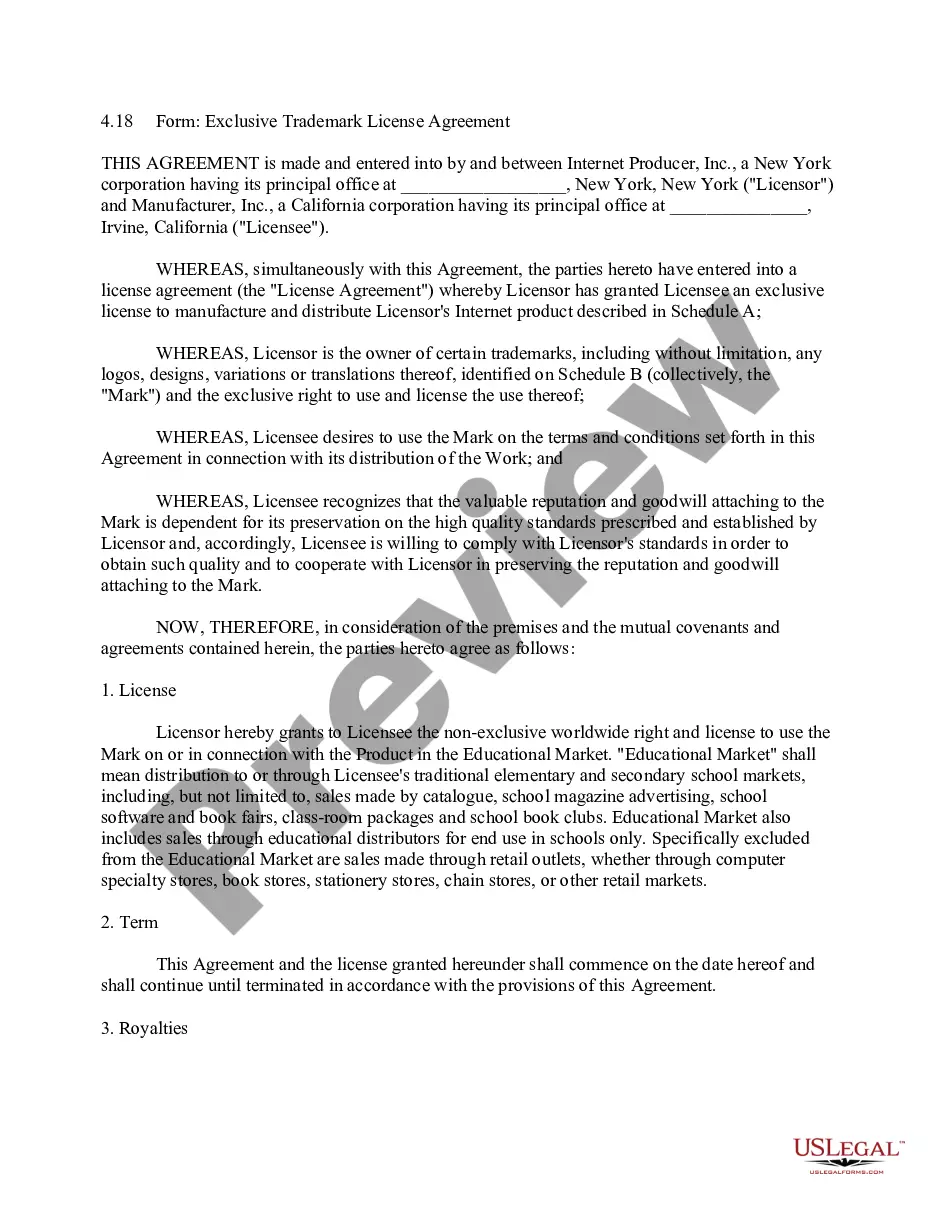
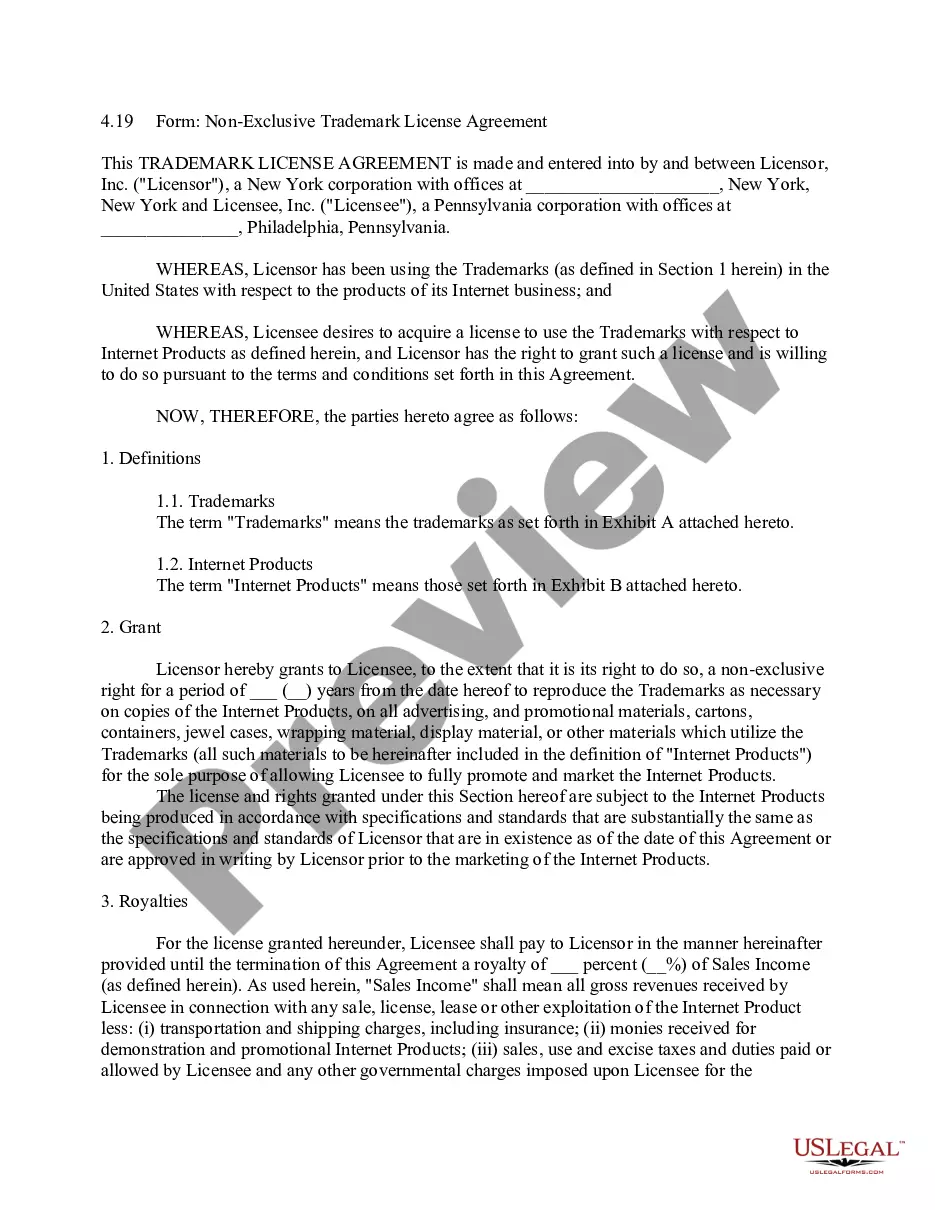
- Be sure you have picked the correct kind for your city/state. Click on the Preview switch to review the form`s content material. Browse the kind explanation to actually have chosen the right kind.
- In the event the kind does not satisfy your needs, make use of the Lookup field at the top of the monitor to find the one that does.
- Should you be content with the form, verify your selection by simply clicking the Purchase now switch. Then, choose the costs plan you favor and give your accreditations to sign up for the accounts.
- Procedure the deal. Make use of charge card or PayPal accounts to finish the deal.
- Select the file format and down load the form in your gadget.
- Make changes. Fill up, edit and print and indication the downloaded South Dakota Basic Nonexclusive Royalty Free Trademark License Agreement.
Every template you included in your account lacks an expiration day and is your own eternally. So, in order to down load or print another copy, just proceed to the My Forms area and click on in the kind you require.
Gain access to the South Dakota Basic Nonexclusive Royalty Free Trademark License Agreement with US Legal Forms, probably the most extensive catalogue of lawful record themes. Use thousands of expert and status-specific themes that meet your organization or specific needs and needs.
Form popularity
FAQ
Non-exclusive licenses grant the licensee rights in the intellectual property but also allow the licensor rights to exploit the intellectual property in question ? including granting licenses to other entities. In general, non-exclusive licensees face competition from other licensees.
For example, a software company could grant a non-exclusive license to multiple companies to use their copyrighted software. In this case, multiple companies can use the software, but none of them have the right to take legal action against potential infringers.
What's a non exclusive contract? Non exclusive contracts are contracts that don't include exclusivity provisions that stop one party from engaging with others. In fact, they may include an explicit non-exclusivity clause that makes it clear that competitive vendors or partners can be engaged. What is an exclusive contract? Exclusivity meaning & examples juro.com ? learn ? exclusivity-meaning-exclusive-... juro.com ? learn ? exclusivity-meaning-exclusive-...
(2) A non-exclusive right of use entitles the rightholder to use the work in the manner permitted without it ruling out use by other persons. (3) An exclusive right of use entitles the rightholder to use the work in the manner permitted, to the exclusion of all other persons, and to grant rights of use. Act on Copyright and Related Rights (Urheberrechtsgesetz ? UrhG) gesetze-im-internet.de ? englisch_urhg gesetze-im-internet.de ? englisch_urhg
In relation to property, an exclusive right will, for the most part, arise when something tangible is acquired; as a result, others are prevented from exercising control of that thing. For example, a person may prohibit others from entering and using their land, or from taking their personal possessions. Exclusive right - Wikipedia wikipedia.org ? wiki ? Exclusive_right wikipedia.org ? wiki ? Exclusive_right
Non-exclusive or ordinary licences give the licensee the right to use the intellectual property, but do not restrict the rights of the licensor or other parties in any way. In other words, the licensor retains the right to license the work to third parties and to simultaneously use the rights licensed itself. Licencing intellectual property, things to consider Norton Rose Fulbright ? publications Norton Rose Fulbright ? publications
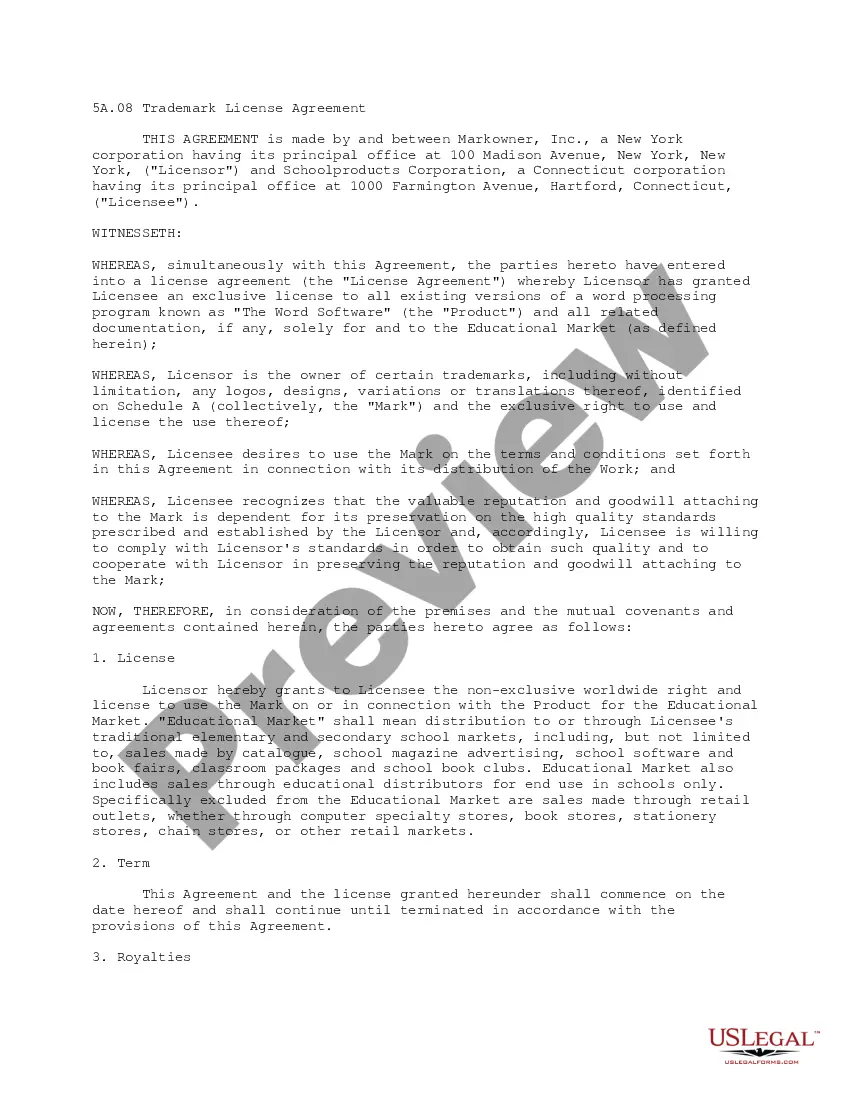
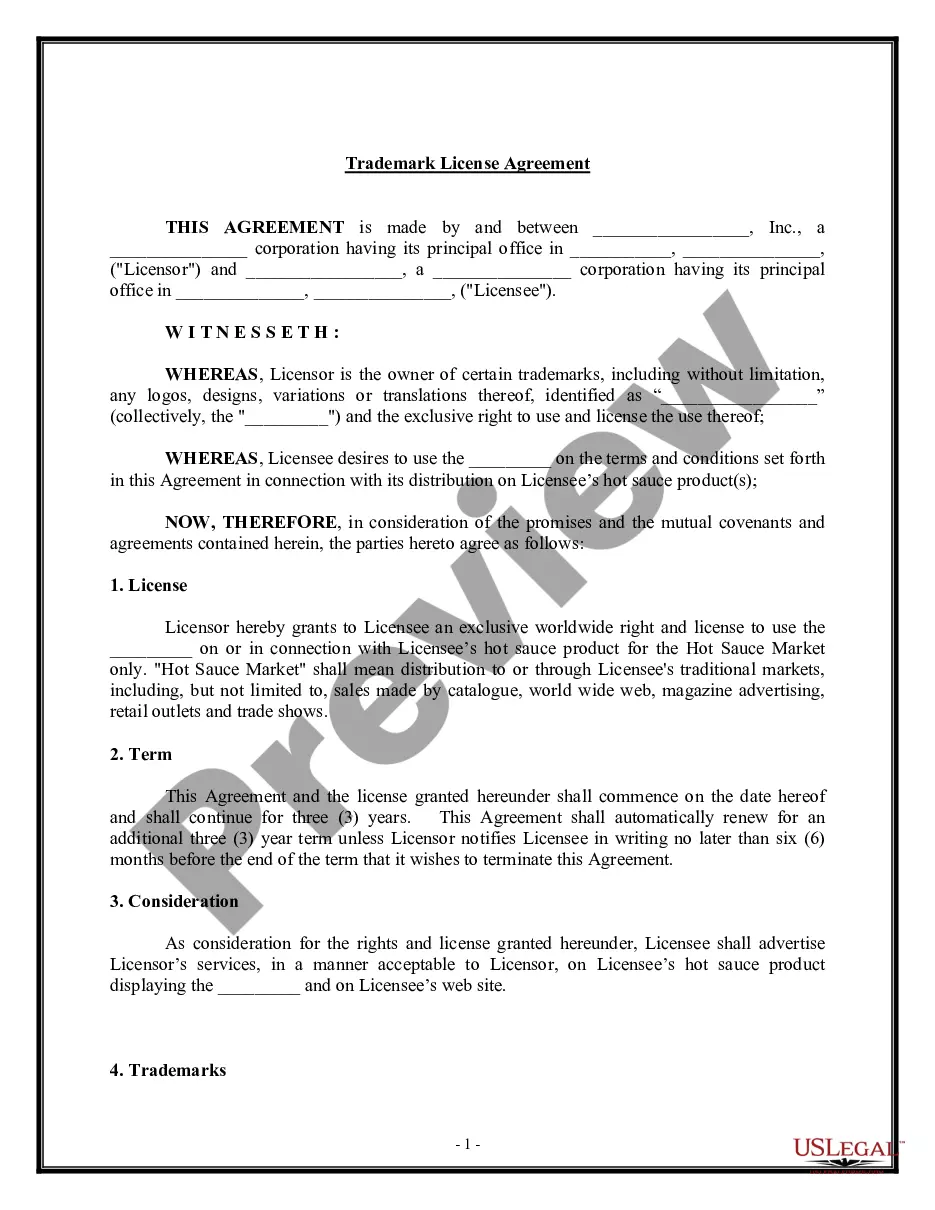
A trademark license agreement allows the licensee to use (but not own) the licensor's trademark in connection with agreed-on products or services. Licensing can help a company expand into new markets effectively and easily while lending the licensee an established name and reputation.
A licensing agreement allows one party (the licensee) to use and/or earn revenue from the property of the owner (the licensor). Licensing agreements generate revenues, called royalties, earned by a company for allowing its copyrighted or patented material to be used by another company.
