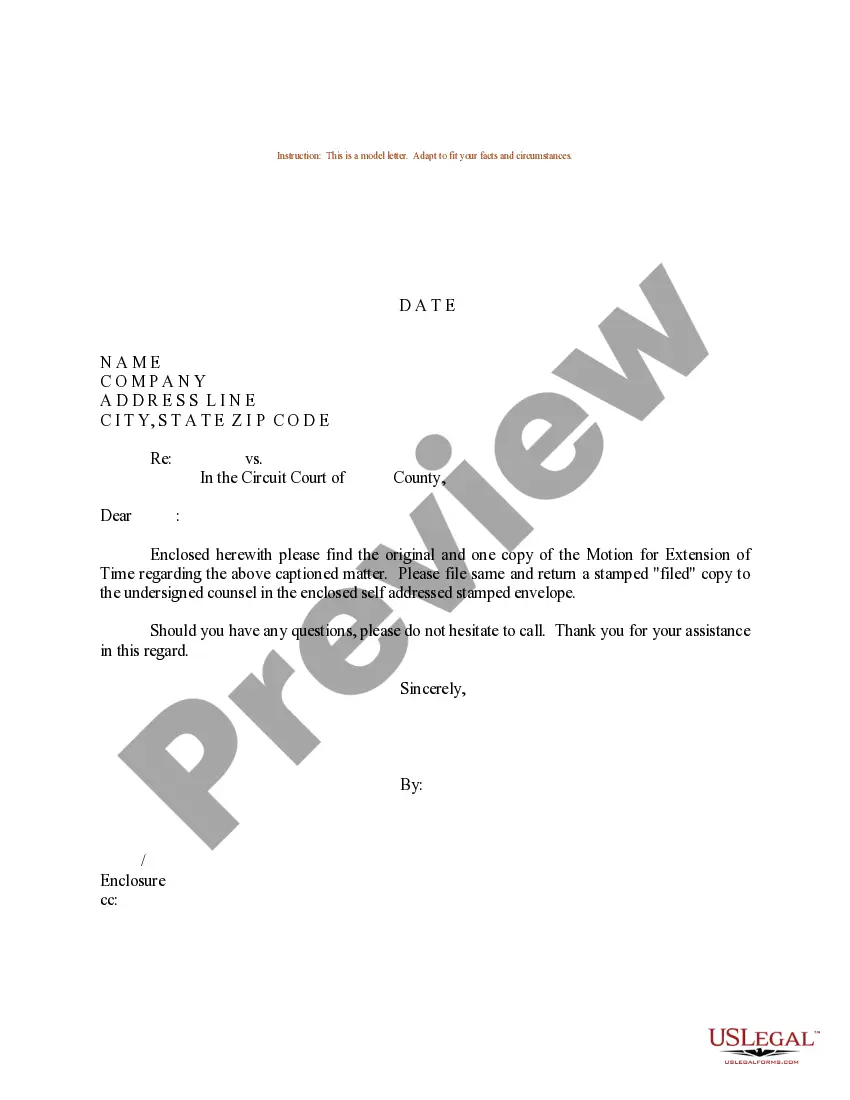
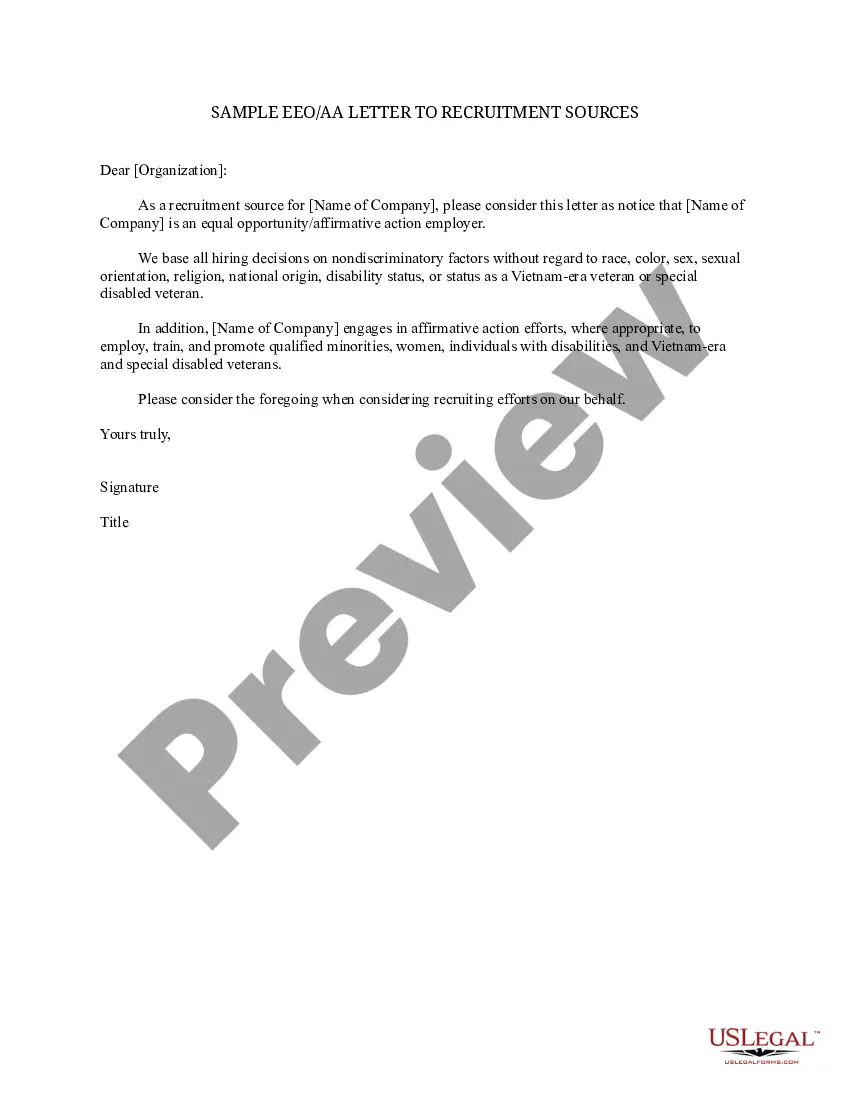
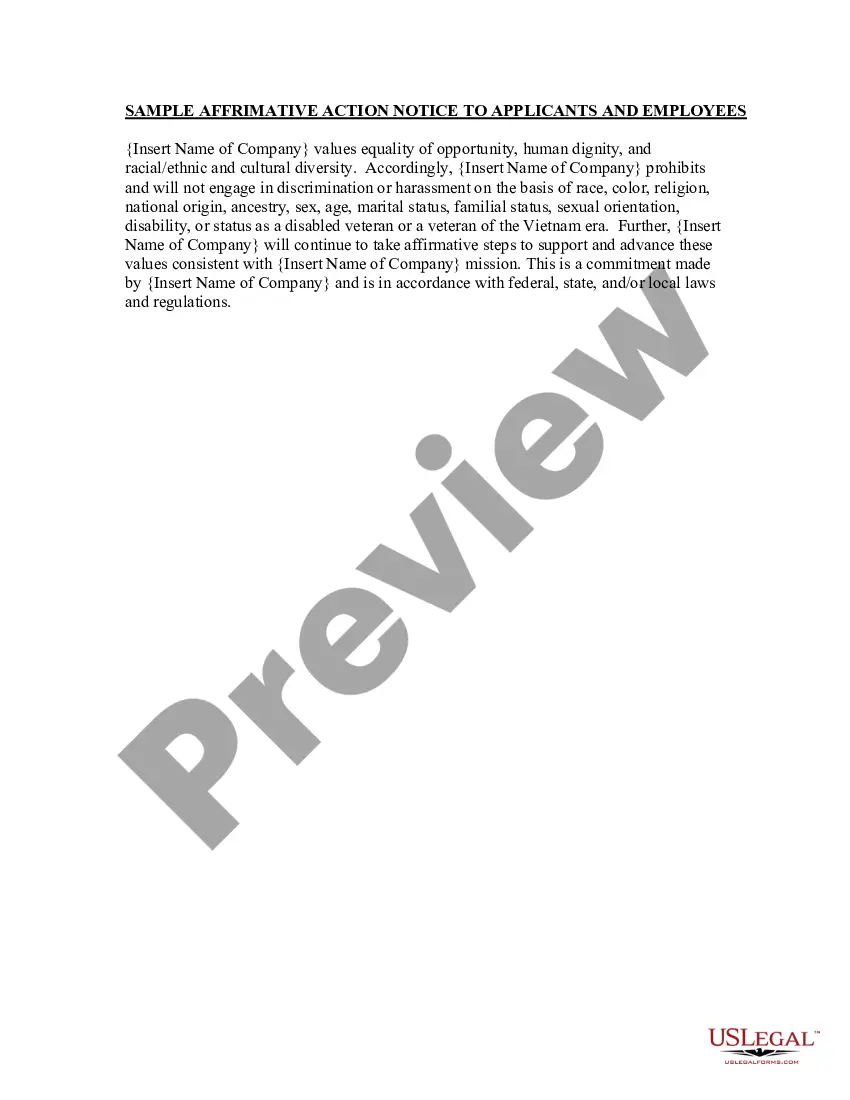
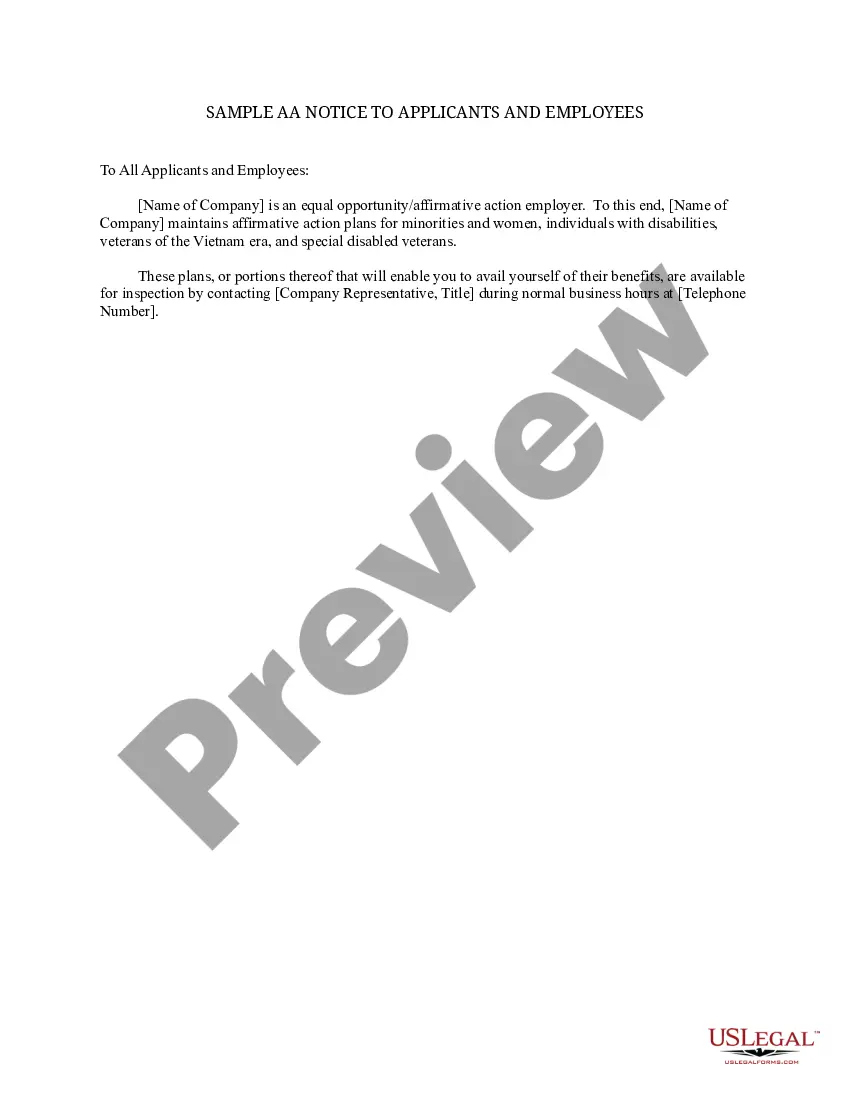
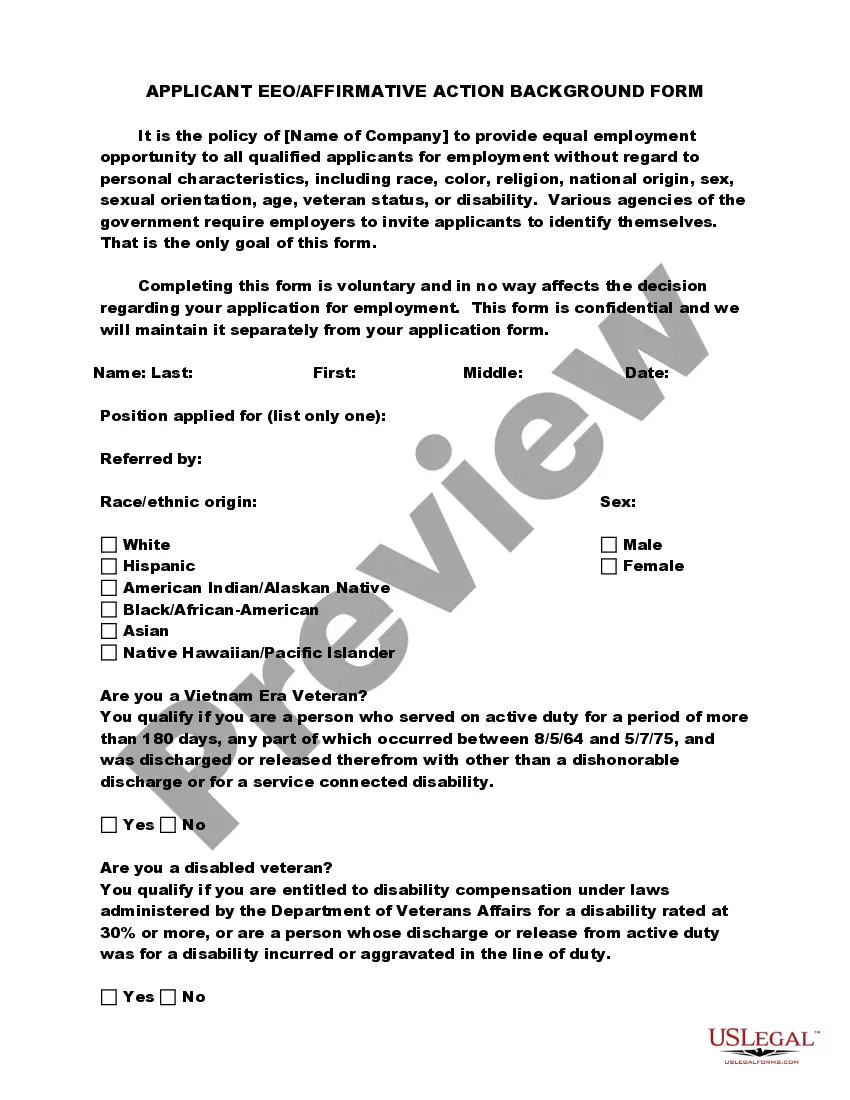
South Dakota Sample EEO / AA Letter to Recruitment Sources
Description
Get your form ready online
Our built-in tools help you complete, sign, share, and store your documents in one place.
Make edits, fill in missing information, and update formatting in US Legal Forms—just like you would in MS Word.
Download a copy, print it, send it by email, or mail it via USPS—whatever works best for your next step.
Sign and collect signatures with our SignNow integration. Send to multiple recipients, set reminders, and more. Go Premium to unlock E-Sign.
If this form requires notarization, complete it online through a secure video call—no need to meet a notary in person or wait for an appointment.
We protect your documents and personal data by following strict security and privacy standards.

Make edits, fill in missing information, and update formatting in US Legal Forms—just like you would in MS Word.

Download a copy, print it, send it by email, or mail it via USPS—whatever works best for your next step.

Sign and collect signatures with our SignNow integration. Send to multiple recipients, set reminders, and more. Go Premium to unlock E-Sign.

If this form requires notarization, complete it online through a secure video call—no need to meet a notary in person or wait for an appointment.

We protect your documents and personal data by following strict security and privacy standards.
Looking for another form?




How to fill out Sample EEO / AA Letter To Recruitment Sources?
Are you currently in a situation where you require documents for either business or personal purposes almost every day.
There are numerous legal document templates available online, but finding reliable ones isn't easy.
US Legal Forms offers a wide array of form templates, such as the South Dakota Sample EEO / AA Letter to Recruitment Sources, that are designed to comply with federal and state regulations.
Once you find the right form, click Purchase now.
Choose the payment plan you prefer, provide the necessary information to set up your account, and complete the transaction using your PayPal or credit card.
- If you are already familiar with the US Legal Forms website and have an account, simply Log In.
- Afterward, you can download the South Dakota Sample EEO / AA Letter to Recruitment Sources template.
- If you do not have an account and want to start using US Legal Forms, follow these steps.
- Find the form you need and ensure it is for the correct area/region.
- Utilize the Preview button to review the form.
- Read the description to confirm that you’ve selected the correct form.
- If the form isn't what you're looking for, use the Lookup area to find a form that fits your needs.
Form popularity
FAQ
The purpose of EEO regulations is to make sure nobody will face rejection or difficulties because they're in a protected group. For example, under several EEO laws, you cannot reject a candidate simply because they're Jewish or Christian, African or Caucasian, or because they're pregnant.
Collect voluntary applicant EEOC data To do this, just go to 'Recruiting preferences', scroll down to the EEOC section and turn the 'EEO survey' on. If you're an employer with a Federal Government contract you should then also enable the 'OFCCP survey'.
Overview U.S. Equal Employment Opportunity Commission.
The U.S. Equal Employment Opportunity Commission (EEOC) is responsible for enforcing federal laws that make it illegal to discriminate against a job applicant or an employee because of the person's race, color, religion, sex (including pregnancy, transgender status, and sexual orientation), national origin, age (40 or
EEO (Equal Employment Opportunity) questions are most commonly found at the very end of a job application. Companies are required to ask EEO questions on job applications in order to file the EEO-1 Report; a compliance survey mandated by federal statute and regulations.
The Equal Employment Opportunity Commission requires that every American employer include an EEO in their job postings. You must include the words (Company X) is an Equal Opportunity Employer followed by a policy statement that details non-discriminatory practices.
Under EEO law related to the recruitment process, employers cannot discriminate based on age (forty years or older), disability, genetic information, national origin, sex, pregnancy, race, and religion. In a job announcement, organizations usually have an EEO statement.
Under EEO law related to the recruitment process, employers cannot discriminate based on age (forty years or older), disability, genetic information, national origin, sex, pregnancy, race, and religion.
These laws protect employees and job applicants against employment discrimination when it involves: Unfair treatment because of race, color, religion, sex (including pregnancy, gender identity, and sexual orientation), national origin, age (40 or older), disability or genetic information.