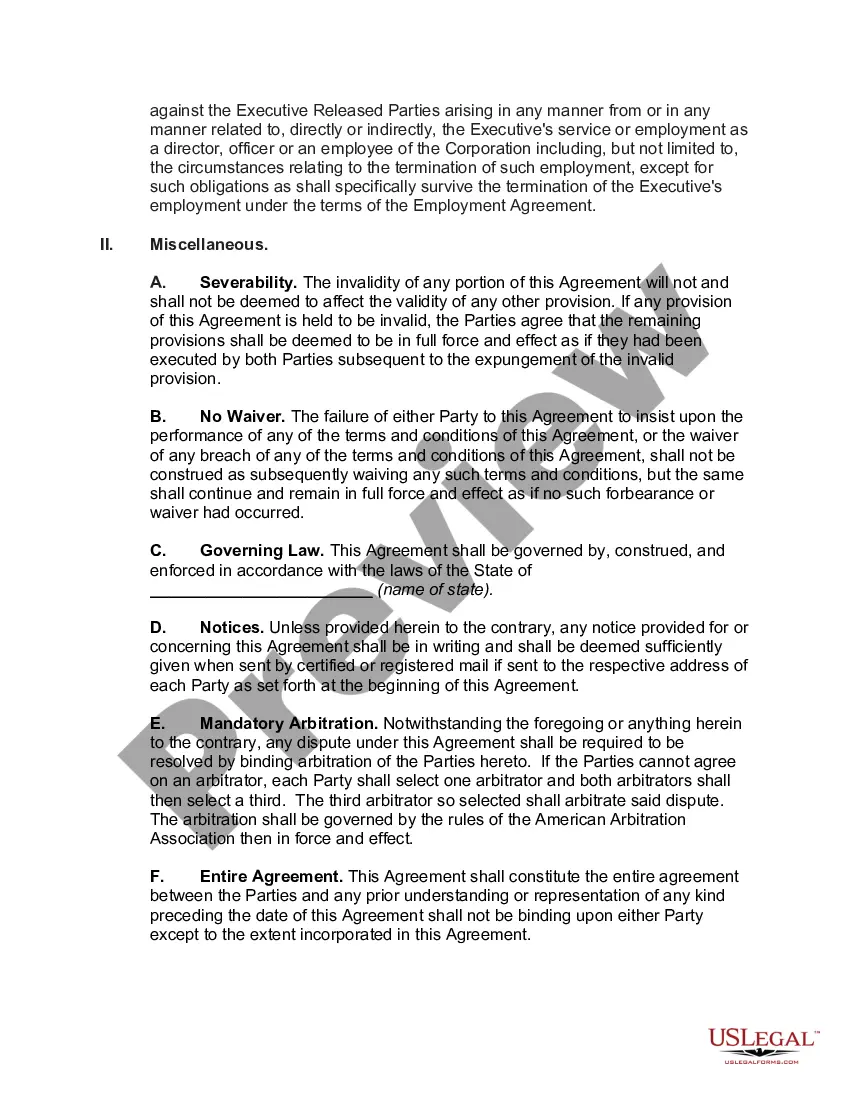
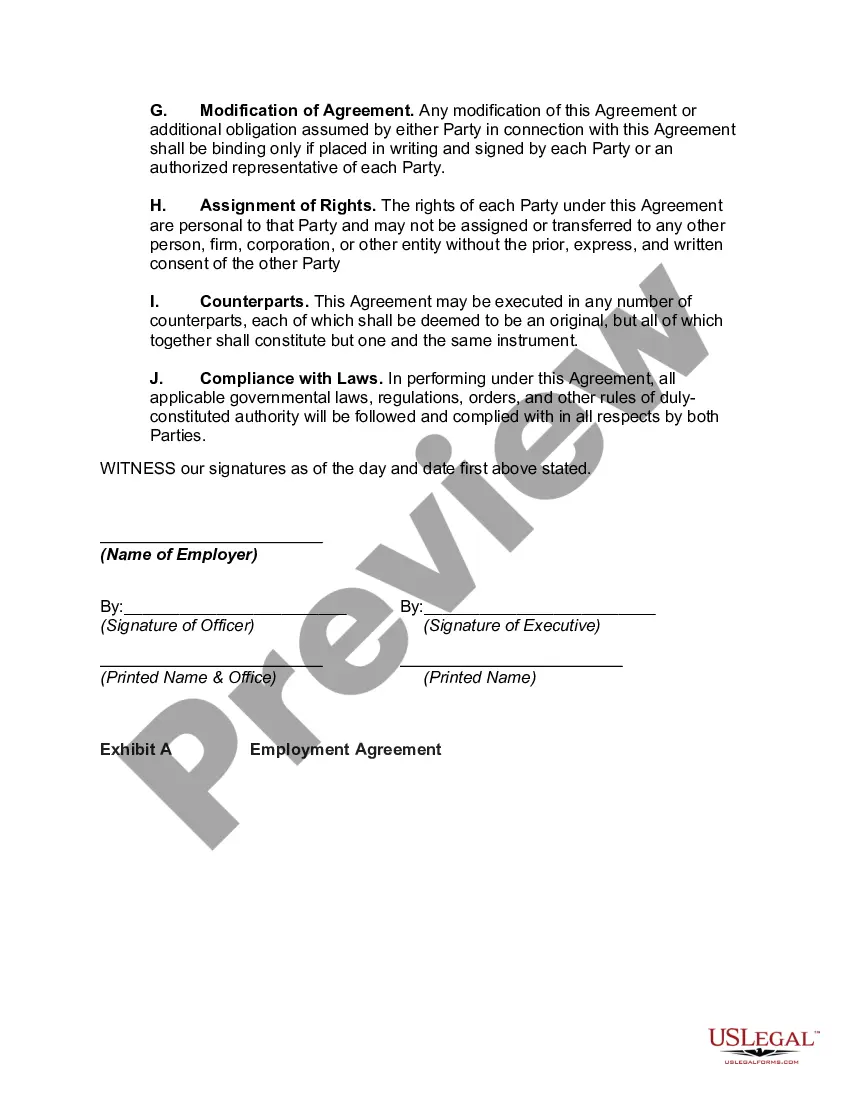
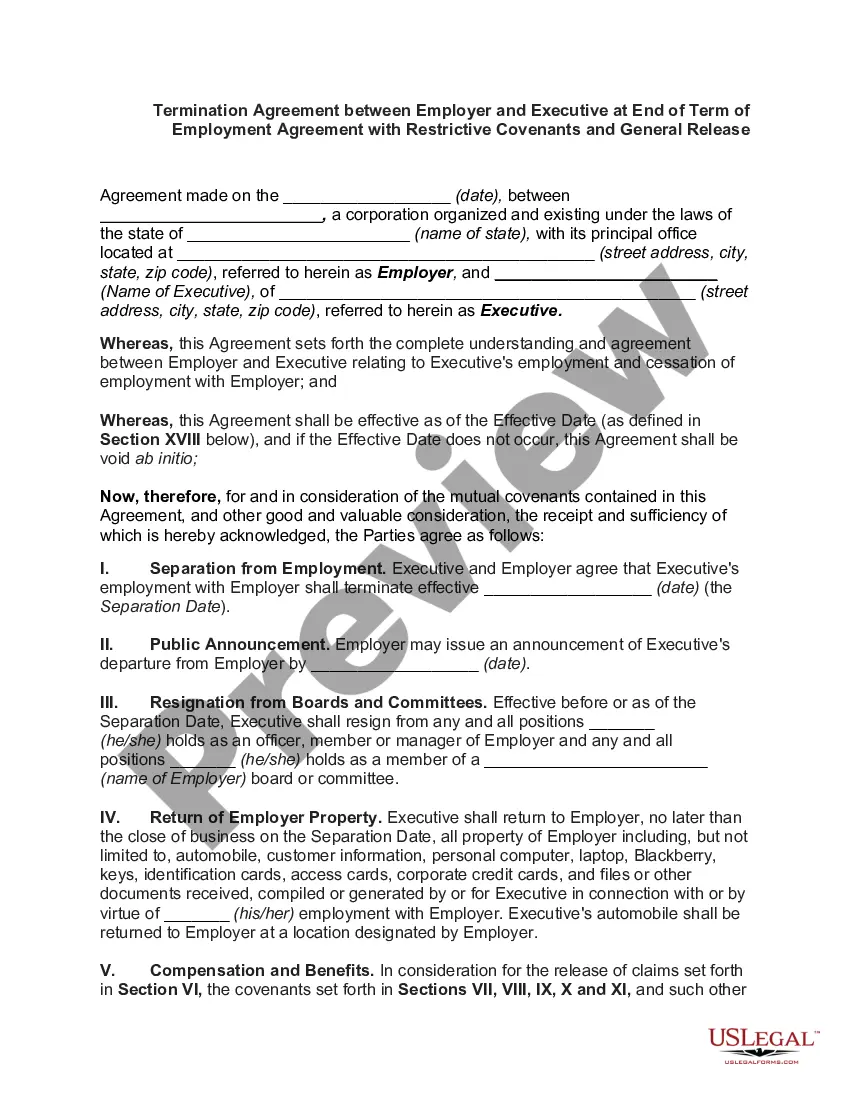
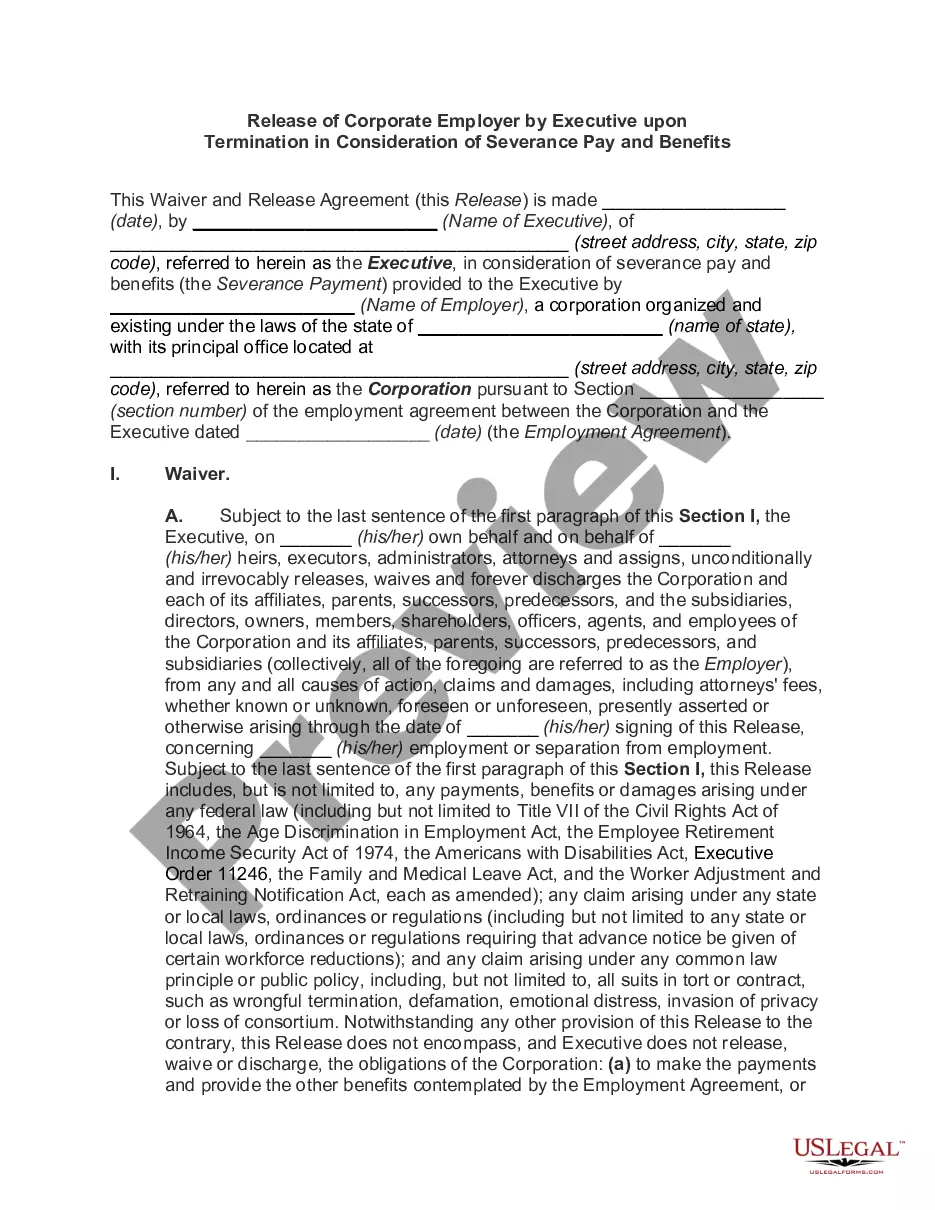
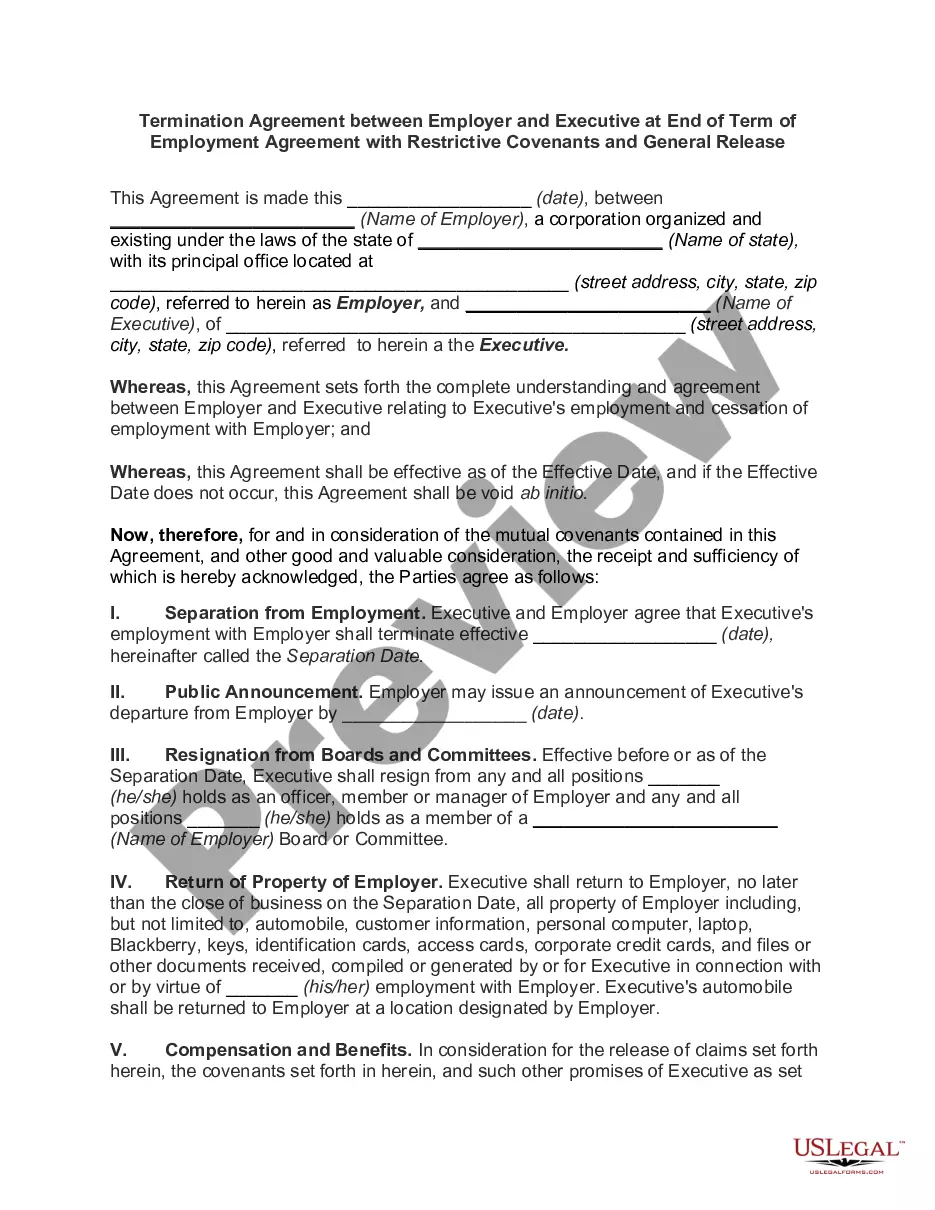
South Dakota Mutual Release Agreement between Corporate Employer and Executive upon Termination of Employment
Description

Get your form ready online
Our built-in tools help you complete, sign, share, and store your documents in one place.
Make edits, fill in missing information, and update formatting in US Legal Forms—just like you would in MS Word.
Download a copy, print it, send it by email, or mail it via USPS—whatever works best for your next step.
Sign and collect signatures with our SignNow integration. Send to multiple recipients, set reminders, and more. Go Premium to unlock E-Sign.
If this form requires notarization, complete it online through a secure video call—no need to meet a notary in person or wait for an appointment.
We protect your documents and personal data by following strict security and privacy standards.

Make edits, fill in missing information, and update formatting in US Legal Forms—just like you would in MS Word.

Download a copy, print it, send it by email, or mail it via USPS—whatever works best for your next step.

Sign and collect signatures with our SignNow integration. Send to multiple recipients, set reminders, and more. Go Premium to unlock E-Sign.

If this form requires notarization, complete it online through a secure video call—no need to meet a notary in person or wait for an appointment.

We protect your documents and personal data by following strict security and privacy standards.
Looking for another form?



How to fill out Mutual Release Agreement Between Corporate Employer And Executive Upon Termination Of Employment?
You can dedicate time online searching for the legal document format that meets your federal and state requirements.
US Legal Forms provides thousands of legal templates that can be reviewed by professionals.
You can obtain or print the South Dakota Mutual Release Agreement between Corporate Employer and Executive upon Termination of Employment from our service.
First, ensure you have selected the correct document template for the county/region of your preference. Review the template description to confirm that you have chosen the correct one. If available, use the Preview button to check through the document template as well.
- If you have a US Legal Forms account, you can sign in and click the Acquire button.
- After that, you can complete, modify, print, or sign the South Dakota Mutual Release Agreement between Corporate Employer and Executive upon Termination of Employment.
- Every legal document template you purchase is yours indefinitely.
- To get another copy of any acquired template, visit the My documents tab and click the respective button.
- If you are using the US Legal Forms website for the first time, follow the straightforward instructions below.
Form popularity
FAQ
A common feature of a deed of release is a mutual release. It involves both parties agreeing to release each other from all: future claims; demands; debts; or.
Draft a letter to the other party to the contract. State that you would like to terminate your contract by way of mutual agreement. Present a list of reasons why you believe contract termination is the best course for both parties. Request a response releasing you from the agreement.
What is a Release? A release is a legal document that records an employee's agreement to relinquish their right to make any future claims against their employer relating to their employment or the termination of their employment. A release is essentially a contract between the terminated employee and the employer.
For example: Mary has offered her used car to John for a price of $10,000 and they have reached a mutual agreement. This means that Mary and John have mutually agreed on the terms and conditions relating to the sale of Mary's car to John.
The dismissal by mutual agreement happens when the company and the employee decide consensual form terminate the employment contract.
Updated October 28, 2020: Termination of contract by mutual consent takes place when a contract is no longer being followed, if the contract can no longer be performed, or the parties involved ceased operating the business. When these situations occur, the parties can formally terminate the agreement in writing.
A mutual agreement is a binding contract between two or more parties and can cover any contingency. The difference between a mutual agreement and a settlement not creating a trust, is determined by the operative words, ie "mutually agrees" or "settles".
Updated October 28, 2020: Termination of contract by mutual consent takes place when a contract is no longer being followed, if the contract can no longer be performed, or the parties involved ceased operating the business. When these situations occur, the parties can formally terminate the agreement in writing.
What makes a contract legally valid is mutual consent. A contract must include both parties' free, mutual consent that hasn't been obtained through fraud, duress, or undue influence.