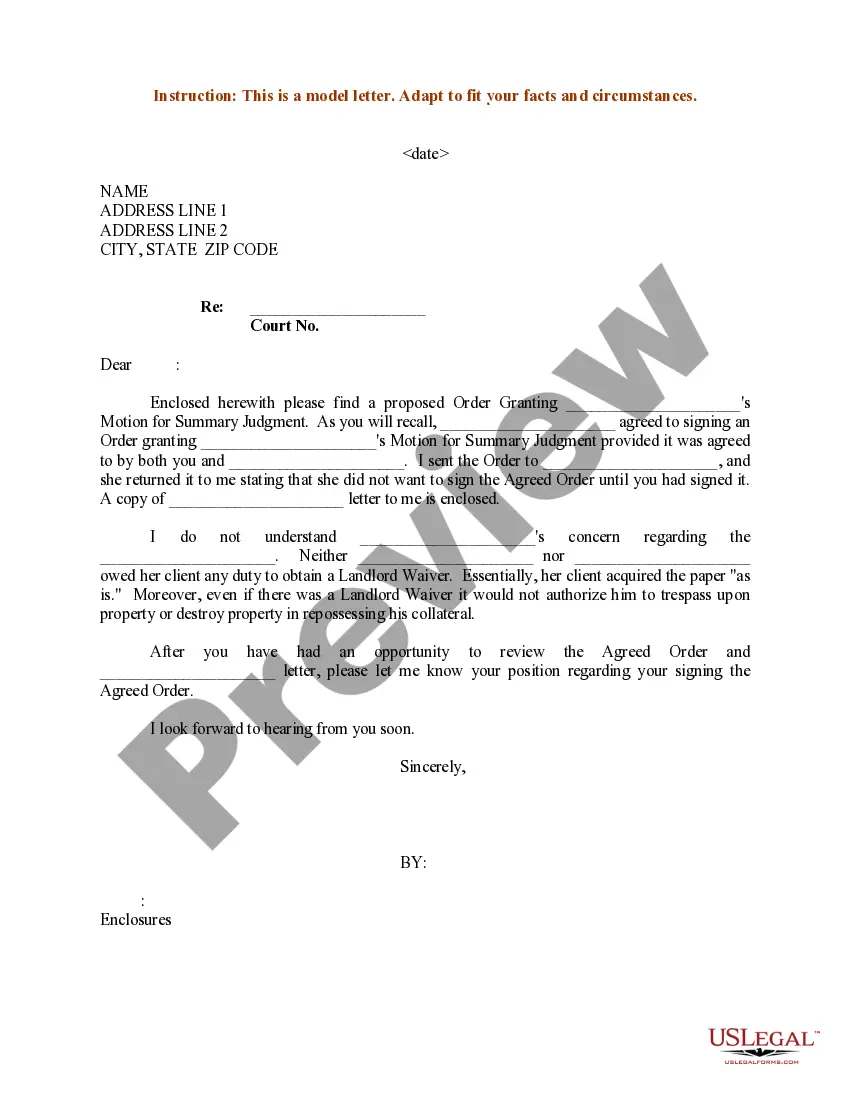
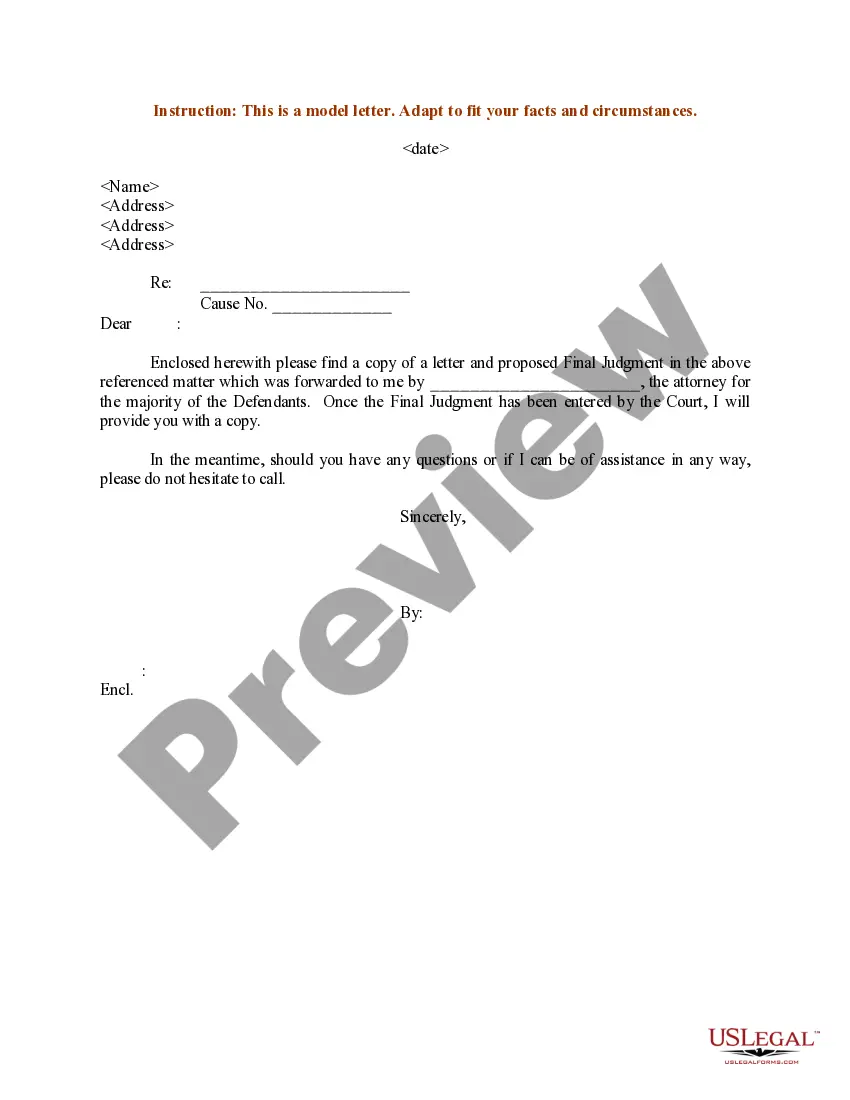
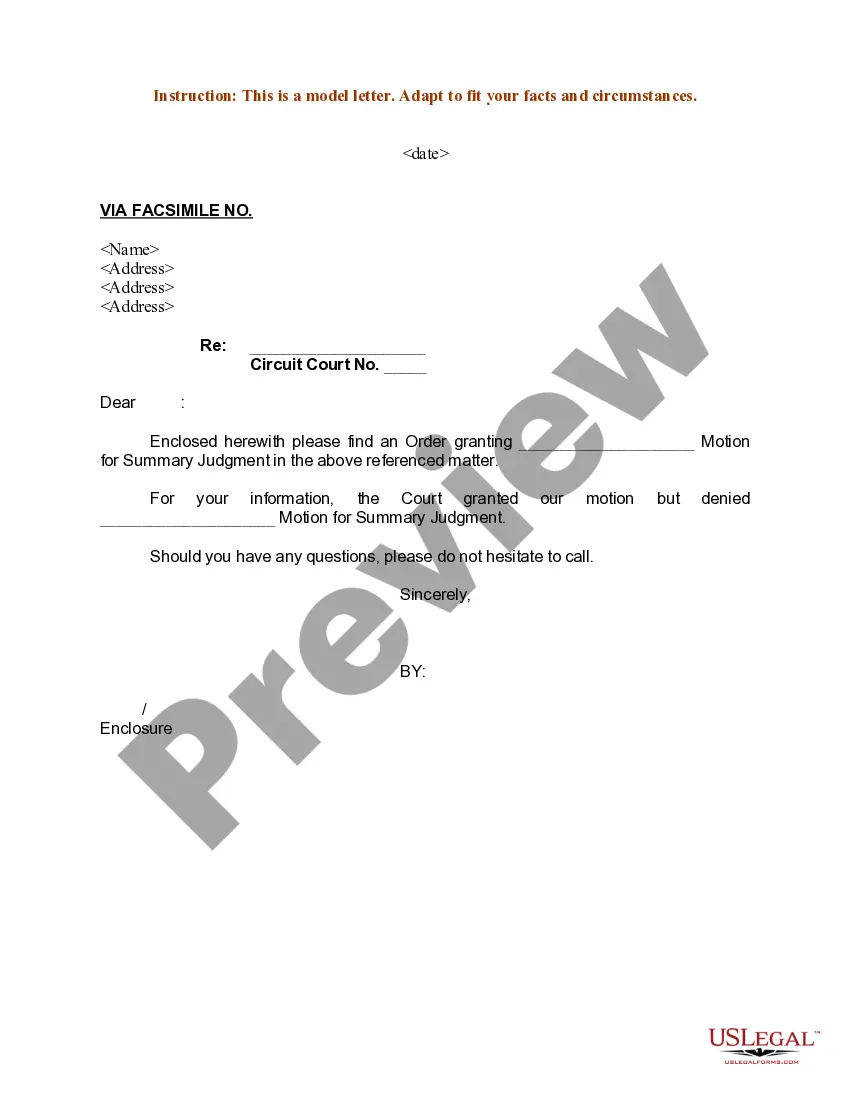
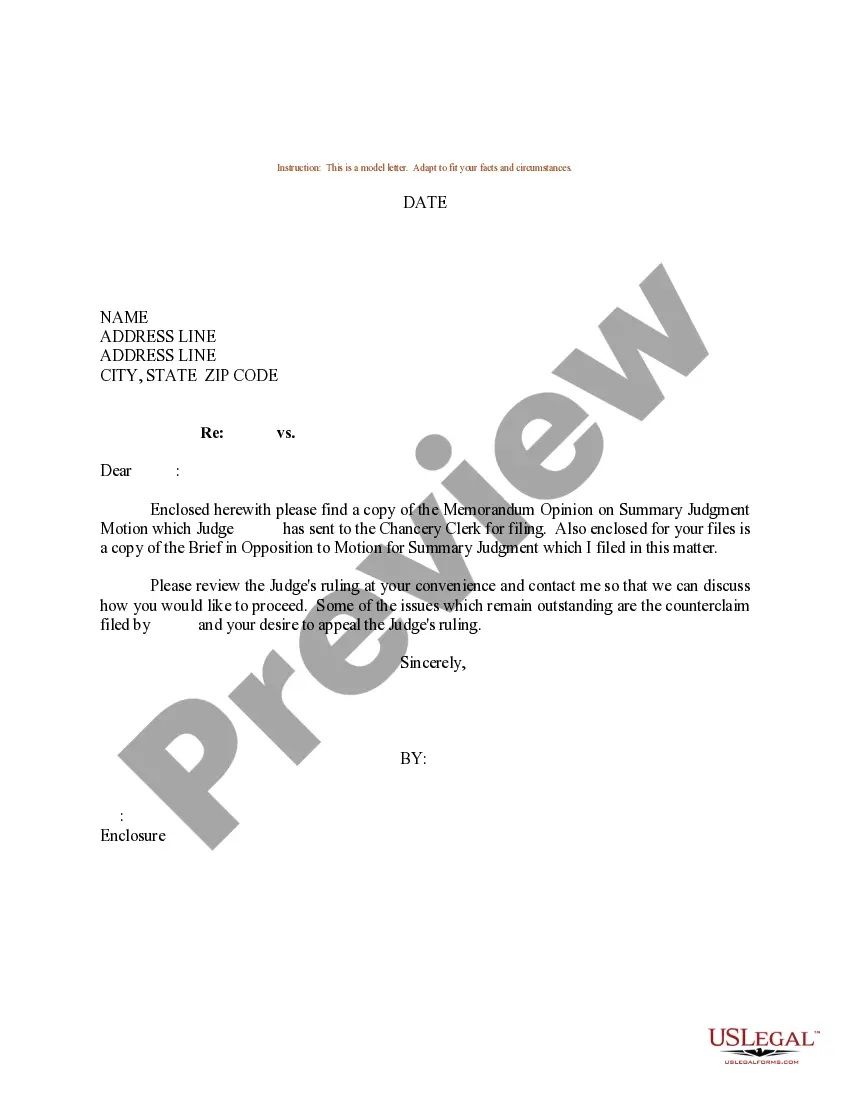
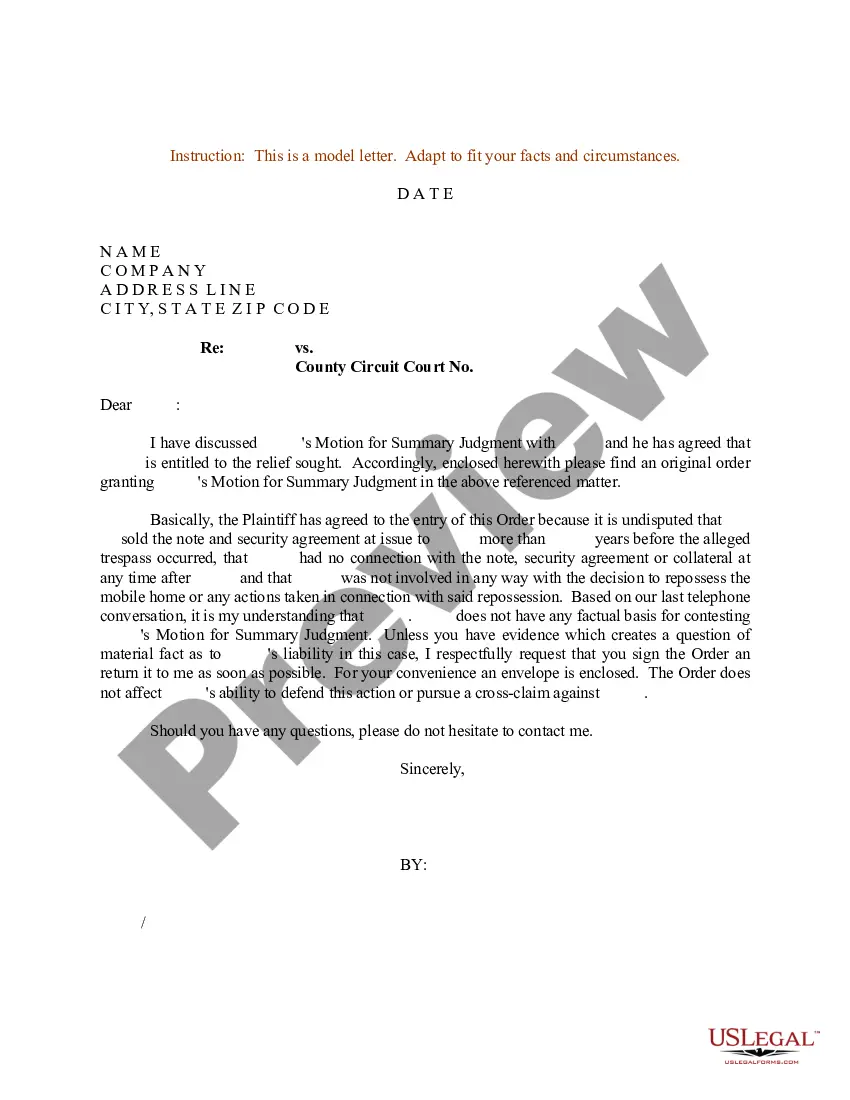
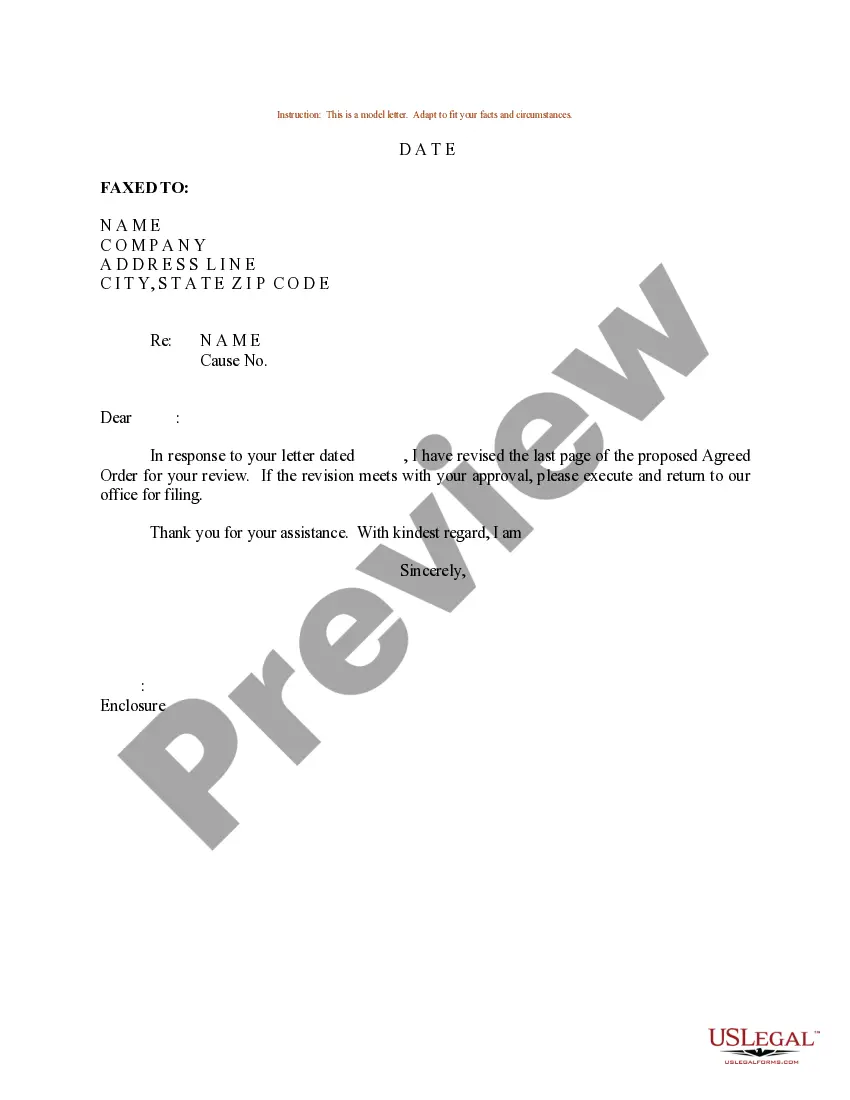
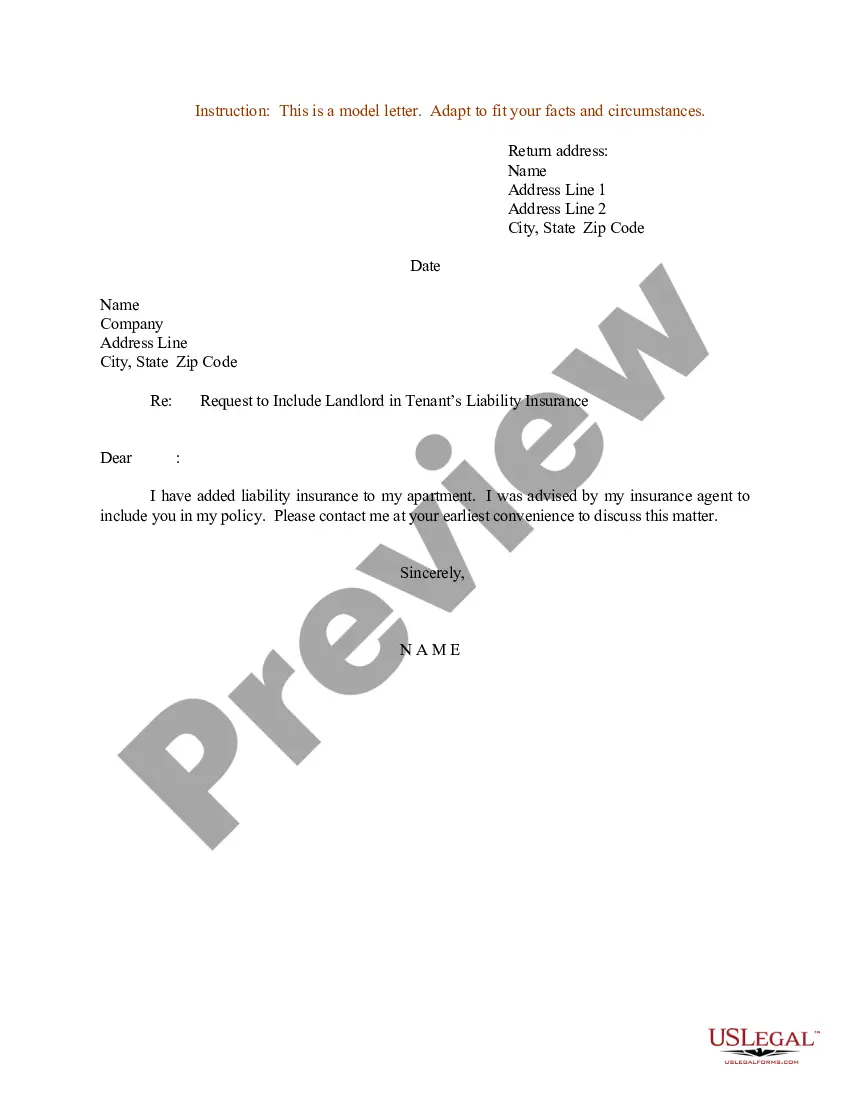
South Dakota Sample Letter for Proposed Order Granting Summary Judgment
Description
Get your form ready online
Our built-in tools help you complete, sign, share, and store your documents in one place.
Make edits, fill in missing information, and update formatting in US Legal Forms—just like you would in MS Word.
Download a copy, print it, send it by email, or mail it via USPS—whatever works best for your next step.
Sign and collect signatures with our SignNow integration. Send to multiple recipients, set reminders, and more. Go Premium to unlock E-Sign.
If this form requires notarization, complete it online through a secure video call—no need to meet a notary in person or wait for an appointment.
We protect your documents and personal data by following strict security and privacy standards.

Make edits, fill in missing information, and update formatting in US Legal Forms—just like you would in MS Word.

Download a copy, print it, send it by email, or mail it via USPS—whatever works best for your next step.

Sign and collect signatures with our SignNow integration. Send to multiple recipients, set reminders, and more. Go Premium to unlock E-Sign.

If this form requires notarization, complete it online through a secure video call—no need to meet a notary in person or wait for an appointment.

We protect your documents and personal data by following strict security and privacy standards.
Looking for another form?

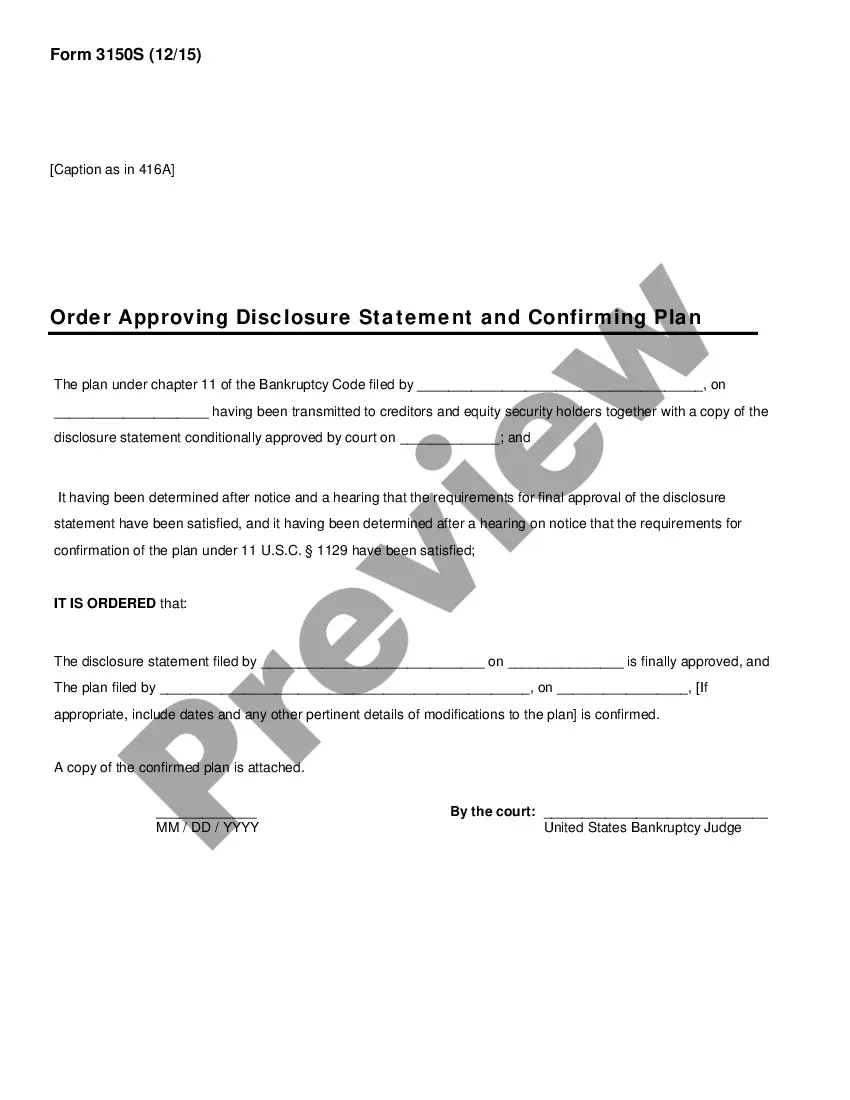

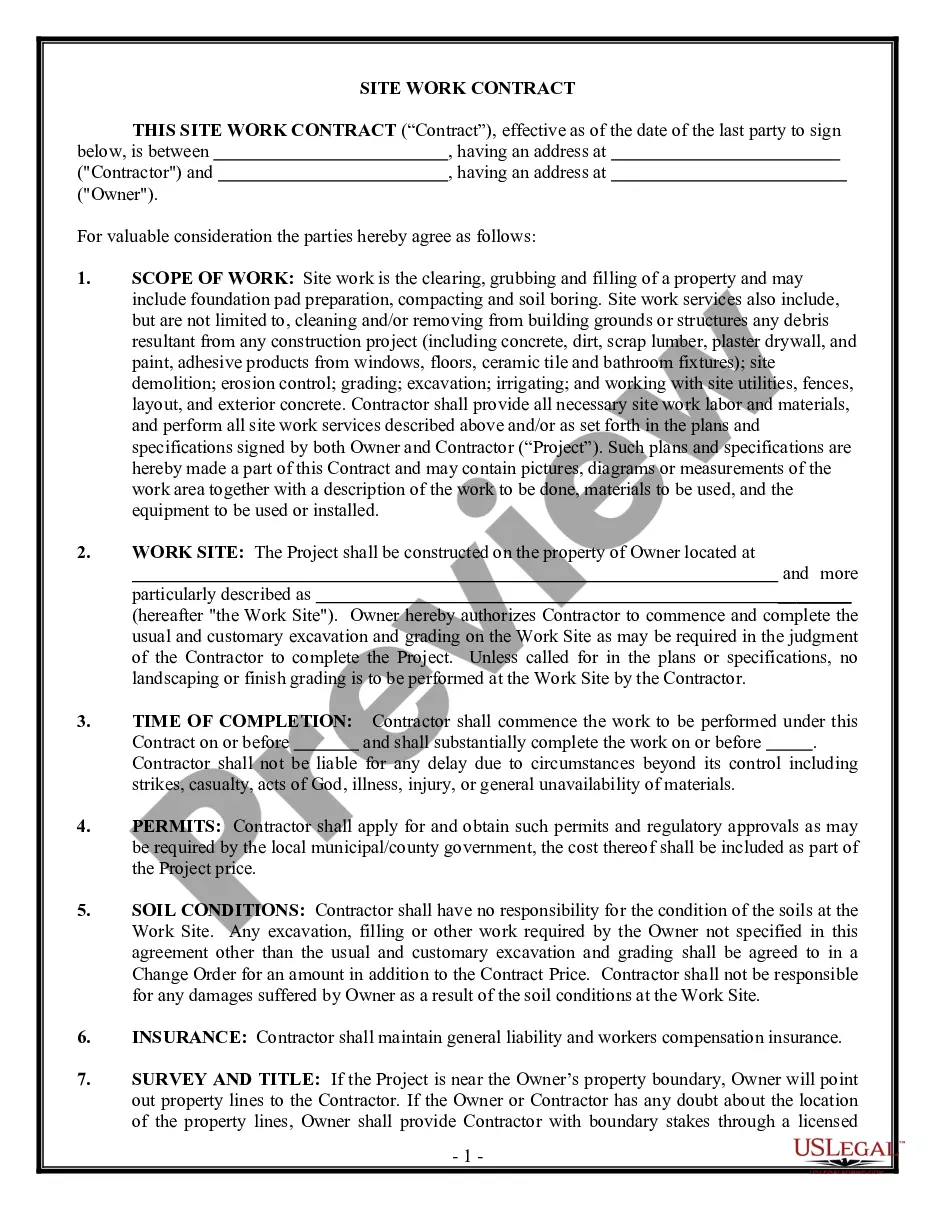

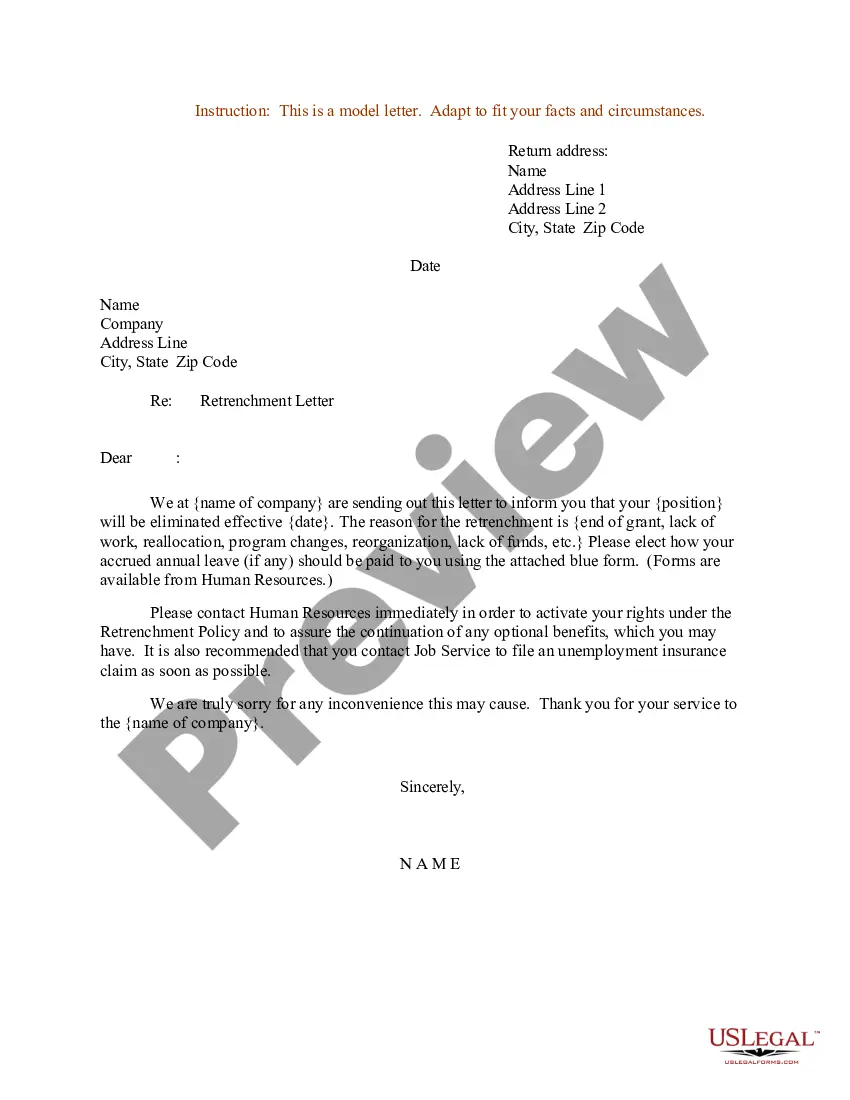
How to fill out Sample Letter For Proposed Order Granting Summary Judgment?
US Legal Forms - one of the largest collections of legal forms in the United States - provides a variety of legal document templates that you can download or print. By using the website, you can access thousands of forms for business and personal purposes, organized by categories, states, or keywords. You can find the latest versions of forms such as the South Dakota Sample Letter for Proposed Order Granting Summary Judgment in just seconds.
If you already have an account, Log In and download the South Dakota Sample Letter for Proposed Order Granting Summary Judgment from the US Legal Forms library. The Download button will be displayed on every form you view. You can access all previously downloaded forms in the My documents section of your account.
If you are using US Legal Forms for the first time, here are simple steps to get you started: Ensure you have selected the correct form for your city/county. Click the Review button to examine the form's content. Read the form description to make sure you have chosen the right form. If the form does not meet your needs, use the Search field at the top of the screen to find one that does. If you are satisfied with the form, confirm your choice by clicking the Buy now button. Then, select the pricing plan you prefer and provide your credentials to register for the account.
- Process the transaction. Use your credit card or PayPal account to complete the transaction.
- Choose the format and download the form to your device.
- Make edits. Fill out, modify, print, and sign the downloaded South Dakota Sample Letter for Proposed Order Granting Summary Judgment.
- Each template you add to your account does not have an expiration date and is yours permanently. Therefore, to download or print another copy, simply go to the My documents section and click on the form you need.
- Access the South Dakota Sample Letter for Proposed Order Granting Summary Judgment with US Legal Forms, the most comprehensive collection of legal document templates.
- Utilize thousands of professional and state-specific templates that meet your business or personal needs and requirements.
Form popularity
FAQ
See SDCL 15-26A-3. A motion for reconsideration is not a separate and appealable order. Rather, it is ?an invitation to the court to consider exercising its inherent power to vacate or modify its own judgment.? Breeden v. , 598 NW2d 441, 444 ( 1999).
Examples of summary judgement motions John says that Linda ran a red light and caused the crash. John happens to have a video of Linda running the red light and crashing into him. John's attorney files a motion for summary judgment claiming that: There are no material facts that can be reasonably disputed.
While a summary judgment motion is not a substitute for trial, it is a tool that allows courts to weed out cases that do not need a trial to be resolved. It also allows the court to simplify and streamline the case so that trial is more efficient and focused on the areas of actual dispute.
When a motion for summary judgment is made and supported as provided in this rule, an adverse party may not rest upon the mere allegations or denials of his pleading, but his response, by affidavits or as otherwise provided in this rule, must set forth specific facts showing that there is a genuine issue for trial.
Motion for summary judgment: The court can consider all evidence in the record, even if the evidence was not cited in the pleadings. However, the court can only consider evidence that would be admissible at trial.
The chance of success in these cases is less than 10% [1]. Another study found that summary judgment is mostly granted in Title VII cases, for example, cases involving equal pay or employment discrimination [2]. When it comes to federal cases, summary judgments are filed in 17% of total cases.
Where there is n genuine issue of material fact, the court will Page 2 Appendix 5 grant summary judgment in favor of one of the parties. For example, if all the evidence shows that the light was green, the court does not need to hold a trial to determine whether the light was red or green.
Therefore, to win on summary judgment you have to convince a judge that it is a good use of his or her very limited time and resources to write the decision. This means that your written material has to demonstrate that the law and facts support summary judgment, and contain no misstatements of law or fact.