South Dakota Marital Domestic Separation and Property Settlement Agreement no children
About this form
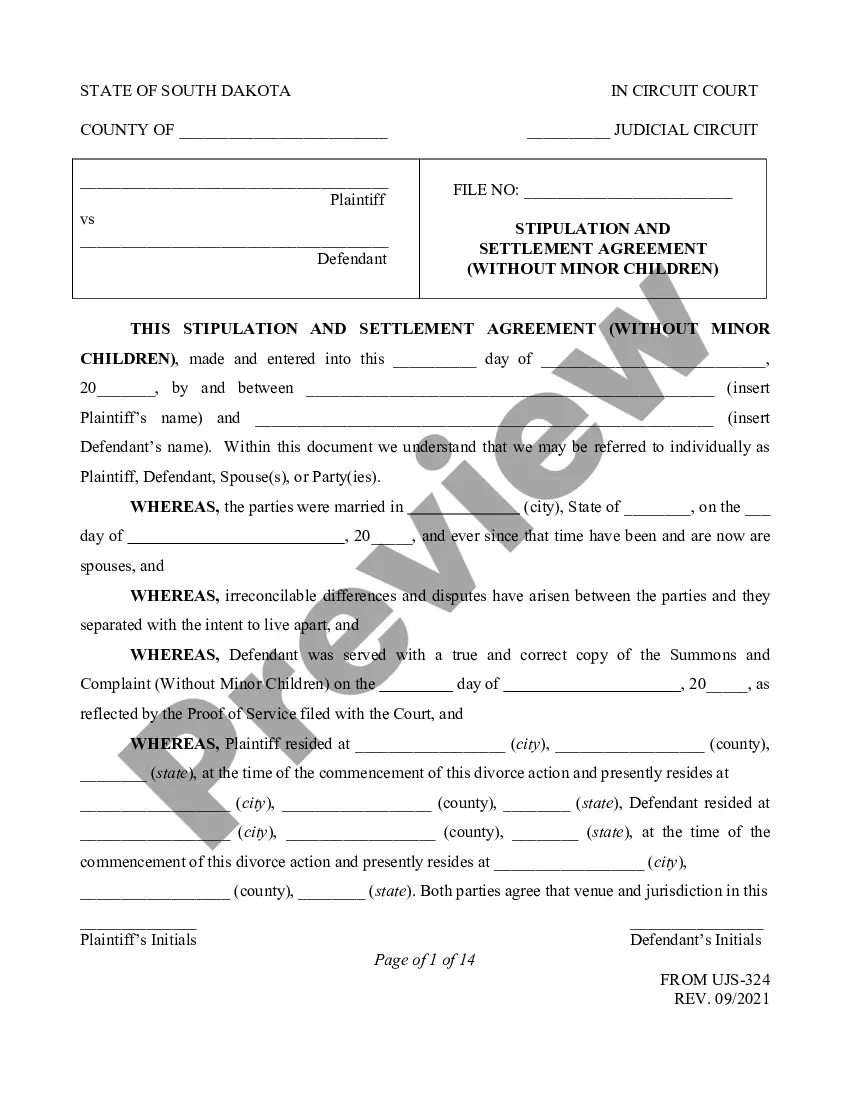
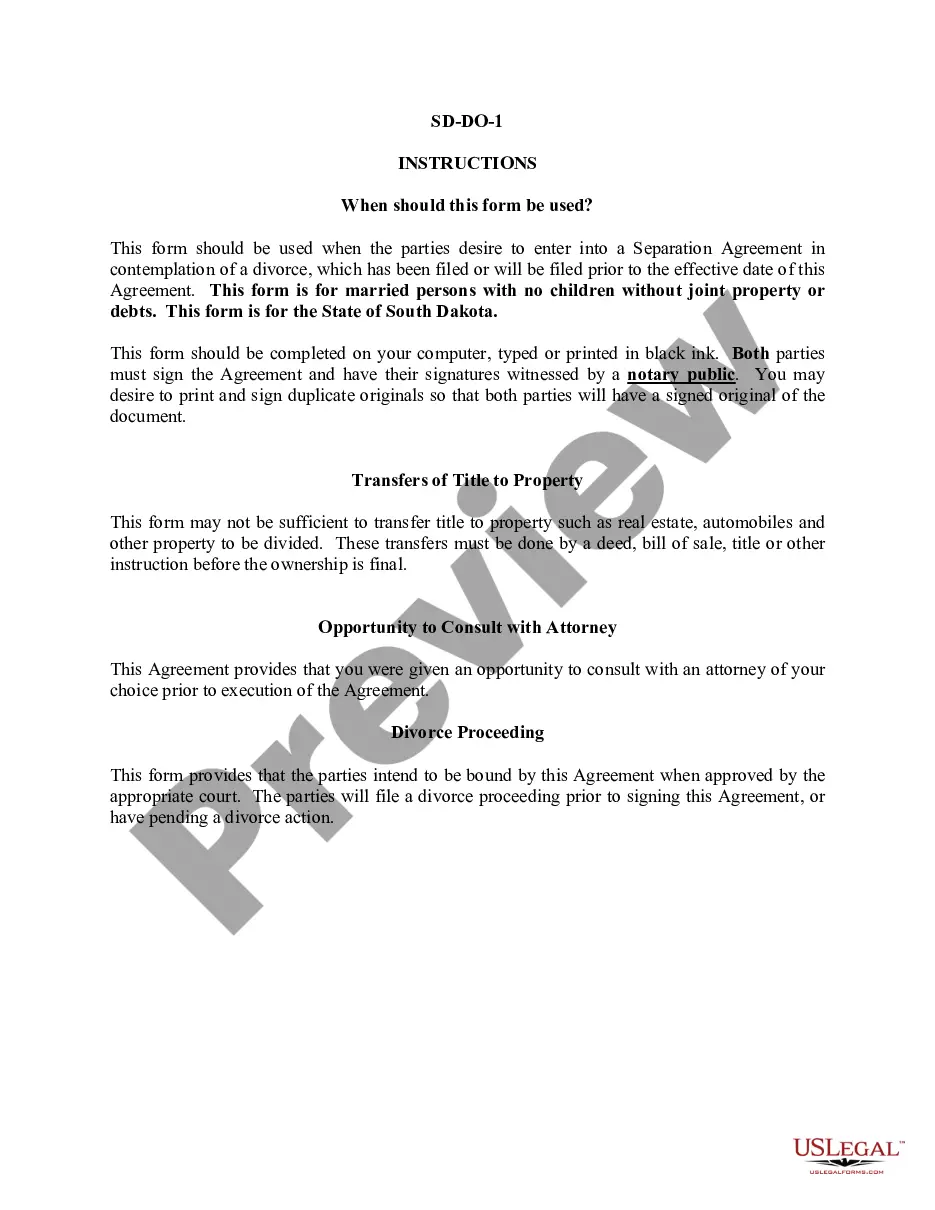
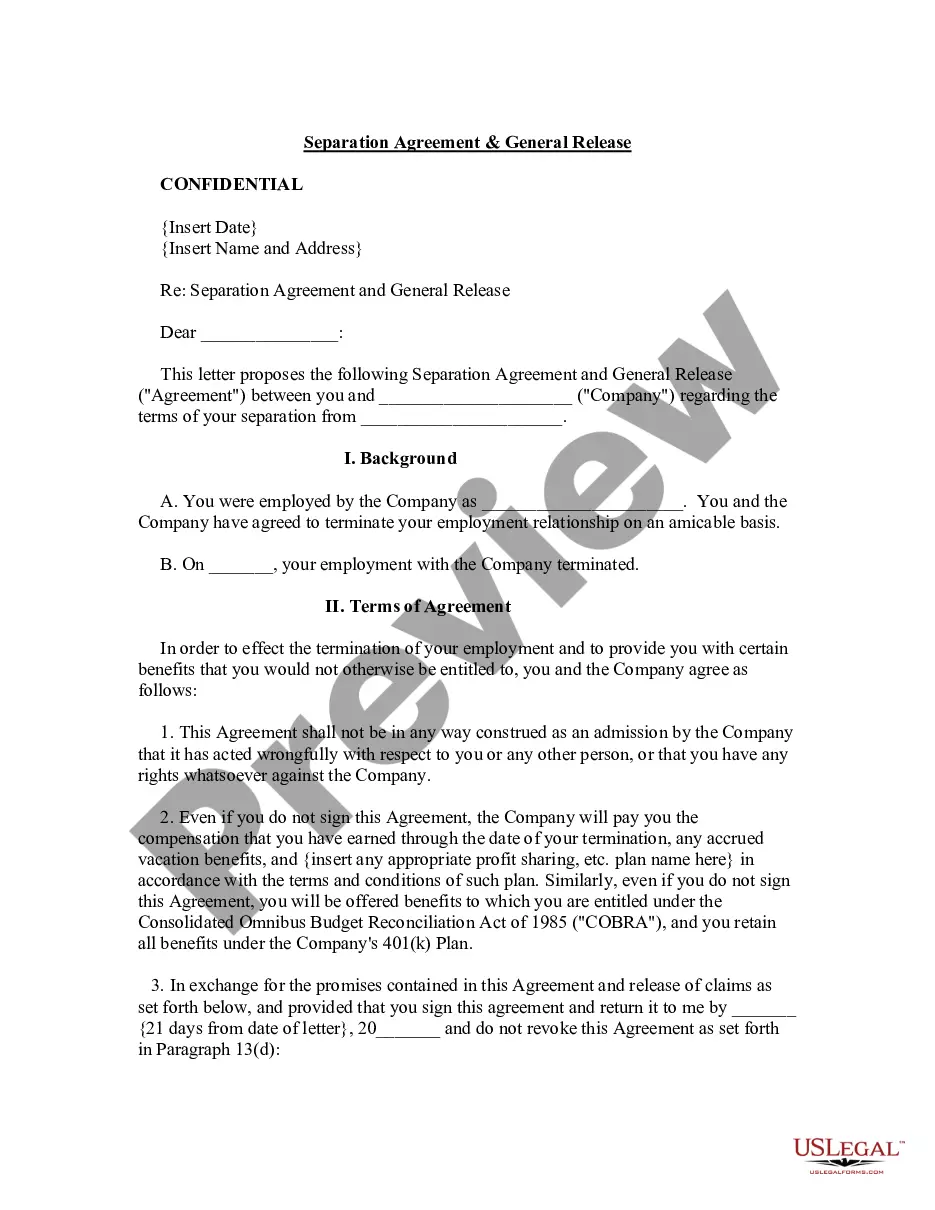
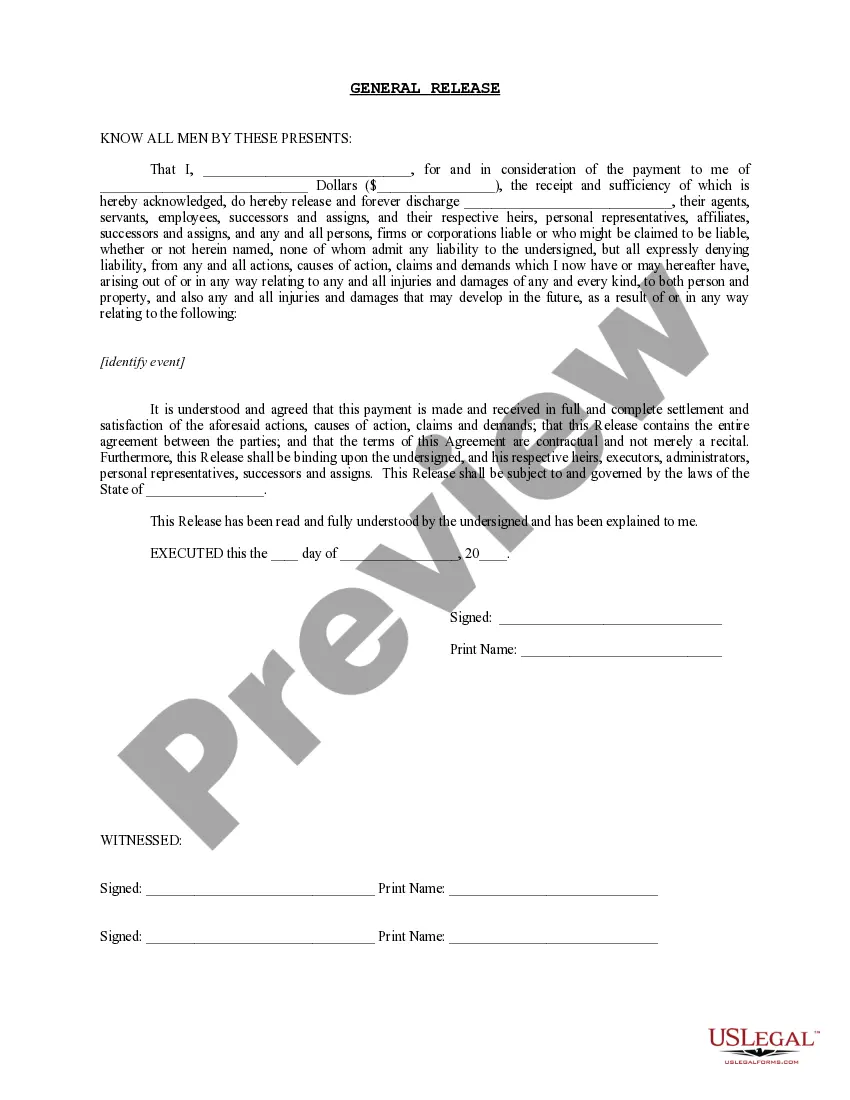
The Marital Domestic Separation and Property Settlement Agreement (no children) is a legal document used in South Dakota for couples seeking to formalize their separation and agree on the division of their property without involving minor children. This agreement details how assets and debts will be allocated, which is essential for a smooth divorce process. Unlike other agreements that may include child custody or support provisions, this form focuses solely on financial and property matters between the parties.
Key components of this form
- Identification of the parties involvedâplaintiff and defendant.
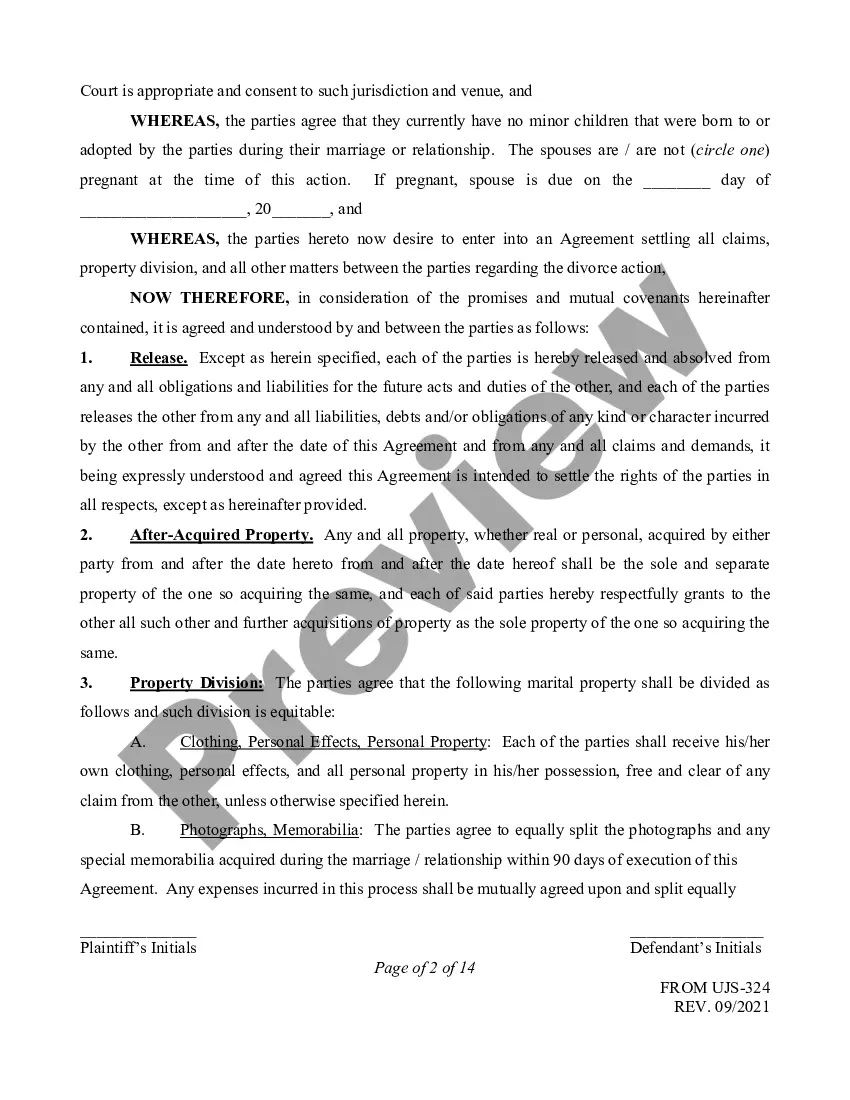
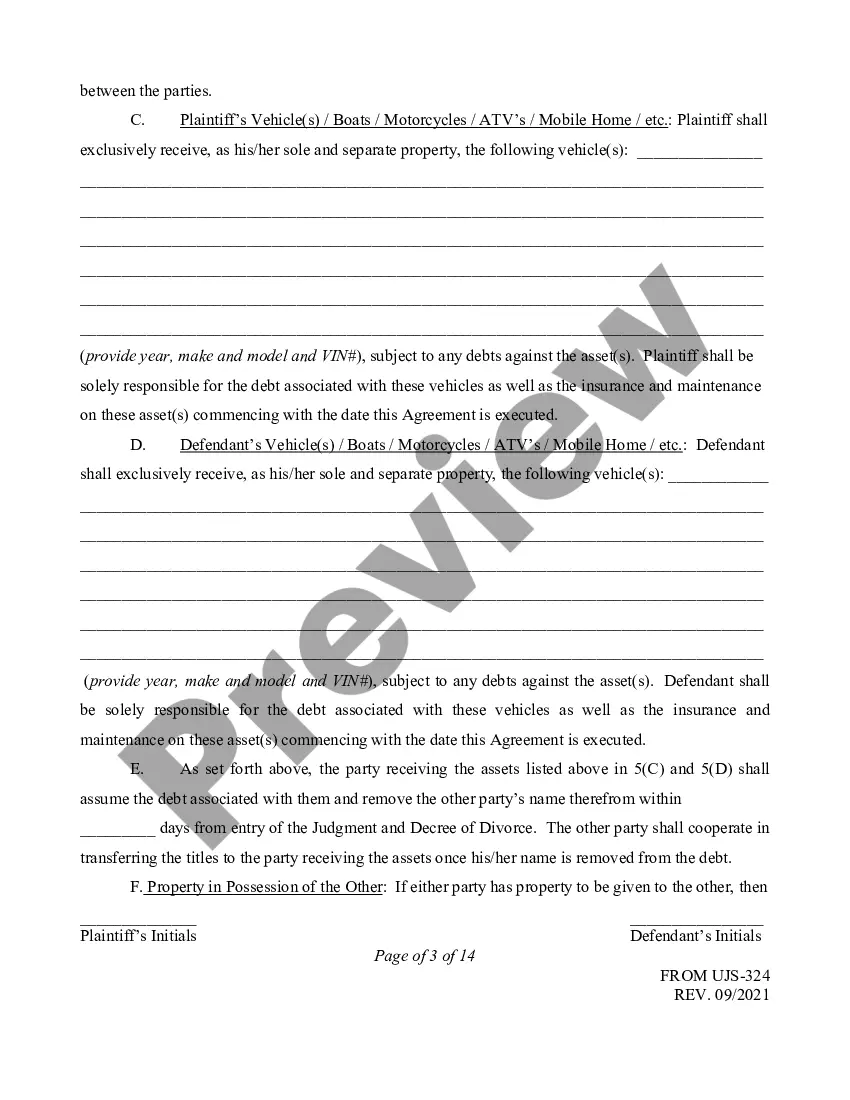
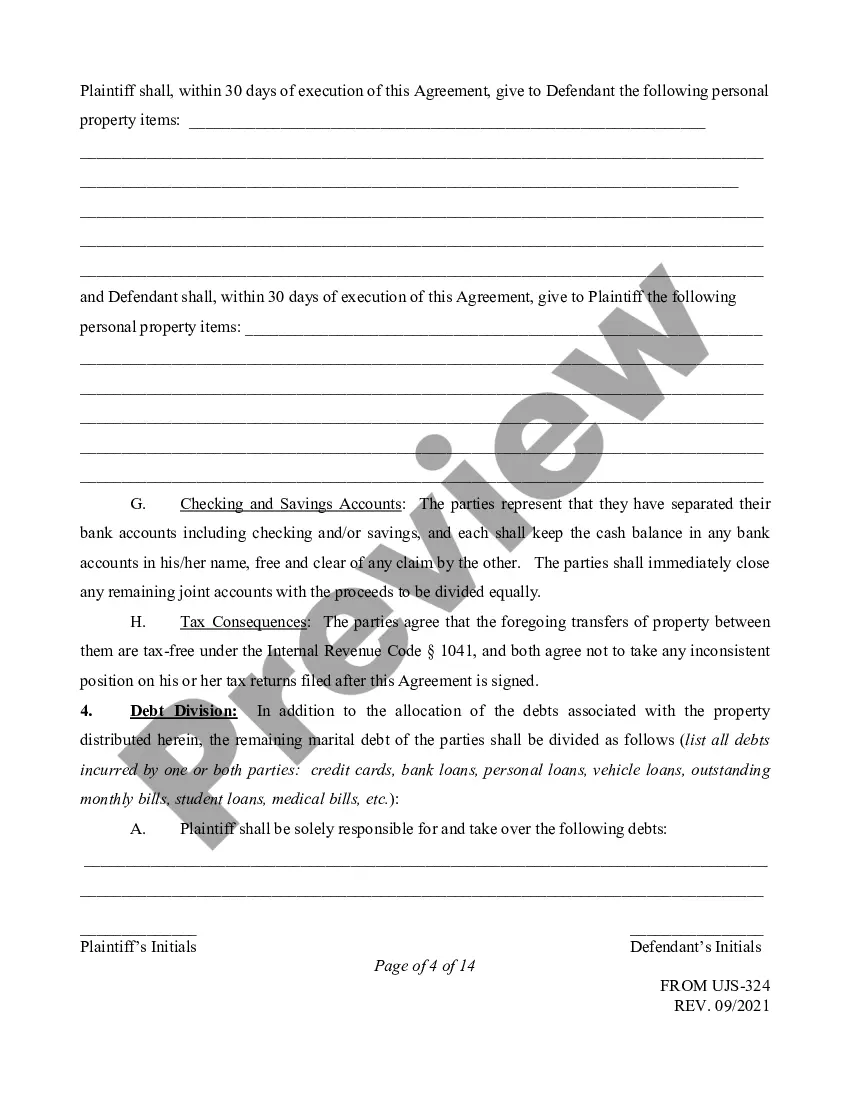
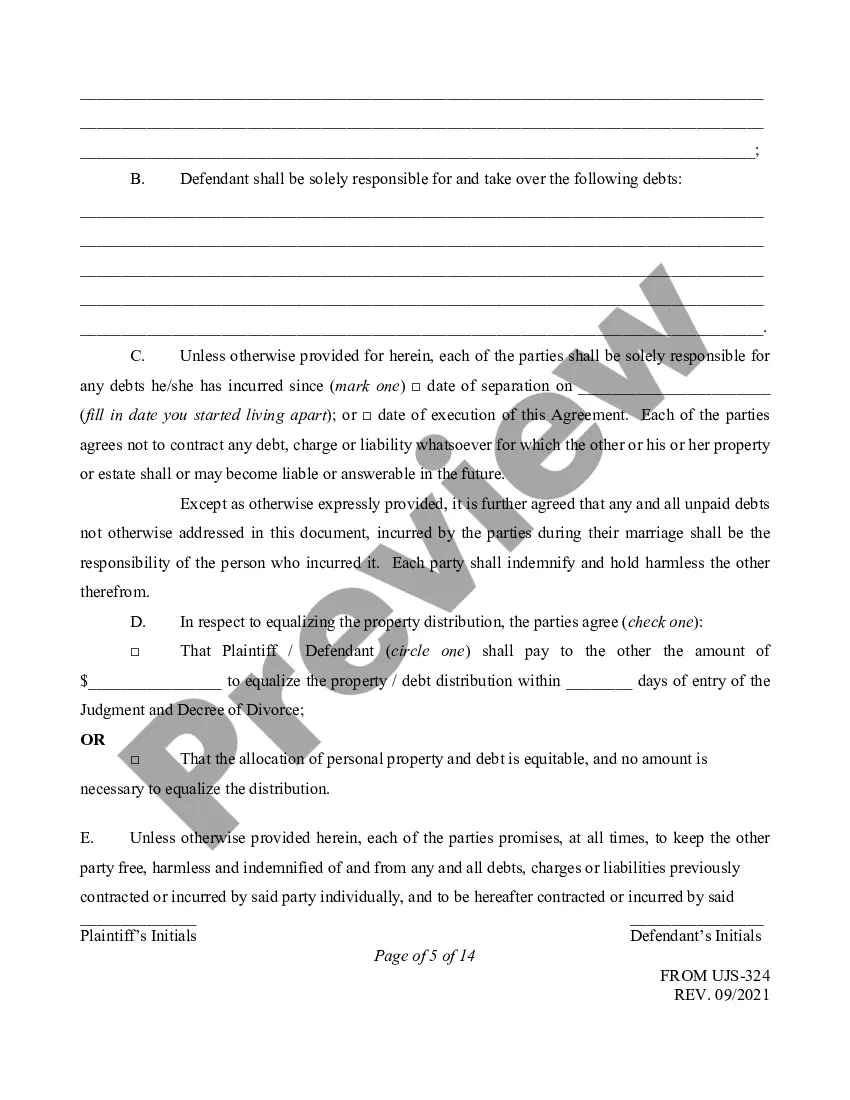
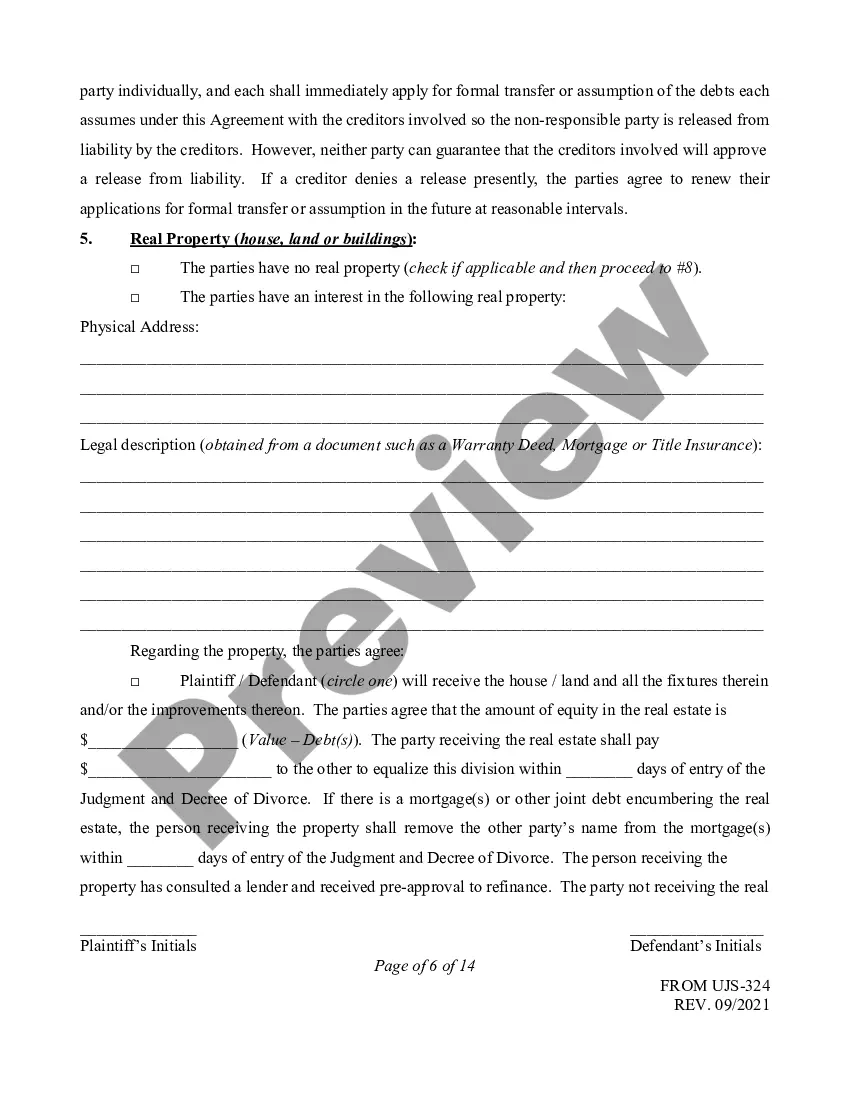
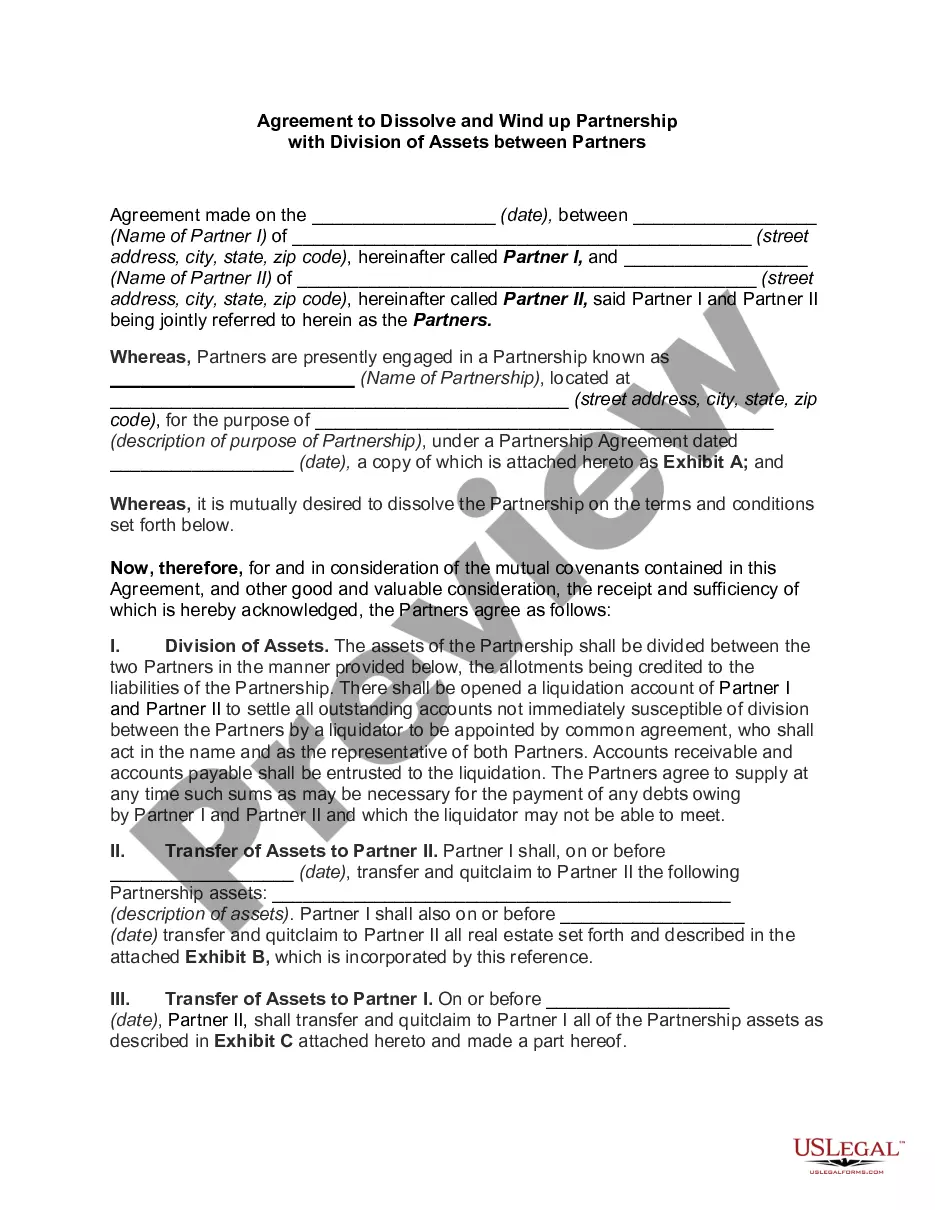
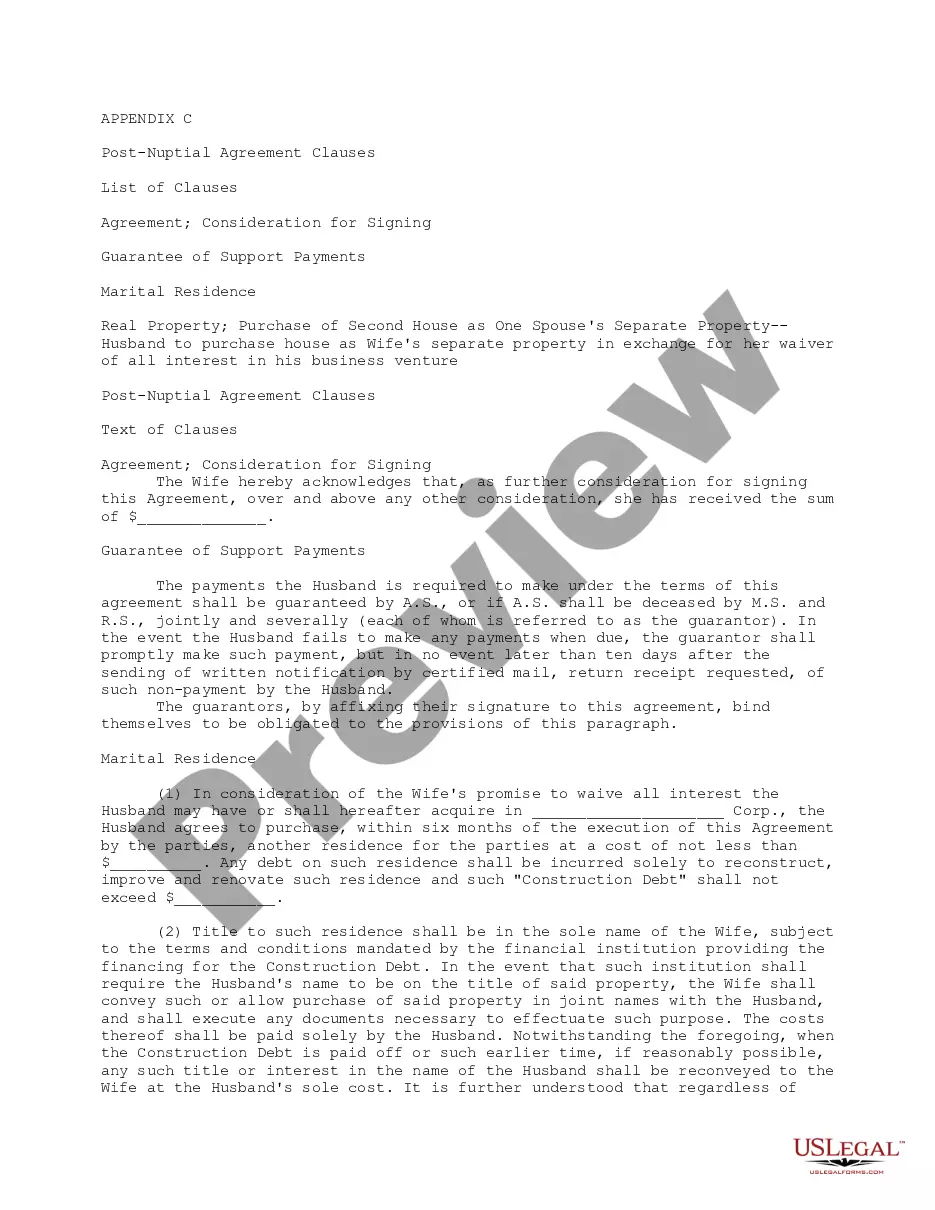
- Detailed property division clauses, specifying which assets each party will retain.
- Debt allocation to outline responsibilities for any marital debts incurred.
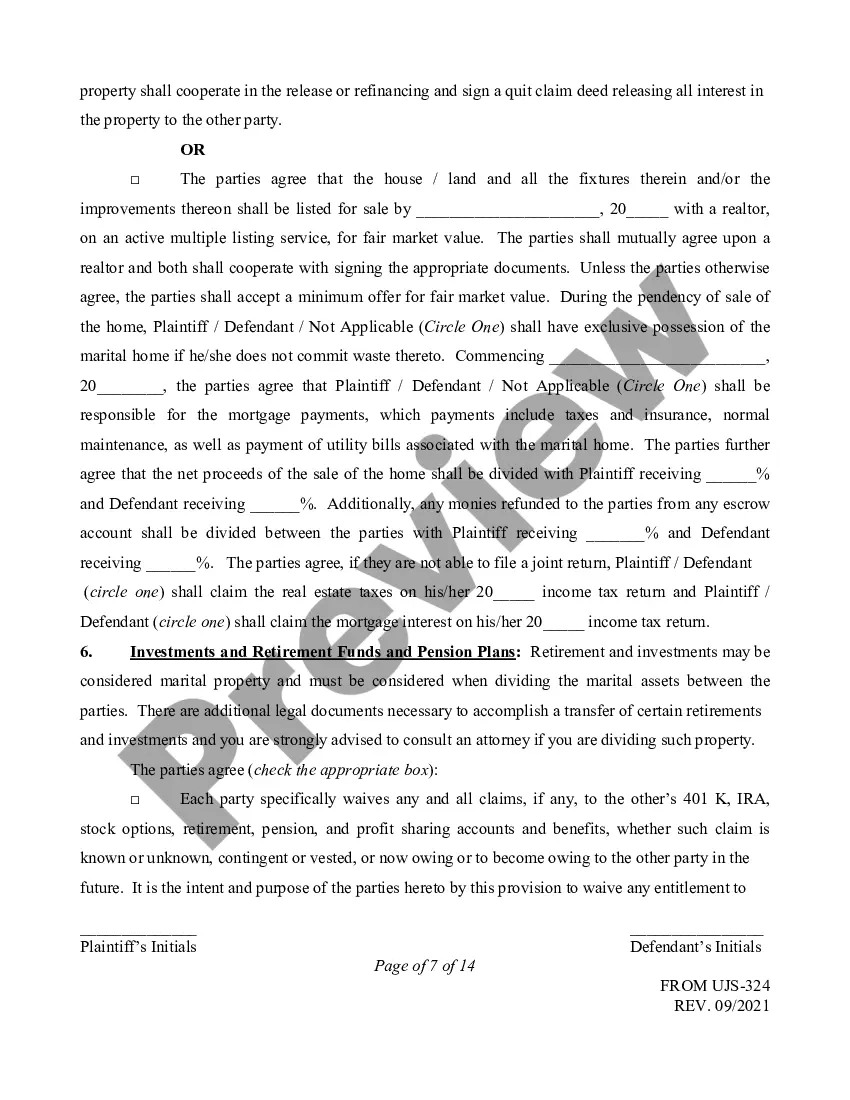
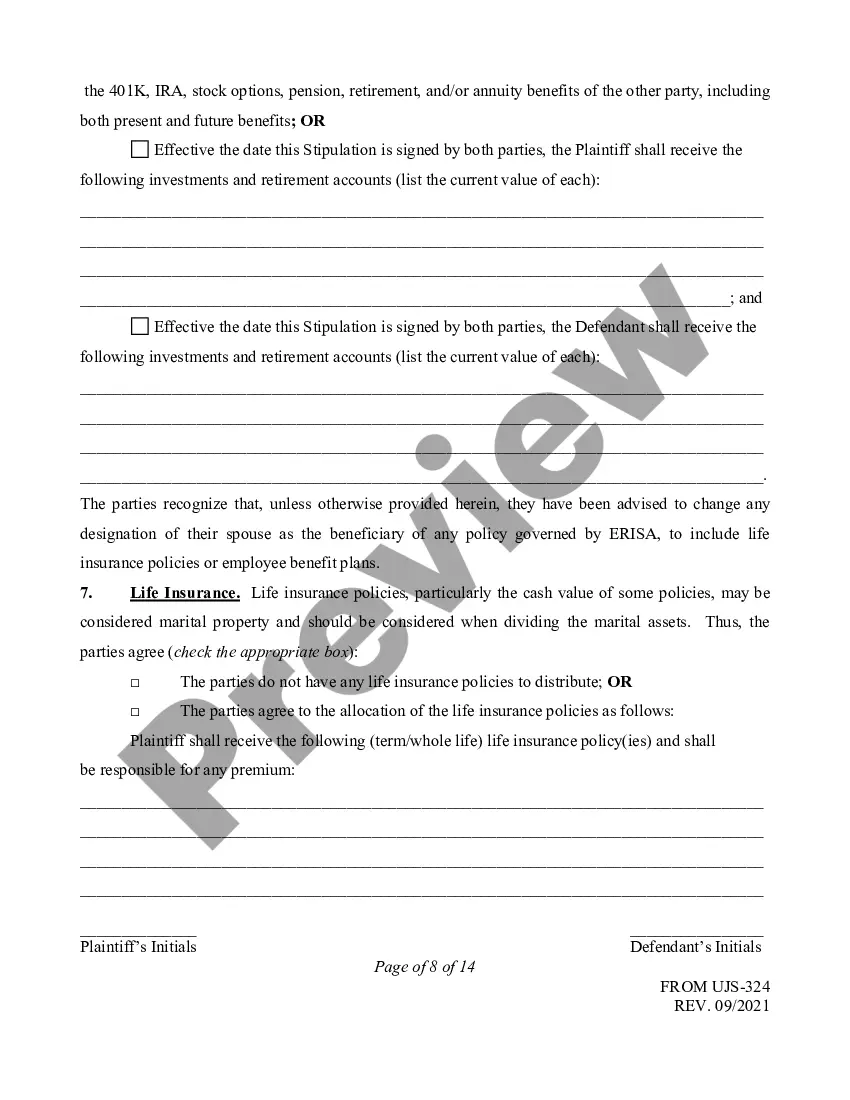
- Procedures for the division of retirement accounts and investments, if applicable.
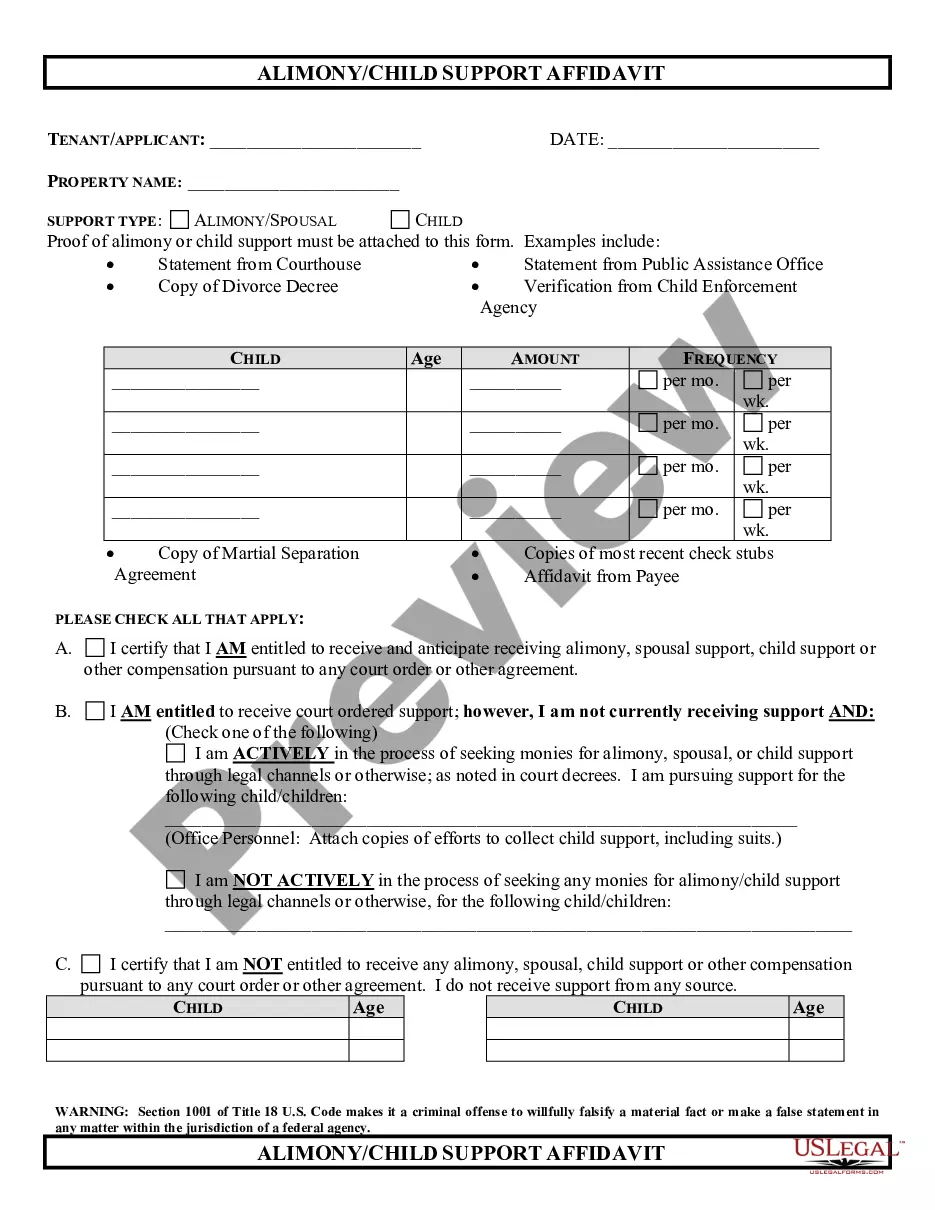
- Provisions for spousal support (alimony) if one party is entitled to it.
- A final clause that affirms the binding nature of the agreement on both parties.

When this form is needed
This form is appropriate for couples in South Dakota who are separating without minor children. You should use this agreement if you and your spouse have reached a mutual understanding regarding the division of property and debts and want to formalize your separation legally. It can also be beneficial if you prefer to avoid a lengthy court process and wish to settle your divorce amicably.
Who this form is for
- Couples in South Dakota seeking a divorce without minor children.
- Individuals looking to settle property and debt divisions fairly and efficiently.
- Spouses who agree on terms for financial matters but want a formal agreement.
How to complete this form
- Identify the parties by filling in their names at the top of the document.
- Complete the sections detailing property and debts, clearly indicating which party will retain which assets and liabilities.
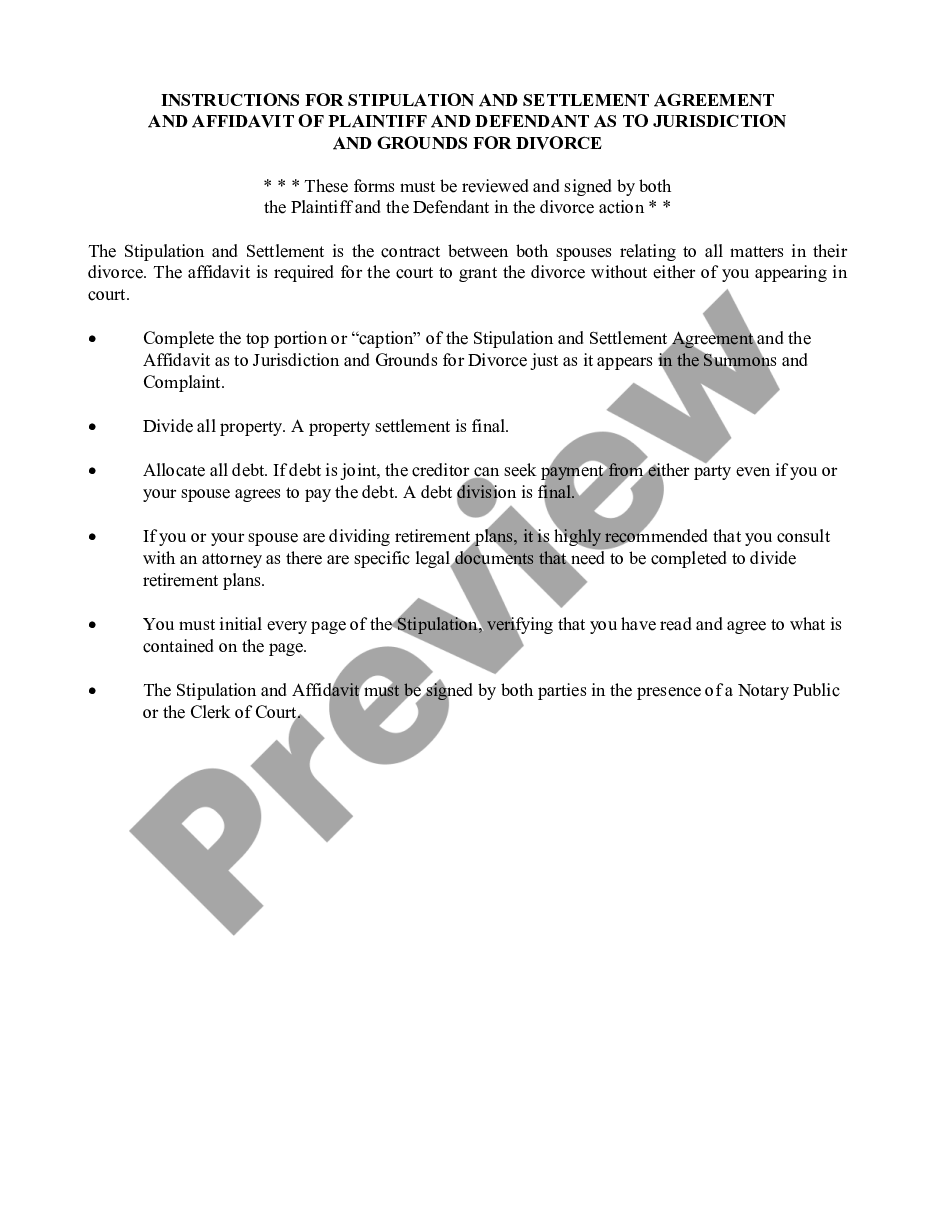
- Initial each page of the agreement to confirm that both parties agree to the terms outlined.
- Sign the document in the presence of a Notary Public or Clerk of Court to validate it legally.
- Make copies of the signed agreement for both parties and any legal representatives, if applicable.
Is notarization required?
Yes, this form must be notarized to be legally valid. It must be signed in the presence of a Notary Public or Clerk of Court, confirming the identities and voluntary participation of both parties. Through US Legal Forms' online service, you can easily access integrated notarization options, allowing you to complete this step quickly and securely.
Get your form ready online
Our built-in tools help you complete, sign, share, and store your documents in one place.
Make edits, fill in missing information, and update formatting in US Legal Forms—just like you would in MS Word.
Download a copy, print it, send it by email, or mail it via USPS—whatever works best for your next step.
Sign and collect signatures with our SignNow integration. Send to multiple recipients, set reminders, and more. Go Premium to unlock E-Sign.
If this form requires notarization, complete it online through a secure video call—no need to meet a notary in person or wait for an appointment.
We protect your documents and personal data by following strict security and privacy standards.

Make edits, fill in missing information, and update formatting in US Legal Forms—just like you would in MS Word.

Download a copy, print it, send it by email, or mail it via USPS—whatever works best for your next step.

Sign and collect signatures with our SignNow integration. Send to multiple recipients, set reminders, and more. Go Premium to unlock E-Sign.

If this form requires notarization, complete it online through a secure video call—no need to meet a notary in person or wait for an appointment.

We protect your documents and personal data by following strict security and privacy standards.
Common mistakes
- Failing to include all assets and debts, which can cause disputes later.
- Not initialing each page, which may lead to questions about agreement acknowledgment.
- Forgetting to have the document notarized, which is essential for its legal validity.
Benefits of completing this form online
- Convenience: Download and fill out the form at your own pace.
- Editability: Easily make changes to tailor the form to your specific situation.
- Reliability: Use templates drafted by licensed attorneys to ensure legal soundness.
Looking for another form?
Form popularity
FAQ
Because California law views both spouses as one party rather than two, marital assets and debts are split 50/50 between the couple, unless they can agree on another arrangement.
There is no minimum length of marriage that will guarantee a 50/50 division of anything.
Enforcing an MSA must be done by filing a formal request or motion (legal paperwork) with the court. You will need to show the court how your ex-spouse failed to follow the terms of the agreement. There are many reasons you may need to ask the court to assist you with enforcing your agreement.
South Dakota is not a community property state; it is an all property state.All property in a divorce is divided into two categories, marital and non-marital property. Marital property is typically defined as all property obtained during the course of a marriage.
Once an agreement has been reached, both parties will sign the settlement, and it will be forwarded to a judge who will incorporate the agreement into the final divorce decree.Usually, an attorney will need to file a motion immediately, and present an argument to the court about why the agreement should be rescinded.
In California, a marriage that lasts under 10 years will have a set duration of alimony, which is typically half the length of the marriage.
If you and your spouse cannot reach an agreement between you and the court needs to decide how your finances should be divided, your spouse is entitled to a fair settlement even though they have cheated.
Marital Settlement Agreements, reached between the parties in writing and signed by the parties, become legally binding when approved by the court at the time of the final court hearing.Once approved by the court, such post judgment stipulations do become legally binding and enforceable between the parties.
Under California's community property laws, assets and debts spouses acquire during marriage belong equally to both of them, and they must divide them equally in a divorce.