South Dakota Framing Contract for Contractor
What this document covers
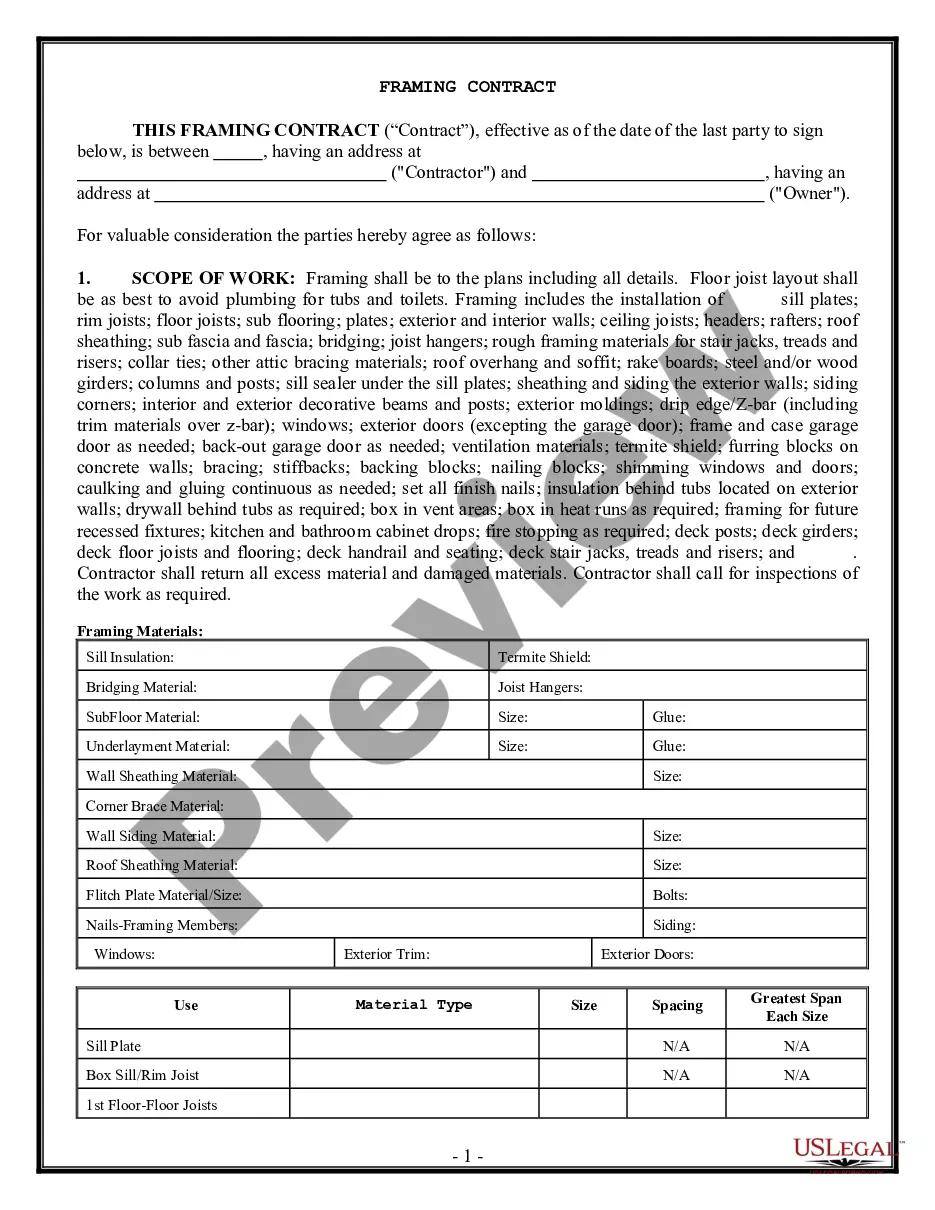
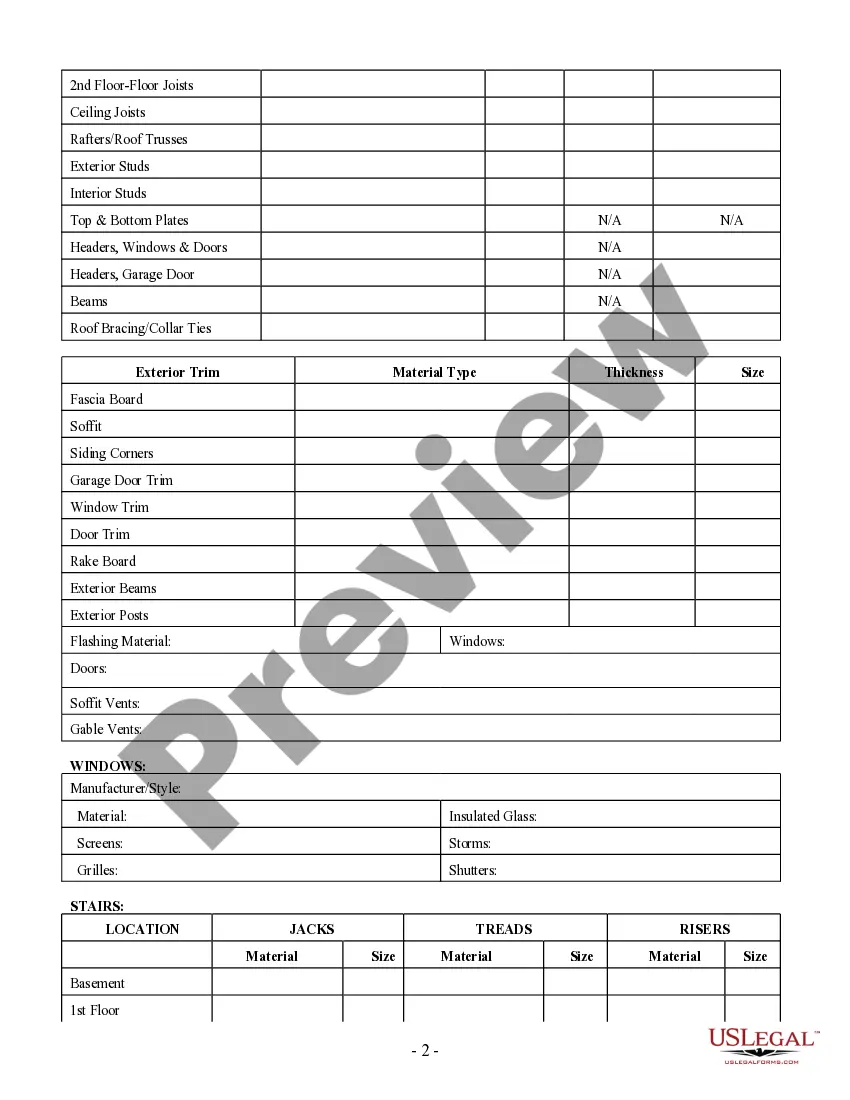
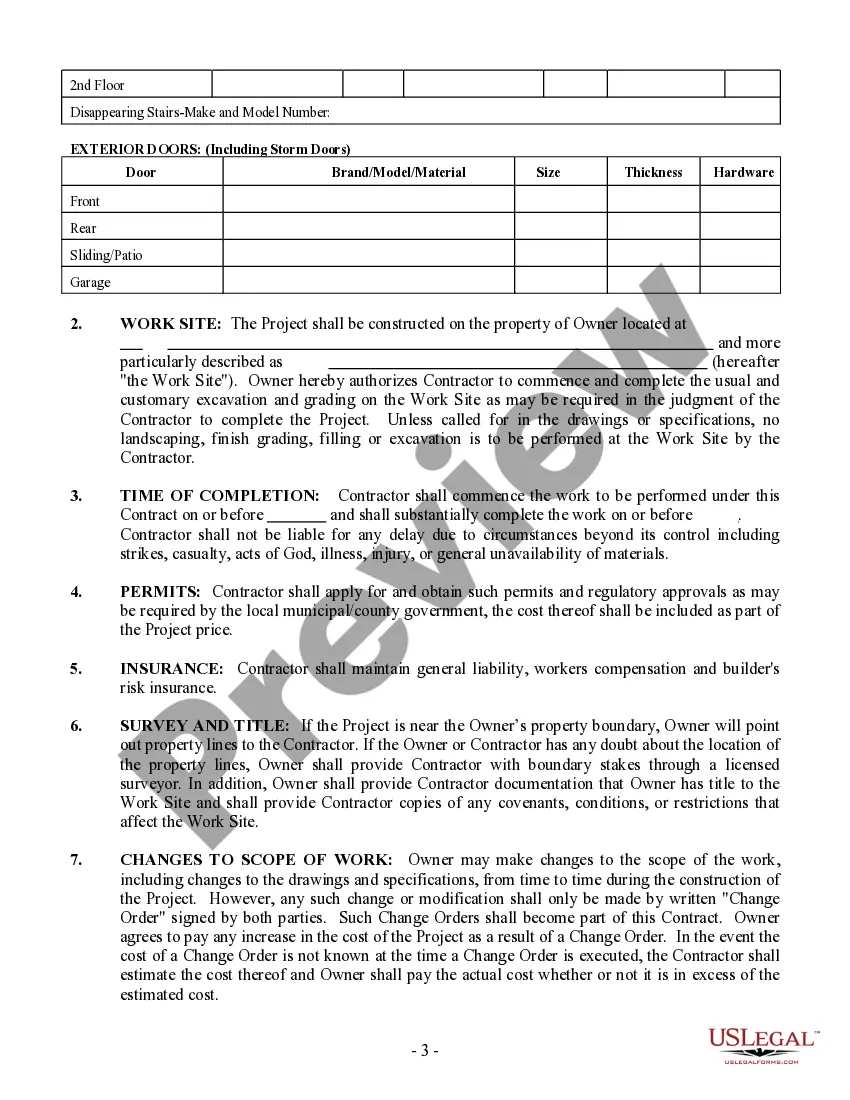
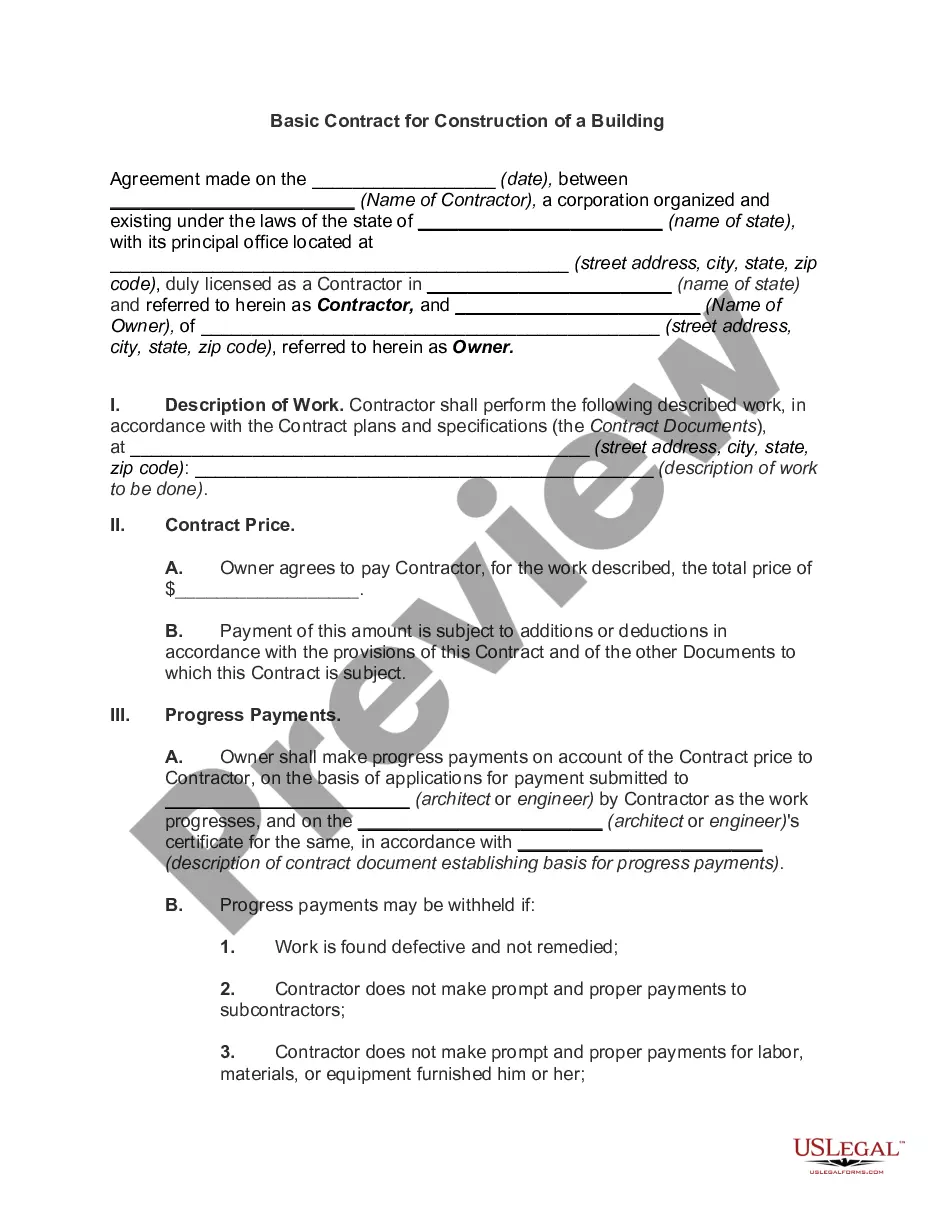
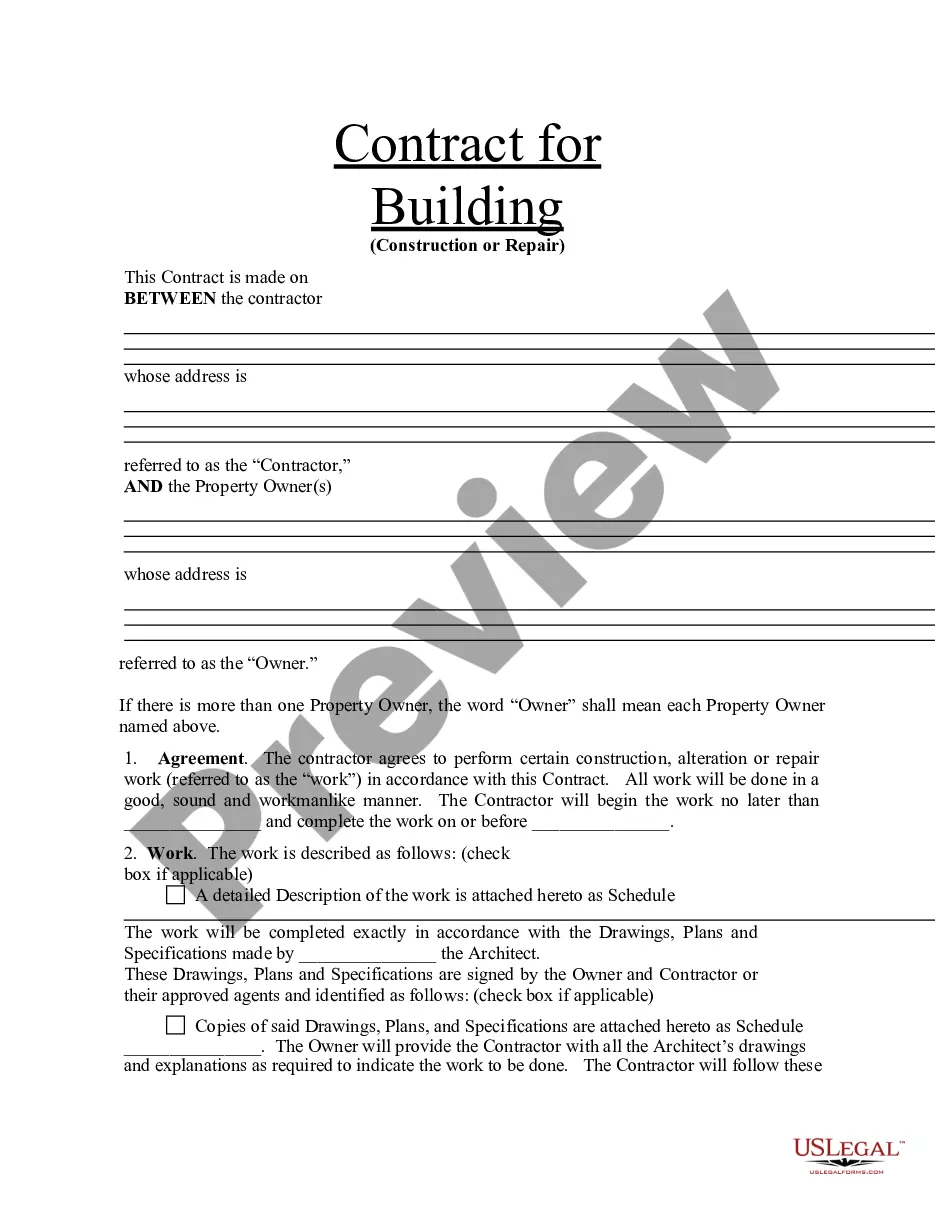
The Framing Contract for Contractor is a legally binding document used between framing contractors and property owners. This contract outlines the terms of the construction project, including payment arrangements, responsibilities, change orders, and necessary insurance coverage. Unlike generic construction contracts, this specific form is tailored to comply with the legal requirements of South Dakota, making it an essential tool for local projects.
Form components explained
- Permits: Specifies the contractor's responsibility to obtain necessary permits.
- Insurance: Outlines required insurance types, including liability and workers compensation.
- Survey and Title: Addresses property boundary verification and title documentation.
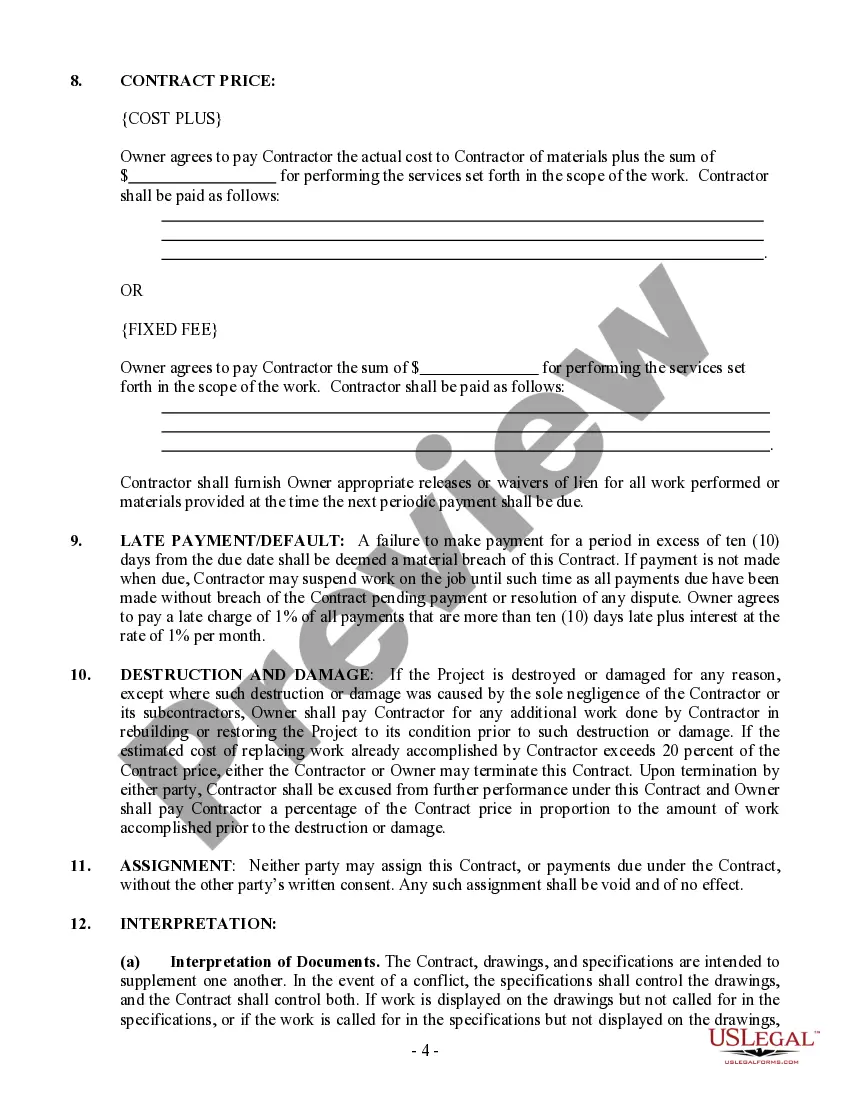
- Changes to Scope of Work: Details how changes can be made and how costs are handled.
- Destruction and Damage: Explains procedures if the project is damaged or destroyed.
- Assignment: States conditions regarding the assignment of the contract.


When to use this document
This form should be used whenever a property owner engages a framing contractor for a construction project in South Dakota. It is essential when establishing clear terms for payment, changes to the work, and responsibilities related to permits and insurance. Utilizing this form ensures both parties understand their commitments and rights throughout the project.
Intended users of this form
- Framing contractors who need a formal agreement with property owners.
- Property owners seeking to hire a framing contractor for construction projects.
- Individuals involved in residential or commercial construction in South Dakota.
How to complete this form
- Identify the parties involved: Clearly state the names and contact information for both the contractor and property owner.
- Specify project details: Include the project description, location, and timeline for completion.
- Outline payment terms: Specify whether the arrangement is fixed fee or cost plus and detail any payment schedules.
- Include necessary permits: Confirm that the contractor will apply for and secure any required local permits.
- Add signatures: Ensure both parties sign and date the contract to validate the agreement.
Does this document require notarization?
Notarization is generally not required for this form. However, certain states or situations might demand it. You can complete notarization online through US Legal Forms, powered by Notarize, using a verified video call available anytime.
Get your form ready online
Our built-in tools help you complete, sign, share, and store your documents in one place.
Make edits, fill in missing information, and update formatting in US Legal Forms—just like you would in MS Word.
Download a copy, print it, send it by email, or mail it via USPS—whatever works best for your next step.
Sign and collect signatures with our SignNow integration. Send to multiple recipients, set reminders, and more. Go Premium to unlock E-Sign.
If this form requires notarization, complete it online through a secure video call—no need to meet a notary in person or wait for an appointment.
We protect your documents and personal data by following strict security and privacy standards.

Make edits, fill in missing information, and update formatting in US Legal Forms—just like you would in MS Word.

Download a copy, print it, send it by email, or mail it via USPS—whatever works best for your next step.

Sign and collect signatures with our SignNow integration. Send to multiple recipients, set reminders, and more. Go Premium to unlock E-Sign.

If this form requires notarization, complete it online through a secure video call—no need to meet a notary in person or wait for an appointment.

We protect your documents and personal data by following strict security and privacy standards.
Typical mistakes to avoid
- Failing to specify payment terms clearly, leading to potential disputes.
- Not outlining the process for change orders, which can cause confusion during the project.
- Neglecting to confirm insurance coverage before work begins.
- Overlooking the need to document property lines and boundaries accurately.
Advantages of online completion
- Convenience: Easily download and complete the form at your convenience.
- Editability: Modify specific sections to tailor the contract to your needs.
- Reliability: Ensure you're using a legally vetted document drafted by licensed attorneys.
Legal use & context
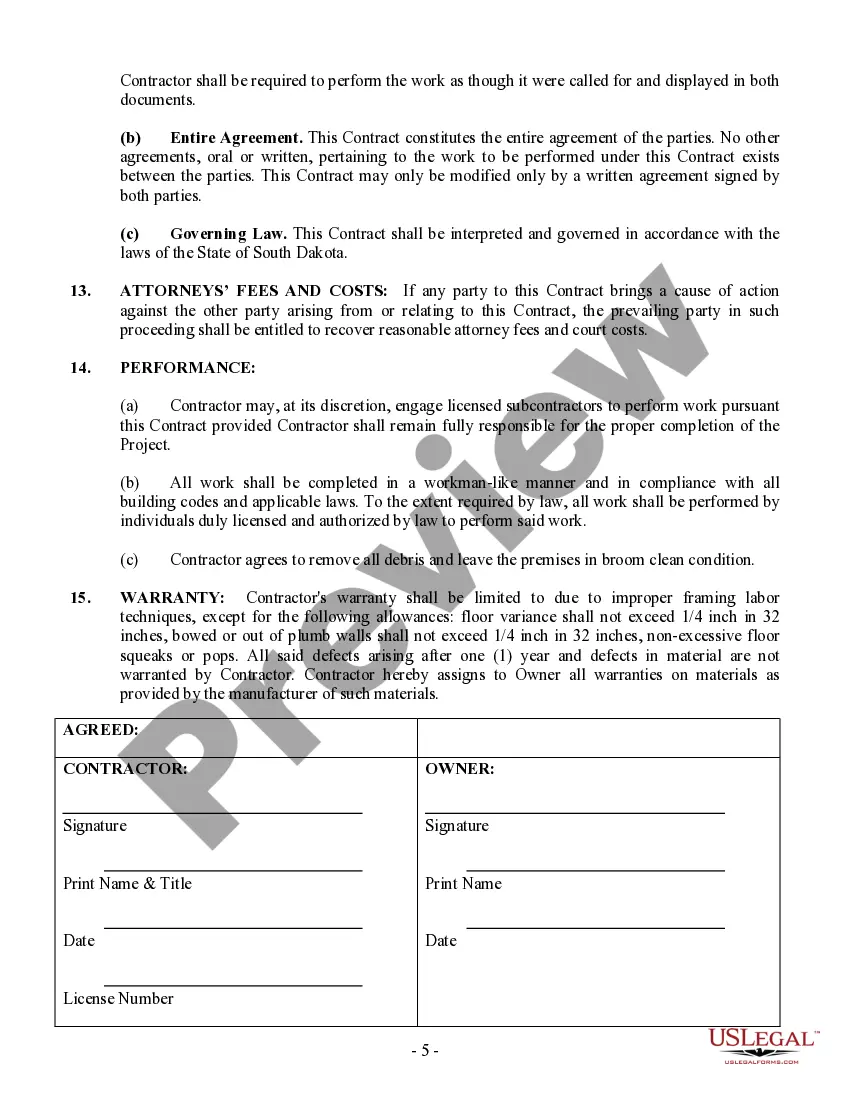
- The Framing Contract for Contractor establishes a legally binding agreement between the contractor and property owner.
- It protects both parties by clearly defining their rights and responsibilities during the construction project.
- This form is enforceable in a court of law if disputes arise regarding construction activities.
Summary of main points
- The Framing Contract for Contractor is crucial for formalizing agreements in construction projects.
- Clear payment and change order processes help prevent misunderstandings.
- Utilizing this state-specific form ensures compliance with South Dakota laws.
Looking for another form?
Form popularity
FAQ
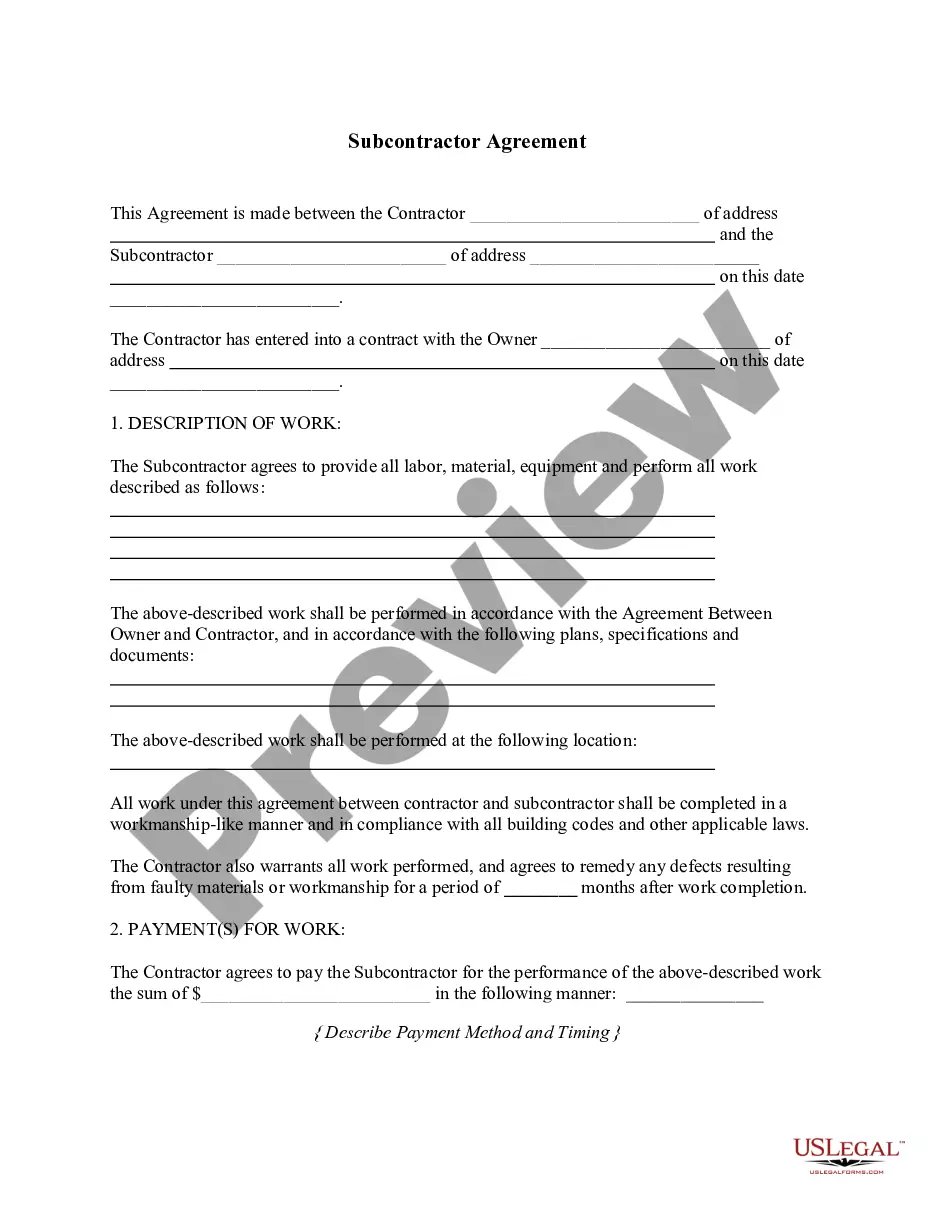
For example, a building contractor may hire a subcontractor to complete the electrical wiring part of the contractor's building job. The contractor is responsible to the client for the building job including the part performed by the subcontractor.
Clients withhold retention against main contractors and main contractors withhold payment against sub-contractors. Retentions typically take the form of a percentage on the contract value. The rate can vary wildly but is typically around 5%.
Subcontractor markup will vary by trade and can be upwards of 25% depending on the trade and whether the work is union or non-union. To summarize, the contractor marks up work performed his own employed workers and each subcontractor (or supplier) hired by the contractor will mark up their own work.
Usually, anything that subcontractors would be liable for, general contractors may also be liable for (with the caveat that if the contractor has to pay for damages, the subcontractor who is legally responsible will often reimburse the general contractor).
A rule of thumb for independent contractors is that the vendor should be allowed to mark up your pay rate by about 15 percent when billing the client. This allows the vendor a respectable profit without making the bill rate outrageous.
All subcontractors must file and pay taxes including state, local and federal income and self-employment taxes on their own. The general contractor must file IRS Form 1099-MISC if the subcontractor earns over $600.
(The general contractor is often referred to as a principal and the subcontractor as an independent contractor.) A general contractor is not ordinarily liable for the negligence of an independent contractor such as a subcontractor.
General Contractor Company licensure is not required on the State level in South Dakota. There is no state level license for general contractor firms in South Dakota, however, local licensing requirements may apply. Most contractors are required to obtain a department of revenue contractor's excise tax license.
Usually, anything that subcontractors would be liable for, general contractors may also be liable for (with the caveat that if the contractor has to pay for damages, the subcontractor who is legally responsible will often reimburse the general contractor).