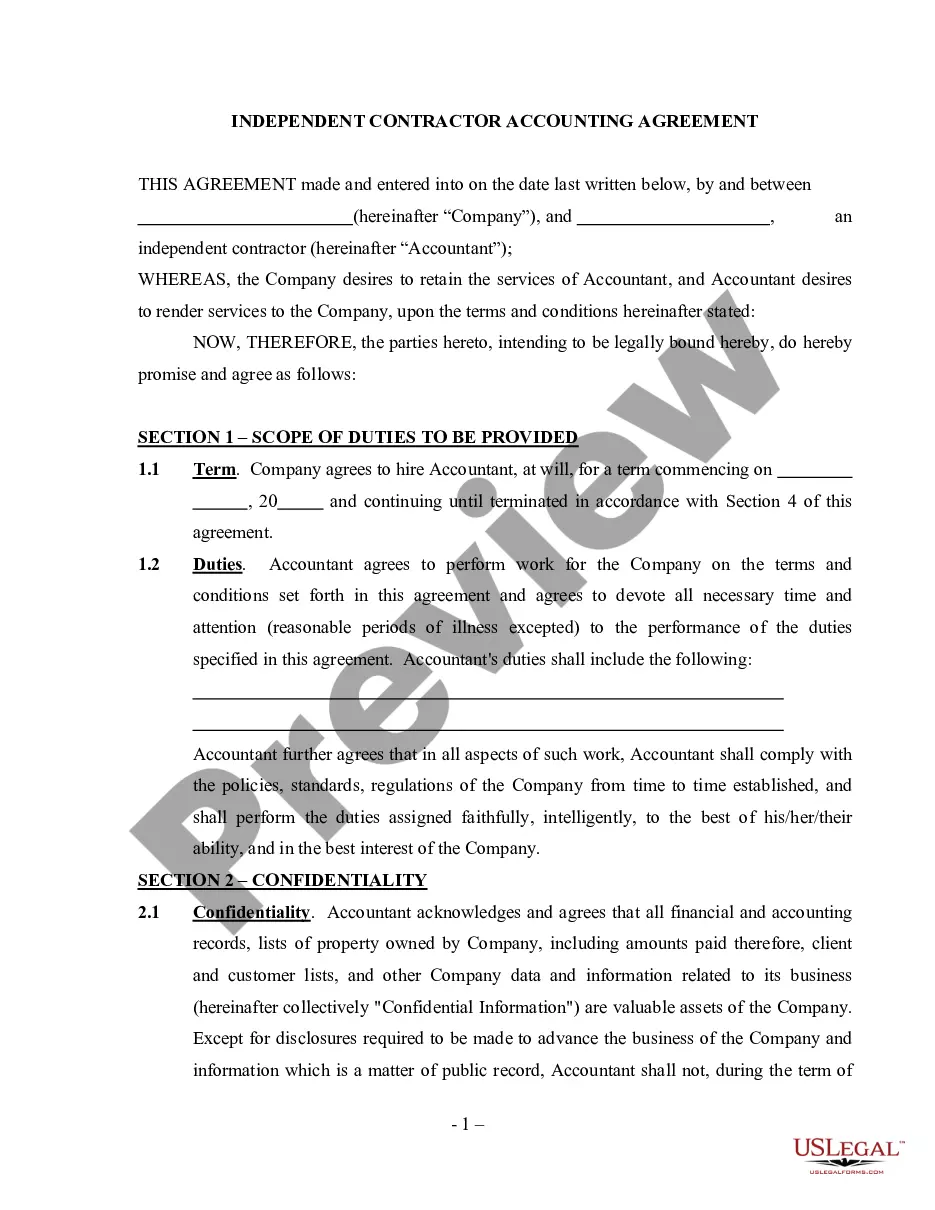
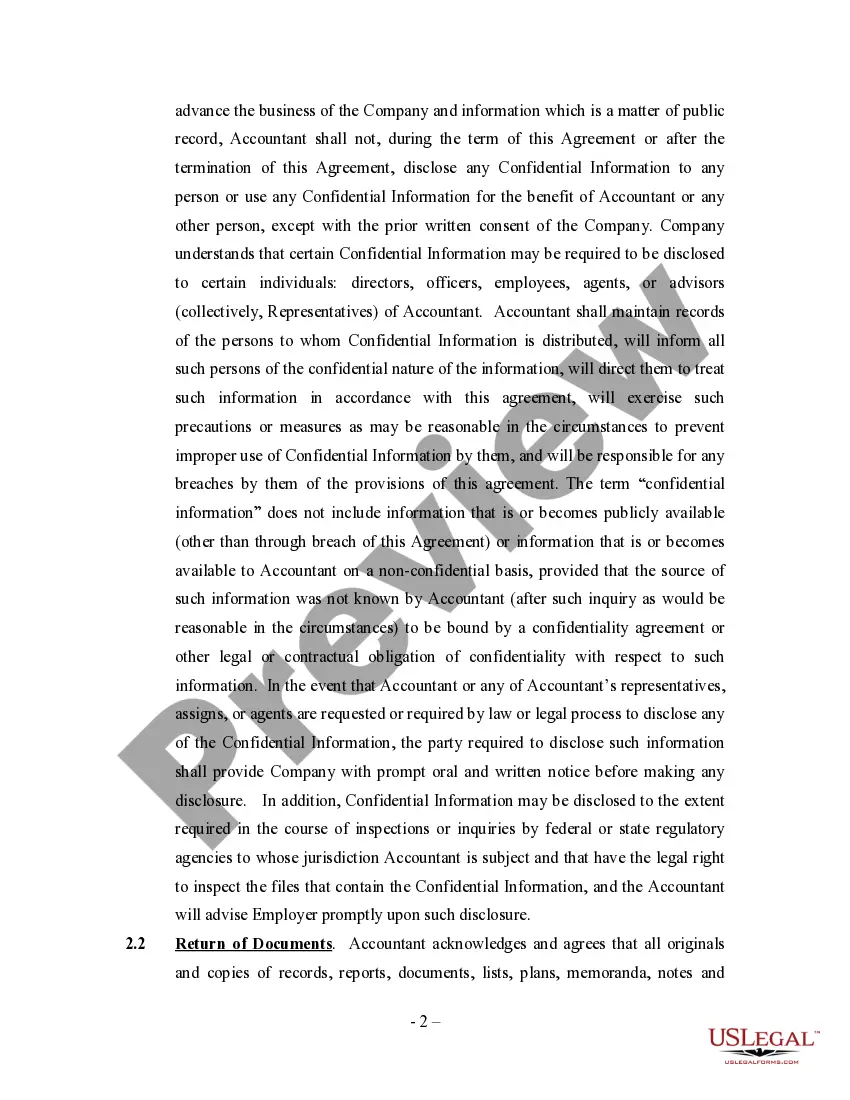
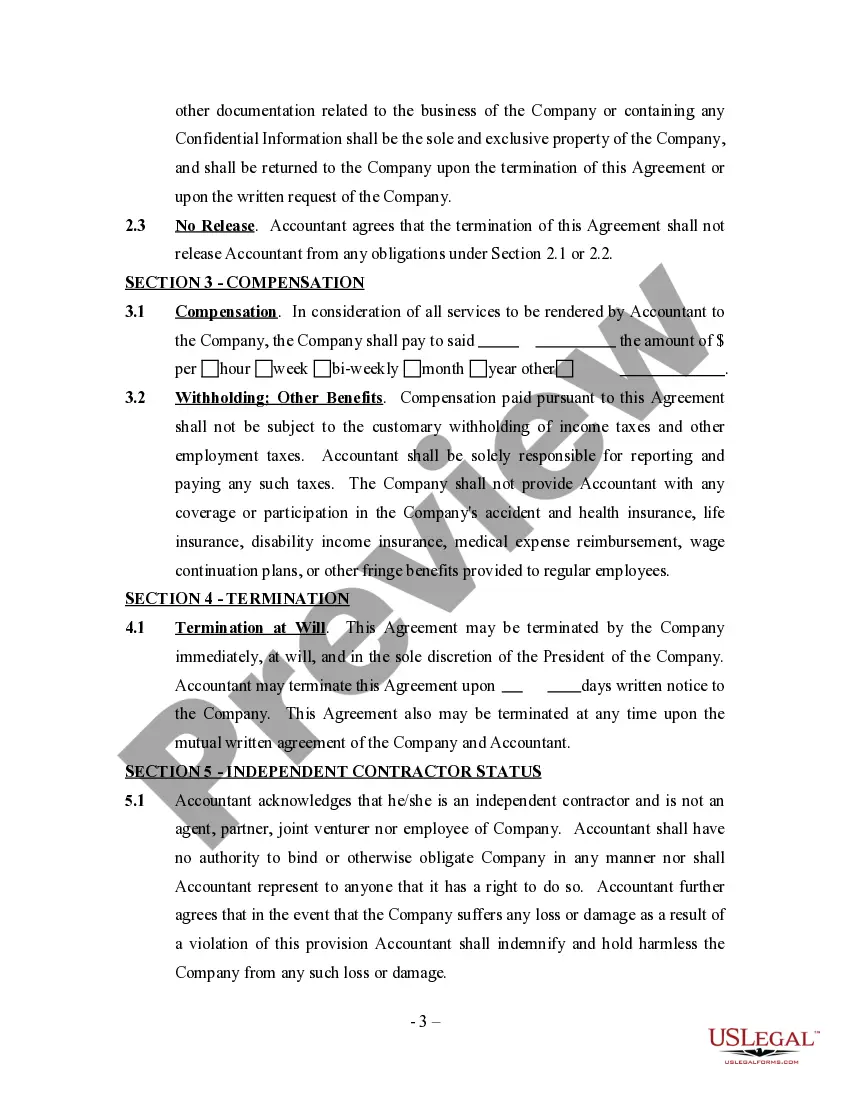
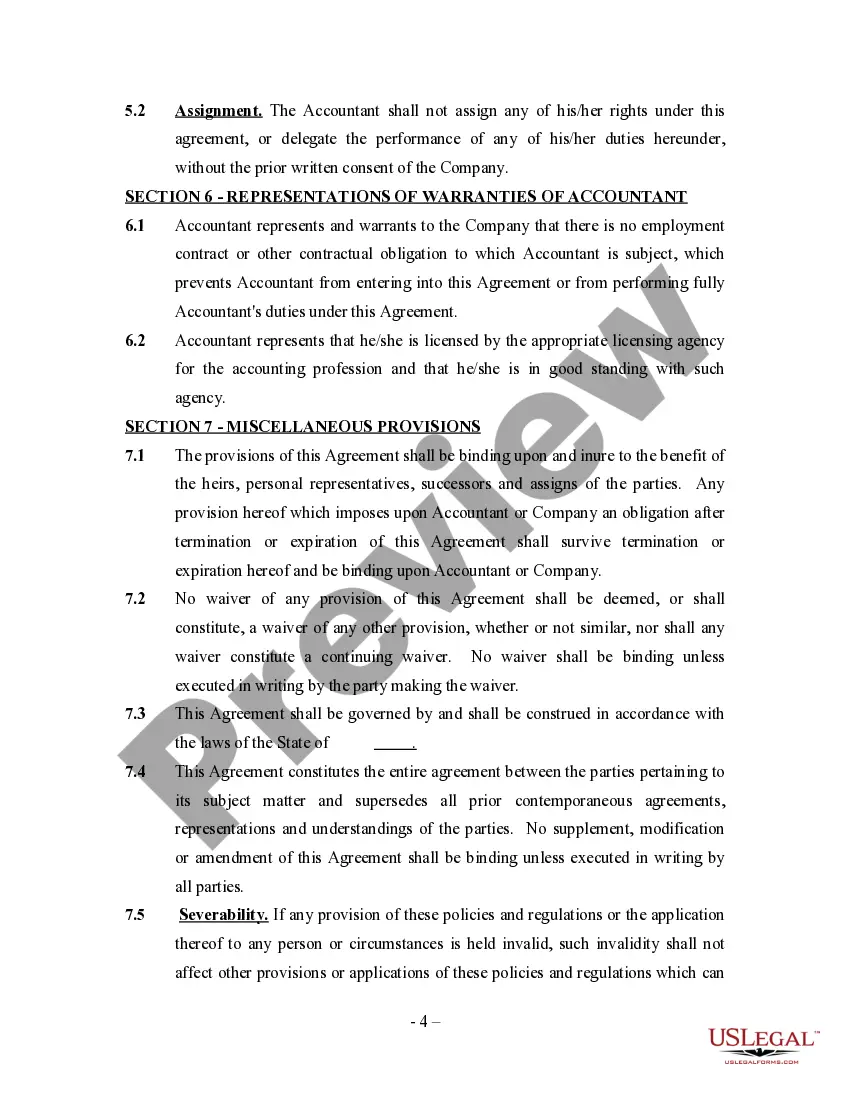
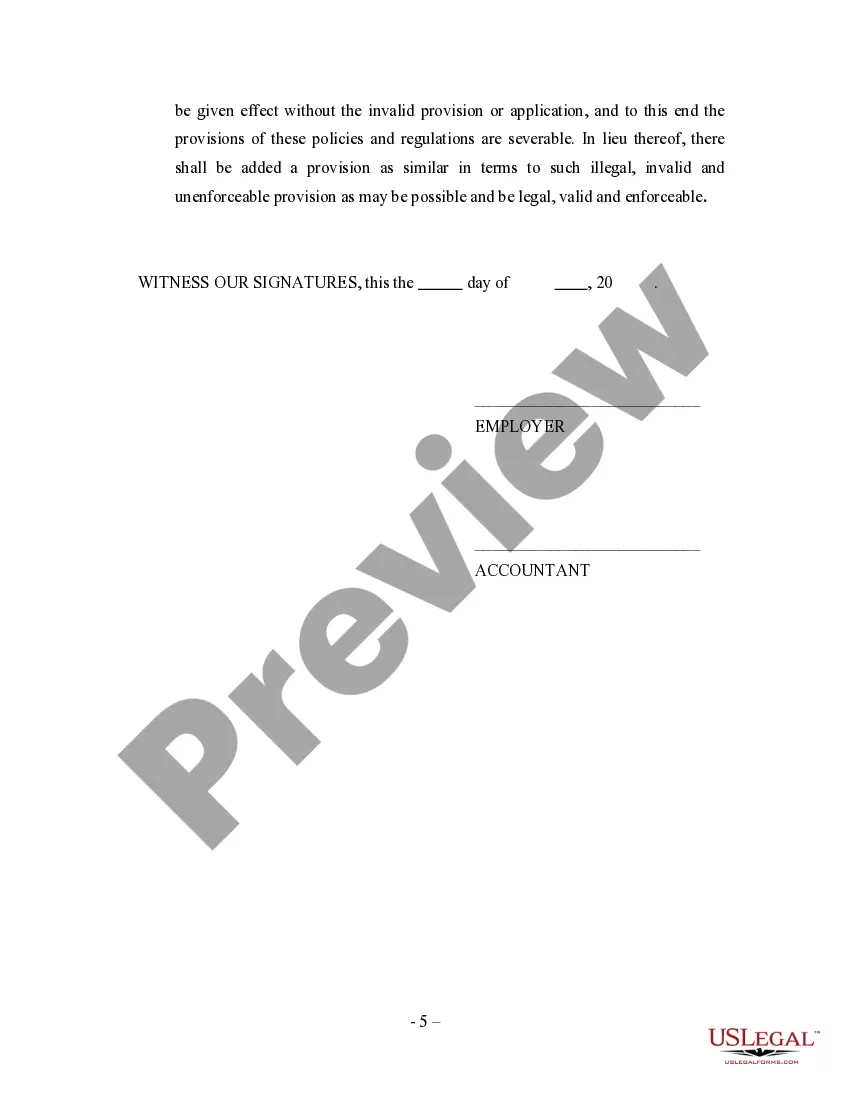
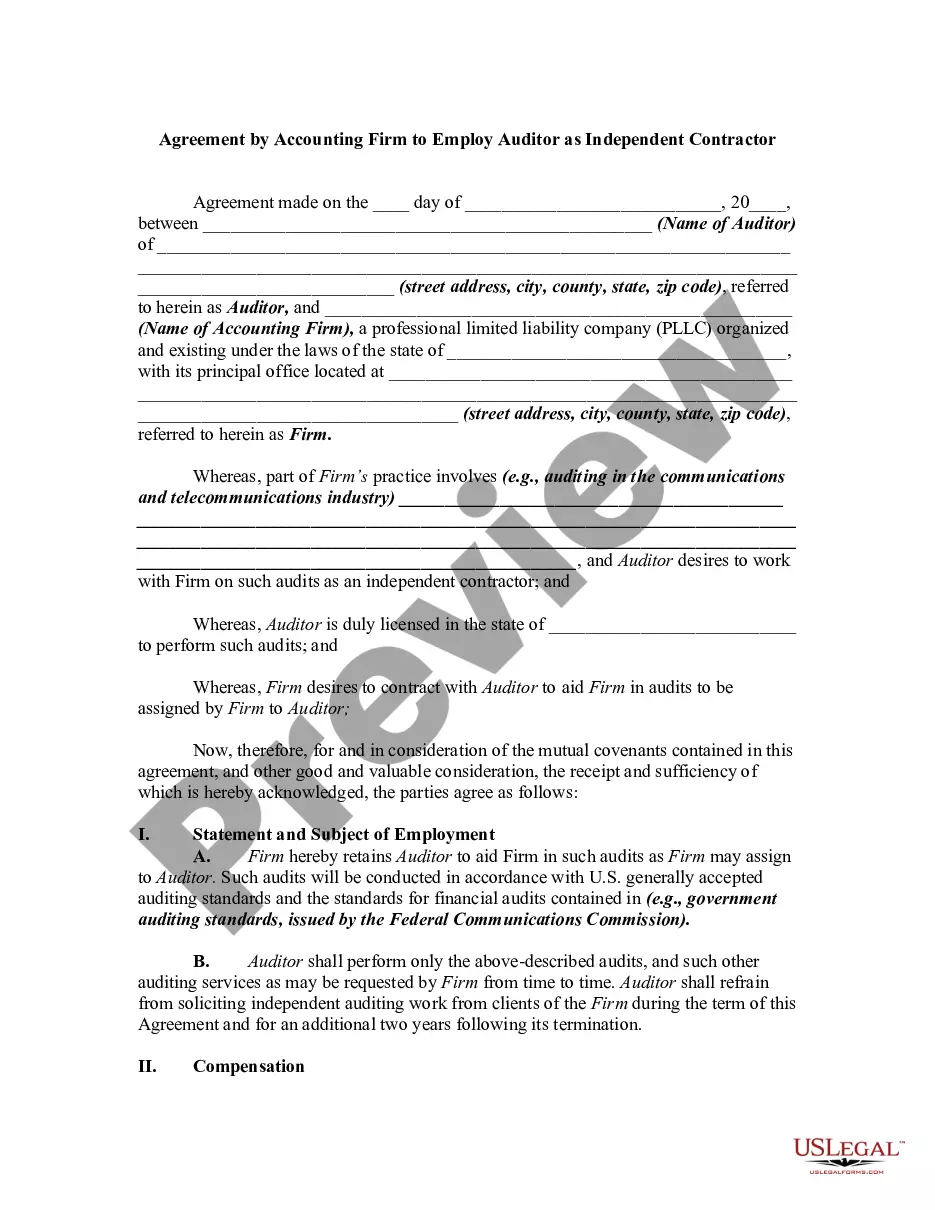
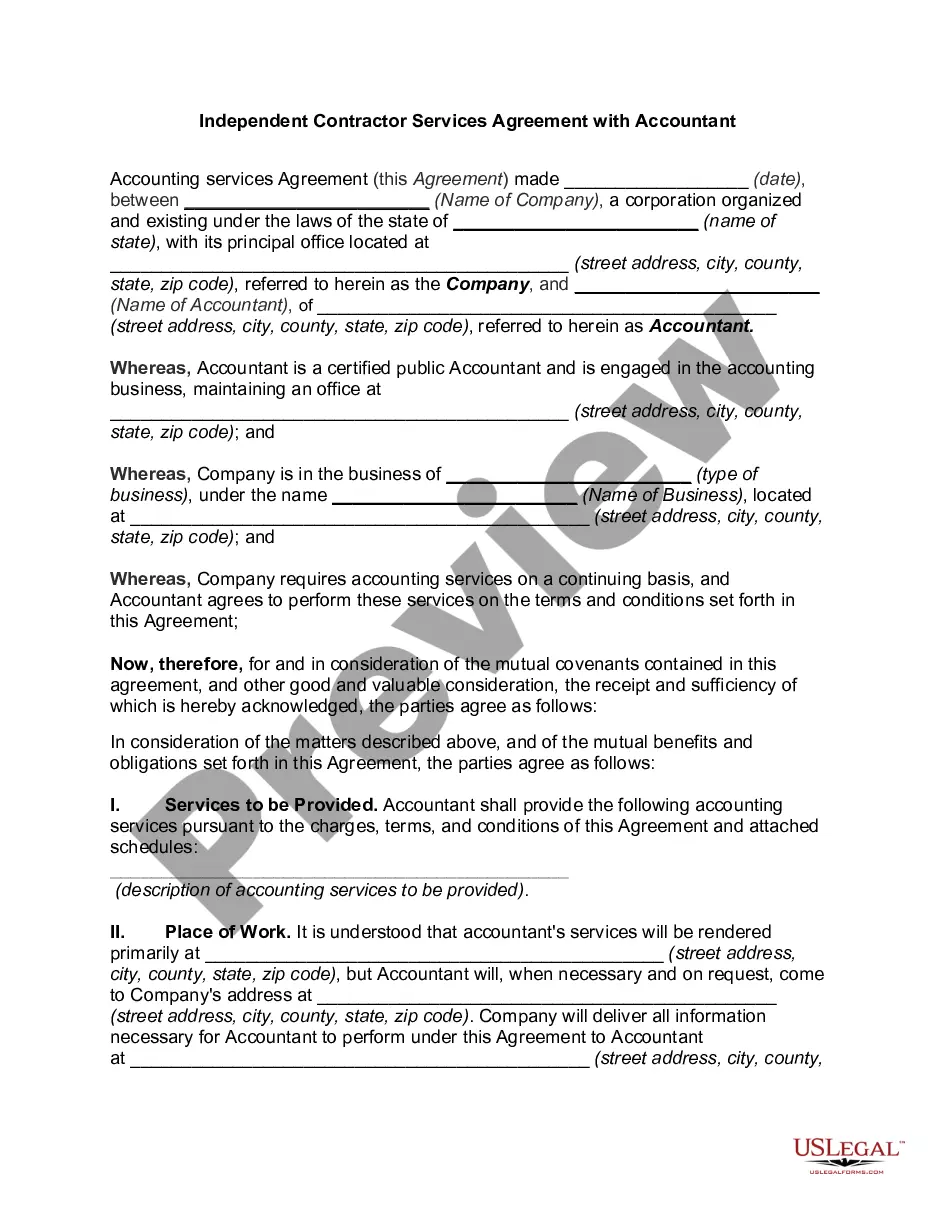
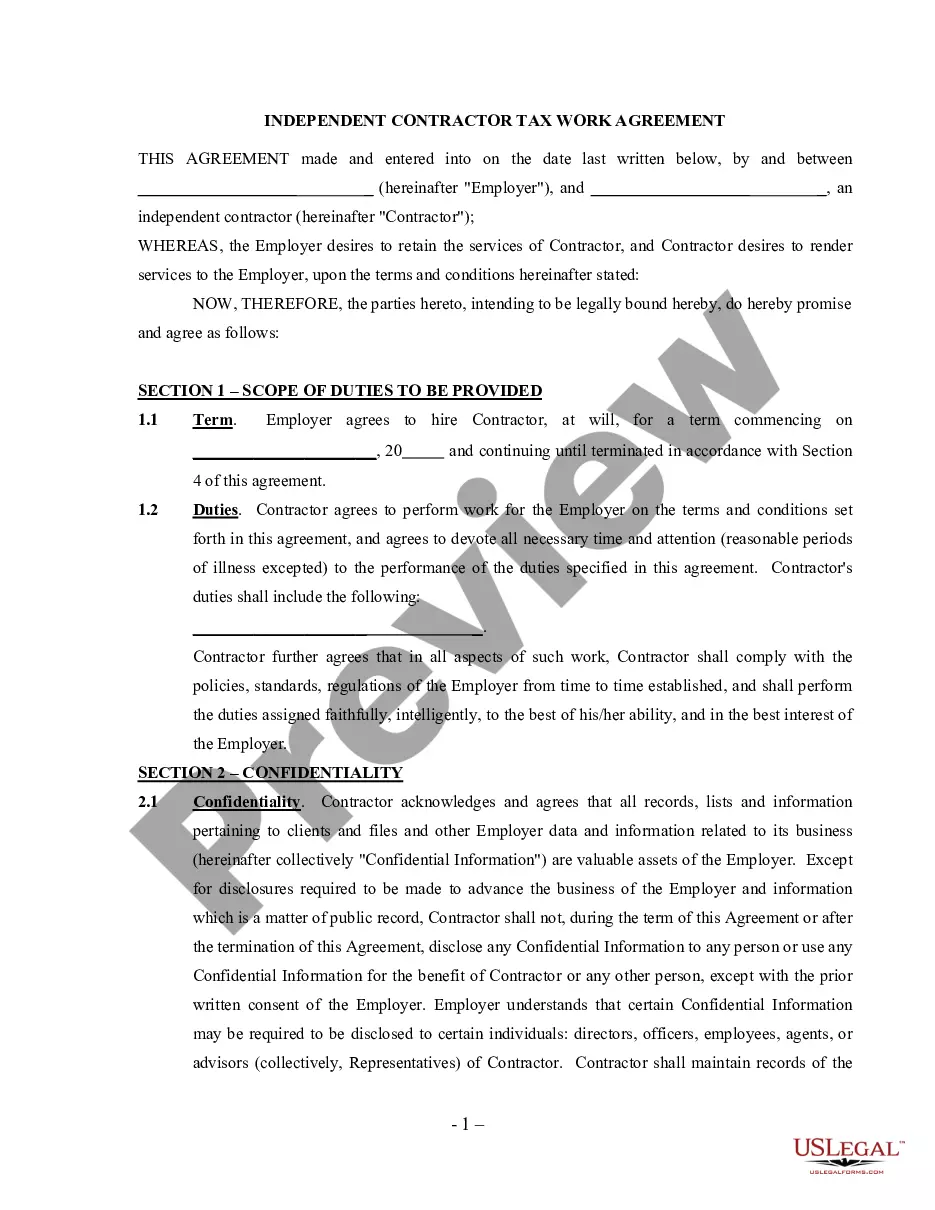
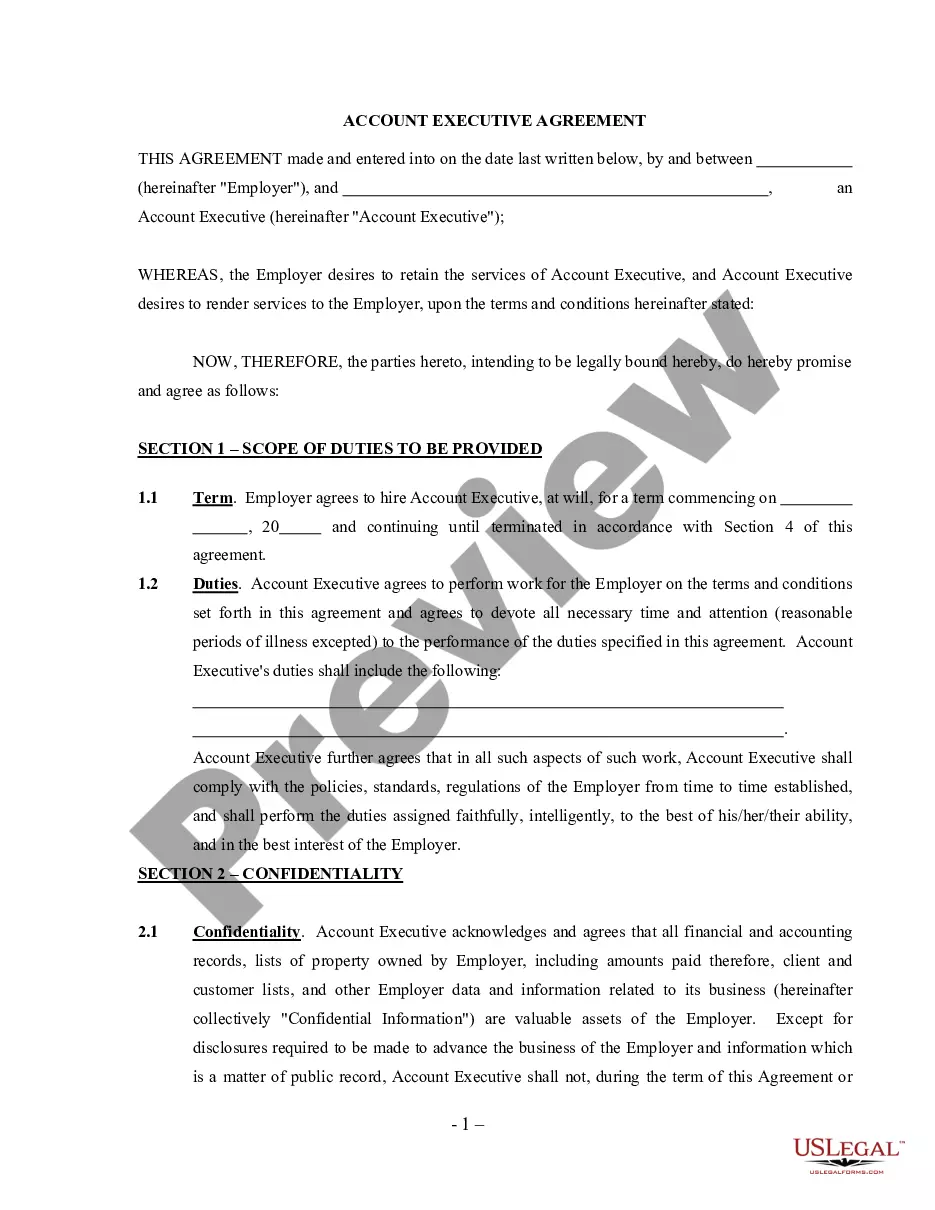
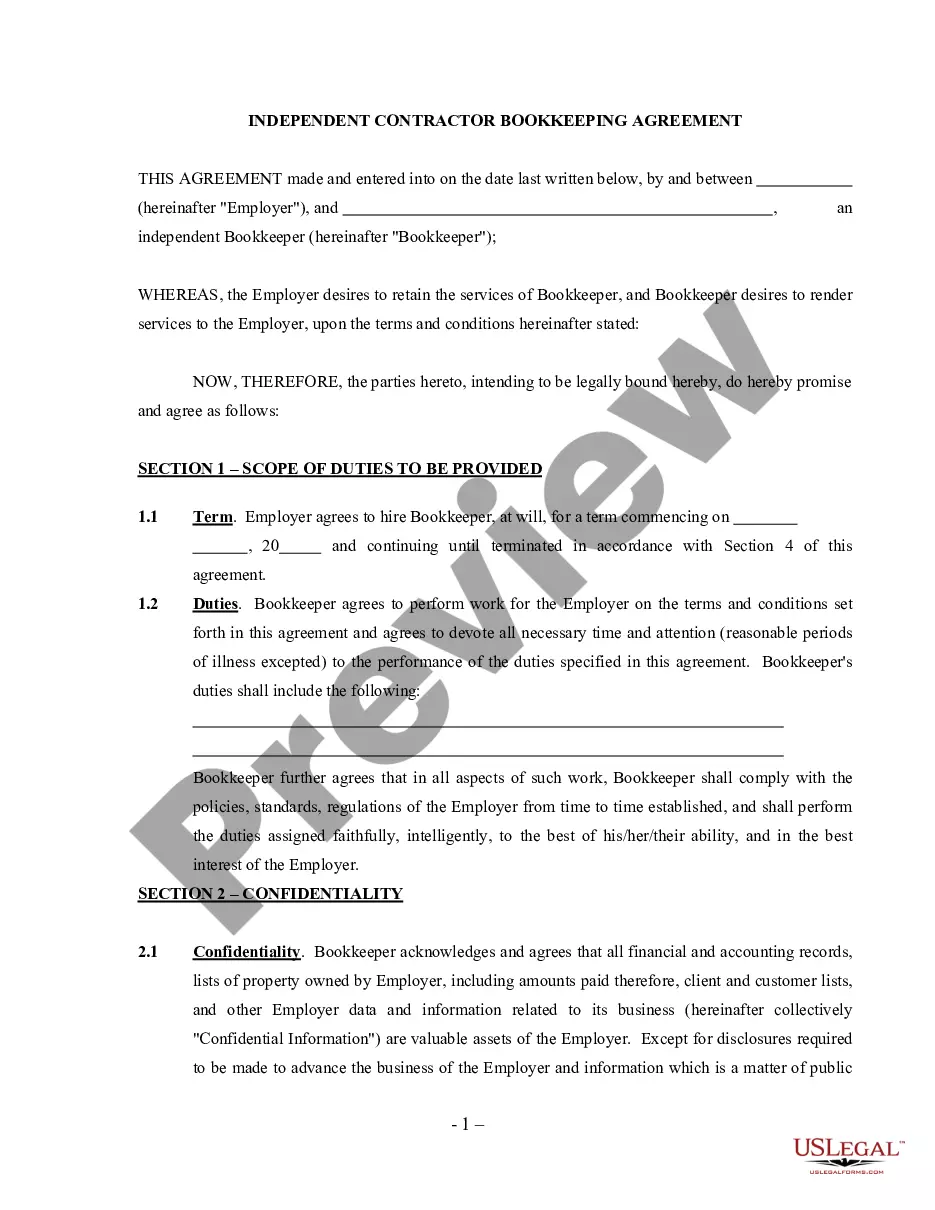
This is a contract whereby an employer hires an independent contractor to perform various accounting functions as designated in the Agreement.
South Carolina Accounting Agreement - Self-Employed Independent Contractor
State:
Multi-State
Control #:
US-INDC-40
Format:
Word;
Rich Text
Instant download
Description
Free preview



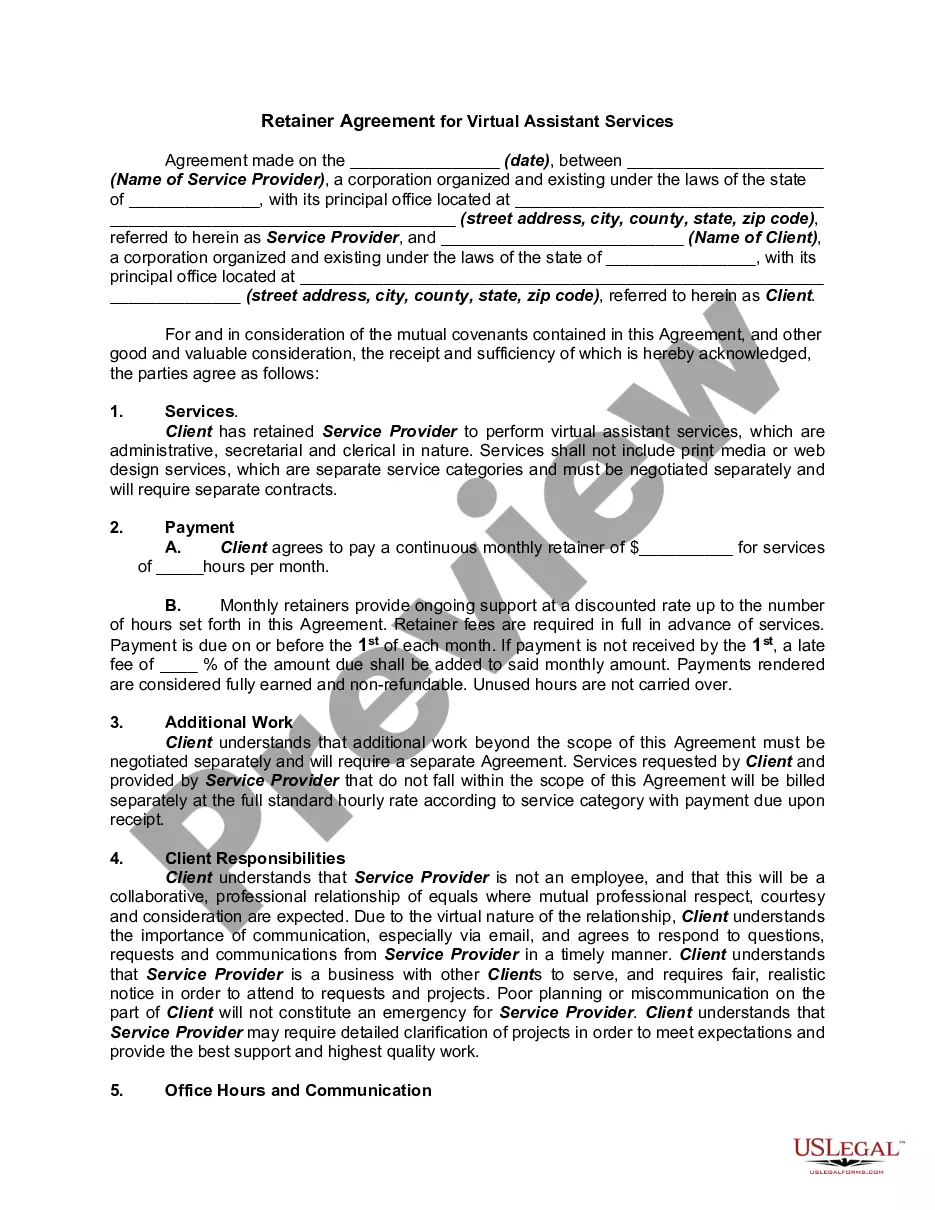
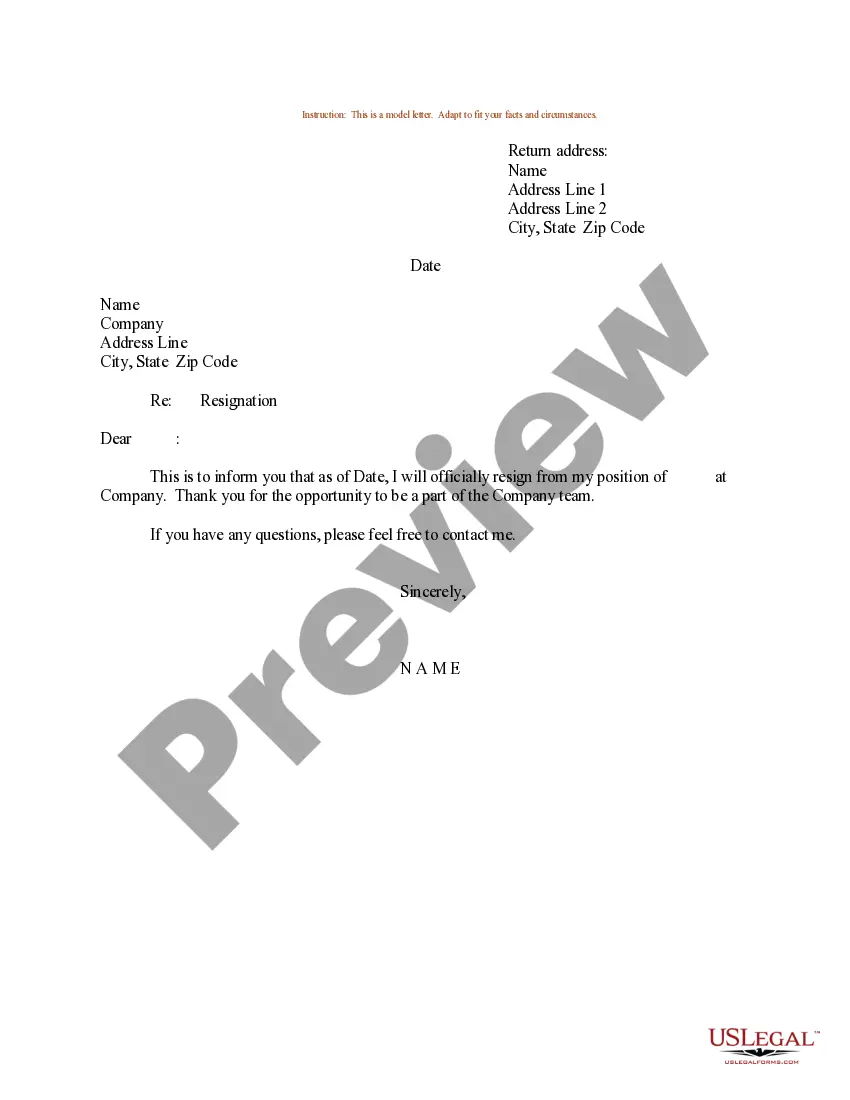
How to fill out Accounting Agreement - Self-Employed Independent Contractor?
Finding the appropriate legal document template can be challenging. Naturally, there are numerous templates available online, but how can you secure the legal form you require? Utilize the US Legal Forms website.
This service offers a vast collection of templates, such as the South Carolina Accounting Agreement - Self-Employed Independent Contractor, that can be utilized for business and personal needs. All forms are vetted by professionals and meet federal and state regulations.
If you are already a member, Log In to your account and click on the Download button to acquire the South Carolina Accounting Agreement - Self-Employed Independent Contractor. Use your account to review the legal forms you have purchased previously. Navigate to the My documents section of your account to obtain another copy of the documents you require.
Complete, edit, print, and sign the acquired South Carolina Accounting Agreement - Self-Employed Independent Contractor. US Legal Forms is the largest repository of legal documents where you can find various paper templates. Use this service to obtain professionally crafted documents that adhere to state requirements.
- If you are a new user of US Legal Forms, follow these simple steps.
- First, ensure you have selected the correct form for your region/state. You can examine the form using the Preview button and read the form description to confirm it is suitable for you.
- If the form does not meet your requirements, use the Search field to find the appropriate form.
- Once you are confident that the form is correct, click the Get now button to acquire the form.
- Choose the pricing plan you prefer and input the required information. Create your account and pay for the order using your PayPal account or credit card.
- Select the file format and download the legal document template to your device.
Form popularity
FAQ
Becoming an independent contractor is one of the many ways to be classified as self-employed. By definition, an independent contractor provides work or services on a contractual basis, whereas, self-employment is simply the act of earning money without operating within an employee-employer relationship.
Accrual Method Accounting When you operate a business providing services as an independent contractor, you have the option of using the accrual method of accounting for your contractor earnings and expenses while reporting your personal income and deductions using the cash method.
An independent contractor agreement is a legally binding document signed by a 1099 employee and the company that hires them. It outlines the scope of work and the terms under which that work will be completed, which goes a long way to making sure both parties are on the same page about the project from the start.
Independent contractors are self-employed workers who provide services for an organisation under a contract for services. Independent contractors are not employees and are typically highly skilled, providing their clients with specialist skills or additional capacity on an as needed basis.
The general rule is that an individual is an independent contractor if the payer has the right to control or direct only the result of the work and not what will be done and how it will be done. If you are an independent contractor, then you are self-employed.
Independent contractors generally report their earnings to the IRS quarterly using Form 1040-ES, Estimated Tax for Individuals. This covers both their federal income tax and self-employment tax liabilities. They may also have to pay state and local taxes according to their state and local government guidelines.
Here is a list of some of the things you can write off on your 1099 if you are self-employed:Mileage and Car Expenses.Home Office Deductions.Internet and Phone Bills.Health Insurance.Travel Expenses.Meals.Interest on Loans.Subscriptions.More items...?
Becoming an independent contractor is one of the many ways to be classified as self-employed. By definition, an independent contractor provides work or services on a contractual basis, whereas, self-employment is simply the act of earning money without operating within an employee-employer relationship.
How do I create an Independent Contractor Agreement?State the location.Describe the type of service required.Provide the contractor's and client's details.Outline compensation details.State the agreement's terms.Include any additional clauses.State the signing details.
What Should Be in a Construction Contract?Identifying/Contact Information.Title and Description of the Project.Projected Timeline and Completion Date.Cost Estimate and Payment Schedule.Stop-Work Clause and Stop-Payment Clause.Act of God Clause.Change Order Agreement.Warranty.More items...