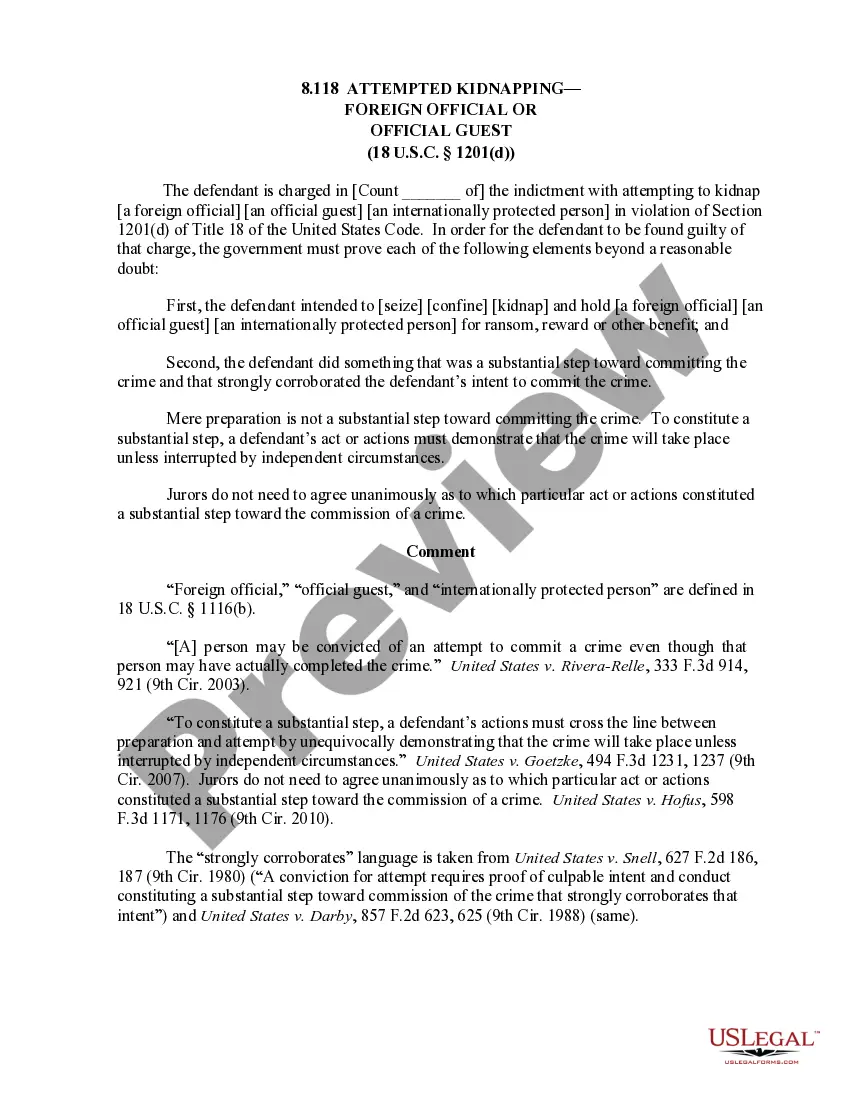
South Carolina Exclusive License Agreement for Patent with Schedule of Royalties
Description
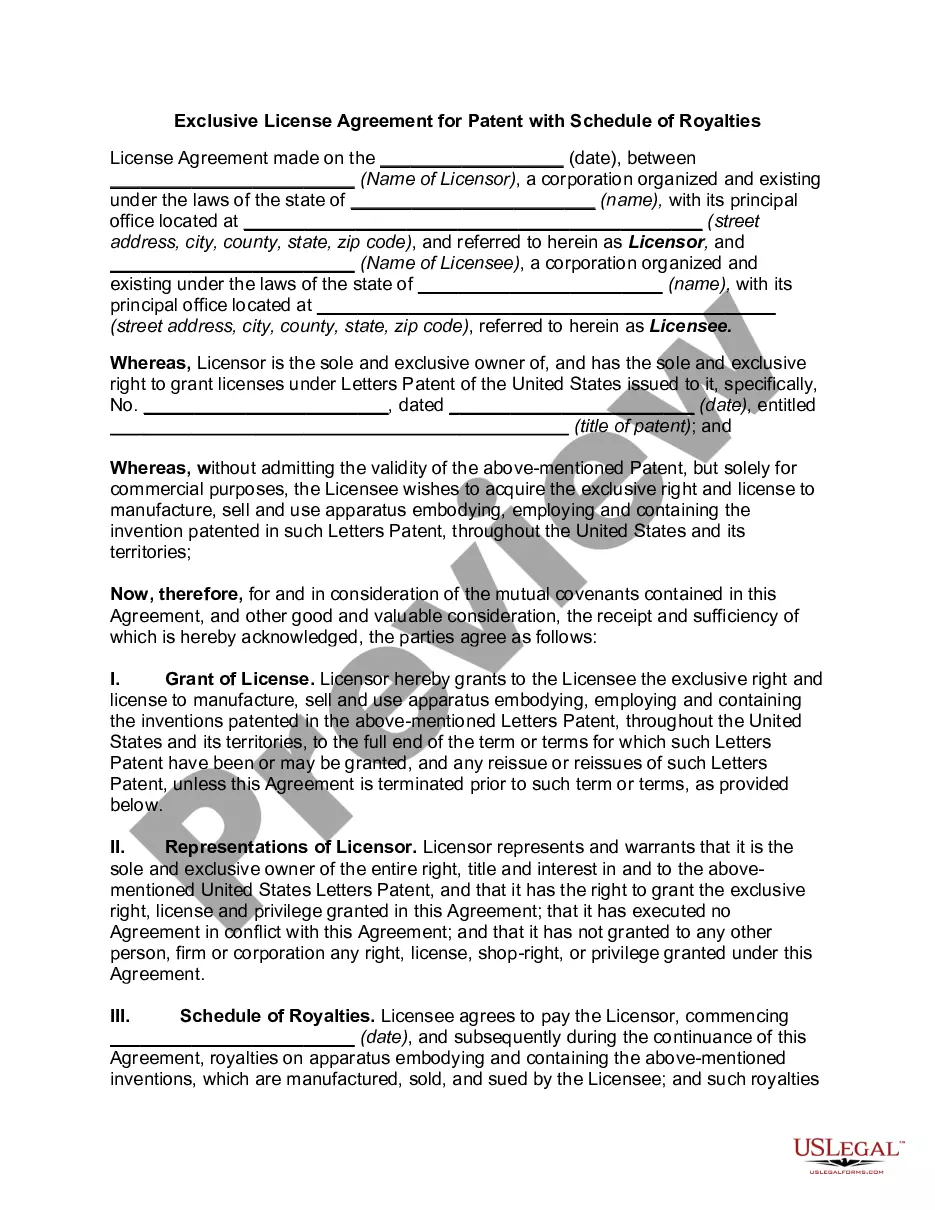
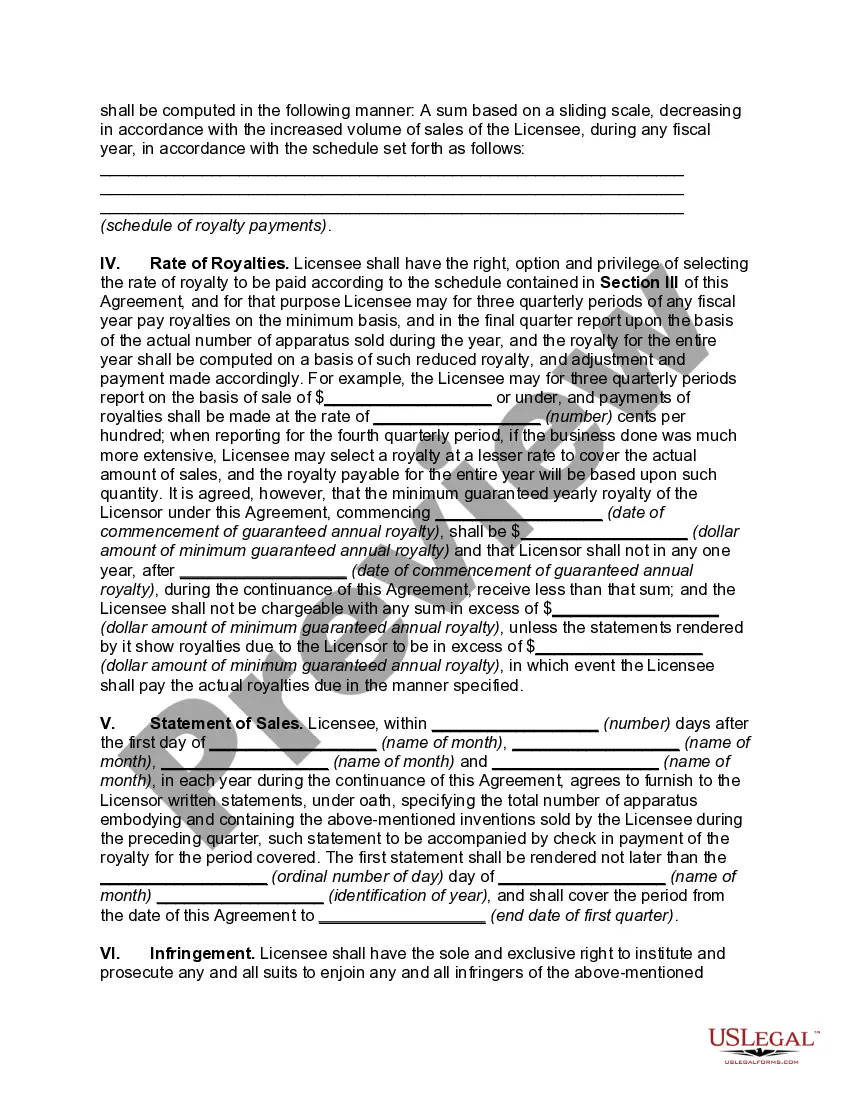
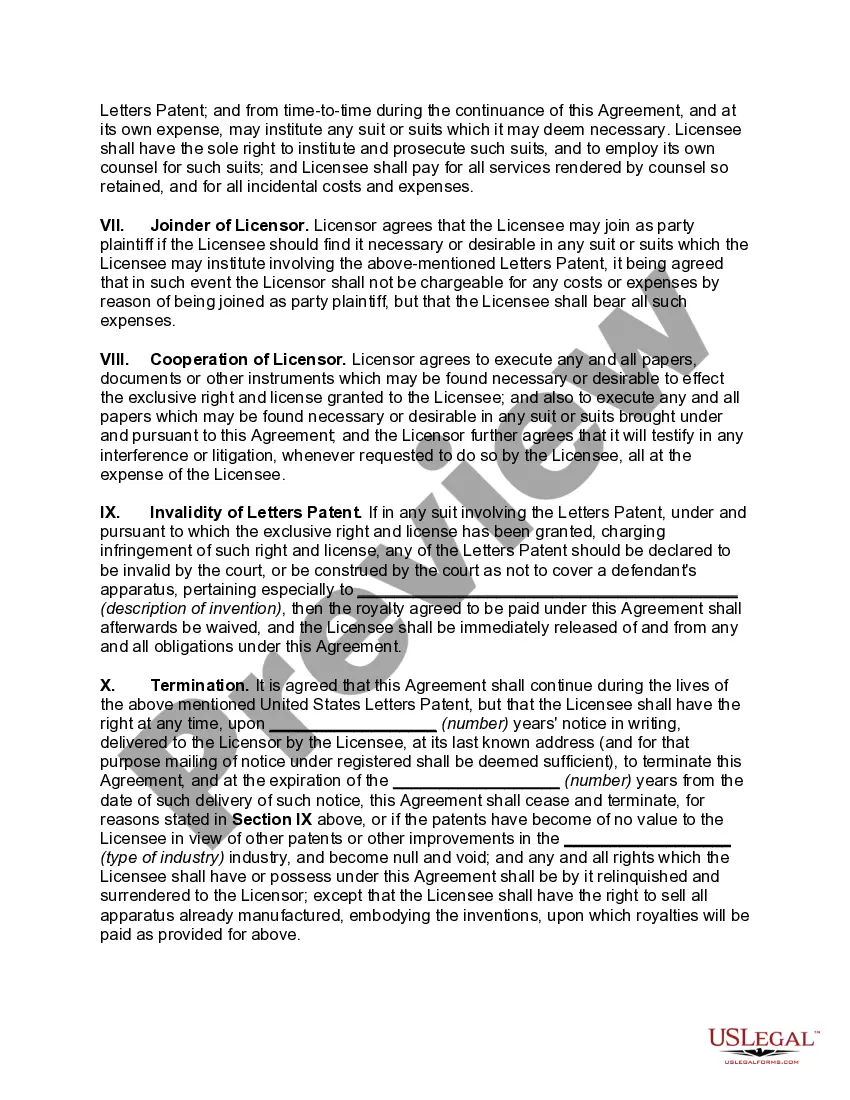
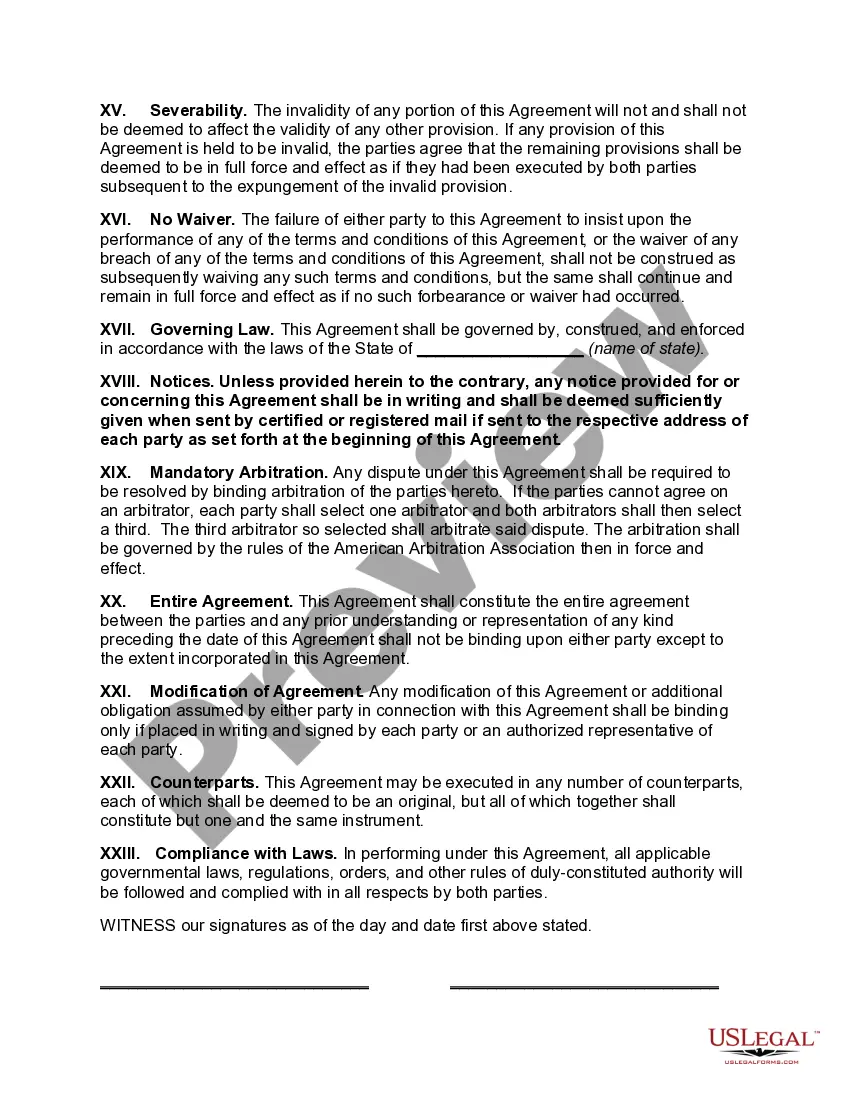
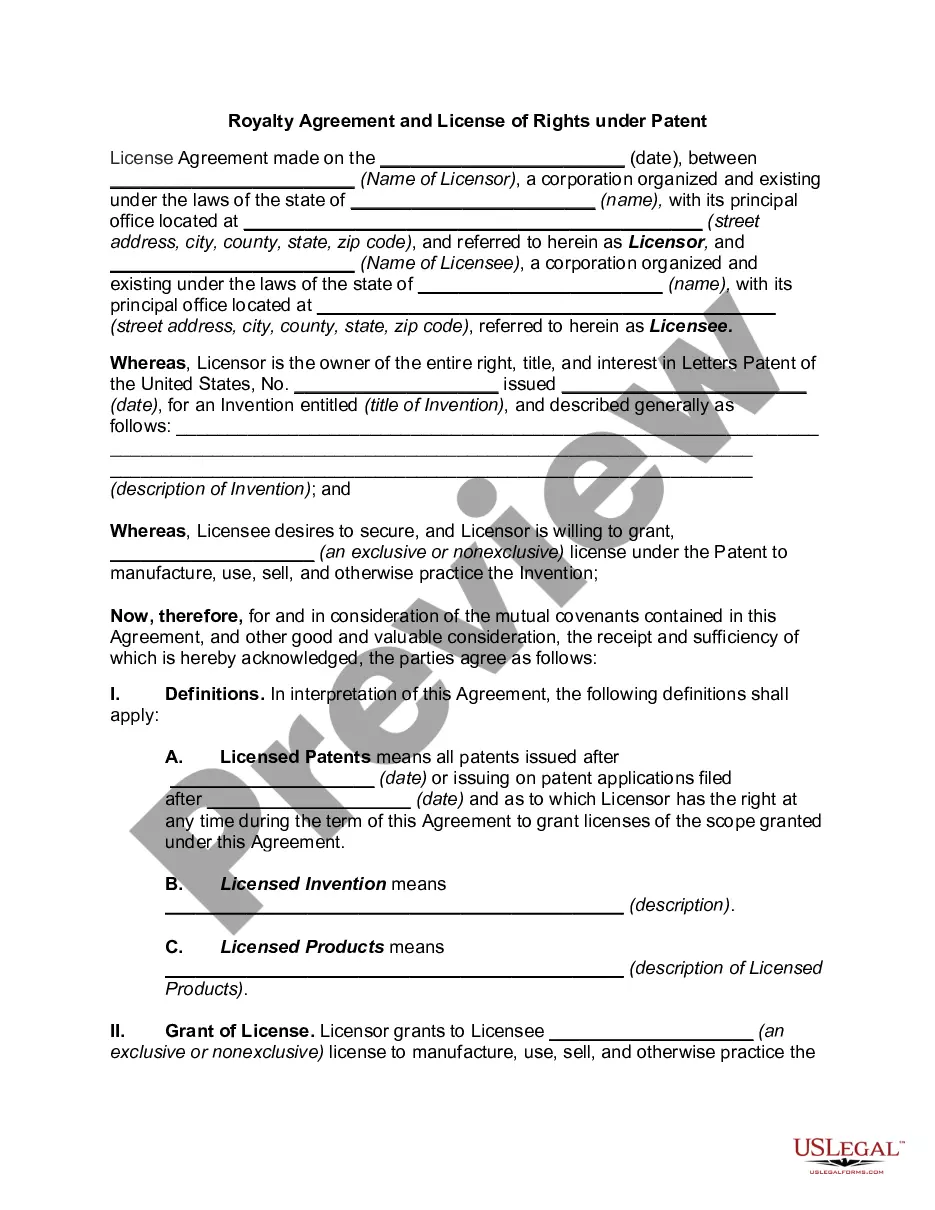
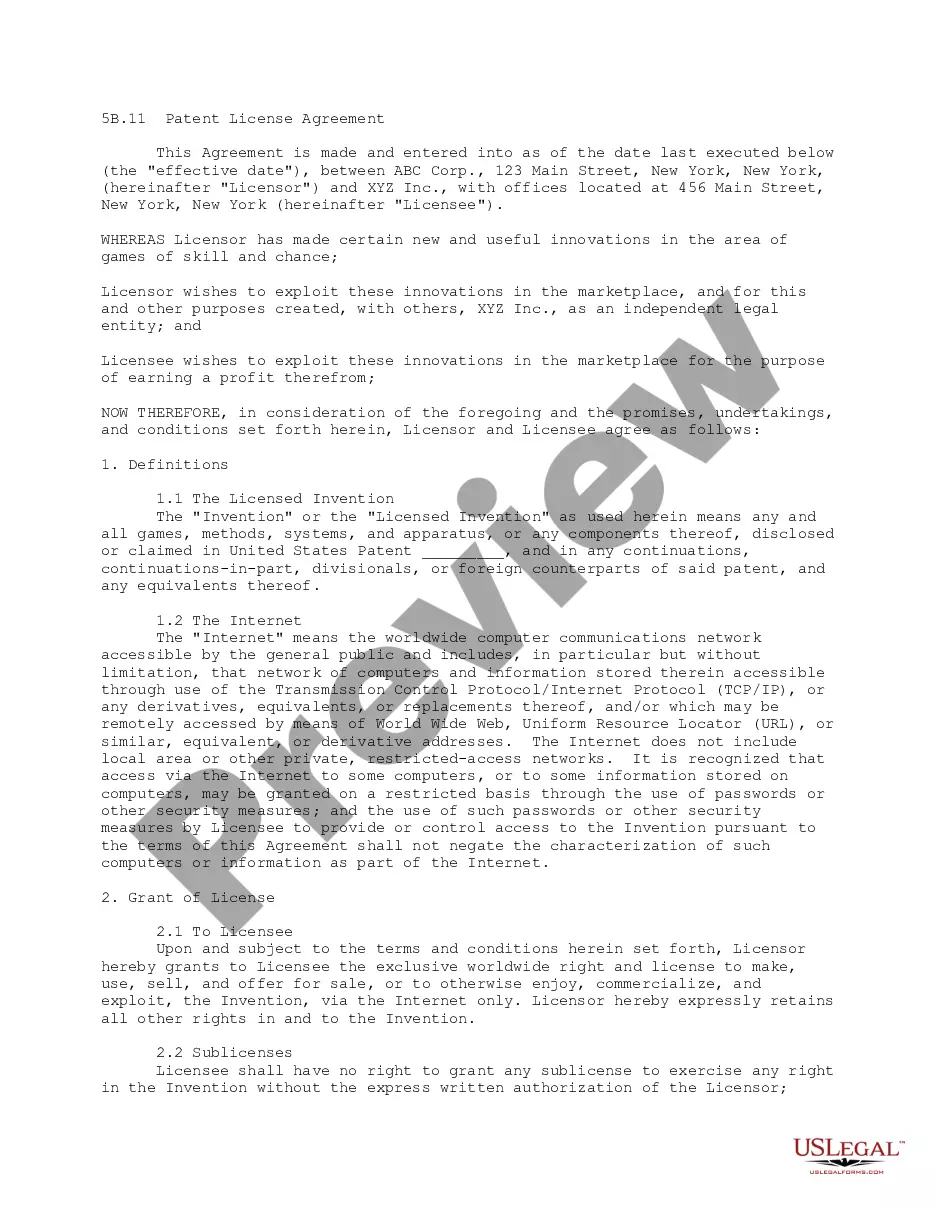
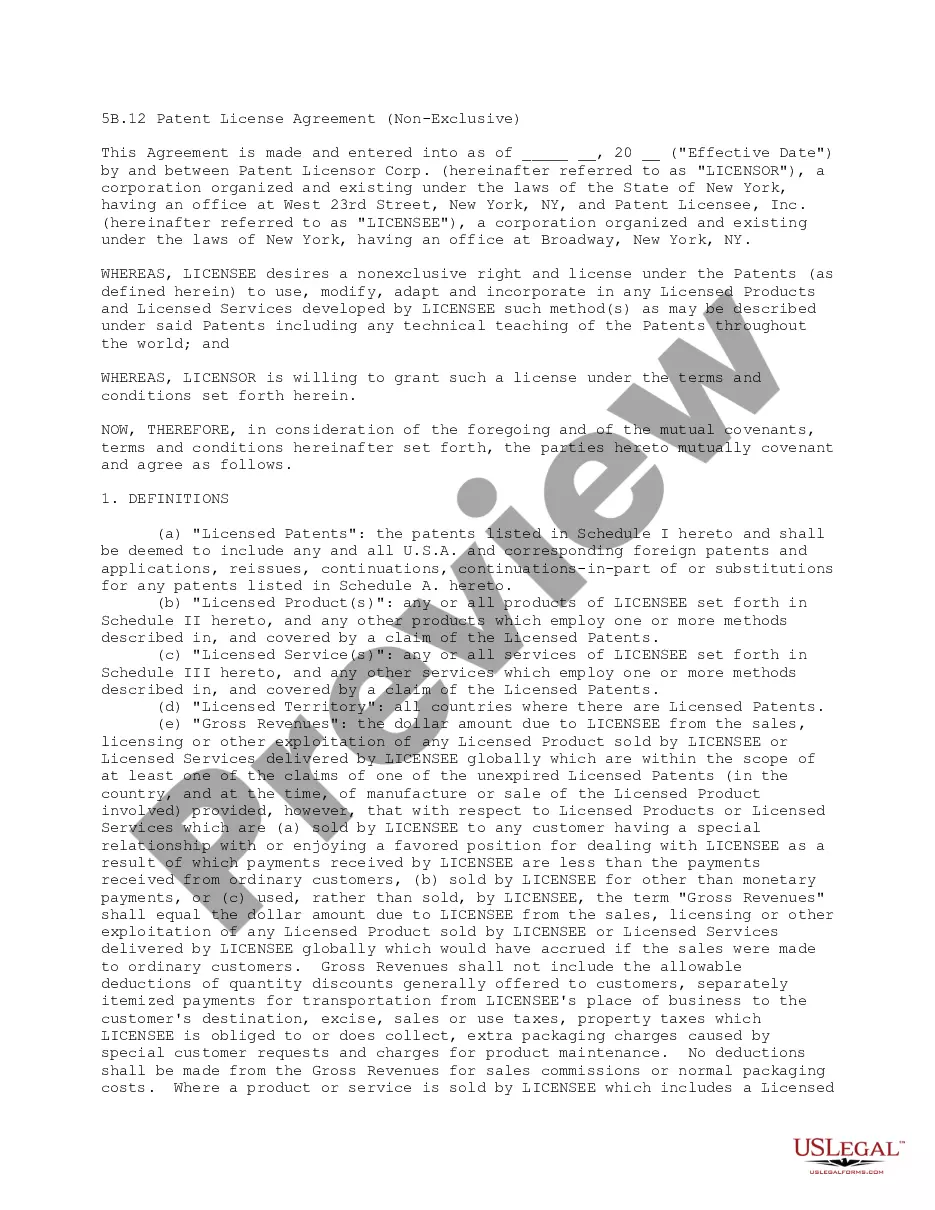
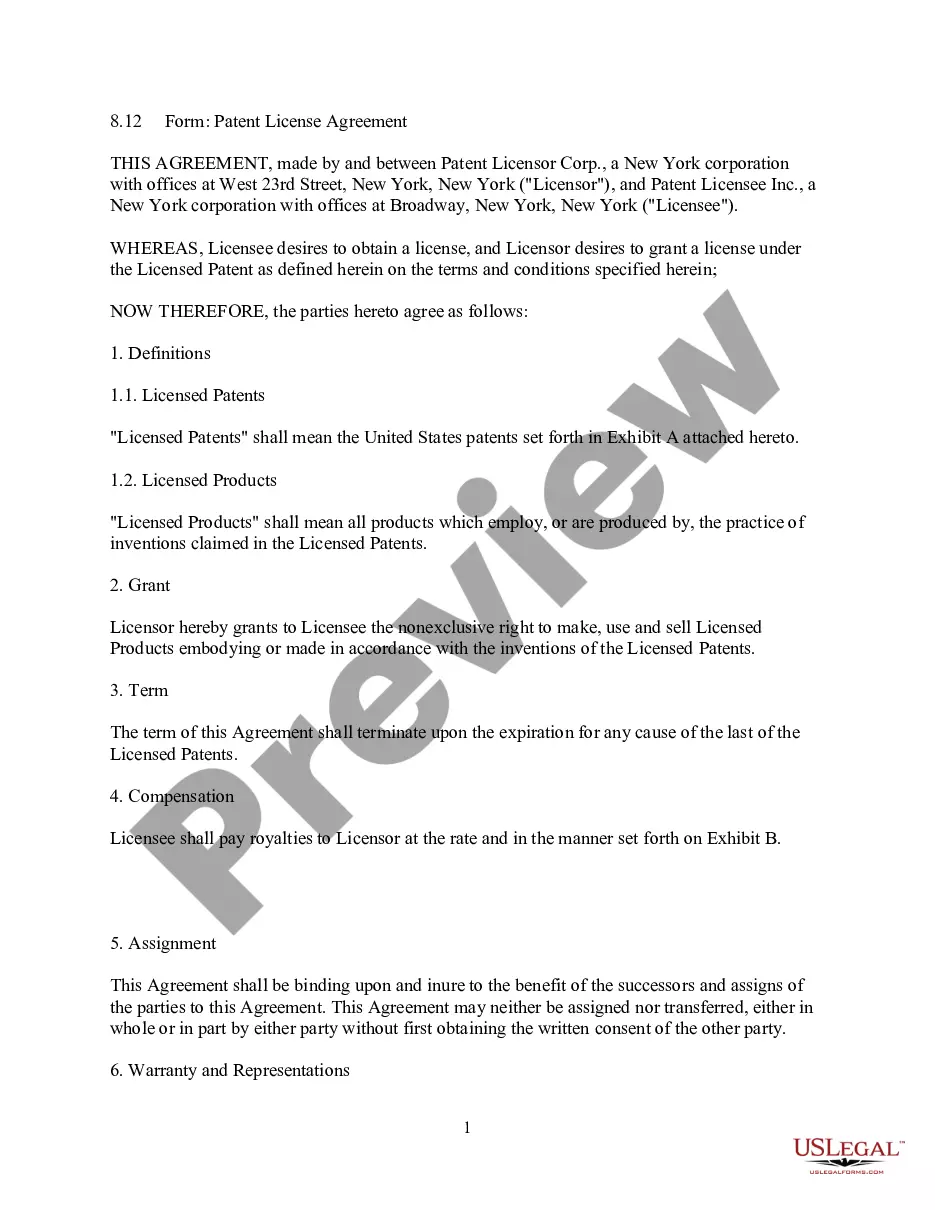
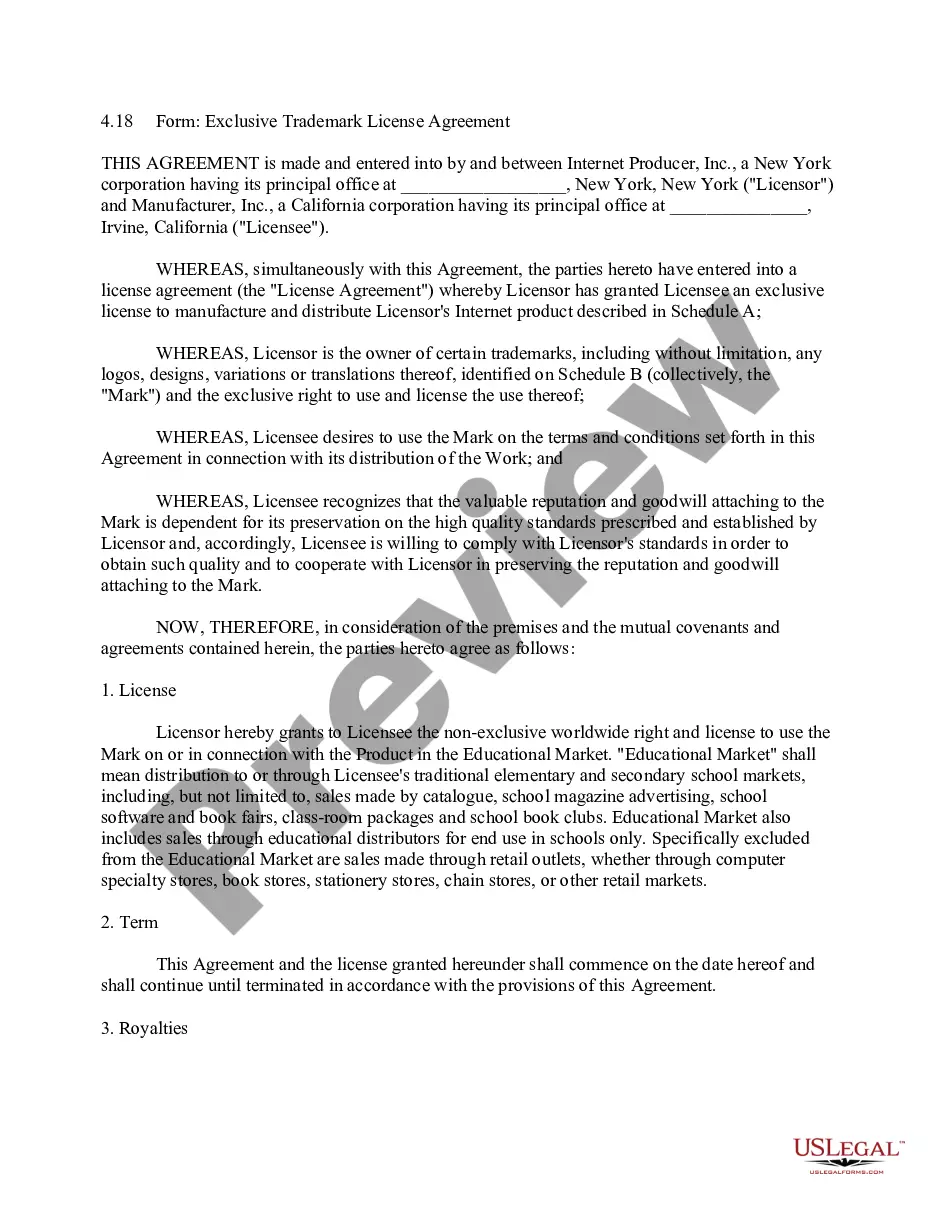
How to fill out Exclusive License Agreement For Patent With Schedule Of Royalties?
If you wish to compile, acquire, or print authentic legal document templates, utilize US Legal Forms, the most extensive assortment of legal forms available online.
Take advantage of the site's straightforward and convenient search function to find the documents you require.
A range of templates for business and personal purposes are organized by categories and states, or keywords.
Step 4. Once you have found the form you need, click on the Acquire now button. Choose your preferred pricing plan and provide your credentials to register for an account.
Step 5. Complete the purchase. You can use your credit card or PayPal account to finalize the transaction.
- Use US Legal Forms to locate the South Carolina Exclusive License Agreement for Patent with Schedule of Royalties in just a few clicks.
- If you are already a US Legal Forms member, Log In to your account and hit the Download button to obtain the South Carolina Exclusive License Agreement for Patent with Schedule of Royalties.
- You can also access forms you previously purchased from the My documents section of your account.
- If this is your first time using US Legal Forms, follow the steps below.
- Step 1. Ensure you have selected the form for the correct city/state.
- Step 2. Use the Preview option to review the form's content. Don't forget to check the details.
- Step 3. If you are not satisfied with the form, utilize the Search area at the top of the screen to find other versions of the legal form template.
Form popularity
FAQ
A licensing agreement allows one party (the licensee) to use and/or earn revenue from the property of the owner (the licensor). Licensing agreements generate revenues, called royalties, earned by a company for allowing its copyrighted or patented material to be used by another company.
Typically, royalties are paid as a percentage of the product's gross sales. The typical percentage for royalty payments will be 3-5%.
Intellectual property royalties are payments made by a licensee to a licensor in exchange for the use of the licensor's intellectual property. They are usually a percentage of the net or gross revenue made by the intellectual property, paid on a regular basis (often monthly, quarterly or annually).
It's generally a percentage of gross revenue or net profit. Meanwhile, a licensing fee is money paid by someone using someone's property, but this fee is generally a fixed amount. Royalties can be collected for things that are also licensed, such as patents.
Under federal patent law, you have the exclusive right to make, use or sell your patented invention throughout the United States and its territories. You also have the right to receive royalties from patent licensing agreements that give others permission to make, use or sell your invention.
What is the difference between a license and a royalty? A license is an agreement between two parties for using someone's property without paying any money for it, whereas royalty is paying an agreed fee each time he/she use the owners asset.
Yes, a patent can help you to sell your product at a higher price. However, it does not guarantee to do so. Patents themselves don't make you any money.
To receive these payments, an inventor can enter into a licensing agreement with a company. With a licensing agreement in place, the company has the right to sell the patented invention, and the inventor will receive a percentage of the sale of each product.
A royalty agreement is a legal contract between a licensor and a licensee. The agreement grants the licensee the right to use the licensor's intellectual property in exchange for royalty payments.